2027 How to Strengthen an MSW Application Without a Social Work Background

Co-Founder and Chief Data Scientist
Applying to an MSW program without a bachelor’s degree in social work is common, but it requires a clear strategy. Admissions committees are not only checking whether you earned strong grades; they are looking for evidence that you understand the profession, can work ethically with people and communities, and have taken concrete steps toward a social work career.
For career changers, the strongest applications connect past experience to social work values. Teaching, public health, psychology, criminal justice, nonprofit work, caregiving, advocacy, customer-facing roles, and community service can all support an MSW application when presented with the right context. The key is to show readiness for graduate-level study and a realistic understanding of social work practice.
This guide explains how to strengthen an MSW application without prior social work experience, what prerequisites and admissions requirements to expect, how online programs evaluate nontraditional applicants, and what career, salary, accreditation, cost, and timeline factors to consider before choosing a program.
Key Things You Should Know
- Applicants without a social work background should highlight transferable skills like counseling, research, or community service to strengthen their MSW application credibility.
- Completing prerequisite coursework in human behavior, psychology, or sociology significantly improves admission chances, with 65% of programs requiring it as of 2025.
- Gaining relevant volunteer or paid experience in social service agencies boosts practical understanding, with 70% of admitted candidates having documented such involvement.
Can You Get an MSW Without Social Work Experience?
Yes. Many MSW programs admit students who do not have formal social work experience or a bachelor of social work. In fact, nearly 89% of master's-level nonlicensed social workers hold an MSW without having a BSW, according to the Social Work Census, Report 3: The Nonlicensed Social Work Workforce, 2025. That figure shows that the MSW is a major entry point for people moving into social work from other academic and professional backgrounds.
However, “no social work experience” should not mean “no relevant preparation.” Programs usually want to see that you understand the field, have reflected seriously on the career change, and can connect your prior work or study to social work practice.
Applicants without direct social work experience can strengthen their profile by focusing on five areas:
- Transferable skills: Highlight communication, conflict resolution, documentation, research, crisis response, leadership, advocacy, and cultural humility from fields such as psychology, education, public health, criminal justice, healthcare, nonprofit work, or human services.
- Service exposure: Volunteer, intern, or work with organizations serving children, older adults, people experiencing homelessness, immigrants, veterans, people with disabilities, or individuals affected by mental health or substance use concerns.
- Academic readiness: Use strong grades, research experience, writing samples, and relevant coursework to show that you can handle graduate-level reading, analysis, and field-based learning.
- A focused personal statement: Explain why social work is the right profession for you, what experiences shaped that decision, and how your background will inform your future practice.
- Strong recommendations: Choose references who can speak to your judgment, reliability, empathy, professionalism, and ability to work with diverse communities.
Some schools offer bridge, foundation, or pre-MSW coursework for students without a BSW or formal experience. These options can help you build basic knowledge before or during the MSW curriculum. When comparing programs, look for schools that value career changers, provide advising for non-BSW applicants, and offer practicum placements aligned with your interests.
If you are also thinking about long-term academic or leadership routes, reviewing the best online PhD social work programs can help you understand how MSW training may connect to future doctoral study. For admission now, though, your priority should be building a credible record of service, reflection, and readiness.
What Are MSW Admission Requirements for Career Changers?
MSW admission requirements for career changers usually combine academic standards, prerequisite preparation, experience, recommendations, and a personal statement. A BSW is not required for traditional MSW admission, but applicants without one are typically evaluated on whether they can succeed in foundational social work coursework and field education.
Universities typically expect a minimum GPA between 2.5 and 3.0 for traditional non-BSW applicants, while advanced standing BSW tracks demand at least a 3.0 GPA, reflecting prior social work education. These standards originate from Psychology.org's report on MSW degree eligibility.
Prerequisite coursework often includes psychology, sociology, statistics, or human development. Some programs require these courses before admission; others allow students to complete missing prerequisites before enrollment or early in the program. Official transcripts are normally required from every college or university attended.
Career changers should expect admissions committees to review several parts of the application together:
- Academic record: GPA, transcript trends, writing-intensive coursework, research exposure, and evidence of readiness for graduate study.
- Relevant experience: Volunteer service, paid work, internships, caregiving, advocacy, mentoring, crisis-line work, case management, community outreach, or public-facing roles.
- Personal statement: A clear explanation of why you are leaving or expanding from your current field and how your goals align with social work ethics and practice.
- Recommendations: Letters from supervisors, professors, volunteer coordinators, or community leaders who can evaluate your maturity, interpersonal skills, and commitment to service.
- Program fit: Alignment between your interests and the school’s concentrations, field placements, faculty expertise, and delivery format.
Some MSW programs still ask for GRE scores, although waivers are common for applicants with strong academic records or substantial professional experience. Because policies differ widely, career changers should confirm requirements directly with each program before applying.
Cost is also part of the admissions decision. Applicants comparing options can review low cost MSW programs to identify schools that may fit both academic and financial needs.
How to Strengthen MSW Application Without Background?
The best way to strengthen an MSW application without a social work background is to build evidence before you apply. Admissions committees are more likely to trust your career change when your application shows sustained exposure to social issues, direct service, and thoughtful preparation for the realities of the profession.
Volunteering is often the fastest way to gain relevant experience. Roles with refugee support programs, LGBTQ+ advocacy groups, language access services, food assistance programs, domestic violence organizations, youth mentoring programs, hospice services, reentry programs, or community health agencies can help you understand how social needs, systems, and services intersect. About half of nonlicensed social workers serve clients from these underserved populations, making such roles highly beneficial for gaining practical insight and transferable skills like empathy and crisis intervention.
Prioritize experiences that involve responsibility, consistency, and direct contact. One-time service events can be meaningful, but a regular role over several months usually provides stronger application material. Look for opportunities where you can observe assessment, referral, advocacy, documentation, group support, or program coordination.
Applicants can also improve their competitiveness by taking targeted coursework. Classes in psychology, sociology, human development, statistics, social policy, public health, ethics, or research methods can show academic readiness. Post-baccalaureate certificates, community college courses, and continuing education in human services may be useful, especially for applicants with unrelated undergraduate majors.
Use the personal statement to connect your preparation into a coherent story. Avoid saying only that you “want to help people.” Instead, describe what you have learned from specific experiences, what population or issue area interests you, and why MSW training is necessary for your goals.
Practical steps that can make an application stronger include:
- Complete at least one sustained volunteer or paid role in a social service, health, school, nonprofit, or community-based setting.
- Track your responsibilities, populations served, skills used, and lessons learned so you can discuss them clearly in essays and interviews.
- Interview licensed social workers or MSW students to understand field expectations, burnout risks, supervision, and licensure pathways.
- Ask for recommendations from people who have directly observed your service, judgment, reliability, and communication skills.
- Apply to programs whose concentrations and practicum options match your career goals.
Applicants looking for a shorter timeline can also compare fast track MSW programs, but speed should not be the only factor. A strong fit, reliable field placement support, and accreditation matter more than finishing quickly.
MSW prerequisites vary by school, but most programs expect applicants to have a broad liberal arts and social science foundation. For students without a social work background, the most common prerequisite areas include human behavior, psychology, sociology, and statistics. Some programs may also look for coursework in research methods, social welfare policy, ethics, biology, political science, economics, or diversity-related studies.
Requirements differ because MSW programs design their own admissions policies within accreditation expectations. One school may admit an applicant with missing prerequisites on the condition that they complete them before the first term. Another may recommend additional coursework but not require it. A third may accept related coursework from health sciences, education, criminal justice, public health, or behavioral sciences as preparation.
Work experience can help, but it does not always replace required courses. For example, experience in counseling, community outreach, healthcare, school support, or advocacy can demonstrate transferable competencies, but a program may still require statistics or human development if those are listed as formal prerequisites. According to the Social Work Census, Report 3: The Nonlicensed Social Work Workforce, 2025, bachelor's-level nonlicensed social workers, often in case manager roles, earn a median annual salary of $48,410. That context can help applicants understand how entry-level experience may build a path toward graduate training.
To prepare efficiently, prospective students should:
- Review each program’s prerequisite list before applying, not after acceptance.
- Request pre-admission advising to identify missing courses.
- Use community college, online, or post-baccalaureate coursework to complete key social science and statistics requirements.
- Keep syllabi for borderline courses in case a program asks for proof of content.
- Pair coursework with practical experience in human services, behavioral health, advocacy, education, or healthcare.
Meeting prerequisites does more than satisfy a checklist. It helps you enter the MSW curriculum with stronger reading, research, policy, and human behavior foundations. Applicants exploring long-term outcomes can also review what can you do with a degree in social work to connect prerequisite planning with future career pathways.
For beginners, the MSW curriculum starts with foundation courses that introduce the knowledge, ethics, and practice skills used across social work settings. Students without prior social work education should expect a structured first phase that builds common competencies before moving into advanced practice or specialization.
Core coursework typically covers human behavior and the social environment, social welfare policy, research methods, ethics, diversity and social justice, and practice with individuals, families, groups, organizations, and communities. These courses help students understand how personal challenges are shaped by family systems, institutions, policy, poverty, discrimination, trauma, health conditions, and community resources.
Research and statistics courses prepare students to read evidence, evaluate programs, and apply evidence-based practice. Policy courses show how laws, funding, eligibility rules, and public systems affect client access to services. Ethics courses introduce professional boundaries, confidentiality, informed consent, mandated reporting, documentation, and the responsibilities that come with social work practice.
Field education is a central part of the MSW curriculum. Practicum placements place students in supervised settings where they learn assessment, engagement, intervention planning, referral, advocacy, documentation, and professional communication. For beginners, fieldwork is often where classroom concepts become concrete.
With over 55,000 students enrolled in 225 MSW programs, competition is intense-especially for direct practice tracks. Applicants new to social work can stand out by showing readiness for the curriculum: strong writing, emotional maturity, cultural humility, research ability, and a realistic understanding of field placement demands.
Students should also understand the difference between broad foundation learning and advanced concentration. Foundation courses prepare all MSW students for generalist practice. Advanced courses may focus on clinical practice, healthcare, children and families, school social work, aging, community practice, administration, policy, or another specialization depending on the program.
Yes. Online MSW programs can be viable for applicants without prior social work experience, provided the program is accredited, offers strong field placement support, and admits students through a traditional non-BSW pathway. Online delivery changes how coursework is completed, but it does not remove the need for supervised field education or professional readiness.
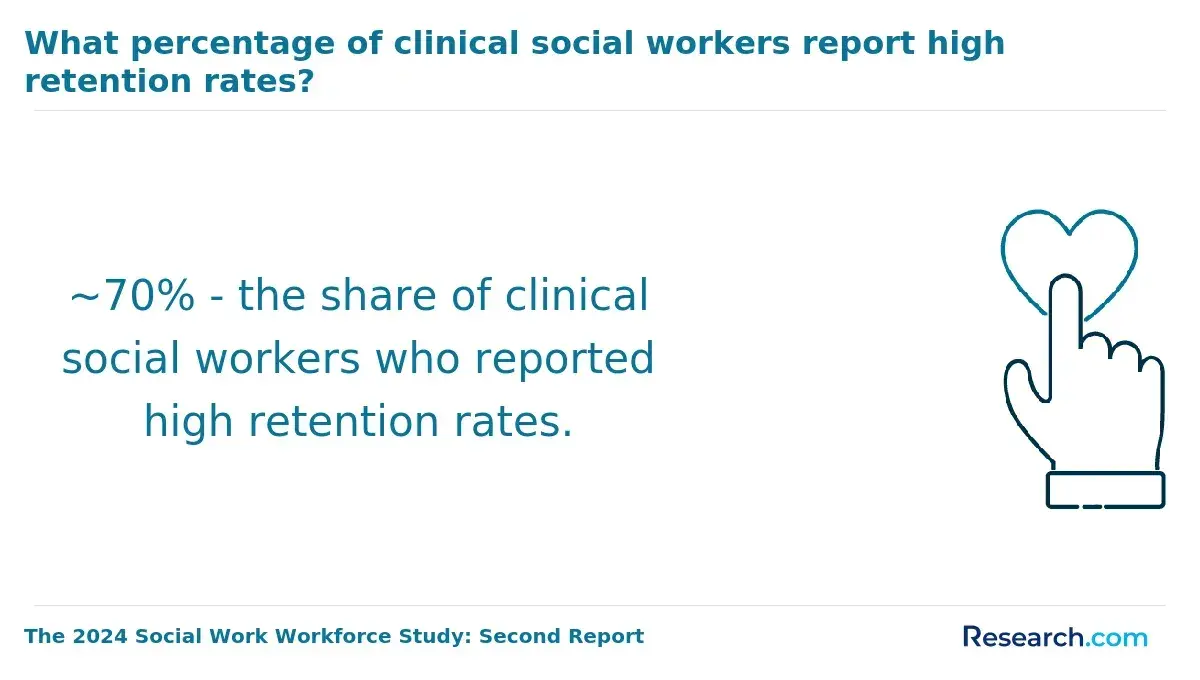
Applicants from psychology, education, healthcare, nonprofit management, public service, criminal justice, communications, or business can be competitive when they show transferable skills and a clear reason for entering social work. Nearly 52% of bachelor's- and master's-level social workers plan to pursue licensure, so applicants should choose online programs with careful attention to licensure preparation and state requirements.
The most important issue for online students is field placement. A strong online MSW program should explain how placements are arranged, whether students must find their own sites, what types of agencies qualify, and how supervision is handled. This is especially important for students without prior human services networks.
To improve an online MSW application without experience, focus on:
- Relevant recommendations: Ask supervisors, professors, or volunteer coordinators who can describe your reliability, ethics, communication, and service orientation.
- Hands-on exposure: Gain experience through volunteer work, internships, part-time roles, crisis lines, community organizations, healthcare settings, schools, or social service agencies.
- A strong statement of purpose: Explain how your background connects to social work values, why online study fits your circumstances, and how you will manage fieldwork obligations.
- Program-state alignment: Confirm that the program’s curriculum and field requirements fit your state’s licensure expectations if clinical practice is your goal.
Online MSW programs are not an easier substitute for campus programs. They require self-discipline, strong writing, consistent participation, and the ability to balance coursework with practicum hours. For nontraditional students, the best online programs provide advising, accessible faculty, clear field placement processes, and transparent licensure guidance.
Most Master of social work (MSW) programs in the U.S. typically take two years for full-time students. Part-time options often extend to three or four years, which can help working adults balance school, employment, caregiving, and field placement. Accelerated tracks can reduce the duration to 12 to 18 months, but they usually require prior social work coursework or a related undergraduate degree.
Applicants without a BSW should pay close attention to track type. Traditional MSW programs are designed for students from other majors. Advanced standing programs are generally for students with a recent BSW and may not be available to career changers. Transferable skills from majors like psychology can strengthen applications and may help with prerequisites since 21.41% of nonlicensed bachelor's-level social workers have psychology backgrounds, according to the Social Work Census, Report 3: The Nonlicensed Social Work Workforce.
Tuition fees vary widely depending on the institution. Public universities usually charge between $10,000 and $25,000 per year for in-state students, while out-of-state and private schools can cost from $30,000 to $60,000 annually. Additional expenses such as fees, books, field placements, and living costs can push total program costs beyond $60,000, making financial planning crucial.
When estimating cost, include more than tuition. Field placements may reduce the number of hours you can work for pay. Online programs may still charge technology fees, residency fees, travel costs, or local placement-related expenses. Campus programs may require commuting, relocation, parking, or higher living costs.
Before enrolling, compare programs on:
- Full-time, part-time, online, hybrid, and accelerated options.
- Whether the track is traditional or advanced standing.
- Total tuition and required fees, not only cost per credit.
- Scholarships, assistantships, employer tuition support, and federal financial aid eligibility.
- Field placement support and whether placements are available near where you live.
- Credit transfer, prerequisite, and leave-of-absence policies.
The right MSW timeline is the one you can complete without undermining your finances, health, or fieldwork performance. A lower-cost or part-time option may be the better choice if it improves persistence and reduces borrowing.
An MSW can lead to clinical, community, administrative, policy, and advocacy roles even if you did not study social work as an undergraduate. Your prior background may shape your first specialization, but MSW training and field placements often determine your strongest employment options after graduation.
Common career paths include mental health counseling, substance abuse treatment, family services, child welfare, healthcare social work, school social work, gerontology, hospice and palliative care, community organization, nonprofit program management, policy advocacy, reentry services, forensic social work, and case management. Some roles require licensure, specific field experience, or additional post-graduate supervised hours, especially clinical positions.
Applicants with undergraduate degrees in psychology, sociology, education, public health, criminal justice, communications, or liberal arts may be able to connect earlier training to MSW specializations. For example, a teacher may move toward school social work or child and family practice. A healthcare worker may pursue medical social work. A nonprofit professional may move toward program management, community practice, or policy advocacy.
Field education is especially important for students without prior social work experience. Practicum placements can provide the first direct evidence of social work competence for future employers. Students should choose placements strategically, seeking settings that match career goals and offer strong supervision.
Career options also depend on licensure rules, employer expectations, and local workforce needs. Students interested in clinical practice should confirm the requirements for supervised experience and clinical licensure in the state where they plan to work. Students interested in macro practice should build skills in program evaluation, grant writing, policy analysis, leadership, data use, and community engagement.
Overall, an MSW can open several professional directions for career changers, but the strongest outcomes usually come from aligning coursework, field placements, licensure planning, and prior experience early in the program.
The median annual salary for social workers holding an MSW typically ranges from $50,000 to $75,000, influenced by specialization and location. Clinical social workers often earn above $70,000, while those in macro areas like policy or administration may see more variability based on funding and organizational factors.
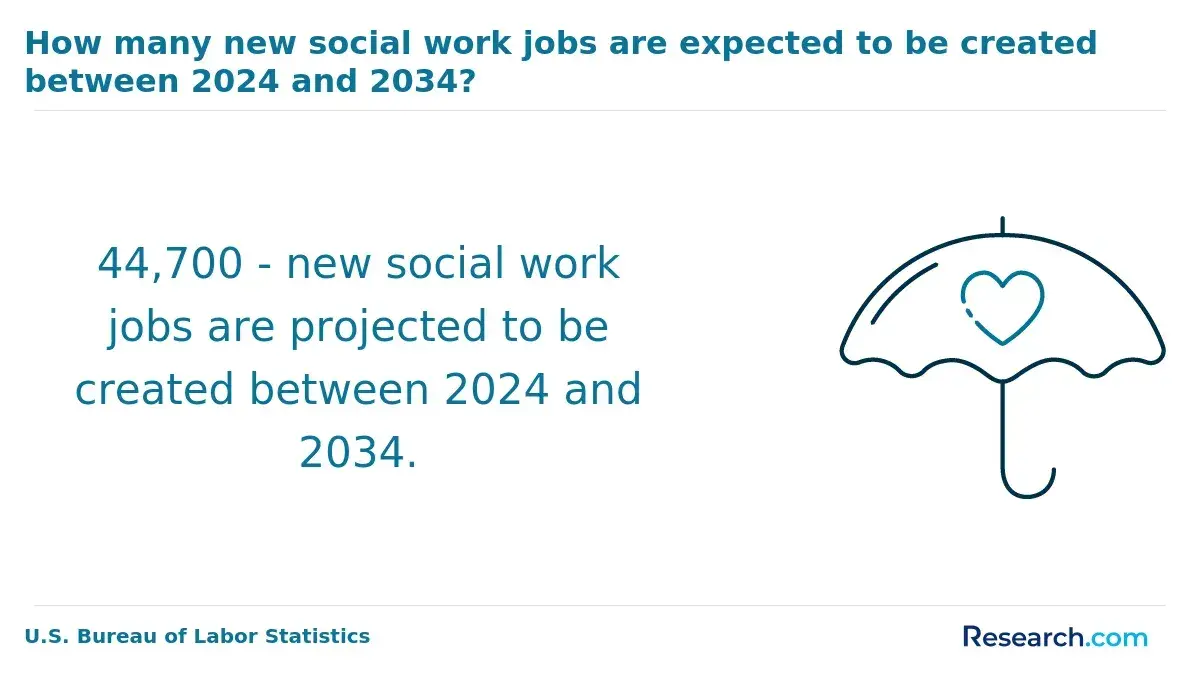
Employment growth for MSW graduates is strong, with the Bureau of Labor Statistics projecting a 12% increase from 2024 to 2034, much faster than average for all jobs. Demand is supported by expanding health services, aging populations, behavioral health needs, child and family services, substance use treatment, and broader recognition of mental health care.
Salary and job prospects vary by setting. Healthcare systems, government agencies, schools, behavioral health clinics, nonprofit organizations, correctional settings, and private or group clinical practice may offer different pay structures, supervision models, caseload expectations, and advancement opportunities. Location also matters because state funding, cost of living, workforce shortages, and licensure rules differ.
Admission to MSW programs is competitive, averaging a 65.3% acceptance rate. Applicants can improve both admissions and career outcomes by showing fit with workforce needs, especially in high-demand areas such as child and family services, healthcare, behavioral health, substance abuse social work, and community-based direct service.
Licensure can also affect earnings and mobility. Obtaining relevant certifications and clinical licensure (LCSW) often increases salary and job opportunities, but requirements vary by state. Students who want clinical roles should choose programs with strong clinical coursework, appropriate field placements, and clear guidance on post-graduate supervision.
For the best return on investment, compare expected salary with total program cost, debt, geographic job markets, and licensure timeline. A well-chosen MSW can offer stable demand and meaningful advancement, but outcomes depend heavily on specialization, location, field experience, and credentials.
How to Choose Accredited MSW Programs?
Choosing an accredited MSW program is essential. Enrollment in a Council on Social Work Education (CSWE) accredited MSW program is crucial for licensure eligibility and professional growth. Accreditation signals that the curriculum, field education, faculty qualifications, and program outcomes meet recognized professional standards.
For most students, CSWE accreditation is not optional. Many state licensing boards and employers require graduation from a CSWE-accredited program. A program that is only regionally approved, unclear about professional accreditation, or outside CSWE standards may limit licensure, employment, and future educational options.
Graduating from a CSWE-accredited program can also support long-term career value. The Social Work Census, Report 3: The Nonlicensed Social Work Workforce, 2025, shows that master's-level nonlicensed social workers have a median annual salary of $63,860 with strong retention, as only 4.18% plan to leave the field. Accreditation helps protect your investment by keeping your degree aligned with professional expectations.
Before applying, verify accreditation directly through the CSWE website or official school documentation. Do not rely only on marketing language. Look for clear statements about accreditation status, program format, field education requirements, and whether the program is in good standing.
After confirming accreditation, compare programs using practical fit factors:
- Specializations: Clinical practice, healthcare, children and families, school social work, aging, community practice, policy, administration, or another focus area.
- Format: Full-time, part-time, online, hybrid, evening, weekend, or accelerated options.
- Field placement support: Help finding placements, quality of supervision, local partnerships, and fit with your career goals.
- Licensure preparation: Coursework and advising aligned with the state where you plan to practice.
- Faculty expertise: Instructors with experience in your intended area of practice or research.
- Cost and aid: Tuition, fees, scholarships, assistantships, employer support, and borrowing needs.
- Student outcomes: Graduation support, licensing pass information where available, employment support, and alumni networks.
The best accredited MSW program is not simply the most prestigious or the fastest. It is the program that meets licensure standards, fits your finances and schedule, provides strong field education, and prepares you for the type of social work career you actually want.
Other Things You Should Know About Social Work
Effective communication, empathy, and critical thinking are fundamental skills for social work professionals. Strong organizational abilities and cultural competence also play a significant role in managing diverse client needs and navigating complex systems. Developing resilience and ethical decision-making is crucial for addressing the challenges encountered in social work practice.
No. Most accredited MSW programs admit applicants from any undergraduate major, provided they have a bachelor’s degree from a regionally accredited institution and submit transcripts, recommendations, and a statement of purpose. Programs may also require prerequisites or foundation courses for students without a social work background.
Career changers entering social work often need to address gaps in foundational knowledge by completing prerequisite courses or gaining relevant experience. They may also need to adapt to the profession's ethical framework and client-centered approach. Many MSW programs offer support tailored to non-traditional students to facilitate this transition.
- Online MSW Programs No GRE Required - MasterofSocialWork.com https://www.masterofsocialwork.com/faqs/gre-requirements-online-msw-programs
- MSW Program Options and Curriculum - MSU Denver https://www.msudenver.edu/social-work/master-social-work/program-options-and-curriculum/
- Career Conversion Programme https://www.ncss.gov.sg/programmes/people/career-conversion-programme/
- Best Affordable Master's Degree In Social Work https://www.psychology.org/social-work/best-affordable-masters-programs/
- Social Worker (LCSW, MSW) Salary Guide By State https://socialworklicensemap.com/social-work-careers/social-work-salary/
- FAQ: Are there any one year online MSW programs? https://www.onlinemswprograms.com/faqs/one-year-online-msw-programs/
- Master of Social Work Programs Guide | MSWGuide.org https://www.mswguide.org/
- Applying to Social Work as a Mature Student or Career Changer https://www.mswhelper.com/blog/applying-to-social-work-as-a-mature-student-or-career-changer
- Admission requirements https://socialwork.wayne.edu/msw/requirements