2027 How Online MSW Discussion Boards, Group Projects, and Class Formats Work

Co-Founder and Chief Data Scientist
Choosing an online MSW is not only a question of cost, admissions, or program length. The day-to-day learning format matters just as much. Discussion boards, virtual group projects, live classes, recorded lectures, and fieldwork expectations shape how much time the degree requires each week and how well the program fits around work, caregiving, and other responsibilities.
This guide explains how online MSW courses typically operate so prospective students can enter with realistic expectations. It covers how discussion boards are graded, what online group projects usually involve, how synchronous and asynchronous formats differ, what to verify about accreditation and licensure, and how program structure connects to curriculum, career preparation, and job outcomes.
Key Things You Should Know
- Online MSW discussion boards promote active engagement, with 78% of students reporting improved critical thinking through peer interaction in 2025 studies.
- Group projects in hybrid MSW programs blend synchronous and asynchronous formats, enhancing collaboration skills crucial for 21st-century social work practice.
- Class formats increasingly utilize modular content and live sessions, with 65% of accredited programs adopting flexible schedules to accommodate working professionals.
How do online MSW discussion boards work?
Online MSW discussion boards are structured spaces where students respond to instructor prompts, apply course readings, analyze practice scenarios, and exchange feedback with classmates. In many courses, they replace part of the classroom conversation that would happen in an in-person seminar. The format is usually asynchronous, meaning students do not have to log in at the same time, but they still must meet weekly posting and reply deadlines.
In an MSW course, discussion prompts often focus on case studies, ethical dilemmas, policy questions, community interventions, cultural humility, trauma-informed practice, or human behavior theory. A strong post does more than express an opinion. It connects the prompt to assigned readings, professional standards, evidence, field experience when appropriate, and respectful engagement with peers’ perspectives.
Most discussion boards include two parts: an original response and replies to classmates. Faculty may grade posts based on accuracy, use of evidence, depth of reflection, professionalism, timeliness, and contribution to the conversation. Short, generic responses usually perform poorly because graduate social work education expects analysis, self-awareness, and applied reasoning.
Discussion boards can be especially useful for students who need time to think before responding. They also help working students participate outside standard classroom hours. Nearly 80% of CSWE-accredited social work programs offer at least part of their curriculum online or in a hybrid format, which makes discussion boards a common feature of remote social work education.
To participate effectively, students should:
- Read the prompt and rubric before starting the assigned readings so they know what evidence to look for.
- Schedule specific weekly time for the original post and separate time for replies.
- Use professional language, especially when discussing race, poverty, trauma, diagnosis, family systems, or client behavior.
- Support claims with course materials or credible research instead of relying only on personal opinion.
- Respond to classmates by extending the discussion, asking a useful question, or comparing practice implications.
Common mistakes include posting too close to the deadline, summarizing readings without applying them, disagreeing in a dismissive tone, or treating replies as a checklist task. The best online MSW discussion boards build habits that transfer directly to practice: careful listening, ethical reasoning, documentation, and respectful professional communication.
Students planning long-term advancement may also compare graduate pathways beyond the MSW. For example, researching online DSW programs can help clarify whether a future practice doctorate aligns with leadership, teaching, or advanced clinical goals.
What are group projects like in online MSW programs?
Group projects in online MSW programs are designed to mirror the collaboration social workers use in agencies, hospitals, schools, policy organizations, and community settings. Students may work together on case assessments, policy briefs, treatment plans, program evaluations, advocacy campaigns, presentations, or community needs analyses. The work is usually completed through a mix of video meetings, shared documents, email, learning management systems, and discussion threads.
These projects are not simply academic exercises. They test whether students can divide responsibilities, communicate across differences, meet deadlines, resolve conflict, and integrate multiple viewpoints into one professional product. Those skills matter because social work practice often requires coordination with supervisors, nurses, teachers, attorneys, case managers, clients, families, and community partners.
Online group projects commonly include:
- Case-based assignments: teams assess a client or family scenario and recommend interventions.
- Policy analysis: students evaluate legislation, agency rules, or social welfare programs.
- Clinical simulations: groups practice interviewing, role-playing, documentation, or treatment planning.
- Community research: teams examine service gaps, population needs, or program outcomes.
- Presentations: students create slides, recorded briefings, or live presentations for faculty and peers.
The main challenge is coordination. Online MSW students may live in different time zones, work different shifts, or have field placement schedules that limit availability. Strong groups reduce friction early by agreeing on meeting times, communication channels, deadlines, file naming, and what to do if someone misses a task. A shared project calendar and collaborative document can prevent confusion over who is responsible for each part.
Faculty often provide rubrics, due dates, and expectations for equitable participation. Some courses include peer evaluations to identify uneven work distribution. Students should keep communication professional and documented, especially if a group member repeatedly misses deadlines. Addressing problems early is better than waiting until the final week.
According to data from socialworkdegrees.org, top online MSW programs boast clinical licensure exam pass rates of 85%, surpassing the national average of 75.3%, reflecting the effectiveness of interactive, group-based learning environments. While pass rates depend on many factors, well-designed collaborative work can strengthen applied reasoning, communication, and professional judgment.
Prospective students comparing affordable online MSW programs no gre should look beyond tuition. It is also useful to ask whether the program provides clear rubrics, accessible faculty, reliable technology support, structured group expectations, and enough flexibility for students who work while enrolled.
What class formats are used in online MSW degrees?
Online MSW programs usually combine several class formats rather than relying on one delivery method. The most common formats are asynchronous courses, synchronous live sessions, hybrid models, cohort-based classes, accelerated modules, and supervised field education. Each format affects scheduling, interaction, workload, and how much independence students need to succeed.
Asynchronous courses allow students to watch lectures, complete readings, post discussions, and submit assignments without attending a live class at a fixed time. This format is often best for working professionals or students with unpredictable schedules. The trade-off is that students must be disciplined enough to keep pace without weekly in-person reminders.
Synchronous courses require students to attend live online sessions, usually through video conferencing. These classes offer real-time discussion, immediate feedback, role-play, and stronger peer connection. The drawback is reduced flexibility, especially for students across time zones or those with evening, weekend, or rotating work schedules.
Hybrid formats combine online coursework with occasional campus visits, live intensives, or scheduled virtual sessions. This approach can be useful for skills-based learning, clinical practice exercises, and networking, but students should confirm travel, attendance, and technology requirements before enrolling.
Cohort models move students through the program together. A cohort can increase accountability and peer support because students repeatedly work with the same classmates. However, cohort programs may offer less flexibility if a student needs to pause or reduce course load.
Modular or accelerated courses compress content into shorter terms. These formats may help students finish sooner, but the weekly workload can be intense. Students considering accelerated study should be realistic about field placement, employment, family responsibilities, and group project deadlines.
Field education remains a central part of online MSW degrees. Even when coursework is remote, students complete supervised practicum or internship experiences in approved settings. Programs may help coordinate local placements, but students should ask early how placement matching works, what supervision is required, and whether their state has specific expectations for licensure.
Data from socialworkdegrees.org, referencing a 2018 NASW Survey updated in 2025, shows online MSW graduates secure job offers at rates above 80%, with 43.2% receiving multiple offers, highlighting the effectiveness of varied class formats. For students who want a shorter route, one year MSW online programs may be worth comparing, provided the schedule, fieldwork expectations, and accreditation status fit the student’s goals.
The core difference between an online MSW and a campus-based MSW is delivery, not necessarily academic purpose. In a properly accredited program, both formats are designed to teach professional social work competencies, prepare students for field education, and support progress toward licensure requirements. The practical experience of being a student, however, can feel very different.
Online MSW students typically learn through recorded lectures, live video sessions, discussion boards, digital readings, virtual office hours, and online group work. Campus students attend classes in person, interact before and after class, and may have easier access to informal conversations with faculty and peers. Online programs offer more location flexibility, while campus programs provide more built-in routine and face-to-face engagement.
Online formats can benefit students who work full time, live far from a university, have caregiving responsibilities, or need to complete coursework outside standard hours. They can also encourage more deliberate written reflection because students often have time to compose discussion responses before posting. The challenge is that students must be proactive about time management, networking, and asking for help.
Campus programs may be a better fit for students who learn best through in-person discussion, want frequent face-to-face contact with faculty, or value the structure of physically attending class. The trade-off is less scheduling flexibility and, often, the need to live near or commute to campus.
Group work also differs. Online teams must coordinate meetings, documents, and deadlines intentionally, especially across time zones. Campus groups may find it easier to meet after class or use shared campus spaces, but they still face common collaboration issues such as uneven participation and conflicting schedules.
Salary outcomes for healthcare social workers with an MSW degree do not significantly differ by program format. According to socialworkdegrees.org citing data from the Bureau of Labor Statistics, the median annual salary is $62,940 regardless of online or campus education. Employers generally focus more on accreditation, licensure eligibility, field experience, skills, and fit for the role than whether coursework was completed online or in person.
Students deciding between formats should compare learning style, schedule control, field placement support, licensure goals, faculty access, networking opportunities, and total cost. For a broader look at the benefits of studying social work, students can review career pathways and educational considerations before committing to a program format.
For an online MSW, the key accreditation to verify is Council on Social Work Education (CSWE) accreditation. CSWE accreditation indicates that the program meets recognized standards for social work curriculum, faculty qualifications, field education, assessment, and professional competencies. For students who plan to pursue clinical licensure, this is one of the most important checks before applying.
Graduating from a CSWE-accredited MSW program is commonly required for Licensed Clinical Social Worker (LCSW) eligibility and other state social work credentials. Requirements vary by state, but students who attend a non-CSWE-accredited program may face serious barriers when applying for licensure, supervised clinical hours, or certain social work positions.
Online delivery does not remove the need for accreditation. Full-time, part-time, advanced standing, online, hybrid, and campus-based MSW tracks should all meet the same accreditation expectations if they are part of an accredited program. Students should confirm that the specific online track they plan to enter is covered by the institution’s CSWE accreditation status.
Before enrolling, applicants should:
- Verify CSWE accreditation directly through official program materials and the CSWE directory.
- Confirm whether the program meets educational requirements for the state where they plan to seek licensure.
- Ask how field placements are approved and supervised for online students.
- Check whether the curriculum supports clinical, macro, school, healthcare, or other intended practice pathways.
- Confirm whether the program’s accreditation status affects eligibility for federal financial aid.
State licensing boards set their own rules for exams, supervised hours, background checks, application steps, and continuing education. Students should contact the relevant board before enrolling, especially if they live in one state but attend an online program based in another.
Workforce data highlights that licensed clinical social workers earn a median annual income of $59,980, with private practice salaries often higher. Accreditation does not guarantee a specific salary or job, but it is a foundational requirement for many professional opportunities in social work.
Online MSW admission requirements usually mirror campus-based MSW requirements. Programs want evidence that applicants can handle graduate-level study, understand the social work profession, communicate clearly, and show readiness for ethical work with individuals, families, groups, organizations, or communities.
Most programs require a bachelor’s degree from an accredited institution. Applicants with a Bachelor of Social Work (BSW) may qualify for advanced standing if the program offers that option and if their prior coursework meets the school’s standards. Applicants without a BSW can still enter many traditional MSW tracks, although they may need to complete the full foundation curriculum.
A minimum GPA between 3.0 and 3.25 is commonly required, though some programs review applicants holistically. A lower GPA may be offset by strong recommendations, relevant professional or volunteer experience, a compelling personal statement, or evidence of improvement in later coursework. Applicants should not assume flexibility, however; each school sets its own threshold.
Typical application materials include:
- A completed application form and official transcripts.
- A resume or CV showing work, volunteer, internship, or service experience.
- Two or three letters of recommendation from academic, professional, or supervisory references.
- A personal statement explaining career goals, motivation for social work, relevant experience, and fit with the program.
- Evidence of social services, human services, community, advocacy, or related experience, when required.
- GRE scores, if the school still requires them.
- TOEFL or IELTS scores for international applicants when required.
Relevant experience may include paid work or volunteering in behavioral health, schools, shelters, child welfare, aging services, hospitals, crisis lines, disability services, advocacy organizations, or community programs. Programs often look for maturity, cultural awareness, ethical judgment, and a realistic understanding of social work responsibilities.
The personal statement is especially important. Strong essays avoid vague claims about wanting to “help people” and instead explain the applicant’s preparation, population interests, professional values, and reasons for choosing a particular MSW program. Applicants should also address any academic weaknesses directly and professionally when appropriate.
The US Bureau of Labor Statistics projects 7% growth for social workers through 2033, with approximately 63,800 new job openings annually. Graduates of online MSW programs have equal access to these opportunities when they meet education, licensure, and employer requirements, as outlined by socialworkdegrees.org citing BLS projections.
Online MSW programs generally take 2 to 3 years to complete, depending on enrollment status, prior education, course load, field placement scheduling, and program design. Full-time students often finish in about 2 years, while part-time students may take 3 years or more. Some schools offer accelerated options that allow completion in as little as 18 months by increasing course loads or using summer sessions.
Program length is not only about the number of courses. Field education can strongly affect pacing because students must complete supervised hours in approved settings. Students who work full time may need to plan carefully around practicum schedules, agency availability, commuting time, supervision requirements, and evening or weekend limitations.
Several factors influence completion time:
- Enrollment status: full-time study is faster but more demanding; part-time study is slower but often more manageable.
- Advanced standing eligibility: students with a qualifying BSW may have a shorter path if admitted to an advanced standing track.
- Course format: asynchronous courses offer flexibility, while synchronous courses require attendance at set times.
- Field placement: internships may limit how many courses a student can reasonably take at once.
- Capstone or thesis requirements: some programs include final projects that affect workload near graduation.
- Group work and discussion deadlines: even flexible programs still require consistent weekly participation.
Students should choose a timeline based on actual weekly capacity, not just the fastest advertised route. An accelerated path may be appealing, but it can be difficult for students balancing employment, caregiving, health needs, or extensive fieldwork. A slower program may cost more over time but can reduce burnout and improve learning quality.
The median wage for mental health and substance abuse social workers with MSWs is $55,290, with no wage difference between online and in-person degrees, according to socialworkdegrees.org citing BLS data. This wage parity reinforces the importance of choosing a realistic, accredited program format rather than assuming that faster is always better.
The MSW curriculum is built around preparing students for professional social work practice with individuals, families, groups, organizations, and communities. Coursework usually combines theory, policy, research, ethics, assessment, intervention, and supervised field education. Online students complete the same broad academic content as campus students, though delivery methods may differ.
Foundation coursework commonly introduces human behavior in the social environment, social welfare policy, research methods, diversity and social justice, generalist practice, ethics, and field education. These courses help students understand how individual needs connect to families, communities, institutions, policy systems, and structural inequality.
Advanced coursework depends on the program’s concentration. Common focus areas include mental health, child and family services, healthcare, school social work, substance use, aging, community organizing, administration, policy, and clinical practice. A mental health or clinical track may emphasize assessment, diagnosis, treatment planning, therapeutic methods, and documentation. A policy or macro track may focus more on advocacy, program evaluation, leadership, and systems change.
Key online learning activities may include:
- Recorded or live lectures on social work theory and practice methods.
- Discussion boards analyzing case studies, ethical issues, and policy questions.
- Group projects that simulate agency collaboration or interdisciplinary teamwork.
- Role-play or simulation exercises for interviewing, assessment, and intervention skills.
- Research assignments that teach students to evaluate evidence and apply findings to practice.
- Field seminars that connect practicum experiences to classroom learning.
Field education is one of the most important parts of the curriculum. It gives students supervised experience in real practice settings and helps them connect academic concepts to client work, agency operations, documentation, supervision, and ethical decision-making. Students should ask how online programs secure placements, what types of agencies are available, and whether placements align with their career goals.
Career support can also matter. For example, Columbia University's online MSW program connects its 19,000+ graduates with virtual career resources, aiding job placement and ongoing professional development. Prospective students should compare not only course titles but also field placement quality, faculty access, licensure support, alumni networks, and concentration options.
An online MSW can lead to many of the same career paths as a campus-based MSW when the program is properly accredited and the graduate meets state licensure requirements. Common roles include clinical social worker, healthcare social worker, school social worker, mental health counselor, substance abuse social worker, child and family social worker, case manager, policy analyst, community program leader, and nonprofit administrator.
Many graduates pursue Licensed Clinical Social Worker (LCSW) status, which can qualify them for roles involving therapy, counseling, assessment, diagnosis where permitted, treatment planning, and clinical supervision after meeting state requirements. Others choose macro or administrative roles focused on policy, advocacy, community programs, research, or agency leadership.
Salaries typically range from $50,000 to over $80,000 annually. For instance, clinical social workers have a median salary near $59,000, while healthcare social workers average about $57,000, with experienced professionals in large metropolitan areas earning upwards of $90,000. Actual pay depends on location, employer, licensure level, specialization, experience, union coverage, funding source, and whether the role is clinical, administrative, school-based, healthcare-based, or private practice.
Career paths may include:
- Clinical social work: therapy, behavioral health, crisis intervention, substance abuse treatment, and case management.
- Child, family, and school social work: family support, school services, child welfare, and educational advocacy.
- Healthcare social work: discharge planning, patient advocacy, care coordination, hospice, and chronic illness support.
- Community and policy work: program development, advocacy, research, nonprofit leadership, and social justice initiatives.
Online MSW programs accredited by the Council on Social Work Education (CSWE) provide education equivalent to traditional campus programs, ensuring graduates meet licensure and employment standards. Approximately 19% of CSWE-accredited master's programs were fully online by 2025, supporting consistent career outcomes (socialworkdegrees.org).
State-specific licensure requirements affect eligibility and salary potential, so students should review regulations in the state where they plan to practice. Continuing education and specialized certifications in areas such as trauma or gerontology may improve job prospects and earning capacity. Degree holders often find roles in government agencies, hospitals, schools, and nonprofits, supported by a job growth rate exceeding 12% through 2031 according to the U.S. Bureau of Labor Statistics.
How does MSW prepare for licensing and job outlook?
An MSW supports licensing preparation by combining graduate coursework, supervised field education, ethical training, and practice-based skill development. For students seeking clinical licensure, the degree is typically one step in a longer process that may also include post-graduate supervised hours, a licensing exam, background checks, and state-specific applications.
MSW coursework helps students build knowledge tested in licensure and used in practice, including human development, assessment, intervention planning, ethics, diversity, policy, research, and professional documentation. Clinical tracks may add deeper preparation in diagnosis, treatment methods, crisis response, and therapeutic relationships. Macro tracks may prepare students for leadership, advocacy, administration, and program evaluation roles.
Field placements are especially important for licensing readiness. They allow students to practice professional judgment under supervision, receive feedback, understand agency systems, and work with real client or community needs. Students should verify that their field placement options match their intended licensure path and state requirements.
Many programs also support licensing and employment through exam preparation resources, advising, workshops, mentorship, alumni connections, and career services. Online MSW discussion boards and group projects can also strengthen professional communication, collaboration, and exposure to diverse practice perspectives, all of which matter in multidisciplinary social work settings.
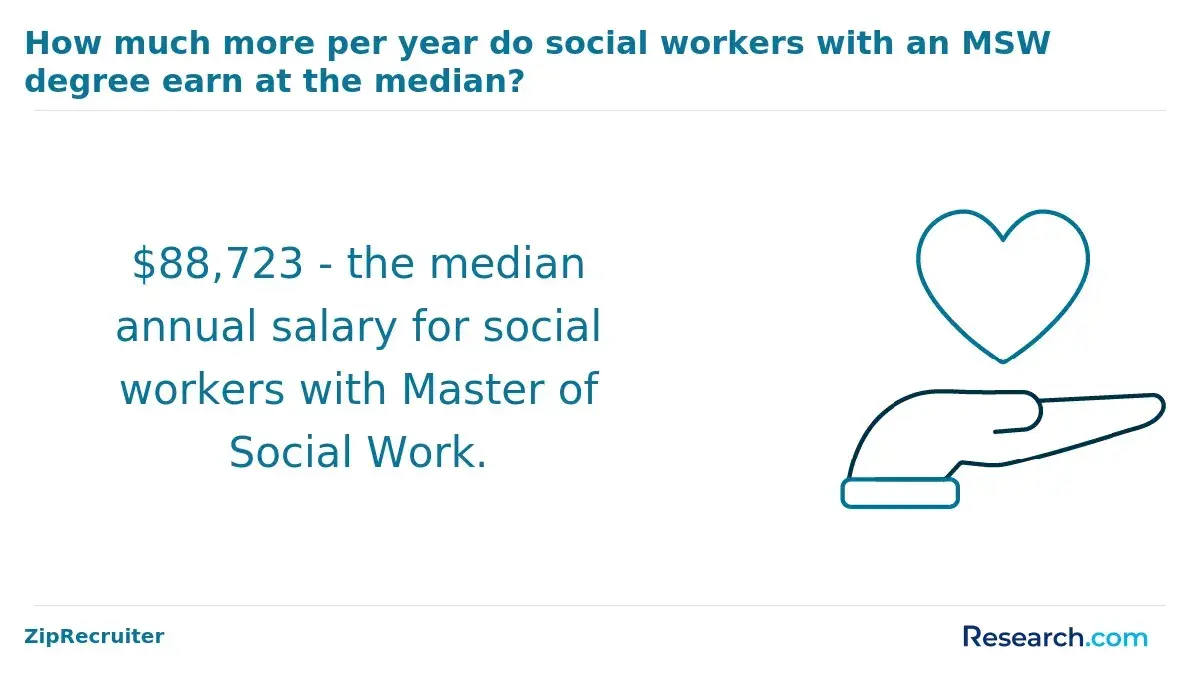
Financially, earning an MSW results in an annual wage increase of $13,000 to $15,000 over BSW holders, reflecting advanced expertise and eligibility for roles such as licensed clinical social worker (LCSW), according to socialworkdegrees.org.
Students should not assume that admission to an MSW program automatically guarantees licensure. The safer approach is to confirm CSWE accreditation, review state licensing board rules, understand supervised hour requirements, and choose field placements strategically. With careful planning, an online MSW can provide a credible path toward licensure, broader job options, and long-term advancement in social work.
Other Things You Should Know About Social Work
Online social work programs in 2027 offer flexible schedules and asynchronous classes, making them ideal for working professionals. With options to participate in discussions and complete group projects at convenient times, students can balance career, family, and education effectively.
Most accredited online social work programs provide support in securing field placements or internships in the student's local area. These practical experiences are mandatory and supervised to ensure students gain real-world skills essential for licensure and professional development.
Many online MSW programs require 0 to 2 live meetings per week, while asynchronous classes use recorded lectures and weekly discussion posts. Programs usually list synchronous attendance rules in the syllabus, and field seminar sections may still meet live through Zoom for set times each term.
- All CSWE Accredited Online MSW Programs (2025 Update) https://www.masterofsocialwork.com/online-msw-programs
- The Evolution of Online Social Work Education https://www.socialworktoday.com/news/enews_0317_1.shtml
- Social Work Educator Tips: Guidelines for Online Discussion Forums - Teaching & Learning in Social Work https://laureliversonhitchcock.org/2018/02/20/social-work-educator-tips-guidelines-for-online-discussion-forums/
- 5 High-Paying Jobs You Can Get with an MSW https://onlinedegrees.keuka.edu/blog/highest-paying-msw-jobs
- Online Master’s in Social Work Programs https://onlinecounselingprograms.com/online-counseling-degrees/cswe-accredited-online-msw-programs/
- 5 Things Every Social Work Graduate Should Know https://therapistdevelopmentcenter.com/blog/5-things-every-social-work-graduate-should-know
- Types of Social Workers: Exploring the Many Fields in Which They Serve https://www.umassglobal.edu/blog-news/types-of-social-workers
- Full-time online MSW programs https://www.onlinemswprograms.com/online-social-work-degrees/full-time-online-msw-programs/
- Social Work Masters Prerequisites: Discover 7 Critical Pieces - Prereqcourses https://www.prereqcourses.com/social-work-masters-prerequisites/
- 21 Ways to Structure an Online Discussion, Part Three https://www.facultyfocus.com/articles/online-education/online-student-engagement/21-ways-to-structure-an-online-discussion-part-three/