2027 Steps to Become a Licensed Clinical Social Worker (LCSW)

Co-Founder and Chief Data Scientist
Becoming a Licensed Clinical Social Worker is a structured but state-specific process: you need the right graduate degree, supervised clinical experience, a passing licensing exam score, and approval from your state board. The challenge is not usually one single requirement; it is understanding how the steps fit together and avoiding delays caused by the wrong program, incomplete supervision documentation, or missed state rules.
This guide is for prospective MSW students, current social work graduate students, and early-career social workers planning for independent clinical practice. It explains what an LCSW does, how the licensure path works, what to look for in an MSW program, how supervision and the ASWB Clinical Exam fit into the timeline, and where the credential can lead. Because licensing rules vary by state, use this as a practical roadmap and confirm final requirements with your state social work board before making enrollment, employment, or exam decisions.
Key Things You Should Know About The Steps to Become a Licensed Clinical Social Worker
- The median annual salary for licensed clinical social workers is $94,158, highlighting strong earning potential for this clinical role.
- Employment for social workers is projected to grow 6% from 2024 to 2034, indicating steady demand.
- A Master of Social Work from a CSWE-accredited program is a non-negotiable requirement across all states for licensure.
- You must complete approximately 3,000-4,000 hours of post-graduate, clinically supervised experience, which typically takes two to three years.
- The field offers diverse settings, with 17% of social workers employed in individual and family services.
What is a Licensed Clinical Social Worker (LCSW)?
A Licensed Clinical Social Worker (LCSW) is a state-licensed social work professional who is authorized to provide clinical mental health services. In most states, that means assessing clients, diagnosing mental, behavioral, and emotional disorders, developing treatment plans, and providing psychotherapy. The license matters because it signals that the professional has completed graduate-level clinical education, supervised post-graduate practice, and a licensing exam.
The “clinical” part of the title is important. Not every social worker provides therapy or practices independently. Generalist social workers may focus on case management, community services, discharge planning, policy, or client advocacy. LCSWs are trained for direct clinical work and, depending on state law, may be able to practice without ongoing clinical supervision, bill insurance, and open a private practice.
Licensure also protects the public. In fact, 32 states require social workers to have a license for their work. That requirement reflects the level of responsibility involved when a professional is treating mental health conditions, documenting clinical decisions, and coordinating care for vulnerable clients.
The Scope of Clinical Practice
LCSWs work with individuals, couples, families, and groups. Their clinical work may include therapy for anxiety, depression, trauma, substance use, grief, relationship stress, serious mental illness, or life transitions. They also help clients navigate practical barriers that affect mental health, such as housing instability, family conflict, health care access, disability services, school support, or benefits systems.
Compared with some other mental health professionals, LCSWs are especially trained to view a client’s challenges in context. They consider not only symptoms, but also family systems, social supports, community resources, financial pressures, discrimination, and institutional barriers. That combination of therapy and systems knowledge is one reason LCSWs are common in hospitals, schools, mental health centers, community agencies, and private practices.
What are the key responsibilities of an LCSW?
The key responsibilities of an LCSW are clinical assessment, diagnosis, treatment planning, psychotherapy, crisis support, documentation, care coordination, and client advocacy. In daily practice, the work combines direct counseling with careful recordkeeping and communication with other professionals involved in a client’s care.
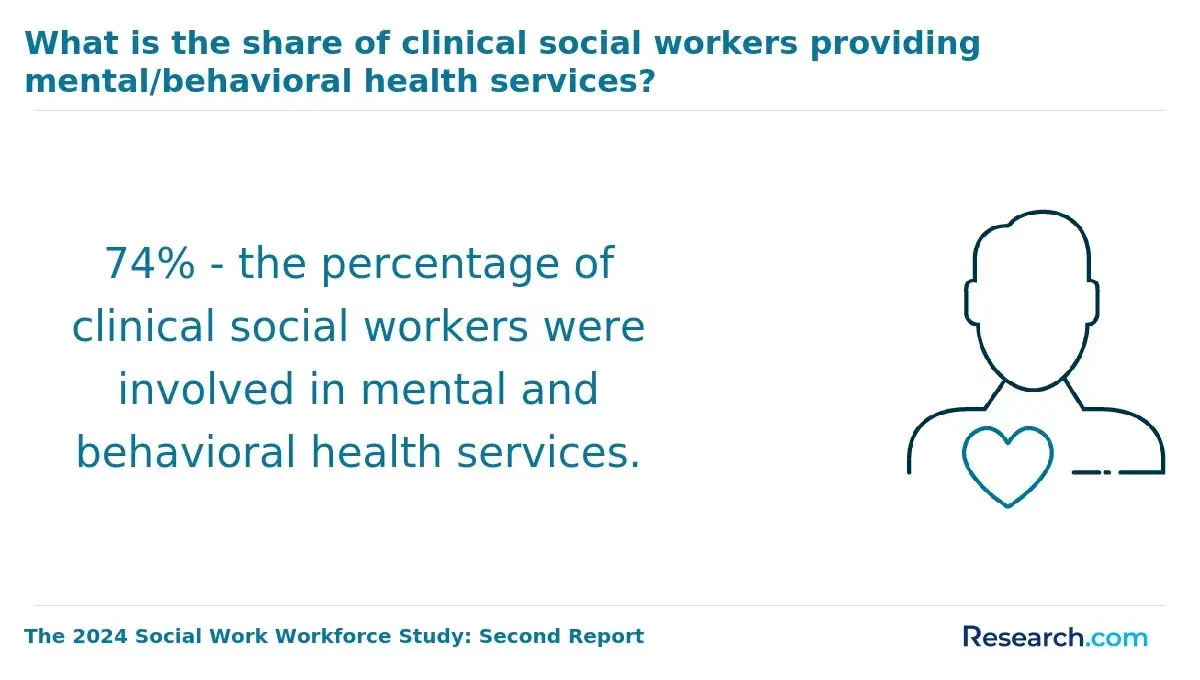
A significant majority—74% of clinical social workers—are involved in mental and behavioral health services. That means many LCSWs spend much of their time helping clients manage symptoms, build coping skills, improve relationships, reduce risk, and connect with appropriate services.
Common LCSW duties
- Clinical assessment: Gathering information about symptoms, history, strengths, risks, family systems, and social conditions that affect treatment.
- Diagnosis: Identifying mental, behavioral, and emotional disorders within the scope allowed by state law and professional standards.
- Treatment planning: Setting goals with clients, choosing interventions, and adjusting care as needs change.
- Psychotherapy: Providing individual, family, group, or couples therapy using evidence-informed approaches appropriate to the client and setting.
- Crisis response: Assessing safety, responding to suicidal ideation or abuse concerns, and coordinating emergency or higher-level care when needed.
- Care coordination: Working with physicians, psychiatrists, schools, courts, case managers, family members, or community agencies when appropriate and authorized.
- Documentation: Maintaining accurate clinical notes, treatment plans, consent forms, risk assessments, and records required by employers, insurers, and licensing standards.
- Advocacy: Helping clients access resources and navigate systems that may affect their health, stability, and treatment progress.
Beyond Therapy: Advocacy and System Navigation
LCSW work is rarely limited to a therapy room. A client may need counseling and also need help understanding insurance coverage, finding a psychiatrist, securing safe housing, arranging school support, or accessing substance use treatment. The LCSW often serves as a bridge between the client and complex systems.
This combination of emotional labor, administrative work, and crisis exposure can be demanding. Sustainable practice requires strong boundaries, consultation, supervision when needed, continuing education, and attention to burnout risk. People who enjoy both clinical relationships and problem-solving across systems are often well suited to the role.
What is the job outlook and earning potential for LCSWs?
The job outlook for social workers is positive, with 6% projected growth in employment for social workers. For LCSWs, demand is supported by ongoing needs in mental health care, hospitals, schools, community agencies, substance use treatment, and private practice. The credential can also improve mobility because it demonstrates advanced clinical preparation and eligibility for roles that require independent practice authority.
Earning potential is also a major reason many MSW graduates pursue clinical licensure. The median annual salary for licensed clinical social workers is $94,158. By comparison, the median pay for healthcare social workers is $68,090. That difference does not guarantee a specific salary for every person, but it shows how clinical licensure can expand access to higher-paying roles, especially in specialized, supervisory, or independent practice settings.
What affects an LCSW salary?
- Location: Pay can vary substantially by state, metropolitan area, cost of living, and local demand for mental health providers.
- Practice setting: Hospitals, government agencies, private practice, telehealth organizations, schools, nonprofits, and residential programs may have different compensation structures.
- Experience level: Newly licensed clinicians usually earn less than experienced clinicians with strong referral networks, leadership duties, or specialized expertise.
- Specialization: Trauma, substance use, child and family therapy, medical social work, crisis services, and other focused areas may influence opportunities.
- Employment model: Salaried work may offer stability and benefits, while private practice may offer more control and a higher ceiling but also more business risk.
Maximizing Your Earning Potential as an LCSW
To improve long-term earning potential, choose field placements and supervised roles that build marketable clinical skills. Learn documentation, risk assessment, insurance basics, and interdisciplinary communication early. If you are interested in private practice, also build competence in ethical marketing, referral relationships, billing, and caseload management.
Geography can also matter. If compensation is a major factor in your career plan, compare salaries, job openings, licensing rules, and cost of living before relocating. Research.com’s guide to where social workers make the most money can help you evaluate location as part of your strategy.
What are the education requirements to become an LCSW?
To become an LCSW, you generally need a bachelor’s degree, a Master of Social Work from a CSWE-accredited program, and post-graduate clinical supervision that meets your state’s rules. The MSW is the key educational credential because it provides the advanced clinical and professional training required for licensure.
- Bachelor's Degree: A four-year undergraduate degree is required. A Bachelor of Social Work can be the most direct route because it may qualify you for advanced standing MSW options, but many students enter the field with degrees in psychology, sociology, human services, public health, criminal justice, or other related areas.
- Master of Social Work (MSW): A CSWE-accredited Master of Social Work is mandatory for clinical licensure. Accreditation is critical because state boards typically use it to verify that your graduate program meets professional education standards.
Why CSWE accreditation matters
Before applying to an MSW program, confirm that it is accredited by the Council on Social Work Education. This is not a minor detail. Enrolling in a non-accredited program can create serious problems when you apply for licensure, even if the coursework appears similar. If your goal is to become an LCSW, accreditation should be a non-negotiable requirement.
Exploring Different MSW Program Formats
MSW programs are offered in several formats, and the best option depends on your previous education, work schedule, budget, and timeline. Traditional programs are often designed for students without a BSW. Advanced standing tracks are usually for students who already hold a BSW and want to shorten their graduate study. Online and hybrid programs may help working adults or students who cannot relocate, but they still require field education.
Students trying to reduce time in school may compare accelerated social work programs online. When reviewing these options, look closely at accreditation, field placement support, clinical coursework, state authorization, and whether the program’s structure fits your capacity. A faster program is only helpful if you can complete the academic and field requirements successfully.
How do you choose the right Master of Social Work (MSW) program?
Choose an MSW program by starting with licensure fit, not branding. The right program should be CSWE-accredited, accepted by your intended state board, financially realistic, and aligned with the type of clinical work you want to do. Cost and convenience matter, but they should not outweigh accreditation, field placement quality, and preparation for supervised clinical practice.
Affordability is often a central concern because graduate debt can affect your career options after graduation. Researching cheap MSW programs online can be a practical first step, especially if you need flexibility. Still, the lowest tuition is not always the best value if the program has weak field support, limited clinical electives, or poor alignment with your licensing goals.
Questions to ask before enrolling
- Is the program CSWE-accredited? Verify this directly before applying.
- Does the program meet requirements in your state? If you may move, check more than one state board.
- How are field placements arranged? Ask whether the school finds placements, whether students must secure their own, and what happens if a placement falls through.
- Does the curriculum support clinical licensure? Look for coursework in assessment, diagnosis, treatment planning, ethics, research, and clinical practice methods.
- What is the total cost? Include tuition, fees, books, technology costs, commuting, unpaid field hours, and lost work time.
- Is the schedule realistic? Intensive online or accelerated programs can be convenient but may be difficult if you work full time or have caregiving responsibilities.
- What support is available? Advising, licensure guidance, exam preparation, career services, and placement coordination can affect your experience.
Balancing Cost and Quality in Your MSW Program
A strong MSW program should help you become eligible for licensure and competent for real clinical work. That means you should evaluate both price and professional preparation. A higher-cost program may be worth considering if it offers strong clinical placements, specialized training, experienced faculty, and a clear path to post-graduate employment. A lower-cost program may be the better choice if it is accredited, well supported, and limits debt while meeting your licensure needs.
Avoid choosing a program based only on speed. Clinical social work requires supervised judgment, ethical reasoning, and comfort with complex client situations. The best program for you is the one you can complete successfully while building the skills and documentation you will need after graduation.
What are the post-graduate supervision requirements for LCSW licensure?
After earning your MSW, you must complete approximately 3,000 to 4,000 hours of post-graduate supervision under a qualified LCSW. This supervised period typically takes two to three years to finish. The work must usually be clinical in nature, meaning it involves assessment, diagnosis, treatment planning, psychotherapy, crisis intervention, or related direct practice activities accepted by your state board.
This stage is where many candidates lose time because state rules are specific. Your state may define who can supervise you, how often supervision must occur, what counts as direct client contact, what settings qualify, and which forms must be submitted. Before accepting a job, confirm that the position can provide licensure-eligible hours.
Navigating the Logistics of Supervision
Choose supervised employment carefully. A job title that includes “social worker” does not automatically mean the hours will count toward LCSW licensure. Ask direct questions during the hiring process: Is supervision provided? Is the supervisor board-approved or otherwise qualified under state rules? Are individual and group supervision both available? Will the employer sign required verification forms when you leave?
Keep your own records from the beginning. Track dates, hours, client contact, supervision sessions, supervisor credentials, and the type of clinical work performed. Do not wait until the end of two or three years to reconstruct your experience. Incomplete or inconsistent documentation can delay your license application even if you did the work.
Common supervision mistakes to avoid
- Starting a position before confirming that the hours meet state requirements.
- Assuming any licensed professional can serve as your clinical supervisor.
- Failing to document supervision sessions as they occur.
- Changing jobs without getting signed verification for completed hours.
- Counting administrative or case management tasks that your state does not accept as clinical hours.
- Relying on another state’s rules if you plan to move before licensure.
How do you prepare for and pass the ASWB Clinical Exam?
To prepare for the ASWB Clinical Exam, build a study plan that combines content review, practice questions, ethics review, and test-taking strategy. Clinical experience helps, but it is not enough by itself. The exam tests how you apply social work knowledge, professional ethics, assessment skills, intervention planning, and reasoning to exam-style scenarios.
Start by reviewing the official ASWB materials so you understand the exam structure and content areas. Then identify your weakest topics and create a realistic study schedule. Short, consistent study sessions are usually more effective than last-minute cramming, especially if you are working full time while completing licensure requirements.
What to focus on while studying
- Ethics and professional boundaries: Know how to handle confidentiality, informed consent, dual relationships, mandated reporting, supervision, and conflicts of interest.
- Assessment and diagnosis: Review how to evaluate risk, symptoms, client history, strengths, and contextual factors.
- Human development and diversity: Understand how age, culture, trauma, family systems, identity, and environment can affect practice decisions.
- Intervention planning: Practice choosing the best next step, not just a plausible step.
- Clinical judgment: Learn to distinguish between what you would do in your workplace and what the exam considers the most appropriate professional response.
- Practice exams: Use timed practice to build stamina and identify patterns in missed questions.
Planning Your Path: From Education to Exam
Your preparation for the exam begins before you register for it. Select an MSW program with strong clinical coursework, take field education seriously, and use supervision to strengthen assessment and intervention skills. If you are still comparing graduate options and want a shorter route into the profession, programs described as 1 year MSW programs online no BSW may be worth reviewing carefully. Make sure any option you consider is accredited, accepted for licensure, and realistic for your schedule.
When you are close to exam eligibility, confirm your state’s approval process. Some states require board approval before testing, while others may allow candidates to register at a different point. Follow your board’s instructions exactly so you do not pay fees or schedule an exam before you are eligible.
How do you apply for your LCSW license?
To apply for your LCSW license, you submit documentation to your state social work board showing that you meet education, supervision, examination, background check, and fee requirements. The exact process varies by state, but the application usually requires several core items.
- Official transcripts: Submit documents directly from your CSWE-accredited MSW program to verify your education.
- Supervision verification: Provide completed forms that document all your required supervised clinical hours.
- Passing ASWB score: Arrange for your official passing score on the Clinical exam to be sent to the licensing board.
- Background check: Complete any required criminal background checks and fingerprinting.
- Application fees: Pay all required processing and licensing fees to complete your submission.
Ensuring a Smooth Application Process
Before submitting, compare every form against your state board’s checklist. Names, dates, license numbers, supervision totals, signatures, and notarization requirements must match what the board asks for. Even small errors can cause delays, especially if a supervisor has moved, retired, or changed contact information.
Keep copies of everything you submit. Save transcripts confirmations, supervision logs, signed forms, exam score reports, fee receipts, background check instructions, and board correspondence. If your state uses an online portal, monitor it regularly and respond quickly to requests for additional information.
What to do if you plan to move states
LCSW licenses are issued by states, not by one national licensing authority. If you plan to move, review the destination state’s requirements before relocating. Some states may accept substantial equivalency, while others may require additional coursework, forms, exams, supervision details, or jurisprudence requirements. Planning ahead can prevent a gap in your ability to practice.
Where can you work as a Licensed Clinical Social Worker?
LCSWs can work in many settings because clinical social work skills apply across mental health, health care, education, social services, corrections, and community-based care. The best setting depends on the population you want to serve, the level of clinical intensity you prefer, and whether you value stability, autonomy, specialization, or leadership opportunities.
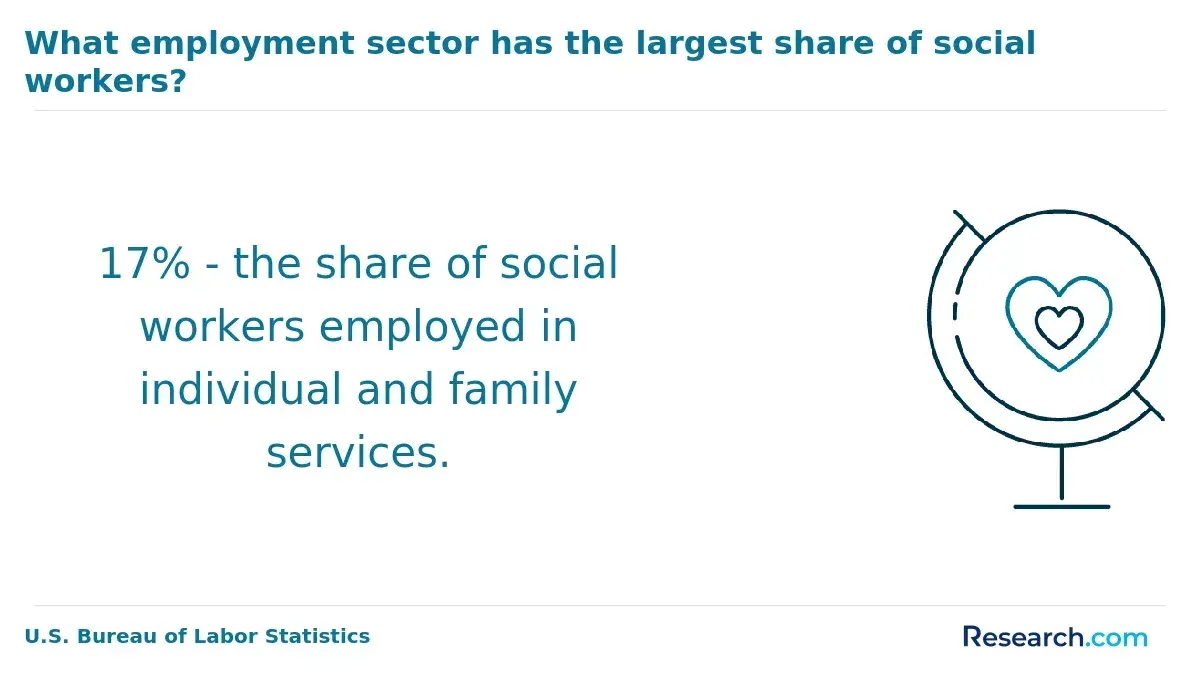
About 17% of social workers find roles in individual and family services, but that is only one part of the employment landscape. LCSWs also work in hospitals, outpatient clinics, schools, universities, government agencies, substance use treatment programs, residential facilities, employee assistance programs, Veterans Affairs facilities, crisis services, and private practice.
Common LCSW work settings
- Hospitals and health systems: Provide assessment, discharge planning, crisis intervention, family support, and behavioral health services.
- Community mental health centers: Serve clients with a wide range of needs, often including serious mental illness, trauma, poverty-related stressors, and case coordination.
- Private practice: Offer therapy independently or in a group practice, with more control over schedule, niche, and client population.
- Schools and universities: Support students with mental health concerns, family challenges, crisis needs, and academic or social barriers.
- Substance use treatment programs: Provide counseling, relapse prevention, group therapy, and coordination with medical or recovery services.
- Government and public agencies: Work in child welfare, corrections, public health, veterans services, disability programs, or court-connected services.
- Telehealth organizations: Deliver remote therapy where allowed by state law, employer policy, and licensing rules.
The Versatility of a Social Work Degree
An LCSW is valuable because it can support both direct care and broader systems work. You may begin in a community agency, later move into hospital practice, specialize in trauma, supervise new clinicians, or open a private practice. The credential gives you room to adapt as your interests and life circumstances change.
If you are still deciding whether social work is the right educational investment, Research.com’s guide to what you can do with a degree in social work offers a broader view of career paths in the field.
What are the career advancement opportunities for an LCSW?
An LCSW can advance into clinical specialization, supervision, private practice, program leadership, consulting, administration, teaching, policy work, or doctoral-level roles. The license is often a turning point because it can qualify you for positions that require independent clinical judgment and the ability to supervise or direct services.
Advancement paths for LCSWs
- Private practice ownership: Build an independent caseload, choose a niche, manage billing or self-pay services, and set your own schedule within legal and ethical limits.
- Clinical supervision: Support MSW graduates working toward licensure, if you meet state requirements to supervise.
- Clinical leadership: Move into roles such as lead clinician, program manager, behavioral health director, or clinical director.
- Specialized practice: Develop expertise in areas such as trauma, addiction, child and family therapy, medical social work, crisis care, or gerontology.
- Training and consulting: Provide workshops, organizational consultation, policy guidance, or clinical program development.
- Teaching and academic work: Teach social work courses, supervise field education, or contribute to professional training.
Some LCSWs pursue advanced education to deepen expertise or qualify for higher-level leadership and academic roles. For those seeking the highest level of clinical and organizational preparation, DSW degree programs may be a relevant option.
Pursuing Leadership and Academia: The Doctorate Path
A Doctor of Social Work is typically oriented toward advanced practice, leadership, applied research, teaching, and systems change. It can be useful for LCSWs who want to influence clinical programs, lead organizations, design interventions, teach future practitioners, or move into policy and administration.
A doctorate is not required for most LCSW roles, so the decision should be strategic. Consider the cost, time commitment, career goal, and whether the credential is necessary for the roles you want. For some professionals, advanced certification or focused clinical training may offer a better return than a doctoral program. For others, especially those pursuing leadership or academic influence, the doctorate may be a strong next step.
Is becoming an LCSW worth it in 2027?
Becoming an LCSW can be worth it in 2027 if your goal is to provide clinical mental health services and you are prepared for the education, supervision, exam, and emotional demands of the profession. The path is not quick, but it can lead to stable employment, meaningful client work, and stronger earning potential than many nonclinical social work roles.
The career case is strong: social workers have 6% projected growth, and the median annual salary for licensed clinical social workers is $94,158. The credential can also expand your options in therapy, health care, leadership, private practice, and specialized clinical settings.
Weighing the Challenges Against the Rewards
The main trade-offs are time, cost, and emotional intensity. You must complete graduate school, finish approximately 3,000 to 4,000 supervised hours, prepare for the ASWB Clinical Exam, and meet your state board’s requirements. The work can involve trauma exposure, crisis situations, heavy documentation, insurance barriers, and high caseloads.
For the right person, the rewards are significant. LCSWs build long-term therapeutic relationships, help clients through serious challenges, and often have more career flexibility after licensure. The best candidates are those who combine empathy with boundaries, curiosity with discipline, and a commitment to both individual healing and social context.
Who should consider the LCSW path?
- You want to provide therapy or clinical mental health services.
- You are willing to complete a CSWE-accredited MSW and supervised post-graduate experience.
- You can manage documentation, ethics, and state licensing requirements carefully.
- You value both direct client work and advocacy within larger systems.
- You want a credential that can support long-term mobility across clinical, leadership, and private practice roles.
If you want fast entry into a helping profession, the LCSW path may feel long. If you want independent clinical authority, a respected mental health credential, and the flexibility to work across many settings, it remains one of the strongest options in social work.
Other Things You Should Know About The Steps to Become a Licensed Clinical Social Worker
Most candidates must pass the Association of Social Work Boards’ Clinical Level Exam, called the ASWB Clinical Exam. State boards usually require an approved master’s degree, supervised clinical hours, and then a passing score before issuing the LCSW license.
In 2027, Licensed Clinical Social Workers must complete 30 hours of continuing education every two years to maintain their license. This includes at least 6 hours in ethics education. The requirements vary by state, so it's vital to check specific state regulations.
References
References:
- Association of Social Work Boards. (2025). Licensure. Retrieved from ASWB.
- Council on Social Work Education. (2025). About CSWE. Retrieved from CSWE.
- Data USA. (2025). Social work. Retrieved from Data USA.
- National Association of Social Workers. (2025). Careers. Retrieved from SocialWorkers.org.
- U.S. Bureau of Labor Statistics. (2025). Social workers. Retrieved from BLS.