2027 Geriatric and Hospice Social Work Online Concentrations

Co-Founder and Chief Data Scientist
Choosing geriatric and hospice social work means preparing for one of the most human, complex, and needed areas of practice. By 2030, all baby boomers will be age 65 or older, meaning one in five Americans will be of retirement age. That shift is already increasing demand for social workers who can help older adults, seriously ill patients, caregivers, and families make difficult decisions about care, safety, independence, grief, finances, and end-of-life wishes.
This guide is for students considering an MSW, current social workers who want to specialize, and career changers comparing healthcare-focused social work paths. It explains what geriatric and hospice social workers do, how online concentrations work, what to look for in a program, which credentials matter, and how to evaluate career outlook and salary potential without overlooking licensure, accreditation, field placement, and long-term fit.
Key Things You Should Know About Geriatric and Hospice Social Work Online Concentrations
- With the population of adults over 65 projected to grow significantly, your specialized skills will be in constant demand, ensuring strong job security and career stability.
- You will play a crucial role in enhancing the quality of life for older adults and providing comfort to individuals and families during one of life's most vulnerable periods.
- This specialization opens doors to a wide range of settings, from hospitals and long-term care facilities to home health agencies, hospice centers, and private practice.
What is the role of a geriatric social worker?
A geriatric social worker supports older adults and their families as they navigate aging-related health, emotional, housing, financial, and caregiving challenges. The role is not limited to arranging services. Geriatric social workers assess the whole person, identify risks, coordinate care, protect client rights, and help older adults maintain as much dignity, safety, and independence as possible.
In practice, this work often sits at the intersection of healthcare, family systems, public benefits, mental health, long-term care, and community support. A geriatric social worker may help a client remain at home safely, transition from a hospital to a skilled nursing facility, cope with dementia, manage caregiver conflict, or access services that a family did not know existed.
Common responsibilities in geriatric social work
- Comprehensive assessment: Reviewing physical health, cognitive status, emotional well-being, home safety, finances, caregiver support, transportation, and social connection.
- Care planning: Building a realistic plan with the client, family, physicians, nurses, therapists, and community providers.
- Resource navigation: Connecting clients to in-home care, meal delivery, transportation, adult day programs, public benefits, legal help, and caregiver support.
- Counseling and adjustment support: Helping older adults and families cope with loss of independence, chronic illness, disability, isolation, grief, and changing family roles.
- Advocacy: Ensuring that clients understand their options, are not ignored in care decisions, and receive appropriate services in complex systems.
- Risk and safety planning: Identifying concerns such as self-neglect, elder abuse, unsafe housing, medication mismanagement, caregiver burnout, or lack of reliable support.
What makes this role different from general social work?
Geriatric social work requires strong knowledge of aging, chronic disease, dementia, family caregiving, long-term services and supports, Medicare, Medicaid, advance care planning, and ethical issues around capacity and autonomy. The best practitioners balance protection with self-determination: they help older adults stay safe without unnecessarily taking control away from them.
What does a hospice social worker do?
A hospice social worker supports patients with terminal illnesses and the families, caregivers, and loved ones around them. The focus is quality of life, comfort, dignity, emotional support, family communication, and practical planning near the end of life. Hospice social workers do not replace medical providers; they address the psychosocial, emotional, spiritual, and logistical issues that medical treatment alone cannot resolve.
This work requires clinical skill and calm presence. Patients and families may be dealing with fear, unfinished conversations, financial stress, guilt, conflict, anticipatory grief, cultural or religious concerns, and uncertainty about what comes next.
Core functions in end-of-life care
- Psychosocial assessment: Understanding the patient’s emotional state, family relationships, coping style, support system, living situation, and practical needs.
- Grief and bereavement support: Helping patients process the diagnosis and helping families prepare for and cope with loss, including support after death.
- Facilitating difficult conversations: Supporting discussions about goals of care, advance directives, funeral planning, caregiving expectations, family conflict, and final wishes.
- Caregiver support: Identifying burnout, arranging respite options when available, and helping caregivers understand what support they can realistically provide.
- Resource coordination: Connecting families with financial assistance, legal aid, community services, spiritual care, transportation, or other practical supports.
- Patient advocacy: Keeping the patient’s preferences central when family members, providers, or systems disagree about the best path forward.
- Interdisciplinary teamwork: Collaborating with nurses, physicians, chaplains, aides, and other hospice team members so care addresses the whole person.
Hospice social work versus palliative social work
| Area | Primary focus | Typical social work role |
| Hospice care | Comfort-focused care for people near the end of life | End-of-life planning, family support, grief counseling, psychosocial assessment, and advocacy for patient wishes |
| Palliative care | Relief from symptoms and stress of serious illness, which may occur alongside treatment | Goals-of-care conversations, coping support, care coordination, family meetings, and resource navigation |
In both settings, the social worker’s value is the ability to help people make meaning, reduce distress, and make informed decisions during one of the most vulnerable periods of life.
Why choose an online concentration for this field?
An online concentration can be a strong option if you need MSW-level specialization in geriatric, hospice, palliative, or health social work while continuing to work or manage family responsibilities. The main advantage is flexibility: online formats can reduce commuting, expand access beyond your local region, and make it easier to compare programs with relevant coursework and faculty expertise.
Online study can also fit the realities of modern social work practice. Many agencies now use telehealth platforms, electronic case records, virtual team meetings, and digital care coordination tools. Learning in an online environment can help students become more comfortable communicating, documenting, and collaborating through technology.
When an online concentration makes sense
- You are already working in social services or healthcare: Online coursework may allow you to keep earning income while building credentials for advancement.
- You do not live near a specialized MSW program: Online options can give you access to aging, health, hospice, or palliative care coursework that may not be available locally.
- You need schedule flexibility: Asynchronous or hybrid formats may make graduate school more manageable for working adults.
- You want to apply learning immediately: Students already employed in related settings can often connect assignments and concepts to real client situations, while still respecting confidentiality and agency policy.
Trade-offs to consider before enrolling
Online programs are not automatically easier. You still need to complete rigorous coursework, participate in discussions, meet deadlines, and complete supervised field education. The biggest factor to investigate is field placement support. A program may be online, but your practicum will usually require in-person work with an approved agency in your area.
| Benefit | What to verify |
| Flexible learning format | Whether classes are asynchronous, synchronous, or a mix of both |
| Access to specialized coursework | Whether the program offers a true concentration, track, certificate, or only a few electives |
| Local field experience | How the school helps online students secure placements in geriatric, hospice, palliative, or healthcare settings |
| Lower relocation burden | Whether tuition, fees, travel, technology requirements, and field placement expectations fit your budget and schedule |
What are the educational requirements to specialize in geriatric and hospice social work?
The standard educational pathway for advanced geriatric and hospice social work is a Master of Social Work (MSW) from a program accredited by the Council on Social Work Education (CSWE). A Bachelor of Social Work (BSW) can lead to some entry-level human services and case management roles, and many prospective students understandably ask, whether a bachelor's in social work is worth it. However, an MSW is typically required for clinical licensure, advanced healthcare roles, and many hospice, palliative care, and medical social work positions.
If your goal is to provide clinical services, pursue independent practice, or qualify for higher-level roles in hospitals, hospice agencies, long-term care, or behavioral health settings, plan for graduate education and post-graduate supervised experience.
Typical education path
| Stage | What it can prepare you for | Key decision point |
| BSW or related bachelor’s degree | Entry-level social services, case management support, aging services, or preparation for graduate study | Consider whether you want direct entry to the workforce or a pathway to an MSW |
| CSWE-accredited MSW | Advanced practice, clinical training, healthcare social work, hospice and palliative care roles, and licensure preparation | Choose a program with relevant coursework and strong field placement support |
| Post-MSW supervised practice | Clinical licensure eligibility and deeper specialization | Confirm your state’s requirements before choosing jobs or supervisors |
| Specialty certification or continuing education | Formal recognition of expertise in gerontology, hospice, or palliative care | Match credentials to your practice setting and long-term career goals |
Why CSWE accreditation matters
CSWE accreditation should be treated as a non-negotiable requirement when choosing an MSW program. The CSWE is the sole accrediting body for social work education in the United States, and accreditation indicates that the program meets established standards for curriculum, field education, ethics, and professional preparation.
Accreditation also affects licensure. Graduating from a CSWE-accredited program is a mandatory prerequisite for obtaining clinical licensure, such as the LCSW, in every state. A non-accredited program can seriously limit your ability to become licensed, qualify for clinical roles, or move across state lines in the future.
What are some leading online programs in geriatric and hospice social work?
Several universities offer online MSW programs, certificates, or post-master’s options connected to gerontology, health, palliative care, or end-of-life practice. The best choice depends on your current education level, whether you already hold an MSW, your licensure goals, and the type of field experience you want.
As you compare options, review the full range of CSWE-accredited online MSW programs and confirm each program’s current accreditation status, field placement model, concentration requirements, and state authorization before applying.
Programs with relevant specialized offerings
- Yeshiva University: The Wurzweiler School of Social Work at Yeshiva University offers an online MSW with a Gerontology and Palliative Care Certification. The curriculum is designed for students who want to support individuals and families facing late-life and end-of-life challenges in hospitals, hospice programs, long-term care facilities, and related settings.
- University of Missouri: The University of Missouri offers a 100% online Graduate Certificate in Gerontological Social Work for students who already have or are pursuing an MSW. Its coursework on evidence-based strategies and bio-psycho-social assessments is designed to prepare students for the Advanced Social Worker in Gerontology (ASWG) licensure.
- Michigan State University: The online Social Work in Health and Aging Certificate program at Michigan State University focuses on competencies for practice related to wellness, illness, and aging. A key component is the field placement, which gives students direct experience in a healthcare or aging services setting.
- University of Pittsburgh: Online MSW students can pursue a DP-Gerontology Certificate from the University of Pittsburgh. The program is structured to strengthen students’ understanding of aging and build specialized skills for practice with older adults and families, with certificate requirements integrated into the MSW program structure.
- New York University: The New York University Silver School of Social Work offers an online Post-Master's Certificate in Palliative and End-of-Life Care for practicing social workers who already hold an MSW. The program is designed to deepen clinical skills using a biopsychosocial-spiritual framework.
How to compare these options
Do not choose a program based only on name recognition. Ask whether the program serves your stage of training. Some options are built into an MSW, while others are certificates for students who already hold or are pursuing graduate social work education. Also ask whether the field placement can be completed in a setting relevant to aging, serious illness, hospice, palliative care, long-term care, or medical social work.
What can I expect from the curriculum in a specialized online MSW program?
A specialized online MSW curriculum combines core social work training with focused preparation for work with older adults, people with serious illness, caregivers, and families facing end-of-life decisions. Students usually study human behavior, social welfare policy, research, ethics, diversity, assessment, intervention, and field education, then add courses in aging, health, grief, bereavement, hospice, and palliative care.
Some schools also offer accelerated MSW programs for eligible students who want a shorter timeline. These can be useful, but the pace may be demanding, especially when combined with field placement, employment, or caregiving responsibilities.
Specialized coursework you may encounter
- Psychosocial aspects of aging: Mental health, social isolation, depression, dementia, changing family roles, retirement, loss, and identity in later life.
- Health and aging: Chronic illness, disability, healthcare systems, care transitions, Medicare, Medicaid, interdisciplinary teamwork, and the social worker’s role in care coordination.
- Death, dying, and bereavement: Grief theory, anticipatory grief, complicated grief, family support, cultural and religious considerations, and counseling approaches.
- Palliative and hospice care: Quality of life, comfort-focused care, pain and symptom conversations, goals-of-care discussions, and hospice team collaboration.
- Ethics and decision-making: Capacity, consent, autonomy, guardianship, mandated reporting, advance directives, confidentiality, and family disagreement.
- Policy and services for older adults: Long-term services and supports, elder justice, public benefits, housing, and community-based aging services.
Field education is the test of program quality
Field education remains essential in online MSW programs. It is where students learn how classroom concepts work with real clients, documentation requirements, interdisciplinary teams, and agency constraints. For this specialization, strong placements may include hospitals, hospice agencies, palliative care programs, skilled nursing facilities, Area Agencies on Aging, home health agencies, adult protective services, community mental health programs, and nonprofit aging services organizations.
Before enrolling, ask the school how it approves placements, whether it has existing relationships in your region, what happens if a placement falls through, and whether students can request settings connected to gerontology, hospice, or palliative care.
What licensing and certification options are available for specializing in geriatric and hospice social work?
Licensure and certification are related but not the same. Licensure is the legal credential granted by a state board that determines what services you may provide and whether you can practice clinically. Certification is usually voluntary and demonstrates specialized competence in a practice area such as gerontology, hospice, or palliative care.
For most advanced clinical roles, the key credential is state licensure, commonly the Licensed Clinical Social Worker (LCSW). Requirements vary by state, so students should check the licensing board in the state where they plan to practice before choosing a program, supervisor, or post-MSW position.
Licensure versus specialty certification
| Credential type | Purpose | Why it matters |
| State licensure, such as LCSW | Legally authorizes clinical social work practice within a state | Often required for therapy, clinical assessment, advanced healthcare roles, supervision, and independent practice |
| Specialty certification | Recognizes focused experience and competence in a specialty area | Can strengthen credibility with employers, clients, interdisciplinary teams, and leadership roles |
Common credentials in this field
- Licensed Clinical Social Worker (LCSW): This state license typically requires an MSW from a CSWE-accredited program, supervised post-MSW clinical hours, often around 3,000, and a standardized exam. Exact rules vary by state.
- Advanced Social Worker in Gerontology (ASW-G): This credential recognizes advanced social work practice with older adults and can be useful for roles in aging services, long-term care, healthcare, and care management.
- Advanced Certified Hospice and Palliative Social Worker (ACHP-SW): This certification signals specialized experience in hospice and palliative care social work and may be valuable for social workers on end-of-life care teams.
Practical credentialing advice
Start with licensure planning. Confirm that your MSW program, field placement, supervision arrangement, and exam preparation align with your state’s rules. Then consider specialty certifications once you have the required experience and a clearer sense of your practice niche. Certifications can help differentiate you, but they do not replace state licensure when licensure is required.
What skills are essential for success in geriatric and hospice social work?
Geriatric and hospice social work requires more than compassion. Successful practitioners combine clinical judgment, practical problem-solving, cultural humility, strong documentation, crisis response, family mediation, and emotional resilience. They must be able to sit with grief and uncertainty while still helping clients make concrete decisions.
Core skills for effective practice
- Advanced communication: Explaining complex care options in plain language, listening carefully, asking sensitive questions, and facilitating conversations about prognosis, safety, caregiving, and end-of-life wishes.
- Clinical assessment: Recognizing depression, anxiety, grief, cognitive changes, caregiver strain, safety risks, trauma responses, and social determinants affecting care.
- Advocacy: Helping clients access appropriate services, protecting rights, challenging unsafe discharge plans, and ensuring that care decisions reflect the client’s goals whenever possible.
- Family systems understanding: Navigating conflict among relatives, blended families, estranged family members, caregivers, and decision-makers under stress.
- Cultural competence and humility: Respecting different beliefs about aging, illness, disability, family duty, pain, death, funeral practices, and medical decision-making.
- Interdisciplinary collaboration: Working effectively with physicians, nurses, chaplains, therapists, aides, case managers, attorneys, and community providers.
- Ethical decision-making: Balancing autonomy, safety, confidentiality, mandated reporting, informed consent, and capacity concerns.
- Emotional resilience: Maintaining boundaries, using supervision, processing grief exposure, and practicing self-care to reduce burnout risk.
Common mistakes to avoid
- Assuming the family speaks for the client: When the client has decision-making capacity, their wishes should remain central.
- Overpromising services: Resource availability, insurance coverage, staffing, and eligibility rules can limit options.
- Avoiding hard conversations: Delayed discussions about safety, caregiving capacity, or end-of-life wishes can increase crisis and conflict later.
- Neglecting documentation: Clear records are essential in healthcare, hospice, long-term care, and protective services settings.
- Ignoring your own grief load: Repeated exposure to decline, death, and family distress requires supervision, support, and boundaries.
What are the career paths and work environments for social work graduates who want to specialize in geriatric and hospice work?
Graduates who specialize in geriatric and hospice social work can work across healthcare, long-term care, home-based services, community agencies, and end-of-life care programs. The right setting depends on the type of client contact you want, your tolerance for crisis work, your interest in clinical practice, and whether you prefer medical teams, community-based advocacy, or family-centered care planning.
Common work settings and roles
| Setting | Possible role | Typical focus |
| Hospitals and medical centers | Medical social worker | Discharge planning, crisis intervention, care transitions, family meetings, and connection to post-hospital resources |
| Hospice and palliative care agencies | Hospice or palliative care social worker | Psychosocial assessment, grief support, end-of-life planning, caregiver support, and interdisciplinary care |
| Long-term care and skilled nursing facilities | Social services staff or Director of Social Services | Resident rights, care planning, family communication, adjustment support, and regulatory documentation |
| Home health and community agencies | Geriatric care manager or community-based social worker | In-home assessments, service coordination, aging-in-place planning, caregiver support, and safety planning |
| Aging services organizations | Program coordinator, case manager, or benefits navigator | Community resources, public benefits, transportation, meal programs, housing support, and caregiver programs |
| Private or nonprofit care management | Aging life care or care coordination specialist | Family consultation, care planning, service coordination, and long-term support for older adults |
How career paths can evolve
Many social workers begin in case management, hospital discharge planning, long-term care, or community-based aging services and then move into more specialized hospice, palliative care, clinical, supervisory, or program leadership roles. With licensure and experience, some develop private practice or consulting work focused on aging families, caregiver stress, grief, or serious illness.
Those interested in senior leadership, policy, research, or university-level teaching may eventually consider doctoral study, including online DSW programs. A doctorate is not required for most direct practice roles, but it may support advancement into higher-level systems, education, or applied leadership work.
What is the job outlook and salary potential for geriatric and hospice social work concentrations?
The job outlook for social workers with geriatric, hospice, palliative care, and healthcare expertise is strong because the need is tied to a major demographic shift: a growing population of older adults and families needing support with serious illness, long-term care, and end-of-life decisions. The U.S. Bureau of Labor Statistics projects that employment for healthcare social workers will grow much faster than the average for all occupations.
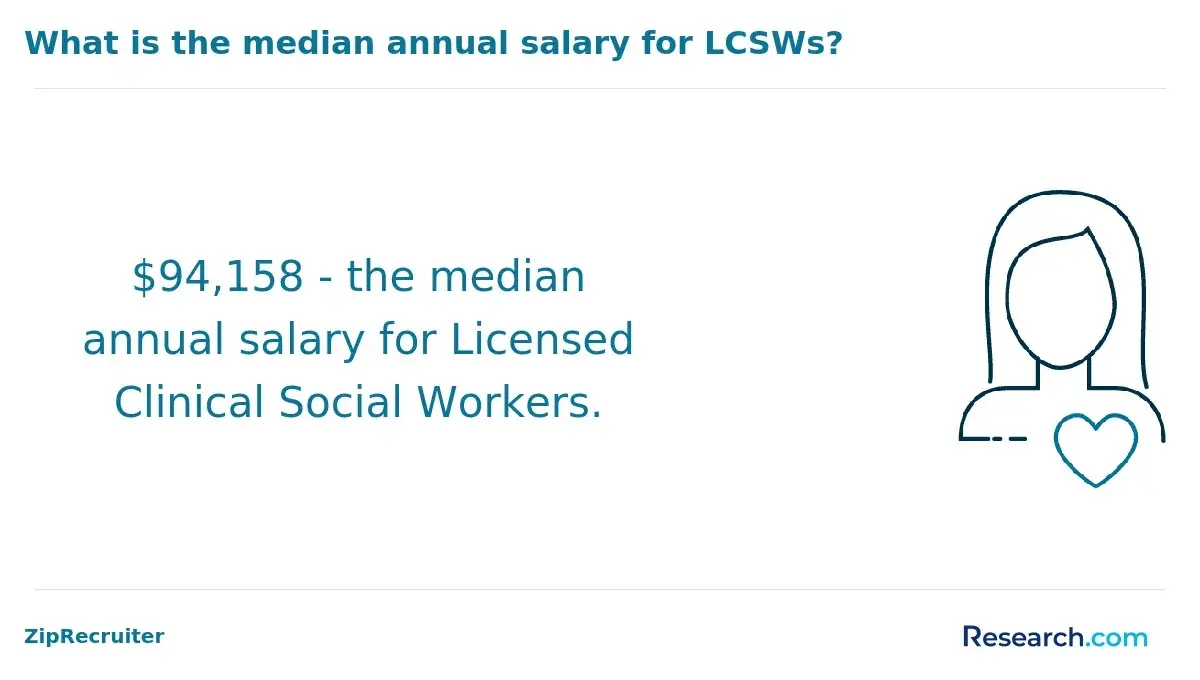
Salary potential varies by location, employer, licensure, years of experience, role, and setting. A hospital-based LCSW, a hospice social worker, a long-term care social services director, and a community agency case manager may all work with older adults but have different pay structures and advancement paths. For state-specific compensation context, compare data in a master’s in social work salary guide.
Factors that influence demand and earnings
- Demographic shift: As the older adult population grows, demand increases in hospitals, hospice programs, home health, long-term care, and community aging services.
- Licensure: LCSW licensure often expands access to clinical positions, supervisory roles, and higher-responsibility jobs.
- Specialized experience: Employers may value experience with dementia, serious illness, grief, care transitions, interdisciplinary teams, and complex family systems.
- Work environment: Compensation can differ between hospitals, hospice agencies, private organizations, nonprofits, government programs, and long-term care facilities.
- Geographic location: Salaries are often higher in urban and metropolitan areas where cost of living and healthcare employer concentration may be greater.
- Certification: Credentials such as ASW-G or ACHP-SW can support professional credibility and may help with advancement, especially when paired with relevant experience.
How to evaluate salary realistically
When comparing job offers, look beyond the base salary. Consider supervision toward licensure, caseload size, on-call expectations, documentation burden, mileage reimbursement, benefits, paid time off, continuing education support, and opportunities to move into clinical or leadership roles. In emotionally demanding fields such as hospice and geriatric care, workload and support can matter as much as pay.
How do I choose the right online social work program?
The right online social work program is the one that fits your licensure goals, field placement needs, budget, learning style, and intended specialty. For geriatric and hospice social work, do not stop at general MSW quality. You need to know whether the program can prepare you for practice with older adults, serious illness, family caregiving, grief, healthcare systems, and end-of-life care.
Program selection checklist
- CSWE accreditation: Verify that the program is accredited by the Council on Social Work Education. This is essential for licensure and employment pathways.
- Relevant specialization: Look for a concentration, track, certificate, or electives in aging, health, hospice, palliative care, grief, or gerontology.
- Faculty expertise: Review whether faculty teaching specialized courses have practical or scholarly experience in gerontology, healthcare, hospice, or palliative care.
- Field placement support: Ask how the school helps online students find placements, who approves agencies, and whether placements can align with geriatric or hospice interests.
- Licensure alignment: Confirm whether the program meets educational requirements for the state where you plan to practice, especially if you may move later.
- Online format: Compare asynchronous, synchronous, and hybrid requirements. Make sure live class times, residencies, exams, and practicum schedules fit your life.
- Student support: Look for advising, field education staff, career services, library access, writing support, technology help, and licensure preparation resources.
- Cost and aid: Compare tuition, fees, books, technology costs, travel, and lost work time. You can also review affordable online MSW programs to find options that balance cost and quality.
Questions to ask admissions before applying
- Is the online MSW fully CSWE-accredited?
- Does the program offer a defined aging, health, hospice, palliative care, or gerontology pathway?
- What kinds of field placements have online students completed in my state or region?
- Who is responsible for finding the field placement: the student, the school, or both?
- How does the program support students preparing for LCSW licensure?
- Are there online students or alumni working in hospice, palliative care, hospitals, or aging services whom I can speak with?
- What are the total costs, including fees and field-related expenses?
Before making a final decision, compare several programs side by side and speak directly with admissions and field education staff. A strong online MSW should be able to explain not only what you will study, but also how the program will help you gain relevant supervised experience and move toward licensure and specialized practice.
Other Things You Should Know About Geriatric and Hospice Social Work Online Concentrations
To complete the 2027 Geriatric and Hospice Social Work Online Concentrations, students must earn a total of 36 credit hours. These credit hours typically include specialized courses focused on aging populations, palliative care, and ethical considerations in hospice settings.
Most programs require a supervised field placement tied to CSWE standards, with 400 to 600 practicum hours completed in approved health care or aging-service settings. Students usually document client contact, complete agency evaluations, and meet faculty supervision requirements before receiving concentration credit.
Application deadlines for 2027 Geriatric and Hospice Social Work Online Concentrations vary by institution but typically fall between April and July 2027. Prospective students should check specific program websites for exact dates to ensure timely submission of all required materials.
References
- Montclair State University. (2025). Online Master of Social Work. https://www.montclair.edu/online/graduate-degrees/master-social-work-msw/
- University of South Carolina. (2025). College of Social Work — Online MSW. https://sc.edu/m/social-work/online-msw/
- University of Washington. (2025). Master of Social Work (MSW) Program. https://socialwork.uw.edu/academics/msw/
- U.S. Bureau of Labor Statistics. (2025). Social workers: Occupational outlook handbook. https://www.bls.gov/ooh/community-and-social-service/social-workers.htm
- U.S. Department of Labor. (2025). Summary report for: 21-1022.00 – Healthcare social workers. O*NET OnLine. https://www.onetonline.org/link/summary/21-1022.00