
2027 Fastest Online Master's Degree Programs in Analytics

Co-Founder and Chief Data Scientist
A fast online master’s degree in analytics is for professionals who want graduate-level data skills without stepping away from work for two years or more. The decision is not just “Which program is fastest?” It is also whether the program is accredited, whether the curriculum matches your target role, whether the cost makes sense, and whether the accelerated pace is realistic for your schedule.
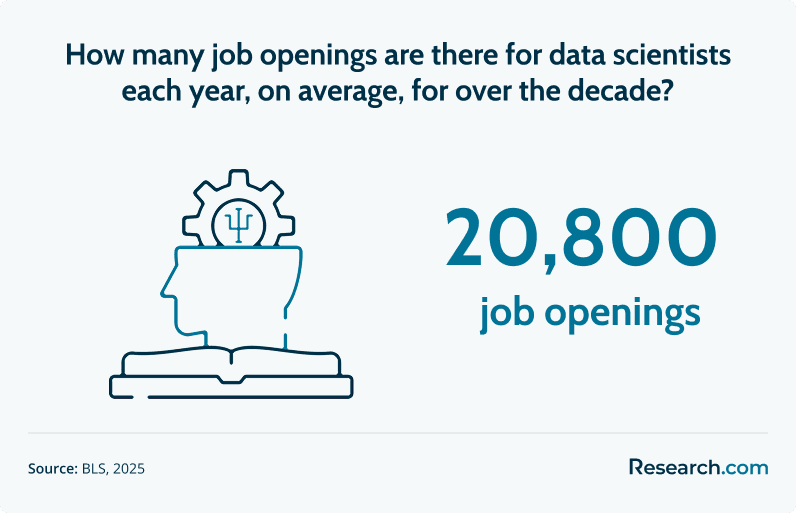
The timing matters. Analytics skills are now central to decision-making in technology, healthcare, finance, consulting, insurance, retail, logistics, and government. Data scientist roles alone are projected to generate about 20,800 openings each year over the next decade, which makes speed valuable—but only if the program also delivers credible training and career-relevant experience.
This guide explains what to expect from the fastest online master’s degree programs in analytics, how long they take, what they cost, which careers they can support, and how to compare programs before enrolling. It also highlights common mistakes, ROI questions, and practical steps to help you choose a program that fits your goals.
Quick Answer: Is a Fast Online Master’s in Analytics Worth Considering?
A fast online master’s in analytics can be worth it if you already have some quantitative, technical, business, or professional experience and want to move into data analyst, business intelligence, data science, analytics manager, or related roles faster. Many accelerated programs can be completed in 12 to 18 months, and tuition in the programs discussed here ranges from around $12,000 to $45,000, depending on the school and format.
The degree is not automatically the best choice for everyone. It makes the most sense when the program is properly accredited, includes practical projects, teaches tools used by employers, and fits your workload. If you need only a narrow skill upgrade, a certificate or bootcamp may be a better first step.
What are the main benefits of earning a fast online master's degree in analytics?
- Faster access to analytics roles: Graduates may qualify for positions such as data analyst, business intelligence analyst, data scientist, operations analyst, marketing analyst, or analytics manager across industries including technology, healthcare, finance, insurance, and consulting.
- Strong salary potential: Analytics roles can pay well, with many professionals earning around $90,000–$120,000 annually, and some experienced or specialized roles exceeding six figures.
- Career-friendly format: Many programs are 100% online and can be completed in as little as 12 months, allowing working adults to continue earning income while studying.
What can I expect from a fast online master's degree in analytics?
A fast online master’s in analytics usually combines graduate-level quantitative training with applied business or technology coursework. Instead of studying data in isolation, students learn how to collect, clean, analyze, visualize, and interpret data so organizations can make better decisions.
Most programs include core subjects such as statistics, data mining, machine learning, database concepts, data visualization, predictive modeling, programming, and business strategy. Many also require a capstone project where students analyze a real or simulated data problem and present findings in a professional format. Some programs may include internship or practicum components, although requirements vary by school.
Online delivery typically includes recorded lectures, live virtual sessions, discussion boards, coding assignments, case studies, group projects, and instructor feedback. Some programs are asynchronous, meaning students can complete work on their own schedule. Others require scheduled class meetings, which can be useful for accountability but harder for students with unpredictable work hours.
Costs vary significantly. Tuition for fast online analytics master’s programs can range from around $12,000 to $45,000, depending on the institution, total credits, tuition model, and program length.
Interest in analytics graduate education has grown quickly. In 2022, nearly 8,000 students completed a master’s in analytics, which was more than triple the number from 2018. That growth reflects both employer demand and the increasing availability of online and accelerated analytics programs.
| Program feature | What it usually means for students | Why it matters |
| Accelerated schedule | Courses may run in shorter terms or require heavier course loads. | You can finish sooner, but the workload can be intense. |
| Online delivery | Classes, assignments, projects, and advising are completed remotely. | This helps working professionals avoid relocation or commuting. |
| Applied curriculum | Programs often include Python, R, SQL, visualization tools, modeling, and capstone work. | Employers usually want proof that you can use analytics in real business settings. |
| Specializations | Options may include business analytics, data science, healthcare analytics, finance analytics, or cyber security. | A focused track can help align your degree with your target industry. |
Where can I work with a fast online master’s degree in analytics?
Graduates can work anywhere organizations use data to improve decisions, reduce costs, forecast trends, manage risk, understand customers, or measure performance. Common employers include technology companies, hospitals and health systems, banks, insurance firms, consulting agencies, manufacturers, retailers, government agencies, research organizations, and corporate strategy teams.
In 2023, there were over 200,000 data scientist jobs. The largest employer groups included computer systems firms at 11%, insurance companies at 10%, corporate management at 9%, consulting services at 6%, and research organizations at 5%.
The degree can also support advancement into leadership or specialized analytics roles. Strong programs train students not only to build models or dashboards, but also to explain findings to executives, nontechnical teams, clients, and stakeholders who need clear recommendations.
How much can I make with a fast online master’s degree in analytics?
Earnings depend on role, industry, experience, location, technical depth, and management responsibility. For data scientists, the median annual salary was $112,590 in May 2024. Entry-level salaries are usually lower, while experienced professionals in high-demand industries or leadership roles may earn more.
Industry can make a noticeable difference. Professionals in computer systems design had a median annual wage of $128,020. Those working in corporate management earned $126,940, while research roles reported $120,090 and consulting roles reported $110,240. Insurance sector professionals earned around $108,920.
A master’s degree alone does not guarantee a specific salary. The strongest outcomes typically come from combining the credential with practical skills, a portfolio of projects, knowledge of analytics tools, communication ability, and experience solving business problems.
- Fastest Online Master's Degree Programs in Analytics for 2027
- How long does a fast online master's degree in analytics take?
- How does an online analytics master’s compare with an on-campus program?
- What does a fast online master's degree in analytics cost?
- What financial aid is available for online analytics master’s students?
- What are the admission requirements for a fast online analytics master’s?
- What courses are included in a fast online master's in analytics?
- What specializations are available in online analytics master’s programs?
- How to choose the right fast online master's degree in analytics
- What careers can graduates pursue?
- What is the job market for analytics graduates?
- What post-graduation support do online analytics programs provide?Job market details
- Is the ROI of a fast online master's in analytics worth it?
- What academic options can complement an analytics master’s?ROI considerationsLabor market outlook
Fastest Online Master's Degree Programs in Analytics for 2027
Because a graduate degree can require a major financial and time commitment, students should evaluate rankings with a clear understanding of how programs were identified and compared. The ranking uses information from trusted education data sources, including the IPEDS database, Peterson's database, the College Scorecard database, and The National Center for Education Statistics.
These sources help provide consistent information for evaluating degree programs, institutional characteristics, and student-facing data. To learn more about how Research.com evaluates programs, visit the methodology page.
1. Western Governors University – M.S. Data Analytics
The M.S. Data Analytics program at Western Governors University is offered fully online and uses a flexible model that can be especially attractive to working adults. Students study areas such as data mining, machine learning, visualization, and statistical analysis. The curriculum also incorporates CompTIA and SAS certifications, which can help students demonstrate specific technical competencies in addition to earning the degree.
- Cost per credit: Not priced per credit; flat-rate tuition model
- Total cost of program: Approximately $4,755 per 6-month term; average time to complete is 18 months (approx. $14,265)
- Accreditation: Northwest Commission on Colleges and Universities (NWCCU)
2. Arizona State University – M.S. in Business Analytics
The online M.S. in Business Analytics from Arizona State University focuses on using data to solve business challenges. Students examine machine learning, data mining, predictive analytics, and applied analytics tools. The program is designed for professionals who want to connect technical analysis with business strategy and decision-making across multiple sectors.
- Cost per credit: $1,042
- Total cost of program: Approximately $37,512
- Accreditation: Higher Learning Commission (HLC)
3. University of Bath – MSc Business Analytics (Online)
The online MSc Business Analytics from the University of Bath is built for part-time online study. The curriculum covers topics such as machine learning, forecasting, data mining, strategy analytics, and marketing analytics. Students also examine ethical issues in data-driven decision-making, which is increasingly important as organizations rely more heavily on analytics and AI-supported tools.
- Cost per credit: Approximately £321 (based on £722 per 15-credit unit)
- Total cost of program: £10,830
- Accreditation: University of Bath is a UK-recognized institution with degree-awarding powers; subject to national UK standards and quality assurance
4. MIT xPRO – Applied Data Science Program
The Applied Data Science Program from MIT xPRO is a 100% online professional education option rather than a master’s degree. It may be useful for learners who want short, focused training in Python, machine learning, predictive analytics, and data visualization before deciding whether to pursue a full graduate degree. The program is taught by MIT faculty and can be completed in 12 weeks.
- Cost per credit: Not applicable (non-credit professional program)
- Total cost of program: $2,950
- Accreditation: Offered by MIT xPRO; non-degree, professional education under MIT Professional Education
5. Ohio University – Online Master of Business Analytics
The online Master of Business Analytics from Ohio University emphasizes data management, predictive modeling, machine learning, AI, visualization, and strategic decision-making. Students complete a capstone project that asks them to apply analytics concepts to a business problem, making the program suitable for professionals who want applied experience and a business-oriented analytics credential.
- Cost per credit: $1,032
- Total cost of program: $32,000
- Accreditation: Association to Advance Collegiate Schools of Business (AACSB)
6. Franklin University – M.S. in Data Analytics
The online M.S. in Data Analytics from Franklin University combines technical analytics training with business application. Students study data visualization, predictive modeling, data mining, and related topics designed to help them turn raw data into usable insights. The program is structured for working professionals and can be completed in as few as 19 months.
- Cost per credit: $670
- Total cost of program: $16,080 (based on 24 credits)
- Accreditation: Higher Learning Commission (HLC)
7. The University of Texas at Austin – Master of Science in Data Science (Online)
The online M.S. in Data Science from The University of Texas at Austin blends computer science and statistics. Students develop skills in machine learning, data visualization, and big data analytics. The program is offered through a collaboration between the College of Natural Sciences and the Department of Statistics and Data Sciences and is designed to provide a flexible online path at a comparatively affordable tuition level.
- Cost per credit: $500
- Total cost of program: $15,000 (30 credits)
- Accreditation: Southern Association of Colleges and Schools Commission on Colleges (SACSCOC)
8. Eastern University – M.S. in Data Science
The online M.S. in Data Science at Eastern University prepares students to work with complex datasets, build predictive models, and communicate findings. Coursework covers machine learning, data visualization, database management, and applied data science. A capstone project gives students an opportunity to demonstrate their skills in a practical setting.
- Cost per credit: $625
- Total cost of program: $18,750 (30 credits)
- Accreditation: Middle States Commission on Higher Education (MSCHE)
9. Harvard University Extension School – Data Science Graduate Program
The Data Science Graduate Program at Harvard University Extension School uses a flexible hybrid format that combines online and on-campus coursework. Students build skills in data analysis, machine learning, visualization, and applied project work. This option may appeal to learners who want online flexibility but are also willing to complete required on-campus components.
- Cost per credit: $1,840
- Total cost of program: Approximately $36,800 (20 credits)
- Accreditation: New England Commission of Higher Education (NECHE)
10. Arden University – MSc Data Science & Cyber Security
The online MSc Data Science & Cyber Security from Arden University combines analytics with cyber security. Students study data analytics, ethical hacking, risk management, and related technical topics. This pathway may suit learners who want to work in roles where data systems, security risks, and analytical decision-making overlap.
- Cost per credit: Not specified
- Total cost of program: £10,620
- Accreditation: Chartered Institute for IT (BCS) and Chartered Management Institute (CMI)
| Program | Best fit | Important note |
| Western Governors University | Self-paced learners who want a flat-rate tuition model | Progress depends heavily on your ability to move through competencies efficiently. |
| Arizona State University | Business-focused analytics students | Higher per-credit cost than some alternatives on this list. |
| University of Bath | Part-time international learners interested in business analytics | Students should confirm recognition and employer expectations in their target country. |
| MIT xPRO | Professionals seeking short technical upskilling | This is a non-credit professional program, not a master’s degree. |
| UT Austin | Students seeking data science training with a strong statistics and computer science foundation | Admissions preparation may require stronger technical readiness. |
How long does it take to complete a fast online master's degree in analytics program?
Most fast online master’s in analytics programs can be completed in 12 to 18 months. Some students may finish faster if the program is self-paced or uses accelerated terms, while others may take up to 24 months if they study part time or balance coursework with a demanding job.
The structure is similar in purpose to the best accelerated online journalism degree programs: the goal is to compress a rigorous curriculum into a shorter period while still giving students enough applied practice to build career-ready skills.
Common completion timelines
- 12 months: Usually requires full-time study, steady weekly availability, and few breaks between terms.
- 15 to 18 months: A common accelerated range for working professionals who can handle a demanding but more manageable pace.
- Up to 24 months: Still relatively fast for a graduate program, especially for part-time students.
What can speed up or slow down completion?
- Course load: Taking more credits each term shortens the timeline but increases weekly workload.
- Term structure: Eight-week sessions, rolling starts, or competency-based formats may help students finish faster.
- Capstone, practicum, or internship: Applied requirements can add time but may improve your portfolio and job readiness.
- Prerequisite gaps: Students who need statistics, programming, or math refreshers may need additional preparation before starting core coursework.
The fastest option is not always the best option. Choose a pace that lets you complete assignments well, build a portfolio, and avoid burnout.
How does a fast online master's degree in analytics program compare to an on-campus program?
A fast online master’s in analytics can provide similar academic content to an on-campus program, but the learning experience, networking format, and level of structure can differ. The better choice depends on your work schedule, learning style, location, and need for in-person access to faculty, classmates, or campus resources.
| Factor | Fast online analytics master’s | On-campus analytics master’s |
| Flexibility | Usually better for working adults, caregivers, and students who cannot relocate. | Better for students who want a fixed campus schedule and in-person structure. |
| Pace | Often designed with accelerated terms or year-round study. | May follow a traditional semester schedule, although some campus programs are accelerated. |
| Networking | Relies on virtual discussions, group projects, alumni platforms, and online events. | Offers more face-to-face contact, campus events, and local employer connections. |
| Learning environment | Requires strong self-discipline and comfort with remote tools. | Provides physical classroom interaction and easier access to campus services. |
| Career fit | Useful for students who want to keep working while studying. | Useful for students who want an immersive graduate school experience. |
Curriculum and academic quality
Both formats commonly cover statistics, data mining, machine learning, predictive modeling, visualization, and business applications. In many universities, online students learn from the same faculty or use similar course materials as campus-based students. Still, students should verify faculty involvement, assignment rigor, capstone expectations, and employer partnerships rather than assuming all formats are identical.
Flexibility and workload
Online programs give students more control over where they study, but not necessarily less work. Accelerated analytics courses can be demanding because programming assignments, statistical projects, and group work often require sustained weekly effort.
Specialization choice
Before choosing a program, clarify whether you want a data science, analytics, or business analytics path. If you are comparing technical and business-focused options, this guide to data science vs business analytics can help you understand how the fields differ.
What is the average cost of a fast online master's degree in analytics program?
The average cost of a fast online master’s degree in analytics ranges from $12,000 to $45,000. The total price depends on tuition structure, number of credits, school type, residency rules, technology fees, books, required software, and whether the program charges by credit or by term.
Some institutions use a traditional per-credit model, while others charge a flat amount for a set period. A flat-rate model can be cost-effective for students who move quickly, but less efficient for students who need to slow down. Public universities may offer lower tuition than some private institutions, although online pricing policies vary.
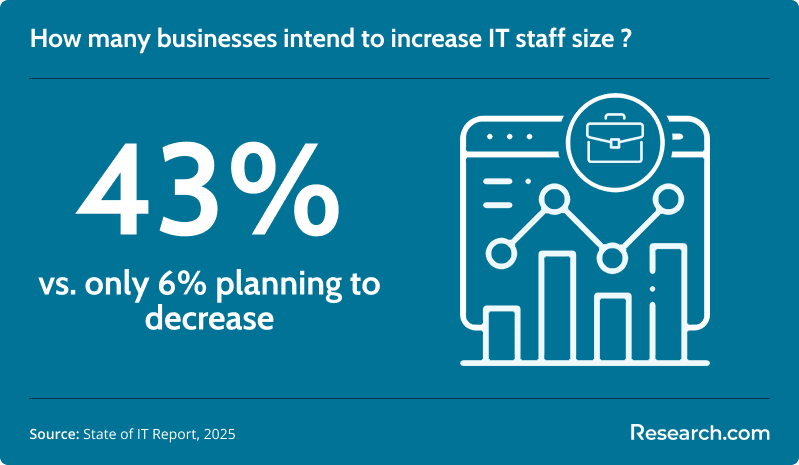
Labor market conditions can make the investment attractive for some students. In one cited IT workforce trend, 43% of businesses planned to increase IT staff size, while only 6% planned to reduce it. That does not guarantee a job after graduation, but it does show that employers continue to invest in technical talent.
If a full master’s degree is too expensive or too large a commitment right now, shorter alternatives may help you build skills first. The most affordable online data science bootcamps can be useful for learners who want targeted training before applying to graduate school.
| Cost factor | What to check before enrolling |
| Tuition model | Confirm whether the school charges per credit, per course, per term, or for the full program. |
| Fees | Ask about technology fees, graduation fees, online learning fees, and assessment fees. |
| Software and equipment | Check whether you need a specific laptop, cloud tools, analytics software, or paid platforms. |
| Transfer credits | Ask whether prior graduate coursework or certificates can reduce the total cost. |
| Completion pace | For flat-rate programs, calculate whether your realistic pace will actually save money. |
What are the financial aid options for students enrolling in a fast online master's degree in analytics program?
Students in accredited online analytics master’s programs may have access to several forms of financial aid. The best option depends on the school’s eligibility, the student’s financial profile, employer benefits, and whether the program is degree-granting.
Federal and state aid
Many accredited graduate degree programs qualify for federal financial aid. Students typically begin by completing the FAFSA. Some students may also qualify for state-based aid, depending on location, income, school participation, and field of study.
Scholarships and fellowships
Universities may offer merit-based or need-based scholarships for graduate students. External organizations, foundations, employers, and technology-related groups may also provide awards for students pursuing analytics, data science, statistics, computer science, or business analytics.
Employer tuition assistance
Employer support can be one of the most valuable ways to reduce out-of-pocket cost. Organizations that rely on data may be willing to fund graduate education if the degree improves your current role or supports internal promotion. For example, professionals moving toward the BI developer career path may find that employers value advanced analytics and reporting skills.
Payment plans
Many online programs allow students to divide tuition into scheduled payments. This does not reduce the total cost, but it can make cash flow easier to manage.
| Funding option | Best for | Question to ask |
| Federal aid | Students in eligible accredited degree programs | Is this exact online program eligible for federal financial aid? |
| Scholarships | Students with strong academic, professional, or need-based profiles | Are scholarships automatic, competitive, renewable, or one-time? |
| Employer reimbursement | Working professionals whose degree aligns with company needs | Do I need to stay with the employer for a set period after receiving funds? |
| Payment plans | Students who can pay over time without borrowing as much | Are there enrollment fees, late fees, or interest charges? |
What are the prerequisites for enrolling in a fast online master's degree in analytics program?
Admission requirements vary, but most fast online analytics master’s programs expect applicants to show evidence of academic readiness, quantitative ability, and basic technical preparation. Some programs are designed for experienced professionals, while others accept career changers who can demonstrate the right foundation.
Common prerequisites include:
- A bachelor’s degree in any field, although STEM, business, economics, statistics, computer science, or related majors may be preferred.
- Prior coursework or demonstrated ability in math, statistics, or quantitative reasoning.
- Introductory programming experience, often in Python, R, SQL, or a related language.
- Professional experience, especially for programs aimed at working adults or business analytics professionals.
- Letters of recommendation, a resume, and a personal statement explaining career goals.
- GRE or GMAT scores for some programs, although many online or accelerated programs waive these tests.
Students who do not yet have an undergraduate degree may want to compare fast-track bachelor's in analytics online programs. These options can help learners build the undergraduate foundation needed for graduate-level analytics study.
If cost is a major constraint, compare admission requirements across the cheapest online master's programs in analytics. Some lower-cost programs may still require strong preparation in statistics, programming, or data management, so affordability should be evaluated alongside readiness.
How to prepare if you are missing prerequisites
- Take a statistics refresher before applying.
- Build basic Python, R, or SQL skills through short courses or projects.
- Create a small portfolio with dashboards, notebooks, or data cleaning examples.
- Ask admissions advisors whether bridge courses are available.
- Review sample syllabi to estimate the technical difficulty of first-term courses.
What courses are typically in a fast online master's degree in analytics program?
A fast online master’s in analytics usually includes courses that blend statistics, computing, data management, visualization, modeling, and business communication. The strongest programs do not teach tools in isolation; they require students to apply methods to messy, realistic problems.
| Course area | What students learn | Career relevance |
| Statistical Methods | Hypothesis testing, regression, probability, and inference. | Supports evidence-based analysis and model interpretation. |
| Data Mining and Machine Learning | Pattern discovery, classification, clustering, prediction, and model evaluation. | Useful for data science, forecasting, risk modeling, and recommendation systems. |
| Data Visualization | Dashboard design, visual storytelling, chart selection, and tools such as Tableau or Power BI. | Helps analysts communicate findings to nontechnical audiences. |
| Programming for Analytics | Python, R, SQL, data cleaning, scripting, and reproducible workflows. | Builds hands-on technical ability expected in many analytics roles. |
| Business Analytics | Use of data in operations, marketing, finance, strategy, and performance measurement. | Connects analytical findings to organizational decisions. |
| Capstone Project | End-to-end analysis of a real or realistic problem. | Can become a portfolio piece for job applications. |
Some programs also offer electives in finance, healthcare, marketing, supply chain, AI, cyber security, or management. Students interested in the overlap between finance and analytics can review what can you do with a masters in finance to compare how finance-focused graduate study differs from analytics training.
What types of specializations are available in a fast online master's degree in analytics program?
Specializations help students align their graduate work with a specific role, industry, or technical skill set. The right specialization depends on whether you want to work closer to business strategy, software and modeling, healthcare operations, finance, marketing, sports, or security.
If you are not ready for a full degree, an accelerated data analytics graduate certificate online may provide a shorter way to test the field, build targeted skills, or prepare for a later master’s program. Some certificates may be stackable, but students should confirm credit transfer policies before enrolling.
Business Analytics
This track focuses on using data to improve organizational decisions in areas such as operations, marketing, finance, supply chain, and strategy. It is often a good fit for students who want analyst, consultant, or management-facing roles.
Data Science
Data science tracks usually go deeper into machine learning, programming, algorithms, statistics, and large-scale data. This path is better suited to students who want more technical roles involving predictive models and advanced analysis.
Healthcare Analytics
Healthcare analytics applies data methods to patient outcomes, public health, hospital operations, cost management, and clinical decision support. Students interested in this area should look for programs with healthcare datasets, privacy awareness, and health systems context.
Financial Analytics
Financial analytics uses data for investment analysis, risk modeling, budgeting, fraud detection, forecasting, and financial planning. Students comparing finance and analytics graduate pathways can revisit what can you do with a masters in finance to see where the fields overlap.
Sports Analytics
Sports analytics combines statistics, performance data, business strategy, scouting, fan engagement, and operations. Students interested in this niche may want to explore a fast-track sports analytics masters online, especially if they want to work with teams, athletic departments, sports technology firms, or performance analytics units.
Why specialization matters
Employers increasingly want analytics professionals who understand context, not just tools. One cited executive survey found that 59.5% of executives said data was driving innovation, while only 20.6% said their company had established a true data culture. A specialization can help graduates lead analytics adoption in organizations that still struggle to turn data into daily practice.
How to Choose a Fast Online Master's Degree in Analytics Program
The best fast online master’s in analytics is not simply the shortest or cheapest program. It is the program that fits your career goal, academic background, budget, learning style, and need for flexibility while still providing credible training.
Step 1: Confirm accreditation and institutional credibility
Start by checking whether the university is accredited by a recognized accrediting body. Accreditation affects credit transfer, employer recognition, financial aid eligibility, and admission to future academic programs.
Step 2: Match the curriculum to your target role
Review required courses and electives. A future data scientist may need deeper programming, statistics, and machine learning, while a future analytics manager may benefit from business strategy, visualization, communication, and leadership-focused coursework.
Step 3: Compare realistic completion times
Do not rely only on the advertised minimum timeline. Ask how many hours per week students typically spend on coursework, whether courses are offered every term, and whether the capstone can delay graduation.
Step 4: Evaluate specializations and adjacent pathways
If your interests include economics, forecasting, modeling, or policy analysis, the shortest economics degree programs online may be worth comparing as a related academic path. Students interested in sports organizations may also consider an accelerated sports management bachelor's degree online as a complementary foundation for analytics roles in athletics or sports business.
Step 5: Choose the right online format
Decide whether you need asynchronous courses, live evening sessions, self-paced progression, or structured weekly deadlines. Students who need flexibility may prefer asynchronous learning, while students who want accountability may prefer live class meetings.
Step 6: Calculate total cost, not just tuition
Add tuition, fees, books, software, equipment, travel for any campus requirements, and the cost of reducing work hours if needed. Then compare the total with expected career benefits and your current financial situation.
Step 7: Ask about career support and employer connections
Look for resume support, portfolio guidance, interview preparation, employer events, alumni networking, and analytics-specific career coaching. A fast program should still help students translate coursework into job-ready evidence.
| Question to ask | Why it matters |
| Is the program fully online, hybrid, or mostly online with required visits? | Campus requirements can affect cost and scheduling. |
| What tools will I use? | Employers often expect experience with programming, databases, visualization, and analytics platforms. |
| Does the capstone produce a portfolio-ready project? | Projects can help career changers prove practical ability. |
| Are courses taught by full-time faculty, adjuncts, or industry practitioners? | Faculty structure can affect academic depth and applied relevance. |
| Can I slow down if work becomes demanding? | Accelerated schedules can become difficult during busy professional periods. |
Common Mistakes to Avoid When Choosing an Online Analytics Master’s
| Mistake | Why it can hurt you | Better approach |
| Choosing only the fastest program | A short timeline is not useful if the curriculum is too shallow or the workload is unrealistic. | Balance speed with accreditation, course quality, projects, and support. |
| Ignoring accreditation | Unaccredited or unclear credentials may limit aid, transfer options, and employer acceptance. | Verify institutional accreditation before applying. |
| Looking only at tuition | Fees, software, books, and extended enrollment can change the real cost. | Calculate total program cost under your likely completion timeline. |
| Assuming all analytics programs teach the same skills | Some programs are business-heavy, while others are more technical. | Compare syllabi against your target job descriptions. |
| Skipping portfolio development | Employers may want proof of applied ability, especially for career changers. | Choose courses and capstones that create work samples. |
| Relying only on rankings | Rankings may not reflect your schedule, budget, prerequisites, or career goal. | Use rankings as a starting point, then evaluate fit carefully. |
What career paths are available for graduates of a fast online master's degree in analytics program?
Graduates can pursue technical, business, operational, and leadership roles depending on their prior background and the program’s focus. Career changers may start in analyst positions, while experienced professionals may use the degree to move into senior or management roles.
| Career path | Typical responsibilities | Best fit for |
| Data Analyst | Clean, analyze, visualize, and explain data to support business decisions. | Entry-level or transitioning professionals with strong analytical and communication skills. |
| Business Intelligence Analyst | Build dashboards, track KPIs, create reports, and help teams monitor performance. | Students interested in reporting, visualization, SQL, and business operations. |
| Data Scientist | Use statistics, machine learning, and programming to model trends and generate predictions. | Students with stronger technical preparation in coding, math, and modeling. |
| Analytics Manager | Lead analytics teams, set priorities, communicate findings, and guide data strategy. | Professionals with experience who want leadership responsibilities. |
| Operations Analyst | Use data to improve processes, productivity, logistics, and resource allocation. | Students interested in efficiency, systems, and business process improvement. |
| Marketing Analyst | Evaluate customer behavior, campaign performance, segmentation, and digital strategy. | Students interested in consumer data, branding, and marketing technology. |
| Financial Analyst | Analyze financial patterns, forecasts, risk, and investment-related data. | Students who want to combine finance knowledge with analytics methods. |
Students who want to combine analytics with digital marketing may also compare fastest online social media marketing degree programs. That pathway can complement analytics training for roles involving campaign measurement, audience insights, and brand growth.
Long-term advancement often depends on more than the degree. Graduates who build domain expertise, communicate clearly, manage stakeholders, and keep technical skills current are better positioned for senior analytics and leadership roles.
What is the job market for graduates with a fast online master's degree in analytics program?
The job market for analytics graduates remains strong because organizations need professionals who can transform large volumes of information into decisions. Demand is especially visible in technology, finance, healthcare, consulting, insurance, retail, logistics, and government.
From 2023 to 2033, employment for data scientists is projected to grow by 36%, compared with the 4% average for all occupations. Broader mathematical science roles are projected to grow by 28%. These projections suggest strong opportunity, but individual outcomes still depend on skills, experience, location, industry, and job search strategy.
Current trends affecting analytics graduates
- AI is changing job expectations: Employers increasingly value professionals who can use automated tools responsibly, evaluate model outputs, and explain limitations.
- Business communication is becoming more important: Technical results matter only if decision-makers understand and trust them.
- Data culture remains uneven: Many organizations collect data but still struggle to use it consistently, creating opportunities for analytics professionals who can connect technical work to strategy.
- Cross-functional analytics skills are valuable: Professionals in communications, marketing, operations, finance, and management can benefit from analytics training.
Professionals in adjacent fields may use analytics to strengthen existing expertise. For example, students interested in communications strategy can compare the shortest public relations master's degree online if they want to combine media, branding, and data-driven decision-making.
A fast online master’s can help students enter or advance in this market, but it should be paired with practical projects, networking, interview preparation, and ongoing technical development.
What post-graduation support do fast online master's in analytics programs offer?
Post-graduation support can make a major difference, especially for online students who may not have access to the same informal networking as campus-based learners. Strong programs typically provide career coaching, resume reviews, portfolio feedback, mock interviews, job boards, employer events, alumni networks, and mentorship opportunities.
Students should ask whether career support is general or analytics-specific. A useful career center should understand data analyst, business intelligence, data scientist, and analytics manager roles, including common technical interview formats and portfolio expectations.
Some graduates may also want broader business training after completing an analytics degree. Programs connected to or comparable with fastest online business degree programs accredited can be useful for learners who want to combine analytics skills with management, entrepreneurship, or executive decision-making.
What do graduates say about fast online master’s programs in analytics?
-
: "
The applied data projects helped me turn classroom concepts into work I could use immediately. I did not just study theory; I practiced using analytics tools to solve business problems, which improved both my confidence and my performance at work. — Kenneth
"
-
: "
Managing a full-time job while studying was challenging, but the online structure made it possible. The coursework pushed me to think more carefully about how data affects business decisions, and the capstone gave me a chance to work through a realistic problem from start to finish. — Jonathan
"
-
: "
The project-based format was the most valuable part for me. Case studies and hands-on assignments helped me build the kinds of practical skills employers ask for, and that made it easier to step into new responsibilities. — Salik
"
Is the ROI of a Fast Online Master's in Analytics Program Worth the Investment?
The ROI of a fast online master’s in analytics depends on how much you pay, how quickly you finish, whether you keep working while enrolled, and how effectively the degree helps you move into a higher-value role. A shorter program can reduce opportunity cost because students may reach the job market or promotion opportunities sooner, but speed is only valuable if the credential and skills are strong.
To evaluate ROI, compare the total cost of attendance with your current salary, target roles, likely time to completion, employer tuition benefits, and the strength of the program’s career support. Also consider whether a certificate, bootcamp, or employer-funded training could meet your goal at lower cost.
Students considering broader management credentials can compare analytics programs with an affordable MBA, especially if their long-term goal is leadership rather than highly technical analytics work.
| ROI question | Why it matters |
| Will this degree help me qualify for roles I cannot access now? | The strongest ROI usually comes when the credential changes your career options. |
| Can I keep working while enrolled? | Maintaining income can reduce the overall financial burden. |
| Does the program produce portfolio-ready work? | Projects can help employers see your applied skills. |
| Is a full master’s necessary for my goal? | Some learners may only need a certificate, bootcamp, or targeted technical training. |
| How long will it take to recover the cost? | Compare tuition and fees with realistic salary growth, not best-case outcomes. |
What additional academic opportunities can complement a fast online master’s in analytics program?
Analytics becomes more powerful when paired with domain knowledge. Students who understand a specific industry—such as healthcare, finance, sports, marketing, public policy, or operations—can often apply data skills more effectively than those with technical skills alone.
Complementary study can include management, finance, economics, computer science, cyber security, marketing, public relations, or industry-specific business programs. For students interested in sports business, the cheapest sports management degree online may provide useful context in operations, leadership, and organizational decision-making.
The right add-on depends on your career target. A future data scientist may benefit from additional programming and machine learning. A future analytics manager may benefit from leadership, project management, and business strategy. A future industry specialist may benefit most from domain-specific coursework.
References
- Bureau of Labor Statistics. (n.d.). Data scientists. U.S. Department of Labor. https://www.bls.gov/ooh/math/data-scientists.htm
- American Statistical Association. (2023, December 1). Statistics and biostatistics degree data, 2022. Amstat News. https://magazine.amstat.org/blog/2023/12/01/degreesstats2022/BLS data scientists profile
- Spiceworks. (2024). 2024 State of IT: The annual report on IT budgets and tech trends. https://www.spiceworks.com/research/it-report/Data scientist occupational outlook
- Bean, R. (2023, January). Has progress on data, analytics, and AI stalled at your company? Harvard Business Review. https://hbr.org/2023/01/has-progress-on-data-analytics-and-ai-stalled-at-your-companyBureau of Labor Statistics data scientist outlook
Key Insights
- A fast online master’s in analytics is most useful for students who want graduate-level data skills quickly but still need an accredited, rigorous, and career-relevant program.
- Most accelerated online analytics master’s programs take 12 to 18 months, although part-time students may need up to 24 months.
- Tuition can range from around $12,000 to $45,000, so students should compare total cost, fees, pace, and employer tuition assistance before enrolling.
- The median annual salary for data scientists was $112,590 in May 2024, but actual earnings vary by industry, experience, technical skill, and location.
- Data scientist employment is projected to grow 36% from 2023 to 2033, compared with the 4% average for all occupations.
- Program fit matters more than speed alone. Check accreditation, curriculum depth, capstone quality, tools taught, career services, and whether the format matches your weekly availability.
- Students who need a smaller commitment may want to start with a certificate, bootcamp, or professional program before investing in a full master’s degree.
Other Things You Should Know about a Fast Online Master's Degree in Analytics
Most accelerated online master’s degrees in analytics require 30 to 36 credit hours. Programs that allow heavier course loads or award transfer credit can often be finished in 12 to 18 months, especially when the curriculum uses eight-week terms and no thesis requirement.
The fastest programs typically require a bachelor’s degree, a strong academic record, relevant work experience, and sometimes a GRE/GMAT score. Some programs may also require prerequisite courses in mathematics or statistics to ensure preparedness for the rigorous curriculum.


