
2027 Best Data Analytics Certificates Online

Co-Founder and Chief Data Scientist
Online data analytics certificates are designed for people who want practical, job-relevant analytics skills without committing immediately to a full degree. The decision matters because organizations are producing and using more data every year: in 2024, the total amount of data generated, collected, copied, and used up reached 149 zettabytes, and over the next 5 years up to 2028, global data generation is expected to reach 394 zettabytes. That growth keeps increasing the need for professionals who can collect, clean, interpret, visualize, and explain data in ways that support better decisions.
This guide is for career changers, working professionals, recent graduates, and students comparing online data analytics certificates for 2027. It explains what these certificates cover, how much they cost, how long they take, which programs stand out, what employers look for, and how to decide whether a certificate is enough or whether you should consider a degree, specialization, or related credential.
Quick Answer: Are Online Data Analytics Certificates Worth It?
An online data analytics certificate can be worth it if you need a faster, lower-cost way to build skills in Excel, SQL, Python, statistics, dashboards, and business reporting. It is especially useful for entry-level job seekers, professionals moving into analytics from another field, and employees who already use data but need stronger technical skills. A certificate is less likely to replace a bachelor’s or master’s degree for advanced data science, machine learning, or research-heavy roles, but it can help you build a portfolio and qualify for analyst-focused positions.
What Is an Online Data Analytics Certificate?
An online data analytics certificate is a short, skills-based academic or professional credential focused on using data to answer business, operational, financial, healthcare, marketing, or technical questions. Most programs teach the analytics workflow: gathering data, preparing it for analysis, applying statistical methods, creating visualizations, and communicating findings to decision-makers.
Unlike a full degree, a certificate usually focuses on applied skills rather than broad general education. Some certificates are beginner-friendly, while others assume prior experience with statistics, business, programming, or database tools. The best option depends on your current background and the type of analytics job you want.
What are the main benefits of earning a data analytics certificate online?
- Stronger marketable skills: A certificate can help you practice data visualization, statistical analysis, SQL, Python, Tableau, Power BI, Excel, and other tools commonly used in analytics roles.
- Faster career entry: Many certificates can be finished in weeks or months, which makes them a quicker option than a traditional degree for learners who want to test the field or qualify for entry-level analytics work.
- Potential salary growth: Employers often value candidates who can demonstrate practical analytics ability. Entry-level roles commonly average around $60,000–$70,000 annually, while experienced analysts or specialists may earn $90,000 or more, depending on location, employer, industry, and skill level.
What can I expect from data analytics certificates online?
Most online data analytics certificates combine technical training with applied projects. You should expect a practical curriculum, flexible pacing, and assignments that require you to work with real or realistic datasets.
- Curriculum: Common subjects include data collection, data cleaning, data analysis, statistics, dashboards, reporting, and data storytelling. Many programs also introduce Excel, SQL, Tableau, Power BI, Python, or R. More advanced certificates may include predictive analytics, machine learning, or big data concepts.
- Length: Completion time varies by program format. Some certificates take only a few weeks, while university-based or advanced programs may take several months or longer.
- Tuition: Prices range from free courses to more structured certificates costing $1,000–$5,000, particularly when offered by universities or specialized institutions.
Where can I work with data analytics certificates online?
Data analytics skills apply across industries because most organizations need evidence-based decisions. A certificate can support roles in sectors where teams rely on reports, dashboards, forecasting, performance metrics, or operational data.
- Technology: Companies such as Microsoft and other technology employers use analysts to improve products, user experience, internal workflows, and operational performance.
- Finance and banking: Banks, insurance companies, investment firms, and financial services organizations use analytics for fraud detection, risk assessment, forecasting, and customer insights.
- Healthcare: Hospitals, pharmaceutical companies, health systems, and healthcare startups use data to improve patient care, manage operations, support research, and monitor outcomes.
- Retail and e-commerce: Retailers and online marketplaces rely on analytics to study customer behavior, manage inventory, personalize marketing, and improve sales performance.
- Marketing and advertising: Agencies and in-house marketing teams use analytics to evaluate campaigns, segment audiences, allocate budgets, and improve return on advertising spend.
How much can I make with data analytics certificates online?
Your income after earning an online data analytics certificate depends on your experience, portfolio, employer, job title, region, and the tools you can use confidently. A certificate alone does not guarantee a specific salary, but it can help you demonstrate job-ready skills.
- Entry-level roles: Junior data analyst, reporting analyst, and business intelligence analyst positions typically pay between $50,000 and $70,000 per year.
- Mid-level roles: Analysts with several years of experience and strong project results may earn between $70,000 and $90,000 per year, especially in technology, finance, and other data-intensive sectors.
- Advanced or specialized roles: Senior data analyst, machine learning analyst, data scientist, and similar roles can reach $90,000 to $120,000 or more annually, particularly in high-demand fields such as healthcare or consulting.
- Freelance and contract work: Independent analysts may charge $30 to $100 per hour depending on expertise, project complexity, client budget, and specialization.
Location, previous education, employer reputation, technical specialization, and the credibility of the certificate provider can all affect pay.
- Best Data Analytics Certificates Online for 2027
- How long does an online data analytics certificate take?
- Online vs. campus data analytics certificates
- Average cost of online data analytics certificates
- Financial aid and scholarships
- Admission requirements and prerequisites
- Common courses in data analytics certificates
- Popular data analytics specializations
- How to choose the right certificate
- Skills employers expect from certificate graduates
- Should data analytics learners study cybersecurity?
- Career paths after a data analytics certificate
- How to verify accreditation and industry recognition
- Complementary technical certifications
- Job market for online data analytics certificate graduates
- Computer science accelerated programs and analytics
- Return on investment for online data analytics certificates
- Emerging trends in online data analytics certificates
- Using analytics certificates as a pathway into AI
- Health informatics and data analytics careers
- Common mistakes to avoid
- Key insights
10 Best Data Analytics Certificates Online for 2027
How do we rank schools?
To identify strong online data analytics certificate options, we reviewed program information and institutional data from reputable education sources, including the IPEDS database, Peterson's Distance Learning Licensed Data Set, College Scorecard database, and the National Center for Education Statistics.
For more detail on how Research.com evaluates programs and institutions, review our research methodology section.
At-a-glance comparison of featured programs
| Rank | School and Certificate | Length | Focus Area | Cost | Credits or Units | Accreditation |
| 1 | Maryville University, Certificate in Data Analytics | 2.5 semesters | Business and Applied Analytics | $700 per credit | 12-18 | Higher Learning Commission (HLC) |
| 2 | University of Richmond, Certificate in Data Analytics | 2 semesters | Business Analytics and Applied Data Science | $1,600-$4,800 per semester | 18 | Southern Association of Colleges and Schools Commission on Colleges (SACSCOC) |
| 3 | Champlain College, Data Science Certificate | 8 months | No info available | $335 per credit | 16 | New England Commission of Higher Education (NECHE) |
| 4 | University of North Texas, Data Analytics Certificate | 12-18 months | Business Intelligence and Advanced Analytics | Approximately $5,800 | 15 | SACSCOC |
| 5 | Pennsylvania Western University, Post-Baccalaureate Data Science Certificate | 6-12 months | General Analytics With Electives in Business and IT Analytics | $450 per credit | 15 | Middle States Commission on Higher Education (MSCHE) |
| 6 | Grand Valley State University, Applied Data Analytics Certificate | 6 weeks | No info available | Approximately $600 per credit | 18 | HLC |
| 7 | University of Arizona, Business Analytics Certificate | No info available | No info available | $2,750 estimated total cost | 12-18 | HLC |
| 8 | Franklin University, Graduate Certificate in Data Analytics | 8 months | No info available | $398 per credit | 16 | HLC |
| 9 | Wilmington University, Data Analytics Certificate | 6-12 months | No info available | $450 per credit | 18 | MSCHE |
| 10 | Colorado State University Global, Undergraduate Certificate in Data Management and Analysis | No info available | No info available | $375 per credit | 18 | HLC |
How to read this list
Use the ranking as a starting point, not as the only factor in your decision. The best certificate for you should match your background, schedule, budget, preferred tools, and target job title. A working professional may prioritize flexibility and short completion time, while a career changer may need a broader curriculum with career support and portfolio projects.
How long does it take to complete data analytics certificates online?
Online data analytics certificates vary widely in length because some teach only one tool, while others offer a more complete analytics sequence. If you are considering longer academic pathways, compare certificate timelines with options such as fast track college programs.
| Program Type | Typical Length | Best For | What to Watch For |
| Short-term certificate | 4–12 weeks | Beginners who want quick exposure to Excel, SQL, Tableau, or basic analytics concepts | May not provide enough depth for competitive analyst roles without extra projects |
| Mid-length certificate | 3–6 months | Working professionals and career changers who want structured technical training and portfolio work | Requires consistent weekly study time while balancing work or family responsibilities |
| Longer certificate | 6–12 months or more | Learners seeking deeper coverage of machine learning, big data, capstone projects, or specialized analytics | Higher time commitment and often higher cost than shorter options |
How does an online data analytics certificate compare to an on-campus program?
Online and campus-based data analytics certificates can both teach valuable skills, but they fit different learning styles and life situations. If you are comparing flexible graduate options, you may also want to review 1 year graduate programs.
| Factor | Online Certificate | On-Campus Certificate |
| Schedule | Usually more flexible, with asynchronous or hybrid formats that support working learners | Often requires set class times and travel to campus |
| Cost | May reduce commuting, housing, and campus-related costs | Can include additional campus fees and transportation expenses |
| Learning style | Best for self-directed students who can manage deadlines independently | Best for students who prefer face-to-face instruction and structured classroom routines |
| Networking | May include discussion boards, virtual groups, career events, and remote projects | Offers in-person interaction with classmates, faculty, and campus resources |
If your long-term goal is a broader technology credential, compare certificates with a masters in information technology online before enrolling.
What is the average cost of data analytics certificates online?
Online data analytics certificate costs depend on the provider, course depth, student support, university affiliation, and whether the program awards academic credit. You should evaluate total cost, not just tuition, because software subscriptions, books, proctored exams, and technology fees can affect your final expense.
- Free or low-cost options ($0–$200): These courses are useful for learning a specific tool or testing whether analytics is right for you. Some platforms allow free auditing and charge only for a certificate.
- Mid-range programs ($200–$2,000): These certificates often include structured lessons, projects, assessments, and career resources.
- High-end programs ($1,000–$5,000 or more): University-affiliated options and specialized certificates may cost more because they may include academic oversight, advanced content, or stronger institutional recognition. If you want a broader school search, compare options from the top online universities.
If a certificate is only one step toward a degree, compare it with cheap computer science degree programs to see which option offers the better long-term value.
What are the financial aid options for students enrolling in data analytics certificates online?
Financial aid for certificates can be more limited than aid for degree programs, but there are still ways to reduce cost. Start by asking whether the certificate is credit-bearing, whether it qualifies for employer tuition assistance, and whether the provider offers scholarships, payment plans, or workforce funding.
- University of Edinburgh Business School Data Analytics (Online) Scholarship: The University of Edinburgh offers up to five scholarships, each valued at £5,000, for students entering its online Master's in Data and Decision Analytics. The scholarships are open to students from all countries and are intended to partially offset tuition.
- MinneAnalytics Data Science Scholarship: This $1,000 award supports undergraduate students who are committed to data analytics careers and have demonstrated community engagement.
- ASA's Gertrude M. Cox Scholarship: The ASA scholarship provides $1,000 to women pursuing undergraduate or graduate study in statistics or data science, including data analytics.
- Google Career Certificates Scholarships: Through Grow with Google, learners may access scholarships for Google career certificates, including data analytics, that cover the full cost of the certificate program.
Before applying, confirm eligibility requirements, deadlines, whether the award can be used for certificate study, and whether you must enroll through a specific provider or partner organization.
What are the prerequisites for enrolling in data analytics certificates online?
Prerequisites differ by provider. Some beginner certificates require no analytics experience, while advanced or graduate certificates may expect previous coursework or professional experience. If your goal is a full analytics career transition, review the broader pathway in our guide on how to become a data analyst.
- Education: Many programs require a high school diploma or equivalent. Graduate or post-baccalaureate certificates may require a bachelor's degree, often with preference for backgrounds in business, mathematics, computer science, statistics, or a related field.
- Computer proficiency: You should be comfortable using spreadsheets, web-based learning platforms, file management systems, and productivity software.
- Math readiness: A basic understanding of algebra and statistics is usually required because analysts work with numerical patterns, probability, averages, distributions, and uncertainty.
- Programming background: Introductory programs may teach coding from the beginning, but intermediate certificates may expect some familiarity with Python, R, SQL, or general programming logic.
- Technology access: Online learners need a reliable computer, stable internet access, and the ability to install or access required analytics tools.
What courses are typically in data analytics certificates online?
Most certificates are organized around the analytics process, moving from raw data to business-ready insight. The strongest programs include both technical exercises and applied projects that can become part of your portfolio.
- Introduction to data analytics: This course explains how organizations use data, what analysts do, and how analytics supports decisions across departments.
- Statistics and probability: Students learn descriptive statistics, inferential statistics, probability, sampling, and interpretation of results.
- Data wrangling and preprocessing: Coursework covers cleaning messy data, handling missing values, validating entries, formatting files, and preparing datasets for analysis.
- Data visualization: Students practice building charts, reports, dashboards, and stakeholder-facing visuals using tools such as Tableau, Power BI, or Matplotlib.
- Programming for analytics: Many certificates introduce Python or R so learners can automate data tasks, manipulate datasets, and perform analysis more efficiently.
Python is the top programming language in 2024, according to the report below.
What types of specializations are available in data analytics certificates online?
Specializations help you connect analytics skills to a specific job market. Choose one only after you understand the roles you want, the industry you prefer, and the tools employers commonly request.
| Specialization | What It Emphasizes | Good Fit For |
| Business analytics | Forecasting, performance metrics, operations, financial analysis, customer segmentation, and decision support | Professionals seeking analyst roles in corporate, operations, consulting, or management settings |
| Data science and machine learning | Machine learning algorithms, artificial intelligence concepts, big data processing, and more complex datasets | Learners planning to move beyond reporting into predictive modeling or technical analytics |
| Marketing analytics | Campaign measurement, consumer behavior, segmentation, digital marketing metrics, and ROI analysis | Marketing professionals, agency staff, and business graduates who want stronger quantitative skills |
| Healthcare analytics | Clinical data, operational performance, patient outcomes, public health metrics, and healthcare regulations | Learners interested in healthcare systems, health IT, or roles related to health informatics |
| Financial analytics | Risk analysis, financial modeling, forecasting, portfolio analysis, and investment-related data | Students and professionals targeting banking, insurance, asset management, or corporate finance |
Healthcare analytics can connect well with health informatics roles; for example, health informatics analyst is one of the best careers to pursue with a health informatics masters degree. Data analytics also pairs well with economics, and data analyst is listed among the best jobs to get with an economics masters degree.
How to choose the best data analytics certificates online?
The right certificate should fit your career target, skill level, schedule, budget, and preferred learning style. Avoid choosing only by school name or ranking position. Instead, compare whether the program will help you build evidence of skill that employers can review.
Questions to ask before enrolling
- Does the curriculum match your goal? Entry-level analysts need strong foundations in spreadsheets, SQL, statistics, dashboards, and communication. More technical paths may require Python, R, machine learning, or cloud analytics.
- Is the provider recognized? For academic programs, check whether the institution is part of the group of accredited online universities or otherwise holds recognized accreditation.
- Will you complete portfolio projects? Employers often want proof that you can work with data, not just proof that you watched lectures.
- Are career services included? Resume review, interview practice, job search support, and employer connections can make a certificate more useful.
- Can credits transfer? If you may pursue a degree later, ask whether certificate credits can apply to future undergraduate, graduate, or dual degree programs.
- What is the total cost? Include tuition, fees, software, textbooks, exam costs, and the value of your time.
Certificate decision checklist
| Factor | Why It Matters | Better Choice |
| Accreditation or provider credibility | Employers and graduate schools may weigh recognized institutions more heavily | Choose a reputable provider with transparent institutional status |
| Hands-on work | Portfolio projects help show practical ability | Select programs with datasets, dashboards, reports, and capstones |
| Tool coverage | Different jobs require different tools | Match the curriculum to postings for your target roles |
| Career support | A certificate is more valuable when it helps you translate training into job applications | Look for resume help, interview practice, and employer networking |
| Transferability | Some learners later pursue a degree | Ask whether credits count toward a future academic program |
What essential skills do employers seek in graduates of online data analytics certificates?
Employers usually look for a combination of technical accuracy, business judgment, and communication. Certificate graduates should be able to clean data, analyze it correctly, create clear visuals, and explain findings in plain language. Technical skills matter, but so does the ability to connect results to a business problem.
- Technical tools: Excel, SQL, Python, R, Tableau, Power BI, and database basics.
- Analytical thinking: Statistics, pattern recognition, hypothesis testing, and careful interpretation of results.
- Data storytelling: Clear dashboards, concise reports, and recommendations that nontechnical stakeholders can understand.
- Business context: Ability to connect data findings to revenue, cost, risk, operations, customer behavior, or performance goals.
- Adaptability: Willingness to keep learning as analytics platforms, cloud tools, and AI-assisted workflows change.
Strong analytics skills can support advancement into technology roles, including some of the highest paying it jobs, but competition is stronger for roles that require advanced programming, machine learning, or engineering skills.
Should Data Analytics Certificate Holders Consider Cybersecurity Courses?
Cybersecurity training can be a smart addition for data analytics professionals who work with sensitive, regulated, or high-risk information. Analysts often handle customer records, financial data, healthcare data, operational systems, and confidential business files. Understanding basic security principles helps protect data quality, privacy, access controls, and compliance.
You do not need to become a cybersecurity specialist to be a better analyst, but a targeted course in data privacy, risk, access management, or secure data handling can strengthen your profile. Learners who want a deeper security path can compare programs from top online cyber security schools.
What career paths are available for graduates of data analytics certificates online?
Online data analytics certificates can prepare learners for several roles, especially when paired with relevant work experience, a portfolio, or a degree. Job titles vary by employer, but many analytics roles involve turning raw data into usable insight.
| Career Path | Typical Responsibilities | Helpful Skills |
| Data analyst | Collects, cleans, analyzes, and visualizes data to support decisions | SQL, Excel, dashboards, statistics, reporting, communication |
| Business analyst | Studies business processes, identifies problems, and recommends data-informed improvements | Requirements gathering, process mapping, stakeholder communication, analytics |
| Marketing analyst | Measures campaign results, studies consumer behavior, and supports marketing strategy | Digital metrics, segmentation, visualization, ROI analysis |
| Financial analyst | Analyzes financial trends, risk, forecasts, and investment-related information | Financial modeling, forecasting, risk analysis, spreadsheet expertise |
| Healthcare data analyst | Uses patient, operational, or public health data to support healthcare decisions | Healthcare data systems, privacy awareness, reporting, outcome analysis |
How Can I Verify the Accreditation and Industry Recognition of Online Data Analytics Certificates?
Start by separating institutional accreditation from general brand recognition. A university certificate should come from an institution with recognized accreditation, while a non-university certificate should be evaluated based on employer recognition, curriculum quality, instructor expertise, projects, and learner outcomes.
- Check the school’s accreditation status through official institutional sources.
- Confirm whether the certificate is academic credit, continuing education, professional development, or a noncredit credential.
- Review course outcomes and compare them with job postings for your target roles.
- Look for transparent information about instructors, tools taught, assessment methods, and capstone projects.
- Ask whether employers, advisory boards, or industry partners helped shape the curriculum.
Some learners broaden their technical profile by adding related computing skills. For example, those interested in interactive analytics, simulation, or technical visualization may explore ways to study game programming online, although this should support a clear career goal rather than distract from core analytics training.
Can Integrating Complementary Technical Certifications Enhance Your Data Analytics Career?
Complementary credentials can help when they build skills that your target job market actually values. A data analyst working in manufacturing, energy, engineering, logistics, or technical operations may benefit from domain-specific technical education because those roles often require both data interpretation and systems understanding.
For example, an electrical engineer degree online may be useful for professionals who want to work with sensor data, systems optimization, industrial analytics, or engineering operations. The key is alignment: add credentials that help you solve the problems your target employers face.
What is the job market for graduates with data analytics certificates online?
Organizations continue to rely on data for decision-making, and analytics was one of the most in-demand skills for 2024. Through 2031, several data-focused occupations are projected to grow strongly, and compensation for data-related roles remains above the average for all occupations in the cited data.
Data scientists had an average yearly wage of $103,500 in 2022, more than double the average yearly wage for all careers. In that same year, all data-related positions reported an average yearly wage above the average for all positions.
The chart below shows that employment in data-related jobs is expected to grow faster than the 5-percent average for all other jobs over the next 10 years. Among the roles shown, data scientists are expected to have the fastest job growth.
Is a Computer Science Accelerated Program a Valuable Complement to an Online Data Analytics Certificate?
A computer science accelerated program can be valuable if your target roles require stronger programming, algorithms, software development, databases, or systems knowledge. A data analytics certificate may teach you how to analyze and present data, while computer science training can help you build more complex tools, automate workflows, and understand how data systems are engineered.
This combination is most useful for learners pursuing technical analytics, data engineering, machine learning, or software-adjacent roles. If you want a faster academic route to stronger computing fundamentals, compare options in our guide to a computer science accelerated program.
Is the Return on Investment for Online Data Analytics Certificates Justified?
The ROI of an online data analytics certificate depends on cost, completion time, job relevance, and whether the program helps you produce proof of skill. A low-cost certificate with strong projects can offer excellent value for a beginner. A more expensive certificate may still be worthwhile if it carries academic credit, includes career support, or connects directly to your target field.
How to evaluate ROI before enrolling
- Compare total program cost with your current income and realistic target roles.
- Check job postings to confirm that the tools taught match employer expectations.
- Ask whether you will complete projects that can be shown to hiring managers.
- Consider whether the certificate can transfer into a degree later.
- Compare the certificate with broader information technology degrees online if you want long-term advancement beyond analytics.
What Are the Emerging Trends Impacting Online Data Analytics Certificates?
Online data analytics certificates are changing as employer expectations shift. Programs increasingly emphasize applied projects, dashboarding, cloud-based analytics, real-time data processing, machine learning basics, and responsible data use. Cybersecurity and privacy awareness are also becoming more relevant because analysts often work with sensitive or regulated datasets.
Another trend is cross-disciplinary analytics. Employers may want analysts who understand a specific industry, such as healthcare, finance, engineering, marketing, or operations. Learners interested in technical industries can compare analytics training with broader engineering education options, including low cost accredited engineering online colleges.
Can Data Analytics Certificates Open Pathways to Careers in Artificial Intelligence?
A data analytics certificate can be a starting point for AI-related careers because AI work depends heavily on data quality, statistics, modeling, and interpretation. However, most AI roles require deeper training than a basic analytics certificate provides. If you want to move toward artificial intelligence, look for coursework in Python, statistics, machine learning, data preprocessing, model evaluation, and ethical AI use.
Learners who want a more direct AI pathway should compare analytics certificates with online AI degree programs, especially if their goal is machine learning engineering, AI product development, or applied AI research.
Can an Online Health Informatics Program Enhance My Data Analytics Career?
An online health informatics program can strengthen a data analytics career if you want to work in healthcare, public health, insurance, hospital operations, clinical systems, or patient outcomes analysis. Health informatics adds domain knowledge that general analytics certificates may not cover, including healthcare data systems, privacy requirements, clinical workflows, and health outcome metrics.
If you want to specialize in healthcare analytics, an online degree in health informatics can complement analytics training and make your skills more relevant to healthcare employers.
Common Mistakes to Avoid When Choosing an Online Data Analytics Certificate
- Choosing only by price: A cheap certificate may be useful, but it should still teach tools employers want and include practical assignments.
- Ignoring accreditation or provider credibility: For university programs, verify institutional accreditation. For noncredit programs, check employer recognition and curriculum transparency.
- Assuming a certificate guarantees a job: Hiring depends on your skills, portfolio, interview performance, experience, local market, and competition.
- Skipping portfolio projects: Employers often want to see dashboards, SQL work, Python notebooks, reports, or case studies.
- Overlooking prerequisites: If you enter an advanced program without enough statistics, spreadsheet, or programming preparation, you may struggle.
- Focusing only on tools: Tools matter, but analysts also need critical thinking, communication, and the ability to explain business impact.
- Not checking transfer options: If you may pursue a degree later, ask whether certificate credits apply before enrolling.
Key Insights
- Online data analytics certificates are best for learners who want practical analytics skills quickly, especially in Excel, SQL, Python, statistics, visualization, and reporting.
- Program length varies widely: some certificates take 4–12 weeks, while more complete or advanced options may take 6–12 months or more.
- Costs range from free or low-cost options to university-affiliated certificates costing $1,000–$5,000 or more.
- A basic understanding of algebra and statistics is usually required for many data analytics certificate courses, though beginner programs may teach foundational concepts.
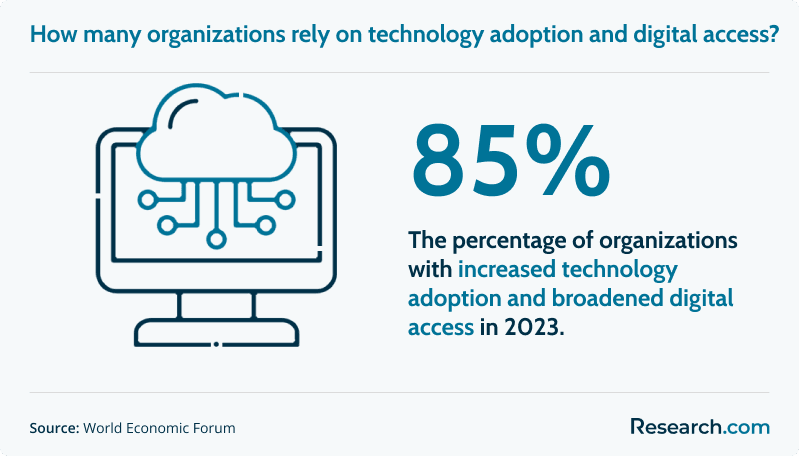
- At least 86% of organizations rely on technology and digital access for their organizational workflows.
- Python garnered a 10% rating increase in 2024.
- With a 36% job growth, data scientists are the most in-demand jobs over the decade.
- The strongest certificate choice is not always the highest-ranked one. Choose based on accreditation, curriculum, projects, cost, career support, transferability, and alignment with your target job.
- Certificates can support analytics careers, but advanced roles in data science, AI, machine learning, or engineering may require additional education or specialized technical training.
References
- Farell, R, & Hussain, M. (2023, June). Data occupations with rapid employment growth, projected 2021-31. Retrieved December 23, 2024, from BLS.
- Indeed. (2024, December 12). Data Science Scholarships for 2024. Retrieved December 23, 2024, from Indeed.
- Taylor, P. (2024, November 21). Volume of data/information created, captured, copied, and consumed worldwide from 2010 to 2023, with forecasts from 2024 to 2038. Retrieved December 24, 2024, from Statista.
- University of Pennsylvania. (2022, October 22). 5 key reasons why data analytics is important to business. Retrieved December 24, 2024, from University of Pennsylvania.
Other Things You Should Know About Data Analytics Certificates Online
In 2027, selecting the best online data analytics certificate involves evaluating the program's curriculum, industry recognition, faculty expertise, and alumni success. Consider courses from reputable platforms like Google, IBM, or Coursera, emphasizing practical skills and comprehensive understanding of data analytics.
In 2027, notable online data analytics certificates include Google's Data Analytics Certificate, Coursera's IBM Data Analyst Professional Certificate, EdX's MicroMasters in Data Science by UC San Diego, and Simplilearn's Professional Certificate in Data Analytics. Each offers comprehensive curricula geared toward current industry demands and technological advancements.
An online data analytics certificate can be enough to start a career in the field, especially if it provides hands-on training and covers essential skills such as data visualization, statistical analysis, and proficiency in tools like Excel, SQL, Python, or Tableau. Many employers value candidates with practical experience and problem-solving abilities, which high-quality certificate programs often emphasize through real-world projects and case studies. While some advanced roles may require a degree or additional experience, entry-level positions like data analyst, business analyst, or junior data scientist are often accessible with a certificate and a strong portfolio. To maximize your career prospects, complement the certificate with continuous learning, networking, and showcasing your skills through personal or freelance projects.


