
2027 Fastest Online Graduate Certificate Programs in Data Analytics

Co-Founder and Chief Data Scientist
Choosing an online graduate certificate in data analytics is usually a speed-versus-depth decision. You want job-ready analytics skills quickly, but you also need a credential that employers respect, credits that may transfer into a master’s degree, and costs that make sense for your career goals.
This guide explains what accelerated online graduate certificate programs in data analytics include, how fast they can be completed, what they cost, which careers they can support, and how to compare programs before you enroll. It is designed for working professionals, career changers, managers who need stronger analytics skills, and recent graduates who want a shorter alternative to a full master’s degree.
Quick Answer: Are Online Graduate Certificate Programs in Data Analytics Worth It?
An online graduate certificate in data analytics can be worthwhile if you already have a bachelor’s degree and need focused training in statistics, SQL, Python or R, visualization, and applied analytics without committing to a full graduate degree. Many programs take 6–12 months, require 12–16 graduate credits, and may allow credits to count toward a master’s program later.
The strongest value comes from programs that are regionally accredited, include hands-on projects, teach widely used tools, and match your career target. A certificate alone does not guarantee a data job, but it can strengthen your resume, help you build a portfolio, and make an internal promotion or career pivot more realistic.
What are the benefits of completing online graduate certificate programs in data analytics?
- Strong labor-market demand: The U.S. Bureau of Labor Statistics projects employment of data scientists to grow 36% from 2023 to 2033.
- Competitive pay potential: Data scientists earned $112,590 per year in May 2024, according to the BLS.
- Frequent openings: BLS expects 59,400 new openings each year through 2033 for data professionals.
- Flexible career use: Analytics skills apply across business intelligence, finance, healthcare, marketing, technology consulting, retail, entertainment, and public-sector roles.
- Shorter than a master’s degree: Many certificates can be completed in months rather than years, especially when courses are offered in accelerated terms.
What can I expect from online graduate certificate programs in data analytics?
Online graduate certificate programs in data analytics are usually compact, skills-focused programs built for students who already hold a bachelor’s degree. Instead of covering the broad theory and electives of a full master’s program, they concentrate on the technical and applied skills used in analytics work.
Most programs include 12–16 graduate credits and cover topics such as statistical analysis, Python or R programming, SQL, data management, dashboarding, visualization, predictive analytics, and applied decision-making. Many courses use case studies, cloud tools, virtual labs, proctored assessments, and final projects that can become portfolio samples.
For students comparing shorter credentials, Research.com’s guide to the best online certificate programs can help explain how graduate certificates differ from bootcamps, microcredentials, and full master’s degrees.
| What to Review | What It Means for You |
| Credits | Many certificates require 12–16 graduate credits, although some require fewer or more. |
| Format | Common formats include asynchronous online courses, 7- or 8-week terms, and multiple start dates. |
| Tools | Look for SQL, Python, R, Tableau, Power BI, cloud analytics, or machine learning tools that match job postings you are targeting. |
| Portfolio value | Capstone projects and applied assignments can help you demonstrate skills to employers. |
| Stackability | Some certificates allow credits to transfer into a master’s degree or MBA later. |
Where can I work with online graduate certificate programs in data analytics?
Data analytics is not limited to technology companies. Organizations in nearly every sector collect data, but many still need professionals who can clean it, interpret it, visualize it, and explain what actions leaders should take next.
Graduates may work with business intelligence teams, finance departments, health systems, insurance companies, government contractors, marketing teams, logistics groups, research units, streaming platforms, or consulting firms. Common work includes tracking sales trends, evaluating operations, identifying fraud, improving patient-care decisions, predicting customer behavior, or building dashboards for executives.
Zippia’s 2025 analysis identifies these locations as strong states or districts for data analyst jobs:
- Connecticut: Opportunities are influenced by insurance, financial services, and hedge-fund activity.
- New Jersey: Demand is tied to pharmaceutical analytics, corporate headquarters, and proximity to New York City employers.
- Maryland: Federal contractors, health research, and the bio-health corridor create analytics needs.
- District of Columbia: Policy, consulting, nonprofit, think-tank, and government analytics roles are common.
Remote and hybrid work can widen your search, especially if your skills combine SQL, reporting, business communication, and systems knowledge. Students interested in broader technology roles can also compare information systems career paths.
How much can I make with online graduate certificate programs in data analytics?
Salary depends on your role, location, industry, work experience, portfolio, and technical depth. A graduate certificate can help you qualify for analytics-related work, but it does not guarantee a specific salary.
The BLS reports median annual pay of $112,590 for data scientists in 2024. Compensation trackers also show a broad salary range for data analyst roles:
- Zippia: Average U.S. data analyst pay is $74,342, with top earnings in New Jersey.
- Salary.com: Data Analyst I mean salary is $71,555 nationwide.
- ZipRecruiter: National average pay is $82,640, while Chicago posts $85,131.
- Indeed: Average salary is $83,105 from 5.7 k postings.
- PayScale: Self-reported average compensation is $69,085.
- Glassdoor: Typical annual range is $70,464–$118,833.
Higher pay is more likely when analytics skills are paired with business strategy, management experience, domain expertise, or advanced technical credentials. Some professionals later add an MBA, such as a one year online MBA, or pursue technical graduate study, including masters in computer science for non CS majors programs.
- Fastest Online Graduate Certificate Programs in Data Analytics for 2027
- Completion Time for Online Graduate Certificates in Data Analytics
- Online vs. On-Campus Data Analytics Certificates
- Average Cost of Online Graduate Certificate Programs in Data Analytics
- Financial Aid Options for Data Analytics Certificate Students
- Admissions Requirements and Prerequisites
- Common Courses in Data Analytics Graduate Certificates
- Available Data Analytics Specializations
- Return on Investment for a Data Analytics Graduate Certificate
- Combining a Data Analytics Certificate With a Business Degree
- How to Choose the Best Online Data Analytics Certificate
- Using Analytics Training to Move Into Business Leadership
- Career Paths After a Data Analytics Graduate Certificate
- Job Market Outlook for Data Analytics Certificate Graduates
- Adding Project Management Skills to a Data Analytics Career
Fastest Online Graduate Certificate Programs in Data Analytics for 2027
Accelerated online graduate certificates are best for students who want a structured university credential, prefer graduate-level coursework, and need a faster option than a master’s degree. The programs below are offered by accredited U.S. institutions and are designed for relatively quick completion.
Use this list as a starting point, not as a substitute for your own program review. Before applying, verify current tuition, transfer policies, start dates, technology requirements, and whether the curriculum aligns with the roles you want.
How do we rank schools?
Research.com builds rankings through a structured methodology that combines institutional data, program research, and comparative analysis.
Sources used in the ranking process include the IPEDS database from the National Center for Education Statistics, Peterson’s database and its Distance Learning Licensed Data Set, and the College Scorecard database. These sources help evaluate institutional quality, online availability, cost, outcomes, and program value.
| Rank | School and Program | Cost | Duration | Credits | Accreditation |
| 1 | University of Wisconsin–Parkside – Data Analytics Certificate | $707.80/credit; 8 credits; $5,662 total | 6 months | 8 credits | HLC, AACSB |
| 2 | University of North Carolina at Chapel Hill – Graduate Certificate in Data Analytics & Decision Making | ~$2,025/credit, estimated, same as UNC online MBA tuition | 6 to 18 months; self-paced; can be completed in as few as 6 months | 12 credits; 5 courses | SACSCOC, AACSB |
| 3 | Franklin University – Graduate Certificate in Data Analytics | $670/credit | 8 months; four 12-week courses | 16 credits; 4 courses | HLC, IACBE |
| 4 | Boston College – Graduate Certificate in Data Analytics | $1,490/credit | 8 months; four 8-week courses over two terms | 12 credits; 4 courses | NECHE |
| 5 | Northeastern University – Graduate Certificate in Data Analytics | $1,847/credit | 8 months full-time; can also be extended up to 1 year | 16 credits; 4 courses | NECHE |
| 6 | Southeastern Oklahoma State University – Graduate Certificate in Data Analytics | $380/credit | 12 months; three terms; as few as 12 months | 12 credits; 4 courses | HLC, AACSB |
| 7 | Christian Brothers University – Graduate Certificate in Data Analytics | $715/credit, estimated based on graduate tuition rates | ≈1 year; 3 courses; can be completed in under 12 months | 9 credits; 3 courses | SACSCOC |
| 8 | Stonehill College – Data Analytics Graduate Certificate | $930/credit; Skyhawk alumni rate $744/credit | 9–12 months; five courses, typically two semesters | 15 credits; 5 courses | NECHE, AACSB |
| 9 | Concordia University, St. Paul – Graduate Certificate in Data Analytics | $625/credit | ≈8 months; 2 semesters part-time, or faster full-time | 12 credits; 4 courses | HLC |
| 10 | Colorado State University–Global Campus – Graduate Certificate in Business Analytics | $675/credit; no student fees | 6 months; 12 credits in 8-week accelerated terms | 12 credits; 4 courses | HLC |
Program Notes
- University of Wisconsin–Parkside: A public university in Kenosha, Wisconsin, UW–Parkside is part of the University of Wisconsin System. Its College of Business, Economics, and Computing holds AACSB accreditation.
- University of North Carolina at Chapel Hill: Founded in 1789, UNC–Chapel Hill is the flagship of the UNC system and an R1 doctoral university with the Kenan-Flagler Business School.
- Franklin University: A private nonprofit university in Columbus, Ohio, Franklin was founded in 1902 and is known for online programs designed for working adults.
- Boston College: Founded in 1863, Boston College is a private Jesuit Catholic university in Chestnut Hill, Massachusetts. The certificate is offered through the Woods College of Advancing Studies.
- Northeastern University: A private R1 research university in Boston, Northeastern is known for experiential learning and offers the certificate through Khoury College of Computer Sciences.
- Southeastern Oklahoma State University: Founded in 1909, SOSU is a public comprehensive university in Durant, Oklahoma. The John Massey School of Business is AACSB accredited.
- Christian Brothers University: CBU is a private Catholic university in Memphis, Tennessee, founded in 1871, with a tradition of STEM and professional education.
- Stonehill College: A private Catholic liberal arts college in Easton, Massachusetts, Stonehill offers the certificate through the Meehan School of Business.
- Concordia University, St. Paul: CSP is a private Lutheran university in Saint Paul, Minnesota, founded in 1893, with a strong focus on adult and online learners.
- Colorado State University–Global Campus: CSU Global was established in 2007 as a fully online state university within the Colorado State University System.
How long does it take to complete online graduate certificate programs in data analytics?
Most online graduate certificates in data analytics are designed to be completed faster than a master’s degree. A common structure is four courses, or 12–16 credits, delivered in 7- or 8-week sessions. Full-time students may finish in 6–12 months, while part-time students may take longer to balance work, family, and coursework.
The University of Wisconsin-Parkside allows students to use accelerated sessions and may be completed in 6–9 months for full-time learners. Colorado State University Global lists a Business Analytics certificate that can be completed in as little as 24 weeks through back-to-back eight-week classes. Boston University publishes standard completion timelines of one year or less for a four-course analytics sequence when students take two courses per term.
Part-time flexibility matters. Many schools allow students to extend certificate requirements across two calendar years, which can be a better option if you are working full time or learning programming for the first time.
| Pacing Option | Typical Timeline | Best For | Trade-Off |
| Accelerated full-time | 6–9 months | Students with available study time and prior quantitative or technical experience | Less time to absorb difficult topics such as statistics, Python, or machine learning |
| Standard part-time | 9–12 months | Working professionals who can take one course at a time | Slower than the fastest options, but usually more manageable |
| Extended part-time | Up to two calendar years at many colleges | Career changers, parents, or students with heavy work travel | Longer timeline may delay job-search or promotion goals |
Accelerated formats are now common in many career-focused online programs, not only analytics. Students comparing other technical or interdisciplinary paths may also review options such as an affordable online space studies degree.
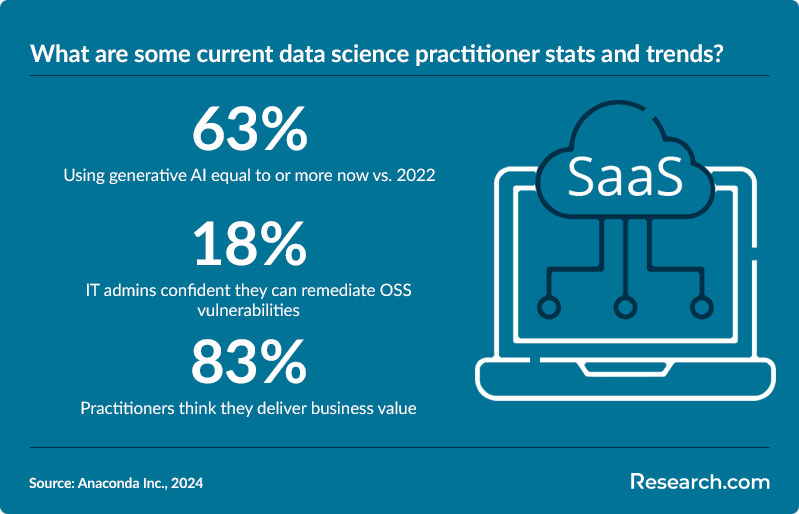
Current workplace trends strengthen the case for short, targeted analytics training. The referenced data below notes that 63% of data science professionals now use generative AI as much or more than in 2022, and 83% believe they contribute business value. Those findings show why analytics programs increasingly emphasize practical use of data, automation, and business impact.
How do online graduate certificate programs in data analytics compare to on-campus programs?
Accredited online and campus-based graduate certificates can be academically comparable when they use the same faculty standards, learning outcomes, assessments, and institutional accreditation. Drexel University notes that online students may learn from the same faculty and syllabi as campus students while using online support services and digital libraries.
Accreditors such as HLC and MSCHE require institutions to maintain appropriate learning standards across delivery modes. This means the real comparison is not simply “online versus campus,” but whether the program is accredited, rigorous, well-supported, and aligned with your goals.
Demand for online graduate education has grown. NCES data show 56% of post-baccalaureate students were taking at least one distance-education course in fall 2021, compared with 42% before the pandemic. A 2025 Society for Human Resource Management survey found that 92% of HR leaders consider accredited online credentials equal to campus equivalents when skills are demonstrated on the job.
| Factor | Online Certificate | On-Campus Certificate |
| Schedule | Often asynchronous with 7- or 8-week terms and multiple start dates | May require fixed class times and commuting |
| Networking | Usually virtual, through discussion boards, group projects, and online events | More face-to-face contact with faculty, classmates, and local employers |
| Access | Can be completed without relocating | Best for students near the campus or willing to move |
| Employer perception | Strongest when the school is accredited and skills are proven through projects | May appeal to employers familiar with a local university |
| Best fit | Working adults, remote learners, and students who need flexibility | Students who want in-person structure, labs, or local networking |
The same logic applies across other online professional programs, including an affordable master’s in emergency management online: the delivery method matters less than accreditation, curriculum quality, support, and fit.
What is the average cost of online graduate certificate programs in data analytics?
Online graduate certificate costs vary widely because tuition is set by each institution. Public universities may charge less than private nonprofit schools, but the final cost depends on per-credit tuition, number of required credits, fees, books, software, and whether your employer or military benefits will pay part of the bill.
NCES lists $12,596 as the average graduate tuition and fees at public universities and $28,017 at private nonprofit schools for academic year 2021-22. EducationData’s March 2025 update places the overall cost of college, including tuition plus living expenses, at $38,270 per student annually, with tuition alone averaging $9,750 for in-state public enrollees.
Tuition tends to rise over time. The Bureau of Labor Statistics reported a 2.3% rise in the college-tuition CPI between May 2024 and May 2025. Program pages also show variation: UW-Parkside charges $575 per credit, while CSU Global lists $500.
If your goal is affordability, compare total program cost rather than per-credit price alone. A lower per-credit rate may not save money if the certificate requires more credits or adds fees. Students comparing management-focused pathways can also review Research.com’s guide to business degree online cost.
| Cost Factor | Why It Matters | Question to Ask |
| Per-credit tuition | This is the largest visible cost but not always the full price. | Is tuition the same for online and out-of-state students? |
| Required credits | A 16-credit certificate can cost more than a 12-credit certificate even with lower tuition. | How many credits are required to graduate? |
| Fees | Technology, student, proctoring, or distance-learning fees can add up. | Are there required fees beyond tuition? |
| Books and software | Analytics courses may require software access, textbooks, or cloud tools. | Are tools included, free, or billed separately? |
| Transfer value | Stackable credits can reduce future master’s degree costs. | Will these credits apply to a master’s program? |
What are the financial aid options for students enrolling in online graduate certificate programs in data analytics?
Financial aid availability depends on the school, certificate structure, enrollment status, and whether the program is eligible for federal aid. Do not assume every graduate certificate qualifies for the same funding as a degree program. Ask the financial aid office before enrolling.
Graduate certificate students may be able to use Direct Unsubsidized Loans up to $20,500 per year and Graduate PLUS Loans for remaining eligible costs after filing the FAFSA. Pell Grants are generally limited to undergraduates.
NCES’s 2023 National Postsecondary Student Aid Study shows 72% of college students, including graduate and undergraduate students, received some form of aid in 2019-20, with the 2024 dataset expected to hold steady. SHRM’s 2024 benefits survey reports that 75% of U.S. employers offer tuition assistance, with an average annual cap of $5,322, slightly above the tax-free $5,250 threshold.
Veterans may be able to use the Post-9/11 GI Bill, which pays up to full tuition plus a monthly housing allowance through July 31 2025. The Lifetime Learning Credit can offset 20 percent of up to $10,000 in qualified expenses and phases out only after a modified AGI of $90,000 for single filers in tax year 2024.
Some schools package internal scholarships or tuition discounts with graduate certificates and online MBA programs. If you are considering future business study, ask whether the certificate can be applied to a larger degree and whether aid can be reused or extended.
| Funding Source | Who Should Check It | Important Caution |
| Federal loans | Students in eligible graduate certificate programs | Not every certificate is federal-aid eligible. |
| Employer tuition assistance | Working professionals | Employers may require minimum grades, job relevance, or a service commitment. |
| Veterans benefits | Eligible military-affiliated students | Confirm benefit coverage with both the VA and the school. |
| Institutional scholarships | Students applying to university-based certificates | Funding may be limited or tied to a degree program. |
| Tax credits | Students paying qualified education expenses | Eligibility depends on tax status and IRS rules. |
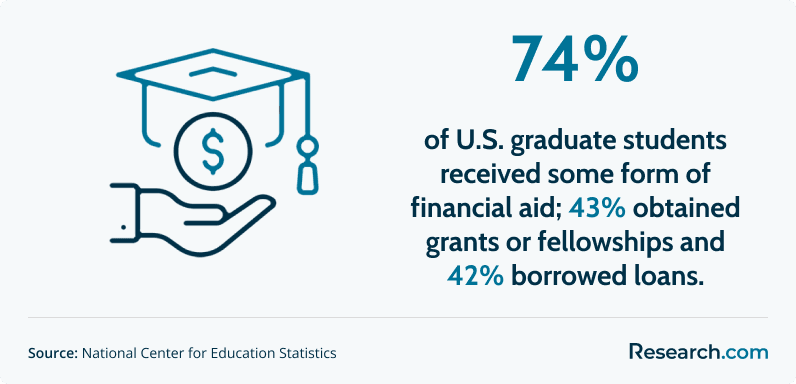
The data below notes that 74% of U.S. graduate students receive some form of financial aid, including grants, fellowships, or loans. That makes early financial-aid planning an essential part of comparing data analytics certificate programs.
What are the prerequisites for enrolling in online graduate certificate programs in data analytics?
Admissions requirements vary, but most online graduate certificates in data analytics expect applicants to show academic readiness for graduate-level quantitative work. Many programs are open to non-STEM majors, but students without a statistics or programming background may need prerequisite coursework or extra preparation.
Applicants comparing other graduate certificates, such as the cheapest online nurse administrator graduate certificate programs, will notice a similar pattern: schools usually require proof of prior education, transcripts, and evidence that the applicant can handle graduate coursework.
- Bachelor’s degree: Most programs require a bachelor’s degree from a regionally accredited institution. A STEM major is not always required.
- Minimum GPA: Some programs expect a cumulative GPA of 3.0 or a 3.0 in the last 60 semester hours.
- Alternate GPA pathway: Some applicants may qualify with an overall GPA of 2.5, a 2.75 in the final 60 credits, and three years of relevant work experience.
- Portfolio review: Applicants with a 2.5 GPA may be able to submit a professional portfolio that includes an application letter, résumé, and three recommendations.
- Statistics or calculus: Some schools require inferential statistics or calculus, which may be completed through a preparatory course such as BANA 7011 at University of Cincinnati.
- Programming fundamentals: Prior exposure to Python or SQL may be expected or strongly recommended.
- Standardized tests: GRE or GMAT requirements are often waived for certificate applicants.
- Bridge preparation: Students who want a stronger foundation before graduate study may compare the fastest online bachelor's degree programs in analytics.
What courses are typically in online graduate certificate programs in data analytics?
Most online graduate data analytics certificates use a sequence of four to five courses that move from foundational data skills into applied analysis. The strongest curricula combine theory, software practice, and business interpretation rather than teaching tools in isolation.
Students in other professional fields often make the same curriculum-quality check. For example, learners comparing the cheapest MSN nurse executive leadership degree online also need programs that connect coursework to real leadership and workplace problems.
| Course Area | What You Learn | Why It Matters at Work |
| Foundations of Analytics & Visualization | Descriptive statistics, chart design, dashboards, and communicating results | Helps you turn raw numbers into decisions that nontechnical stakeholders understand. |
| Data Management & SQL | Querying, cleaning, joining, and storing structured data | SQL is common in analyst job descriptions and daily reporting work. |
| Machine Learning Fundamentals | Supervised and unsupervised models for prediction and classification | Provides a foundation for data scientist or advanced analyst responsibilities. |
| Data Mining & Predictive Analytics | Clustering, regression, classification, and pattern detection | Supports forecasting, segmentation, fraud detection, and operational analysis. |
| Big Data Systems | Hadoop, Spark, and scalable data-processing pipelines | Useful for roles involving large datasets, cloud platforms, or engineering teams. |
| Capstone Project | Applied analysis using real-world datasets | Can become a portfolio piece for interviews and internal promotion discussions. |
Analytics also intersects with social science, policy, and research fields. Students interested in broader research-oriented options may compare accessible programs such as the cheapest online anthropology degree.
The chart below highlights employer-relevant skills often taught in certificates, including data analysis, Python, Power BI, and data management. These are the kinds of capabilities that can make a graduate certificate more than a line on a resume.
What types of specializations are available in online graduate certificate programs in data analytics?
Specializations help you align analytics training with an industry or technical direction. This matters because “data analytics” roles can differ greatly: a marketing analyst may focus on customer behavior, while a healthcare analyst may work with patient records, compliance, and decision-support systems.
| Specialization | Typical Focus | Best For |
| Business Analytics | KPI modeling, statistical analysis in R and SAS, data mining, machine learning, and Power BI dashboards | Professionals targeting consulting, finance, operations, or management analytics |
| Healthcare Analytics | Data management, decision-support systems, and analysis for patient care and operations | Healthcare workers, health IT professionals, and analysts interested in hospitals or insurers |
| Big-Data Engineering | Hadoop, Spark, cloud pipelines, and large-scale data processing | Students who want more technical infrastructure or data engineering exposure |
| Marketing Analytics | Predictive modeling, customer segmentation, A/B testing, campaign optimization, Python, SPSS, and digital metrics | Marketing, product, ecommerce, and customer-insights professionals |
| Policy Analytics | Using data science methods to analyze and evaluate public policy | Government, nonprofit, research, and public-affairs professionals |
| Artificial Intelligence & Machine Learning | Machine learning algorithms, natural language processing, computer vision, and robotics | Students aiming for more advanced AI-related analytics work |
Students who want to go beyond a certificate in a niche field can compare specialized master’s options. For example, the fastest online master's degree in sports analytics programs may suit learners interested in sports performance, fan analytics, and team strategy. Those focused on corporate decision-making may compare the shortest online master's in business analytics programs, while healthcare-focused students may review shortest HIM online degree programs.
What Is the Return on Investment for an Online Graduate Certificate in Data Analytics?
ROI depends on whether the certificate helps you reach a specific career outcome at a reasonable cost. A good ROI case usually includes a clear target role, a program that teaches tools used in that role, a manageable tuition bill, and credits that can be applied to a future degree if you continue studying.
Before enrolling, compare the full program cost with your likely career benefit. The return may come from a promotion, a move into analytics from another department, a stronger freelance or consulting profile, or a pathway into a master’s degree. If your goal is leadership, pairing analytics training with business education may improve the long-term value of the credential.
| ROI Question | Why It Matters |
| Will the certificate teach tools listed in jobs I want? | Employer alignment is more important than a broad course catalog. |
| Can I build a portfolio during the program? | Projects help prove ability, especially for career changers. |
| Are credits transferable into a master’s degree? | Stackable credits can reduce future time and tuition. |
| Will my employer pay part of the cost? | Employer funding can substantially improve ROI. |
| Is the school regionally accredited? | Accreditation affects credibility, transfer options, and financial aid eligibility. |
Can supplementing a data analytics certificate with a business degree boost career growth?
A data analytics certificate can sharpen technical ability, but business training can help you turn analysis into strategy. This combination is useful for roles where professionals must interpret data, explain trade-offs, manage teams, and influence decisions across departments.
Students who want this hybrid path may compare affordable online MBA AACSB accredited degree programs. An MBA is not necessary for every analyst, but it may be valuable for professionals targeting analytics management, consulting, product strategy, operations leadership, or executive-track roles.
How do you choose the best online graduate certificate program in data analytics?
The best certificate is the one that fits your current skill level, career target, budget, and timeline. A highly ranked program may still be a poor fit if it lacks the tools you need, costs too much, or cannot transfer into the degree you may want later.
- Verify accreditation: Confirm regional accreditation through official sources, such as the U.S. Department of Education or College Scorecard.
- Match the curriculum to job postings: Look for statistics, SQL, Python or R, visualization, machine learning, and applied projects.
- Check delivery format: Decide whether you can handle 7- or 8-week courses, asynchronous work, and accelerated deadlines.
- Compare total cost: Include tuition, required credits, fees, software, textbooks, and lost time.
- Ask about transferability: Prioritize programs whose credits can count toward a related master’s degree if that matters to you.
- Review student support: Career coaching, tutoring, faculty access, online libraries, and technical help can affect completion.
- Confirm financial aid: Some certificate programs qualify for federal aid and some do not.
- Evaluate employer value: Ask whether the program includes portfolio-ready projects, industry tools, and opportunities to demonstrate applied skills.
Accelerated certificate formats are popular in other operational fields as well. Professionals interested in data-driven logistics may compare a fast-track graduate certificate in supply chain management and logistics online.
| Common Mistake | Better Approach |
| Choosing the cheapest program without checking accreditation | Verify institutional accreditation before comparing price. |
| Assuming every online certificate qualifies for financial aid | Ask the financial aid office whether the specific certificate is eligible. |
| Focusing only on course titles | Review syllabi, tools, assignments, and capstone requirements. |
| Ignoring prerequisites | Assess your statistics, Excel, SQL, and programming readiness before starting. |
| Assuming salary outcomes are guaranteed | Use salary data as context, not as a promise of earnings. |
| Relying only on rankings | Use rankings as one input alongside cost, fit, accreditation, and career outcomes. |
How Can a Data Analytics Certificate Propel Your Transition to Business Leadership?
A data analytics certificate can support a move into leadership when it helps you make better decisions, communicate insights clearly, and connect data to operational goals. Managers increasingly need to understand dashboards, performance metrics, forecasting, and risk indicators, even if they are not full-time data scientists.
For professionals aiming at management roles, the certificate can be a first step. Additional business education may be useful if your target role involves budgeting, strategy, team leadership, or cross-functional decision-making. Research.com’s guide to the top business schools offering online MBA degrees can help students compare broader management pathways.
What career paths are available for graduates of online graduate certificate programs in data analytics?
Graduates can pursue entry-level, mid-level, specialized, or leadership roles depending on prior experience. A certificate may be enough to strengthen an existing business or technical role, but career changers often need a portfolio, internships, freelance projects, or internal analytics experience to compete for jobs.
| Role | Typical Responsibilities | Career Notes |
| Analyst I & II | Collect, clean, analyze, and report data for teams or departments | Often a starting point for new analytics professionals |
| Senior Analyst | Lead complex analysis, create reporting standards, and mentor junior analysts | Usually requires experience beyond the certificate |
| Data Scientist | Develop predictive models and use machine learning for advanced analysis | Employment is projected to grow 36% by 2033 |
| Business Analyst | Translate business problems into data requirements and actionable recommendations | Good fit for professionals with domain or operations experience |
| Systems Analyst | Improve systems, workflows, and data processes | Projected 11% growth |
| Database Administrator | Maintain, secure, and optimize databases | Projected 9% growth |
| Information Systems Manager | Oversee analytics platforms, data systems, and technology teams | 17% growth and often requires management experience |
| Analytics Consultant | Advise organizations on analytics strategy, implementation, and reporting | Strong communication and business skills are essential |
| Project Manager | Plan and coordinate analytics initiatives across teams | Useful for professionals who combine analytics and execution skills |
| Consultant | Guide organizations through data-driven transformation | Often benefits from industry specialization |
Cybersecurity and governance knowledge can strengthen analytics careers in regulated or data-sensitive industries. Professionals who want to combine analytics with security leadership may explore accelerated CISSP certification training online.
The salary chart below illustrates that data analytics certificate graduates may pursue roles ranging from analysts earning $74K to Information Systems Managers averaging more than $170K. Actual pay depends on experience, employer, location, and scope of responsibility.
What is the job market like for graduates of online graduate certificate programs in data analytics?
The job market for analytics professionals remains strong because organizations continue to rely on data for operations, customer strategy, product decisions, fraud detection, healthcare improvement, and automation. The strongest candidates are not just tool users; they can frame business questions, analyze data accurately, and communicate decisions clearly.
Employment of data scientists is projected to grow 36% from 2023 to 2033, with about 20,800 annual openings. Data analysts are forecast to see 11% growth from 2018 to 2028, equal to roughly 108,400 new positions during that period. There are currently over 93,000 practicing data analysts in the U.S.
Business intelligence, finance, healthcare, entertainment, and technology continue to hire analytics talent. Connecticut, New Jersey, Maryland, and the District of Columbia rank highly for analyst job density and median pay in the cited Zippia analysis.
Employers increasingly accept accredited online learning when candidates can prove skills. The cited SHRM finding reports that 92% of HR leaders view accredited online programs as equivalent to campus programs when skills are demonstrated. Students who want a broader credential than a certificate may compare online data analytics programs.
Career growth may also come from combining analytics with data governance, information security, or risk management. Professionals pursuing those dual-role opportunities may consider the shortest CISM training online.
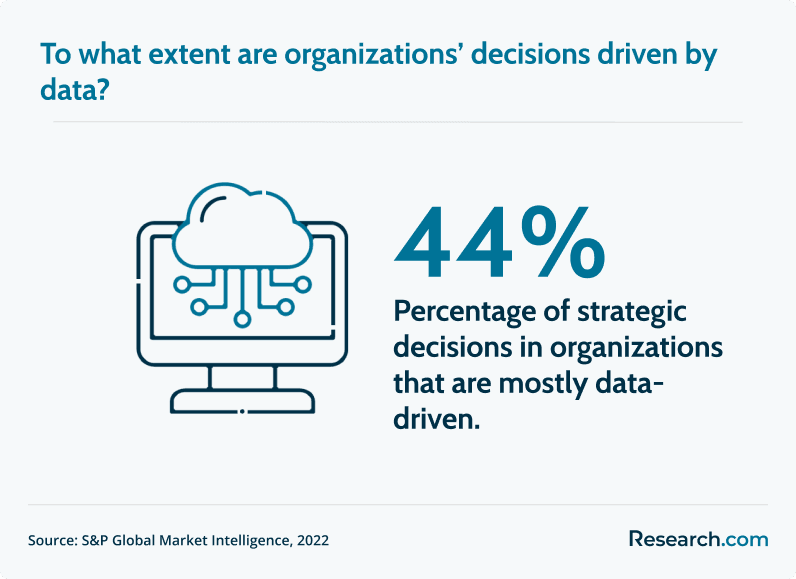
The chart below notes that only 44% of organizations say most of their strategic decisions are data-driven. That gap creates opportunity for professionals who can help teams move from raw data collection to reliable, decision-ready insights.
Can integrating project management skills boost a data analytics career?
Project management skills can make analytics professionals more valuable because data work often depends on timelines, stakeholder coordination, shifting requirements, and cross-functional communication. Analysts who can define scope, manage deadlines, organize deliverables, and communicate risks are better prepared for leadership-track roles.
This combination is especially useful for analytics consultants, business analysts, data product managers, and team leads. If you want formal training in execution and coordination, compare options such as the quickest project management degree online.
Questions to Ask Before Enrolling
- Is the institution regionally accredited?
- Does the certificate qualify for federal financial aid, employer reimbursement, or veterans benefits?
- Which tools are taught: SQL, Python, R, Tableau, Power BI, cloud platforms, or machine learning libraries?
- Will I complete a capstone or portfolio project?
- Can credits transfer into a related master’s degree or MBA?
- Are courses asynchronous, synchronous, or a mix of both?
- How many hours per week should I expect to study?
- What student support is available online?
- What background in statistics or programming is expected before the first course?
- How does the program help students prepare for interviews or career changes?
Related Online Education Paths to Consider
A data analytics graduate certificate is not the only route to career advancement. If your goals include management, operations, healthcare leadership, cybersecurity, or a full graduate degree, compare related pathways before committing.
- Affordable online MBA programs may suit students who want broader business leadership training.
- Affordable AACSB-accredited online MBA programs can be a strong option for students who value business-school accreditation.
- Best online MBA programs may fit students planning for management or executive roles.
- Online data analytics degree programs are worth comparing if you want a more comprehensive credential than a certificate.
- Fast CISM training online and accelerated CISSP certification training online may complement analytics work in security-sensitive environments.
Key Insights
- Online graduate certificates in data analytics are best for learners who need focused, graduate-level analytics training in a shorter format than a master’s degree.
- Many programs can be finished in 6–12 months, but accelerated pacing is demanding and works best for students with enough weekly study time.
- Accreditation, curriculum quality, tool coverage, and portfolio projects matter more than speed alone.
- Data scientists are projected to see 36% employment growth from 2023 to 2033, and median annual pay was $112,590 in May 2024, but individual outcomes depend on experience, location, and role.
- Before enrolling, compare total cost, not just tuition per credit. Fees, required credits, software, books, and transfer value can change the real price.
- Online and campus credentials can be viewed similarly by employers when the institution is accredited and the candidate can demonstrate skills.
- The strongest ROI usually comes from certificates that align with a specific job target, teach in-demand tools, and allow credits to stack into a master’s degree or MBA.
- Common mistakes include ignoring accreditation, assuming financial aid eligibility, choosing only by ranking, and expecting a certificate to guarantee a salary increase.
References:
- Applied Economics at Boston College. Graduate Certificate in Data Analytics.
- Bureau of Labor Statistics. Data Scientists.
- Bureau of Labor Statistics. Data Scientists – Job Outlook.
- CareerFoundry. Top Industries Hiring Data Professionals.
- Catalog – Concordia University, St. Paul. Graduate Certificate in Data Analytics.
- Christian Brothers University. Graduate Certificate in Data Analytics.
- Colorado State University – Global Campus. Graduate Certificate: Business Analytics.
- EducationData.org. Average Cost of College & Tuition.
- Franklin University. Graduate Certificate in Data Analytics.
- Glassdoor. Data Analyst Salaries.
- Graduate School Online – Northeastern University. Graduate Certificate in Data Analytics Online.
- Indeed. Data Analyst Salaries.
- IRS. Credits & Deductions for Individuals.
- National Center for Education Statistics. IPEDS Trend Generator.
- National Center for Education Statistics. NCES Press Release: Student Aid Data.
- Online & Distance Education – Drexel University. Online Degree vs. Traditional Degree.
- Online Business Programs – Southeastern Oklahoma State University. Data Analytics Certificate.
- Online Certificates – UNC Chapel Hill. Graduate Certificate in Data Analytics & Decision Making.
- Online Degrees – UW Parkside. Data Analytics Certificate.
- PayScale. Data Analyst Salary.
- Salary.com. Data Analyst I Salary.
- Stonehill College. Data Analytics Graduate Certificate.
- U.S. Department of Veterans Affairs. Post-9/11 GI Bill Tuition Rates.
- Zippia. Best States for Data Analyst Jobs.
- Zippia. Data Analyst Salary Data.
- ZipRecruiter. Data Analyst Salary.
Other Things You Should Know About the Fastest Online Graduate Certificate Programs in Data Analytics
Many accelerated programs include a capstone or applied project, but it is not universal. Some 12- to 15-credit certificates replace a capstone with course-based assessments, while others require a final project that uses tools such as SQL, Python, Tableau, or R to show job-ready analysis skills.
Applicants should possess proficiency in programming languages like Python or R, as well as a solid understanding of statistics and data visualization tools. These skills are essential for successfully navigating an online graduate certificate program in data analytics in 2027.
Prerequisites typically include a bachelor's degree in a related field and familiarity with statistics and programming. Some 2027 programs might also require prior coursework in calculus or linear algebra. Verify specific requirements with the institution offering the certificate.





