
2027 Best Online Data Analytics Bootcamps

Co-Founder and Chief Data Scientist
It often feels like you need a special kind of background to land a great career in tech. However, the reality is that the rules have changed. The field of data analytics has opened doors for people from all walks of life, creating one of the most direct paths to a stable, high-paying career. In fact, the profession is projected to grow by 36%, with about 20,800 openings each year.
To help you seize this opportunity, our career planning experts, with over 10 years of experience, created this guide. We'll show you exactly how online data analytics bootcamps can provide the skills you need.
What are the benefits of getting an online data analytics bootcamp?
- It provides a direct path to a career in a high-growth, in-demand field where your skills are needed now.
- You gain access to significant earning potential, with top-paying industries offering data scientists an annual mean wage that can exceed $200,000.
- You can access the best, most effective training programs from anywhere, removing geography as a barrier to your career change.
What can I expect from online data analytics bootcamps?
You can expect a quality program to deliver three core things: an intensive, hands-on curriculum, a portfolio of real-world projects to show employers, and dedicated career support.
This is very different from simply watching pre-recorded videos. The best online data analytics bootcamps are structured, interactive programs with live instruction, mentorship, and a community of peers learning alongside you. The entire experience is built to keep you engaged and on track.
This immersive model has been proven to be effective. It’s why graduates report being 70% more productive and 76% more innovative in their new roles. They learn how to produce a better quality of work, and that’s something employers can see. It’s a challenging path, but it’s designed to make you job-ready, fast.
Where can I work with an online data analytics bootcamp?
You can work in almost any industry you can imagine. This is one of the most significant advantages of acquiring data skills.
Think of it this way: if you have a background in finance, healthcare, or retail, you can combine that domain knowledge with new data skills to become the most valuable person in the room. You’re not starting over; you’re upgrading your expertise.
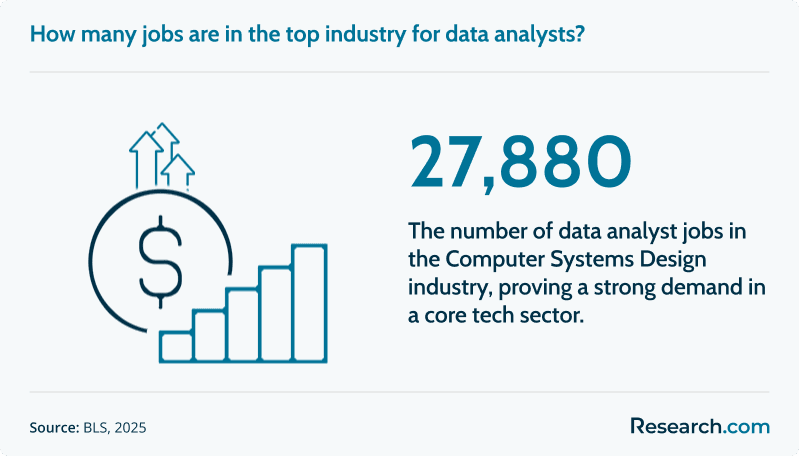
Forget the idea that you have to work for a big tech company. Some of the top industries currently hiring data professionals include Computer Systems Design, with nearly 28,000 jobs; Management of Companies, with over 26,000 jobs; and Insurance Carriers, with more than 13,600 positions. Every company is becoming a data company, and they need people who can help them make smarter decisions.
How much can I make with an online data analytics bootcamp?
The average salary for a data analyst is $74,342, based on 2025 data from Zippia.
But the starting salary isn't the most important number. The real story is the long-term growth potential that these skills unlock for your career.
With a few years of experience, your earning power increases significantly. In top-paying industries like media streaming and software publishing, the annual mean wage for experienced data scientists can exceed $200,000. This is a field that rewards expertise and offers a very high ceiling for growth.
- List of the Best Online Data Analytics Bootcamps for 2027 List of Programs
- How long does it take to complete an online data analytics bootcamp? Completion Time
- How does an online data analytics bootcamp compare to an on-campus program? How does an online data analytics bootcamp compare to an on-campus program?
- What is the average cost of an online data analytics bootcamp? Program Cost
- What are the financial aid options for students enrolling in an online data analytics bootcamp? Financial Aid
- What are the prerequisites for enrolling in online data analytics bootcamps? What are the prerequisites for enrolling in online data analytics bootcamps?
- What courses are typically in an online data analytics bootcamp? What courses are typically in an online data analytics bootcamp?
- What types of specializations are available in an online data analytics bootcamp? What types of specializations are available in an online data analytics bootcamp?
- How to choose the best online data analytics bootcamp? How to choose the best online data analytics bootcamp?
- What career paths are available for graduates of online data analytics bootcamps? Career Paths
- What is the job market for graduates of an online data analytics bootcamp? Job Market
- How do data analytics bootcamps compare to a computer science accelerated program? How do data analytics bootcamps compare to a computer science accelerated program?
- How can bootcamp credentials lead to further academic opportunities? How can bootcamp credentials lead to further academic opportunities?
Best Online Data Analytics Bootcamps for 2027: Programs, Costs, Timelines, and Career Fit
Choosing an online data analytics bootcamp is not just a question of which school has the best branding. You need to know whether the curriculum teaches job-ready tools, whether the schedule fits your life, whether the price makes sense, and whether the career support is strong enough to help you move from training into an analytics role.
This guide is for career changers, recent graduates, working professionals, and students comparing fast-track analytics training options. It explains what online data analytics bootcamps teach, how long they take, what they cost, how they compare with degrees and certificates, and which questions to ask before enrolling.
You will also find a ranked shortlist of online bootcamps, practical selection criteria, common mistakes to avoid, and career paths that may follow after graduation.
Quick answer: What is the best online data analytics bootcamp?
The best online data analytics bootcamp depends on your starting point and career goal. If you want an immersive career-change program, prioritize a bootcamp with SQL, Python, data visualization, statistics, portfolio projects, and structured career coaching. If you already work in business, marketing, finance, operations, or technology, a shorter or more specialized program may be enough to help you apply analytics skills in your current field.
For most students, the strongest choice is not the cheapest or shortest program. It is the one that offers the right mix of curriculum depth, mentor access, job-search support, transparent outcomes, and a schedule you can realistically complete.
How we evaluate online data analytics bootcamps
Our rankings are designed to help readers compare programs using practical decision factors, not marketing claims alone. We consider curriculum relevance, program length, tuition transparency, portfolio development, student support, career preparation, and whether the program teaches tools commonly used in analytics roles.
We also review information from established education data sources, including the IPEDS database, Peterson's database, College Scorecard, and the National Center for Education Statistics. For more detail on how Research.com evaluates education options, see our full ranking methodology.
| Bootcamp | Program Length | Total Tuition | Best Fit |
| Fullstack Academy | 10-26 weeks | $12,995 | Learners who want a hands-on curriculum with GenAI applications and Tableau certification preparation |
| General Assembly | 12 weeks full-time or 32 weeks part-time | $16,450 | Students seeking an intensive program with employer connections and career coaching |
| Flatiron School | 15 weeks full-time or 45 weeks part-time | $15,000 | Learners who want project-based data science training with Python, SQL, and machine learning exposure |
| Springboard | 6 months | $11,300 | Students who value 1:1 mentorship, project work, and a job guarantee model |
| CareerFoundry | 6-10 months | $7,900 | Self-paced learners who want mentor and tutor support with specialization options |
| Chegg Skills | 6-8 months | Price by quote | Beginners focused on Excel, SQL, Tableau, and guided mentorship |
| California Institute of Technology | 22 weeks | $2,790 | Learners interested in a Caltech CTME certificate with data analytics and Generative AI |
| Nashville Software School | 15 weeks | $7,875 | Students who want a full-time, career-focused program using real company data |
| BrainStation | 4-8 weeks | Price by quote | Professionals seeking a shorter certification course in Excel, MySQL, and Tableau |
| Springfield Technical Community College | 16 weeks | $6,300 | Learners who want AI copilot exposure, portfolio projects, and career coaching |
1. Fullstack Academy - Live Online Data Analytics Bootcamp
Fullstack Academy offers a live online analytics program built around applied technical training, portfolio work, and career preparation. The curriculum emphasizes practical analytics skills, including GenAI applications and data visualization, and includes focused preparation for the Tableau Desktop Specialist certification.
- Program Length: 10-26 weeks
- Total Tuition: $12,995
- Key Portfolio Project: Students develop a professional project portfolio during the bootcamp and complete a final capstone that can be used to demonstrate employer-ready analytics skills.
2. General Assembly - Online Data Analytics Bootcamp
General Assembly provides a structured online data analytics bootcamp for students who want an intensive training experience with career coaching and employer-facing support. The program covers core tools such as SQL, Python, and Power BI, while also giving students broad exposure to AI concepts used in modern analytics work.
- Program Length: 12 weeks (full-time) or 32 weeks (part-time)
- Total Tuition: $16,450
- Key Portfolio Project: Students create multiple projects that show how they can analyze data, solve business problems, and communicate findings to hiring teams.
3. Flatiron School - Data Science Bootcamp
Flatiron School offers a project-centered data science bootcamp that combines technical instruction with a support model built around a 5:1 student-to-teacher ratio. Students work with Python, SQL, visualization tools, and applied modeling concepts through hands-on assignments from the beginning of the program.
- Program Length: 15 weeks (full-time) or 45 weeks (part-time)
- Total Tuition: $15,000
- Key Portfolio Project: The capstone sequence includes three separate portfolio projects using regression, supervised learning, and unsupervised learning models to address business problems.
4. Springboard - Data Analytics Bootcamp x Microsoft
Springboard combines a project-based analytics curriculum with 1:1 mentorship and a Microsoft partnership. The program is designed for learners who want both technical training and guidance on how analysts think through business questions, data quality, stakeholder needs, and recommendations.
- Program Length: 6 months
- Total Tuition: $11,300
- Key Portfolio Project: Students complete two capstone projects using real-world datasets and end-to-end analysis workflows that can strengthen a job-search portfolio.
5. CareerFoundry - Data Analytics Program
CareerFoundry is a flexible, self-paced option for students who want guided support without a fixed full-time schedule. Learners receive 1:1 help from both a mentor and a tutor, and the program allows students to specialize in machine learning or data visualization after building foundational analytics skills.
- Program Length: 6-10 months
- Total Tuition: $7,900
- Key Portfolio Project: Students complete a specialization project in either Machine Learning with Python or Data Visualizations with Python to demonstrate focused technical ability.
6. Chegg Skills - Professional Certificate - Data Analytics
Chegg Skills focuses on the core tools many entry-level analysts use: Excel, SQL, and Tableau. The program includes 1:1 mentorship from an industry professional and uses hands-on assignments to help learners show technical competence and analytical thinking.
- Program Length: 6-8 months
- Total Tuition: Price by quote
- Key Portfolio Project: Students build a project portfolio that reflects their skills across the program’s main technical areas and shows how they approach business-focused data tasks.
7. California Institute of Technology - Professional Certificate in Data Analytics and Generative AI
Caltech offers a professional certificate through Caltech CTME that combines data analytics with Generative AI applications. The program includes live expert-led sessions and more than 15 domain-specific projects, making it a strong option for learners who want a university-affiliated credential with applied AI exposure.
- Program Length: 22 weeks
- Total Tuition: $2,790
- Key Portfolio Project: Students complete a capstone that requires them to apply the program’s analytics and AI skills to a complex business problem.
8. Nashville Software School - Full-Time Data Analytics Bootcamp
Nashville Software School offers a full-time online analytics program that uses real data from local companies. The curriculum covers Excel, Python, SQL, and Tableau, while also emphasizing career readiness and support after graduation.
- Program Length: 15 weeks
- Total Tuition: $7,875
- Key Portfolio Project: Students complete an individual capstone that follows the full analytics workflow, from defining a problem and preparing data to presenting insights.
9. BrainStation - Data Analytics Certification
BrainStation provides an online data analytics certification taught by industry professionals, including instructors with experience at companies such as Amazon and Meta. The course focuses on practical tools including Excel, MySQL, and Tableau and leads to the BrainStation Data Analyst Certification (DAC™).
- Program Length: 4-8 weeks
- Total Tuition: Price by quote
- Key Portfolio Project: Students assemble a data analytics portfolio throughout the course using real-world projects that show their practical experience and technical focus.
10. Springfield Technical Community College - Data Analytics Bootcamp
Springfield Technical Community College offers a 16-week online bootcamp that incorporates AI copilots, including ChatGPT, into the learning process. Students work on applied analytics projects, build a job-ready portfolio, and receive personalized career coaching from the beginning of the program.
- Program Length: 16 weeks
- Total Tuition: $6,300
- Key Portfolio Project: Students complete a sponsored capstone using a real dataset and apply the full workflow from data cleaning through final presentation.
How long does an online data analytics bootcamp take?
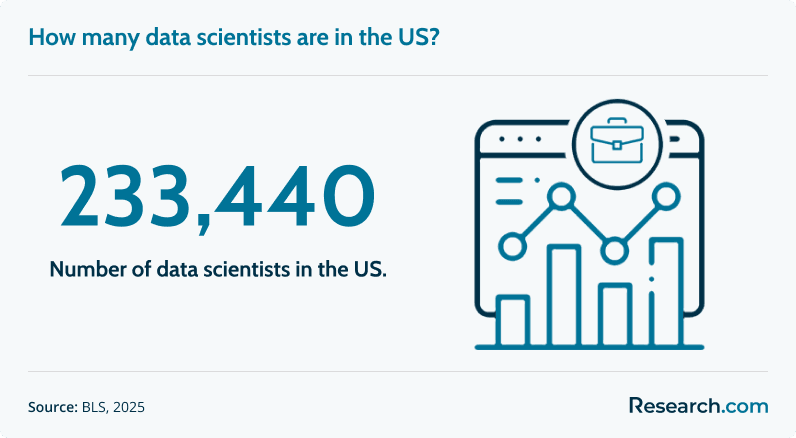
Online data analytics bootcamps can last from 4 weeks to more than eight months. For students making a full career transition, most immersive programs take 15 to 26 weeks because they must cover technical tools, statistics, portfolio projects, and career preparation. The commitment can be demanding, but data work is a large labor category, with 233,440 data scientists currently working in the U.S.
The right timeline depends on whether you want a quick skills upgrade or a more complete career-change pathway. This is similar to online CDL training, where a shorter route may help with a basic credential, while a longer program may provide broader professional preparation.
A short bootcamp is not automatically better. A longer program may be more useful if you need foundational instruction, repeated practice, instructor feedback, portfolio development, and job-search help.
Choosing the right bootcamp length
| Program Type | Typical Use Case | Who It Makes Sense For | Main Trade-Off |
| Short course | Focused training in one tool or topic | Working professionals who need Excel, SQL, Tableau, Power BI, or Python practice | May not provide enough depth for a full career change |
| Immersive bootcamp | Career transition into analytics | Beginners or career changers who need structured instruction and projects | Requires more time, energy, and often more tuition |
| Part-time bootcamp | Skill building while working | Students balancing employment, family, or other responsibilities | Progress is slower and requires strong self-discipline |
| Self-paced program | Flexible completion schedule | Independent learners who can manage deadlines without frequent live classes | Less structure may make it easier to fall behind |
If speed is a major factor, compare the shortest data analytics training courses online, but do not choose based on duration alone. Match the program’s depth to the outcome you want.
Online vs. on-campus data analytics bootcamps: Which format is better?
The biggest difference between online and on-campus data analytics bootcamps is the learning format. Online programs are more flexible and can be completed from anywhere, while on-campus programs offer a fixed classroom environment and more in-person structure. In many cases, the technical curriculum and portfolio expectations are similar.
This decision is comparable to choosing between a campus-based nursing program and an online MSN in care coordination: the better option depends on your schedule, location, learning preferences, and need for face-to-face interaction.
A well-designed online bootcamp should not feel like watching videos alone. Strong programs include live instruction, group projects, instructor office hours, discussion channels, code or assignment reviews, mentor support, and career coaching.
| Factor | Online Bootcamp | On-Campus Bootcamp |
| Flexibility | Often better for students with jobs, families, or limited local options | Requires commuting and attending at fixed times and locations |
| Peer interaction | Usually occurs through live sessions, chat tools, and virtual projects | Happens naturally through in-person classes and group work |
| Access to programs | Allows students to enroll beyond their local market | Limited to programs within commuting distance or relocation range |
| Accountability | Depends heavily on program structure and student discipline | Physical attendance can create stronger routine and accountability |
| Best for | Self-motivated learners who need convenience | Learners who perform best in a classroom setting |
Bootcamp or academic certificate?
A bootcamp is usually designed for fast, applied workforce preparation. An academic certificate may be more formal and may focus on a narrower or more advanced subject area, especially when offered through a college or university.
If you prefer a university-affiliated credential but still want a shorter timeline than a full degree, compare the fastest online graduate certificate programs in data analytics. The right credential should match your career goal, not just your preferred school name.
How much does an online data analytics bootcamp cost?
Based on our research, the average cost is approximately $10,000, with most quality programs falling within a range of $3,000 to $16,000. Some programs publish a fixed tuition price, while others require students to request a quote.
The price difference between a bootcamp and a low-cost online course can be substantial because they are not selling the same experience. A short course may provide lessons and exercises. A bootcamp may include instructor access, structured deadlines, project reviews, mentorship, career coaching, interview preparation, and employer networking.
The cost structure is similar in principle to online MSN FNP programs, where tuition reflects not only course content but also advising, faculty support, clinical or practical preparation, and career relevance.
What your bootcamp tuition may cover
- Technical curriculum: Training in SQL, Python, spreadsheets, visualization tools, statistics, and analytics workflows.
- Instructor support: Live teaching, assignment feedback, office hours, and technical troubleshooting.
- Portfolio development: Projects that show employers how you clean, analyze, visualize, and explain data.
- Career services: Resume reviews, LinkedIn guidance, mock interviews, job-search planning, and employer introductions where available.
- Community and accountability: Cohorts, peer review, study groups, and progress tracking.
Before enrolling, ask whether the listed tuition includes all required materials, career services, certification exam preparation, and any software access. A program that looks cheaper at first may be less valuable if it provides little feedback or limited career support.
How can students pay for an online data analytics bootcamp?
Bootcamp students often have several payment choices, although options vary by provider. Because many bootcamps are not traditional degree programs, financial aid may work differently from federal aid used for accredited college degrees.
- Upfront Payment: Paying all tuition at once may qualify students for a discount, but it requires the most cash at enrollment.
- Monthly Installments: Installment plans divide tuition into smaller payments over the program period.
- Third-Party Loans: Some bootcamps work with lenders that offer education loans for career training programs.
- Income Share Agreements (ISAs): Students delay payment and repay a portion of income after securing qualifying employment.
Bootcamp financing is often narrower than aid for traditional programs such as an online general studies degree, but multiple payment models can make training more accessible for students who cannot pay full tuition immediately.
How income share agreements work
Income Share Agreements, often called ISAs, shift part of the financial risk from the student to the school or financing partner. Instead of paying full tuition before classes begin, students agree to pay a percentage of future earnings once they meet defined income conditions.
An ISA can be useful, but it should be reviewed carefully. Ask about the salary threshold, repayment percentage, payment cap, repayment term, job types that trigger repayment, and what happens if you leave the program or accept a lower-paying role.
| Payment Option | Potential Advantage | What to Check Before Signing |
| Upfront payment | May reduce total cost if a discount is available | Refund policy, withdrawal deadlines, and whether the program has a trial period |
| Installments | Spreads tuition over time | Fees, due dates, late-payment rules, and whether payments continue after withdrawal |
| Third-party loan | Can make enrollment possible without full cash payment | Interest rate, repayment start date, total repayment amount, and borrower protections |
| ISA | May reduce upfront cost and connect repayment to earnings | Income threshold, repayment cap, term length, and qualifying employment rules |
What are the prerequisites for online data analytics bootcamps?
Most online data analytics bootcamps are built for beginners, and many require only a high school diploma or GED. Strong motivation, time management, curiosity, and problem-solving ability often matter more than a previous technical background.
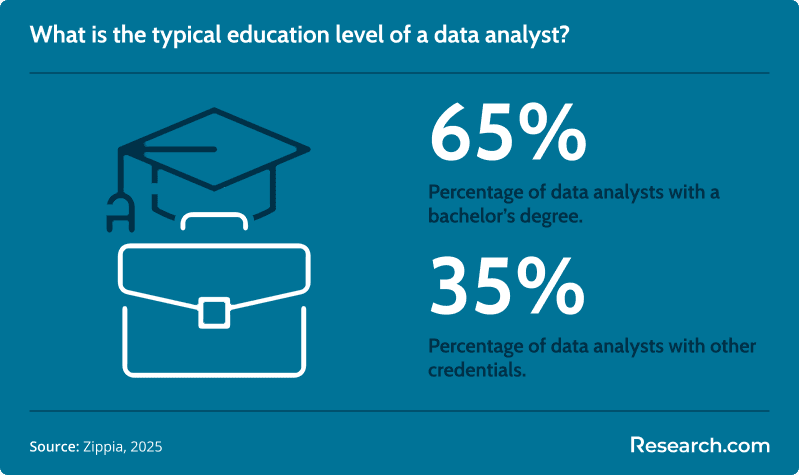
You generally do not need a computer science degree or a STEM degree to enroll. A bootcamp is intended to teach practical analytics skills from the ground up. A recent survey showed that while a bachelor's is typical, 35% of working data analysts succeed with other credentials.
That does not mean bootcamps are easy. Students should be ready to learn technical tools, practice consistently, revise projects after feedback, and explain their findings clearly.
Do you need a degree before a data analytics bootcamp?
A college degree is not always required for bootcamp admission, but some employers may still prefer or require one for certain analytics roles. Students who want a broader academic credential may compare bootcamps with bachelor’s or certificate programs before deciding.
If you want to understand how a degree pathway compares with bootcamp training, review fast-track bachelor's in analytics online programs. The best path depends on your timeline, budget, prior education, and target jobs.
What do students learn in an online data analytics bootcamp?
Online data analytics bootcamps usually focus on practical tools and workflows used in entry-level analytics jobs. The goal is to help students collect, clean, analyze, visualize, and present data in a way that supports business decisions.
- SQL: Students learn how to retrieve, filter, join, and summarize data stored in relational databases.
- Python: Students use Python to clean data, automate analysis, explore datasets, and apply basic analytical methods.
- Data Visualization: Programs often teach Tableau, Power BI, or similar tools so students can build dashboards, charts, and reports.
- Essential Statistics: Students learn the statistical foundations needed to identify patterns, avoid misleading conclusions, and interpret results responsibly.
What a strong bootcamp curriculum should include
| Curriculum Area | Why It Matters | Questions to Ask |
| SQL and databases | Many analyst jobs require pulling and shaping data from databases | Will I write SQL queries regularly, or only watch demonstrations? |
| Python or another analytics language | Programming helps automate cleaning, analysis, and reporting workflows | Will I complete projects using real datasets? |
| Visualization tools | Analysts must communicate findings to nontechnical stakeholders | Will I build dashboards and explain business recommendations? |
| Statistics | Statistical thinking helps prevent weak or incorrect conclusions | How much applied statistics is included? |
| Portfolio projects | Employers need evidence of practical ability | How many reviewed projects will I graduate with? |
| Career preparation | Technical skill alone may not be enough to secure interviews | Is job-search coaching included, and for how long? |
The best bootcamps revise their content as employer expectations change. Look for programs that teach current analytics tools while also emphasizing timeless skills: asking clear questions, validating data, communicating uncertainty, and making recommendations based on evidence.
What specializations are available in online data analytics bootcamps?
Some online data analytics bootcamps allow students to specialize after completing the core curriculum. Common focus areas include Business Intelligence, Data Visualization, machine learning foundations, advanced Python libraries, and analytics for specific business functions.
A specialization can help you connect analytics training with your previous experience. For example, a marketing professional may benefit from customer analytics and dashboarding, while someone with operations experience may focus on process metrics, forecasting, or supply chain data.
How to choose a data analytics specialization
| Specialization | Good Fit For | Career Angle |
| Business Intelligence | Learners who enjoy dashboards, reporting, and executive decision support | BI analyst, reporting analyst, analytics associate |
| Data Visualization | Students who like storytelling, presentation, and stakeholder communication | Visualization analyst, dashboard developer, business analyst |
| Python for analytics | Learners who want stronger technical and automation skills | Data analyst, junior data scientist, operations analyst |
| Machine learning foundations | Students who want exposure to predictive models and data science concepts | Junior data science pathway, analytics roles requiring modeling awareness |
Can specialization affect earning potential?
Specialization may improve your competitiveness when it matches employer demand, industry needs, or your prior work background. It does not guarantee a higher salary, but it can help you position yourself more clearly in the job market.
Location also matters. Some states and metropolitan areas have stronger demand for data professionals, which can influence pay. The following chart shows how salaries can vary by location and why students should think strategically about both specialization and target job market.
How to choose the best online data analytics bootcamp
To choose the best online data analytics bootcamp, focus on evidence. A reputable program should be clear about what it teaches, how students are supported, what projects graduates complete, and what career services are included. Avoid choosing based only on social media ads, limited-time discounts, or vague promises of “job-ready” training.
Look for programs that publish graduate outcomes or use reporting standards from organizations such as CIRR. Ask whether job placement data is independently reviewed, what types of jobs are counted, how long career support lasts, and whether outcomes include all graduates or only those who respond to surveys.
Questions to ask before enrolling
| Question | Why It Matters |
| What tools will I use every week? | You need repeated practice in SQL, Python, spreadsheets, visualization tools, and analytics workflows. |
| How many portfolio projects will be reviewed by instructors? | Feedback improves project quality and helps you avoid presenting weak work to employers. |
| Who teaches the program? | Instructors with field experience can connect technical lessons to real workplace problems. |
| What career services are included? | Resume help, interview practice, networking support, and job-search planning can be important after graduation. |
| Are job outcomes audited or clearly defined? | Transparent outcomes help you judge whether the program has a track record beyond testimonials. |
| What happens if I fall behind? | Policies on tutoring, pacing, extensions, and withdrawals can affect completion. |
| What is the refund policy? | You should know your financial risk before committing. |
Common mistakes when selecting a bootcamp
- Choosing only by price: Low tuition is useful, but a cheaper program may offer limited feedback, weaker projects, or little career support.
- Assuming shorter means better: A fast program can work for experienced learners, but beginners often need more practice and structure.
- Ignoring career services: Technical training without job-search support can leave graduates unsure how to position themselves.
- Not checking outcomes: Ask how job placement is measured and whether the numbers include all graduates.
- Overlooking schedule fit: A strong program still may fail for you if the pacing conflicts with work, caregiving, or other obligations.
- Relying only on rankings: Rankings can narrow your shortlist, but your final decision should reflect your goals, budget, and learning style.
After narrowing your options, compare bootcamps with other accelerated pathways. Reviewing the shortest online data analytics programs can help you decide whether a bootcamp, certificate, or degree is the better fit.
What jobs can you get after an online data analytics bootcamp?
Graduates of online data analytics bootcamps commonly pursue entry-level roles such as Data Analyst, Business Intelligence Analyst, Marketing Analyst, and Operations Analyst. These jobs use similar analytical skills but apply them to different business problems.
Your prior experience can be an advantage. A former retail manager may understand sales and inventory data. A finance professional may bring budgeting or reporting knowledge. A healthcare worker may already understand operational or patient-service metrics. Bootcamp training can help translate that domain knowledge into analytics work.
| Role | Typical Focus | Useful Bootcamp Skills |
| Data Analyst | Analyzing datasets, building reports, and answering business questions | SQL, Python, statistics, visualization, data cleaning |
| Business Intelligence Analyst | Creating dashboards and recurring reports for decision-makers | Tableau, Power BI, SQL, KPI design, stakeholder communication |
| Marketing Analyst | Measuring campaigns, customer behavior, and channel performance | Spreadsheets, visualization, segmentation, reporting, statistical reasoning |
| Operations Analyst | Improving processes, tracking performance, and identifying inefficiencies | SQL, Excel, workflow analysis, dashboards, process metrics |
Career growth after an entry-level analytics role
Entry-level analytics roles can lead to more advanced positions after you build experience and prove that your work improves decisions. Common next steps include Senior Data Analyst, Senior BI Analyst, Analytics Manager, and Director of Analytics.
As responsibilities grow, compensation can also increase, although salaries vary by employer, location, industry, and experience. Readers comparing long-term business analytics earning potential may also want to review how much business analysts make. It is also notable that data analysts are 52% more likely to work at public companies, which may affect the type of benefits and organizational structures graduates encounter.
What is the job outlook for online data analytics bootcamp graduates?
The broader labor market for data roles remains strong. According to the U.S. Bureau of Labor Statistics, employment for data scientists is projected to grow 36% through 2033, much faster than the average for all occupations.
Tech layoffs can make the market feel uncertain, but the long-term need for data skills is broader than the technology sector. Employers in finance, healthcare, retail, logistics, education, government, marketing, and manufacturing all use data to guide decisions. The challenge for job seekers is proving they can turn raw information into useful recommendations.
Why analytics skills remain in demand
Organizations continue to collect large volumes of data, but many still lack enough workers who can clean, analyze, interpret, and communicate that data. A recent survey found that 77% of organizations are impacted by the IT skills gap, and 44% report their most acute shortage is in data science and AI.
This does not mean every bootcamp graduate will get hired quickly or earn the same salary. Outcomes depend on portfolio quality, job-search effort, local market conditions, interview performance, prior experience, and the strength of the program’s career support.
Data analytics bootcamp vs. accelerated computer science program
A data analytics bootcamp is usually the better fit when your main goal is to move quickly into applied analytics work. A computer science accelerated program is broader and may be better if you want deeper training in programming, algorithms, systems, and software development.
| Pathway | Best For | Strength | Limitation |
| Data analytics bootcamp | Career changers targeting analyst roles | Fast, practical, project-based training in tools used by analysts | May not provide the theoretical depth of a degree program |
| Accelerated computer science program | Students seeking a broader technical foundation | Stronger coverage of computer science concepts and programming fundamentals | May take longer and may be less focused on analytics-specific job preparation |
If your target role is Data Analyst or BI Analyst, a bootcamp may be more direct. If you want software engineering, advanced technical roles, or a longer academic foundation, an accelerated computer science pathway may be more appropriate.
Can a bootcamp credential support further education?
A bootcamp credential can be a practical first step toward additional academic or professional training. Some learners use bootcamps to confirm their interest in analytics before pursuing a certificate, bachelor’s degree, graduate program, or industry certification.
Combining analytics skills with another field can also create a more specialized career profile. For example, pairing bootcamp training with a space studies degree may help students explore opportunities where data analysis intersects with aerospace, research, or technical operations.
Before using a bootcamp as a stepping stone, ask whether credits transfer, whether the credential is recognized by colleges, and whether your target employers value the specific bootcamp or certificate.
What graduates say about online data analytics bootcamps
- Orson: "I used to think analytics was only for people who were naturally strong at math. The program helped me break technical topics like Python into smaller steps I could actually practice. When I built my first useful data visualization, I finally understood that this career path was possible for me."
- Zola: "After ten years in retail management, I worried that moving into analytics would mean starting over. Instead, the bootcamp helped me connect data skills to the industry knowledge I already had. My retail background became part of my value, not something I had to hide."
- Aya: "The tuition decision was serious for me, but the outcome made the investment easier to justify. Within three months of finishing the program, I accepted a role with a salary that was 40% higher than what I had been earning. That change gave me more financial stability and made the training feel worthwhile."
Key Insights
- The best bootcamp is the one that matches your goal. Choose an immersive program for a career change and a shorter course if you only need a specific tool or skill upgrade.
- Curriculum depth matters more than speed. Strong programs teach SQL, Python, visualization, statistics, portfolio development, and job-search strategy.
- Cost should be evaluated by value, not tuition alone. Based on our research, online data analytics bootcamps average approximately $10,000, with most quality programs falling within a range of $3,000 to $16,000.
- Career support is a major differentiator. Look for resume coaching, interview practice, employer connections, portfolio reviews, and transparent graduate outcomes.
- Bootcamps are accessible to nontechnical learners. Many programs require only a high school diploma or GED, and 35% of working data analysts succeed with credentials other than a bachelor’s degree.
- The job outlook is strong but not automatic. The U.S. Bureau of Labor Statistics projects 36% growth for data scientists through 2033, but individual outcomes depend on skills, portfolio quality, experience, location, and job-search execution.
- Ask hard questions before enrolling. Confirm refund policies, financing terms, instructor experience, portfolio expectations, career services, and how job outcomes are measured.
References:
- Bureau of Labor Statistics, U.S. Department of Labor. (2025a). Occupational employment and wage statistics. Retrieved from BLS.
- Bureau of Labor Statistics, U.S. Department of Labor. (2025b). Data Scientists. Occupational Outlook Handbook. Retrieved from BLS.
- Pearson VUE. (2025). Certifications fuel the success in the age of AI. Retrieved from Pearson VUE.
- Revature. (2025, January 28). Survey reveals 77% of organizations have been impacted by the IT skills gap. Retrieved from GlobeNewswire.
- Zippia. (2025a). Data analyst jobs: Demographics. Retrieved from Zippia.
- Zippia. (2025b). Data analyst jobs: Education. Retrieved from Zippia.
- Zippia. (2025c). Data analyst jobs: Salary. Retrieved from Zippia.
Other Things You Should Know About Online Data Analytics Bootcamps
Top online data analytics bootcamps in 2027 typically teach skills such as statistical analysis, data visualization, and machine learning. They cover tools like Python, R, Tableau, and SQL, which are essential for a successful career in data analytics.
In 2027, some of the top-ranked online data analytics bootcamps include Springboard, Thinkful, and DataCamp. These programs are recognized for their strong curriculum, industry-relevant projects, and career support services, ensuring comprehensive preparation for a data analytics career.
You can build a strong professional network in an online bootcamp through collaborative projects, dedicated class communication channels like Slack, and virtual networking events. Quality programs encourage students to work together on assignments, simulating a real-world team environment. Many also have active alumni networks and host online meetups with hiring partners, giving you direct access to industry professionals.
Graduates face challenges in staying current due to rapid technological changes and evolving industry tools. Frequent updates in software and methodologies necessitate continuous learning, often requiring participation in ongoing education, industry webinars, and professional forums to maintain relevancy in the field of data analytics.





