
2027 Easiest Data Science Degree Programs

Co-Founder and Chief Data Scientist
Choosing the “easiest” data science degree is not about finding a program with no math, coding, or statistics. A credible data science degree will still require quantitative work. The better question is which program is easiest to access, fastest to complete, flexible enough for your schedule, and aligned with the kind of data job you want.
This guide is for students, career changers, working adults, and professionals who want a practical route into data science without spending unnecessary time or money. You will learn how accelerated, online, associate, bachelor’s, and master’s options compare; what courses and prerequisites to expect; how much programs may cost; how to evaluate accreditation and quality; and which career paths a data science degree can support.
Quick Answer: What Is the Easiest Data Science Degree to Get?
The easiest data science degree for most students is usually an online associate or bachelor’s program with flexible scheduling, strong academic support, applied projects, and clear transfer-credit policies. For professionals who already have a technical or quantitative background, an accelerated online master’s in data science may be the fastest option.
However, “easy” should not mean low quality. A useful data science program should still teach programming, statistics, data management, machine learning basics, visualization, and communication. The best choice is the program that matches your current skills, available time, budget, and career target.
What are the benefits of getting a degree in data science?
- A data science degree can prepare graduates for roles such as data scientist, machine learning engineer, data analyst, and business intelligence analyst in fields including healthcare, finance, technology, retail, and government.
- Data scientists earn a median annual salary of $100,910, and experienced professionals in specialized roles may earn more than $150,000 annually.
- Online data science degrees can make the path more manageable for working adults because they often reduce commuting and relocation barriers while allowing students to complete coursework around employment or family responsibilities.
What can I expect from a data science degree program?
A data science degree teaches students how to collect, organize, analyze, model, and explain data. Most programs combine computer science, statistics, mathematics, database systems, and applied analytics. Students commonly work with programming languages such as Python and R, statistical methods, machine learning, data visualization, and tools used to manage large datasets.
The strongest programs do more than teach theory. They require hands-on assignments, capstone projects, case studies, or portfolio work so students can show employers that they can solve practical problems. Communication also matters. Data professionals must explain patterns, model results, limitations, and recommendations to people who may not have a technical background.
What makes a data science degree “easy” or “fast”?
A program may feel easier or faster because of its format, not because the subject is simple. Common features include online delivery, asynchronous classes, generous transfer-credit policies, prior-learning credit, competency-based pacing, short terms, year-round enrollment, and strong tutoring or advising services.
| Program Feature | Why It Can Make the Degree Easier | What to Watch For |
| Online or asynchronous classes | Students can often study around work or family responsibilities. | Self-paced learning requires discipline and consistent time management. |
| Transfer credit | Prior college coursework may reduce the number of required classes. | Not all credits transfer, and some schools limit major-related transfer credits. |
| Competency-based structure | Students who already know some material may move faster. | This format can be difficult for students who need frequent deadlines. |
| Applied curriculum | Project-based courses can make abstract concepts easier to understand. | Students still need enough math and programming depth for career mobility. |
| Academic support | Tutoring, advising, and career coaching can reduce frustration and delays. | Support quality varies, so students should ask specific questions before enrolling. |
Where can I work with a data science degree?
Data science skills are used wherever organizations need to turn information into decisions. Technology companies hire data professionals to improve algorithms, user experiences, search systems, recommendation tools, and product performance. Healthcare organizations use analytics to study patient data, improve operations, support diagnoses, and personalize treatment approaches.
Finance employers use data science for risk modeling, fraud detection, portfolio analysis, and algorithmic trading. Retail and e-commerce companies rely on data professionals to forecast demand, improve supply chains, segment customers, and personalize marketing. Graduates may also find opportunities in insurance, education, manufacturing, logistics, energy, public policy, and research.
How much can I make with a data science degree?
According to the U.S. Bureau of Labor Statistics, data scientists earn a median annual salary of $100,910, with the top 10% earning over $167,000 per year. Entry-level positions such as data analyst or junior data scientist commonly list salaries ranging from $65,000 to $85,000, depending on employer, industry, location, and technical expectations.
With experience, stronger modeling skills, and a record of successful projects, graduates may move into roles such as machine learning engineer, senior data scientist, analytics lead, or data science manager. In these more advanced positions, salaries often exceed $120,000 to $150,000 annually.
- 2027 list of accessible and fast data science degree programs
- How long does the easiest data science degree take?
- Online vs. campus data science degrees
- Average cost of a data science degree
- Financial aid options for data science students
- Prerequisites for data science degree programs
- Common data science courses
- Specializations in easier or accelerated data science programs
- Emerging trends in data science education
- How programming training can strengthen data science preparation
- How to choose the best data science degree program
- Career paths for data science graduates
- Job market outlook for data science graduates
- How to assess accreditation and program quality
- How internships and industry partnerships help data science students
- Why a data science portfolio matters
- How AI master’s programs can expand data science expertise
- How electrical engineering can support data science innovation
- How cybersecurity skills can enhance data science careers
- How an IT degree can complement data science credentials
- How affordable engineering programs can support a data science foundation
- How health informatics can strengthen healthcare data science skills
Accessible and Fast Data Science Degree Programs for 2027
How should you use this list?
This list is a starting point, not a final enrollment decision. A program that is “easy” for one student may be difficult for another. For example, a self-paced online program may be ideal for someone with programming experience, while a more structured program may be better for a beginner who needs weekly deadlines and instructor interaction.
Research.com evaluates programs using a transparent ranking methodology. The process draws from sources such as the Integrated Postsecondary Education Data System database, Peterson's databases including the Distance Learning Licensed Data Set, and the College Scorecard database from the National Center for Education Statistics. Students should still verify current tuition, admissions requirements, delivery format, accreditation, and graduation requirements directly with each institution.
| School | Program | Best Fit | Key Format Detail |
| Arizona State University | MS in Data Science, Analytics and Engineering | Students seeking graduate-level analytics and engineering depth | Blend of online and on-campus options |
| Bellevue University | Bachelor of Science in Data Analytics | Working adults who need a fully online bachelor’s option | Delivered entirely online |
| University of Maryland Global Campus | Bachelor of Science in Data Science | Working adults and military-affiliated students | Delivered entirely online |
| Western Governors University | Bachelor of Science in Data Analytics | Self-directed students who want competency-based pacing | Delivered entirely online |
| Indiana University | Online Master of Science in Data Science | Professionals seeking a flexible graduate degree | Delivered entirely online |
Arizona State University
The MS in Data Science, Analytics and Engineering from Arizona State University was established in 2014 for students and professionals who want advanced preparation in data analysis, analytics systems, and engineering-oriented data work. The program offers online and on-campus study options and includes concentration areas such as machine learning, data mining, and data visualization.
- Program Length: 18-24 months (full-time)
- Tracks/Concentrations: Machine Learning, Data Mining, Data Visualization
- Tuition Cost: $12,562 (base tuition)
- Required Credits to Graduate: 30
- Accreditation: Higher Learning Commission (HLC), ABET
Bellevue University
The Bellevue University Bachelor of Science in Data Analytics, launched in 2015, is designed for working professionals who want to build applied analytics skills for business decision-making. Because the program is fully online, it may be easier to manage for students who cannot relocate or attend weekday campus classes.
- Program Length: 120 credit hours (approximately 4 years)
- Tracks/Concentrations: Data Science
- Cost per Credit: $449
- Required Credits to Graduate: 120
- Accreditation: Higher Learning Commission (HLC)
University of Maryland Global Campus
The Bachelor of Science in Data Science at the University of Maryland Global Campus was established in 2013 and is built for adult learners, including working students and military personnel. The curriculum emphasizes programming, statistics, and data analysis, and the fully online format supports students who need broad schedule flexibility.
- Program Length: 3 - 4 years
- Tracks/Concentrations: Data Science
- Cost per Credit: $250
- Required Credits to Graduate: 120
- Accreditation: Middle States Commission on Higher Education (MSCHE)
Western Governors University
The Bachelor of Science in Data Analytics from Western Governors University, launched in 2013, uses a competency-based model that lets students advance as they demonstrate mastery. This structure can be efficient for motivated learners with prior experience, but students who prefer live lectures and fixed class schedules should consider whether the format fits their learning style.
- Program Length: Based on student pace
- Tracks/Concentrations: Data Analytics
- Tuition Cost: $3,835 (tuition for 6-month term)
- Required Credits to Graduate: 120
- Accreditation: Northwest Commission on Colleges and Universities (NWCCU)
Indiana University
The Indiana University online Master of Science in Data Science, established in 2014, is intended for working professionals who want graduate-level training in statistical methods, machine learning, and big data technologies. The fully online format makes the program more accessible for students balancing study with full-time work.
- Program Length: 2 years (full-time)
- Tracks/Concentrations: Data Science
- Cost per Credit: $490
- Required Credits to Graduate: 30
- Accreditation: Higher Learning Commission (HLC)
How long does it take to complete the easiest data science degree program?
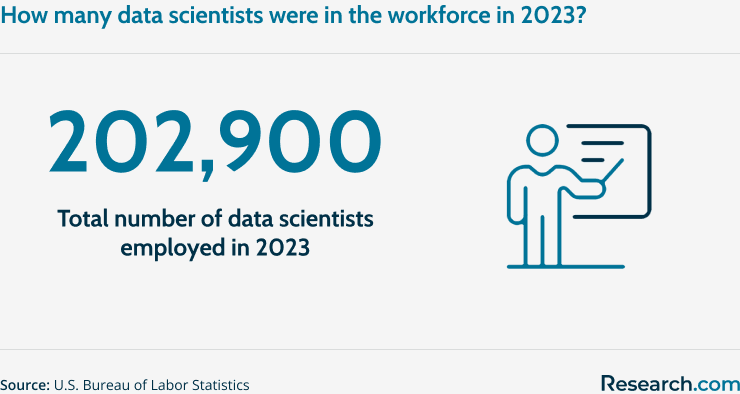
In 2023, there were 202,900 data science professionals in the U.S. workforce. For students trying to enter this field quickly, completion time depends mainly on degree level, transfer credits, enrollment intensity, and whether the program offers accelerated or self-paced options.
An associate degree is often the fastest academic entry point and may also serve as a lower-cost route into a bachelor’s program. Students comparing broader technology options may also want to review accelerated computer science degree programs, since computer science and data science curricula often overlap in programming, algorithms, databases, and systems thinking.
| Degree Path | Typical Timeline | When It Makes Sense |
| Associate in Data Science | 2 years (full-time); accelerated timeline of 12-18 months | Best for students seeking the shortest college-level start or a transfer pathway. |
| Accelerated Bachelor’s in Data Science | 2-3 years | Best for students with prior credits or the ability to study year-round. |
| Accelerated Master’s in Data Science | 12-18 months | Best for professionals with related academic or work experience. |
| Integrated BS/MS Programs | 4-5 years | Best for undergraduates who know early that they want graduate training. |
| Online Bachelor’s in Data Science | 3-4 years; some self-paced options may be completed in as little as 2.5 years | Best for students who need flexibility and may bring transfer credit. |
| Online Master’s in Data Science | 12-16 months for accelerated programs | Best for working professionals who can handle condensed graduate coursework. |
Ways to finish faster
- Transfer previously earned credits: General education and introductory computing courses may reduce the number of required credits.
- Ask about credit for prior learning: Some institutions evaluate professional experience, certifications, military training, or exams for credit.
- Consider dual enrollment: High school students may be able to earn college credit early, shortening the time needed after graduation.
- Choose year-round terms if realistic: Summer or accelerated sessions can shorten the calendar timeline, but they can also increase workload intensity.
How does an online data science degree compare to an on-campus program?
An online data science degree is usually the better fit for students who need flexibility, cannot relocate, work full time, or prefer to complete assignments outside a fixed classroom schedule. Many online programs use asynchronous lectures, virtual labs, discussion boards, cloud-based coding environments, and remote advising.
Online study can also reduce commuting, housing, and some campus-related costs. Research on the benefits of online and virtual learning highlights why flexibility and access are major reasons students choose remote formats. Still, online does not automatically mean easier. Students must be proactive about deadlines, technical troubleshooting, and asking for help.
On-campus programs may be better for students who want face-to-face access to professors, in-person collaboration, campus recruiting events, research labs, and a structured weekly schedule. Some campus programs also offer local internship pipelines or specialized facilities that are harder to replicate online.
| Factor | Online Data Science Degree | On-Campus Data Science Degree |
| Best for | Working adults, remote learners, self-directed students | Students who want structure, campus life, and in-person networking |
| Schedule | Often flexible or asynchronous | Usually follows set class meeting times |
| Networking | Virtual networking, online cohorts, remote career services | In-person events, clubs, labs, and local employer connections |
| Costs | May reduce commuting, housing, and relocation expenses | May involve housing, transportation, and campus-based fees |
| Learning style fit | Best for organized students who can manage independent work | Best for students who benefit from direct classroom interaction |
What is the average cost of a data science degree program?
Data science degree costs vary widely by school type, residency status, degree level, delivery format, and whether students already have transferable credits. Tuition is only one part of the total cost; technology fees, books, software, commuting, housing, and time away from work can also affect affordability.
| Degree Level | Estimated Cost Range |
| Associate's Degree | $10,000 - $30,000 |
| Bachelor's Degree | $20,000 - $100,000+ (in-state) $50,000 - $200,000+ (out-of-state) |
| Master's Degree | $30,000 - $150,000+ |
Associate degrees are typically the most affordable entry point, but they may not qualify graduates for every data science role. Bachelor’s degrees usually provide broader preparation in programming, statistics, databases, and applied analytics. Master’s degrees can be more expensive, but they may be useful for students pursuing advanced modeling, machine learning, research, or leadership roles.
Online programs may lower indirect costs, especially for students who would otherwise need to relocate. However, online students should still ask about technology requirements, proctoring fees, residency requirements, and whether tuition differs for in-state and out-of-state learners.
Students who want a shorter credential before committing to a full degree can compare online data analytics certificate programs. Certificates can help build targeted skills, but they should not be assumed to replace a degree for every employer or advanced role.
What are the financial aid options for students enrolling in a data science program?
Although data science programs can require a significant upfront investment, the field’s salary potential is one reason students consider the degree. The median annual wage of data science practitioners reached $108,020 in 2023, and students researching early career options may also want to review expected pathways for becoming a data analyst.
Students trying to limit debt should compare total program cost, not just advertised tuition. Graduate students can also review affordable online master’s in data science programs when evaluating return on investment.
Common financial aid options
- Federal grants: Pell Grants and Federal Supplemental Educational Opportunity Grants (SEOG) may help eligible undergraduate students reduce out-of-pocket costs.
- Federal loans: Direct Loans and Plus Loans can help cover tuition and approved education expenses, but students should compare repayment terms carefully.
- Scholarships: Merit-based, need-based, university-specific, department-based, and private scholarships may be available for data science, STEM, analytics, or technology students.
- Work-study: Eligible students may qualify for campus-based employment through work-study programs.
- Employer tuition assistance: Some employers reimburse part of an approved degree or certificate, especially when the training relates to analytics, business intelligence, or technology roles.
Questions to ask before borrowing
- What is the full program cost after fees, books, software, and required technology?
- How many credits will transfer, and how much will that reduce tuition?
- Are scholarships renewable, or do they apply only to the first term?
- Does the employer tuition benefit require staying with the company for a certain period?
- What monthly payment could the loan require after graduation?
What are the prerequisites for enrolling in a data science degree program?
Prerequisites differ by degree level and institution. Entry-level undergraduate programs may accept students with limited coding experience, while master’s programs often expect prior coursework or experience in math, statistics, computer science, engineering, or another quantitative field.
- High school diploma or GED: Most undergraduate programs require a high school diploma or equivalent credential. Students comparing the two can review this overview of the GED vs. high school diploma.
- Mathematics preparation: Algebra, geometry, trigonometry, and calculus can help students handle statistics, modeling, and algorithms.
- Science or quantitative coursework: Some programs prefer applicants with coursework in biology, chemistry, physics, economics, engineering, or another analytical subject.
- Programming exposure: Experience with Python, R, Java, or another language is often recommended, even when not required.
Additional expectations for master’s programs
- A bachelor’s degree is usually required, often in a related field such as computer science, mathematics, statistics, engineering, or another quantitative discipline.
- Some programs require undergraduate coursework in mathematics, statistics, and computer science.
- Applicants from nontechnical backgrounds may be considered if they have relevant work experience, strong quantitative skills, or prerequisite bridge coursework.
What courses are typically in a data science degree program?
Data science programs bring together math, statistics, programming, data systems, and applied problem-solving. Course names vary, but students should expect a curriculum that builds from foundational quantitative skills to practical analytics and modeling.
Mathematics foundations
- Calculus
- Linear Algebra
- Discrete Mathematics
- Probability and Statistics
Computer science and systems
- Programming Fundamentals (Python, R, Java)
- Data Structures and Algorithms
- Database Systems
- Operating Systems
Statistics and modeling
- Statistical Inference
- Regression Analysis
- Multivariate Analysis
- Time Series Analysis
Applied data science
- Machine Learning
- Data Mining
- Data Analysis and Interpretation
Courses beginners should not skip
Students looking for the easiest path sometimes try to avoid math or programming-heavy classes. That can backfire. Introductory statistics, Python, SQL, and data visualization are especially important because they support entry-level analytics work and help students build portfolio projects.
What types of specializations are available in the easiest data science degree programs?
Shorter associate and accelerated programs may offer fewer specialization choices than traditional bachelor’s or master’s degrees. Still, students can often choose electives, certificates, capstone topics, or project themes that point toward a career area. Students comparing technology majors can also review how broader computing programs relate to outcomes such as computer science degree salary potential.
| Specialization | Focus | Good Fit For |
| Business Analytics | Using data to support business planning, market analysis, customer segmentation, and forecasting | Students interested in management, operations, marketing, finance, or strategy |
| Data Analysis and Visualization | Cleaning, transforming, analyzing, and presenting data through reports and dashboards | Students targeting analyst, BI, or reporting roles; related options include an online data analytics degree program |
| Programming for Data Science | Using Python, R, and related tools for data manipulation, modeling, and automation | Students who want stronger technical depth and may later pursue machine learning or engineering roles |
| Data Entry and Management | Organizing, cleaning, validating, and maintaining datasets and basic database workflows | Students seeking entry-level data operations, data quality, or administrative analytics work |
What are the emerging trends in data science education?
Data science education is becoming more applied, interdisciplinary, and employer-facing. Programs increasingly use real datasets, team-based projects, industry case studies, and capstones that require students to explain business value rather than simply complete technical exercises.
Another trend is the integration of analytics with business strategy. Students who want to move into leadership, consulting, or analytics management may compare a data science degree with an affordable online MBA in data analytics. The best choice depends on whether the student wants deeper technical modeling skills or broader business decision-making preparation.
How can a complementary programming degree enhance your data science education?
Programming ability is one of the clearest ways to make a data science education more useful. Students who can write clean code, automate workflows, query databases, and deploy analytical tools are better prepared to move beyond spreadsheet-based analysis into scalable data work.
A student who feels underprepared in coding may benefit from additional computing coursework or a programming degree online. This can be especially helpful for learners aiming for data engineering, machine learning engineering, analytics software development, or technical data science roles.
How do you choose the best data science degree program?
The best program is not automatically the fastest, cheapest, or highest ranked. It is the one that helps you reach your goal with the least wasted time, lowest realistic cost, and enough academic support to finish. Data science is challenging, so students should look for a program that is manageable without being academically weak.
Step 1: Define what “easy” means for your situation
- Less math-heavy: Look for programs with applied analytics, business analytics, or visualization tracks, but avoid programs that eliminate essential statistics or programming.
- More flexible: Online, hybrid, evening, asynchronous, or competency-based programs may be easier for working adults.
- More supported: Tutoring, coding labs, faculty office hours, career coaching, and peer support can make a rigorous program more manageable.
Step 2: Match the program to your learning style
- Self-directed learners: Online and competency-based formats can work well if you can plan, study, and troubleshoot independently.
- Structured learners: Campus-based or synchronous online programs may be better if you need live instruction and weekly accountability.
- Hands-on learners: Prioritize programs with labs, portfolio projects, capstones, internships, or industry-sponsored assignments.
Step 3: Compare career alignment
- Choose business analytics or visualization if you want analyst or BI roles.
- Choose machine learning or AI coursework if you want technical modeling roles.
- Choose data engineering coursework if you are interested in pipelines, databases, and cloud-based data systems.
- Choose healthcare, finance, cybersecurity, or domain-specific electives if you want to work in a regulated or specialized industry.
Step 4: Verify quality before enrolling
- Curriculum: Check whether the program includes programming, statistics, databases, visualization, machine learning, and applied projects.
- Faculty: Look for instructors with current research, industry, or applied analytics experience.
- Student outcomes: Ask about graduation rates, employment support, internships, and alumni roles.
- Accreditation: Confirm that the institution is accredited by a recognized accreditor.
- Support services: Ask how students get help with coding, math, advising, and career preparation.
Common mistakes to avoid
| Mistake | Why It Matters | Better Approach |
| Choosing only because a program is advertised as easy | A weak curriculum may not prepare you for technical interviews or real projects. | Review required courses and sample assignments before applying. |
| Ignoring accreditation | Accreditation can affect credit transfer, employer recognition, and financial aid eligibility. | Verify institutional accreditation through official sources. |
| Comparing tuition only | Fees, software, books, housing, and lost income can change the true cost. | Estimate total cost of attendance and time to completion. |
| Assuming online means easier | Online courses may require more independent planning and self-teaching. | Ask about deadlines, instructor access, tutoring, and student success support. |
| Skipping portfolio development | Employers often want evidence of practical skills, not only a transcript. | Build projects throughout the program and revise them for job applications. |
What career paths are available for graduates of data science degree programs?
Data science graduates can pursue technical, analytical, business, research, and domain-specific roles. Some students also compare technology careers with people-centered fields, such as counseling; for those exploring nontechnical alternatives, Research.com has a separate guide on the easiest counseling degree programs.
| Career Path | What the Role Usually Involves | Helpful Preparation |
| Data Scientist | Analyzing large datasets, building predictive models, and converting results into recommendations | Statistics, machine learning, Python or R, data storytelling |
| Data Analyst | Collecting, cleaning, analyzing, and visualizing data to identify trends | SQL, spreadsheets, dashboards, statistics, communication |
| Machine Learning Engineer | Developing, testing, and deploying machine learning models | Programming, algorithms, model evaluation, software engineering |
| Data Engineer | Building and maintaining data pipelines, warehouses, and infrastructure | Databases, cloud tools, ETL, programming, systems design |
| Business Analyst | Using data to improve business processes and support decisions | Business analytics, reporting, stakeholder communication; related preparation includes data analytics degrees |
| Data Architect | Designing data systems that support quality, security, access, and governance | Database design, architecture, security, enterprise systems |
| Data Visualization Analyst | Creating visual reports and dashboards that make complex findings understandable | Visualization tools, design principles, analytics, storytelling |
| Research Scientist | Conducting research in artificial intelligence, machine learning, or data mining | Advanced math, graduate study, research methods, publication experience |
| Product Manager | Using data to understand users, prioritize features, and measure product success | Analytics, experimentation, communication, business strategy |
| Financial Analyst | Analyzing financial data for investment, risk, and opportunity assessment | Finance, statistics, modeling, visualization, business communication |
What is the job market for graduates with a data science degree?
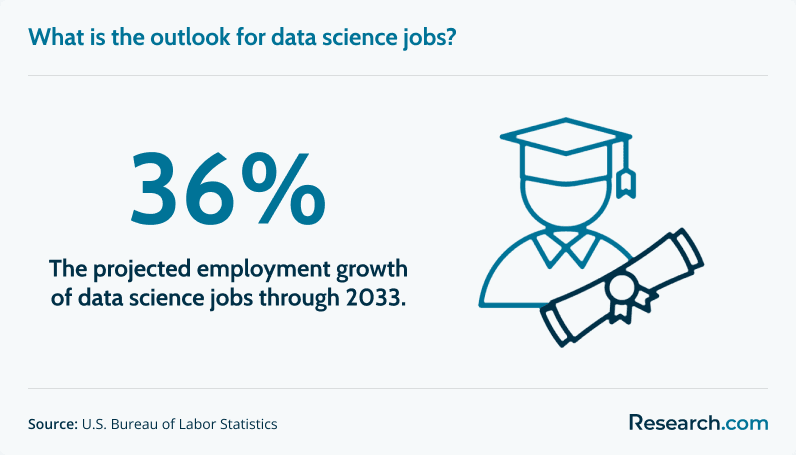
The job market for data science graduates remains strong, but it is not automatic. Data science is often grouped with high-paying computer science careers, and the Bureau of Labor Statistics projects 36% growth in data scientist employment from 2023 to 2033, which is much faster than the average for all occupations.
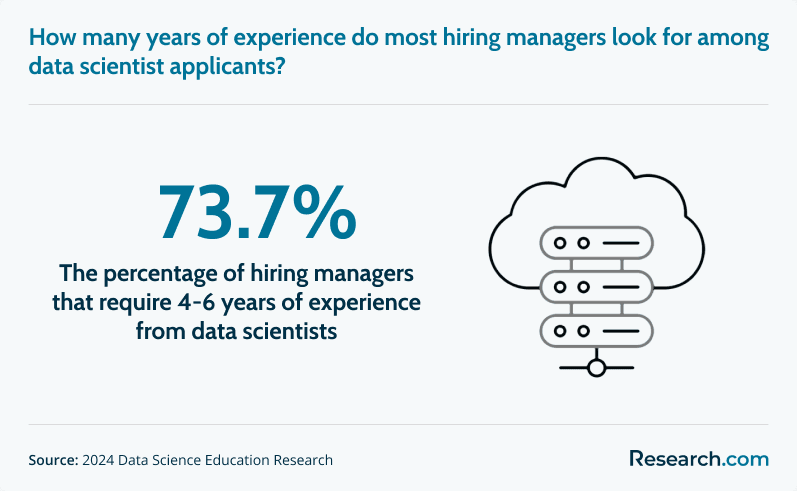
Competition is also increasing. Employers may expect applicants to show job-ready skills through projects, internships, technical interviews, and tools relevant to the role. Among hiring managers, 73.7% look for data scientists with four to six years of work experience, and data engineering roles accounted for 76.3% of high-demand data science positions.
Students exploring the broader technology market may also ask whether it is easier to enter adjacent areas such as cybersecurity. A related Research.com guide discusses easier cybersecurity degree programs for readers comparing tech pathways.
The most employable graduates usually combine technical ability with business judgment, communication skills, and evidence of applied work. A degree can open doors, but portfolio quality, internships, networking, and continuous learning often determine how quickly a graduate gains traction.
How can you assess a data science program's accreditation and quality?
Accreditation and quality checks are essential before enrolling, especially in online or accelerated programs. Start by confirming that the institution is accredited by a recognized accrediting body. Then review the data science curriculum, faculty credentials, student support services, career resources, graduation requirements, and whether the program regularly updates coursework as tools and employer expectations change.
Students who want a broader technical base before specializing can also compare data science programs with an affordable online computer science degree. Computer science may be a better fit for students who want deeper software, systems, and algorithms training.
Quality questions to ask an admissions advisor
- Is the institution accredited, and by which accreditor?
- How often is the data science curriculum updated?
- Which programming languages, databases, and analytics tools are used in courses?
- Are students required to complete a capstone, internship, or portfolio project?
- What support is available for students struggling with coding or statistics?
- What career services are available to online students?
- Can graduates share examples of job titles or industries they entered?
How do internships and industry partnerships enhance career opportunities in data science?
Internships, employer-sponsored projects, and industry partnerships give students a chance to apply classroom knowledge to real business problems. This experience can help students learn how messy real datasets are, how stakeholders define success, and how analytics projects move from question to recommendation.
Practical learning is especially valuable for students in short programs because they may have less time to build experience before graduation. Learners who want a shorter academic route can compare data science options with broader 2 year online degrees, especially if they plan to transfer later into a bachelor’s program.
How does developing a robust portfolio impact data science career prospects?
A portfolio helps translate a degree into proof of skill. Strong projects show that a candidate can define a problem, gather or clean data, select appropriate methods, build visualizations or models, explain limitations, and communicate a useful conclusion.
Students should prioritize quality over quantity. A few well-documented projects are more useful than many unfinished notebooks. Creative presentation can help, but the work should stay relevant to data roles. Students interested in visual design or interactive storytelling may find inspiration from related digital media fields such as online game development degree programs.
Can online artificial intelligence masters USA programs transform your data science expertise?
Artificial intelligence training can deepen a data science professional’s ability to work with machine learning, deep learning, natural language processing, and predictive analytics. This path is best suited for students who already have a solid foundation in programming, statistics, and modeling.
Professionals who want advanced AI preparation can compare data science graduate programs with an online artificial intelligence master’s program in the USA. The right option depends on whether the student wants broad data science training or a more focused AI curriculum.
Can an electrical engineering background enhance your data science innovations?
Electrical engineering can complement data science in areas such as signal processing, sensor systems, robotics, embedded systems, IoT, and real-time data collection. Students with this background may be well positioned for analytics roles involving physical systems, industrial data, energy, telecommunications, or hardware-generated datasets.
For learners who want to add engineering fundamentals without overspending, Research.com provides information on the cheapest online electrical engineering degree options.
How can integrating cybersecurity expertise enhance data science careers?
Cybersecurity and data science overlap in areas such as anomaly detection, fraud analysis, risk scoring, threat intelligence, privacy, and data governance. Data scientists who understand security principles may be better prepared to work with sensitive information and build models responsibly.
Students who want to combine analytics with security can compare data science programs with a cyber security program online. This combination may be especially useful in finance, healthcare, government, and enterprise technology environments.
Can a complementary IT degree amplify your data science credentials?
Information technology training can strengthen practical data science work by improving a student’s understanding of networks, systems, databases, cloud platforms, and enterprise infrastructure. This can be useful for analysts who need to work closely with IT teams or manage data workflows in production environments.
Students who want broader technology preparation may consider an accredited online information technology degree alongside or before a specialized data science credential.
Can affordable engineering programs accelerate your data science foundation?
Engineering programs can build the quantitative, problem-solving, and systems-thinking skills that support data science. This pathway can be useful for students interested in analytics for manufacturing, energy, transportation, robotics, product design, operations, or applied research.
Cost-conscious students can compare data science degrees with low cost online colleges for engineering to decide whether an engineering-first route may better support their long-term goals.
How can integrating health informatics elevate your data science approach?
Health informatics applies data, technology, and information systems to healthcare. For data science students, this specialization can be valuable because healthcare data often involves privacy rules, complex records, interoperability challenges, and high-stakes decision-making.
Students interested in clinical analytics, patient outcomes, digital health records, or healthcare operations may benefit from an online health informatics degree or health-focused data science coursework.
Key Insights
- The easiest data science degree is usually the one with the best fit: flexible format, realistic workload, strong support, transfer-credit options, and a curriculum aligned with your target role.
- Data science is not a low-effort field. Even accessible programs should teach statistics, programming, databases, machine learning basics, visualization, and communication.
- Online programs can be easier to manage for working adults, but they require independence, organization, and consistent study habits.
- Program cost varies widely: associate degrees are estimated at $10,000 - $30,000, bachelor’s degrees at $20,000 - $100,000+ for in-state students and $50,000 - $200,000+ for out-of-state students, and master’s degrees at $30,000 - $150,000+.
- The U.S. data science workforce included 202,900 professionals in 2023, and data scientist employment is projected to grow 36% from 2023 to 2033.
- Salary potential is strong, with data scientists earning a median annual salary of $100,910 and the top 10% earning over $167,000 per year, but individual outcomes depend on skills, experience, location, industry, and portfolio quality.
- Before enrolling, verify accreditation, review the curriculum, ask about student support, compare total costs, and confirm that the program includes applied projects or portfolio-building opportunities.
- Portfolio projects, internships, industry partnerships, and technical interview preparation can matter as much as the degree itself when competing for entry-level data roles.
References:
- AnalytixLabs. (2024). Data science skills survey report 2024: A comprehensive market study of most in-demand skills.
- Market.us Scoop (2024). Data science statistics 2024.
- ExcelinEd. (2024). Data science is for everyone.
- Massachusetts Institute of Technology (2024). Five key trends in AI and data science for 2024. Sloan Review.
- U.S. Bureau of Labor Statistics. (2023). Occupational outlook handbook: Data scientists.
Other Things You Should Know About the Easiest Data Science Degree Programs
Some of the easiest data science degree programs in 2027 include those offered by universities like Southern New Hampshire University and Western Governors University. These programs often feature flexible online coursework and reduced prerequisites, making them more accessible and manageable for students seeking a flexible learning schedule.
In 2027, several factors influence the perceived ease of an online data science program. These include flexible deadlines, access to robust online resources, comprehensive instructor support, and streamlined course structures. Programs emphasizing practical applications and having a well-developed curriculum are often easier for students to navigate.


