2027 Most Affordable Online Master’s Degree Programs in Analytics

Co-Founder and Chief Data Scientist
Choosing an affordable online master’s degree in analytics is usually a cost-versus-career decision: you want advanced data skills, but you may also need to keep working, avoid unnecessary debt, and choose a program that employers will recognize. Analytics master’s programs can prepare students for roles in data science, business analytics, operations research, financial analysis, market research, and analytics management, but the best choice depends on your technical background, career target, schedule, and budget.
This guide is designed for working professionals, career changers, and recent graduates comparing lower-cost online analytics master’s programs. It explains what these programs teach, how much they cost, how long they take, what admissions requirements to expect, which career paths may follow, and how to choose a program without focusing on tuition alone.
Quick answer: Is an affordable online master’s in analytics worth considering?
An affordable online master’s in analytics can be worth considering if you want graduate-level training in statistics, programming, data visualization, machine learning, and business decision-making without relocating or pausing your career. The strongest programs combine regional or recognized institutional accreditation, practical analytics projects, current software tools, career support, and a total cost that fits your expected return on investment.
What are the main benefits of enrolling in an affordable online master’s degree program in analytics?
- Career flexibility: Graduates may qualify for data-focused roles such as data scientist, financial analyst, operations research analyst, management analyst, market research analyst, and business intelligence professional.
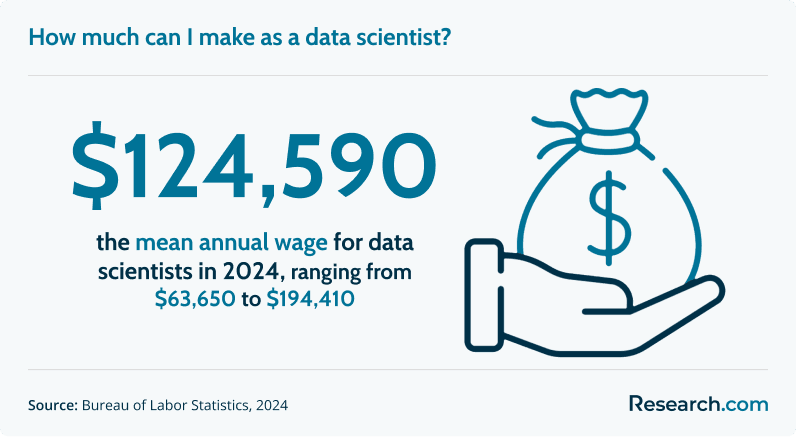
- Strong salary potential: Data scientists have a median annual salary of $112,590, while several related analytics roles report median salaries above $75,000.
- Study while working: Online delivery can make graduate school more practical for adults who need evening, asynchronous, part-time, or accelerated formats.
- Transferable skills: Analytics training applies across finance, healthcare, consulting, corporate management, IT services, insurance, marketing, logistics, and public-sector roles.
- Lower opportunity cost: Affordable online programs may reduce expenses tied to commuting, relocation, housing, and lost income.
What can I expect from the most affordable online master's degree programs in analytics?
Affordable online master’s programs in analytics typically focus on turning raw data into decisions. Students usually study statistical analysis, data mining, machine learning, database concepts, visualization, business intelligence, optimization, and applied analytics strategy. Many programs also include work with tools such as Python, R, SQL, Tableau, Power BI, and cloud-based analytics environments.
Lower tuition does not automatically mean weaker academic quality. Some affordable programs are offered by public universities, competency-based institutions, or schools with lower online tuition models. The key is to verify accreditation, curriculum depth, faculty experience, employer alignment, student support, and whether the program includes applied projects that can be used in a professional portfolio.
Students should expect a blend of technical and business coursework. A data science-oriented program may emphasize modeling, machine learning, and programming, while a business analytics program may focus more on dashboards, forecasting, operations, financial decision-making, and executive communication. The right choice depends on whether you want to build models, manage analytics projects, interpret business data, or move into leadership.
Where can I work after graduating from the most affordable online master's degree programs in analytics?
Analytics graduates are not limited to one industry. In 2024, data scientists were employed heavily in IT services (27,880), corporate management (26,100), management and tech consulting (13,990), insurance (13,630), and research and development (12,280). These figures show that analytics hiring is spread across both technical and business-centered sectors.
Common work settings include banks, insurance companies, hospitals, consulting firms, technology companies, retail organizations, logistics companies, government agencies, universities, research organizations, and large corporations with internal analytics teams. Job titles may include data analyst, data scientist, business analyst, financial analyst, marketing analyst, operations research analyst, business intelligence analyst, analytics consultant, or analytics manager.
The most important question is not simply “Where can I work?” but “Which analytics problems do I want to solve?” Students interested in customer behavior may prefer marketing analytics. Those who like process improvement may fit operations research or supply chain analytics. Students who enjoy coding and modeling may prefer data science or data engineering.
How much can I make with a degree from the most affordable online master's degree programs in analytics?
Salary outcomes vary by job title, location, industry, prior experience, technical skill level, and employer. However, analytics-related roles can offer competitive pay. Data scientists have a median annual salary of about $112,590. Financial analysts earn a median salary around $101,910, while management analysts earn around $101,190. Operations research analysts earn roughly $91,290, and market research analysts earn about $76,950.
A master’s degree does not guarantee a specific salary. Employers often weigh your portfolio, programming ability, business knowledge, internships, prior work experience, certifications, and interview performance alongside your degree. Students seeking the strongest return should choose programs that include applied projects, career services, and coursework aligned with their target roles.
- Most Affordable Online Master's Degree Programs in Analytics in 2027
- How long does it take to complete an affordable online master's degree program in analytics?
- Online vs. on-campus master’s in analytics: which format fits you?
- What is the average cost of the most affordable online master's degree in analytics programs?
- What financial aid options are available for online analytics master’s students?
- What are the prerequisites for affordable online master's degree programs in analytics?
- What courses are typically included in online master's degree programs in analytics?
- What specializations are available in affordable online master's degree in analytics programs?
- Why accreditation and quality assurance matter
- How online analytics programs support professional growth
- Advanced degree options after a master’s in analytics
- Is an affordable online master's degree in analytics a sustainable long-term investment?
- Challenges to expect before enrolling
- How to choose the best affordable online master's degree in analytics program
- Career paths for graduates of affordable online master's degree programs in analytics
- Job market outlook for analytics master’s graduates
Most Affordable Online Master's Degree Programs in Analytics in 2027
How do we rank schools?
This program list is based on research and data analysis using Research.com’s ranking methodology. The review process used the IPEDS database from the National Center for Education Statistics for institutional information, Peterson’s database and its Distance Learning Licensed Data Set for online program details, and the College Scorecard for cost and student outcome information. National Center for Education Statistics data were also referenced for the most current institutional data available.1
1. Texas Tech University - MS in Data Science
Texas Tech University offers an online Master of Science in Data Science through the Rawls College of Business. The 36-credit, STEM-designated program is built for professionals who want to apply analytics to business problems and strategic decisions. Its lock-step curriculum covers topics such as machine learning, big data security, simulation, and optimization. Students may choose a one-year or two-year format, and the cohort model can support peer interaction and professional networking. Graduates are positioned to pursue roles in data science, business intelligence, analytics consulting, and data-informed management.
- Program Length: 1-year and 2-year options
- Required Credits to Graduate: 36
- Cost per Credit (Tuition): $383 (in-state); $788 (out-of-state)
- Accreditation: Association to Advance Collegiate Schools of Business (AACSB); Southern Association of Colleges and Schools Commission on Colleges (SACSCOC)
2. Northwest Missouri State University - MS in Data Analytics
Northwest Missouri State University offers an online MS in Data Analytics for students who want a faster route into technical analytics work. The program emphasizes hands-on use of software, programming languages, and applied data projects. Its ~12-month structure may appeal to professionals who want to build data analysis and decision-support skills quickly. Compared with an MBA in Business Analytics, this MS option is more technically focused and better suited for students who want to work directly with datasets, models, and analytics outputs.
- Program Length: ~12 months
- Required Credits to Graduate: 30
- Cost per Credit (Tuition): $391
- Accreditation: Higher Learning Commission (HLC)
3. University of North Texas - Accelerated MS in Advanced Data Analytics
The University of North Texas provides an accelerated online MS in Advanced Data Analytics for students who want to connect statistical learning, visualization, and big data tools with practical business cases. The 30-credit hour curriculum is designed to help students interpret complex datasets and communicate insights for decision-making. Students may select existing specializations or work with an advisor to create a focus area that matches their goals. This can be useful for working professionals who want applied analytics training without a long campus-based commitment.
- Program Length: ~2 years
- Required Credits to Graduate: 30
- Full Tuition: $14,300 with $476.67 per-credit estimate
- Accreditation: Southern Association of Colleges and Schools Commission on Colleges (SACSCOC)
4. Oklahoma State University - MS in Business Analytics and Data Science (MS BAnDS)
Oklahoma State University offers the MS in Business Analytics and Data Science, a STEM-designated program that combines analytics, business problem-solving, and data science preparation. The fully multi-platform online program includes applied work with tools such as Python, R, Power BI, Tableau, and related technologies. Students can follow pre-approved tracks or customize electives around their professional goals. The program also includes internship or externship options lasting three to eleven months during the final year, which may help students gain experience before moving into roles such as data scientist, business analyst, or consultant.
- Program Length: 21 months
- Specialization: Business Analytics and Data Science
- Required Credits to Graduate: 30
- Cost per Credit (Tuition): $489 (in-state); $530 (out-of-state)
- Accreditation: Association to Advance Collegiate Schools of Business (AACSB); Middle States Commission on Higher Education (MSCHE)
5. Arizona State University (ASU) Online - MS in Business Analytics
Arizona State University Online offers an MS in Business Analytics focused on quantitative analysis, data storytelling, and business applications. Students study large-data manipulation, data mining, visualization, modeling, machine learning, predictive analytics, and related tools such as Python, SQL, and Tableau. The coursework is designed for employer-relevant business analytics needs. A STEM undergraduate background is not required, but applicants with prior calculus, statistics, and coding exposure may be better prepared for the program’s technical pace.
- Program Length: ~2 years
- Specialization: Business Analytics
- Required Credits to Graduate: 30
- Cost per Credit (Tuition): $576
- Accreditation: Association to Advance Collegiate Schools of Business (AACSB); Higher Learning Commission (HLC)
6. Western Governors University (WGU) - MS in Data Analytics
Western Governors University offers an MS in Data Analytics built around the data analytics lifecycle, advanced analytics, machine learning, and data management. Students work with tools and languages such as Python, R, SQL, and Tableau. The program offers three specialization options: data science, data engineering, and decision process engineering. WGU’s competency-based model emphasizes demonstrated mastery, which can work well for self-directed learners who already have relevant experience and want a flexible path through graduate-level analytics content.
- Program Length: ~2 years
- Available Specializations: Data Science; Data Engineering; and Decision Process Engineering
- Required Credits to Graduate: 32
- Full Tuition: $18,800 with $587.50 per competency unit estimate
- Accreditation: Northwest Commission on Colleges and Universities (NWCCU)
7. Kent State Online - MS in Business Analytics
Kent State University offers an online MS in Business Analytics for students who want to use data to support business strategy. The program covers data analysis, predictive modeling, business intelligence, technical communication, and leadership-oriented analytics skills. Students complete integrative capstone work and may pursue an optional internship for additional professional development. This option may fit students who want a business analytics credential with applied project experience and AACSB accreditation.
- Program Length: ~12 months
- Specialization: Business Analytics
- Required Credits to Graduate: 32
- Cost per Credit (Tuition): $594.78 (in-state); $604.78 (out-of-state)
- Accreditation: Association to Advance Collegiate Schools of Business (AACSB)
8. University of Arkansas - Professional Master of Applied Business Analytics
The University of Arkansas offers a Professional Master of Applied Business Analytics for professionals seeking analytics roles in business, government, or public service. The 30-hour program includes coursework in business analysis, computing, data handling, and optimization. Students may study full time or part time, with a one-year full-time option or a five-semester part-time option. Monthly on-campus meetings provide a structured way to interact with faculty and classmates while keeping most coursework online.
- Program Length: ~21 months
- Specialization: Applied Business Analytics
- Required Credits to Graduate: 30
- Cost per Credit (Tuition): $614.96
- Accreditation: Association to Advance Collegiate Schools of Business (AACSB); Higher Learning Commission (HLC)
9. Southern New Hampshire University (SNHU) - MS in Data Analytics
Southern New Hampshire University (SNHU) offers an online master’s in data analytics focused on data mining, visualization, modeling, ethical data use, statistics, risk assessment, agile management, and data presentation. Students may be able to waive certain foundational courses if they already have relevant preparation. The 12-course program culminates in a capstone project and uses cloud-based virtual environments in select courses to provide applied technology experience. This format may suit students seeking broad analytics training with a practical online structure.
- Program Length: ~15 months
- Required Credits to Graduate: 36
- Cost per Credit (Tuition): $637
- Accreditation: New England Commission of Higher Education (NECHE)
10. University of Texas at Tyler - MBA in Data Analytics
The University of Texas at Tyler offers an online MBA in Data Analytics for students who want analytics training inside a broader business leadership degree. The AACSB-accredited program covers data analysis theory, business intelligence, data and text analytics, Python programming, data quality, and professional ethics. Delivered fully online and eligible for military benefits, the program can be completed in as few as 12 months. This option may be best for students targeting management, strategy, or leadership roles rather than purely technical data science positions.
- Program Length: ~15 months
- Required Credits to Graduate: 36
- Full Tuition: $28,887.44 with $802.43 per credit estimate
- Accreditation: Association to Advance Collegiate Schools of Business (AACSB)
How long does it take to complete the most affordable online master's degree programs in analytics?
Most affordable online master’s programs in analytics can be completed in about 12 to 24 months, depending on credit load, course format, transfer or waiver policies, and whether the student enrolls full time or part time. Northwest Missouri State University offers an accelerated ~12-month MS in Data Analytics, while Western Governors University’s MS in Data Analytics is commonly structured around a ~2-year timeline.
Programs on this list generally require 30 to 38 credit hours. A shorter program can help students enter the job market faster, but it may be intense for learners who are working full time. A longer timeline may cost more in time but can make coursework, portfolio building, and internships more manageable.
Specialized coursework can also affect the learning path. For example, students interested in supply chain analytics may look for electives involving forecasting, logistics, optimization, and operations efficiency.
| Program pace | Best for | Trade-off to consider |
| Accelerated, about 12 months | Students with strong preparation who want fast career movement | Heavy workload and less time for internships or portfolio refinement |
| Standard, about 15 to 21 months | Working adults who can manage steady graduate coursework | Requires consistent time management across multiple terms |
| Flexible, about 2 years | Students balancing work, family, and skill-building | Longer time before completing the credential |
How does an online master's degree program in analytics compare to an on-campus program?
An online master’s in analytics is often the better fit for students who need schedule flexibility, cannot relocate, or want to continue working while enrolled. An on-campus program may be better for students who want in-person networking, campus recruiting, research opportunities, or direct access to labs and faculty.
| Factor | Online analytics master’s | On-campus analytics master’s |
| Schedule | Often asynchronous or designed for working adults | Usually fixed class times and campus attendance |
| Cost | May reduce commuting, relocation, housing, and some campus-related expenses | May involve higher living or transportation costs |
| Networking | Virtual events, discussion boards, group projects, alumni platforms | In-person classmates, faculty access, campus events, recruiting fairs |
| Learning style | Best for self-directed students with strong time management | Best for students who prefer structured face-to-face interaction |
| Employer recognition | Strong when the institution is properly accredited and reputable | Strong when the institution and program have recognized quality |
Students comparing online options should look beyond convenience. The best fit should offer credible accreditation, rigorous coursework, applied projects, and career support. For a broader comparison of flexible degree options, review Research.com’s guide to affordable online colleges for working adults.
What is the average cost of the most affordable online master's degree in analytics programs?
Based on data from ten representative institutions, the average total tuition is around $19,500 for in-state students and about $21,100 for out-of-state students. Per-credit tuition commonly ranges from $380 to $800, depending on the school, residency classification, and tuition model.
Most programs require 30–38 credits, with total tuition starting as low as $13,800 and reaching up to $28,900. These figures do not always capture the full cost of attendance, so students should ask about technology fees, online course fees, books, software, residency requirements, travel, graduation fees, and whether tuition differs for out-of-state online students.
| Cost item | Why it matters | Question to ask |
| Tuition per credit | Determines the base cost of the degree | Is the rate different for in-state and out-of-state online students? |
| Total credits | A lower per-credit rate may not be cheaper if the program requires more credits | How many credits are required after waivers or prerequisites? |
| Fees | Technology, online learning, and student service fees can add up | What is the total program cost, including mandatory fees? |
| Residency or campus visits | Travel costs can affect affordability | Are any in-person sessions required? |
| Software and materials | Analytics courses may require specialized tools or platforms | Are software licenses included in tuition? |
Students comparing affordability across graduate fields may also find it useful to review the most affordable online master’s degree programs in sustainability as another benchmark for tuition structures and online program costs.
What are the financial aid options for students enrolling in a the most affordable online master's degree programs in analytics?
Online graduate students may have access to several funding sources, but aid eligibility depends on the school’s accreditation, enrollment status, citizenship or residency requirements, academic progress, and program policies. Start financial planning before applying so you can compare net cost rather than advertised tuition.
- Federal and state aid: Students in eligible accredited programs may use federal aid options such as Direct Unsubsidized Loans and Grad PLUS Loans. Some students may also qualify for state-based support, particularly at public universities.
- School scholarships and discounts: Universities may offer merit scholarships, alumni discounts, veteran or military benefits, employer-partner discounts, or awards for students in specific fields.
- Employer tuition assistance: Working professionals should ask human resources whether the employer will reimburse tuition, prepay costs, or fund courses tied to workforce needs.
- Payment plans: Monthly payment plans can reduce the need for large upfront payments, though students should ask about setup fees and deadlines.
- Lower application costs: If you are applying to several programs, accredited online colleges with no application fee can help reduce upfront comparison costs.
Financial aid steps before you enroll
- Complete the Free Application for Federal Student Aid (FAFSA) if you plan to use federal aid.
- Ask each school for a total program cost estimate, not just tuition per credit.
- Request scholarship, assistantship, employer partnership, military benefit, and payment plan information.
- Compare net cost after aid, transfer credit, waived prerequisites, and employer reimbursement.
- Borrow only after estimating monthly repayment and expected career value.
What are the prerequisites for enrolling in the most affordable online master's degree programs in analytics?
Admissions requirements vary, but most online analytics master’s programs expect applicants to show they can handle graduate-level quantitative and technical work. Career changers can still be competitive, especially if they complete bridge coursework or demonstrate relevant professional experience.
- Bachelor’s degree: Most programs require a bachelor’s degree, often from an accredited institution. The degree may be in any field, although technical preparation can help.
- Minimum GPA: A 3.0 GPA is a common benchmark, but some schools review applicants holistically.
- Math and statistics background: Prior coursework in statistics, calculus, linear algebra, or quantitative methods may be required or recommended.
- Programming exposure: Some programs expect familiarity with Python, R, SQL, or similar tools; others offer leveling courses.
- Professional materials: Applicants may need a resume, statement of purpose, transcripts, and one to three letters of recommendation.
- Work experience: Not always required, but analytics-adjacent experience can strengthen an application and clarify career goals.
Students comparing graduate admissions expectations may also review the most affordable online master’s in instructional design programs, where prior academic preparation and professional goals also influence admissions decisions.
A practical path for career changers
If you lack a technical background, do not choose a program solely because it has fewer prerequisites. Instead, ask whether the school offers bridge courses, tutoring, coding support, statistics refreshers, and early advising. Building the foundation before advanced analytics coursework can help you prepare for roles such as data science ($112,590), financial analysis ($101,910), and operations research ($91,290).
What courses are typically in the most affordable online master's degree programs in analytics?
Most online analytics master’s curricula combine quantitative methods, computing, data management, business context, and applied projects. Course names vary, but students can expect several core learning areas.
- Statistics and probability: Covers inference, uncertainty, hypothesis testing, regression, and methods used to interpret data responsibly.
- Programming for analytics: Builds practical skill in languages such as Python, R, or SQL for cleaning, analyzing, and managing data.
- Data visualization: Teaches students to communicate findings through dashboards, charts, and visual narratives using tools such as Tableau or Power BI.
- Machine learning and predictive modeling: Introduces algorithms used for classification, forecasting, pattern recognition, and recommendation systems.
- Business intelligence: Connects analytics outputs to organizational performance, strategy, operations, and decision-making.
- Data management: Covers databases, data warehousing, data governance, and data quality issues.
- Capstone or applied project: Gives students a chance to solve a real or simulated data problem and build portfolio evidence for employers.
How to use the curriculum to choose a program
Do not assume all analytics degrees teach the same skill set. A student pursuing data science should look for machine learning, advanced statistics, Python or R, and portfolio projects. A student seeking business analytics roles should look for visualization, forecasting, business intelligence, and stakeholder communication. Those interested in customer insights can pair analytics coursework with guidance on how to become a marketing analyst.
What types of specializations are available in the most affordable online master's degree in analytics programs?
Specializations help students align coursework with a specific job market. They are especially useful when you already know whether you want a technical, business, operations, security, healthcare, or marketing-focused analytics role.
| Specialization | What it emphasizes | May fit students targeting |
| Applied Business Analytics | Business problem-solving, reporting, forecasting, and performance improvement | Business analyst, analytics consultant, operations analyst |
| Data Science | Statistical modeling, machine learning, data mining, and advanced analysis | Data scientist, machine learning analyst, quantitative analyst |
| Data Engineering | Data pipelines, databases, infrastructure, and scalable data systems | Data engineer, analytics engineer, database-focused roles |
| Decision Process Engineering | Optimization, structured decision-making, and process improvement | Operations research analyst, process analyst, decision analyst |
| Business Analytics and Data Science | A combined technical and business analytics approach | Hybrid analytics, consulting, and business intelligence roles |
| Cybersecurity and Risk Analysis | Threat data, risk modeling, privacy, and security analytics | Security analytics and risk-focused roles |
| Marketing Analytics | Customer behavior, campaign measurement, segmentation, and market insight | Marketing analyst, market research analyst, customer insights roles |
| Healthcare Analytics | Healthcare operations, patient data, quality improvement, and system efficiency | Healthcare analyst, population health analyst, operations roles in healthcare |
Students exploring niche tracks may compare how other graduate programs organize concentrations. For example, the most affordable online master’s degree programs in homeland security show how cybersecurity, risk, and emergency response focus areas can shape career preparation.
Matching specialization to labor market demand
Specializations should connect to real job functions. Applied business analytics and data science may align with sectors such as IT services (27,880), corporate management (26,100), and consulting (13,990). Students interested in cyber-focused analytics can also use Research.com’s information security analyst career guide to understand how analytics overlaps with security work.
How does accreditation and quality assurance impact online analytics programs?
Accreditation is one of the most important checks when evaluating an online master’s in analytics. Institutional accreditation helps determine whether a school meets recognized academic standards and may affect federal financial aid eligibility, transfer credit, employer recognition, and future doctoral admissions. Business schools may also hold programmatic or school-level recognition such as AACSB, which can matter for students choosing business analytics or MBA analytics programs.
Quality assurance goes beyond accreditation. Students should review course update cycles, faculty qualifications, student support, technical help desk availability, career services, capstone quality, industry tool access, and graduation requirements. Comparing analytics programs with other accredited online business options, such as the most affordable online MBA programs, can help students understand how accreditation and cost interact in graduate business education.
How do online master's programs in analytics support continuous professional growth?
A strong online analytics program should support more than course completion. Look for career coaching, resume and portfolio reviews, mock interviews, employer events, alumni networks, internship guidance, and mentoring. These services matter because analytics hiring often depends on proof of applied skill, not the degree alone.
Students planning for leadership roles may also benefit from interdisciplinary exposure. For example, professionals interested in analytics leadership in healthcare settings can compare analytics training with business-focused healthcare pathways such as the most affordable online MBA in healthcare management programs.
What advanced degree options should I consider after my master’s in analytics?
Most analytics professionals do not need another degree immediately after a master’s program. However, additional education can make sense for those pursuing research, executive leadership, teaching, healthcare specialization, or regulated professional fields. Options may include a PhD in data science, statistics, information systems, business analytics, operations research, or a professional doctorate connected to a specific industry.
Students interested in healthcare and pharmaceutical data may explore advanced clinical or professional pathways, including an online PharmD degree, if their goals extend beyond analytics into pharmacy practice, healthcare management, or medication-related decision systems.
Is an affordable online master's degree in analytics a sustainable long-term investment?
An affordable online master’s in analytics is most likely to be a strong long-term investment when the program builds durable skills: statistics, programming, data management, ethical data use, communication, problem framing, and domain knowledge. Tools will change, but professionals who can define business problems, evaluate data quality, build sound analyses, and explain findings clearly are better positioned to adapt.
Students should evaluate return on investment with a practical lens. Compare total cost, time to completion, salary potential, employer tuition support, career services, and the likelihood that the curriculum supports your target role. If your interests are outside analytics, compare other high-earning pathways as well, including the highest earning medical bachelor’s degrees, before committing to a graduate analytics degree.
What are the potential challenges in pursuing an affordable online master's degree in analytics?
Online analytics programs can be flexible, but they are not easy. Students must manage technical coursework, programming assignments, group projects, statistics, and deadlines without the structure of a traditional campus schedule. The most common challenges include time management, limited in-person networking, uneven technical preparation, software learning curves, and difficulty translating coursework into job-ready portfolio examples.
Affordability can also create trade-offs. A low-cost program may have fewer electives, less individualized advising, fewer live sessions, or limited internship support. This does not make it a poor choice, but it does mean students should ask detailed questions before enrolling. For another example of comparing affordability and academic rigor in an online professional field, review the most affordable online doctorate in pharmacy programs.
Common mistakes to avoid
- Choosing only by tuition: A cheap program with weak support or outdated coursework may cost more in missed career opportunities.
- Ignoring accreditation: Accreditation can affect aid, transferability, employer confidence, and future education options.
- Assuming “analytics” means “data science”: Business analytics, data science, and data engineering can lead to different skill sets and roles.
- Underestimating prerequisites: Students without statistics or coding preparation may need bridge coursework before succeeding in advanced classes.
- Skipping the portfolio: Employers often want evidence of projects, dashboards, code, models, or business impact.
- Overlooking career services: Resume support, interview preparation, and employer connections can matter as much as coursework.
How do you choose the best among the most affordable online master's degree in analytics programs?
The best affordable online analytics master’s program is the one that fits your career goal, technical readiness, budget, schedule, and preferred learning style. A lower tuition rate is helpful, but it should not be the only deciding factor.
| Decision factor | What to verify | Why it matters |
| Accreditation | Institutional accreditation and any relevant business school accreditation | Protects degree credibility and may affect aid eligibility |
| Total cost | Tuition, fees, software, books, residency travel, and payment options | Shows the real investment, not just advertised tuition |
| Curriculum fit | Courses in statistics, programming, machine learning, visualization, and business application | Determines whether the degree matches your target role |
| Program format | Asynchronous, synchronous, cohort-based, competency-based, part-time, or accelerated | Affects whether you can finish while working |
| Applied learning | Capstones, internships, externships, case studies, and portfolio projects | Helps convert coursework into job evidence |
| Career support | Advising, alumni network, resume help, interview prep, and employer engagement | Can improve your transition into analytics roles |
| Admissions support | Bridge courses, prerequisite reviews, and technical readiness resources | Especially important for career changers |
Questions to ask before applying
- What is the total program cost after fees, not just tuition?
- Are courses taught by full-time faculty, industry practitioners, or both?
- Which software tools are used in the curriculum?
- Does the program include a capstone, internship, externship, or portfolio project?
- How often are analytics courses updated?
- What support exists for students new to coding or statistics?
- Are career services available to online students?
- Can students study part time, pause enrollment, or accelerate completion?
- What job titles do recent graduates commonly pursue?
What career paths are available for graduates of the most affordable online master's degree programs in analytics?
An online master’s in analytics can support several career directions. The best path depends on whether you want to build technical models, interpret business performance, improve operations, manage risk, support marketing strategy, or lead analytics teams.
- Data science path: Students may begin as data analysts or junior data scientists and move into senior data scientist, analytics manager, or chief data officer roles.
- Financial analytics path: Graduates may work as financial analysts or risk analysts before advancing toward portfolio manager, finance director, or analytics leadership roles.
- Operations and consulting path: Analytics graduates may enter operations research, process improvement, or consulting roles and later move into project management or senior consulting work.
- Marketing analytics path: Entry roles may include market research analyst or marketing data analyst, with advancement into marketing analytics manager or director of marketing insights positions.
- Public sector and security path: Analytics skills can support intelligence, risk, fraud, cybersecurity, and investigative functions. Students interested in federal law enforcement can review Research.com’s guide on how to become an FBI agent to understand additional requirements.
Analytics also intersects with healthcare workforce and care delivery systems. Students exploring health-related education and workforce pathways can compare analytics careers with programs such as the most affordable online LVN programs, especially if they are interested in healthcare operations or health data environments.
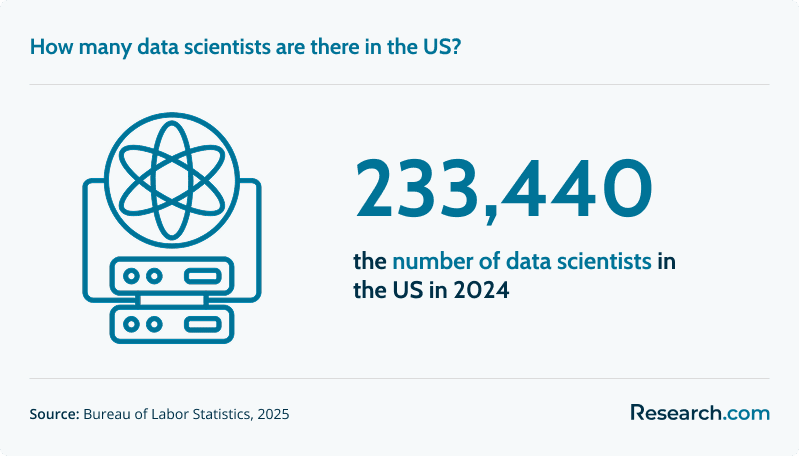
The scale of the field is significant: there are 233,440 data scientists in the US as of 2024, showing a broad employment base for advanced analytics skills.
What is the job market for graduates of the most affordable online master's degree programs in analytics?
The employment outlook for analytics-related roles remains strong across several occupations. Data scientists are projected to grow by 36% from 2022 to 2032, with roughly 20,800 new annual openings. Operations research analysts are projected to grow by 23%, with about 11,300 average yearly job openings. Management analysts, financial analysts, and market research analysts are projected to grow by 11%, 9%, and 8%, respectively.
These projections reflect demand for professionals who can use data to improve decisions, forecast outcomes, optimize operations, manage risk, and communicate insights. However, competition can still be strong for higher-paying technical roles. Students who want leadership opportunities may eventually explore the data analytics manager career path, where technical ability, business communication, and team leadership become increasingly important.
Here's What Graduates Have to Say About Their Affordable Online Master's Degree Programs in Analytics
- The online format made it possible for me to keep my job while completing graduate coursework. I valued the mix of analytics theory and applied projects because it helped me bring stronger recommendations to my team. The degree gave me a clearer path toward the next stage of my career. Daniel
- Returning to school after several years felt manageable because the program was flexible and the support resources helped me stay organized. I built confidence working with complex data and explaining findings in a way others could use. The experience helped me grow both professionally and personally. Raj
- I was surprised by how practical the online coursework felt. The projects, collaboration, and feedback helped create a real learning community even though we were not in the same classroom. Completing the program was challenging, but it gave me skills I am ready to apply in a changing analytics field. Marco
Key Insights
- An affordable online master’s in analytics can be a strong option for students who need graduate-level data skills without relocating or leaving full-time work.
- Program quality depends on more than tuition. Accreditation, curriculum relevance, applied projects, technical support, and career services should all influence your decision.
- Common analytics master’s topics include statistics, programming, SQL, machine learning, data visualization, business intelligence, optimization, and capstone work.
- Data scientists earn a median annual salary of around $112,590 in 2024, but salary outcomes depend on experience, location, industry, technical skill, and portfolio strength.
- The job outlook is favorable: data scientist roles are projected to grow by 36% between 2022 and 2032, with approximately 20,800 new jobs.
- Related occupations also show opportunity, including operations research analysts at 23% growth and management analysts at 11% growth.
- The U.S. data scientist workforce reached about 233,440 in 2024, with IT services, corporate management, and management and tech consulting among the major employing sectors.
- California, Texas, and New York lead the nation in data scientist employment, with California alone employing nearly 37,000 professionals.
- The best program choice starts with your target role: data science, business analytics, data engineering, marketing analytics, operations research, finance, healthcare analytics, or analytics management.
- Before enrolling, ask each school for total cost, accreditation details, software requirements, prerequisite expectations, career outcomes, and online student support.
References:
- Bellevue University. (2025). What can you do with a master's degree in business analytics? Bellevue University. Retrieved May 19, 2025, from Bellevue University.
- Bureau of Labor Statistics. (2024). Data scientists. U.S. Department of Labor. Retrieved May 19, 2025, from BLS.
- Bureau of Labor Statistics. (2024). Financial analysts. U.S. Department of Labor. Retrieved May 19, 2025, from BLS.
- Bureau of Labor Statistics. (2024). Management analysts. U.S. Department of Labor. Retrieved May 19, 2025, from BLS.
- Bureau of Labor Statistics. (2024). Market research analysts. U.S. Department of Labor. Retrieved May 19, 2025, from BLS.
- Bureau of Labor Statistics. (2025). Occupational Employment and Wage Statistics (OEWS) profiles. U.S. Department of Labor. Retrieved May 19, 2025, from BLS.
- Bureau of Labor Statistics. (2024). Operations research analysts. U.S. Department of Labor. Retrieved May 19, 2025, from BLS.
- Park University. (2024, October 16). Data analytics in healthcare: Transforming patient care delivery. Park University. Retrieved May 19, 2025, from Park University.
- University of Cincinnati. (2025). What can you do with a master’s in business analytics? 6 potential jobs. University of Cincinnati Online. Retrieved May 19, 2025, from University of Cincinnati.
Other Things You Should Know About Online Master's Degree Programs in Analytics
For 2027, some of the most affordable online master’s programs in analytics include those offered by institutions like Georgia Institute of Technology, Eastern University, and Bellevue University. These programs combine cost-effectiveness with comprehensive curriculums, offering students valuable skills in data analysis at a fraction of the usual cost.
Most programs require college-level statistics, algebra, and basic calculus or proof of quantitative readiness through prior coursework. Many also ask for a bachelor’s degree with a minimum 3.0 GPA, and some require a GRE waiver form or prerequisite completion before enrollment.