2027 Highest Earning Medical Bachelor’s Degrees

Co-Founder and Chief Data Scientist
Healthcare is one of the broadest career fields a bachelor’s degree can lead into, but the payoff varies widely by specialization. A student who studies health administration, biomedical engineering, health information systems, data science, radiation therapy, or dental hygiene may graduate into very different work environments, licensing rules, advancement paths, and salary ranges.
This guide is for students comparing medical bachelor’s degrees, working adults considering a healthcare career change, and healthcare professionals deciding whether to add a bachelor’s credential. It explains which medical bachelor’s degree paths are linked with higher earnings, what each role actually does, what skills employers look for, when additional certification or graduate education may be needed, and how to judge whether a program is worth the cost.
Quick Answer: Which Medical Bachelor’s Degrees Tend to Pay the Most?
The highest-earning medical bachelor’s degree paths are usually those that combine healthcare knowledge with specialized technical, administrative, engineering, or data skills. Based on the salary sources cited in this article, high-paying options include pharmaceutical data science, bioinformatics, healthcare administration, healthcare management, radiation therapy, nuclear medicine technology, biomedical engineering, healthcare IT, genetic counseling preparation, and dental hygiene.
A bachelor’s degree can be enough for some of these careers, but not all. Certain roles may require state licensure, clinical credentials, national certification, supervised training, or graduate study before a graduate can practice independently or qualify for senior-level positions.
Key Things to Know Before Choosing a High-Earning Medical Bachelor’s Degree
- The best-paying paths are often specialized. Higher salaries usually come from roles that require technical depth, regulatory knowledge, data expertise, clinical judgment, or leadership ability.
- “Medical bachelor’s degree” does not always mean direct patient care. Some graduates work with patients every day, while others manage health systems, analyze clinical data, design devices, support electronic health records, or work in research and biotechnology.
- Licensure and certification matter. Radiation therapy, dental hygiene, imaging, health information management, and other fields may require specific credentials. Always check the rules in the state where you plan to work.
- Salary depends on more than the major. Location, employer type, experience, shift schedules, certifications, graduate education, and management responsibility can all affect compensation.
- Not every high-paying role is entry-level. Some listed careers may be realistic after a bachelor’s degree plus experience, while others may require a master’s degree or advanced credential to reach the highest salary levels.
- Highest-Earning Medical Bachelor’s Degree Paths for 2027
- What Counts as a Medical Bachelor’s Degree?
- Admission Requirements for Medical Bachelor’s Programs
- Where Graduates with Medical Bachelor’s Degrees Work
- How Long a Medical Bachelor’s Degree Usually Takes
- Is a Medical Bachelor’s Degree Worth It?
- Common Challenges Students Should Expect
- How Digital Transformation Is Changing Healthcare Pay
- How Online Programs Can Support Medical Bachelor’s Students
- Career Advancement Options After a Medical Bachelor’s Degree
- How to Find an Affordable Online Public Health Degree
- Common Certifications for Medical Bachelor’s Degree Holders
- Moving from Healthcare into Non-Medical Careers
- Using Supplementary Online Courses to Build Healthcare Skills
- How to Prepare for Executive Healthcare Administration Roles
- How Online Healthcare Administration Degrees Can Support Advancement
- Using an Accelerated Online Biology Degree for Healthcare Innovation
- Why Accreditation and Curriculum Quality Matter
10 Highest-Earning Medical Bachelor’s Degree Paths for 2027
The following careers are connected to medical, health science, health technology, or healthcare administration bachelor’s degree pathways. Use this list as a starting point, not as a guarantee of income. Some positions may require experience, certification, licensure, or graduate education beyond the bachelor’s level.
| Career Path | Common Bachelor’s Degree Options | Best Fit For Students Who Like | Average Annual Salary in the U.S. |
| 1. Pharmaceutical data scientist | Data Science, Bioinformatics, Pharmaceutical Sciences, Biomedical Engineering | Drug data, coding, statistics, clinical research, AI tools | $122,738 |
| 2. Healthcare manager | Healthcare Administration Degree, Business Administration with a healthcare focus, Public Health, Health Management | Operations, leadership, budgets, staffing, healthcare systems | $100,056 |
| 3. Healthcare administrator | Healthcare Administration, Business Administration with a healthcare focus, Public Health, Health Services Management | Facility operations, compliance, patient services, organizational planning | $105,855 |
| 4. Healthcare IT professional | Health Information Management, Computer Science, Information Technology, Biomedical Informatics | EHR systems, cybersecurity, databases, healthcare software | $84,265 |
| 5. Biomedical engineer | Biomedical Engineering, Mechanical Engineering with a biomedical focus, Electrical Engineering, Bioengineering | Medical devices, design, biology, engineering, problem-solving | $93,700 |
| 6. Radiation therapist | Radiation Therapy, Medical Imaging, Radiologic Sciences, Health Sciences | Patient care, oncology, imaging equipment, precision treatment | $97,400 |
| 7. Genetic counselor | Genetics, Biology, Health Sciences, Psychology with a genetic counseling focus | Genetics, patient counseling, risk interpretation, ethics | $87,538 |
| 8. Bioinformatics scientist | Bioinformatics, Computer Science, Biology with a computational focus, Biomedical Engineering | Genomics, algorithms, data science, laboratory research | $122,364 |
| 9. Nuclear medicine technologist | Nuclear Medicine Technology, Radiologic Sciences, Health Sciences, Biomedical Sciences | Imaging, radiopharmaceuticals, diagnostics, patient safety | $96,719 |
| 10. Dental hygienist | Dental Hygiene, Health Sciences, Biology with a dentistry focus | Preventive care, oral health, hands-on clinical work, patient education | $84,842 |
The salary figures above are drawn from Salary.com or ZipRecruiter sources cited in the references. They should be viewed as national averages, not promises. Actual pay can differ by state, city, employer, experience, credentials, and job responsibilities. Students comparing healthcare salaries across degree types may also want to review broader information on the highest paying bachelor degrees.
1. Pharmaceutical Data Scientist
Pharmaceutical data scientists use clinical, laboratory, drug development, and market data to help researchers and companies make better decisions. Their work may support clinical trials, precision medicine, treatment optimization, safety monitoring, or business strategy in pharmaceutical and biotechnology settings.
Core skills to build:
- Statistical analysis and data modeling
- Machine learning and artificial intelligence applications
- Familiarity with clinical trials and pharmaceutical research
- Programming in Python, R, and SQL
- Problem-solving, documentation, and critical evaluation of data
Why this path can pay well: It combines healthcare knowledge with advanced analytics. Employers value professionals who can translate complex data into useful research, regulatory, or business insights.
2. Healthcare Manager
Healthcare managers coordinate people, budgets, workflows, and policies inside hospitals, clinics, physician groups, long-term care organizations, or other health systems. Their goal is to keep services efficient, compliant, financially stable, and aligned with patient care goals.
Core skills to build:
- Team leadership and staff supervision
- Healthcare policy and regulatory awareness
- Budgeting and financial planning
- Clear communication with clinical and administrative teams
- Operations management and decision-making
Good degree match: A healthcare administration, public health, health management, or business program with healthcare coursework can prepare students for entry-level administrative roles and future management growth.
3. Healthcare Administrator
Healthcare administrators manage day-to-day operations within medical organizations. They may oversee patient services, scheduling systems, compliance processes, staffing, quality improvement, records, or department-level budgets.
Core skills to build:
- Healthcare law, ethics, and compliance knowledge
- Financial and resource management
- Staff coordination and performance improvement
- Strategic planning and organizational communication
- Patient experience and service quality improvement
Decision point: Students who want leadership roles but do not want a clinical job may find healthcare administration more suitable than nursing, radiation therapy, or laboratory-based majors.
4. Healthcare IT Professional
Healthcare IT professionals support the technology infrastructure that medical organizations depend on. Their work may involve electronic health records, cybersecurity, system integrations, databases, analytics platforms, technical support, or healthcare software implementation.
Core skills to build:
- IT systems management and troubleshooting
- Cybersecurity and privacy protection
- Electronic health record systems
- Database management and programming
- Analytical thinking and user support
Students who wonder what can you do with a computer science degree while staying connected to healthcare should consider health informatics, healthcare cybersecurity, clinical systems analysis, and EHR implementation roles.
5. Biomedical Engineer
Biomedical engineers apply engineering principles to healthcare problems. They may help design medical devices, prosthetics, imaging systems, monitoring equipment, surgical tools, rehabilitation technology, or software used in clinical settings.
Core skills to build:
- Engineering design and medical technology knowledge
- Computer-aided design and programming
- Biology, biomechanics, and physiology
- Testing, documentation, and safety analysis
- Collaboration with clinicians, researchers, and manufacturers
Best fit: This path suits students who like both science and engineering and want to solve practical healthcare problems through technology.
6. Radiation Therapist
Radiation therapists deliver prescribed radiation treatments, most often for patients receiving cancer care. They work with radiation oncologists and medical physicists, operate treatment equipment, position patients accurately, follow safety procedures, and monitor patients during therapy.
Core skills to build:
- Radiation therapy and oncology knowledge
- Precision, attention to detail, and safety awareness
- Compassionate patient communication
- Technical ability with specialized medical equipment
- Strict adherence to clinical protocols
Important caution: Students should verify program accreditation, clinical placement requirements, credentialing rules, and state requirements before enrolling.
7. Genetic Counselor
Genetic counselors help individuals and families understand inherited health risks, genetic test results, and medical or reproductive options. A bachelor’s degree in genetics, biology, health sciences, or psychology can be a useful foundation, but students should research whether graduate education and licensure are required for the role they want.
Core skills to build:
- Genetics and human biology
- Risk assessment and data interpretation
- Patient counseling and communication
- Ethical reasoning and confidentiality
- Ability to explain complex scientific information clearly
Best fit: This path may appeal to students who want a patient-facing career that blends science, counseling, and ethical decision-making.
8. Bioinformatics Scientist
Bioinformatics scientists use computing, statistics, and biology to analyze complex biological information such as genetic sequences, molecular data, and research datasets. Their work can support genomics, drug discovery, disease research, and personalized medicine.
Core skills to build:
- Programming in Python, R, and SQL
- Statistics and data analysis
- Genetics, molecular biology, and laboratory concepts
- Machine learning and computational modeling
- Scientific problem-solving and research communication
Why employers value it: Healthcare and life sciences organizations need professionals who can connect biological knowledge with large-scale data analysis.
9. Nuclear Medicine Technologist
Nuclear medicine technologists prepare and administer radioactive drugs used in diagnostic imaging and certain treatments. They operate imaging equipment, follow radiation safety procedures, support physicians, and help produce images used to diagnose or monitor disease.
Core skills to build:
- Nuclear medicine and radiopharmaceutical knowledge
- Operation of PET and SPECT imaging equipment
- Radiation safety and regulatory compliance
- Patient care and clear communication
- Accuracy, documentation, and procedural discipline
Program check: Before choosing this path, confirm whether the degree includes required clinical training and prepares graduates for the credentialing process expected by employers.
10. Dental Hygienist
Dental hygienists provide preventive oral healthcare. They clean teeth, assess patients for signs of gum disease, take X-rays, document findings, support treatment planning, and teach patients how to maintain oral health.
Core skills to build:
- Oral health and dental procedure knowledge
- Manual dexterity and careful attention to detail
- Patient education and chairside communication
- Use of dental instruments and X-ray equipment
- Professional judgment and infection control awareness
Important note: Dental hygiene is a regulated profession. Students should check accreditation and licensure requirements before committing to a program.
What Counts as a Medical Bachelor’s Degree?
A medical bachelor’s degree is an undergraduate program that prepares students for healthcare, health science, medical technology, clinical support, public health, health administration, or related science careers. It is different from medical school, which leads to a Doctor of Medicine degree. A bachelor’s program may qualify graduates for certain entry-level roles or prepare them for graduate programs, professional schools, clinical credentials, or specialized certifications.
Common subjects include anatomy, physiology, biology, chemistry, statistics, health policy, healthcare finance, medical terminology, public health, informatics, research methods, clinical procedures, and healthcare ethics. The exact curriculum depends heavily on the major. A nursing or radiation therapy program will look very different from a bioinformatics, healthcare administration, or biomedical engineering program.
Because career outcomes vary by state and specialty, students should connect the degree title to a specific role before enrolling. For example, someone considering nursing should compare regional pay, specialty differences, and experience levels using resources such as a US nurse salary guide.
What Are the Typical Requirements for Pursuing a Medical Bachelor’s Degree?
Admission requirements differ by institution and major, but healthcare-related bachelor’s programs commonly evaluate academic preparation, science readiness, communication ability, and evidence of interest in healthcare.
| Requirement | What It Usually Means | Why It Matters |
| High school diploma or equivalent | Applicants typically need secondary school completion with a solid record in science and math. | Healthcare majors often build quickly on biology, chemistry, physics, statistics, and algebra. |
| Minimum GPA | Many programs set GPA expectations, often around 2.5 to 3.5, depending on selectivity. | Competitive clinical or technical programs may use GPA to manage limited seats. |
| Standardized test scores | Some schools request SAT or ACT scores, though many institutions have test-optional policies. | Testing policies can affect how applicants are evaluated for admission or scholarships. |
| Prerequisite courses | Programs may require anatomy, physiology, calculus, chemistry, or other foundation courses. | Missing prerequisites can delay admission into upper-division or clinical coursework. |
| Application materials | Transcripts, recommendation letters, essays, and applications are commonly required. | Selective programs may look for motivation, maturity, and communication skills. |
| Healthcare exposure | Volunteer work, shadowing, CNA experience, or healthcare employment may strengthen an application. | Experience helps students confirm that the work environment fits their goals. |
A bachelor’s degree is not the only way into healthcare. Students who want faster entry into patient care or support roles can research what medical career doesn’t require a degree, including options where training, certification, or apprenticeships may be enough to begin working.
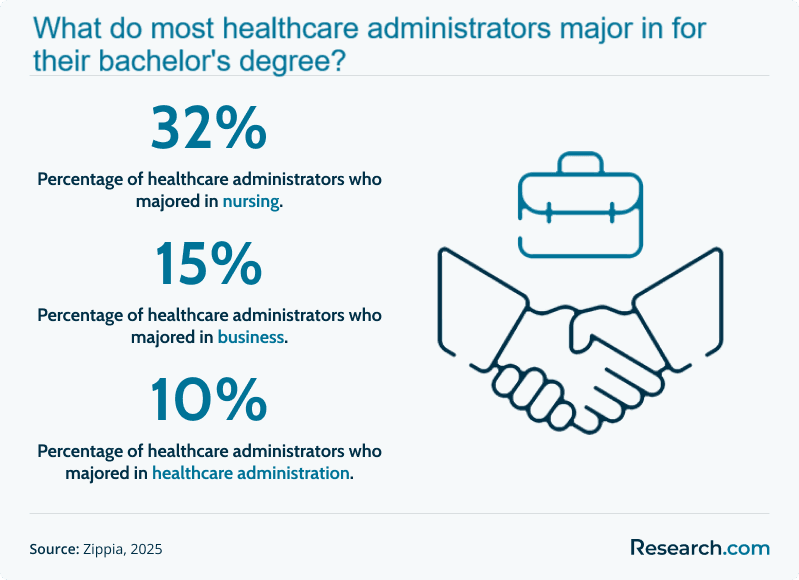
The image below shows common undergraduate majors among healthcare administrators.
What Are the Work Settings for Medical Bachelor’s Degree Graduates?
Medical bachelor’s degree graduates work in many settings. The right environment depends on whether the graduate wants direct patient care, administrative leadership, research, technology, imaging, oral health, or data-focused work.
| Work Setting | Common Roles | What to Consider |
| Hospitals and clinics | Radiation therapists, administrators, nurses, imaging professionals, department coordinators | Fast-paced schedules, patient interaction, shift work, compliance requirements, and team-based care are common. |
| Research laboratories | Biomedical engineers, bioinformatics scientists, pharmaceutical data professionals, research associates | These settings usually favor analytical skills, documentation, scientific methods, and technical tools. |
| Pharmaceutical and biotechnology companies | Data scientists, clinical research staff, product specialists, biomedical engineers | Work may focus on development, trials, regulatory processes, analytics, or commercialization. |
| Public health organizations | Public health analysts, program coordinators, health educators, policy support staff | These roles often focus on populations, prevention, access, and community health programs. |
| Educational institutions | Research assistants, lab coordinators, training staff, academic support professionals | Some roles may require graduate education for teaching or independent research responsibilities. |
| Technology and IT organizations | Healthcare IT specialists, informatics analysts, cybersecurity staff, software implementation teams | Technical certifications, privacy knowledge, and health system experience can be valuable. |
| Dental and imaging centers | Dental hygienists, nuclear medicine technologists, radiologic science professionals | Credentialing, patient communication, equipment skills, and safety protocols are central. |
Students who want early exposure to hospital or long-term care environments can also consider earning a CNA certificate and license before or during a bachelor’s program.
How Long Does It Take to Complete a Medical Bachelor’s Degree Program?
Most medical bachelor’s degrees take four years of full-time study. The timeline can change if the program includes clinical placements, if the student transfers credits, if prerequisite courses are missing, or if the student enrolls part time.
| Study Format | Typical Timeline | Best For |
| Traditional full-time bachelor’s program | Usually four years | Students who can study full time and complete required labs, clinicals, or internships on schedule. |
| Accelerated program | Some programs may shorten completion to three years | Students with strong preparation, clear goals, and the ability to handle a heavier pace. Some may compare fast track bachelor degree options. |
| Part-time program | Often five to six years | Working adults, caregivers, and students balancing school with employment. |
| Clinical or internship-heavy program | Timeline varies by placement requirements | Students entering patient-facing or technical healthcare fields where supervised practice is required. |
| Combined bachelor’s/master’s pathway | Often five to six years | Students who know they need graduate preparation for leadership, clinical advancement, research, or specialized practice. |
Before enrolling, ask whether clinical placements are guaranteed, whether online coursework has in-person requirements, and whether transfer credits apply to major-specific prerequisites.
Is Earning a Medical Bachelor’s Degree Worth It?
A medical bachelor’s degree can be worth it when the program leads to a clear career path, meets accreditation or credentialing expectations, and fits the student’s financial situation. It is less likely to pay off if the student chooses a program without checking licensure rules, assumes every healthcare degree leads to the same jobs, or borrows heavily without understanding likely earnings.
The value is strongest when a degree connects directly to a specific occupation, such as healthcare administration, radiation therapy, dental hygiene, nuclear medicine technology, biomedical engineering, health informatics, or data-focused health research. It can also be a strong foundation for graduate education, medical school preparation, advanced nursing, physician assistant pathways, public health, or management.
The table below shows the returns of health degrees from 2023 to 2063. The ROI for a bachelor’s health degree is based on a starting salary of $66,644 and an initial investment of $296,097.
| Years in Workforce | Total Degree-based Earnings | ROIs |
| 10 | $275,383 | -7.00% |
| 20 | $672,146 | 127.00% |
| 30 | $1,288,308 | 335.10% |
| 40 | $2,245,188 | 658.26% |
When a Medical Bachelor’s Degree Is More Likely to Be Worth It
- You are choosing a program tied to a defined occupation, certification, or graduate pathway.
- The program has appropriate accreditation for your career goal.
- You understand the licensing or credentialing process in your state.
- You have compared total cost, not just tuition.
- You are comfortable with the work environment associated with the role.
- You have a plan for internships, clinical experience, research experience, or technical skill development.
When You Should Consider a Different Path
- You need to enter the workforce quickly and cannot commit to four years of study.
- Your target job does not require a bachelor’s degree.
- You are unsure whether you want patient care, administration, research, or technology work.
- The program is not accredited or does not meet licensure requirements for your state.
- The expected salary does not justify the debt you would need to take on.
What Are the Common Challenges of Pursuing a Medical Bachelor’s Degree?
Healthcare-related programs can be demanding because they combine science, technical training, professional standards, and in some cases clinical practice. Students should prepare for academic intensity and practical constraints before enrolling.
| Challenge | Why It Happens | How to Reduce the Risk |
| Rigorous science coursework | Many programs require biology, chemistry, anatomy, physiology, and statistics. | Take prerequisite courses seriously, use tutoring early, and avoid overloading science labs in one term. |
| Heavy workload | Labs, lectures, clinical hours, projects, and exams may overlap. | Plan weekly study blocks and ask current students how demanding the program feels in practice. |
| Cost pressure | Healthcare programs may include tuition, lab fees, clinical supplies, background checks, transportation, and exam fees. | Compare total attendance cost and ask about scholarships, employer tuition benefits, and transfer credits. |
| Selective admission | Clinical and technical programs may have limited seats. | Apply to more than one program and complete prerequisites with competitive grades. |
| Emotional and physical demands | Patient-facing roles may involve illness, stress, long shifts, or high-stakes decisions. | Shadow professionals, volunteer, or work in a healthcare setting before committing. |
How Is Digital Transformation Reshaping Compensation Trends in Healthcare Roles?
Digital tools are changing which healthcare skills employers value. Artificial intelligence, telemedicine, electronic health records, cybersecurity, health analytics, and automated billing systems are creating demand for workers who understand both healthcare workflows and technology. Professionals who can interpret data, protect patient information, improve digital systems, or connect clinical teams with software teams may have access to broader opportunities than workers with only traditional healthcare training.
This does not mean every healthcare worker needs to become a programmer. It does mean students should look for programs that include data literacy, privacy rules, informatics, analytics, digital documentation, and technology-enabled care. Students exploring administrative or revenue-cycle careers can use resources on medical billing and coding salary to understand how digital skills may fit into healthcare compensation decisions.
How Can Online Programs Enhance Your Medical Bachelor’s Degree?
Online healthcare programs can help students complete general education, health administration, public health, informatics, data analysis, or biology coursework with more scheduling flexibility. They are especially useful for working adults and students who cannot relocate. However, online learning is not automatically easier, and some medical fields still require labs, simulations, clinical placements, or in-person skill checks.
Specialized online or hybrid options can also help students add career-focused credentials. For example, students interested in imaging careers may compare sonography certificate programs online while checking whether the program includes appropriate hands-on training and meets employer expectations.
Online vs. Campus Medical Bachelor’s Programs
| Factor | Online or Hybrid Program | Campus Program |
| Flexibility | Often better for working students and caregivers. | Usually follows a more fixed weekly schedule. |
| Clinical or lab access | May require local placements or periodic campus visits. | Often has on-campus labs and established local clinical partners. |
| Networking | May require more intentional outreach to faculty and classmates. | Face-to-face interaction can make networking easier. |
| Best suited for | Health administration, public health, informatics, data science, and some science completion pathways. | Clinical, lab-intensive, imaging, dental hygiene, and hands-on technical programs. |
| Main risk | Assuming an online program meets licensure or clinical requirements without verifying. | Choosing a campus program based on convenience without comparing cost and outcomes. |
What Career Advancement Opportunities Are Available to Medical Bachelor’s Degree Holders?
A medical bachelor’s degree can lead to several advancement routes. The right path depends on whether the graduate wants higher pay, leadership, clinical specialization, research responsibility, or a move into technology or business.
- Professional certification: Credentials in healthcare leadership, management, radiologic technology, informatics, analytics, or clinical specialties can strengthen career mobility. One example is training linked to healthcare leadership.
- Graduate education: A master’s degree in healthcare administration, public health, nursing, biomedical engineering, informatics, or a related field may be needed for advanced roles.
- Professional school or advanced clinical training: Some graduates use the bachelor’s degree as preparation for medical school, physician assistant programs, advanced nursing, or other professional pathways.
- Supervisory and administrative roles: Experienced graduates may move into department management, clinical operations, quality improvement, compliance, or executive-track positions.
- Research and development: Graduates in biomedical science, bioinformatics, and engineering may move toward clinical trials, product development, laboratory leadership, or data-driven research roles.
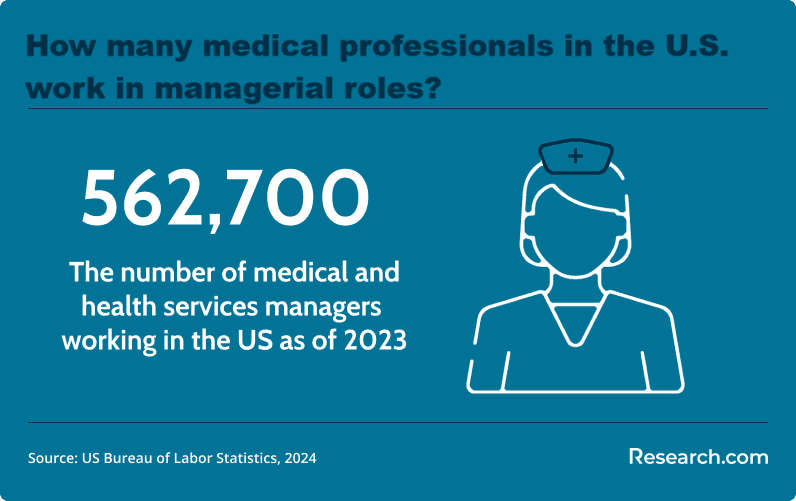
The image below shows the number of medical field professionals working in managerial positions.
How Can I Find the Cheapest Online Public Health Degree Without Compromising Quality?
The cheapest program is not always the best value. A low tuition rate can still be a poor investment if the program lacks recognized accreditation, has weak student support, offers limited transfer credit, or does not align with the jobs you want. When comparing public health programs, evaluate total cost, curriculum depth, faculty background, internship access, career services, and whether graduates can pursue the roles or graduate programs you are targeting.
Students focused on affordability can begin by reviewing options for the cheapest online public health degree, then narrowing the list based on accreditation, course quality, flexibility, and career fit.
Questions to Ask Before Enrolling in an Online Medical or Public Health Program
- Is the institution properly accredited?
- Does the program meet licensure, certification, or graduate school prerequisites for my goal?
- Are labs, internships, clinicals, or practicums required?
- Does the school help students secure placements, or must students find their own?
- What is the total cost after fees, books, technology requirements, and travel?
- How many transfer credits will the program accept?
- What career services are available to online students?
- What jobs do recent graduates actually enter?
What Are the Common Certifications for Professionals with a Medical Bachelor’s Degree?
Medical certifications can help graduates document specialized skills, qualify for regulated roles, or compete for advancement. The right credential depends on the career path, employer requirements, and state rules.
| Certification | Best Matched Career Area | How It Can Help |
| Certified Clinical Research Associate (CCRA) | Clinical research, biomedical sciences, pharmaceutical research | Supports roles involving clinical trials, research documentation, and study coordination. |
| Registered Health Information Administrator (RHIA) | Health information management, healthcare data, records administration | Demonstrates knowledge of patient records, healthcare data systems, and information governance. |
| Certified Healthcare Financial Professional (CHFP) | Healthcare administration, finance, management | Builds credibility in financial planning, budgeting, and healthcare revenue operations. |
| Certified Radiologic Technologist (CRT) | Radiologic sciences, imaging, nuclear medicine-related pathways | Credentialing can be required for imaging-related roles. Certification through the American Registry of Radiologic Technologists (ARRT) is important for many radiologic technology careers. |
| Certified Professional in Healthcare Information and Management Systems (CPHIMS) | Healthcare IT, informatics, health systems management | Validates healthcare technology, information systems, and informatics knowledge. |
| Certified Medical Laboratory Scientist (MLS) | Medical laboratory science, diagnostics, biomedical science | Supports laboratory roles that require verified competence in testing and diagnostic procedures. |
| Board of Certification in Emergency Nursing (BCEN) | Nursing, emergency care, critical care | BCEN credentials are among the recognized nursing certifications for nurses specializing in emergency or critical care settings. |
| Certified Health Data Analyst (CHDA) | Healthcare analytics, health data, informatics | Signals ability to use data for decision-making in healthcare settings. |
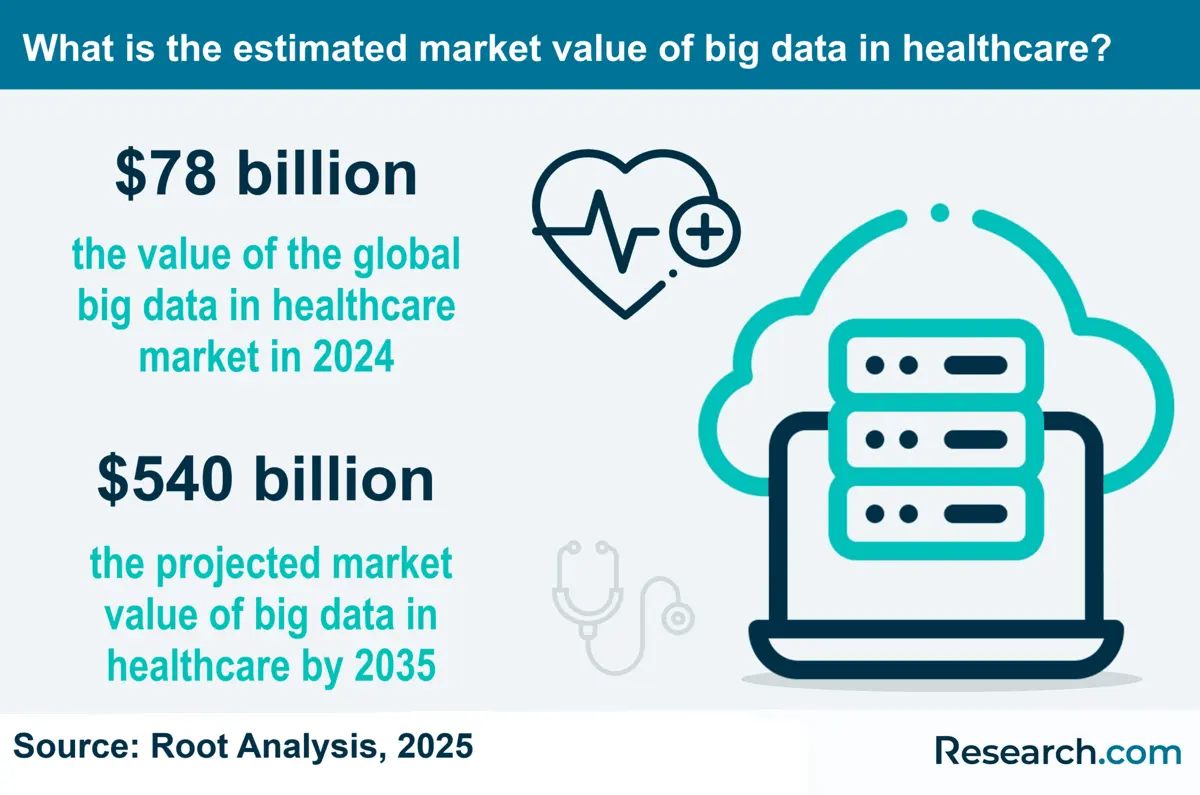
The image below shows the value of big data in the healthcare market, highlighting the growing relevance of data skills in medical careers.
Can Medical Professionals Transition into Non-Medical Careers?
Yes. A medical bachelor’s degree can support careers outside traditional clinical practice, especially when graduates combine healthcare knowledge with business, technology, communication, education, or analytics skills. This can be useful for professionals who want less direct patient care, more predictable schedules, or broader industry options.
- Healthcare technology and IT: Graduates can move into informatics, health systems implementation, cybersecurity, product support, or software roles serving hospitals and medical companies.
- Business and administration: Healthcare consulting, project management, operations, compliance, and strategy roles often value people who understand clinical environments.
- Education and training: Some professionals become instructors, corporate trainers, curriculum developers, or health educators. A medically trained professional interested in fitness and prevention might explore teaching-related work; Physical education teacher responsibilities include fitness planning, healthy lifestyle instruction, and physical activity education.
- Pharmaceutical and medical sales: Medical knowledge can help in pharmaceutical sales, medical device marketing, biotech account management, or product education.
- Writing and research communication: Graduates with strong writing skills can pursue medical writing, research analysis, science communication, policy writing, or healthcare journalism.
How Can Supplementary Online Courses Enhance Your Career in Healthcare?
Supplementary online courses can help healthcare students and professionals close skill gaps without committing immediately to another degree. Shorter programs may be useful for learning telehealth workflows, medical coding, health analytics, EHR systems, data visualization, leadership, compliance, or digital health tools.
This approach works best when courses are chosen strategically. A student pursuing health administration may benefit from finance or analytics training, while a clinical worker moving toward revenue-cycle roles may compare a billing and coding online school. The goal is not to collect random certificates, but to build a coherent skill set that supports a specific job target.
How Can I Secure Executive Roles in Healthcare Administration?
Executive healthcare administration roles usually require more than a bachelor’s degree. Employers often look for leadership experience, financial knowledge, regulatory judgment, strategic planning ability, and a track record of improving operations. A bachelor’s degree can be the starting point, but advancement typically depends on results, relationships, graduate education, and targeted professional development.
Students and early-career professionals should seek roles that expose them to budgeting, staffing, quality improvement, patient experience, compliance, and cross-functional projects. Mentorship, leadership certifications, and graduate study can also strengthen preparation for the highest salary jobs in healthcare administration.
How Does an Online Healthcare Administration Degree Accelerate Career Advancement?
An online healthcare administration degree can help working adults build management skills without leaving the workforce. Strong programs connect coursework to real healthcare problems: staffing shortages, budget constraints, patient safety, compliance, quality metrics, and operational efficiency.
Online healthcare administration programs are most useful when students already work in healthcare or can complete internships, projects, or applied assignments that demonstrate leadership potential. Flexibility is valuable, but career growth still depends on experience, networking, measurable accomplishments, and the ability to lead people and systems.
Can an Accelerated Online Biology Degree Drive Innovation in Healthcare Careers?
A fast-paced biology pathway can support healthcare innovation when it helps students build strong scientific foundations in genetics, molecular biology, physiology, research methods, and data interpretation. An accelerated online biology degree may appeal to students who want to move quickly toward biotechnology, health data science, biomedical research, graduate study, or professional school preparation.
Students should be cautious, however, if their target path requires wet labs, clinical experiences, or specific prerequisites. Before enrolling, confirm how laboratory work is delivered, whether credits transfer to graduate or professional programs, and whether the accelerated pace is realistic alongside work or family responsibilities.
How Do Accreditation and Curriculum Quality Impact Your Medical Bachelor’s Degree Success?
Accreditation and curriculum quality directly affect whether a medical bachelor’s degree is respected by employers, accepted by graduate schools, and useful for licensure or certification. Institutional accreditation is important, but some healthcare fields also require programmatic accreditation tied to a profession.
Curriculum quality matters just as much. A strong program should teach current healthcare practices, ethics, technology, data literacy, communication, and hands-on skills relevant to the field. Students comparing online science options, such as a biological sciences online degree, should verify whether labs, research opportunities, advising, and prerequisite sequencing match their long-term goals.
Common Mistakes to Avoid When Choosing a Medical Bachelor’s Degree
- Choosing based only on salary. High-paying jobs may require credentials, graduate degrees, stressful environments, or technical skills that do not fit every student.
- Ignoring accreditation. A non-accredited or poorly aligned program can limit licensure, certification, transfer, and employment options.
- Assuming all online programs meet clinical requirements. Many healthcare careers require in-person labs, supervised practice, or state-specific approvals.
- Looking only at tuition. Fees, supplies, background checks, clinical travel, exam costs, and lost work hours can change the true cost.
- Skipping career research. Students should shadow professionals, review job postings, and talk to advisors before committing.
- Assuming salary averages apply to entry-level jobs. National averages may include experienced professionals, managers, or workers in high-cost locations.
Graduate Perspectives on Medical Bachelor’s Degrees
- “My degree gave me a stable entry point into healthcare and helped me see several possible advancement paths. I had to work hard, but the structure made my career goals more realistic.” Taylor
- “The most rewarding part of my program was learning how science translates into patient care. The coursework was demanding, but it prepared me to communicate better with patients and clinical teams.” Kyle
- “I started with clinical interests and later moved toward health informatics. The degree was flexible because I kept adding technical skills after graduation.” Lauren
Key Insights
- The highest-paying medical bachelor’s paths usually blend healthcare with specialization. Data science, bioinformatics, healthcare administration, imaging, radiation therapy, biomedical engineering, and healthcare IT are strong examples.
- A bachelor’s degree may be enough for some roles, but not all. Check certification, licensure, clinical placement, and graduate education requirements before enrolling.
- Salary tables should guide research, not decide everything. National averages do not guarantee entry-level pay or local job availability.
- Program quality matters more than the degree title. Accreditation, curriculum, labs, clinical access, faculty support, and career services can determine whether the degree leads to real opportunities.
- Online programs can be valuable when they match the career goal. They work especially well for administration, public health, informatics, and some science pathways, but students must verify hands-on requirements.
- The best decision starts with the job you want. Identify the target role first, then choose the degree, credentials, experience, and cost structure that support that outcome.
References:
- GW University Bulletin 2024-2025. (n.d.). Bachelor of Science with a Major in Health Data Science. bulletin.gwu.edu.
- Hanson, M. (2024, December 30). College Degree Return on Investment. Education Data Initiative.
- Massachusetts College of Pharmacy and Health Sciences. (2024). Bachelor of Science in Data Science & Health Analytics. mcphs.edu.
- Milken Institute School of Public Health. (n.d.). Health Data Science - BS Overview. publichealth.gwu.edu.
- Saint Louis University - College for Public Health and Social Justice. (n.d.). Biostatistics, B.S. slu.edu.
- Salary.com. (2025, March 1). Bioinformatics Scientist Salary in the United States. salary.com.
- Salary.com. (2025, March 1). Dental Hygienist Salary in the United States. salary.com.
- Salary.com. (2025, March 1). Genetics Counselor Salary in the United States. salary.com.
- Salary.com. (2025, March 1). Health Care Information Technology Salary in the United States. salary.com.
- Salary.com. (2025, March 1). Health Care Manager Salaries in the United States. salary.com.
- Salary.com. (2025, March 1). Health Services Administrator Salaries in the United States. salary.com.
- Salary.com. (2025, March 1). Nuclear Medicine Technologist Salary in the United States. salary.com.
- Salary.com. (2025, March 1). Radiation Therapist | Salary in the United States. salary.com.
- Sharma, R. & Sood, J. (2025). Big Data in Healthcare Market. Root Analysis Business Research & Consulting.
- Stanford University. (n.d.). Medical Statistics Program - Stanford School of Medicine, Stanford Center for Health Education. Stanford Online.
- ZipRecruiter. (2025, March 16). Biomedical Clinical Engineer Salary. ziprecruiter.com.
- ZipRecruiter. (2025, March 16). Pharmaceutical Data Scientist Salary. ziprecruiter.com.
Other Things You Should Know About the Highest Earning Medical Bachelor’s Degrees
In 2027, bachelor's degrees in Medical Laboratory Technology, Biomedical Science, Radiologic Technology, and Nursing are among the highest earners in the medical field. Graduates in these areas typically secure roles with strong starting salaries due to high demand and specialized skills required.
Check program accreditation with the appropriate national or regional body, such as the Commission on Accreditation of Allied Health Education Programs for many U.S. allied health degrees. For nursing, verify approval from the state board and CCNE or ACEN if the program leads to licensure.