2027 Best Online CAHIIM-Accredited Health Information Management Degree Programs

Co-Founder and Chief Data Scientist
The healthcare field offers plenty of opportunity, with roles like health information technologists projected to grow 16% in the coming years. Still, numbers don’t make the decision for you. Some careers focus on managing teams, others on managing data. Clarifying which path fits your skills and goals is the first step.
Our career planning experts, with over a decade of experience, have created this roadmap for those drawn to the data side of healthcare. We’ll show you why Health Information Management is a smart, future-proof choice and how to find the best CAHIIM-accredited online health information management programs to ensure your investment is a sound one.
What are the benefits of getting an online CAHIIM-accredited health information management degree?
- You gain direct entry into a stable and growing healthcare field, ensuring patient data is accurate and secure.
- You unlock excellent earning potential, with managers in top industries earning a median wage of around $80,990.
- You have the flexibility to earn your degree online, allowing you to fit your education around your work and life commitments.
What can I expect from an online CAHIIM-accredited health information management degree?
You can expect a curriculum that blends healthcare, data management, and information technology. This isn't a program focused on direct patient care; instead, it trains you to be an expert in the data and information systems that are essential for modern medicine.
It’s important to understand how this differs from other healthcare degrees. Many people confuse Health Information Management with Healthcare Administration, but they lead to very different careers.
Think of it this way: Healthcare Administration is primarily about managing people and budgets. Health Information Management is about managing the data and the systems that store it. If you are interested in the technical side of healthcare—ensuring data is accurate, secure, and useful—then one of the best CAHIIM-accredited online health information management programs is the right path for you.
Where can I work with an online CAHIIM-accredited health information management degree?
An online CAHIIM-accredited health information management degree opens doors to a variety of data-focused roles in healthcare and beyond. Your specific career path can lead to many different settings. Based on 2023 employment data for health information technologists, the largest employers include:
- Hospitals: Employing 47% of the workforce, hospitals are the primary setting for roles in managing patient records, ensuring data integrity, and maintaining regulatory compliance.
- Physician Offices: Employing 9% of professionals, these settings include private practices and large clinic networks that need experts to manage patient data, coding, and reimbursement.
- Management and Technical Services: This growing sector, which includes corporate management and technical consulting firms, employs a combined 13% of HIM graduates for roles in EHR system implementation and data strategy.
- Administrative and Support Services: Making up 4% of the job market, these roles are often found in third-party billing companies, insurance carriers, or specialized auditing firms that support the healthcare industry.
How much can I make with an online CAHIIM-accredited health information management degree?
With an online CAHIIM-accredited degree, your earning potential is directly tied to your credentials and career path. An associate's degree prepares you for technician roles (RHIT), while a bachelor's degree unlocks higher-paying management positions (RHIA).
As of May 2024, median annual wages for key roles in the field show a clear progression:
- Health Information Technologists: In hospitals, the largest employment sector, the median annual wage is around $64,320.
- Medical and Health Services Managers: For those who advance into leadership, the median annual wage is significantly higher at $117,960.
- List of the Best Online CAHIIM-Accredited Health Information Management Degree Programs for 2027 List of Programs
- How long does it take to complete an online CAHIIM-accredited health information management degree program? Completion Time
- How does an online CAHIIM-accredited health information management degree program compare to an on-campus program? How does an online CAHIIM-accredited health information management degree program compare to an on-campus program?
- What is the average cost of an online CAHIIM-accredited health information management degree program? Program Cost
- What are the financial aid options for students enrolling in an online CAHIIM-accredited health information management degree program? Financial Aid
- What are the prerequisites for enrolling in an online CAHIIM-accredited health information management degree program? What are the prerequisites for enrolling in an online CAHIIM-accredited health information management degree program?
- What courses are typically in an online CAHIIM-accredited health information management degree program? What courses are typically in an online CAHIIM-accredited health information management degree program?
- What types of specializations are available in an online CAHIIM-accredited health information management degree program? Specializations
- What Additional Certification Programs Can Enhance Career Growth? What Additional Certification Programs Can Enhance Career Growth?
- How to Choose the Best Online CAHIIM-Accredited Health Information Management Degree Program How to Choose the Best Online CAHIIM-Accredited Health Information Management Degree Program
- What career paths are available for graduates of an online CAHIIM-accredited health information management degree program? Career Paths
- What is the job market for graduates of an online CAHIIM-accredited health information management degree program? Job Market
List of the Best Online CAHIIM-Accredited Health Information Management Degree Programs for 2027
Choosing an online health information management degree is not just about finding a healthcare major that fits your schedule. For students who want to work with patient data, coding systems, electronic health records, compliance, reimbursement, and healthcare analytics, accreditation can shape certification eligibility, employer trust, and long-term career mobility. A CAHIIM-accredited health information management program signals that the curriculum has been reviewed against recognized standards for health informatics and information management education.
This guide is for prospective students comparing online HIM bachelor’s programs, career changers moving into healthcare data roles, working adults looking for flexible study options, and healthcare employees who want a pathway into management or analytics. You will learn which online CAHIIM-accredited programs stand out, how online and campus options compare, what costs and timelines to expect, what careers may follow, and which questions to ask before enrolling. Students exploring healthcare leadership may also compare HIM with credentials such as a healthcare administration certification, especially if they are deciding between data-focused and administration-focused career paths.
Quick Answer: What Is the Best Online CAHIIM-Accredited HIM Degree?
The best online CAHIIM-accredited health information management degree is the one that matches your career goal, budget, transfer credit situation, and preferred pace. CAHIIM accreditation should be treated as a baseline requirement, not a bonus. After that, compare RHIA preparation, professional practice experience, tuition and fees, transfer policies, advising, virtual lab access, and graduate outcomes.
Students who want the fastest route should focus on accelerated or degree-completion formats. Students who need the lowest published credit cost should compare per-credit tuition carefully and ask about added technology, lab, and exam fees. Students planning for leadership roles should prioritize programs with strong practicum experiences, RHIA exam support, analytics coursework, and healthcare compliance training.
How do we rank schools?
Research.com builds rankings with the goal of helping students compare programs using transparent and relevant data. Because a degree is a major financial and career decision, our evaluation considers information from established education data sources, including the IPEDS database, Peterson's database, the College Scorecard database, and The National Center for Education Statistics.
These sources support a more consistent comparison of online CAHIIM-accredited health information management degree programs. To learn more about how Research.com evaluates schools and programs, visit the Research.com methodology page.
Online CAHIIM-Accredited HIM Programs at a Glance
| Rank | School and Program | Program Length | Credits | Published Cost | Best Fit |
| 1 | Southern New Hampshire University - Bachelor of Science in Health Information Management | 2.5 to 3 years | 120 | $342 per credit | Students seeking a broad HIM curriculum with health data, classification, ethics, and legal foundations |
| 2 | American Public University - Online Bachelor of Science in Health Information Management | 4 years | 120 | $350 per credit | Students interested in operational HIM roles across hospitals, insurers, and government agencies |
| 3 | Charter Oak State College - Bachelor of Science in Health Information Management | 4 years | 120 | $276 in-state; $363 out-of-state per credit | Students who want a fully online CAHIIM School of Distinction with practical simulations |
| 4 | Rasmussen University - Bachelor’s Degree in Health Information Management | As few as 18 months | 90 | $34,270 total tuition | Qualified students looking for an accelerated pathway with RHIA exam preparation |
| 5 | Herzing University - Bachelor of Science in Health Information Management | Approximately 36 months | 124 | $530 per credit | Students comparing associate and bachelor’s options with flexible online study |
| 6 | University of Cincinnati - Bachelor’s in Health Information Management | 2–4 years | 65 | $441 in-state; $456 out-of-state per credit | Students seeking a CAHIIM Future Education Model program with strong advising |
| 7 | Texas State University - Bachelor of Science in Health Information Management | Approximately 4 years | 120 | $404 per credit | Students interested in RHIA, CHDA, and CAHIMS preparation with supervised experiential learning |
| 8 | University of Arizona - Bachelor of Science in Health Information Management | Approximately 4 years | 120 | $250 per credit | Students focused on healthcare technology workflows and RHIA preparation |
| 9 | Purdue University - Bachelor’s in Health Information Management | 2–4 years | 180 quarter credits | $371 per credit | Students who want a capstone with an 80-hour professional practice experience |
| 10 | Western Kentucky University - Bachelor of Science in Health Information Management | 4 years | 120 | $540 per credit | Students choosing between a traditional path and the “HIM Plus 2” option |
1. Southern New Hampshire University - Bachelor of Science in Health Information Management
The online HIM program at Southern New Hampshire University is built around the systems that organize and protect healthcare data. Students study health data structures, clinical classification, legal requirements, ethics, and professional communication, making it a practical option for learners who want both technical and workplace-ready skills.
- Program Length: 2.5 to 3 years
- Required Credits to Graduate: 120
- Cost per Credit: $342
- Accreditation: Commission on Accreditation for Health Informatics and Information Management Education (CAHIIM)
2. American Public University - Online Bachelor of Science in Health Information Management
The HIM bachelor’s program at American Public University emphasizes the administrative and operational use of health information. Students learn HIM software and complete a required practicum in an approved healthcare setting, which can be useful for building experience before moving into hospitals, insurance organizations, or public-sector healthcare roles.
- Program Length: 4 years
- Required Credits to Graduate: 120
- Cost per Credit: $350
- Accreditation: Commission on Accreditation for Health Informatics and Information Management Education (CAHIIM)
3. Charter Oak State College - Bachelor of Science in Health Information Management
Charter Oak State College offers a fully online HIM bachelor’s degree that has been recognized as a CAHIIM School of Distinction. The program uses real-world simulations to connect coursework with practice, and its Fast Track option allows eligible students to earn graduate-level credits that may apply toward a master’s degree.
- Program Length: 4 years
- Required Credits to Graduate: 120
- Cost per Credit: $276 (In-State); $363 (Out-of-State)
- Accreditation: Commission on Accreditation for Health Informatics and Information Management Education (CAHIIM)
4. Rasmussen University - Bachelor’s Degree in Health Information Management
Rasmussen University may appeal to qualified students who want an accelerated completion route, with a degree timeline as short as 18 months. The curriculum includes RHIA exam preparation from the beginning and uses the Empowered Learning® model, which emphasizes applied projects and workplace-style assignments.
- Program Length: As few as 18 months
- Required Credits to Graduate: 90
- Total Tuition: $34,270
- Accreditation: Commission on Accreditation for Health Informatics and Information Management Education (CAHIIM)
5. Herzing University - Bachelor of Science in Health Information Management
Herzing University gives students multiple HIM pathways, including associate and bachelor’s degree options. Its online “Everywhere Classroom” format supports flexible study, while the dual-credit option may help students begin MBA-level work earlier if graduate business education is part of their plan.
- Program Length: Approximately 36 months
- Required Credits to Graduate: 124
- Cost per Credit: $530
- Accreditation: Commission on Accreditation for Health Informatics and Information Management Education (CAHIIM)
6. University of Cincinnati - Bachelor’s in Health Information Management
The University of Cincinnati offers a CAHIIM Future Education Model (FEM) program, a format that places additional emphasis on experiential learning. The program reports a 100% RHIA exam pass rate and provides individualized advising, which can be especially valuable for online students who need clear academic and career guidance.
- Program Length: 2–4 years
- Required Credits to Graduate: 65
- Cost per Credit: $441 (In-State); $456 (Out-of-State)
- Accreditation: Commission on Accreditation for Health Informatics and Information Management Education (CAHIIM)
7. Texas State University - Bachelor of Science in Health Information Management
Texas State University focuses on using and interpreting healthcare data, with coursework that supports preparation for credentials such as RHIA, CHDA, and CAHIMS. Students complete supervised experiential learning, giving them structured exposure to HIM practice before graduation.
- Program Length: Approximately 4 years
- Required Credits to Graduate: 120
- Cost per Credit: $404
- Accreditation: Commission on Accreditation for Health Informatics and Information Management Education (CAHIIM)
8. University of Arizona - Bachelor of Science in Health Information Management
The University of Arizona Global Campus program emphasizes the technology, workflows, and information practices used by hospitals, health systems, and private practices. Graduates have achieved an 80% pass rate on the RHIA exam, which the program describes as significantly higher than the national average.
- Program Length: Approximately 4 years
- Required Credits to Graduate: 120
- Cost per Credit: $250
- Accreditation: Commission on Accreditation for Health Informatics and Information Management Education (CAHIIM)
9. Purdue University - Bachelor’s in Health Information Management
Purdue Global designs its HIM program for students who want to use technology in healthcare management and decision-making. The capstone includes an 80-hour professional practice experience, and taking the RHIA certification exam is built into the course as a graded activity.
- Program Length: 2–4 years
- Required Quarter Credits to Graduate: 180
- Cost per Credit: $371
- Accreditation: Commission on Accreditation for Health Informatics and Information Management Education (CAHIIM)
10. Western Kentucky University - Bachelor of Science in Health Information Management
Western Kentucky University offers two online HIM routes: a traditional four-year bachelor’s pathway and the accelerated “HIM Plus 2” option for students who already hold a CAHIIM-accredited associate degree. The curriculum covers data management, informatics, compliance, and revenue cycle management.
- Program Length: 4 years
- Required Credits to Graduate: 120
- Cost per Credit: $540
- Accreditation: Commission on Accreditation for Health Informatics and Information Management Education (CAHIIM)
How long does it take to complete an online CAHIIM-accredited health information management degree program?
Most full-time students should expect a bachelor’s degree in health information management to take about four years, while an associate degree commonly takes two years. The actual timeline can be shorter or longer depending on transfer credits, course load, program format, and whether the student enrolls full time or part time.
Career changers and students with prior college credits should pay close attention to transfer policies. Some of the shortest HIM online degree programs are designed for learners who have already completed general education or lower-division coursework. Part-time study can also make sense for working adults, but it may delay graduation and certification preparation.
Timeline factors that can speed up or slow down completion
| Factor | How It Affects Your Timeline | What to Ask Before Enrolling |
| Transfer credits | Accepted credits can reduce the number of courses you still need to complete. | How many credits can I transfer, and which HIM prerequisites must be completed at your school? |
| Prior associate degree | A CAHIIM-accredited associate degree may support an accelerated bachelor’s completion route at some schools. | Do you offer a degree-completion track for students with a CAHIIM-accredited associate degree? |
| Full-time enrollment | Taking more courses per term can shorten the calendar timeline but increases weekly workload. | How many hours per week should I expect for a full-time online schedule? |
| Part-time enrollment | Part-time study can be more manageable for working adults but usually extends the program. | Is there a maximum time limit for finishing the degree? |
| Practicum requirements | Experiential learning can require scheduling with an approved healthcare site. | Will I need to find my own site, or does the program help arrange placement? |
A Field for Experienced Leaders
Students changing careers later in life should not assume they are too late for HIM. The field often rewards people who bring experience in healthcare, business, technology, compliance, administration, customer service, or operations.
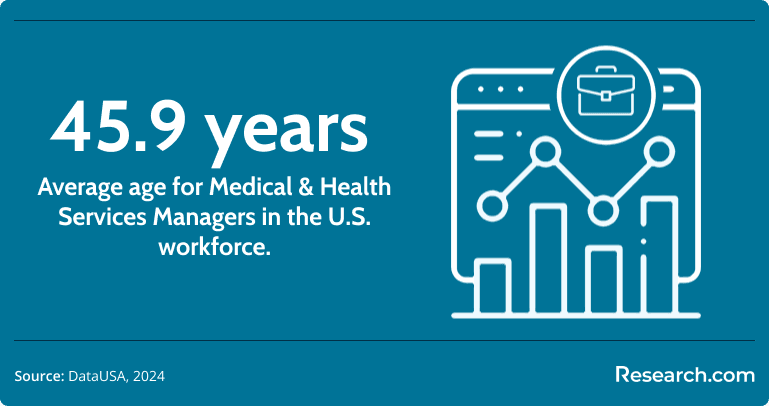
The average age for medical and health services managers is 45.9 years. That matters because many HIM-related leadership roles require judgment, communication skills, process knowledge, and the ability to work across clinical, technical, and administrative teams. Prior professional experience can become an advantage rather than an obstacle.
How does an online CAHIIM-accredited health information management degree program compare to an on-campus program?
For most students, the biggest difference between an online and campus CAHIIM-accredited HIM program is the delivery format, not the value of the credential. If both programs are CAHIIM-accredited, they are expected to meet the same educational standards for HIM preparation.
An online degree usually does not identify the format on the diploma. Employers are more likely to care about accreditation, relevant skills, certification readiness, experience, and whether graduates can work confidently with health data systems. Online learning, however, requires strong time management, self-direction, and comfort with digital platforms.
Online vs. on-campus HIM programs
| Comparison Point | Online CAHIIM-Accredited Program | On-Campus CAHIIM-Accredited Program |
| Accreditation expectations | Must meet CAHIIM standards if accredited. | Must meet CAHIIM standards if accredited. |
| Schedule flexibility | Usually better for working adults and students outside commuting distance. | Often better for students who prefer fixed class times and in-person support. |
| Hands-on practice | May use virtual labs, simulations, remote assignments, and arranged practicum experiences. | May use campus labs, local partnerships, and in-person practice activities. |
| Student experience | Requires independence, written communication, and digital organization. | Provides more face-to-face interaction and campus-based networking. |
| Best for | Working adults, rural students, military learners, caregivers, and career changers. | Students who want in-person structure and local campus resources. |
Ensuring Quality: The Role of Accreditation and Virtual Labs
CAHIIM accreditation is the key quality marker to verify before applying. Online delivery alone does not make a program weaker, but lack of appropriate accreditation can limit the value of the degree for students pursuing HIM credentials and career advancement.
Many strong online programs use virtual lab tools to replicate workplace software experience. The American Health Information Management Association (AHIMA) offers AHIMA VLab, which gives students exposure to electronic health record and health information tools used in professional settings.
These technology-heavy skills can also support adjacent healthcare career paths. For example, professionals researching non bedside nursing jobs may find that data, compliance, records management, and EHR experience can open roles away from direct patient care.
What is the average cost of an online CAHIIM-accredited health information management degree program?
Published tuition for an online HIM bachelor’s degree can vary widely. A typical estimate is around $388 per credit hour for in-state students, which may place total tuition between $40,000 and $50,000 for the full program.
That estimate should be treated as a starting point, not a final price. When comparing CAHIIM-accredited online health information management programs, ask each school for a full cost breakdown. Tuition is only one part of the bill; technology fees, virtual lab fees, books, course materials, practicum-related costs, and proctored exam fees may change the actual amount you pay.
Cost factors to compare before you apply
| Cost Item | Why It Matters | Question to Ask |
| Tuition per credit | This is the most visible cost, but it does not always show the full price. | Is the rate different for in-state, out-of-state, military, or online students? |
| Required credits | A lower credit price may not mean a lower total cost if the program requires more credits. | How many credits will I personally need after transfer evaluation? |
| Technology and online fees | Online programs may charge separate fees for platforms, systems, or remote services. | Are all mandatory online learning fees included in the tuition estimate? |
| Virtual lab access | HIM students may need access to specialized software or lab environments. | Is virtual lab access included, or is it billed separately? |
| Certification exam preparation | Some programs build exam preparation into coursework, while others expect students to pay separately. | Does tuition include RHIA or RHIT exam preparation materials? |
| Practicum expenses | Students may face travel, background check, immunization, or site-related costs. | What expenses are commonly associated with the professional practice experience? |
Analyzing Your Return on Investment: Salary Potential
Cost only makes sense when compared with career outcomes. HIM can lead to technical, specialist, analytics, compliance, and management roles, and salary potential can grow with experience, certification, and responsibility. Some students compare HIM outcomes with other healthcare earnings, such as dental assistant salary per state, to understand how different healthcare paths may affect long-term ROI.
The salary data below shows an average salary of over $80,000, with top earners in the field making more than $125,000 a year. These figures do not guarantee individual results, but they show why many students view a CAHIIM-accredited HIM degree as a career investment rather than only an education expense.
What are the financial aid options for students enrolling in an online CAHIIM-accredited health information management degree program?
Students in accredited programs may qualify for several types of financial aid. Before committing to a school, compare the net price after grants, scholarships, employer benefits, and transfer credits, not just the listed tuition.
- Federal Financial Aid: Start with the Free Application for Federal Student Aid (FAFSA). It is used to determine eligibility for federal grants, loans, and work-study opportunities.
- Scholarships and Grants: Search for awards for online students, adult learners, healthcare students, and HIM students. Field-specific scholarships may be available through professional organizations and foundations.
- Employer Tuition Reimbursement: Healthcare systems, insurers, technology companies, and public agencies may help pay for job-related education. Ask your HR department whether reimbursement requires a minimum grade, continued employment, or manager approval.
Financial aid should be evaluated alongside academic fit. Some students compare HIM with other flexible online options, including affordable online history master's programs or other graduate pathways, but the best financial decision depends on career direction, program cost, completion time, and expected use of the credential.
What are the prerequisites for enrolling in an online CAHIIM-accredited health information management degree program?
Most online HIM bachelor’s programs are accessible to first-time college students, transfer students, and career changers. Applicants do not always need prior healthcare experience, although previous coursework or work in healthcare, IT, business, coding, compliance, or administration can be helpful.
Common admission requirements include:
- A high school diploma or GED for bachelor’s-level admission.
- Foundational coursework in areas such as anatomy, physiology, medical terminology, or healthcare systems, depending on the program.
- Official transcripts from previous colleges if you want transfer credits evaluated.
- Program-specific requirements for upper-division entry, practicum eligibility, or professional practice placement.
- Relevant prior education or professional experience, including backgrounds in business, information technology, communication, or programs such as the best technical communication degrees online.
What courses are typically in an online CAHIIM-accredited health information management degree program?
Health information management sits at the intersection of healthcare, data, technology, compliance, and business operations. The curriculum is designed to help students understand how health information is collected, coded, protected, analyzed, and used for care delivery, reimbursement, reporting, and decision-making.
| Course Area | What Students Learn | Why It Matters in HIM Work |
| Healthcare systems and terminology | Medical language, healthcare delivery structures, disease processes, and clinical documentation basics | HIM professionals must understand the context behind patient records and clinical data. |
| Medical law, privacy, and ethics | Confidentiality, patient rights, compliance expectations, and ethical information use | Health data work requires careful handling of sensitive patient information. |
| Clinical classification and coding | Systems such as ICD-10, coding rules, documentation review, and reimbursement connections | Accurate coding supports billing, reporting, research, and quality measurement. |
| Data quality and database management | Data integrity, database concepts, information governance, and record accuracy | Organizations depend on clean, reliable data for operations and care improvement. |
| Health information technology | Electronic health records, information systems, security concepts, and healthcare software use | HIM professionals work closely with EHRs and digital health platforms. |
| Analytics and reporting | Data interpretation, performance measures, dashboards, and healthcare decision support | Analytics skills are increasingly important for quality, compliance, and management roles. |
| Professional practice experience | Applied work in a supervised setting, simulation, capstone, or practicum format | Practical experience helps connect academic concepts to real healthcare workflows. |
The technology component is healthcare-specific. Unlike a broader technology degree such as the shortest management information systems master's degree online, HIM coursework focuses on clinical data, health records, regulatory requirements, coding, and healthcare operations.
Where Your Skills Are Needed: Top Industries
HIM graduates are most often associated with hospitals, but their skills are also relevant in physician practices, insurance organizations, consulting firms, government agencies, software vendors, and healthcare management companies. Coding and reimbursement knowledge can be especially important in outpatient and physician office settings, while database, EHR, and analytics skills are central in large health systems.
The chart below shows that hospitals employ the largest number of health information professionals. It also highlights demand in physician offices and management or consulting settings, which reinforces the versatility of the degree.
What types of specializations are available in an online CAHIIM-accredited health information management degree program?
Specializations help students align an HIM degree with specific career goals. Not every program offers formal concentrations, but many allow students to focus electives, projects, practicum work, or certifications around a particular area of health information practice.
- Health Data Analytics: This path focuses on using healthcare data to support quality improvement, operations, population health, and decision-making. Students who want advanced analytics or informatics roles may later consider the shortest health informatics master's degree online.
- Revenue Cycle Management: This specialization connects coding, billing, payer requirements, reimbursement, denials, and financial performance. It can be a strong fit for students who want to work with the business side of healthcare.
- Clinical Documentation Integrity: This area focuses on making sure patient records are accurate, complete, compliant, and useful for care quality, coding, reimbursement, and reporting.
- Compliance and Information Governance: Students interested in policy, privacy, auditing, and risk management may focus on how organizations protect and manage health data.
- Health Informatics: This direction emphasizes the use of information systems, EHR workflows, and digital tools to improve healthcare processes.
What Additional Certification Programs Can Enhance Career Growth?
A CAHIIM-accredited HIM degree can provide the academic foundation for the field, but targeted certifications may help students demonstrate job-specific skills. Additional credentials are most useful when they match a clear career goal, such as coding, revenue cycle, analytics, documentation integrity, compliance, or health informatics.
For example, students pursuing entry-level coding or reimbursement roles may compare affordable online medical billing and coding certification programs to strengthen technical preparation. Certification choices should be based on employer expectations in your target market, not on collecting credentials without a plan.
How to Choose the Best Online CAHIIM-Accredited Health Information Management Degree Program
The best program is not always the cheapest, fastest, or highest ranked. It is the one that prepares you for the credential, role, and work setting you actually want. Use the following checklist before applying.
- Verify CAHIIM Accreditation. Do not rely only on marketing language. Confirm that the program is listed and in good standing through the official CAHIIM program directory.
- Ask About RHIA or RHIT Exam Outcomes. Request first-time pass rates, exam preparation resources, and how certification content is integrated into coursework.
- Review Practicum and Professional Practice Requirements. Ask whether the school helps secure sites, whether virtual options are available, and what requirements must be completed before placement.
- Calculate the Full Cost. Compare tuition, fees, transfer credits, virtual lab charges, textbooks, proctoring, and any certification-related expenses.
- Compare Transfer Credit Policies. If you already have college credits or an associate degree, request an official transfer evaluation before making a decision.
- Evaluate Student Support. Online students should look for responsive advising, tutoring, career services, technical support, and clear communication about course sequencing.
- Match the Curriculum to Your Goal. Students targeting analytics should look for data courses; students targeting revenue cycle should look for coding and reimbursement depth; students targeting leadership should look for management and compliance preparation.
Common mistakes to avoid when choosing an online HIM program
| Mistake | Why It Can Hurt You | Better Approach |
| Choosing a program before confirming CAHIIM accreditation | The degree may not support your intended certification or employer expectations. | Verify accreditation before applying or paying fees. |
| Comparing only tuition per credit | A program with lower tuition may still cost more after fees or extra credits. | Ask for a personalized total cost estimate after transfer review. |
| Ignoring practicum logistics | Placement requirements can affect your schedule, location, and graduation timeline. | Ask how sites are arranged and what students in your area typically do. |
| Assuming online means easier | Online HIM programs can be rigorous and require weekly discipline. | Review course load expectations before enrolling full time. |
| Relying only on rankings | A ranked program may not be the best fit for your budget, transfer credits, or career goal. | Use rankings as a starting point, then compare outcomes and requirements. |
| Overlooking certification preparation | Graduation alone may not be enough for your target role. | Ask how the curriculum supports RHIA, RHIT, CHDA, CAHIMS, or other relevant credentials. |
What career paths are available for graduates of an online CAHIIM-accredited health information management degree program?
An HIM degree can lead to several career tracks. Some graduates begin in technical roles, while others move into compliance, analytics, documentation, revenue cycle, or management as they gain experience and credentials.
| Career Track | Typical Focus | Common Preparation | Good Fit For |
| Health information technician | Records, coding support, data quality, and health information systems | Associate or bachelor’s HIM preparation; RHIT may be relevant | Students seeking an entry point into HIM operations |
| Medical coding and revenue cycle | Coding accuracy, claims, reimbursement, denials, and payer rules | Coding coursework, reimbursement training, and related certifications | Detail-oriented students interested in healthcare finance |
| Clinical documentation specialist | Completeness, accuracy, and compliance of clinical records | HIM degree, documentation training, coding knowledge, and clinical context | Students who enjoy auditing, precision, and collaboration with care teams |
| Health data analyst | Data reporting, dashboards, quality metrics, and operational insights | HIM degree with analytics, database, and reporting coursework | Students who like data interpretation and problem-solving |
| Compliance or privacy officer | Policies, audits, privacy, risk, and regulatory adherence | HIM degree with law, ethics, privacy, and governance coursework | Students interested in rules, systems, and organizational accountability |
| HIM manager or director | Team leadership, strategy, records operations, compliance, and performance improvement | Bachelor’s degree, RHIA preparation, experience, and leadership skills | Students aiming for long-term management responsibility |
Students interested in healthcare technology leadership sometimes compare HIM with a broader management information systems degree online. The key difference is focus: MIS is broader across business technology, while HIM is specialized for healthcare data, records, coding, compliance, and clinical information systems.
The High-Demand Management Track
HIM can be a strong pathway for students who want to move into healthcare management. Leaders in this area need to understand both healthcare operations and the information systems that support them.
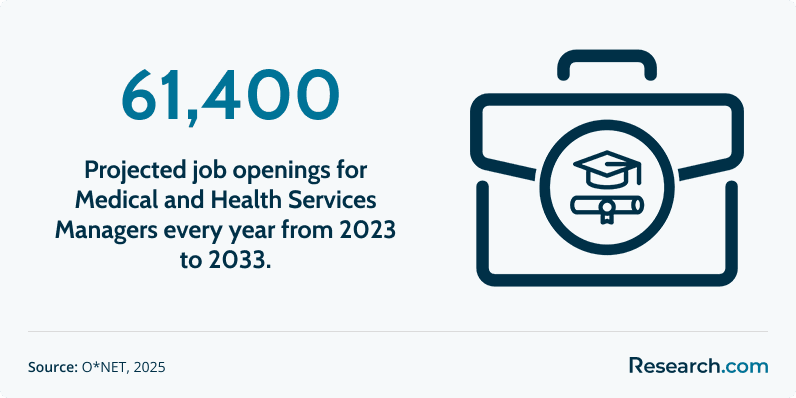
Projected demand supports the management path. There are expected to be an average of 61,400 job openings for medical and health services managers every year for the next decade. This does not guarantee a job for every graduate, but it does show that healthcare organizations will continue to need managers who can work across clinical, administrative, compliance, and technology functions.
What is the job market for graduates of an online CAHIIM-accredited health information management degree program?
The job market for HIM graduates is supported by the ongoing shift toward digital records, healthcare data reporting, compliance requirements, reimbursement complexity, and the need for secure information management. Students should still research local employers and preferred credentials, but national labor data points to continued demand.
The U.S. Bureau of Labor Statistics projects 16% job growth for health information technologists over the next decade, with about 3,200 job openings each year. This outlook reflects the need for professionals who can manage electronic health records, support data quality, and help healthcare organizations use information accurately and securely.
Current trends affecting HIM students and graduates
- AI and automation are changing tasks, not eliminating the need for oversight. Automated coding, documentation tools, and analytics platforms still require trained professionals to validate data, audit accuracy, manage risk, and interpret results.
- Employers increasingly value data literacy. HIM professionals who understand analytics, dashboards, data quality, and reporting may have more options beyond traditional records roles.
- Privacy and compliance remain central. As healthcare data becomes more connected and more vulnerable, organizations need staff who understand ethical, legal, and technical safeguards.
- Remote and hybrid work can expand opportunities. Some coding, auditing, data quality, and documentation roles may be compatible with remote work, although requirements vary by employer.
- Certification expectations vary by role. Some employers prefer or require RHIA, RHIT, coding, analytics, or compliance credentials, so students should check job postings before choosing electives or certifications.
The Broader Outlook: A Thriving Healthcare Ecosystem
Health information management is part of a much larger healthcare management labor market. Students who build technical HIM knowledge and leadership skills may be able to move into broader management roles over time.
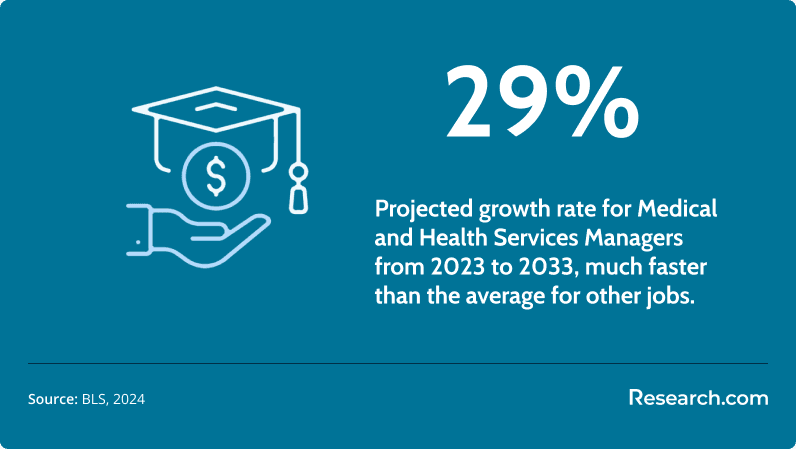
The projected job outlook for medical and health services managers is 29%. That growth highlights why HIM students should think beyond a first job and consider how a degree, credentials, experience, and specialization can support advancement.
Here’s What Graduates Have to Say about Their Online CAHIIM-Accredited Health Information Management Degree Program
- Jax: "I came from software development and wanted my next career move to feel more connected to public service. HIM gave me a way to use my technical background in healthcare. Studying online let me keep working, and the coursework helped me understand how data security, patient records, and clinical workflows all fit together."
- Genevieve: "I was worried about choosing a field that technology might replace. The analytics coursework helped me see the opposite: HIM professionals are needed to review, manage, and improve the systems that use healthcare data. That gave me more confidence about building a long-term career in this area."
- Anya: "Because I live in a small town, I did not have access to this kind of program locally. The online format made the degree possible, and the virtual lab helped me practice with electronic health record tools before starting my first job. It made the transition from student to professional much less intimidating."
References
- Data USA. (2023). Medical & health services managers. Retrieved September 5, 2025, from Data USA medical and health services managers profile
- National Center for O*NET Development. (n.d.). 11-9111.00 - Medical and Health Services Managers. O*NET OnLine. Retrieved September 5, 2025, from O*NET medical and health services managers summary
- National Center for O*NET Development. (n.d.). 29-9021.00 - Health Information Technologists and Medical Registrars. O*NET OnLine. Retrieved September 5, 2025, from O*NET health information technologists and medical registrars summary
- PayScale. (2025). Health Information Management (HIM) Manager Salary. Retrieved September 5, 2025, from PayScale HIM manager salary data
- U.S. Bureau of Labor Statistics. (2024, April 3). 11-9111 Medical and Health Services Managers. Occupational Employment and Wage Statistics. Retrieved September 5, 2025, from BLS occupational employment data for medical and health services managers
- U.S. Bureau of Labor Statistics. (2024, April 3). 29-9021 Health Information Technologists and Medical Registrars. Occupational Employment and Wage Statistics. Retrieved September 5, 2025, from BLS occupational employment data for health information technologists
- U.S. Bureau of Labor Statistics. (2024, April 16). Health information technologists and medical registrars. Occupational Outlook Handbook. Retrieved September 5, 2025, from BLS Occupational Outlook Handbook for health information technologists
- U.S. Bureau of Labor Statistics. (2024, April 16). Medical and health services managers. Occupational Outlook Handbook. Retrieved September 5, 2025, from BLS Occupational Outlook Handbook for medical and health services managers
- ZipRecruiter. (n.d.). Healthcare Information Management Salary. Retrieved September 5, 2025, from ZipRecruiter healthcare information management salary data Additional ZipRecruiter salary source Additional BLS managers outlook source Additional BLS health information technologists outlook source Additional BLS health information technologists wage source Additional BLS managers wage source Additional PayScale HIM manager source Additional O*NET health information technologists source Additional O*NET managers source Additional Data USA managers source
Key Insights
- CAHIIM accreditation should be your first filter. Before comparing price, pace, or ranking position, confirm that the HIM program is CAHIIM-accredited and aligned with your certification goals.
- Online and campus HIM degrees can carry the same academic value. The stronger question is whether the online program provides advising, virtual lab access, professional practice experience, and certification preparation.
- Total cost matters more than tuition alone. Ask about transfer credits, fees, lab access, proctoring, materials, practicum costs, and exam preparation before estimating ROI.
- Program speed depends heavily on your starting point. Students with prior college credits or a CAHIIM-accredited associate degree may finish faster than first-time bachelor’s students.
- HIM is broader than medical records. Graduates may work in coding, revenue cycle, compliance, clinical documentation, analytics, informatics, privacy, or management.
- Labor market indicators are favorable but not automatic. The field shows strong projected growth, including 16% job growth for health information technologists and a 29% outlook for medical and health services managers, but individual outcomes depend on credentials, experience, location, and employer needs.
- The best choice is career-specific. Choose analytics-heavy programs for data roles, coding and reimbursement depth for revenue cycle careers, and leadership-focused coursework for management advancement.
Other Things You Should Know About Online CAHIIM-Accredited Health Information Management Degree Programs
Many online CAHIIM-accredited HIM programs require an applied practicum or capstone in the final term. CAHIIM standards expect programs to include supervised experiential learning tied to competencies such as coding, data management, quality improvement, and privacy compliance, though the exact number of hours is set by each school.
Students in 2027 need a reliable computer, high-speed internet access, and specific software like Microsoft Office and healthcare simulation programs for online CAHIIM-accredited health information management courses. Some courses may also require virtual lab access for data management practice.