2027 Best Online Technical Communication Degree Programs

Co-Founder and Chief Data Scientist
Confusion over which programs are reputable, uncertainty about job prospects, and a lack of clarity around tuition costs often stop individuals from pursuing a degree in technical communication. For those balancing work, family, or financial constraints, finding a flexible and credible online option can feel overwhelming.
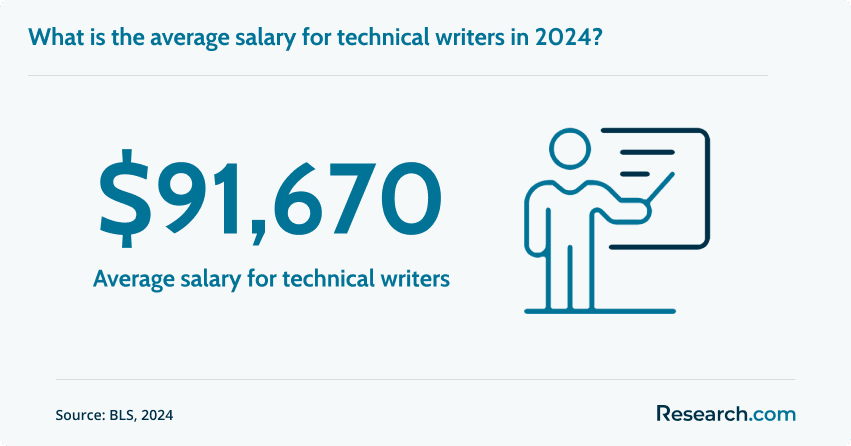
This guide breaks down the best online technical communication degree programs for 2027, with expert insights and up-to-date data—including how median salaries in the field exceed $91,670 according to the U.S. Bureau of Labor Statistics. Prepared by specialists in career planning, it will help readers identify practical, high-quality programs that fit their goals and situation.
What are the benefits of getting an online technical communication degree?
- Qualifies you for roles like technical writer, UX writer, content strategist, and documentation manager across industries such as tech, healthcare, and engineering.
- Leads to strong earning potential—technical writers earn a median salary of $78,060 per year (U.S. Bureau of Labor Statistics).
- Online programs offer flexible scheduling, allowing you to earn a degree without pausing your career or relocating.
What can I expect from an online technical communication degree?
An online technical communication degree combines writing, design, and technology to prepare students for careers in clear, user-focused communication. Core courses often include information design, usability testing, digital content strategy, and technical editing. Most programs require a capstone project that showcases your ability to solve real-world communication problems. Some also include internship hours for practical experience.
Online classes are typically delivered asynchronously, allowing students to complete coursework on their own schedule through discussion boards, video lectures, and collaborative tools. Tuition varies widely, with programs ranging from $9,000 to $38,000 depending on the school and residency status. This format is ideal for working professionals who need flexibility without sacrificing academic quality.
Where can I work with an online technical communication degree?
A technical communication degree opens doors across a wide range of industries. Graduates work in corporate offices, government agencies, nonprofit organizations, and consulting firms. Many also build careers in technology, healthcare, manufacturing, or education—fields that require clear and effective communication of complex information.
Roles include technical writer, content strategist, documentation manager, UX writer, and more. Some graduates move into research or management positions, while others freelance or launch their own communication businesses. According to the U.S. Bureau of Labor Statistics, employment for technical writers is projected to grow 7% from 2024 to 2034, faster than average. With strong problem-solving and communication skills, graduates can thrive in both traditional and emerging work environments.
How much can I make with an online technical communication degree?
Graduates with a technical communication degree can expect competitive salaries. According to the U.S. Bureau of Labor Statistics, the median annual wage for technical writers is $78,060, with the top 10% earning over $124,000. Entry-level professionals typically start around $50,000–$60,000, depending on the industry and location.
Salaries are higher in sectors like software development, aerospace, and pharmaceuticals. Experience, specialization (such as UX writing or regulatory documentation), and certifications like CPTC (Certified Professional Technical Communicator) can significantly boost earnings. Those with advanced degrees or leadership roles in content strategy or documentation management often earn six-figure salaries. Remote and freelance opportunities also offer flexibility and potential for higher income.
- List of the Best Online Technical Communication Degree Programs for 2027 List of Programs
- How long does it take to complete an online technical communication degree program? Program Length
- How does an online technical communication degree program compare to an on-campus program? How does an online technical communication degree program compare to an on-campus program?
- What is the average cost of an online technical communication degree program? Program Cost
- What are the financial aid options for students enrolling in an online technical communication degree program? What are the financial aid options for students enrolling in an online technical communication degree program?
- What are the prerequisites for enrolling in an online technical communication degree program? What are the prerequisites for enrolling in an online technical communication degree program?
- What courses are typically in an online technical communication degree program? What courses are typically in an online technical communication degree program?
- What types of specializations are available in an online technical communication degree program? Specializations
- How to Choose the Best Online Technical Communication Degree Program How to Choose the Best Online Technical Communication Degree Program
- What career paths are available for graduates of an online technical communication degree program? Career Paths
- What is the job market like for graduates of an online technical communication degree program? Job Outlook
- What Do Employers Value Most in Online Technical Communication Graduates? What Do Employers Value Most in Online Technical Communication Graduates?
- How Does Integrating User Experience Enhance Technical Communication Education? How Does Integrating User Experience Enhance Technical Communication Education?
Best Online Technical Communication Degree Programs for 2027
An online technical communication degree is designed for students who want to turn strong writing, editing, design, and technology skills into a career explaining complex information clearly. These programs are especially relevant now because employers need people who can create software documentation, help content, UX microcopy, training materials, policy documents, and technical content for digital products.
This guide is for first-time college students, transfer students, working adults, writers moving into technology, and professionals who already work in business, healthcare, manufacturing, or IT and want a communication-focused bachelor’s degree. You will learn which online programs stand out, how long they take, what they cost, what courses to expect, how online study compares with campus study, and how to judge whether this degree fits your career goals.
If you are still comparing broad undergraduate options, you may also want to review other career-oriented pathways such as a sports management bachelor's degree online, especially if you are weighing communication-heavy roles across different industries.
Quick answer: Is an online technical communication degree worth considering?
Yes, an online technical communication degree can be a practical choice if you want a writing-centered career connected to technology, science, business, healthcare, government, or digital products. Most programs require 120 credits, can be completed online, and build skills in technical writing, editing, document design, usability, project management, and digital communication. The strongest programs combine accredited coursework, portfolio-building assignments, flexible scheduling, and career support.
How these programs are evaluated
Research.com rankings are built to help students compare programs using consistent, verifiable information rather than marketing claims. Our evaluation process uses established education data sources, including IPEDS, the Peterson’s database, the College Scorecard, and the National Center for Education Statistics.
These sources help us assess online technical communication programs using factors such as institutional credibility, program availability, tuition information, student outcomes, and academic quality indicators. For more detail on Research.com’s ranking process, visit our methodology page.
| School | Online Degree | Credits | Tuition Listed | Accreditation |
| Arizona State University | BS in Technical Communication | 120 | $561–$661 per credit hour | Higher Learning Commission (HLC) |
| Missouri University of Science and Technology | BS in Technical Communication | 120 | $378.20 per credit hour (in-state), $955.20 (out-of-state) | Higher Learning Commission (HLC) |
| University of Minnesota Twin Cities | BS in Scientific and Technical Writing | 120 | $538.77 per credit (resident), $1,296.77 (non-resident) | Higher Learning Commission (HLC) |
| Texas Tech University | BA in Technical Communication | 120 | $421 per credit (resident), $771 (non-resident) | Southern Association of Colleges and Schools Commission on Colleges (SACSCOC) |
| University of Central Florida | BA in English: Technical Communication | 120 | $179.19 per credit (in-state), $715.80 (out-of-state) | Southern Association of Colleges and Schools Commission on Colleges (SACSCOC) |
| University of Alabama | BA in Communication Studies: Organizational and Technical Communication | 120 | $385 per credit hour | Southern Association of Colleges and Schools Commission on Colleges (SACSCOC) |
| East Carolina University | BS in Industrial Technology: Information and Computer Technology | 120 | $204.83 per credit (in-state), $741.50 (out-of-state) | Southern Association of Colleges and Schools Commission on Colleges (SACSCOC) |
| Utah State University | BS in Technical Communication and Rhetoric | 120 | $304 per credit (undergraduate online tuition) | Northwest Commission on Colleges and Universities (NWCCU) |
| Indiana University East | BS in Technical and Professional Writing | 120 | $252.09 per credit (in-state), $366.69 (out-of-state) | Higher Learning Commission (HLC) |
| Northern Arizona University | BS in Professional and Technical Writing | 120 | $460 per credit hour | Higher Learning Commission (HLC) |
Arizona State University – BS in Technical Communication
Arizona State University offers an online Bachelor of Science in Technical Communication that connects professional writing with digital media, information design, and workplace documentation. Students study how to produce clear technical content for online platforms, business environments, and specialized audiences. The program is a strong fit for learners interested in documentation, UX writing, content strategy, and technical editing.
- Required Credits to Graduate: 120
- Cost: $561–$661 per credit hour
- Accreditation: Higher Learning Commission (HLC)
Missouri University of Science and Technology – BS in Technical Communication
Missouri S&T offers an online BS in Technical Communication with a strong orientation toward science, engineering, and technology settings. Students learn to write for technical audiences, manage documentation work, apply usability principles, and communicate effectively in STEM-focused organizations. Coursework may appeal to students who want technical writing careers in engineering, research, software, energy, manufacturing, or other technical industries.
- Required Credits to Graduate: 120
- Cost: $378.20 per credit hour (in-state), $955.20 (out-of-state)
- Accreditation: Higher Learning Commission (HLC)
University of Minnesota Twin Cities – BS in Scientific and Technical Writing
UMN Twin Cities offers an online Bachelor of Science in Scientific and Technical Writing that emphasizes analytical thinking, communication theory, and applied writing. Students can pursue focused study in areas such as biological, medical, or legal communication. The required capstone gives students a chance to produce work that demonstrates professional writing, editing, and research skills.
- Required Credits to Graduate: 120
- Cost: $538.77 per credit (resident), $1,296.77 (non-resident)
- Accreditation: Higher Learning Commission (HLC)
Texas Tech University – BA in Technical Communication
Texas Tech University provides an online BA in Technical Communication for students who want a writing degree tied to digital documentation, editing, project management, and web-based communication. The program includes applied work through a senior project or internship, which can help students build evidence of their skills before entering the job market. It may suit students aiming for corporate, nonprofit, government, or technical communication roles.
- Required Credits to Graduate: 120
- Cost: $421 per credit (resident), $771 (non-resident)
- Accreditation: Southern Association of Colleges and Schools Commission on Colleges (SACSCOC)
University of Central Florida – BA in English: Technical Communication
UCF offers an online BA in English with a Technical Communication track for students who want to combine English studies with applied workplace writing. Courses cover rhetoric, document design, user-centered writing, and professional communication. Internship options can help students translate classroom assignments into portfolio-ready experience.
- Required Credits to Graduate: 120
- Cost: $179.19 per credit (in-state), $715.80 (out-of-state)
- Accreditation: Southern Association of Colleges and Schools Commission on Colleges (SACSCOC)
University of Alabama – BA in Communication Studies: Organizational and Technical Communication
The University of Alabama offers a fully online BA in Communication Studies with a concentration in organizational and technical communication. The degree focuses on writing, message design, collaboration, and communication strategy in business and technical environments. It is a good option for students who want a broader communication studies foundation with applied technical and organizational coursework.
- Required Credits to Graduate: 120
- Cost: $385 per credit hour
- Accreditation: Southern Association of Colleges and Schools Commission on Colleges (SACSCOC)
East Carolina University – BS in Industrial Technology: Information and Computer Technology
East Carolina University offers an online BS in Industrial Technology with an Information and Computer Technology concentration that includes technical communication-related training. This program is best viewed as a technology-oriented degree with communication, professional writing, project coordination, and digital communication components. It may be most appropriate for students who already have or want a stronger technical background.
- Required Credits to Graduate: 120
- Cost: $204.83 per credit (in-state), $741.50 (out-of-state)
- Accreditation: Southern Association of Colleges and Schools Commission on Colleges (SACSCOC)
Utah State University – BS in Technical Communication and Rhetoric
Utah State offers an online BS in Technical Communication and Rhetoric that emphasizes audience analysis, digital communication, professional editing, and technical writing. Students learn how to create manuals, instructions, online documentation, and other user-focused materials. The program’s attention to rhetoric and portfolio development can help students prepare for digital-first communication roles.
- Required Credits to Graduate: 120
- Cost: $304 per credit (undergraduate online tuition)
- Accreditation: Northwest Commission on Colleges and Universities (NWCCU)
Indiana University East – BS in Technical and Professional Writing
IU East offers a fully online Bachelor of Science in Technical and Professional Writing focused on writing, editing, design, publishing, and applied communication across business, science, and technology contexts. Students complete practical assignments that can support a professional portfolio for documentation, editing, and digital content roles.
- Required Credits to Graduate: 120
- Cost: $252.09 per credit (in-state), $366.69 (out-of-state)
- Accreditation: Higher Learning Commission (HLC)
Northern Arizona University – BS in Professional and Technical Writing
NAU offers an online BS in Professional and Technical Writing that combines workplace writing, digital literacy, instructional materials, proposals, technical manuals, and collaborative communication. Its flexible online format can work well for remote learners, transfer students, and working adults who need a practical writing degree with applied projects.
- Required Credits to Graduate: 120
- Cost: $460 per credit hour
- Accreditation: Higher Learning Commission (HLC)
How Long Does an Online Technical Communication Degree Take?
Most online bachelor’s programs in technical communication take about four years for full-time students because they commonly require 120 credit hours. Those credits usually include general education, major coursework, electives, and a final capstone, portfolio, internship, or senior project.
Your actual timeline depends on how many credits you take each term, whether you transfer previous college credit, and whether the program has required experiential components. Students comparing program structures should evaluate outcomes and requirements carefully, much as they would when reviewing differences between LSCW vs LPC degree programs.
| Student Situation | Typical Completion Pattern | What to Check Before Enrolling |
| Full-time first-time student | Often about four years | Semester course load, required sequence, and capstone timing |
| Transfer student | May finish faster if credits apply | Transfer credit limits, residency requirements, and major prerequisites |
| Part-time student | Often five to six years | Course rotation, maximum time to degree, and advising support |
| Working adult | Depends on weekly availability and asynchronous options | Deadlines, live class requirements, and internship flexibility |
Factors that can shorten or extend the degree
- Transfer credits: Prior college coursework or an associate degree may reduce the number of credits you still need.
- Full-time or part-time enrollment: Full-time students typically take 12–15 credits per semester, while part-time students take fewer courses.
- Internship or capstone requirements: A final project can strengthen your portfolio, but it may require planning around work or family responsibilities.
- Online course design: Asynchronous courses can make it easier to study around a job, while synchronous courses require scheduled attendance.
Online vs. On-Campus Technical Communication Degrees: Which Format Fits You?
Online and campus-based technical communication degrees can lead to the same credential, but the learning experience is different. The better choice depends on your schedule, preferred interaction style, budget, access to campus resources, and need for flexibility.
| Comparison Point | Online Program | On-Campus Program | Best Fit |
| Course delivery | Often asynchronous, with assignments completed through a learning platform | Class meetings usually happen at set times and locations | Online works better for working adults; campus works better for students who prefer face-to-face structure |
| Curriculum | Typically covers technical writing, editing, usability, digital communication, and document design | Usually covers the same core subjects with in-person class activities | Both formats can be academically comparable if the institution is accredited |
| Networking | Depends on virtual events, discussion boards, group projects, and online career services | May include more informal contact with faculty, peers, clubs, and campus employers | Campus may help students who want frequent in-person networking |
| Cost and access | May reduce housing, commuting, and relocation costs | Can include higher living and transportation expenses | Online may be more accessible for students outside commuting distance |
| Support services | Advising, tutoring, writing help, library resources, and tech support are usually offered virtually | Similar services are often available in person | Choose the format with support you will actually use |
Curriculum quality
In a well-designed online program, students should still study technical writing, document design, editing, usability, digital content, and professional communication. The important question is not whether the program is online, but whether the curriculum is rigorous, current, accredited, and connected to portfolio development.
Student support
Online learners should look for accessible advising, writing assistance, library services, career coaching, and technology support. Strong student services can improve persistence and performance, and outside resources on guidance for academic success can also help students plan for online learning demands.
Flexibility and affordability
Online programs can be especially useful if you need to keep working, avoid relocation, or study from a place without nearby campus options. Students who like short-term, skill-based training may also compare degree programs with focused technical training options such as top CompTIA A+ boot camp online courses, although bootcamps and bachelor’s degrees serve different purposes.
How Much Does an Online Technical Communication Degree Cost?
The cost of an online technical communication bachelor’s degree varies by school, residency status, transfer credits, and fee structure. Based on the figures provided for these programs, students may see total program costs ranging from $9,000 to $38,000. Many programs require around 120 credit hours, and listed tuition commonly falls between $250 and $660 per credit.
Cost should be compared with curriculum quality, accreditation, career services, and fit with your goals. This is similar to evaluating credential value in other fields, such as comparing CBCS vs CPC certification, where recognition and career relevance matter as much as price.
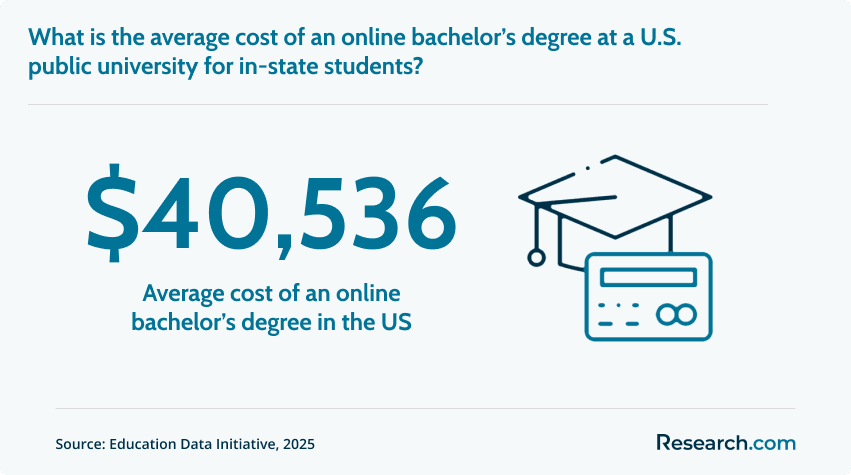
Recent data provides additional context: in-state students at U.S. public universities pay an average of $40,536 for an online bachelor’s degree. That benchmark suggests some technical communication programs may fall below or within the broader national range, particularly when public universities offer lower in-state online tuition.
Tuition is not the only expense. Students should also budget for books, software, technology fees, online course fees, portfolio tools, and possible graduation or transcript costs. Online learners may save on housing, commuting, and relocation, but those savings should be weighed against all required academic fees.
| Cost Factor | Why It Matters | Question to Ask |
| Residency-based tuition | Public universities may charge different rates for in-state and out-of-state students | Does the online program charge one rate or separate resident and non-resident rates? |
| Transfer credits | Accepted credits can reduce total tuition | How many of my previous credits will apply to the major and graduation requirements? |
| Technology and online fees | These costs may not appear in the base tuition rate | What mandatory fees are charged each term or each credit? |
| Books and software | Technical communication courses may require writing, design, collaboration, or documentation tools | Which tools are required, and are student licenses included? |
| Time to completion | Taking longer can increase total fees and delay earnings from a new role | Can I follow a clear degree plan that fits my schedule? |
Financial Aid Options for Online Technical Communication Students
Students in accredited online technical communication programs may qualify for many of the same aid options as campus students. Federal aid can include Pell Grants, Direct Subsidized and Unsubsidized Loans, and Work-Study programs, depending on eligibility and institutional participation. The first step is completing the Free Application for Federal Student Aid (FAFSA).
Some colleges also award institutional scholarships for online learners, transfer students, adult learners, high-achieving applicants, or students in specific majors. Students exploring multiple fields can use the same comparison mindset they would apply when reviewing the types of forensic science: identify the path, then compare funding, requirements, and outcomes.
Additional funding may come from private scholarships, state grants, military or veteran benefits, professional associations, and employer tuition assistance. If you already work in technology, healthcare, manufacturing, business, or government, ask your employer whether writing, documentation, training, or compliance-related coursework qualifies for reimbursement.
Financial aid checklist
- Confirm that the institution is accredited and eligible for federal financial aid.
- Submit the FAFSA as early as possible.
- Ask whether online students qualify for the same scholarships as campus students.
- Check transfer scholarships, adult learner awards, and major-specific scholarships.
- Review the full cost of attendance, not just tuition.
- Compare loan amounts with realistic salary expectations and repayment plans.
Admission Requirements for Online Technical Communication Degrees
Most online bachelor’s programs in technical communication require a high school diploma or GED, official transcripts, and a completed application. Some schools request SAT or ACT scores, but many online programs no longer make standardized tests mandatory.
Programs may also ask for a minimum GPA, often around 2.5, along with a personal statement or writing sample. Because technical communication is built around writing, revision, audience awareness, and digital tools, applicants should be comfortable with college-level reading, basic technology, and consistent internet access. Research on a student’s communication skills also reinforces how central written and interpersonal communication can be to academic performance.
Common prerequisites and application materials
- High school diploma or GED
- Minimum GPA, often 2.5 or higher
- Official high school and college transcripts
- Basic writing, research, and computer skills
- Personal statement or writing sample, when required
- Transfer credit evaluation, if you have prior college coursework
Admission policies vary by institution. Adult learners and career changers should also review flexible online options in related fields, such as an online bachelor's degree in organizational leadership, if they are deciding between communication, management, and workplace leadership pathways.
Courses You Can Expect in an Online Technical Communication Program
Online technical communication programs usually combine writing, editing, design, rhetoric, digital tools, and applied workplace projects. The goal is to help students explain difficult information accurately, clearly, and in a format that users can understand and act on.
Most curricula begin with writing-intensive courses, then move into specialized topics such as visual communication, usability, web content, project coordination, and professional editing. By graduation, students should have a portfolio that shows they can create practical documents for real audiences.
| Typical Course | What Students Learn | Career Relevance |
| Introduction to Technical Writing | Document planning, audience analysis, structure, and clarity | Foundation for manuals, guides, procedures, and reports |
| Editing and Style for Technical Communicators | Grammar, consistency, tone, formatting, and revision | Useful for editing, proofreading, and quality control roles |
| Information Design and Visual Communication | Layout, graphics, formatting, and visual hierarchy | Important for user guides, instructions, and digital documentation |
| Writing for the Web | Online content, usability, accessibility, and digital publishing | Relevant for web content, UX writing, and content strategy |
| Project Management for Technical Communicators | Planning, deadlines, collaboration, and documentation workflows | Helpful for documentation teams and cross-functional projects |
| User Experience (UX) and Usability Testing | User research, testing methods, and audience-centered design | Supports UX writing, product content, and help documentation |
| Capstone Project or Professional Portfolio | Applied documents that demonstrate job-ready skills | Provides work samples for internships and entry-level roles |
Like students researching the highest paid medical assistant specialties, technical communication students should look closely at whether the curriculum matches the work they actually want to do after graduation.
Common Specializations in Online Technical Communication Programs
Some online technical communication degrees offer formal concentrations, while others allow students to choose electives that create an informal focus area. A specialization can help you target employers in technology, healthcare, science, training, publishing, or digital product teams. Students comparing salary-oriented pathways may also review resources on the highest paying jobs with sociology degree holders to see how different majors connect to different labor markets.
| Specialization | Best For Students Interested In | Common Work Products |
| Scientific and medical communication | Healthcare, biotechnology, research, pharmaceuticals, and medical devices | Research summaries, patient instructions, regulatory documents, and medical device materials |
| User experience and usability | Digital products, apps, software platforms, and product content | UX copy, help content, usability reports, and user-facing instructions |
| Digital media and web content | Web publishing, SEO content, social platforms, and multimedia communication | Web pages, online guides, content plans, and digital publishing assets |
| Technical editing and publishing | Quality control, editorial processes, and document production | Edited manuals, style guides, reports, and publication-ready documents |
| Instructional design | Training, e-learning, onboarding, and workplace education | Training modules, tutorials, job aids, and user manuals |
Choose a specialization based on the type of content you want to create, the industries that interest you, and the portfolio samples you need for entry-level applications.
How to Choose the Best Online Technical Communication Degree Program
The best program is not automatically the cheapest, fastest, or highest-ranked option. The right choice is the accredited program that fits your schedule, budget, transfer situation, career target, and preferred learning style.
1. Confirm institutional accreditation
Start by verifying that the college or university is accredited by a recognized accreditor. Accreditation affects credit transfer, financial aid eligibility, graduate school options, and employer confidence.
2. Match the curriculum to your career goal
If you want to work in software documentation, look for usability, UX writing, information architecture, and web documentation coursework. If you prefer healthcare or science, prioritize scientific, medical, or research communication. If you want corporate communication, consider programs with organizational communication, project management, and business writing.
3. Evaluate flexibility honestly
Do not assume every online program is self-paced. Ask whether courses are asynchronous, whether group projects require scheduled meetings, and whether internships or capstones must follow a fixed timeline.
4. Look for portfolio-building assignments
A technical communication degree should help you graduate with samples: manuals, procedures, help articles, editing projects, UX copy, web content, proposals, or usability reports. Employers often want to see proof that you can produce clear, usable documents.
5. Compare total cost, not just tuition
Include technology fees, books, software, transfer credit policies, residency rates, and the cost of taking additional semesters. Students interested in accelerated formats may also compare models used in programs such as an accelerated online bachelor's degree program in space studies, while remembering that speed should not come at the expense of curriculum fit.
Questions to ask before applying
- Is the institution accredited by a recognized accreditor?
- How many transfer credits will apply toward the 120-credit requirement?
- Are courses asynchronous, synchronous, or mixed?
- Does the program require an internship, capstone, or portfolio?
- What software or documentation tools will I learn?
- Can online students use the same career services as campus students?
- Are there alumni working in technical writing, UX writing, documentation, or content strategy?
- What fees are charged beyond tuition?
Common mistakes to avoid
| Mistake | Why It Can Hurt You | Better Approach |
| Choosing a school without checking accreditation | It can affect aid, transfer credits, and employer confidence | Verify institutional accreditation before applying |
| Focusing only on the lowest tuition | A cheap program may lack relevant courses, portfolio work, or support | Compare total value, including outcomes, flexibility, and curriculum |
| Assuming all online programs are fully flexible | Some courses may require live attendance or fixed deadlines | Ask about asynchronous options and weekly workload |
| Ignoring transfer credit rules | You may repeat courses or pay for more credits than expected | Request a transfer evaluation before committing |
| Graduating without a portfolio | Employers may want evidence of applied writing ability | Save strong projects and revise them into professional samples |
| Relying only on rankings | A ranked program may not match your specific career goal | Use rankings as a starting point, then compare fit and requirements |
Career Paths for Online Technical Communication Graduates
Graduates can pursue writing, editing, documentation, UX, content, and communication roles in organizations that need complex information made clear. The same attention to accuracy and documentation matters in other career paths too, including for students researching how to become a medical office assistant.
| Career Path | Typical Responsibilities | Good Fit If You Enjoy |
| Technical Writer | Creating manuals, instructions, user guides, procedures, and product documentation | Explaining technical material in clear, structured language |
| Content Strategist | Planning, organizing, and managing digital content for websites, apps, or platforms | Combining writing with audience research and content systems |
| UX Writer | Writing interface copy, onboarding text, error messages, help content, and product guidance | Improving user experiences through concise language |
| Documentation Specialist | Maintaining internal and external documentation, including compliance or process materials | Organizing information and managing documentation standards |
| Corporate Communications Specialist | Preparing internal messages, announcements, reports, and public-facing communication | Writing for business audiences and organizational goals |
| Editor or Proofreader | Reviewing technical content for accuracy, clarity, style, and consistency | Improving documents through careful revision |
| Marketing Writer | Producing case studies, white papers, product explainers, and technical marketing content | Translating product value into persuasive but accurate content |
These roles can lead to advanced positions in management or specialized industry communication, particularly when graduates build experience, earn relevant certifications, and develop a strong portfolio. Employment opportunities are concentrated in several states. Based on recent data, the states with the highest number of technical writers were California (5,990), Texas (3,510), Florida (2,860), Virginia (2,500), and New York (2,420).
Job Market Outlook for Technical Communication Graduates
The labor market for technical communication graduates is supported by the growing need for clear documentation in software, healthcare, government, manufacturing, engineering, finance, and other technical sectors. As products, systems, and regulations become more complex, organizations need communicators who can translate specialized information into usable content.
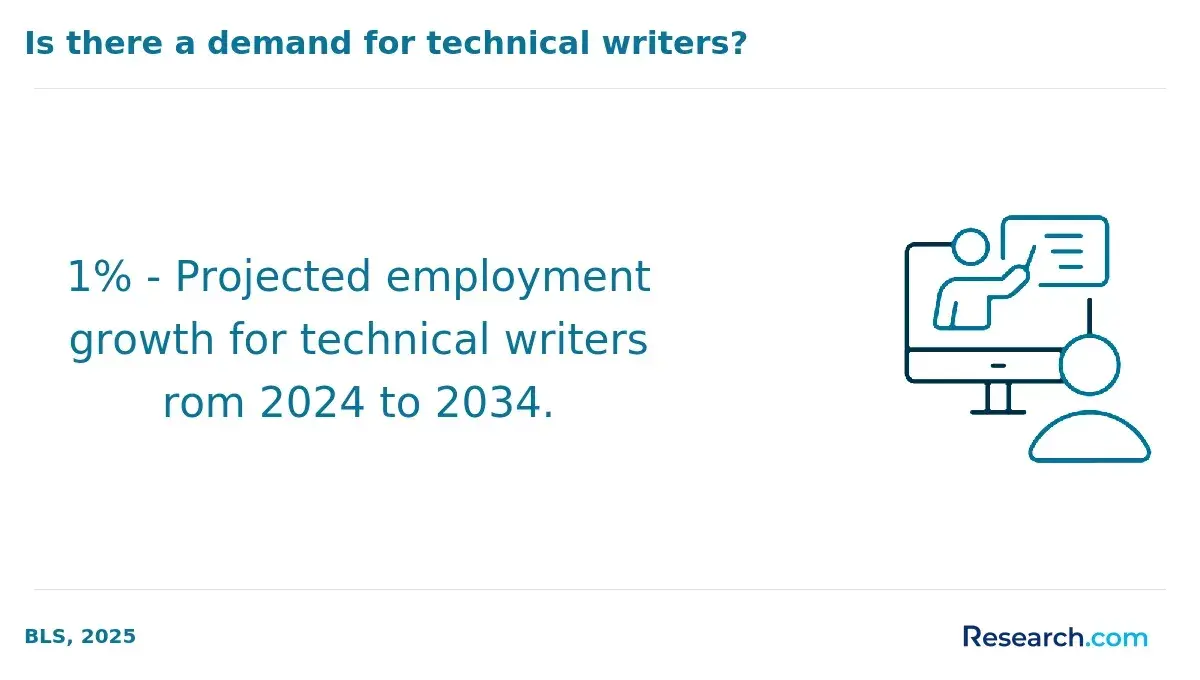
According to the U.S. Bureau of Labor Statistics, employment for technical writers is projected to grow 5% from 2024 to 2034, about as fast as the average for all occupations. The median annual wage for technical writers was $98,200 in 2024, with top earners making over $135,000 depending on experience and industry.
Online graduates can be competitive for remote and hybrid roles if they can show strong writing samples, comfort with collaboration tools, and the ability to work independently. Employers generally care less about whether the degree was online and more about whether the applicant can write clearly, learn technical material quickly, manage deadlines, and collaborate with subject-matter experts.
Certifications and tool experience may also help. Familiarity with documentation platforms, content management systems, usability testing, version control, Adobe FrameMaker, or MadCap Flare can strengthen a candidate’s profile, especially for software and product documentation roles.
What Employers Value Most in Online Technical Communication Graduates
Employers look for graduates who can make complicated information accurate, useful, and easy to follow. A degree helps, but hiring managers often evaluate candidates through writing samples, editing tests, portfolio projects, internships, and evidence of collaboration with technical teams.
Skills employers commonly prioritize
- Clear writing: The ability to explain processes, products, policies, and technical concepts without unnecessary complexity.
- Audience awareness: The judgment to adapt content for users, engineers, executives, customers, regulators, or internal teams.
- Editing discipline: Careful attention to accuracy, consistency, grammar, terminology, and style guides.
- Digital tool fluency: Comfort with documentation software, content platforms, collaboration tools, and basic design principles.
- Problem-solving: The ability to identify what users need, what information is missing, and how documentation can reduce confusion.
- Portfolio evidence: Samples from capstones, internships, professional projects, or revised coursework.
- Adaptability: Willingness to learn new tools, workflows, industries, and product environments.
Students who want to blend technical communication with more creative writing, design, or media production may also compare complementary options such as the most affordable online MFA programs.
How UX Is Changing Technical Communication Education
User experience has become increasingly important in technical communication because documentation is no longer limited to long printed manuals. Technical communicators now write help center content, in-app guidance, onboarding flows, tooltips, knowledge base articles, release notes, and support materials that users encounter inside digital products.
Programs that integrate UX principles teach students to think beyond sentence-level clarity. They learn to ask whether users can find the right information, complete a task, recover from an error, and understand what to do next. Coursework may include usability testing, user-centered design, accessibility, information architecture, UX writing, and audience research.
Students who want a deeper design-centered pathway can compare technical communication coursework with UX design online programs. Technical communication is usually more writing- and documentation-focused, while UX design programs often place greater emphasis on research, prototyping, interface design, and product strategy.
Technical Communication Degree vs. Creative Arts Degree
An online technical communication degree and a creative arts degree can both strengthen writing and communication skills, but they usually serve different career goals. Technical communication programs focus on practical workplace documents, digital documentation, information design, usability, editing, and content for technical or professional audiences. Creative arts programs often emphasize artistic development, literary craft, visual expression, or media production.
| Degree Type | Primary Focus | Best Fit | Potential Trade-Off |
| Technical communication degree | Applied writing, documentation, editing, usability, and professional content | Students who want writing careers in technical, business, digital, or regulated environments | Less emphasis on personal creative expression |
| Creative arts degree | Creative practice, artistic development, storytelling, design, or media production | Students pursuing creative, literary, studio, or media-centered work | Career paths may be less directly tied to technical documentation roles |
The better choice depends on the work you want to do. If you want to write software documentation, product help content, training materials, or technical reports, technical communication is likely the more direct path. If you want to build a career around creative writing, visual art, film, or literary production, a creative arts pathway may fit better.
How Online Programs Build Industry Readiness
Strong online technical communication programs connect coursework to real workplace expectations. That may include internships, capstones, collaborative projects, faculty feedback, virtual career events, professional portfolios, and assignments based on real documentation problems.
Look for programs that help students practice working with subject-matter experts, managing revisions, following style guides, testing usability, and presenting content decisions. These experiences matter because technical communicators rarely work alone; they often collaborate with engineers, product managers, clinicians, trainers, lawyers, designers, and executives.
How Programs Stay Current with Digital Communication Trends
Technical communication is changing as organizations adopt cloud platforms, collaborative documentation systems, AI-assisted drafting, knowledge bases, UX content systems, and remote work tools. Programs stay relevant when they update assignments, tools, and examples to reflect how documentation is produced in modern workplaces.
Students should ask whether a program covers digital publishing, accessibility, UX writing, usability testing, content management, and ethical use of emerging tools. AI can assist with drafting, summarizing, and content organization, but employers still need human judgment for accuracy, audience fit, compliance, tone, and technical validation.
Key Insights
- An online technical communication degree is best for students who want a writing-focused career connected to technology, business, healthcare, science, government, or digital products.
- Most listed programs require 120 credits, but completion time depends on transfer credits, full-time or part-time enrollment, course sequencing, and capstone or internship requirements.
- Accreditation should be one of your first checks because it affects financial aid, transferability, graduate school options, and employer confidence.
- Cost varies widely. Listed program figures include tuition from $179.19 per credit (in-state) to $1,296.77 per credit (non-resident), so residency status and fees can significantly change the final price.
- The strongest programs produce portfolio-ready work, not just completed coursework. Look for assignments in manuals, UX writing, web content, editing, usability testing, and documentation projects.
- According to the U.S. Bureau of Labor Statistics, technical writer employment is projected to grow 5% from 2024 to 2034, and the median annual wage for technical writers was $98,200 in 2024.
- Online study can be a strong format for working adults, but students should verify whether courses are asynchronous, whether support services are accessible, and whether internships or capstones fit their schedule.
- Before enrolling, compare programs by accreditation, curriculum focus, transfer policy, total cost, portfolio opportunities, career support, and alignment with the industry you want to enter.
References:
- EducationData.org. (2025, February 22). Average cost of online college [2025]: Yearly tuition + fees. EducationData.org.
- U.S. Bureau of Labor Statistics. (n.d.). Technical writers. In Occupational Outlook Handbook. U.S. Bureau of Labor Statistics.
- U.S. Bureau of Labor Statistics. (2024, May). Occupational Employment and Wage Statistics: Technical Writers (SOC 27‑3042). U.S. Bureau of Labor Statistics.
Other Things You Should Know About the Best Online Technical Communication Degree Programs
Most programs require a high school diploma or equivalent, with some emphasizing a background in English or communication skills. Prior coursework or experience in writing, digital media, or technology may enhance an application.
The GPA requirement for admission into 2026's top online technical communication degree programs varies by institution, but most programs seek a minimum GPA of 3.0 on a 4.0 scale. However, some programs may offer conditional acceptance for students with lower GPAs based on other factors like work experience or a strong personal statement.
Technical communication involves clearly explaining complex or technical information to specific audiences. To qualify, students typically need strong writing skills, the ability to learn technical subjects, and familiarity with tools like Adobe FrameMaker, MadCap Flare, or XML. A degree in technical communication, English, or a related field is often required. Some positions also prefer experience in industries like software, healthcare, or engineering. Employers often ask for writing samples that demonstrate clarity, organization, and audience awareness.