2027 What Can You Do With a Master’s in Public Relations?

Co-Founder and Chief Data Scientist
A master’s in public relations is a graduate degree for communication professionals who want to move beyond writing press releases and managing media lists into higher-level strategy, reputation management, crisis response, executive communication, and digital brand leadership. The decision matters because public relations work now sits at the intersection of media, marketing, analytics, social platforms, stakeholder trust, and organizational risk.
This guide is for current PR specialists, communications coordinators, marketers, journalists, nonprofit communicators, and career changers who are deciding whether graduate study is the right next step. You will learn what jobs a master’s in public relations can support, how much related roles earn, how online programs compare with campus options, what specializations and certifications to consider, how to evaluate accreditation and ROI, and what mistakes to avoid before enrolling.
Quick Answer: Is a Master’s in Public Relations Worth It?
A master’s in public relations can be worth it if you want to compete for leadership, strategic communication, crisis management, corporate communication, or integrated marketing roles. It is less necessary if you are aiming only for entry-level PR work, where a bachelor’s degree and a strong portfolio are often more important. The best candidates for this degree are professionals who already have some communication experience and want stronger credentials, deeper strategic training, and access to a broader professional network.
Key Things You Should Know About Getting a Master’s in Public Relations
- A master’s in public relations is designed to build advanced capability in strategic communication, media relations, crisis response, reputation management, branding, and stakeholder engagement for corporate, agency, government, and nonprofit settings.
- An online master’s in public relations can be a practical option for working adults because it may allow them to continue earning income while completing graduate coursework, networking with peers, and applying new skills on the job.
- In 2023, public relations managers across the United States (US) had a median annual wage of $134,760 [US Bureau of Labor Statistics (BLS), 2024].
- What jobs can I get with a master’s in public relations for 2027?
- Is a master’s in public relations worth it for career advancement?
- How much can I earn with a master’s in public relations?
- How does a master’s in public relations increase my earning potential?
- What specializations can I choose for a master’s in public relations program?
- How long does it take to complete a master’s in public relations?
- What certifications can I pursue after completing a master’s in public relations?
- How do I select the best master’s in public relations program?
- How does accreditation affect program quality and career value?
- What are the advantages of an online master’s in public relations?
- How do online master’s programs support adult learners?
- Is a doctorate in public relations a strategic investment for career advancement?
- What financial aid options are available for public relations graduate students?
- Can foundational degrees strengthen your master’s in public relations experience?
- What challenges do graduates face in today’s evolving PR landscape?
- What career support and mentorship opportunities do master’s in public relations programs offer?
- What is the job outlook for public relations professionals?
- What are the admission requirements for an online master’s in public relations?
- How do you calculate the return on investment for a master’s in public relations? Review related references as you compare programs.
What jobs can I get with a master’s in public relations for 2027?
A master’s in public relations can prepare graduates for roles that require strategic planning, audience analysis, message development, media judgment, and leadership. The degree does not guarantee a promotion, but it can help candidates present stronger evidence of advanced communication training, especially when paired with work experience and a portfolio of campaigns, writing samples, media placements, or crisis plans.
- Public Relations Specialists: Public relations specialists write media materials, pitch stories, coordinate interviews, monitor public sentiment, support campaigns, and help organizations maintain a credible public image. They may work for companies, agencies, government offices, universities, hospitals, advocacy organizations, or nonprofits. In 2023, 308,000 public relations specialists were employed in the US (US BLS, 2024).
- Public Relations Managers: Public relations managers lead communication teams, approve messaging, coordinate media strategy, manage sensitive issues, and advise executives during reputational challenges. In 2023, 78,400 public relations managers worked across the US (US BLS, 2024).
- Marketing Managers: Marketing managers connect brand positioning, audience research, campaign planning, advertising, and communication strategy. PR graduates who want stronger digital campaign skills may also compare online digital marketing degrees to see whether marketing analytics and performance-based media training better match their goals. In 2023, 31,100 marketing managers were employed in the US (US BLS, 2024).
| Role | How a PR master’s can help | Best fit for |
| Public Relations Specialist | Builds stronger writing, campaign planning, media strategy, and measurement skills | Early- to mid-career communicators who want to move into more complex assignments |
| Public Relations Manager | Supports leadership readiness in crisis communication, messaging governance, team management, and executive advising | Experienced PR professionals seeking management or director-track roles |
| Marketing Manager | Helps connect reputation, brand storytelling, audience engagement, and integrated campaigns | PR professionals who want to broaden into brand, marketing, or growth-focused communication roles |
The chart below visualizes employment levels for selected public relations-related occupations using 2024 data from the US BLS.
Is a master’s in public relations worth it for career advancement?
A master’s in public relations is most valuable when it helps you close a specific career gap. If you already work in communications but need stronger credentials for management, crisis response, executive communication, analytics, or strategic planning, graduate study can be a useful investment. If you are new to the field, you may first need internships, portfolio work, professional writing samples, or entry-level experience before the degree produces meaningful career leverage.
The degree can also help professionals shift from tactical execution to strategy. Instead of only drafting content or coordinating coverage, graduate students often learn how to diagnose audience needs, design communication plans, measure campaign outcomes, prepare crisis protocols, and advise leaders. Those who want to combine PR with broader marketing and business strategy may compare a PR master’s with an online business marketing degree, especially if their target roles emphasize market research, consumer behavior, or campaign performance.
| A PR master’s may be worth it if you... | Consider another path if you... |
| Want to move into PR management, corporate communication, crisis communication, or communications director roles | Need an entry-level PR job and do not yet have writing samples, internships, or campaign experience |
| Need formal training in strategy, analytics, reputation management, or executive communication | Already have senior-level PR experience and only need a targeted credential or short course |
| Can choose an accredited, reasonably priced program with strong career support | Would need to take on high debt without clear salary, promotion, or career-change goals |
| Want access to alumni networks, faculty mentors, and industry projects | Prefer hands-on learning through agency work, freelance projects, or employer-sponsored training |
How much can I earn with a master’s in public relations?
Salary outcomes depend on job title, industry, geography, experience, portfolio strength, leadership responsibility, and employer type. A master’s degree can improve competitiveness for higher-responsibility roles, but it does not automatically place graduates into the highest salary tier. According to 2023 US BLS data cited in this guide, median annual wages for related roles were:
- Public Relations Specialists: $66,750
- Public Relations Managers: $134,760
- Marketing Managers: $157,620
| Occupation | 2023 median annual wage | What typically drives higher pay |
| Public Relations Specialist | $66,750 | Strong writing, media relationships, campaign results, digital fluency, and industry experience |
| Public Relations Manager | $134,760 | Team leadership, crisis communication, executive advising, brand reputation responsibility, and strategic planning |
| Marketing Manager | $157,620 | Integrated campaign leadership, revenue or brand accountability, market analysis, and cross-functional management |
Some students compare a public relations master’s with broader business graduate programs. For example, affordable online MBA programs may be more relevant for professionals who want finance, operations, management, and corporate strategy training in addition to communication skills. The stronger option depends on whether your career target is communication leadership or general business leadership.
The chart below shows 2023 median annual wages for public relations-related occupations based on 2024 US BLS data.
How does a master’s in public relations increase my earning potential?
A master’s in public relations can improve earning potential by helping professionals qualify for roles with greater responsibility. Higher pay usually comes from managing people, budgets, campaigns, reputational risk, executive messaging, or cross-functional strategy—not from the credential alone.
Graduate programs can strengthen several career assets at once: advanced communication judgment, portfolio-quality projects, research and measurement skills, crisis planning, digital communication fluency, and access to faculty, alumni, and employer networks. These advantages can matter when applying for manager-level roles or moving into industries where communication risk is especially important, such as healthcare, finance, technology, government, and public affairs.
The salary range for PR work also shows why role progression matters. Public relations specialists in the US had a 2023 median annual wage of $66,750, or a median hourly wage of $32.09 (US BLS, 2024). That hourly figure is slightly above the $27.57 living wage of a single adult with no children living in New York, according to Glasmeier and the Massachusetts Institute of Technology (2025). However, the lowest 10% of US public relations specialists earned less than $38,570, while the highest 10% earned over $126,220 during the same period (US BLS, 2024).
The practical takeaway is simple: a graduate degree should be part of a larger advancement plan. Students should use the program to build a portfolio, document measurable campaign outcomes, secure references, learn analytics tools, and position themselves for management responsibilities by graduation.
What specializations can I choose for a master’s in public relations program?
Specializations help you match graduate coursework to a target career. Before choosing one, review job postings for the roles you want and note whether employers emphasize crisis communication, corporate affairs, digital content, analytics, public affairs, nonprofit advocacy, or integrated marketing.
| Specialization | What you study | Best career fit |
| Corporate Communications | Internal communication, external messaging, executive communication, stakeholder engagement, and reputation strategy | Corporate communication manager, employee communication lead, executive communication specialist |
| Digital and Social Media Communication | Social media strategy, online reputation, content planning, digital campaigns, influencer communication, analytics, and rapid-response messaging | Digital PR strategist, social media communication manager, brand content lead |
| Crisis Communication and Reputation Management | Crisis planning, issue monitoring, media response, stakeholder messaging, risk communication, and recovery strategy | Crisis communication specialist, reputation manager, public affairs or regulated-industry communicator |
Students focused on digital brand engagement may also compare PR specializations with a social media degree online, especially if they want deeper training in platform strategy, online communities, and social content execution.
How long does it take to complete a master’s in public relations?
Completion time depends on enrollment pace, credit requirements, course availability, transfer policies, internship or capstone expectations, and whether the program is online, hybrid, or campus-based. A traditional full-time master’s in public relations usually takes 1 to 2 years and often includes around 30 to 36 credit hours.
Part-time and online programs can be easier to balance with work and family obligations, but they may take 2 to 3 years. Accelerated formats may allow students to finish in about 1 to 1.5 years, though the workload can be intense and may not suit students with demanding jobs.
| Program pace | Typical completion time | Who it works best for | Trade-off |
| Full-time | 1 to 2 years | Students who can prioritize school and may want internships or campus involvement | May require reducing work hours or pausing full-time employment |
| Part-time or online | 2 to 3 years | Working professionals, caregivers, and adult learners balancing multiple responsibilities | Takes longer and requires strong self-management |
| Accelerated | About 1 to 1.5 years | Students who want the fastest route and can handle concentrated coursework | Less flexibility and a heavier academic pace |
What certifications can I pursue after completing a master’s in public relations?
Certifications can complement a master’s degree by demonstrating professional experience, applied knowledge, and commitment to communication standards. They are especially useful when you want to show credibility beyond academic coursework.
| Certification | Administering organization | Requirements stated in this guide | Best for |
| Accreditation in Public Relations (APR) | Universal Accreditation Board (UAB) | Professionals complete an online examination and panel presentation. The credential must be renewed every 3 years. | PR professionals who want a recognized credential showing broad competence in the field |
| Communication Management Professional (CMP) | Global Communication Certification Council (GCCC) | Applicants need a minimum of 40 hours of training experience to be eligible for the exam. The GCCC recommends 6 years of professional experience and at least a college degree. | Communication professionals moving into management-level responsibilities |
| Strategic Communication Management Professional (SCMP) | Global Communication Certification Council (GCCC) | Applicants need a minimum of 20 hours of training experience and a letter of recommendation. The GCCC recommends 11 years of professional experience and a college degree. | Senior communicators responsible for strategy, leadership, and organizational communication outcomes |
How do I select the best master’s in public relations program?
The best master’s in public relations is not automatically the most famous, expensive, or selective program. It is the program that aligns with your career goal, budget, schedule, learning style, and target industry.
- Start with accreditation: Confirm that the institution is properly accredited before comparing tuition, curriculum, or rankings.
- Review the curriculum: Look for courses in strategic communication, media relations, crisis communication, research methods, digital analytics, campaign planning, and ethics.
- Check applied learning: Strong programs include internships, consulting projects, capstones, portfolio assignments, simulations, or partnerships with real organizations.
- Evaluate faculty expertise: Faculty with academic research and industry experience can help students connect theory with current practice.
- Compare total cost, not just tuition: Include fees, books, travel, technology costs, lost income, and the number of credits required.
- Ask about outcomes: Request information about alumni roles, employer partnerships, career services, internship access, and networking opportunities.
If cost is a major constraint, comparing options through Research.com’s guide to the cheapest online school can help you identify lower-cost pathways while still keeping accreditation and program quality at the center of your decision.
| Question to ask | Why it matters |
| Is the institution accredited? | Accreditation affects financial aid eligibility, credit transfer, employer perception, and academic quality control. |
| Does the curriculum match my target role? | A crisis communication program and a digital PR program may lead to different skill sets. |
| Will I graduate with portfolio-ready work? | Employers often want proof that you can plan, write, measure, and defend communication decisions. |
| How flexible is the course schedule? | Working adults may need asynchronous courses, evening options, or predictable term schedules. |
| What career support is available to online students? | Online students should receive meaningful access to advising, alumni, internships, and employer connections. |
How does accreditation affect program quality and career value?
Accreditation is one of the first quality checks prospective students should make. It indicates that an institution has been reviewed against recognized academic standards. While accreditation does not guarantee a job or salary outcome, it can affect financial aid access, transfer credit, employer confidence, and eligibility for some graduate or professional opportunities.
Students should verify institutional accreditation directly rather than relying only on marketing language. It is also wise to compare the school’s mission, governance, student support, and outcomes with established non profit universities when evaluating long-term academic value.
What are the advantages of an online master’s in public relations?
An online master’s in public relations can deliver advanced communication training without requiring students to relocate or leave the workforce. This format is especially useful for professionals who want to apply coursework immediately to their current roles.
- Flexible scheduling: Many online programs allow students to complete lectures, discussions, and assignments around work and family responsibilities.
- Broader school access: Students can compare programs outside their local area and choose based on curriculum fit, faculty, price, and support services rather than geography alone.
- Immediate workplace application: Working students can often use class projects to improve campaigns, stakeholder communication, or media strategy in their current jobs.
- Digital communication practice: Online learning can build comfort with remote collaboration, virtual presentations, content platforms, and digital project management.
- Networking beyond one city: Online cohorts may include classmates from different industries, markets, and regions, which can expand professional perspective.
Students who want a broader management foundation alongside communication skills may also review the cheapest online business administration degree options before deciding whether PR, marketing, business administration, or an MBA path fits best.
How do online master’s programs support adult learners?
Adult learners often need a different kind of graduate experience than full-time residential students. Strong online PR programs support them with predictable scheduling, asynchronous coursework, part-time enrollment options, accessible faculty, career advising, writing support, and technology platforms that make collaboration manageable.
Before enrolling, adult learners should ask whether deadlines are weekly or self-paced, whether group projects require live meetings, whether career services are available outside business hours, and whether the school has experience serving working professionals. Students balancing education with work, caregiving, or later-life career change can also explore online degree programs for adults to compare formats designed for nontraditional learners.
Is a doctorate in public relations a strategic investment for career advancement?
A doctorate in public relations or a related communication field is usually most relevant for people who want to teach at the college level, conduct advanced research, influence communication theory, or pursue specialized consulting and policy work. It is not typically required for most PR management roles in agencies, corporations, nonprofits, or government communication offices.
Professionals considering doctoral study should be clear about their goal. If your target is a communications director, vice president of communications, or agency leadership role, experience, results, networks, and possibly an MBA or executive credential may be more practical. If your target is academia, research leadership, or high-level communication scholarship, a doctorate may make more sense. Cost-conscious students can compare advanced options such as the cheapest PhD program before committing to a long academic path.
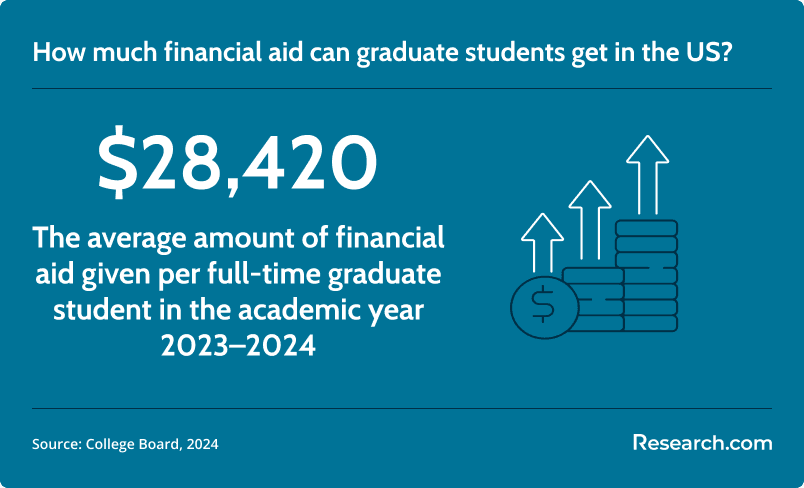
What financial aid options are available for public relations graduate students?
Graduate education can be expensive, so students should build a funding plan before applying. Common options include scholarships, grants, federal student aid when eligible, employer tuition assistance, payment plans, graduate assistantships, and private loans. Always compare the total cost of attendance and borrowing terms before choosing a program.
During the research for this guide, the following scholarship examples were identified for students in public relations or related communication fields:
- PRSSA Individual Scholarships: The Public Relations Student Society of America (PRSSA) and the PRSA Foundation offer scholarships and grants for eligible undergraduate and graduate students. Graduate students may apply for the Chester Burger Scholarship for Excellence in Public Relations, which awards $1,000, or the T-Mobile PRSSA ICON Grant, which covers registration fees for 25 PRSSA members attending the PRSSA International Conference.
- The LAGRANT Foundation Scholarships: The LAGRANT Foundation supports undergraduate and graduate students in advertising, marketing, and public relations who are part of ethnic-minority communities. In 2023, 28 graduate students received a LAGRANT Foundation scholarship amount of $3,500 each.
- Dr. Jack G. Shaheen Media Scholarship: The American-Arab Anti-Discrimination Committee (ADC) provides qualified Arab-American undergraduate and graduate students with $2,500 in scholarship funding. Applicants must also be majoring in journalism, radio, television, and film.
| Funding option | What to check before relying on it |
| Scholarships and grants | Eligibility rules, deadlines, renewal requirements, and whether awards apply to graduate students |
| Employer tuition assistance | Grade requirements, repayment obligations, approved programs, and whether the degree must relate to your job |
| Federal student aid | School participation, enrollment status requirements, borrowing limits, and repayment terms |
| Graduate assistantships | Availability for online students, workload expectations, tuition benefits, and stipend conditions |
| Private loans | Interest rates, repayment protections, cosigner requirements, and total debt at graduation |
Can foundational degrees strengthen your master’s in public relations experience?
A strong undergraduate or associate-level foundation can make graduate PR coursework easier to manage. Students with prior study in communication, journalism, marketing, English, business, political science, psychology, or media studies may already understand audience analysis, writing, research, persuasion, and organizational communication.
Career changers without that background can still succeed, but they may need to build skills in writing, media literacy, campaign planning, or marketing fundamentals before or during the master’s program. If you are still planning earlier credentials, reviewing how much is an associate's degree can help you compare lower-cost pathways before committing to graduate study.
What challenges do graduates face in today’s evolving PR landscape?
Public relations graduates enter a field that changes quickly. Employers increasingly expect communicators to understand traditional media, social platforms, analytics dashboards, search visibility, influencer dynamics, internal communication, misinformation risks, and rapid-response workflows. The challenge is not just learning new tools; it is knowing when to use them and how to protect trust.
- Digital speed: Reputational issues can escalate quickly online, requiring faster monitoring, approval, and response processes.
- Measurement pressure: PR teams are often asked to connect communication work to business, policy, engagement, or reputation outcomes.
- AI and automation: Generative tools can speed up drafting and research, but professionals still need judgment, ethics, fact-checking, audience insight, and brand voice control.
- Fragmented media: Audiences now receive information from journalists, creators, newsletters, podcasts, search engines, social feeds, and AI-generated summaries.
- Trust and transparency: Organizations need communicators who can address mistakes honestly and maintain credibility during public scrutiny.
Students who mainly need a credential for a career pivot should compare difficulty, format, and workload carefully. Research.com’s discussion of What is the easiest masters degree to get online? can help frame that decision, but ease should not be the main criterion if your goal is meaningful career advancement.
What career support and mentorship opportunities do master’s in public relations programs offer?
Career support can be one of the most important differences between programs. A strong curriculum matters, but students also need help converting coursework into interviews, portfolio assets, mentorship relationships, and employer connections.
- Career coaching: Resume reviews, interview preparation, job search planning, and salary negotiation guidance can help students position graduate training effectively.
- Portfolio development: Capstones, campaign plans, writing samples, media strategies, and analytics reports can become evidence of job-ready skills.
- Alumni networks: Alumni can provide informational interviews, mentorship, referrals, and realistic insight into different PR career paths.
- Industry partnerships: Internships, agency projects, nonprofit consulting, guest speakers, and employer panels can connect academic work to current practice.
- Faculty mentorship: Professors can help students refine research interests, target roles, and identify professional development opportunities.
Graduates who become interested in teaching, research, or advanced academic administration may later compare doctoral pathways, including 2 year Ed.D programs online, but most PR leadership careers depend more directly on professional experience, results, and communication judgment.
What is the job outlook for public relations professionals?
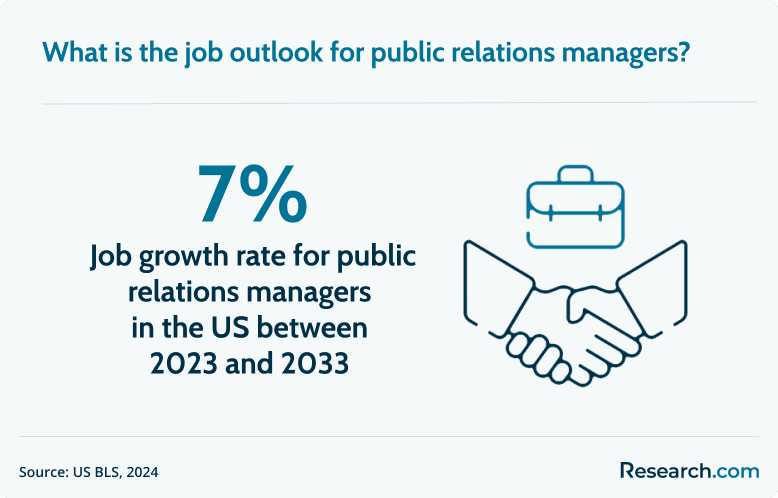
The US BLS projects employment growth for public relations-related occupations that is faster than the average for all occupations in the country. Employment for public relations specialists is expected to increase by 6%, rising from 308,000 in 2023 to a projected 327,200 in 2033. That represents an increase of 19,200 positions, with an average of around 27,100 job openings for the role annually between 2023 and 2033 (US BLS, 2024).
Management-level roles also show positive projections in the cited BLS data. Between 2023 and 2033, employment for public relations managers has been predicted to grow by 7%, while employment for marketing managers is expected to increase by 8% (US BLS, 2024). Professionals who want to combine PR leadership with executive-level business training may compare online executive MBA programs as an alternative or complement to graduate communication study.
| Occupation | Projected growth cited in this guide | What candidates should prepare for |
| Public Relations Specialist | 6% | Strong writing, media judgment, digital monitoring, campaign coordination, and analytics basics |
| Public Relations Manager | 7% | Leadership, strategic planning, crisis response, stakeholder communication, and executive advising |
| Marketing Manager | 8% | Integrated marketing, brand strategy, campaign measurement, and cross-functional collaboration |
How should you use alumni feedback when evaluating a master’s in public relations?
Alumni perspectives can be useful, but they should be treated as qualitative evidence rather than proof of guaranteed outcomes. Instead of relying only on testimonials, ask graduates specific questions about workload, faculty responsiveness, career support, networking value, technology platforms, and whether the degree helped them reach a concrete career goal.
- Ask about applied projects: Did alumni complete campaigns, crisis simulations, capstones, or portfolio work that helped during interviews?
- Ask about flexibility: Were deadlines and course schedules realistic for working professionals?
- Ask about career outcomes: Did alumni receive promotions, switch industries, or build stronger professional networks after graduating?
- Ask about support: Were online students given the same advising, career services, and networking access as campus students?
- Ask what they would change: Honest criticism is often more useful than polished success stories.
What are the admission requirements for an online master’s in public relations?
Admission requirements vary by school, but online master’s in public relations programs commonly ask for a bachelor’s degree from an accredited institution, official transcripts, a minimum GPA, letters of recommendation, a statement of purpose, and a resume. Some programs may request standardized test scores, writing samples, professional experience, or an interview.
Your application should show that you can handle graduate-level writing, research, collaboration, and communication strategy. If your undergraduate background is outside communications, use the statement of purpose to explain your career direction and how your prior experience connects to PR. Students who plan to use federal financial aid should also review online colleges that accept financial aid while checking each school’s eligibility and aid policies.
| Application item | How to strengthen it |
| Resume | Highlight communication, writing, marketing, media, leadership, project management, or stakeholder-facing experience. |
| Statement of purpose | Explain your target role, why graduate PR study fits, and what specialization or skills you want to build. |
| Recommendation letters | Choose supervisors, professors, or clients who can discuss your writing, judgment, reliability, and leadership potential. |
| Writing sample | Submit polished work that shows clarity, audience awareness, structure, and professional tone. |
| Transcripts | If your GPA is weaker, use optional materials to show growth, professional achievement, or recent academic readiness. |
How do you calculate the return on investment for a master’s in public relations?
To estimate ROI, compare the full cost of the program with the realistic career benefit you expect. Include tuition, fees, books, technology, travel, interest on loans, and possible lost income if you reduce work hours. Then compare those costs with likely salary growth, promotion potential, career-change value, employer tuition support, and the time it may take to recover your investment.
Do not calculate ROI using only the highest salary listed for a related occupation. A more realistic approach is to compare your current compensation with target roles you are qualified for, then review job postings to see whether a master’s degree is required, preferred, or rarely mentioned. If you are still comparing academic paths, Research.com’s guide to majors in university can help you think through how different fields connect to long-term career outcomes.
| ROI factor | What to include | Common mistake |
| Total program cost | Tuition, fees, books, technology, travel, and loan interest | Comparing programs based only on tuition per credit |
| Time cost | Program length, weekly workload, reduced work hours, and delayed promotions | Choosing an accelerated program without considering workload |
| Career benefit | Promotion eligibility, job mobility, specialization, network access, and portfolio development | Assuming the degree alone guarantees a management role |
| Employer value | Tuition reimbursement, internal promotion pathways, and role requirements | Failing to ask your employer whether the degree affects advancement |
| Risk | Debt level, uncertain salary growth, program quality, and job market competition | Borrowing heavily without a clear target role |
Common Mistakes to Avoid Before Enrolling
| Mistake | Why it can hurt you | Better approach |
| Choosing a program without checking accreditation | It can affect financial aid, transfer credit, employer confidence, and future academic options. | Verify accreditation before applying or paying deposits. |
| Focusing only on rankings or brand name | A well-known school may not offer the specialization, flexibility, or career support you need. | Compare curriculum, cost, outcomes, faculty, and applied learning opportunities. |
| Assuming online means easier | Online graduate work still requires writing, research, group work, and weekly discipline. | Ask about workload, live session requirements, and student support. |
| Ignoring portfolio development | Employers often want proof of skills, not just a transcript. | Choose courses and projects that produce campaign plans, writing samples, audits, or analytics reports. |
| Overborrowing for unclear goals | Debt can limit career flexibility if salary gains are slower than expected. | Calculate total cost and connect the degree to specific roles and salary ranges. |
| Skipping conversations with alumni | Marketing materials may not reveal workload, support quality, or networking value. | Ask alumni direct questions about outcomes, faculty access, and career services. |
Key Insights
- A master’s in public relations is best suited for professionals who want to move into strategic communication, reputation management, crisis communication, corporate communication, or PR leadership.
- The degree is not usually necessary for entry-level PR work. Early-career candidates should also prioritize internships, writing samples, campaign experience, and media or digital communication skills.
- In 2023, public relations specialists in the US had a median annual wage of $66,750, while public relations managers had a median annual wage of $134,760.
- Employment for public relations specialists is expected to increase by 6%, rising from 308,000 in 2023 to a projected 327,200 in 2033.
- Public relations managers are projected to see 7% employment growth between 2023 and 2033, while marketing managers are expected to see 8% growth.
- A traditional full-time master’s in public relations usually takes 1 to 2 years and often includes around 30 to 36 credit hours, while part-time or online options may take 2 to 3 years.
- Online programs can be valuable for working adults, but students should verify accreditation, career support, applied projects, faculty access, and total cost before enrolling.
- The strongest ROI comes when the degree is tied to a clear career plan: target roles, realistic salary expectations, portfolio development, networking, and manageable debt.
References:
- College Board. (2024). Trends in Student Aid: Highlight. https://research.collegeboard.org/trends/student-aid/highlights
- Glasmeier, A. K. & Massachusetts Institute of Technology. (2025). Living Wage Calculation for New York. https://livingwage.mit.edu/states/36
- US Bureau of Labor Statistics. (2024, August 29). Public Relations and Fundraising Managers. Occupational Outlook Handbook. https://www.bls.gov/ooh/management/public-relations-managers.htm
- US Bureau of Labor Statistics. (2024, August 29). Public Relations Specialists. Occupational Outlook Handbook. https://www.bls.gov/ooh/media-and-communication/public-relations-specialists.htm
- US Bureau of Labor Statistics. (2024, August 29). Advertising, Promotions, and Marketing Managers. Occupational Outlook Handbook. https://www.bls.gov/ooh/management/advertising-promotions-and-marketing-managers.htm
Other Things You Should Know about Getting a Master’s in Public Relations
A master’s in public relations can lead to roles such as public relations manager, communications director, media relations specialist, and crisis communications strategist. Many employers look for 3–5 years of experience plus a graduate degree for management-level roles, especially in agencies, nonprofits, and corporate communications.
In 2027, a Master’s in Public Relations equips students with strategic communication, media relations, crisis management, digital marketing, and analytical skills, preparing them for leadership roles. Courses often include case studies, multimedia storytelling, and engagement with emerging trends in global public relations.