
2027 LCSW vs. LPC Degree Programs: Explaining The Difference

Co-Founder and Chief Data Scientist
Choosing between an LCSW and an LPC pathway is not just a degree decision. It shapes the kind of clients you serve, the settings where you are most employable, the license you pursue, the supervision hours you must complete, and how easily you can move across state lines. The two professions overlap in mental health treatment, but they are built on different training models: clinical social work emphasizes therapy within social systems, while professional counseling focuses more directly on counseling theory, assessment, and therapeutic intervention.
This guide is for students comparing graduate programs, career changers entering mental health, and professionals deciding whether social work or counseling better fits their long-term goals. It explains curriculum differences, fieldwork, licensure, costs, financial aid, loan forgiveness, salary data, career options, portability, ethics, and practical questions to ask before enrolling. Employment of counselors, social workers, and other community and social service specialists is projected to grow by 9% from 2023 to 2033, so understanding the trade-offs now can help you choose a path that fits both your values and your career strategy.
LCSW vs. LPC: quick answer
An LCSW is usually the better fit if you want clinical therapy training combined with case management, advocacy, healthcare coordination, policy awareness, and work with social systems. An LPC is usually the better fit if you want a counseling-centered career focused on psychotherapy, mental health assessment, group counseling, career development, and private or clinical counseling practice.
| Decision factor | LCSW pathway | LPC pathway |
| Typical graduate degree | Master of Social Work | Master’s in counseling or a closely related field |
| Primary training lens | Clinical practice plus social systems, policy, advocacy, and resource coordination | Counseling theory, assessment, diagnosis, and therapeutic techniques |
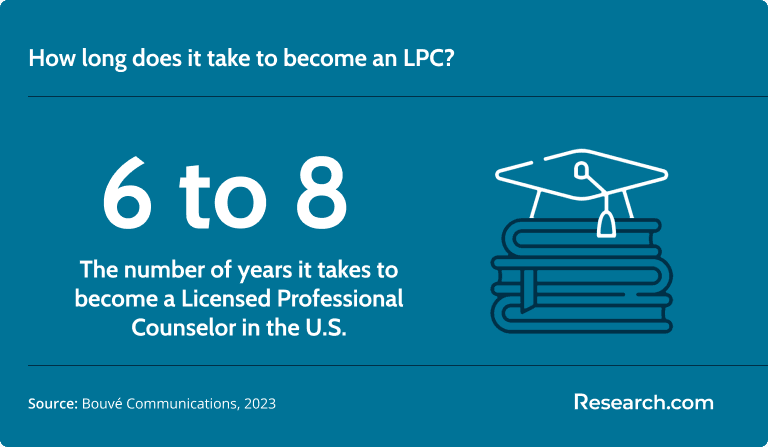
| Common supervised experience range | 1,600 to 4,000 supervised clinical hours | 2,000 to 4,000 supervised work experience hours |
| Common work settings | Hospitals, schools, agencies, nonprofits, government, community health, private practice | Mental health clinics, private practice, hospitals, schools, group practices, counseling centers |
| License portability consideration | Typically handled through state-by-state endorsement or reciprocity | May benefit from the Counseling Compact in 28 participating states |
| Best fit for | Students who want therapy skills plus broader client advocacy and systems-level work | Students who want a more counseling-focused clinical identity |
Key things to know before choosing an LCSW or LPC degree program
- LCSW preparation typically centers on an MSW curriculum that combines clinical practice with social work theory, policy, advocacy, case management, and community resource coordination. Clinical social work licensure usually requires 1,600 to 4,000 supervised clinical hours.
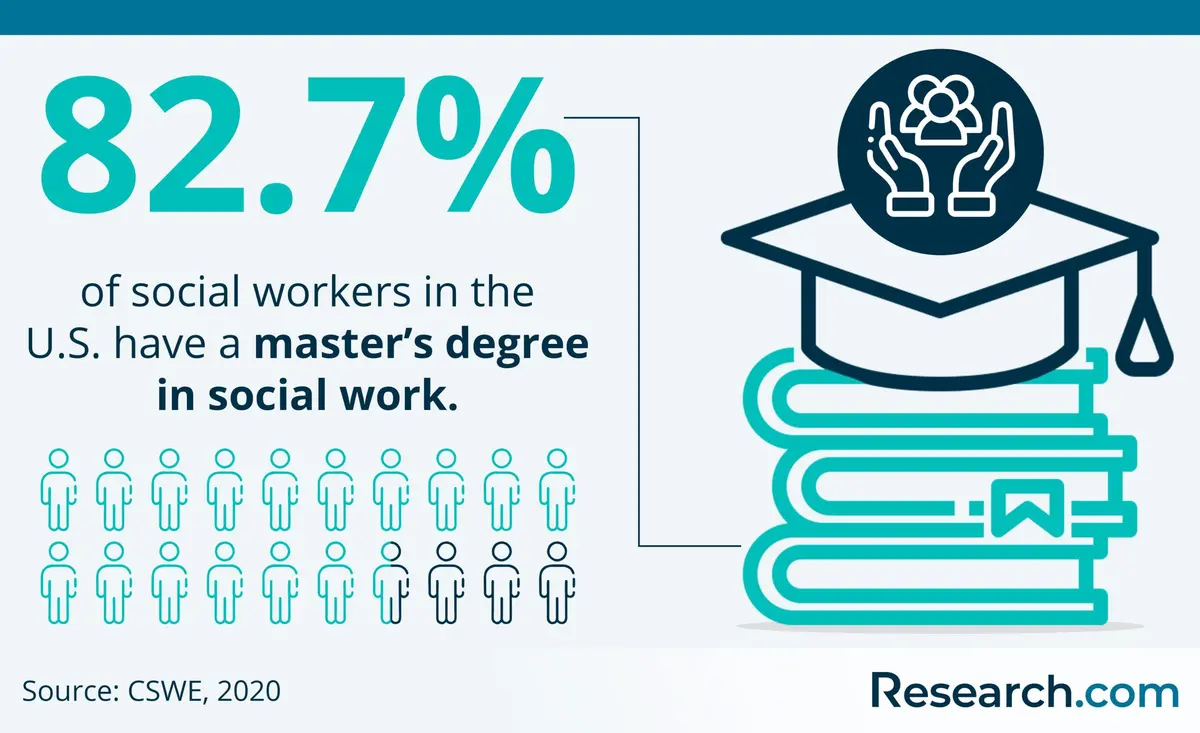
- About 54.1% of clinical social workers hold a master's degree.
- LPC preparation usually emphasizes counseling theories, psychological assessment, diagnosis, multicultural counseling, lifespan development, group counseling, and career development.
- LPCs generally complete a master’s degree in counseling or a related field and 2,000 to 4,000 supervised work experience hours.
- LPCs may have a portability advantage in participating jurisdictions because the Counseling Compact allows licensed counselors to practice in 28 states without holding multiple separate licenses.
- The average annual LPC salary is around $71,915, with top earners reaching over $100,000. For comparison, the median annual wage for all other social workers is $63,770.
- What are the differences in the curriculum between LCSW degree and LPC degree programs?
- How do the financial aid options and costs compare between LCSW degree and LPC degree programs?
- How does the availability of loan forgiveness programs differ for LCSWs and LPCs?
- What are the variations in licensure requirements and scope of practice between LCSWs and LPCs across different states?
- How does the process for obtaining reciprocity differ between LCSW and LPC licenses across state lines?
- Is the LCSW degree or LPC degree more likely to prepare professionals for working in interdisciplinary teams?
- How do the LCSW and LPC programs prepare professionals for cultural competency and diversity?
- What are the differences in clinical field placement requirements between LCSW and LPC programs?
- What are the long-term career advancement prospects for LCSWs versus LPCs?
- How are digital innovations and alternative approaches shaping counseling practices?
- Are online degree programs reshaping counseling and social work education?
- What exam preparation strategies enhance licensure success for LCSWs versus LPCs?
- How can forensic psychology specialization expand career opportunities for LCSWs and LPCs?
- What are the admission prerequisites for LCSW and LPC programs?
- What are the common career paths for LCSWs versus LPCs outside traditional therapy settings?
- How do the job markets differ for LCSWs and LPCs?
- What are the supervision and continuing education requirements for LCSWs versus LPCs?
- How do the ethical codes and professional standards differ between LCSW and LPC practice?
What are the differences in the curriculum between LCSW degree and LPC degree programs?
The major curriculum difference is the professional lens. LCSW programs are built around social work practice, which means students learn clinical skills while also studying how family systems, poverty, policy, healthcare access, discrimination, schools, and community resources affect mental health. LPC programs are built around counseling practice, which means students spend more of the curriculum on therapeutic models, assessment, diagnosis, client development, and counseling interventions.
| Curriculum area | LCSW-oriented MSW programs | LPC-oriented counseling programs |
| Human behavior | Often taught through the relationship between people and social environments | Often taught through psychological, developmental, and counseling frameworks |
| Clinical practice | Psychotherapy is commonly paired with case planning, advocacy, and systems navigation | Therapy skills are usually central, including individual, group, and career counseling techniques |
| Assessment and diagnosis | Included in clinical social work preparation, with attention to social context | Usually a major counseling competency, often paired with treatment planning |
| Policy and advocacy | Typically a required and visible part of the MSW curriculum | May appear through ethics, multicultural counseling, or professional practice courses, but is usually less central |
| Resource coordination | Commonly emphasized through case management and community-based practice | Less central unless the program has a community counseling or agency counseling focus |
LCSW curriculum: what MSW students usually study
The MSW route prepares students to think clinically and structurally. In practice, that means an LCSW may provide therapy while also helping clients manage barriers such as housing instability, family stress, healthcare access, disability services, school systems, or public benefits.
Social work theory
Social work theory helps students interpret human behavior in relation to family, community, cultural, economic, and political conditions. Instead of looking only at symptoms, students learn to ask what systems are shaping the client’s options and stressors.
Human behavior and the social environment
This area examines development, behavior, identity, relationships, and the social structures that influence individual and group functioning. It is especially important for social workers who serve clients whose mental health is affected by schools, workplaces, neighborhoods, healthcare systems, or public agencies.
Social policy and advocacy
MSW students study how laws, public programs, and institutional rules affect client well-being. Advocacy training helps future LCSWs challenge barriers related to poverty, discrimination, resource gaps, and unequal access to care.
Clinical practice and psychotherapy
Clinical social work includes evidence-based therapeutic work with individuals, families, and groups. Students learn to assess client needs, use appropriate interventions, support coping skills, and treat mental health concerns while keeping social context in view.
Case management and community resource coordination
Case management training prepares social workers to assess practical needs, develop care plans, coordinate services, and connect clients with resources such as housing, healthcare, transportation, financial assistance, or family support programs.
LPC curriculum: what counseling students usually study
The LPC route is more directly centered on counseling practice. Students learn how to build therapeutic relationships, assess client concerns, diagnose mental health conditions where allowed by state scope of practice, and apply counseling interventions across developmental stages and cultural contexts.
Counseling theories and techniques
Counseling programs introduce major therapeutic frameworks and show students how to translate theory into practice. Depending on the program, students may study approaches such as cognitive-behavioral strategies, humanistic methods, group techniques, and other counseling models.
Psychological assessment and diagnosis
Assessment training teaches students to use clinical interviews, standardized tools, and diagnostic reasoning to understand client concerns and guide treatment planning. This area is especially important for LPCs working in mental health clinics, hospitals, and private practice.
Multicultural counseling
Multicultural counseling prepares students to work ethically with clients whose identities, values, experiences, and cultural backgrounds differ from their own. The goal is not simply awareness, but the ability to adapt counseling approaches to the client’s lived context.
Lifespan development
Students study physical, emotional, cognitive, and social development from childhood through older adulthood. This helps future counselors understand age-specific challenges and developmental transitions in therapy.
Group counseling and career development
Group counseling courses focus on group dynamics, facilitation, shared support, and interpersonal growth. Career development courses prepare counselors to help clients make vocational decisions, handle career transitions, and address work-related barriers.
If your main concern is finding a manageable counseling pathway, review program requirements carefully rather than choosing only by perceived difficulty. A guide to the easiest counseling degree options can help you compare formats, but licensure standards, field placement access, and state requirements should carry more weight than convenience alone.
Students also need to understand the education sequence. LCSWs and LPCs do not typically enter independent clinical practice with only an associate degree. They usually complete a bachelor’s degree before pursuing the required graduate education, so it helps to understand the difference between an associate degree and a bachelor’s degree early in the planning process.
How do the financial aid options and costs compare between LCSW degree and LPC degree programs?
The cost comparison between LCSW and LPC programs depends less on the license name and more on the school, residency status, delivery format, program length, transfer policies, and whether the institution is public, private nonprofit, or another type of provider. Both MSW and counseling students may use federal aid when enrolled in eligible programs, but scholarship availability and institutional support can vary widely.
MSW students commonly look for federal loans, grants, scholarships, and work-study options, and universities often encourage early completion of the Free Application for Federal Student Aid. Students in LPC-oriented master’s programs may also use federal loans and scholarships, though program pages may not always highlight counseling-specific financial aid as clearly.
Tuition differences can be substantial. Private, four-year universities charge almost four times more than public, in-state schools. Public, in-state tuition represents only 25.4% of the cost at a private, non-profit institution.
The chart below shows the average tuition at four-year institutions for the academic year 2022 to 2023.
Cost factors students often overlook
| Cost factor | Why it matters | Question to ask before enrolling |
| Field placement logistics | Internship sites may require commuting, background checks, health records, or reduced work hours | Does the program help secure placements, or must students find their own? |
| Licensure exam preparation | Graduates may need review materials, practice exams, or prep courses | Does tuition include exam support, or is it an added cost? |
| State approval | A program may be accredited yet still require careful review for state licensure fit | Does the curriculum meet the educational requirements in the state where I plan to practice? |
| Online residency or campus visits | Some online programs include in-person intensives or residency sessions | Are there required travel costs? |
| Time away from paid work | Clinical placements can affect earning capacity during graduate school | Can I complete the program part time or with evening placement options? |
How to compare affordability without choosing the wrong program
- Compare total program cost, not only cost per credit.
- Check whether the program is aligned with your state’s licensure requirements before applying.
- Ask whether field placements are available near your location, especially if you are considering an online program.
- Review graduation timelines for full-time and part-time enrollment.
- Ask the financial aid office which scholarships, assistantships, or work-study options are actually available to graduate counseling or social work students.
How does the availability of loan forgiveness programs differ for LCSWs and LPCs?
Both LCSWs and LPCs may qualify for loan forgiveness when they meet employer, payment, and program rules. The practical difference is that LCSWs often have more clearly identified social work loan repayment opportunities in public service and shortage-area settings, while LPCs may rely more heavily on broader public service or income-driven repayment options unless a specific program includes licensed counselors.
Loan forgiveness options commonly relevant to LCSWs
- Public Service Loan Forgiveness: LCSWs in qualifying government or nonprofit roles may be eligible for PSLF after making 120 qualifying payments.
- National Health Service Corps programs: LCSWs may participate in NHSC loan repayment programs and receive up to $50,000 for service in Health Professional Shortage Areas.
- State-based programs: Some states offer targeted repayment support, such as the New York State Licensed Social Worker Loan Forgiveness Program for LCSWs serving critical human service areas.
Loan forgiveness options commonly relevant to LPCs
- Public Service Loan Forgiveness: LPCs may qualify when they work for eligible public service employers and meet PSLF payment requirements.
- Income-driven repayment and forgiveness: LPCs may use federal repayment plans when eligible, though counseling-specific repayment programs may be less common than programs explicitly designed for social workers.
Before counting on loan forgiveness
Do not choose a graduate program assuming forgiveness is automatic. Eligibility depends on loan type, employer type, repayment plan, payment history, and program rules. Ask the school’s financial aid office and your future employer how they document eligibility before you make borrowing decisions.
What are the variations in licensure requirements and scope of practice between LCSWs and LPCs across different states?
Licensure is state regulated, so the requirements for LCSWs and LPCs can differ by jurisdiction. Students should treat national descriptions as a starting point, not as final guidance. Before enrolling, verify the requirements with the licensing board in the state where you plan to practice.
Typical LCSW licensure requirements
- LCSW candidates typically complete a Master of Social Work from a CSWE-accredited program.
- They usually complete supervised clinical experience, often within a range of 1,600 to 4,000 hours.
- They commonly pass the clinical exam administered through the Association of Social Work Boards, or ASWB.
- States may require additional documentation, background checks, jurisprudence exams, or continuing education.
Typical LPC licensure requirements
- LPC candidates generally complete a master’s degree in counseling or a related field, often from a program accredited by the Council for Accreditation of Counseling and Related Educational Programs, or CACREP.
- They usually complete supervised work experience, typically 2,000 to 4,000 hours.
- They may need to pass a national licensing exam such as the National Counselor Examination or the National Clinical Mental Health Counseling Examination.
- State boards may set specific coursework, practicum, internship, supervision, and ethics requirements.
Scope of practice differences
| Practice area | LCSW | LPC |
| Independent counseling or therapy | Permitted after meeting state clinical licensure requirements | Permitted after meeting state counseling licensure requirements |
| Diagnosis and treatment | Commonly included in clinical social work scope, depending on state rules | Commonly included in professional counseling scope, depending on state rules |
| Case management | Often central to training and job duties | May be included in some settings but is usually not the core professional identity |
| Advocacy and systems work | Strong emphasis in social work education and practice | Included through ethics and multicultural practice but usually less central than therapy skills |
| Typical employment breadth | Healthcare, schools, public agencies, nonprofits, community services, and private practice | Private practice, counseling centers, hospitals, schools, clinics, and behavioral health organizations |
How does the process for obtaining reciprocity differ between LCSW and LPC licenses across state lines?
License portability is one of the most important practical differences between the two paths. If you expect to move, work remotely across state lines, or serve clients in multiple states, research portability before choosing a program.
LCSW reciprocity and endorsement
- Application route: LCSWs commonly apply by endorsement or reciprocity when moving to another state.
- Documentation: Applicants are usually asked to submit license verification, graduate education records, supervised experience information, and ASWB exam scores.
- Comparability review: The new state may compare the applicant’s previous requirements with its own standards and may ask for additional coursework, supervision details, or continuing education.
- State-by-state variation: Some processes are relatively direct, while others require more documentation or temporary/provisional steps.
LPC portability and the Counseling Compact
- Counseling Compact: LPCs may benefit from the Counseling Compact, which allows licensed counselors to practice in participating states without holding separate licenses in each state. Currently, 28 states participate.
- Eligibility expectations: Counselors typically need an independent license in good standing, qualifying education and clinical experience, and a nationally recognized exam such as the NCE.
- State differences remain: Outside compact privileges, LPC mobility can still involve state-specific applications, documentation, exams, or additional requirements.
Decision point for mobile professionals
If portability is a top priority, LPC licensure may have an advantage in Counseling Compact states. If your goal is healthcare, public service, schools, or agency leadership, the LCSW pathway may still be more aligned with your desired roles despite the more state-by-state mobility process.
Is the LCSW degree or LPC degree more likely to prepare professionals for working in interdisciplinary teams?
The LCSW pathway is generally more likely to prepare graduates for interdisciplinary teamwork because MSW programs commonly train students to coordinate care across healthcare providers, educators, public agencies, community organizations, families, and policy systems. This does not mean LPCs do not collaborate; many do. The difference is that collaboration across systems is usually more central to social work education.
LCSWs often work with clients whose needs involve medical treatment, housing, school supports, child welfare, disability services, legal systems, or family services. That requires strong communication with professionals outside mental health. If you are weighing this broader role, a practical discussion of whether a social work degree is worth it can help you compare the mission, workload, and career payoff.
LPC programs, by contrast, tend to focus more deeply on counseling interventions, client assessment, and therapeutic technique. LPCs may still work in teams within hospitals, schools, clinics, or integrated care settings, but their preparation is usually less focused on policy navigation, resource coordination, and systems advocacy.
How do the LCSW and LPC programs prepare professionals for cultural competency and diversity?
Both LCSW and LPC programs address cultural competency, but they do so from different professional traditions. LCSW programs usually connect cultural humility to systemic inequity, advocacy, and social justice. LPC programs usually focus on multicultural counseling skills within the therapeutic relationship.
How LCSW programs approach cultural competence
- Cultural humility and self-reflection: MSW programs commonly ask students to examine their own assumptions, privilege, biases, and professional power.
- Systemic analysis: Students learn how racism, poverty, ableism, gender-based discrimination, immigration status, class, and other social forces can shape access to care and client outcomes.
- NASW-informed standards: Social work education often draws on National Association of Social Workers expectations related to cultural knowledge, advocacy, ethical practice, and equity.
- Field exposure: Students may complete placements in agencies serving diverse communities, allowing them to connect classroom concepts with direct practice.
How LPC programs approach multicultural counseling
- Therapeutic adaptation: Counseling programs train students to adjust interventions to the client’s cultural background, identity, values, and lived experience.
- Multicultural counseling theory: Students study how culture affects help-seeking, symptom expression, family roles, trust, communication, and treatment engagement.
- Accreditation expectations: Many counseling programs accredited by CACREP or influenced by American Psychological Association standards include required diversity or cultural competence coursework, though depth varies by program.
- Skill-building activities: Training may include case analysis, discussion, reflection, role play, and supervised counseling practice with diverse clients.
What are the differences in clinical field placement requirements between LCSW and LPC programs?
Both pathways require supervised practical training, but the placements usually look different. LCSW students often complete field education in community agencies, hospitals, schools, public programs, or nonprofit settings where therapy may be one part of a broader service plan. LPC students more often complete practicum and internship experiences focused on counseling sessions, assessment, treatment planning, and supervised clinical skill development.
| Fieldwork feature | LCSW-oriented MSW placement | LPC-oriented counseling placement |
| Common placement settings | Hospitals, community agencies, child and family services, schools, nonprofits, public programs | Mental health clinics, counseling centers, private practices, hospitals, school counseling environments |
| Main learning goal | Integrating clinical support with case management, systems navigation, and advocacy | Developing counseling technique, assessment skills, treatment planning, and therapeutic presence |
| Supervision focus | Clinical judgment plus ethics, resource coordination, documentation, and social context | Counseling process, diagnosis, intervention planning, ethics, and client progress |
| Student risk to check | Assuming every field placement is therapy-heavy | Assuming every placement meets state LPC clinical hour rules |
If your goal is to enter supervised practice as efficiently as possible, compare timelines carefully and confirm that your fieldwork will count toward licensure. A guide to the fastest way to become a licensed counselor or therapist can help you understand where time can be saved and where state rules cannot be skipped.
What are the long-term career advancement prospects for LCSWs versus LPCs?
Long-term advancement depends on specialization, supervision eligibility, leadership experience, business skills, and the settings where you build your career. LCSWs often have advancement options in healthcare systems, public agencies, nonprofit leadership, program administration, policy, teaching, and integrated care. LPCs often grow through advanced clinical specialization, private practice, group practice leadership, supervision, counseling program administration, and niche therapeutic services.
| Career goal | LCSW advantage | LPC advantage |
| Healthcare or hospital leadership | Strong fit because social work roles often involve care coordination and discharge planning | Possible, especially in behavioral health teams, but may depend on role design |
| Private practice | Possible after clinical licensure, especially for therapy plus case-informed care | Often a natural fit for counseling-focused clinical practice |
| Agency administration | Strong fit in nonprofits, government services, and human service programs | Possible in counseling centers, clinics, and group practices |
| Policy or advocacy | Usually stronger preparation through MSW coursework and fieldwork | Possible, but often requires additional experience or training |
| Specialized therapy niche | Possible through post-graduate training and certification | Often a strong path for counselors who build expertise in specific populations or modalities |
How are digital innovations and alternative approaches shaping counseling practices?
Digital care is changing how both LCSWs and LPCs prepare for practice. Many programs now expose students to telehealth norms, electronic documentation, remote supervision practices, virtual case simulations, and ethical issues related to privacy, boundaries, and cross-state practice. These skills matter because clients increasingly expect flexible access to care, while licensing rules still require careful attention to jurisdiction and confidentiality.
Some programs also allow students to explore integrative or faith-informed counseling models alongside evidence-based practice. Students who want a counseling education that includes Christian perspectives can compare Christian counseling degree programs, while still verifying whether each program meets the requirements for the license they plan to pursue.
Are online degree programs reshaping counseling and social work education?
Online MSW and counseling programs can make graduate education more accessible for working adults, rural students, military families, and career changers who cannot relocate. The format can be convenient, but convenience should not replace due diligence. The central question is not whether the coursework is online; it is whether the program is accredited or appropriately recognized, meets state licensure rules, provides qualified supervision, and can support field placements where you live.
| Online program checkpoint | Why it matters for LCSW and LPC students |
| Licensure alignment | Online programs may enroll students nationally, but state requirements are not identical |
| Field placement support | Students may need approved clinical sites close to home |
| Residency requirements | Some programs require campus visits or intensive sessions |
| Supervision qualifications | Clinical hours may not count if the supervisor does not meet state rules |
| Total cost | Fees, travel, technology, and placement-related expenses can change affordability |
Students comparing related online mental health programs may also want to review the most affordable online MFT program options, especially if their interests include couples and family systems rather than social work or professional counseling.
What exam preparation strategies enhance licensure success for LCSWs versus LPCs?
LCSW and LPC exams test different professional competencies, so preparation should match the license. LCSW candidates should expect content that blends clinical practice, ethics, assessment, diagnosis, intervention, and social work values. LPC candidates should focus heavily on counseling theory, assessment, diagnosis, ethics, group work, career development, and professional counseling practice.
Practical exam preparation steps
- Start with your state board’s exam requirement and candidate handbook.
- Identify which exam you must take before buying prep materials.
- Use practice questions to diagnose weak areas rather than only rereading textbooks.
- Create a study calendar that includes ethics, diagnosis, treatment planning, and professional standards.
- Practice under timed conditions to reduce test-day fatigue.
- Join a study group only if it stays focused and uses accurate, current materials.
- Ask recent graduates which resources matched the actual test structure, but verify everything against official exam guidance.
If speed is a major factor in your planning, compare the shortest path to becoming a counselor with your state’s non-negotiable education, supervision, and exam requirements.
How can forensic psychology specialization expand career opportunities for LCSWs and LPCs?
Forensic psychology training can broaden opportunities for both LCSWs and LPCs who want to work at the intersection of mental health, risk, crisis response, courts, corrections, or community safety. The specialization may support roles involving risk assessment, legal-system collaboration, crisis intervention, correctional mental health, victim services, or reentry support. However, students should distinguish between adding forensic knowledge and becoming qualified for legally regulated evaluations, which may require additional credentials depending on the jurisdiction and role.
Professionals interested in this direction can compare affordable online master’s degrees in forensic psychology to decide whether a separate forensic credential is useful for their target setting.
What are the admission prerequisites for LCSW and LPC programs?
Both LCSW and LPC pathways require graduate education, but admissions committees may look for different academic preparation and experience. MSW programs may value coursework or experience related to social services, human behavior, community work, public policy, or advocacy. Counseling programs may place more emphasis on psychology, counseling-related coursework, interpersonal skills, and readiness for clinical training.
| Admissions factor | LCSW-oriented MSW programs | LPC-oriented counseling programs |
| Undergraduate background | Often open to several majors, especially those connected to human services or social sciences | Often values psychology, counseling, education, or closely related coursework |
| Relevant experience | Volunteer work, case management exposure, social service work, advocacy, community programs | Helping roles, crisis lines, peer support, behavioral health work, mentoring, or counseling-adjacent experience |
| Personal statement focus | Commitment to service, equity, systems awareness, client advocacy, and ethical practice | Interest in counseling, therapeutic relationships, mental health, human development, and client change |
| Program fit question | Do you want therapy plus systems-level work? | Do you want counseling to be the center of your professional identity? |
Cost and flexibility also matter. Students comparing counseling options can review affordable online colleges for counseling degrees, but they should verify accreditation, supervised practice rules, and state licensure alignment before applying.
What are the common career paths for LCSWs versus LPCs outside traditional therapy settings?
LCSWs and LPCs can both work beyond one-on-one therapy, but their strongest nontraditional options often differ. LCSWs are often well positioned for roles that combine mental health, public systems, healthcare, schools, and social services. LPCs often extend their counseling skills into workplace wellness, coaching-adjacent roles, training, clinical leadership, and mental health product or program development.
Common nontraditional career paths for LCSWs
- Healthcare and medical social work: LCSWs may support patients and families in hospitals, clinics, rehabilitation centers, and care teams by addressing psychosocial needs and coordinating resources.
- Nonprofit leadership: Social workers may move into program design, community outreach, grant-funded services, advocacy, or organizational leadership.
- Government and public agencies: LCSWs may work in public health, child welfare, behavioral health programs, social service administration, or policy implementation.
- Schools: In educational environments, LCSWs may help students manage emotional, behavioral, family, or social barriers that affect learning.
- Employee assistance programs: Some LCSWs support workers through counseling, crisis response, workplace stress services, and referrals.
Common nontraditional career paths for LPCs
- Human resources and employee well-being: LPCs may apply communication, conflict resolution, and wellness skills in workplace roles. Those considering a formal HR pivot can compare the most affordable online master’s degrees in human resources.
- Coaching and career advising: Some LPCs use their counseling background in career development, life planning, leadership coaching, or performance support, while staying mindful of legal and ethical boundaries.
- Workplace training and consultation: Counselors may provide training on communication, stress, burnout, boundaries, and team well-being.
- Group practice operations: Experienced LPCs may help manage counseling practices, coordinate clinicians, and improve service delivery.
- Mental health product development: LPCs may contribute clinical insight to apps, education tools, therapeutic resources, or behavioral health content.
Some students comparing these paths also look at psychology careers. If that is part of your decision, reviewing the pros and cons of becoming a psychologist can help clarify whether you want counseling, social work, or a psychology doctorate pathway.
The chart below shows the top five highest-paying cities for LPC LCSW jobs.
How do the job markets differ for LCSWs and LPCs?
The job markets overlap because both LCSWs and LPCs may work in mental health care, schools, community agencies, hospitals, and private practice. The difference is in employer expectations. Social work roles often value systems navigation, case management, and interdisciplinary coordination. Counseling roles often prioritize psychotherapy, assessment, group counseling, and direct behavioral health treatment.
Employment of counselors, social workers, and other community and social service specialists is projected to grow by 9% from 2023 to 2033. For readers comparing earning potential, a deeper look at social work vs. counseling salary can help put these related occupations side by side.
Median annual wages for social workers in 2023
- Social workers, all other: $63,770
- Healthcare social workers: $62,940
- Mental health and substance abuse social workers: $55,960
- Child, family, and school social workers: $53,940
Median annual wages for substance abuse, behavioral disorder, and mental health counselors by setting in 2023
Because mental health and addiction treatment demand affects both counseling and social work careers, students interested in this specialty should also review the substance abuse counselor job outlook.
- Hospitals; state, local, and private: $59,090
- Offices of other health practitioners: $55,410
- Outpatient mental health and substance abuse centers: $51,130
- Individual and family services: $51,010
- Residential mental health and substance abuse facilities: $46,880
Median annual wages for school and career counselors and advisors in 2023
- Elementary and secondary schools; local: $73,520
- Elementary and secondary schools; private: $60,700
- Other educational services; private: $56,670
- Junior colleges, colleges, universities, and professional schools; state and local: $55,070
- Junior colleges, colleges, universities, and professional schools; private: $51,760
Salary should not be evaluated in isolation. The better question is which license gives you access to the settings, populations, and advancement paths you actually want. Students comparing related clinical licenses may also review LCPC vs. LCSW degree programs.
If your long-term goal is higher earning potential, private practice, leadership, specialization, and location may all matter. A practical guide on how to make six figures as a therapist can help you understand the strategies and trade-offs without assuming any outcome is guaranteed.
What are the supervision and continuing education requirements for LCSWs versus LPCs?
Both professions require supervised experience after or during graduate training, and both require continuing education after licensure. Exact requirements depend on the state, so students should verify hours, supervisor credentials, documentation rules, renewal cycles, and approved continuing education categories with the relevant licensing board.
| Requirement area | LCSW | LPC |
| Supervision purpose | Builds clinical social work judgment, ethics, assessment, diagnosis, intervention, and systems-informed practice | Builds counseling competence, therapeutic skill, assessment, diagnosis, treatment planning, and ethical practice |
| Common supervised hour range | 1,600 to 4,000 supervised clinical hours | 2,000 to 4,000 supervised work experience hours |
| Documentation risk | Hours may be rejected if supervisor qualifications or records do not meet state rules | Hours may not count if the placement, supervisor, or activity type is not approved |
| Continuing education | Often includes ethics, clinical practice, cultural competence, and state-specific topics | Often includes ethics, counseling practice, diagnosis, cultural competence, and state-specific topics |
Some professionals add interprofessional training to broaden their behavioral support skills. For example, those interested in behavior analysis can compare BCBA schools, while checking how that credential fits with their existing license and scope of practice.
How do the ethical codes and professional standards differ between LCSW and LPC practice?
LCSWs and LPCs share core ethical duties: protect client welfare, maintain confidentiality, practice within competence, obtain informed consent, respect client autonomy, document appropriately, and manage boundaries. The difference is emphasis. LCSW ethics place strong weight on social justice, service, dignity, human relationships, integrity, and attention to the broader systems affecting clients. LPC ethics focus heavily on the counseling relationship, therapeutic competence, assessment, confidentiality, and professional responsibility in mental health care.
Ethical emphasis in LCSW practice
- Psychotherapy conducted in a broader social and environmental context
- Case management and coordination with other service providers
- Advocacy for client access, equity, and social resources
- Community outreach and systems-level awareness
Ethical emphasis in LPC practice
- Therapeutic relationship quality and client-centered care
- Assessment, diagnosis, and treatment planning within scope of practice
- Confidentiality, informed consent, and professional boundaries
- Competent use of counseling theories and interventions
Common mistakes when choosing between LCSW and LPC programs
| Mistake | Why it can hurt you | Better approach |
| Choosing by title alone | The same job title can involve different duties depending on employer and state rules | Compare actual curriculum, fieldwork, license scope, and job postings in your target area |
| Ignoring accreditation and state licensure fit | A program that sounds credible may not meet your state’s requirements | Check both accreditation and the licensing board’s education rules before applying |
| Looking only at tuition | Fees, travel, lost work hours, exam costs, and placement requirements can change total cost | Calculate total cost of completion and expected time to licensure |
| Assuming online means easier | Online programs still require fieldwork, supervision, exams, and state compliance | Ask how online students secure approved placements and supervision |
| Assuming salary outcomes are guaranteed | Pay varies by location, setting, specialization, experience, and practice model | Use salary data as a planning tool, not a promise |
| Forgetting license portability | Moving states can delay practice if requirements do not align | Research reciprocity, endorsement, and compact participation before enrolling |
How to decide: LCSW or LPC?
Use your preferred work, not only your preferred coursework, to make the decision. If you want to provide therapy while also working with healthcare teams, schools, public agencies, community resources, and policy-related barriers, the LCSW path may fit better. If you want your professional identity to center on counseling, psychotherapy, assessment, group work, and private or clinical mental health practice, the LPC path may be more direct.
Questions to ask yourself before choosing
- Do I want to focus mainly on counseling sessions, or do I want therapy plus case management and advocacy?
- Which license is most requested in job postings where I want to live?
- Does my state recognize the program’s degree, accreditation, coursework, and supervised hours?
- Will I need to move across state lines after graduation?
- Can I afford the program if I complete fieldwork while working fewer hours?
- Does the school help arrange placements, or am I responsible for finding a site?
- Do I want to work in healthcare, schools, public agencies, private practice, or community mental health?
- Which path gives me the strongest route to my preferred specialization?
Student perspectives on LCSW and LPC degree programs
My counseling program helped me practice the skills needed to build trust with clients and support them through difficult mental health concerns. The training made the work feel purposeful and gave me more confidence in session. - Blake
The LCSW route showed me how social systems affect individual well-being. I learned how to advocate for clients while also providing clinical support in complicated real-world situations. - Renaldo
My social work training strengthened my empathy and gave me a clearer ethical framework for therapy. Seeing clients make progress has made the preparation feel worthwhile. - Olivia
Key Insights
- LCSW and LPC careers overlap in mental health care, but they are not interchangeable training paths. LCSW programs combine clinical practice with social systems, advocacy, and resource coordination; LPC programs focus more directly on counseling theory, assessment, and therapeutic intervention.
- The LCSW path is often stronger for students who want healthcare, schools, public agencies, nonprofits, interdisciplinary teams, and client advocacy. The LPC path is often stronger for students who want counseling-centered clinical work, private practice, group counseling, and specialized therapy services.
- Licensure rules are state-specific. Before enrolling, verify degree requirements, accreditation expectations, supervised hour rules, exam requirements, and scope of practice with your state licensing board.
- Portability can matter. LPCs may benefit from the Counseling Compact in 28 states, while LCSWs more often rely on endorsement or reciprocity processes that vary by state.
- Cost comparisons should include tuition, fees, field placement logistics, exam preparation, lost work time, and whether the program helps students secure approved supervision.
- Salary data should guide planning, not create guarantees. Setting, location, experience, specialization, and practice model all influence earnings.
- The best choice is the one that matches your preferred work environment, client population, clinical identity, and long-term career direction—not simply the program that looks fastest or easiest.
References
- Bureau of Labor Statistics, U.S. Department of Labor. (2024). School and career counselors and advisors. Occupational Outlook Handbook. Retrieved from https://www.bls.gov/ooh/community-and-social-service/school-and-career-counselors.htm#tab-5
- Bureau of Labor Statistics, U.S. Department of Labor. (2024). Social workers. Occupational Outlook Handbook. Retrieved from https://www.bls.gov/ooh/community-and-social-service/social-workers.htm#tab-6
- Bureau of Labor Statistics, U.S. Department of Labor. (2024). Substance abuse, behavioral disorder, and mental health counselors. Occupational Outlook Handbook. Retrieved from https://www.bls.gov/ooh/community-and-social-service/substance-abuse-behavioral-disorder-and-mental-health-counselors.htm#tab-5
- Hanson, M. (2024). Average private vs public college tuition. Education Data Initiative. Retrieved from https://educationdata.org/private-vs-public-college-tuition
- Zippia. (2025). What is a clinical social worker and how to become one. Retrieved from https://www.zippia.com/clinical-social-worker-jobs
- Zippia. (2025). What is a licensed professional counselor and how to become one. Retrieved from https://www.zippia.com/licensed-professional-counselor-jobs
- ZipRecruiter. (2024). Licensed professional counselor salary. Retrieved from https://www.ziprecruiter.com/Salaries/Licensed-Professional-Counselor-Salary
- ZipRecruiter. (2025). Lpc Lcsw Salary. Retrieved from https://www.ziprecruiter.com/Salaries/Lpc-Lcsw-Salary
Other Things You Should Know About LCSW vs LPC Degree Programs
LCSW licenses are regulated by state social work boards under the Association of Social Work Boards, while LPC licenses are regulated by state counseling boards, often guided by the National Board for Certified Counselors. Each state sets its own renewal rules, supervision standards, and continuing education hours.
In 2027, LCSW programs typically require courses in social work practice, policy, and ethics, while LPC programs focus on counseling theories, techniques, and human development. Both paths include mental health diagnostics, but LCSW students often study case management extensively.


