2027 Pros & Cons of Being a Psychologist

Co-Founder and Chief Data Scientist
Choosing psychology as a career is not just a question of whether you enjoy helping people. It is a long professional path that can require graduate school, supervised clinical training, licensure, continuing education, emotional resilience, and careful financial planning. For the right person, it can lead to meaningful work, strong specialization options, and stable demand. For others, the time, debt, documentation, legal exposure, and emotional intensity may outweigh the rewards.
This guide explains the real pros and cons of being a psychologist for students, career changers, and early-career mental health professionals. You will learn what psychologists do, how the career compares with related mental health roles, what education and licensing usually require, where demand is strongest, how much debt psychology students may carry, and what questions to ask before committing to this profession.
Quick Answer: Is Becoming a Psychologist Worth It?
Becoming a psychologist can be worth it if you are prepared for several years of graduate education, state licensure requirements, emotionally demanding work, and ongoing professional development. The career offers strong purpose, multiple specialization paths, and a projected 6% job growth for psychologists from 2022 to 2032, while BLS data cited later in this guide also reports projected employment growth of 7% from 2023 to 2033. The trade-off is significant: many psychologist roles require a Ph.D. or Psy.D., student loan debt for psychology doctorates can exceed $100,000, and burnout remains a major concern in clinical settings.
Key Things You Should Know About Being a Psychologist
- The U.S. Bureau of Labor Statistics projects 6% job growth for psychologists from 2022 to 2032, which suggests a relatively stable employment outlook.
- Licensure usually requires graduate education, supervised clinical hours, licensing exams, and compliance with state rules. A master’s degree may qualify graduates for some related roles, but many psychologist positions require a Ph.D. or Psy.D. and 6–10 years of study.
- Psychology doctorate graduates may leave school with more than $100,000 in student loan debt, so program cost, funding, and expected income should be reviewed before enrolling.
- Psychology is not a single career track. Common paths include clinical psychology, counseling psychology, forensic psychology, neuropsychology, industrial-organizational psychology, sports psychology, research, teaching, and consulting.
- Clinical and counseling psychologists earn a median salary of $90,130 per year, while some specialists in neuropsychology and industrial-organizational psychology make over $100,000 annually.
- The work can be emotionally heavy. Psychologists often support clients dealing with trauma, anxiety, depression, grief, and serious mental health conditions, which can contribute to burnout or compassion fatigue.
- Professional risk is part of the job. Psychologists must manage confidentiality, informed consent, documentation, mandatory reporting, boundary issues, and malpractice exposure.
- What does a psychologist do?
- Is being a psychologist fulfilling for 2027?
- Can psychologists maintain a good work-life balance?
- How stable are psychologist jobs for 2027?
- How does psychologist pay compare with other mental health careers?
- Why can psychology work become emotionally draining?
- Is demand for psychologists high for 2027?
- Which psychology specializations offer advancement options?
- How is telepsychology changing mental health care?
- What education and licensing steps do psychologists need?
- How much student loan debt do psychology graduates carry?
- What legal and ethical risks do psychologists face?
- How do networking and mentorship affect psychology careers?
- How can online professional development improve practice?
- How can spirituality be integrated into professional practice?
- How can psychologists combine ethical practice with self-care?
- Can you enter mental health work faster without a full master’s degree?
- How can online forensic psychology master’s programs support specialization?
What does a psychologist do?
A psychologist is a trained professional who studies behavior, emotions, cognition, development, relationships, and mental health. In practice, psychologists may assess clients, diagnose disorders, provide therapy, conduct research, design workplace interventions, support students, consult with legal systems, or teach at colleges and universities.
The daily work depends heavily on specialization. A private practice psychologist may spend much of the day in therapy sessions and documentation. A school psychologist may evaluate students, collaborate with families, and support special education planning. An industrial-organizational psychologist may analyze employee behavior, workplace culture, productivity, hiring practices, or leadership development.
Common psychology specializations
- Clinical psychology: Clinical psychologists assess, diagnose, and treat mental health disorders. The annual salary of clinical and counseling psychologists was $96,100 in 2023.
- Counseling psychology: Counseling psychologists help clients manage emotional distress, relationships, transitions, and life challenges.
- Industrial-organizational psychology: I-O psychologists apply behavioral science to workplaces, productivity, employee selection, leadership, and organizational health. It is often discussed among the highest paying jobs with a psychology degree.
- Educational psychology: Educational psychologists study learning, motivation, assessment, development, and student support systems.
- Forensic psychology: Forensic psychologists work at the intersection of psychology, law, public safety, courts, corrections, and criminal justice.
Psychologist vs. psychiatrist: what is the practical difference?
Psychologists and psychiatrists both work in mental health, but they are trained differently. Psychiatrists are physicians who complete medical school and can prescribe medication. Psychologists generally focus on assessment, diagnosis, psychotherapy, behavioral interventions, psychological testing, and research-based treatment. In most cases, psychologists do not prescribe medication.
Psychologists commonly use approaches such as cognitive-behavioral therapy, psychological assessment, talk therapy, behavioral interventions, trauma-informed treatment, and evidence-based treatment planning. If you are comparing closely related roles, Research.com’s guide to the difference between clinical psychologist and mental health counselor can help clarify how training, licensure, and job duties differ.
Other mental health career paths to compare
Psychology is only one route into mental health work. Students should also compare licensed counseling, social work, marriage and family therapy, school psychology, behavior analysis, and psychiatric careers. For example, the difference between LCPC and LCSW degrees matters because LCPCs usually focus on clinical counseling, while LCSWs combine therapy skills with social work training, systems-based practice, case coordination, advocacy, and community resources.
| Career path | Typical focus | Best fit for students who want to |
| Psychologist | Assessment, diagnosis, therapy, research, testing, consultation | Pursue advanced clinical, research, academic, or assessment-focused work |
| Counselor or therapist | Talk therapy, coping skills, life transitions, emotional concerns | Enter clinical counseling with a more direct counseling-focused route |
| Clinical social worker | Mental health, social systems, case management, advocacy | Work with clients while also addressing social, family, and community needs |
| Psychiatrist | Medical diagnosis, medication management, psychiatric treatment | Complete medical training and prescribe medication |
Is being a psychologist fulfilling for 2027?
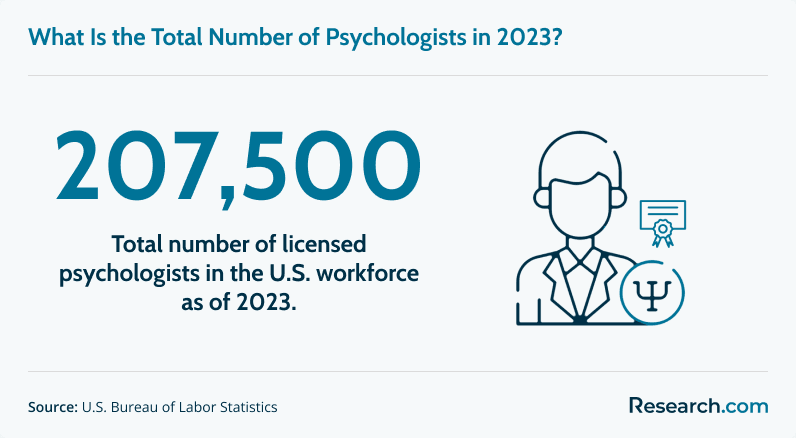
Psychology can be deeply fulfilling, but it is not automatically satisfying for everyone. As of 2023, there were 207,500 psychologists in the U.S. workforce. Many psychologists value the chance to help clients improve their lives, understand complex behavior, and build specialized expertise. At the same time, fulfillment depends on the setting, caseload, supervision, income expectations, administrative burden, and emotional boundaries.
Major advantages of being a psychologist
- Meaningful client impact: Psychologists often help people manage depression, anxiety, trauma, grief, relationship problems, learning challenges, and serious life transitions.
- Wide career variety: A psychology background can lead to clinical practice, school services, research, consulting, legal work, academia, healthcare, corporate roles, or behavioral science positions.
- Constant intellectual growth: The field changes as new research, assessment tools, treatment methods, and digital care models emerge.
- Potential autonomy: Psychologists in private practice may control their schedule, client mix, fees, practice model, and work environment.
- Specialization options: Psychologists can build expertise in neuropsychology, child psychology, trauma, forensic evaluation, organizational psychology, sports performance, geropsychology, or behavioral analysis.
Major disadvantages of being a psychologist
- Long education timeline: Many psychologist roles require doctoral study, supervised clinical training, exams, and state licensure before independent practice.
- High education cost: Doctoral programs, especially Psy.D. programs, can create substantial debt if funding is limited.
- Emotional exposure: Regular work with trauma, crisis, severe symptoms, and family distress can wear down even highly committed professionals.
- Administrative workload: Insurance forms, clinical notes, treatment plans, compliance tasks, and legal documentation can reduce time spent in direct care.
- Legal and ethical responsibility: Mistakes in confidentiality, boundaries, informed consent, assessment, or documentation can carry serious consequences.
| Question to ask yourself | If your answer is yes | If your answer is no |
| Can I commit to years of graduate training? | A psychologist pathway may be realistic. | Consider counseling, social work, or other mental health roles with different timelines. |
| Am I comfortable with emotionally intense conversations? | Clinical work may fit if you also build strong boundaries. | Research, I-O psychology, data-focused roles, or education may be better options. |
| Do I want assessment, diagnosis, and advanced specialization? | Psychology may offer the scope you want. | A counseling or therapy route may align better with your goals. |
| Have I reviewed program cost and loan risk? | You can evaluate ROI more realistically. | Do not enroll until you compare funding, debt, and career outcomes. |
If you want a faster graduate option before deciding on a doctoral path, accelerated psychology masters programs may be worth comparing. However, always verify whether a program leads to the license or credential required in your state.
Can psychologists maintain a good work-life balance for 2027?
Psychologists can have a healthy work-life balance, but it depends on the role. In a recent practitioner survey, 32% reported struggling with burnout. Among practitioners with more than 10 years of experience, 18% reported the same issue. That difference suggests that boundaries, experience, practice structure, and workload management can affect long-term sustainability.
Work settings that may support better balance
- Private practice may allow psychologists to set office hours, choose caseload size, limit evening appointments, and define the type of clients they serve.
- Teletherapy can reduce commute time and create more scheduling flexibility when state licensure rules and privacy requirements are followed.
- Schools, universities, research organizations, and corporate settings may offer more predictable schedules than hospital, crisis, or emergency-oriented roles.
- Consulting and part-time practice may help experienced psychologists reduce caseload intensity while continuing meaningful professional work.
Work conditions that can weaken balance
- Hospital, crisis, forensic, or high-acuity clinical roles may require urgent consultations, evening hours, weekend work, or unpredictable demands.
- High caseloads can leave little time for documentation, supervision, continuing education, and personal recovery.
- Repeated exposure to client distress can make it difficult to mentally disconnect after work.
- Insurance billing, compliance, patient records, and legal documentation can expand the workday beyond scheduled sessions.
| Setting | Potential work-life benefit | Potential drawback |
| Private practice | More control over schedule, fees, and caseload | Requires business management, marketing, billing, and client retention |
| Hospital or crisis setting | Strong clinical exposure and interdisciplinary teamwork | Higher emotional intensity and less predictable workload |
| School or university | Structured calendar and student-centered work | Heavy evaluation demand and limited resources in some districts |
| Research or corporate role | Often less direct clinical crisis work | May involve grant pressure, organizational politics, or project deadlines |
| Telepsychology | More location flexibility and reduced commuting | Requires secure technology, privacy planning, and licensure compliance |
The best work-life balance usually comes from intentional practice design: manageable caseloads, clear policies, consultation, administrative support, regular time off, and the willingness to say no to work that exceeds professional capacity.
How stable are psychologist jobs for 2027?
Psychologist jobs are generally considered stable because mental health care, school services, workplace well-being, neuropsychological assessment, and behavioral health needs remain important across many sectors. Still, stability is not equal across every specialty or location. A rural school district, a private teletherapy practice, a hospital neuropsychology unit, and a corporate I-O role can have very different hiring patterns.
Why the job outlook is positive
Demand is supported by broader recognition of mental health needs, increased use of therapy, school-based mental health concerns, workplace wellness efforts, and the expansion of telehealth. Colleges for doctorate in psychology reflect this demand by preparing students for clinical, academic, research, and applied roles.
The pandemic increased attention on remote therapy and digital mental health services. Psychology degrees are also adaptable: psychologists may work in hospitals, private practices, K–12 schools, universities, government agencies, businesses, correctional settings, research centers, and consulting firms.
According to the U.S. Bureau of Labor Statistics (BLS), the projected employment growth for psychologists is 7% from 2023 to 2033, exceeding the average growth rate. Aging-related needs also support demand for geropsychology, dementia care, brain injury assessment, and neuropsychological services.
Factors that can make job stability harder
- Education barriers: Many psychologist roles require 8 to 12 years of advanced study, supervised experience, exams, and state-specific licensure.
- Competitive specialties: Clinical psychology, sports psychology, and other popular niches may have more applicants than openings in certain regions.
- Private practice uncertainty: Independent psychologists must manage referrals, billing, marketing, recordkeeping, insurance issues, and income variability.
- Licensure limits: Moving across state lines or serving clients remotely can require additional licensure review.
- Funding and reimbursement: Jobs tied to insurance reimbursement, school budgets, grant funding, or public agencies may face financial constraints.
Students comparing graduate options should examine placement data, practicum opportunities, accreditation, state licensure alignment, and faculty expertise. Online options, including online psychology masters programs, can be useful, but they must be evaluated carefully for licensure relevance and supervised training opportunities.
How does psychologist pay compare with other mental health careers?
Salary is one of the most important trade-offs in this field because psychology usually requires more education than many related mental health roles. Psychologists often have higher earning potential than counselors, social workers, and many therapists, but income varies by specialization, setting, location, experience, payer mix, and whether the psychologist owns a practice.
Psychologist salary figures cited in this guide
As of 2023, the average doctor of psychology salary was $92,740. Private practice psychologists may earn more depending on client volume, fees, insurance participation, overhead, and local demand, but higher income is not guaranteed.
| Clinical, Counseling, and School Psychologists | $139,280 |
| Industrial-Organizational Psychologists | $139,280 |
| Forensic Psychologists | $80,000 – $120,000 |
| Neuropsychologists | $100,000 – $150,000 |
What affects psychologist income?
- Specialization: Neuropsychology and industrial-organizational psychology are often associated with higher compensation, which is why they appear in discussions of the highest paid psychologist roles.
- Work environment: Schools, hospitals, universities, private practices, agencies, and corporations use different pay structures.
- Experience: Psychologists usually earn more after developing specialized skills, referral networks, supervisory credentials, or leadership roles.
- Location: Urban and high-cost markets may offer higher pay, though expenses can also be higher.
- Practice model: Independent providers who manage fees, caseloads, and overhead effectively may increase income, but they also carry business risk.
Therapy-focused psychologists who want to increase earning potential often consider specialties such as trauma therapy, addiction treatment, couples therapy, or cognitive-behavioral therapy. Research.com’s guide to highest-paying therapy specializations explains how specialization, business structure, and demand can influence income.
Why can psychology work become emotionally draining?
Psychology can be emotionally demanding because the work often involves prolonged exposure to distress, uncertainty, trauma, conflict, grief, crisis, and serious mental illness. The risk is highest when psychologists carry large caseloads, work with severe symptoms, lack supervision, have poor boundaries, or cannot take recovery time between difficult cases.
Common sources of emotional strain
- Repeated exposure to trauma and distress: Listening to abuse, violence, grief, suicidal thoughts, panic, depression, and family conflict can contribute to secondary trauma or compassion fatigue.
- Responsibility without control: Psychologists can guide, treat, assess, and support clients, but they cannot guarantee outcomes or force change.
- High caseloads: Among psychologists in 2024, 33% reported that their caseload increased compared to the previous year.
- High-intensity specialties: Crisis intervention, forensic psychology, severe trauma work, and PTSD treatment can carry additional emotional weight.
- Boundary management: Psychologists must be empathetic while maintaining professional distance, documentation standards, and ethical limits.
Practical ways psychologists reduce burnout risk
- Use regular consultation or supervision instead of carrying difficult cases alone.
- Set caseload limits and avoid scheduling too many high-acuity clients back to back.
- Build clear communication policies for emergencies, cancellations, and after-hours contact.
- Keep documentation current to reduce legal anxiety and end-of-week overload.
- Take continuing education in trauma-informed care, suicide risk, ethics, and provider resilience.
- Seek personal therapy or peer support when work stress begins affecting sleep, relationships, or health.
Is demand for psychologists high for 2027?
Demand for psychologists is strong in several areas, especially clinical services, school-based mental health, workplace behavior, telepsychology, neuropsychology, and specialized assessment. In 2024, 39% of psychologists reported an increase in the severity of symptoms among patients. The same pressure contributes to burnout: 32% reported feeling burned out.
What is driving demand?
- More public attention to mental health: Anxiety, depression, trauma, family stress, and workplace stress have increased the need for accessible psychological services.
- Teletherapy expansion: Digital platforms and video-based care have made it easier for clients to seek services and for psychologists to reach more communities, subject to licensure rules.
- Workplace psychology: Employers use industrial-organizational psychology to address productivity, employee well-being, leadership, selection, and workplace culture.
- School mental health needs: Students need support for learning, behavior, emotional regulation, disability services, crisis response, and family-school coordination.
- Aging and neuropsychology demand: Dementia, Alzheimer’s disease, brain injury, and cognitive assessment needs increase the importance of neuropsychological expertise.
Demand does not remove all career risk. New psychologists still need the right credentials, supervised experience, state authorization, professional references, and a realistic understanding of local hiring conditions.
Psychologists dedicate their careers to supporting others, but the profession also requires deliberate self-care. The chart below highlights self-care practices and burnout rates among psychologists in 2024.
Which psychology specializations offer advancement options?
Career growth in psychology often comes from specialization. A general psychology background can open doors, but advanced roles usually require focused training, supervised experience, board certification, research experience, or niche clinical expertise. Psychologists may advance into private practice ownership, supervision, program leadership, expert witness work, academic appointments, consulting, or interdisciplinary healthcare teams.
Behavior analysis is one example of a specialized route. Programs such as masters in BCBA online can help students compare behavior-focused training options that may support roles in behavior therapy, autism services, schools, organizational consulting, and applied behavior analysis settings.
| Specialization | Potential advancement path | Important consideration |
| Clinical psychology | Private practice, clinical supervision, hospital leadership, specialty treatment | Requires strong documentation, ethics, and licensure compliance |
| Forensic psychology | Court consultation, risk assessment, correctional work, expert testimony | Requires comfort with legal systems and high-stakes reports |
| Neuropsychology | Assessment clinics, rehabilitation, brain injury care, dementia evaluation | Requires specialized testing and brain-behavior training |
| Industrial-organizational psychology | Corporate consulting, talent analytics, leadership development, workplace research | May be less therapy-focused and more data- or organization-focused |
| School psychology | District leadership, assessment coordination, intervention design | Requires knowledge of education law and school systems |
How is telepsychology changing mental health care?
Telepsychology has made psychological services more accessible for clients who face distance, transportation, scheduling, disability, or provider shortage barriers. Secure video platforms, electronic records, remote assessment tools, and digital communication systems allow psychologists to deliver care beyond traditional office settings.
The shift also creates new responsibilities. Psychologists must protect confidentiality, use secure technology, understand emergency procedures for remote clients, document informed consent for telehealth, and follow state licensure rules when serving clients across jurisdictions. Anyone comparing mental health training routes may also want to review the fastest way to become a counselor to understand how different credentials and practice scopes compare.
What education and licensing steps do psychologists need in the U.S.?
Becoming a licensed psychologist in the U.S. usually requires undergraduate education, graduate training, supervised clinical experience, a national exam, state licensure, and continuing education. Requirements vary by state and specialization, so students should verify rules with the state psychology board before choosing a program.
| Bachelor's Degree | 4 years |
| Graduate Degree (Master’s or Doctorate) | 2-7 years |
| Supervised Clinical Training, Licensing Exam (EPPP), State Licensure | 1-2 years |
Step 1: Complete a bachelor’s degree
A bachelor’s degree in psychology or a related field such as sociology, neuroscience, education, or human development provides the foundation for graduate study. Undergraduate students should seek research experience, statistics coursework, volunteer work, internships, and faculty mentorship because graduate admissions can be competitive.
An associate degree can introduce students to psychology, but it does not provide the same depth or graduate school preparation as a bachelor’s degree. The difference between associate degree and a bachelor’s degree is especially important for psychology because a bachelor’s degree is typically required before entering graduate-level psychology training.
Step 2: Choose the right graduate degree
A master’s degree in psychology may support school psychology, counseling-adjacent work, research assistant roles, or preparation for doctoral study. However, a master’s degree alone usually does not qualify someone to practice independently as a licensed psychologist.
Doctoral training is the more common route for licensure as a psychologist. A Ph.D. generally emphasizes research, teaching, and scientific training, while a Psy.D. is usually more clinically oriented. An Ed.S. may be required for school psychology roles in some contexts. As one overview notes, many career paths within psychology necessitate a doctoral-level degree for professional practice.
Step 3: Complete supervised clinical training
Doctoral psychology programs typically include extensive internship training, often requiring 1,500 to 2,000 hours of supervised practice. Many states and specialties also require postdoctoral supervised hours before full licensure. The setting matters: clinical psychology students may train in hospitals or clinics, forensic psychology trainees may need legal-system experience, and neuropsychology students need specialized brain-behavior assessment training.
Step 4: Pass the EPPP
Most states require candidates to pass the Examination for Professional Practice in Psychology, commonly called the EPPP. The exam covers core areas such as assessment, diagnosis, intervention, ethics, research, development, and professional practice. Passing thresholds vary by state and generally fall within the range of 70% to 75%.
Step 5: Obtain state licensure and maintain it
In most cases, psychologist without a license is generally prohibited outside limited roles such as research, teaching, or some industrial-organizational work. Licensure rules differ by state, and psychologists who move or provide telehealth across state lines may need to review mobility rules carefully.
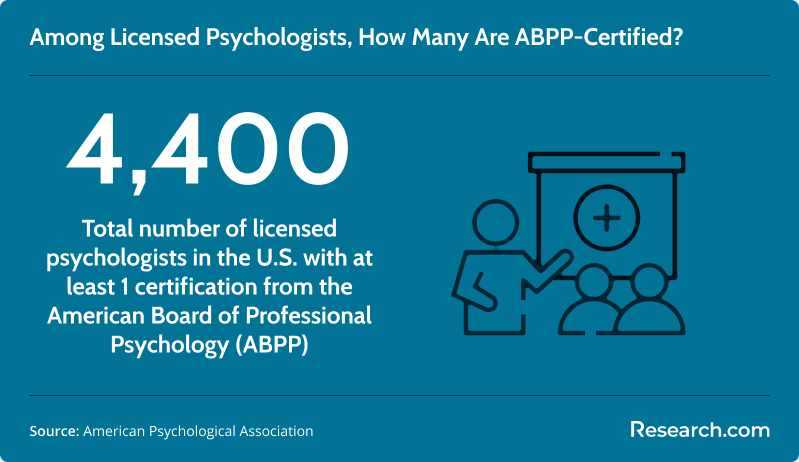
Board Certification from the American Board of Professional Psychology can demonstrate advanced competence in areas such as forensic, clinical, or school psychology. As of 2023, there were 4,400 ABPP-certified psychologists in the U.S..
Students comparing related mental health licenses may also want to review LCSW vs LPC degree programs. LCSW programs emphasize social work, systems, and community context, while LPC programs are more directly centered on clinical counseling and therapy.
Licensure does not end after the first license is issued. Psychologists must renew their license, complete continuing education credits, follow ethical standards, and comply with any state-specific requirements such as jurisprudence exams or oral examinations.
How much student loan debt do psychology graduates carry?
Psychology student debt depends on the degree level, institution type, program length, funding package, cost of living, and whether the student attends a public or private university. Doctoral students, especially Psy.D. students with fewer funding opportunities, may carry the highest loan balances.
| Degree Level | Average Student Loan Debt |
| Bachelor’s in Psychology | $30,000 – $50,000 |
| Master’s in Psychology | $50,000 – $100,000 |
| Doctorate (Ph.D. or Psy.D.) | $100,000 – $250,000+ |
What drives psychology student debt?
- Institution type: Private universities often cost more than public options.
- Funding access: Ph.D. programs may offer tuition waivers or stipends, while Psy.D. programs may provide fewer funded positions.
- Living expenses: Students in high-cost regions, including areas such as New York and California, may borrow more for housing and daily expenses.
- Program length: Psychology doctorates can take 5–7 years, increasing total costs before full-time earnings begin.
How to evaluate return on investment before enrolling
- Ask whether the program is accredited and whether it meets your state’s licensure requirements.
- Compare total cost, not just tuition. Include fees, books, travel, internship expenses, insurance, technology, and lost income.
- Request data on internship match rates, graduation rates, licensure outcomes, and employment outcomes.
- Find out whether assistantships, scholarships, tuition waivers, or stipends are available.
- Estimate monthly loan payments against realistic entry-level and mid-career salaries.
- Compare the psychology route with counseling, social work, school psychology, or behavior analysis if your primary goal is client-facing mental health work.
Debt is not the only pressure. The mental health crisis has also increased workload demands, especially for early-career psychologists. In 2024, 51% of psychologists saw an increase in the severity of symptoms among their patients.
The chart below shows the percentage of psychologists who frequently face capacity challenges, which is one factor connected to stress and burnout.
What legal and ethical risks do psychologists face?
Psychologists work under strict legal and ethical obligations. Mistakes involving confidentiality, documentation, boundaries, assessment, mandated reporting, informed consent, or clinical judgment can result in board complaints, malpractice claims, license discipline, financial penalties, or criminal consequences in serious cases.
Breach of confidentiality
- Duty: Psychologists must protect client privacy under HIPAA and applicable state laws.
- Risk: Sharing information without authorization, mishandling records, or discussing cases in public can trigger legal and licensing consequences.
- Exception: Confidentiality may have to be broken for duty-to-warn situations, child abuse, elder abuse, or other legally mandated reporting scenarios.
- Example: A psychologist talks about a client in a public space, exposing private information and creating a HIPAA concern.
Malpractice and negligence
- Duty: Psychologists must provide competent care within their training and professional scope.
- Risk: Misdiagnosis, failure to assess risk, inappropriate treatment, or lack of follow-up may lead to malpractice claims.
- Example: A psychologist fails to document and respond appropriately to severe risk indicators, and the client is later harmed.
Dual relationships and boundary violations
- Duty: Psychologists must avoid relationships that impair objectivity, exploit clients, or create conflicts of interest.
- Risk: Romantic, financial, or close personal involvement with clients can lead to lawsuits, discipline, and loss of license.
- Example: A psychologist begins a romantic relationship with a client, violating ethical and legal boundaries.
Failure to obtain informed consent
- Duty: Psychologists must explain treatment goals, risks, benefits, alternatives, confidentiality limits, fees, and policies.
- Risk: Poor consent practices can create claims of coercion, negligence, or unethical treatment.
- Example: A psychologist uses hypnotherapy without explaining potential risks or alternatives.
Poor documentation and recordkeeping
- Duty: Psychologists must keep accurate, secure, and timely records according to state board rules, HIPAA, and professional standards.
- Risk: Missing notes, vague treatment plans, or unsecured files can weaken clinical care and increase liability.
- Example: A psychologist fails to document suicidal ideation, making it difficult to show that risk was properly assessed.
What do practitioners say about the pros and cons of being a psychologist?
- Helping clients move through painful experiences can be profoundly meaningful, but carrying those stories requires disciplined self-care. The work is most sustainable when compassion is paired with clear limits. Stacy
- The training path was demanding, yet the range of psychology careers made the investment feel worthwhile. Insurance systems and paperwork can be frustrating, but the field continues to challenge me intellectually. David
- Community-based work can be exhausting because the needs are so visible and resources are often limited. Still, seeing students and families benefit from psychological support makes the effort matter. Milton
How do networking and mentorship affect psychology careers?
Professional relationships can strongly influence a psychologist’s career trajectory. Mentors help students choose specialties, prepare for internships, understand licensure requirements, avoid ethical mistakes, publish research, build referral networks, and identify job opportunities. Professional associations, conferences, supervision groups, and peer consultation circles can also expose psychologists to new treatment methods and regulatory updates.
Networking is especially useful for psychologists moving into private practice, forensic work, academia, hospital systems, school leadership, or consulting. It also helps professionals understand adjacent credentials, including questions such as What is a LPC?.
How can online professional development improve clinical practice?
Digital professional development gives psychologists flexible ways to strengthen skills without pausing their careers. Webinars, online supervision, virtual conferences, research modules, and asynchronous continuing education can help psychologists stay current in ethics, telehealth, trauma care, assessment, cultural competence, documentation, and evidence-based treatment.
Cost matters here as well. Students and professionals comparing counseling-related education may find it useful to review cheapest online LPC programs as part of a broader look at accessible mental health training options.
How can spirituality be integrated into professional practice?
Spirituality can be relevant in psychological practice when it is client-centered, ethically handled, culturally respectful, and clinically appropriate. Psychologists should not impose beliefs, but they may explore a client’s faith, meaning-making, values, grief practices, community support, or spiritual coping when the client wants those themes included in treatment.
Professionals interested in faith-informed counseling may compare programs such as degrees in Christian counseling. The key is to integrate spirituality only within ethical boundaries, informed consent, professional competence, and respect for client autonomy.
How can psychologists combine ethical practice with self-care?
Ethical decision-making and self-care are connected. Exhausted psychologists are more likely to miss documentation, blur boundaries, delay consultation, overextend caseloads, or make reactive decisions. Strong ethical practice requires sustainable work habits, reflective supervision, peer consultation, continuing education, and honest awareness of personal limits.
- Use consultation when cases involve risk, boundaries, legal uncertainty, or unfamiliar cultural issues.
- Document ethical reasoning, informed consent, safety planning, and referrals clearly.
- Schedule recovery time after high-intensity sessions or evaluations.
- Limit caseloads when quality of care is at risk.
- Take continuing education in ethics, resilience, trauma, and professional boundaries.
Related training routes, including cheapest online marriage and family therapy programs, may also help students compare mental health professions that emphasize relational systems, family dynamics, and clinical care.
Can you enter mental health work faster without a full master’s degree?
Some mental health-adjacent jobs do not require a full master’s degree, but independent clinical practice usually does. Certificate programs, peer support roles, behavioral health technician positions, crisis line work, case management, community health roles, and supervised entry-level positions can help people gain experience before committing to graduate school.
However, students should be careful with shortcuts. A fast program is not useful if it does not meet state requirements, lacks accreditation, or does not lead to the credential needed for the desired job. For a deeper look at nontraditional and accelerated options, see Research.com’s guide on How to be a counselor without a master's degree?.
How can online forensic psychology master’s programs support specialization?
Forensic psychology combines psychological science with legal and criminal justice systems. Online master’s programs in this area may help students study risk assessment, criminal behavior, court processes, correctional psychology, victimology, legal ethics, and consultation. This can be useful for professionals who want to work in courts, corrections, law enforcement support, advocacy organizations, or forensic assessment settings.
Before enrolling, students should confirm whether the program is accredited, whether it includes relevant field experience, and whether it supports the license or career outcome they want. Research.com’s resources on affordable forensic psychology master's programs online can help compare cost-conscious options.
Common mistakes to avoid before becoming a psychologist
- Choosing a program before checking licensure alignment: State rules vary, and not every psychology program leads to the same professional outcome.
- Looking only at tuition: Fees, living costs, travel, internship expenses, lost wages, and loan interest can change the real cost.
- Assuming online programs automatically qualify for licensure: Online delivery can be legitimate, but supervised training, accreditation, and state approval still matter.
- Ignoring debt-to-income fit: A high-cost doctorate should be compared against realistic salary expectations and funding opportunities.
- Underestimating paperwork: Documentation, billing, compliance, and legal recordkeeping are a major part of many psychology jobs.
- Choosing a specialty based only on salary: High-paying areas may require training, temperament, and work conditions that do not fit every student.
- Neglecting self-care early: Burnout prevention should begin during training, not after years of clinical overload.
- Relying only on rankings: Rankings can help with research, but accreditation, internship outcomes, faculty fit, supervision quality, and licensure results matter more.
Questions to ask before choosing psychology as a career
- Do I want to provide therapy, conduct assessments, teach, research, consult, or work in organizations?
- Am I willing to complete doctoral training if my target role requires it?
- Which state do I plan to practice in, and what does that state require for licensure?
- How much debt can I reasonably take on compared with expected earnings?
- Does the program provide supervised experience in my intended specialty?
- What are the program’s internship, graduation, licensure, and employment outcomes?
- Can I handle emotionally intense work while maintaining healthy boundaries?
- Would counseling, social work, marriage and family therapy, behavior analysis, or psychiatry better match my goals?
Key Insights
- Psychology can be a strong career for people who want meaningful, specialized work and are prepared for long training, licensure, and emotional responsibility.
- The profession has stable demand: the U.S. Bureau of Labor Statistics projects 6% growth from 2022 to 2032, and BLS data cited in this guide also reports 7% projected employment growth from 2023 to 2033.
- Salary potential can be attractive, but it varies widely by specialty, setting, location, experience, and business model. As of 2023, the median pay cited in this guide was $92,740.
- Debt is one of the biggest risks. Psychology doctorate debt can reach $100,000 – $250,000+, so funding, program type, and ROI should be evaluated before enrollment.
- Burnout is a real concern. In one practitioner survey, 32% reported burnout, while 18% of those practicing for more than 10 years reported the same experience.
- Specialization can improve career direction. Clinical, forensic, neuropsychology, school, and industrial-organizational paths each require different training and suit different personalities.
- Licensure should guide every education decision. Students should verify accreditation, supervised hour requirements, EPPP expectations, and state-specific rules before committing to a program.
- The best candidates for psychology are not only empathetic. They are also disciplined, ethical, research-minded, emotionally resilient, and willing to keep learning throughout their careers.
References:
- American Board of Professional Psychology. (n.d.). ABPP specialist workforce findings from the 2022 workforce survey.
- American Psychological Association. (2024). 2024 practitioner pulse full report.
- American Psychological Association. (2024). Top psychology specialties in Monitor on Psychology, 55(2).
- Bureau of Labor Statistics, U.S. Department of Labor. (2023). Psychologists in the Occupational Outlook Handbook.
- National Association of School Psychologists. (n.d.). NASP member survey resources.
- National Association of School Psychologists. (n.d.). School psychology workforce information.
Other Things You Should Know About the Pros and Cons of Being a Psychologist
Most states require a doctoral degree, supervised postdoctoral hours, and a passing score on the EPPP, the Examination for Professional Practice in Psychology. Many boards also require a jurisprudence exam and state licensure through the psychology board before a psychologist can practice independently.
To become a psychologist in 2027, you typically need a doctoral degree in psychology. Additionally, most states require licensure, often involving passing the Examination for Professional Practice in Psychology (EPPP) and completing supervised clinical hours. Requirements may vary by state.