2027 How to Become a Criminal Psychologist in Rhode Island

Co-Founder and Chief Data Scientist
Becoming a criminal psychologist in Rhode Island usually means preparing for licensed psychology practice, not just studying crime. The work can involve psychological assessment, treatment planning, competency evaluations, risk assessment, consultation with courts or corrections, and research on behavior connected to offending. Because many of these duties require clinical judgment, Rhode Island candidates typically need graduate training, supervised experience, and a psychology license before practicing independently.
This guide is for students, career changers, and psychology graduates who want to understand the Rhode Island pathway. It explains the degrees to consider, how licensure works, where internships may be available, what salaries and job outlook data suggest, which settings hire criminal psychology professionals, and how to choose a program without relying on vague promises or rankings alone.
Quick Answer: How do you become a criminal psychologist in Rhode Island?
To become a criminal psychologist in Rhode Island, start with a bachelor’s degree in psychology, criminal justice, sociology, or a related field; complete graduate study in psychology, forensic psychology, or a closely connected area; gain supervised clinical experience through practicum, internship, pre-doctoral, and post-doctoral training; and meet Rhode Island Board of Psychology licensure requirements. Applicants for psychologist licensure must hold a doctorate in psychology, submit official documentation, pay the $230 application fee, verify supervised experience, and pass the Examination for Professional Practice in Psychology (EPPP). Independent clinical practice generally requires licensure.
Key Points About Becoming a Criminal Psychologist in Rhode Island
- Rhode Island’s outlook for psychology roles connected to criminal psychology is positive, with projected growth of 7% over the next decade.
- The average salary for criminal psychologists in Rhode Island is around $90,893 per year, although pay can vary by employer, location, credentials, and specialization.
- Students often look at institutions such as the University of Rhode Island and Roger Williams University because they offer psychology programs and criminal justice-related academic pathways.
- Professional development and networking can be strengthened through groups such as the Rhode Island Psychological Association and other mental health, forensic, and clinical organizations.
- Academic requirements for criminal psychology in Rhode Island
- Best undergraduate majors for future criminal psychologists
- How to evaluate criminal psychology programs in Rhode Island
- Rhode Island psychologist licensure steps
- Internship and practicum options in Rhode Island
- Job outlook for criminal psychologists in Rhode Island
- Criminal psychologist salary in Rhode Island
- Common workplaces for criminal psychologists
- Advanced roles in criminal and forensic psychology
- Ethical and legal issues in Rhode Island practice
- How forensic science training can support practice
- Research and technology trends affecting the field
- Whether behavior analysis certification is useful
- Additional certifications that may expand practice options
- Continuing education and license renewal
- How substance abuse counseling connects to criminal psychology
- Unique challenges in Rhode Island practice
- How counseling skills can strengthen criminal psychology work
- Professional resources for Rhode Island criminal psychologists
- Rhode Island schools that can prepare you for the field
- Interdisciplinary collaboration in criminal psychology
What are the academic requirements to become a criminal psychologist in Rhode Island?
Criminal psychology is not usually an entry-level field. Most people begin with broad psychology training, then narrow their focus through forensic psychology coursework, supervised clinical placements, research, and work in justice-related settings. In Rhode Island, the route is especially important because independent psychological practice is regulated by the state.
| Stage | What it helps you build | Why it matters for criminal psychology |
| Bachelor’s degree in psychology or a related field | Foundational knowledge of behavior, research methods, statistics, abnormal psychology, development, and social influences | Graduate programs expect applicants to understand core psychological science before moving into specialized forensic or clinical work. |
| Master’s degree in forensic psychology or a related field | Specialized exposure to offender behavior, assessment, legal systems, and applied research | A master’s can strengthen preparation for doctoral study or related roles, but it may not be enough for independent psychologist licensure. |
| Doctorate in psychology, such as a Psy.D. or Ph.D. | Advanced clinical, assessment, research, and supervision skills | Rhode Island psychologist licensure requires doctoral-level preparation. Brown University and the University of Rhode Island are among the institutions students may consider when reviewing advanced psychology options. |
| Practicum, internship, and supervised clinical experience | Real-world assessment, treatment planning, documentation, consultation, and ethical decision-making | Supervised experience is required for licensure and is also where students learn whether correctional, court, clinical, or research settings fit their goals. |
| Thesis, dissertation, or major research project | Research design, evidence review, data analysis, and scholarly writing | Criminal psychology relies on careful interpretation of evidence, not assumptions about offenders or crime patterns. |
A practical way to think about the pathway is this: the bachelor’s degree opens the door, graduate study builds the specialty, supervised experience proves readiness, and licensure allows independent professional practice. Students who want roles involving court testimony, diagnosis, or treatment should plan for doctoral training early rather than assuming a short certificate will be enough.
What undergraduate majors are recommended for aspiring criminal psychologists in Rhode Island?
The strongest undergraduate major depends on what you want to do later. A student aiming for licensed clinical practice should prioritize psychology prerequisites and research experience. A student interested in investigative support, corrections, or policy may benefit from criminal justice coursework. Many successful applicants combine a major with a minor, research lab work, field experience, or statistics training.
| Undergraduate major | Best fit for students who want to | Courses to prioritize |
| Psychology | Apply to graduate psychology programs, pursue assessment or clinical work, or eventually seek licensure | Abnormal psychology, research methods, statistics, developmental psychology, social psychology, psychological testing, ethics |
| Criminal Justice | Understand courts, policing, corrections, and legal processes that affect forensic work | Criminology, criminal law, corrections, juvenile justice, policing, victimology, research methods |
| Sociology | Study crime in relation to social systems, inequality, communities, institutions, and group behavior | Deviance, social problems, family systems, inequality, statistics, qualitative and quantitative research |
Psychology is often the safest primary major for students who plan to pursue graduate psychology training, because it aligns closely with admissions expectations. Criminal justice can be a strong second major or minor for students who want to work comfortably with law enforcement, corrections, and courts. Sociology is useful for students who want to understand the social context surrounding crime, victimization, rehabilitation, and community reintegration.
Students comparing programs in Rhode Island often review the University of Rhode Island for psychology preparation and Roger Williams University for criminal justice-related coursework. The best choice is not simply the school with the most recognizable name; it is the program that gives you the prerequisites, faculty mentoring, research exposure, and applied experience needed for your next step.
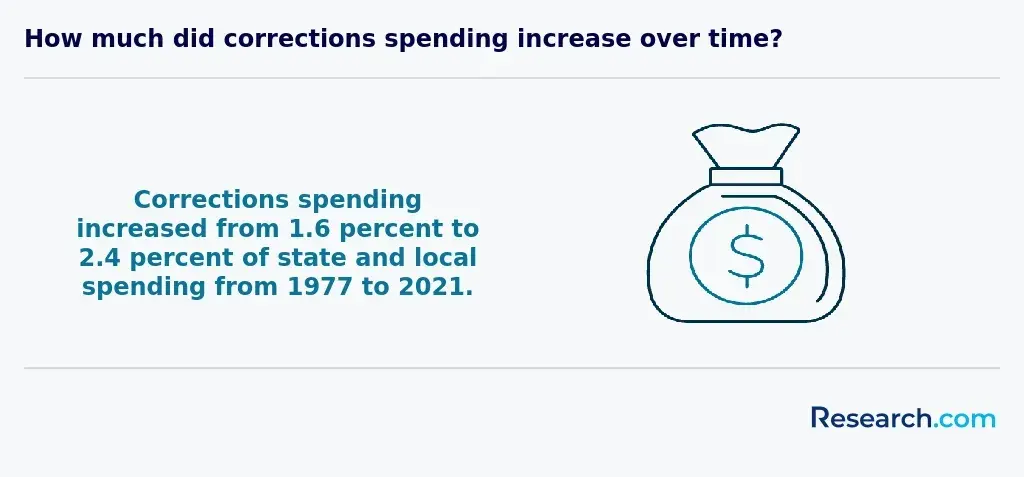
The chart below provides context on public welfare spending and the broader social systems that can intersect with mental health, corrections, and community services.
What should students look for in a criminal psychology program in Rhode Island?
A strong criminal psychology pathway should help you move toward a specific outcome: graduate admission, licensure, correctional work, court-related evaluation, research, or a related mental health role. Before enrolling, compare programs on accreditation, curriculum, supervised experience, cost, faculty expertise, and transfer flexibility.
| Program factor | What to check | Why it matters |
| Accreditation status | Confirm institutional recognition and whether psychology training meets the expectations of graduate schools, internships, and state licensing boards. Programs in Rhode Island should be recognized by the Rhode Island Board of Governors for Higher Education. | Accreditation affects credit transfer, graduate admission, financial aid eligibility, and licensure planning. |
| Tuition and total cost | Public universities in Rhode Island often list average annual tuition in the $15,000 to $20,000 range, while private institutions may exceed $30,000. | Tuition is only one part of cost. Fees, books, transportation, housing, lost work time, and graduate school debt can affect ROI. |
| Specialization options | Look for coursework in forensic assessment, criminal behavior, rehabilitation, trauma, substance use, juvenile justice, or corrections. | Specialized courses help you test your interest before committing to doctoral-level training. |
| Practical training | Ask whether students can complete internships, practicums, research assistantships, or field placements in mental health, legal, law enforcement, or correctional environments. | Experience helps you build references, clarify career goals, and compete for graduate programs or entry-level roles. |
| Faculty expertise | Review faculty research, clinical backgrounds, publications, and community partnerships. | Faculty mentors can shape research opportunities, recommendation letters, and specialization choices. |
Questions to ask before choosing a program
- Does the curriculum include both psychology and justice-system coursework?
- Will the program meet prerequisites for master’s or doctoral psychology programs?
- Are supervised placements available, or must students find them independently?
- How many students continue into graduate study or related mental health roles?
- Can undergraduate students join research projects with faculty?
- Are online courses accepted for prerequisites by the graduate programs you may apply to later?
- What is the total cost after fees, books, travel, housing, and financial aid?
What are the steps for obtaining licensure as a criminal psychologist in Rhode Island?
Rhode Island licenses psychologists through its Board of Psychology. Criminal psychology itself is a specialization or practice focus, but independent psychological services generally require a psychology license. Candidates should verify current rules with the state before making enrollment or employment decisions.
- Complete the required doctoral education. Applicants must hold a doctorate in psychology. If the program is not APA-accredited, Rhode Island may require a detailed curriculum summary form to evaluate whether the education is equivalent.
- Document supervised experience. Candidates must provide verification of supervised pre-doctoral and post-doctoral clinical experience.
- Submit the licensure application. Rhode Island requires a completed application, official transcripts from an accredited institution, and a $230 fee.
- Pass the EPPP. Passing scores from the Examination for Professional Practice in Psychology must be certified directly by the Association of State and Provincial Psychology Boards (ASPPB).
- Address prior licensing, discipline, or criminal history disclosures. Applicants who have held credentials in other states must provide licensure verification and disclose prior criminal convictions or disciplinary actions as required.
- Use temporary permit options only when eligible. Examination applicants may qualify for temporary permits under certain conditions.
- Follow renewal rules after approval. Rhode Island psychology licenses are valid until the next biennial renewal on June 30, and continuing professional education is required for maintenance.
Military personnel, veterans, and spouses may qualify for expedited processing. Because criminal psychology often overlaps with legal testimony, corrections, mental health treatment, and public safety, candidates should track licensure rules carefully rather than assuming that a forensic or criminal psychology degree alone authorizes practice. Students interested in investigative science can also review forensic science careers to understand how evidence-based roles differ from clinical psychology roles.
The chart below shows the leading industries employing probation officers and correctional treatment specialists, a related workforce that often collaborates with mental health professionals.
Are there internship opportunities for criminal psychologists in Rhode Island?
Yes. Rhode Island students can look for internships, practicums, research assistantships, and clinical training experiences in correctional, hospital, youth mental health, and research environments. Availability changes by year, degree level, supervision requirements, and institutional partnerships, so students should confirm eligibility directly with each organization or through their school.
- Rhode Island Department of Corrections (RIDOC): Students interested in correctional mental health may seek exposure to assessment, treatment coordination, reentry issues, and the role psychologists and social workers play inside correctional systems.
- Bradley Hospital: As an institution affiliated with Brown University, Bradley Hospital can be relevant for students interested in pediatric anxiety, trauma, and clinical or research experiences involving youth who may have justice-system risk factors.
- Hasbro Children’s Hospital: Projects connected to child and adolescent mental health can help students understand developmental, family, and trauma-related issues that sometimes intersect with delinquency or later criminal behavior.
- Rhode Island Hospital's Adolescent Risk Prevention Lab: Research opportunities related to youth risk factors can help students strengthen data collection, literature review, and analysis skills.
Students should not wait until senior year to look for experience. Research labs, crisis lines, community mental health organizations, court-adjacent programs, and youth services can all build relevant skills. If you are also considering evidence-focused roles, an affordable master’s forensic science online may help you compare psychology-centered and forensic-science-centered options.
What is the job outlook for criminal psychologists in Rhode Island?
The outlook is favorable but should be interpreted carefully. The U.S. Bureau of Labor Statistics projects a 7% increase in psychology roles in Rhode Island, including criminal psychology, by 2030. That projection is expected to represent about 40 new positions in Rhode Island each year. Criminal psychology roles are a subset of the broader psychology labor market, so individual job availability depends on specialization, licensure, employer budgets, and experience.
Several factors can support demand in Rhode Island:
- Greater attention to mental health: Courts, correctional systems, schools, hospitals, and community agencies increasingly recognize that behavioral health expertise can influence safety, treatment, and rehabilitation.
- Need for assessment and risk-informed services: Professionals who can evaluate behavior, trauma, substance use, competency, and treatment needs may be useful in legal and correctional environments.
- Local education and training pipelines: Rhode Island institutions help prepare psychology and criminal justice graduates, which can expand the applicant pool and raise competition for desirable placements.
Students should prepare for a competitive field. The strongest candidates usually combine licensure-ready education, supervised experience, strong writing skills, ethical judgment, and comfort working with legal and clinical documentation.
How much do criminal psychologists in Rhode Island make?
Criminal psychologists in Rhode Island earn an average annual salary of around $90,893. This figure should be treated as a general benchmark rather than a guaranteed outcome. Compensation can differ substantially based on job title, practice authority, employer type, credentials, and experience.
| Salary factor | How it can affect earnings |
| Location within Rhode Island | Providence and other urban areas may offer more opportunities or higher pay because of service demand and cost-of-living differences. |
| Employer type | Federal agencies and legal consulting work may pay differently from rehabilitation centers, community clinics, academic roles, or smaller private practices. |
| Experience level | Entry-level professionals may earn less while building supervised experience, while experienced professionals with advanced degrees can exceed $100,000. |
| Specialization | Assessment, expert testimony, correctional leadership, substance abuse treatment, and complex forensic cases may influence compensation. |
| Neighboring labor markets | Rhode Island pay is competitive, though slightly below Massachusetts, where demand for forensic expertise is especially strong. |
If earnings are a major factor in your planning, compare this pathway with other criminal justice careers with high salary. Some justice-sector roles require less schooling, while licensed psychology roles require more time but may offer different clinical and leadership opportunities.
Where do criminal psychologists in Rhode Island typically work?
Criminal psychologists may work wherever mental health expertise and legal or correctional issues overlap. In Rhode Island, common settings include law enforcement consultation, court systems, correctional facilities, hospitals, clinics, private practice, and universities.
- Law enforcement and correctional agencies: Psychologists may consult on behavior, provide evaluations, support staff training, or help design treatment approaches for incarcerated or justice-involved individuals. The Rhode Island State Police is one example of a law enforcement organization operating in this environment.
- Courts and legal firms: Forensic-focused psychologists may assess mental state, competency, risk, or other legal questions. Some also provide expert testimony, written reports, and consultation to attorneys.
- Mental health and rehabilitation facilities: These settings often focus on treatment, crisis stabilization, substance use, trauma, and reducing recidivism risk through coordinated care.
- Academic and research institutions: Universities may employ psychologists as instructors, researchers, supervisors, or program leaders studying crime, behavior, trauma, justice systems, and mental health interventions.
For a broader explanation of the specialty and common compensation patterns, see Research.com’s guide to forensic psychology salary and career expectations.
What types of advanced roles can criminal psychologists explore in Rhode Island?
After licensure and substantial experience, criminal psychologists may move into more specialized or senior roles. These positions often require strong assessment skills, clinical documentation, interdisciplinary communication, and the ability to work under legal scrutiny.
| Advanced role | Typical focus | Good fit for professionals who enjoy |
| Forensic Psychologist | Applying psychology to legal questions, offender assessment, court consultation, and expert testimony | Writing detailed reports, explaining findings clearly, and working with attorneys or courts |
| Chief Psychologist | Leading psychological services, supervising clinicians, and overseeing clinical quality in institutional settings | Management, policy, supervision, and systems-level decision-making |
| Specialty Program Coordinator | Managing programs related to mental health crises, rehabilitation, trauma, or substance abuse | Program design, treatment planning, outcomes tracking, and team coordination |
| Advanced Care Level Psychologist | Providing higher-level care for complex clinical cases, often in institutional or correctional settings | Complex assessment, severe mental illness, risk management, and intensive intervention |
| Drug Abuse Program Coordinator | Developing and overseeing substance abuse treatment services for justice-involved populations | Addiction treatment, collaboration with corrections, and rehabilitation planning |
Institutions such as the Bureau of Prisons may offer roles that help experienced psychologists advance into specialized correctional practice. Students still choosing their education path can review the top schools for forensic psychology to compare academic expectations for forensic-oriented careers.
How do criminal psychologists in Rhode Island navigate ethical and legal challenges?
Criminal psychologists must manage a difficult balance: they may serve clients, courts, correctional institutions, attorneys, public agencies, or research projects, and each setting creates different obligations. Rhode Island practitioners are expected to follow professional ethics, protect confidentiality within legal limits, obtain informed consent when appropriate, avoid conflicts of interest, and remain objective in evaluations.
Common ethical pressure points include dual relationships in small professional communities, requests for opinions beyond the available evidence, pressure from legal teams, security concerns in correctional settings, and the need to explain limits of confidentiality clearly. Training in organizational systems can also help practitioners understand institutional decision-making; some professionals explore related study such as online PhD programs in industrial organizational psychology when their work expands into leadership, consulting, or systems analysis.
How Can Forensic Science Training Strengthen Criminal Psychology Practice in Rhode Island?
Forensic science training can make a criminal psychologist more effective when cases involve physical evidence, investigative timelines, digital records, or expert collaboration. It does not replace psychological licensure, but it can improve communication with forensic scientists, attorneys, investigators, and law enforcement teams.
This type of training may be especially useful for psychologists who review case materials, interpret behavioral evidence, consult with investigative teams, or testify in court. If you are considering a more evidence-focused pathway, compare psychology training with a forensic science degree in Rhode Island to understand how the roles differ.
What Are the Emerging Research and Technological Trends in Criminal Psychology in Rhode Island?
Criminal psychology is being shaped by developments in neuroscience, digital forensics, data analytics, telehealth, and electronic record systems. Practitioners may encounter neuroimaging research, AI-driven behavioral modeling, predictive analytics, and digital case materials. These tools can support assessment and collaboration, but they also require caution: algorithms and new technologies should not be treated as substitutes for validated clinical judgment, ethical practice, or legally sound evaluation methods.
Telehealth and digital records can improve access and coordination, especially when multiple agencies are involved. At the same time, they raise concerns about privacy, documentation, informed consent, and secure communication. Professionals who want advanced clinical preparation may compare options such as online PsyD programs while checking whether any program meets licensure and supervised training requirements.
Should I Pursue Board Certification in Behavior Analysis to Enhance My Criminal Psychology Career in Rhode Island?
Behavior analysis training can be useful if your work involves behavior assessment, intervention planning, risk reduction, or structured treatment programs. It may be especially relevant in correctional, developmental, substance use, or institutional settings where behavior change plans must be measurable and evidence-based.
However, board certification in behavior analysis is not a replacement for psychologist licensure. It is best viewed as a complementary credential for professionals whose roles involve behavior intervention. If you are comparing credential options, reviewing how to become a board certified behavior analyst in Rhode Island can help you understand whether the requirements align with your psychology career plan.
Can Additional Certifications Expand Your Criminal Psychology Practice in Rhode Island?
Additional credentials can broaden your toolkit, but they should be chosen strategically. Criminal psychologists may benefit from training in trauma, substance use, risk assessment, crisis intervention, social work systems, family dynamics, or correctional rehabilitation. The right add-on depends on your setting and client population.
For example, training connected to social work can improve collaboration with case managers, courts, families, schools, and community agencies. Professionals who want to understand that pathway can review the social worker education requirements in Rhode Island. The goal is not to collect credentials randomly; it is to fill a skill gap that improves assessment, treatment, consultation, or interdisciplinary practice.
What Are the Continuing Education and Renewal Requirements for Maintaining Licensure in Rhode Island?
Rhode Island psychologists must maintain competence after licensure through ongoing professional development and renewal. Continuing education commonly addresses ethics, treatment methods, assessment standards, legal updates, documentation, cultural competence, and emerging clinical practices. Because renewal rules can change, psychologists should confirm current requirements through official state sources before each renewal period.
For a focused overview of the state pathway, see Research.com’s guide to Rhode Island psychology license requirements.
Can Criminal Psychology and Substance Abuse Counseling Complement Each Other in Rhode Island?
Yes. Substance use and criminal justice involvement often overlap, so criminal psychologists who understand addiction assessment and treatment may be better prepared to evaluate risk, recommend interventions, and collaborate with courts, corrections, and community health providers. This combination can be valuable in rehabilitation, reentry, diversion, and treatment planning.
Substance abuse counseling is a distinct credential pathway, so psychologists should not assume one license automatically covers another role. If you want a formal addiction-focused credential, learn what it takes to become a substance abuse counselor in Rhode Island.
Can Criminal Psychology and Counseling Practices Complement Each Other in Rhode Island?
Counseling skills can strengthen criminal psychology practice by improving interviewing, rapport-building, crisis de-escalation, motivational work, and treatment engagement. These skills matter because justice-involved clients may be guarded, mandated to participate, distrustful of systems, or dealing with trauma, substance use, or severe stress.
Still, counseling and criminal psychology are not identical. Criminal psychology often involves assessment, legal documentation, and forensic objectivity, while counseling emphasizes therapeutic change and client support. Professionals interested in a counseling-focused pathway can compare requirements through the fastest way to become a counselor in Rhode Island.
What Unique Challenges Do Criminal Psychologists Face in Rhode Island?
Rhode Island’s smaller professional environment can be an advantage because collaboration may be easier, but it can also create confidentiality and boundary challenges. Practitioners may know attorneys, clinicians, agency staff, or families connected to a case. That makes documentation, role clarity, and conflict-of-interest screening especially important.
Other challenges include limited specialized training opportunities, competition for supervised placements, overlapping responsibilities among mental health and justice agencies, and the need to stay current with new assessment methods. Professionals who work with youth may also benefit from understanding school-based systems; one related route is learning how to become a school psychologist in Rhode Island.
Common mistakes to avoid when planning this career
| Mistake | Better approach |
| Choosing a program only because it has “criminal” or “forensic” in the title | Check accreditation, licensure alignment, faculty expertise, placements, and graduate outcomes. |
| Assuming a master’s degree automatically permits independent practice | Review Rhode Island psychologist licensure rules early, especially if your goal includes diagnosis, treatment, or court evaluations. |
| Focusing only on tuition | Compare total cost, financial aid, transfer credits, commuting, lost income, internship requirements, and doctoral study costs. |
| Ignoring supervised experience until graduation | Build experience through research, volunteering, practicum, internships, and assistantships as early as possible. |
| Relying only on rankings | Use rankings as one input, then verify whether the program fits your specific career goal. |
| Assuming salary averages are guarantees | Compare actual job titles, employer types, licensure requirements, and local openings before estimating ROI. |
What professional resources are available to criminal psychologists in Rhode Island?
Professional organizations can help students and practitioners find continuing education, supervision contacts, ethics training, job leads, and interdisciplinary collaborators. In a small state, these networks can be especially useful.
- Rhode Island Psychological Association: Offers professional education, advocacy, and networking opportunities for psychologists and psychology trainees.
- National Alliance on Mental Illness, Rhode Island Division: Provides mental health education and advocacy that can help practitioners understand the lived experience of individuals and families affected by mental illness.
- American Association of Marriage and Family Therapy, Rhode Island Division: Can be useful for professionals who want deeper insight into family systems, relationship patterns, and household dynamics connected to treatment and rehabilitation.
- Forensic Mental Health Program at Brown University: May offer lectures, workshops, and academic opportunities related to forensic psychology and mental health practice.
Students should use these resources before they need a job. Attend events, ask about supervised training, learn ethical expectations, and identify professionals whose work matches your intended specialization.
What Criminal Psychologists in Rhode Island Say About Their Careers
- "Building a psychology career in Rhode Island has been meaningful because the professional community is small enough to form real connections, while the clinical needs remain varied and challenging." - Doug
- "Practicing psychology here has allowed me to work in a field that continues to grow while living in a coastal state with strong local support for mental health awareness." - Jill
- "I studied psychology in Rhode Island because I valued the state’s commitment to mental health advocacy and the collaborative culture among local professionals." - Peter
Which academic institutions can best prepare me for a career in criminal psychology in Rhode Island?
The best school is the one that fits your next credential step. Undergraduate students should look for strong psychology coursework, research opportunities, statistics training, criminal justice electives, and advising for graduate school. Graduate students should focus more heavily on accreditation, supervised clinical training, doctoral preparation, internship placement, and licensure alignment.
Use school rankings as a starting point, not the final decision. Compare curriculum, faculty, practicum access, cost, and student support before enrolling. For a school-by-school overview, review Research.com’s guide to psychology colleges in Rhode Island.
How Can Interdisciplinary Collaboration Enhance Criminal Psychology Practices in Rhode Island?
Criminal psychology rarely happens in isolation. Effective practice often requires collaboration with forensic scientists, social workers, counselors, probation officers, correctional staff, physicians, attorneys, family therapists, and community agencies. Collaboration can improve case planning because each professional sees a different part of the client’s behavior, risk, environment, and support system.
For example, family dynamics may influence risk, treatment participation, reentry planning, and victim or offender support. Psychologists who want stronger family-systems knowledge may find it useful to understand how to become a marriage and family therapist in Rhode Island, even if they do not plan to change careers.
Key Insights
- Criminal psychology in Rhode Island is best understood as a psychology specialization that often requires doctoral education, supervised experience, and state licensure for independent clinical practice.
- The fastest useful first step is choosing an undergraduate path that supports graduate admission: psychology is usually the strongest primary major, while criminal justice and sociology can add valuable context.
- Rhode Island psychologist licensure requires a doctorate in psychology, verified supervised experience, an application with a $230 fee, official transcripts, and passing EPPP scores certified by ASPPB.
- The average criminal psychologist salary in Rhode Island is around $90,893, but actual earnings depend on employer, experience, specialization, location, and licensure status.
- Projected growth of 7% by 2030 and about 40 new positions each year suggest opportunity, but the field remains competitive and rewards candidates with strong clinical, research, and legal-system skills.
- Do not choose a program based only on price, title, or rankings. Verify accreditation, licensure alignment, supervised placements, faculty expertise, and total cost before enrolling.
- Related training in forensic science, behavior analysis, substance abuse counseling, social work, counseling, or family systems can strengthen practice when chosen to match a clear career goal.
Related Articles for Nearby States
- 2027 How to Become a Criminal Psychologist in Massachusetts
- 2027 How to Become a Criminal Psychologist in Connecticut
- 2027 How to Become a Criminal Psychologist in New York
- 2027 How to Become a Criminal Psychologist in New Jersey
- 2027 How to Become a Criminal Psychologist in Vermont
- 2027 How to Become a Criminal Psychologist in New Hampshire
- 2027 How to Become a Criminal Psychologist in Pennsylvania
- 2027 How to Become a Criminal Psychologist in Delaware
- 2027 How to Become a Criminal Psychologist in Maine
- 2027 How to Become a Criminal Psychologist in Maryland
References:
- uri.edu (n.d.). A Major Opportunity. uri.edu https://research.com/universities-colleges/best-psychology-schools-in-rhode-island
- Imed Bouchrika (12 Nov 2024). Rhode Island Psychology Licensure Requirements – How to Become a Psychologist in Rhode Island in 2024. research.com https://www.psychologist-license.com/states/rhode-island-psychologist-license/
- psychologydegree411.com (21 Aug 2013). Rhode Island Psychology Licensure Requirements. psychologydegree411.com https://rules.sos.ri.gov/regulations/part/216-40-05-15
- psychologist-license.com (19 Nov 2020). Psychologist Licensure Requirements in Rhode Island. psychologist-license.com https://www.psychologydegree411.com/licensure/rhode-island/
- Imed Bouchrika (12 Nov 2024). Rhode Island Psychology Licensure Requirements – How to Become a Psychologist in Rhode Island in 2024. research.com https://web.uri.edu/ccj/academics/
- web.uri.edu (n.d.). Academics. web.uri.edu https://www.forensicpsychologyonline.com/states/become-a-forensic-psychologist-in-rhode-island/
- careervillage.org (02 Jan 2023). What degrees should I get for a criminal psychologist?. careervillage.org https://www.careervillage.org/questions/645543/what-degrees-should-i-get-for-a-criminal-psychologist
- articles.outlier.org (15 May 2023). A Complete Guide To Getting a Criminal Psychology Degree. articles.outlier.org https://www.psychologyschoolguide.net/psychology-careers/criminal-psychologists/
- quora.com (n.d.). What courses should I take to be a criminal psychologist?. quora.com https://articles.outlier.org/criminal-psychology-degree
- psychologyschoolguide.net (09 Oct 2024). What is a Criminal Psychologist. psychologyschoolguide.net https://learn.org/articles/What_Are_the_Education_Requirements_to_be_a_Criminal_Psychologist.html
- ONet. (n.d.) Rhode Island Employment Trends: 19-3033.00 - Clinical and counseling psychologists. https://www.onetonline.org/link/localtrends/19-3033.00?st=RI
- Department of Health. (n.d.). Psychology Licensing: Department of Health. https://health.ri.gov/licenses/detail.php?id=241
Other Things to Know About Being a Criminal Psychologist in Rhode Island
In 2027, students interested in criminal psychology in Rhode Island can explore programs at universities such as the University of Rhode Island and Roger Williams University. These institutions offer relevant coursework in psychology, criminal justice, and forensic psychology, preparing students for careers in the field.
To become a criminal psychologist in Rhode Island in 2027, you must earn a bachelor’s degree in psychology, followed by a master’s and a doctoral degree specializing in criminal or forensic psychology. Licensure requires passing the Examination for Professional Practice in Psychology and fulfilling state-specific criteria, including supervised clinical hours.
In 2027, notable academic institutions such as the University of Rhode Island offer programs related to criminal psychology. Students can explore undergraduate or graduate programs in psychology that include a focus on criminology or forensic psychology to prepare for a career in the field.
In 2027, the educational costs for pursuing a career in criminal psychology in Rhode Island can vary widely. Tuition for a bachelor's degree ranges from $10,000 to $30,000 annually, while graduate programs, including master's and doctoral studies, can cost between $20,000 and $50,000 per year.