2027 Most Affordable Online Master’s Degrees in Forensic Science

Co-Founder and Chief Data Scientist
Choosing an affordable online master's degree in forensic science is a cost, career, and credibility decision. The field attracts students who want to work with evidence, laboratory methods, crime scenes, digital investigations, toxicology, DNA analysis, or criminal justice agencies—but graduate tuition, lab access, accreditation, and career fit can vary widely by program.
This guide is designed for working professionals, recent science graduates, criminal justice personnel, and career changers comparing online forensic science master's programs for 2027. You will learn what these programs usually include, how long they take, what they cost, which schools offer lower-cost options, how online study compares with campus-based training, and what questions to ask before enrolling.
Quick answer: Is an affordable online master's in forensic science worth considering?
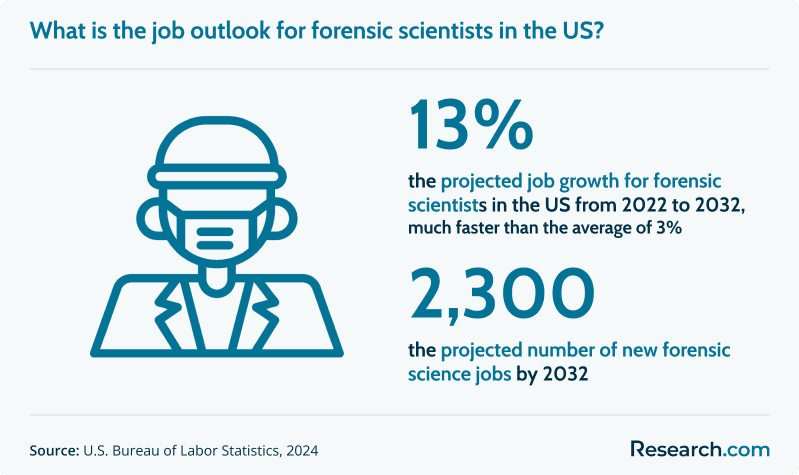
An affordable online master's degree in forensic science can be a practical option if you already have a relevant academic background, need schedule flexibility, and want advanced training for forensic laboratory, investigative, digital forensics, or criminal justice roles. The field has favorable labor-market indicators: forensic scientists are projected to see 13% job growth from 2022 to 2032, compared with 3% percent average growth across occupations. However, the degree is most valuable when the program is accredited, aligns with your intended specialty, includes meaningful practical training, and fits your budget without excessive borrowing.
What are the main benefits of earning an online master's degree in forensic science?
- More specialized career options: A graduate degree can support movement into areas such as crime scene investigation, forensic chemistry, forensic biology, digital forensics, forensic pathology support, toxicology, and laboratory leadership.
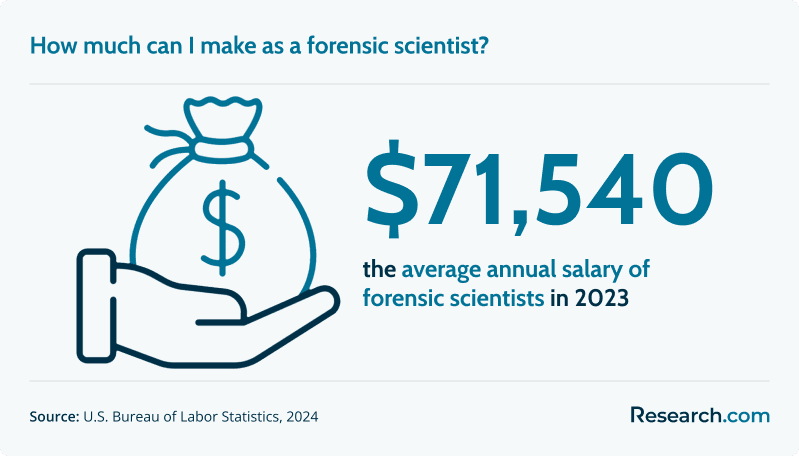
- Competitive earning potential: The average annual salary for forensic scientists with this degree was $71,540 in 2023, with some government roles reporting higher average pay.
- Flexibility for working adults: Online programs allow students to complete coursework while managing employment, family responsibilities, military service, or irregular work schedules.
- Access to programs outside your region: Online delivery can make specialized concentrations available even if you do not live near a university with a forensic science department.
What can I expect from the most affordable online master's degree in forensic science?
An affordable online forensic science master's program typically combines advanced science coursework, investigative methods, evidence analysis, legal procedure, and applied casework. The strongest programs are not simply criminal justice degrees with a few forensic electives; they give students structured exposure to scientific reasoning, laboratory standards, evidence handling, and expert communication.
- Flexible course delivery: Many programs use asynchronous classes, allowing students to watch lectures, submit assignments, and participate in discussions around work schedules.
- Core forensic science content: Common subjects include crime scene investigation, forensic biology and DNA analysis, trace evidence, toxicology, digital forensics, forensic chemistry, and evidence documentation.
- Applied learning formats: Affordable online programs may use virtual laboratories, simulations, case files, capstone projects, thesis work, internship options, or research assignments to connect coursework with professional practice.
- Typical completion time: Depending on course load and program structure, students may finish in 1.5 to 2 years of study, while part-time students may take longer.
- Estimated tuition range: Affordable master's degrees in forensic science may cost anywhere from $350 to $700 per credit, though total cost depends on fees, residency status, technology charges, books, and lab requirements.
Where can I work after completing an affordable online master's degree in forensic science?
Graduates may work in crime laboratories, medical examiner or forensic pathology offices, law enforcement agencies, government agencies, private forensic firms, cybersecurity teams, consulting practices, research organizations, or academic settings. The best workplace fit depends heavily on your concentration. A digital forensics graduate may pursue cyber investigation roles, while a forensic biology graduate may be better aligned with DNA analysis or laboratory work.
Typical responsibilities can include examining physical or digital evidence, preparing technical reports, maintaining chain of custody, assisting investigations, supporting legal proceedings, and explaining scientific findings to investigators, attorneys, judges, or juries.
How much can I make with an online master's degree in forensic science?
Graduates of reputable online forensic science programs can use the degree to pursue roles in a field where the average annual salary was $71,540 in 2023. Pay varies by employer, location, specialization, experience, education level, and whether the role is laboratory-based, investigative, technical, or supervisory.
Government positions can be especially competitive. Federal, state, and local government roles reported average salaries reaching $119,630. These figures show strong earning potential in some parts of the field, but they should not be treated as guaranteed outcomes for every graduate.
- 2027 affordable online master's degrees in forensic science
- How long does an affordable online master's degree in forensic science take?
- Online vs. campus forensic science master's programs
- Average cost of an affordable online master's degree in forensic science
- Financial aid options for forensic science graduate students
- Admission requirements for online forensic science master's programs
- Common courses in an online master's degree in forensic science
- Forensic science master's specializations
- How to choose the best affordable online forensic science master's program
- Career paths for forensic science master's graduates
- How online forensic science programs provide practical training
- Essential skills for forensic science careers
- Alternative careers related to forensic science
- Employer views of online forensic science degrees
- Career development support in online forensic science programs
- Job placement support in affordable online forensic science programs
- Job market for forensic science master's graduates
- Forensic science vs. forensic psychology
- Accreditation and quality assurance for online forensic science degrees
- Return on investment for an online forensic science degree
- Licensure and certification options after an online forensic science degree
2027 Most Affordable Online Master's Degrees in Forensic Science
How do we rank schools?
This list is intended to help students compare online forensic science master's programs using consistent education and cost information. Research.com used the IPEDS database, Peterson’s database, including the Distance Learning Licensed Data Set, the College Scorecard database, and the National Center for Education Statistics. For more detail about ranking inputs and limitations, review our methodology section.
| School | Program | Credits | Cost per credit | Best fit |
| Arizona State University | Online Professional Science Master’s in Forensic Science | 30 | $576 | Professionals seeking leadership-oriented forensic science training |
| University of the Southwest | MS Biology in Forensic Biology | 37 | $649 | Students focused on biology-based forensic work |
| Champlain College | Digital Forensic Science | 37 | $649 | Students pursuing digital evidence and incident response roles |
| National University | Master of Forensic Sciences | 36 | $442 | Students choosing criminalistics or investigation tracks |
| Michigan State University | Master of Science in Forensic Science | 38 | $867 | Students interested in research, internships, and thesis-based study |
1. Arizona State University - Online Professional Science Master’s in Forensic Science
Arizona State University offers an online Professional Science Master’s in Forensic Science for professionals in forensic science, law enforcement, medicolegal work, and adjacent fields. The program is built for students who want to strengthen technical understanding while developing the leadership and management skills needed for advancement in forensic organizations.
- Program Length: 2 years
- Required Credits to Graduate: 30
- Cost per Credit: $576
- Accreditation: Higher Learning Commission (HLC)
2. University of the Southwest - MS Biology in Forensic Biology
University of the Southwest offers an MS in Biology with a Forensic Biology specialization. The program combines biological science with criminal justice coursework and emphasizes ethics, statistics, and professional communication. It may suit students preparing for forensic analyst, forensic scientist, or laboratory technician roles. Students may also have the option to earn a graduate certificate while completing the degree. Graduates meet educational standards set by the FBI and the State of New Mexico.
- Program Length: 2-3 years
- Required Credits to Graduate: 37
- Cost per Credit: $649
- Accreditation: Higher Learning Commission (HLC)
3. Champlain College - Digital Forensic Science
Champlain College provides a digital forensics master's program taught by professionals with field experience. Students study the collection, preservation, and use of digital evidence in investigations and incident response. The curriculum includes technical exposure to more than 34 scripting languages, cloud computing, software applications, leadership, and communication, making it a strong fit for students interested in cyber investigations and digital evidence work.
- Program Length: 2-3 years
- Required Credits to Graduate: 37
- Cost per Credit: $649
- Accreditation: Higher Learning Commission (HLC)
4. National University - Master of Forensic Sciences
National University offers a Master of Forensic Sciences for students seeking deeper preparation in forensic science, law enforcement, or related professional settings. Coursework covers areas such as human anatomy, death investigation, trauma and disease, and identification of unknown deceased individuals. Students choose between two tracks: Criminalistics, which includes trace evidence, forensic toxicology, serology and DNA analysis, and forensic anthropology; and Investigation, which emphasizes advanced investigative methods.
- Program Length: 3 years
- Tracks/Concentrations: Criminalistics; Investigation
- Required Credits to Graduate: 36
- Cost per Credit: $442
- Accreditation: Western Association of Schools and Colleges (WASC)
5. Michigan State University - Master of Science in Forensic Science
Michigan State University offers an interdisciplinary Master of Science in Forensic Science administered through the School of Criminal Justice in collaboration with academic units in chemistry, pharmacology and toxicology, statistics and probability, zoology, and microscopy. Students may gain hands-on experience through internships in U.S. and international forensic science laboratories, and Plan A students complete thesis work.
- Program Length: 3-4 years
- Required Credits to Graduate: 38
- Cost per Credit: $867
- Accreditation: Higher Learning Commission (HLC)
6. Stevenson University - Master's in Forensic Science
Stevenson University offers a Master in Forensic Science for students with a natural science background who want to enter or progress in forensic work. The online curriculum emphasizes evidence identification, collection, analysis, presentation, quality assurance, quality control, and laboratory safety. It may be particularly relevant for students aiming for roles in accredited forensic science laboratories.
- Program Length: 2 years
- Tracks/Concentrations: Forensic Biology; Forensic Chemistry
- Required Credits to Graduate: 36
- Cost per Credit: $705
- Accreditation: Middle States Commission on Higher Education (MSCHE)
7. DeSales University - Online Master of Criminal Justice: Investigative Forensics
DeSales University's online Master of Criminal Justice with an Investigative Forensics concentration focuses on applying scientific methods to criminal investigations, especially violent crime cases. Students study evidence collection and processing, advanced criminology, forensic psychology, forensic science, and crime scene investigation, making the program a possible fit for law enforcement or investigative professionals seeking graduate-level specialization.
- Program Length: 2 years
- Tracks/Concentrations: Investigative Forensics
- Required Credits to Graduate: 30
- Cost per Credit: $850
- Accreditation: Middle States Commission on Higher Education (MSCHE)
8. Utica University - MS in Cybersecurity: Digital Forensics Specialization
Utica University offers a 100% online MS in Cybersecurity with a Digital Forensics specialization. Students learn to investigate computer-related crimes, including fraud, ransomware, and data theft. The program covers forensic tools, network incident analysis, digital evidence preservation, cyber intelligence, critical infrastructures, and investigative principles. It may also help students prepare for cyber forensics certifications.
- Program Length: 2 years
- Tracks/Concentrations: Digital Forensics
- Required Credits to Graduate: 30
- Cost per Credit: $895
- Accreditation: Middle States Commission on Higher Education (MSCHE)
9. University of Maryland Global Campus - MS Digital Forensics & Cyber Investigation
University of Maryland Global Campus offers an online master's in digital forensics and cyber investigation. The curriculum is designed for students who want to analyze cybercrime, identify digital attacks, preserve evidence, and communicate findings in legal or administrative settings. The program may appeal to students targeting investigative, technical, or leadership roles in digital forensics and cybersecurity.
- Program Length: 2-5 years
- Required Credits to Graduate: 30
- Cost per Credit: $694
- Accreditation: Middle States Commission on Higher Education (MSCHE)
10. University of Central Florida - MS in Forensic Science
The University of Central Florida offers an MS in Forensic Science for working professionals and full-time students. Students may choose from Forensic Analysis, Forensic Biochemistry, and Forensic Professional concentrations. Forensic Biochemistry and Forensic Analysis students complete original research and defend a thesis, while the Forensic Professional concentration uses a non-thesis format with coursework and an independent study capstone. Faculty advising is central to helping students select courses that match their goals.
- Program Length: 2 years
- Tracks/Concentrations: Forensic Analysis; Forensic Biochemistry; Forensic Professional
- Required Credits to Graduate: 32 (34 credit hours for non-thesis option)
- Cost per Credit: $369 (in-state); $1,194.05 (out-of-state)
- Accreditation: Southern Association of Colleges and Schools Commission on Colleges (SACSCOC)
11. Salem University - Master of Science in Criminal Justice – Forensic Science
Salem University offers an online master's degree focused on forensic science within criminal justice. Students study topics such as biology, toxicology, criminal profiling, leadership, public policy, and decision-making. The fully online format and one-course-per-month schedule are designed for working adults who prefer concentrated study blocks rather than juggling several courses at once.
- Program Length: 3 years
- Required Credits to Graduate: 38
- Cost per Credit: $650
- Accreditation: Higher Learning Commission (HLC)
What Graduates Say About Affordable Online Master's Degrees in Forensic Science
-
: "
"I was already working full time in forensics, so a campus-based master's program was not realistic for me. The online structure let me keep building field experience while finishing coursework after work. The case-based assignments helped me reconnect with the parts of forensic science I enjoy most, and the lower cost made graduate study possible without putting my finances under too much pressure." - Haley
"
-
: "
"As a parent, I needed a program that fit around family responsibilities instead of replacing them. Online lectures and assignments worked well with my schedule, and faculty support made the distance format feel manageable. The degree helped me return to the workforce with stronger forensic lab knowledge." - Brooke
"
-
: "
"I had delayed graduate school because the cost seemed out of reach. An affordable online forensic science program gave me a way to study practical topics connected to my career goals. The format was more engaging than I expected, and completing the degree helped me qualify for advancement in my department." - Jan
"
Key Findings
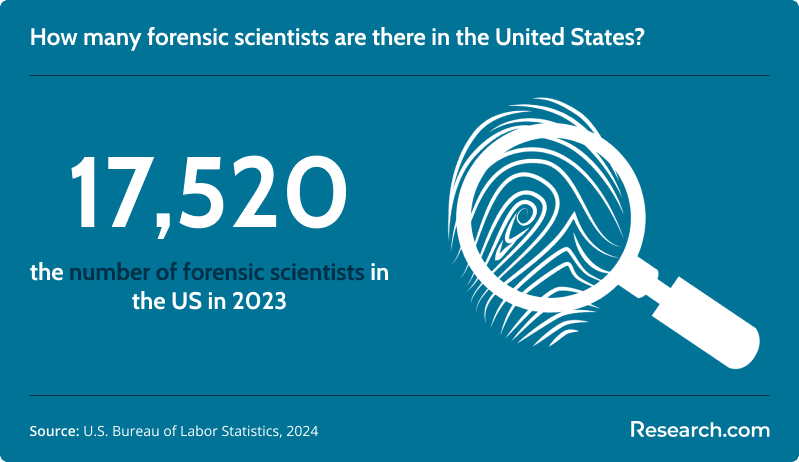
- There are approximately 17,520 forensic scientists employed in the United States as of 2023.
- The average annual salary for forensic scientists in 2023 is $71,540.
- Forensic scientists can expect a robust job growth of 13% from 2022 to 2032, leading to about 2,300 new job openings.
- The highest-paying city for forensic scientists in 2024 is Austin, TX, with an average salary of $79,487.
- Federal, state, and local government sectors offer the highest average annual salary for forensic scientists at $119,630.
- California leads the nation in employing forensic scientists, with an average annual salary of $98,400.
How long does it take to complete the most affordable online master's degree in forensic science?
Most affordable online forensic science master's programs take 1.5 to 2 years for full-time students, though program length depends on credit requirements, course availability, thesis or capstone expectations, internship requirements, and how many courses you take each term.
Part-time students often stretch the degree over 3 or 4 years to accommodate work, family, military, or public safety schedules. Some programs also allow extended timelines for students balancing rotating shifts or laboratory employment.
Before enrolling, ask whether courses are offered every term, whether prerequisites can delay graduation, and whether thesis, internship, or capstone requirements must be completed in a specific sequence.
| Enrollment pace | Typical timeline | Best for | Trade-off |
| Full-time | 1.5 to 2 years | Students who can prioritize graduate study | Heavier weekly workload |
| Part-time | 3 or 4 years | Working professionals and caregivers | Longer time before career benefit |
| Thesis or research track | Often longer depending on project progress | Students considering research, doctoral study, or lab specialization | More intensive faculty supervision and research work |
| Non-thesis or professional track | Often more predictable | Students seeking applied career advancement | May be less research-focused |
How do the most affordable online master's degree in forensic science compare to an on-campus program?
Online and campus-based forensic science master's programs can both be credible when they are properly accredited and academically rigorous. The better choice depends on your specialty, learning style, access to laboratories, and need for flexibility.
| Factor | Online forensic science master's | On-campus forensic science master's |
| Schedule | Often better for working adults because lectures and assignments may be completed remotely | Usually follows fixed class and lab meeting times |
| Location | Lets students access programs outside their local area | Requires commuting or relocating |
| Cost considerations | May reduce commuting, parking, and housing expenses | May add housing, transportation, and campus fees |
| Hands-on training | May use simulations, virtual labs, field assignments, internships, or local placements | Often provides direct access to physical labs and equipment |
| Networking | May rely on virtual events, alumni networks, and online mentoring | Often provides more face-to-face interaction with faculty and peers |
Online study can be a strong match for digital forensics, forensic administration, criminal justice investigation, and professional advancement. Campus-based study may be preferable if your goal requires intensive laboratory work, specialized instruments, or close supervision in a physical lab environment.
What is the average cost of the most affordable online master's degree in forensic science?
The average cost of the most affordable online master's degree in forensic science varies by residency status and institutional pricing. In-state students can expect to pay about $672 per credit, with listed costs ranging from $370 to $895 per credit.
Out-of-state students pay approximately $754 per credit, with costs ranging from $442 to $1,194 per credit, including tuition and additional fees for an online forensic science degree.
Tuition is only part of the total price. Online students should ask schools for a full cost breakdown before enrolling, especially if the program uses virtual labs, specialized software, proctored exams, or required residencies.
- Online learning fee: Some universities charge technology fees for learning platforms, virtual classrooms, or online student services.
- Software and forensic tools: Digital forensics, statistics, data analysis, or lab simulation courses may require paid software access.
- Exam proctoring: Certain online courses require monitored exams, which may include third-party proctoring charges.
- Virtual lab access: Science-heavy courses may require separate fees for online laboratory platforms or simulation tools.
- Books and materials: Technical textbooks, lab manuals, professional standards, and case materials can add to the total cost.
What are the financial aid options for students enrolling in the most affordable online master's degree in forensic science?
Graduate students in online forensic science programs may use several funding sources, but aid availability varies by school, enrollment status, citizenship status, and program eligibility. Start with the total cost of attendance, then compare aid that does not need to be repaid before considering loans.
- Federal Aid: Completing the FAFSA can open access to federal options for eligible graduate students. Federal grants for graduate study are limited, but the TEACH Grant may apply to students committed to teaching in high-need fields. Direct Unsubsidized Loans and Graduate PLUS Loans are also common federal options and may offer borrower protections not always available through private lenders.
- Institutional Aid: Universities may provide merit scholarships, need-based grants, program-specific awards, graduate assistantships, tuition waivers, military discounts, resident rates, or online learner discounts. Ask the program and financial aid office separately because funding is sometimes administered by different offices.
- State Aid: Some states offer graduate grants, scholarships, or loan programs for residents, particularly those attending in-state institutions. Check your state higher education agency for eligibility rules.
- Employer Tuition Assistance: Law enforcement agencies, laboratories, government employers, cybersecurity firms, healthcare organizations, and other employers may help pay for graduate education if the degree supports your job duties. Ask human resources about reimbursement limits, grade requirements, service commitments, and repayment obligations if you leave the employer.
- Private Scholarships: Professional organizations, including the American Academy of Forensic Sciences and the Forensic Science Foundation, may offer scholarships for students pursuing forensic science education. Students can also search for awards connected to criminal justice, law enforcement, STEM, cybersecurity, or public service.
- Private Student Loans: Private loans from banks, credit unions, or online lenders may fill remaining gaps, but they should usually come after scholarships, employer support, institutional aid, and federal loan review. Compare interest rates, repayment terms, cosigner requirements, deferment options, and total repayment cost.
What are the prerequisites for enrolling in the most affordable online master's degree in forensic science?
Admission requirements vary by institution and concentration. Science-heavy tracks may expect more undergraduate coursework in biology, chemistry, or related laboratory sciences, while investigative or digital forensics tracks may accept a broader range of backgrounds.
- Bachelor's Degree: Most programs require a bachelor's degree, often in forensic science, biology, chemistry, criminal justice, cybersecurity, or a related field.
- Minimum GPA: Many programs use a minimum GPA threshold, commonly around 3.0 on a 4.0 scale.
- Letters of Recommendation: Applicants may need 1 to 3 letters from professors, supervisors, laboratory managers, investigators, or other professional references.
- Statement of Purpose: Programs often ask for an essay explaining your goals, relevant experience, and reason for choosing forensic science.
- GRE Scores: Some schools request GRE scores, while others waive them based on academic record, professional experience, or current admissions policy.
- Prerequisite Coursework: Forensic biology, chemistry, and toxicology tracks may require prior coursework in biology, chemistry, statistics, or laboratory methods.
Before applying, request a prerequisite review. This can help you avoid enrolling in a program only to discover that foundation courses will add time and cost.
What courses are typically in the most affordable online master's degree in forensic science?
Graduate forensic science coursework varies by specialization, but most programs cover evidence handling, scientific analysis, forensic methods, legal standards, ethics, and technical reporting. Programs at the top schools for forensic science often combine discipline-specific courses with applied projects or research.
- Forensic Biology: Covers biological evidence, DNA analysis, body fluid identification, and interpretation of biological findings.
- Crime Scene Investigation: Teaches crime scene documentation, evidence collection, chain of custody, scene processing, and investigative protocols.
- Forensic Chemistry: Focuses on chemical analysis of drugs, toxic substances, trace evidence, and other materials relevant to investigations.
- Digital Forensics: Introduces methods for recovering, preserving, and analyzing evidence from computers, mobile devices, networks, and cloud-based systems.
- Forensic Pathology: Examines principles related to death investigation, postmortem examination, cause and manner of death, and medicolegal processes.
- Ethics and Expert Testimony: Prepares students to document findings, avoid bias, communicate limitations, and explain scientific conclusions in legal settings.
What types of specializations are available in the most affordable online master's degree in forensic science?
Specializations help determine the kinds of roles you may qualify for after graduation. Before choosing a track, compare the coursework with actual job postings in your target region and ask whether the program includes relevant applied training.
| Specialization | What it focuses on | Best for students interested in |
| Forensic Anthropology | Analysis and identification of human remains in medicolegal contexts | Human remains, osteology, forensic archaeology, death investigation support |
| Forensic Toxicology | Detection and interpretation of drugs, poisons, and chemicals in biological specimens | Laboratory analysis, impaired driving cases, death investigation, toxic exposure |
| Forensic Entomology | Use of insect evidence in investigations, including time-of-death estimation | Death investigation and environmental evidence |
| Forensic Nursing | Connection between nursing practice, trauma care, violence, abuse, and legal evidence | Clinical forensic work, patient care, victim services, legal documentation |
| Forensic Odontology | Identification using dental evidence and bite mark analysis | Human identification and specialized medicolegal work |
| Digital Forensics | Collection and analysis of evidence from digital devices and networks | Cybercrime, fraud, ransomware, data theft, incident response |
Forensics also overlaps with adjacent disciplines. Students interested in behavior, assessment, and the legal system may compare forensic science with forensic psychology masters programs online. Students who want additional credentials in behavior-focused work can also review online psychology certificate programs.
Specialization can affect both employment setting and compensation. In the US, the highest-paying industries for forensic scientists are the federal, state, and local government ($119,630) and consulting services ($97,040). See the chart below for more information.
How do you choose the best affordable online master's degree in forensic science?
The best affordable online forensic science master's program is not always the program with the lowest posted tuition. It is the program that matches your career target, offers credible training, keeps total cost manageable, and gives you enough practical experience to compete for the roles you want.
| Selection factor | What to check | Why it matters |
| Accreditation | Verify institutional accreditation and any relevant program-level quality indicators | Employers, certification bodies, and financial aid eligibility may depend on recognized accreditation |
| Curriculum fit | Compare required courses with your target job postings | A digital forensics job and a forensic biology job may require very different preparation |
| Faculty expertise | Review faculty backgrounds, research, lab experience, and professional connections | Experienced faculty can strengthen applied learning and mentorship |
| Practical training | Ask about labs, simulations, internships, capstones, thesis options, and local placements | Forensic employers often value demonstrated technical competence |
| Total cost | Include tuition, fees, software, books, proctoring, travel, and time to completion | A low per-credit price can still become expensive if fees or extra courses are high |
| Student support | Evaluate advising, tutoring, technical support, library access, and career services | Online learners need reliable support without having to visit campus |
- Confirm accreditation: Start with recognized accreditation. Research.com's guide to nationally accredited online universities can help you understand why accreditation matters.
- Match the program to your goal: Do not choose a general forensic science program if your goal is specifically digital forensics, forensic biology, toxicology, or crime scene leadership.
- Compare flexibility honestly: A program advertised as online may still require synchronous sessions, field placements, or scheduled labs. If you need a lighter graduate workload, compare options carefully rather than assuming all online degrees are equally manageable; students may also find it useful to review easiest masters degrees when thinking about workload expectations.
- Review financial aid eligibility: Many online colleges accepting FAFSA can help eligible students access federal aid, but you should verify each program's status directly.
- Ask about outcomes: Request information on internships, employer partnerships, alumni roles, certification preparation, and job placement services.
What career paths are available for graduates of the most affordable online master's degree in forensic science?
Graduates can pursue laboratory, investigative, technical, consulting, and public-sector roles. Your undergraduate background, concentration, work experience, and location will influence which jobs are realistic immediately after graduation.
| Career path | Typical work | Relevant preparation |
| Forensic Scientist | Analyze evidence collected during investigations and prepare scientific findings | Forensic biology, chemistry, toxicology, evidence handling |
| Forensic DNA Analyst | Use genetic evidence to help identify suspects, victims, or biological relationships | Biology, DNA analysis, laboratory methods, statistics |
| Crime Scene Investigator | Document scenes, collect evidence, preserve chain of custody, and coordinate with labs | Crime scene methods, photography, evidence protocols, law enforcement knowledge |
| Digital Forensic Examiner | Recover, preserve, and analyze data from computers, phones, networks, and cloud systems | Cybersecurity, digital forensics tools, incident response, legal evidence standards |
| Forensic Toxicologist | Analyze biological samples for drugs, poisons, alcohol, or chemical exposure | Chemistry, toxicology, instrumentation, laboratory quality standards |
| Forensic Consultant | Provide technical analysis or expert input for legal, government, or private clients | Specialized experience, report writing, expert communication, professional credibility |
Forensic science graduates may work for local governments, state governments, federal agencies, private laboratories, law enforcement departments, consulting firms, academic institutions, or cybersecurity organizations. The industries with the highest level of employment in forensic scientists were local governments (10,770) and state governments (4,610). See the chart below for more details.
If you decide forensic science is not the best fit, related education paths may still use your interest in science, evidence, healthcare, or public service. You can compare cheap online nursing programs with high graduation rates, explore affordable online biotechnology master's programs, review cheapest online educational leadership doctorate options if you are moving toward academic or administrative leadership, or consider cheap online exercise science programs for a different applied science pathway.
How do online forensic science programs ensure robust practical training?
Strong online forensic science programs use a mix of virtual laboratories, case simulations, remote assignments, research projects, internships, and partnerships with professional organizations or local agencies. These tools are especially important because forensic science is an applied field, not just a classroom subject.
Students should ask how the program teaches evidence handling, technical documentation, chain of custody, lab safety, quality assurance, and courtroom communication. Programs connected with affordable forensic science colleges may also provide insight into how undergraduate and graduate forensic training differ.
What skills are essential for success in forensic science careers?
Forensic science careers require more than technical knowledge. Professionals must be precise, ethical, objective, and able to explain scientific findings under scrutiny.
- Attention to Detail: Small errors in labeling, measurement, documentation, or evidence handling can affect an entire case. Precision is essential in DNA analysis, toxicology, trace evidence, and digital evidence review.
- Critical Thinking and Problem-Solving: Forensic professionals often interpret incomplete or conflicting information. They must separate evidence from assumptions and explain limitations clearly.
- Technical Proficiency: The field relies on specialized instruments, software, databases, and laboratory protocols. Programs featured among the top 10 forensic science colleges often emphasize practical exposure to these tools.
- Communication Skills: Forensic scientists write reports, brief investigators, and may testify in court. They need to explain complex scientific findings in language that non-specialists can understand.
- Ethical Judgment and Integrity: Forensic work affects legal outcomes and public trust. Professionals must follow evidence protocols, avoid bias, report uncertainty, and maintain professional independence.
What alternative career opportunities complement an online forensic science degree?
A forensic science background can also support roles outside traditional crime laboratories. Graduates may pursue work in compliance, fraud investigation, cybersecurity, forensic accounting support, research, policy analysis, laboratory quality assurance, death investigation support, or private consulting.
Students interested in broader criminal justice work can compare forensic science roles with criminology career pathways. This can help clarify whether you prefer hands-on evidence analysis, offender behavior and crime trends, investigation, policy, or public safety administration.
Do employers perceive online forensic science degrees as credible as traditional programs?
Employers generally care less about whether a degree was earned online and more about whether the program is accredited, relevant, rigorous, and tied to real skills. An online degree from an accredited institution with strong coursework, practical training, credible faculty, and clear assessment can be competitive. A weak program with little applied training may not be.
Students comparing interdisciplinary options should be careful not to choose a degree based only on interest in crime-related topics. If your goal is behavioral assessment or counseling-related work rather than physical or digital evidence, you may want to examine whether psychology or social work better matches your broader career objectives.
How do online forensic science programs support career development?
Career support varies widely, so students should evaluate it before enrolling. Useful services may include career advising, resume reviews, interview preparation, alumni panels, virtual employer events, internship guidance, faculty mentorship, and connections with forensic laboratories, law enforcement agencies, or cybersecurity employers.
Ask whether career services are tailored to forensic science or are general university services. Students considering adjacent graduate careers can also compare advancement paths by reviewing MSW careers, especially if they are deciding between forensic, behavioral health, and public service professions.
What job placement support do affordable online forensic science programs offer?
Affordable online forensic science programs may support job placement through internship coordination, employer networking, resume optimization, mock interviews, job boards, career coaching, alumni mentoring, and virtual career fairs. The most useful programs provide field-specific support rather than generic job search advice.
Before enrolling, ask for examples of recent internship sites, common employers, alumni job titles, and whether online students receive the same career resources as campus students. If you are comparing graduate education investments in other public service fields, you may also want to review cheap DSW online programs.
What is the job market for graduates of the most affordable online master's degree in forensic science?
The job market for forensic science graduates shows solid growth indicators. Forensic science employment is projected to grow 13% from 2022 to 2032, which is much faster than the average of 3% percent across occupations.
There are approximately 17,520 forensic scientists in the US as of 2023. By 2032, about 2,300 new jobs in forensic science are anticipated.
Even with positive growth, forensic science can be competitive because many roles require specialized education, lab experience, government hiring processes, background checks, or location flexibility. Students can improve their prospects by choosing a concentration aligned with market demand, gaining practical experience, building technical skills, and preparing for relevant certifications.
What are the key differences between forensic science and forensic psychology?
Forensic science and forensic psychology both interact with the legal system, but they answer different kinds of questions. Forensic science focuses on evidence. Forensic psychology focuses on human behavior, mental processes, and psychological assessment in legal contexts.
| Field | Main focus | Typical work | Best fit for |
| Forensic Science | Physical, biological, chemical, or digital evidence | Analyze DNA, trace evidence, toxicology samples, fingerprints, crime scenes, or digital data | Students who prefer laboratory science, technical investigation, and evidence analysis |
| Forensic Psychology | Behavior, mental health, competency, risk, and legal decision-making | Conduct assessments, study criminal behavior, evaluate victims or defendants, and provide expert opinions | Students interested in psychology, assessment, legal testimony, and human behavior |
If you are more interested in the reasons behind criminal behavior and the application of psychology to legal settings, a forensic psychology program may be a better fit. You can compare options in our guide to best online forensic psychology master's programs.
What accreditation and quality assurance measures validate an online forensic science degree?
Accreditation is one of the most important credibility checks for an online forensic science degree. It helps confirm that an institution meets recognized academic standards and may affect financial aid eligibility, transferability, employer recognition, and certification pathways.
Quality assurance can also include curriculum review by forensic experts, faculty qualifications, applied training standards, laboratory or simulation design, professional partnerships, and regular updates to reflect current scientific methods. Prospective students should verify accreditation directly with official sources and ask the program how it maintains current forensic science training. For a broader overview of the field, review our guide to the forensic science degree.
What is the return on investment for an online forensic science degree?
To evaluate ROI, compare the total cost of the program with realistic career outcomes. Include tuition, fees, books, software, lost work hours, travel for any required campus sessions, and loan interest. Then compare those costs with salary expectations, advancement potential, employer reimbursement, job stability, and how quickly you can complete the degree.
ROI is strongest when the program leads to a clear career step: promotion, entry into a forensic specialty, eligibility for technical roles, or preparation for certification. Students comparing public safety and justice-related degrees can also evaluate the online criminal justice degree cost against their intended career outcomes.
What licensure options exist after an online forensic science degree?
An online forensics degree can provide academic preparation, but licensure and certification requirements depend on the state, employer, forensic discipline, and job title. Many forensic roles emphasize education, experience, background checks, laboratory competency, and professional certification rather than a universal license.
Understanding licensure requirements
State-specific regulations
Some states or agencies may establish requirements for forensic science roles. These can include:
- Educational Credentials: A master’s degree in forensic science or a related field from an accredited institution may be required or preferred.
- Experience: Certain positions may require supervised work hours in a forensic science laboratory or related professional setting.
- Examinations: Some roles may involve state-administered or agency-specific exams that assess forensic science knowledge and job readiness.
Professional certifications
Professional certification can help demonstrate competency in a specific forensic discipline. Requirements vary by credentialing organization, so students should check current eligibility rules before planning around a certification.
- Certified Forensic Scientist (CFS): Offered by organizations such as the American Board of Criminalistics (ABC), this type of credential can validate expertise in selected forensic science areas.
- Certified Forensic Examiner (CFE): Provided by the International Association for Identification (IAI), this type of credential may relate to forensic disciplines such as fingerprint analysis and DNA profiling.
- Specialized Certifications: Depending on your career focus, certifications in digital forensics, toxicology, forensic pathology support, or other specialties may strengthen your qualifications.
Steps to obtain licensure or certification
- Complete an accredited degree: Choose an online forensic science degree from an accredited institution so your education is more likely to satisfy employer, licensure, or certification expectations.
- Gain practical experience: Build supervised experience through forensic laboratories, internships, law enforcement support roles, digital investigation teams, or related settings.
- Prepare for examinations: Review the exam content outlines from your state board, employer, or certification organization. Study groups, professional workshops, and preparatory courses may help.
- Apply for licensure or certification: Submit documentation of education, experience, examination results, and any required fees to the appropriate board or credentialing body.
- Maintain your credential: Complete continuing education and professional development to keep certifications active and stay current with forensic methods.
Benefits of licensure and certification
- Stronger credibility: Employers may prefer candidates who can document discipline-specific competency.
- Career advancement: Certification may support movement into specialized, senior, or supervisory roles.
- Potential earning benefit: Certified professionals may qualify for roles with stronger compensation when the credential is valued by the employer, though higher pay is not guaranteed.
Common mistakes to avoid when choosing an online forensic science master's program
- Choosing by tuition alone: A low per-credit rate does not guarantee the lowest total cost if fees, prerequisites, or delayed course availability add expenses.
- Ignoring accreditation: Accreditation can affect aid, employer recognition, and certification eligibility.
- Assuming every forensic degree leads to the same jobs: Digital forensics, forensic biology, criminalistics, and investigative forensics prepare students for different roles.
- Overlooking practical training: Ask exactly how the program teaches lab procedures, evidence handling, simulations, internships, or capstone work.
- Not checking employer requirements: Review job postings in your target area before selecting a specialization.
- Assuming online means self-paced: Many online programs still have weekly deadlines, synchronous meetings, group projects, or fixed course sequences.
- Borrowing without an ROI plan: Estimate monthly loan repayment and compare it with realistic salary expectations, not best-case outcomes.
Questions to ask before enrolling
- Is the institution accredited, and does the program meet any relevant forensic science quality standards?
- What concentration best matches my intended job: forensic biology, chemistry, criminalistics, digital forensics, toxicology, or investigation?
- How are practical skills taught online?
- Are internships, labs, residencies, thesis projects, or capstones required?
- What is the total cost, including fees, books, software, proctoring, and lab access?
- Do online students receive the same advising, library access, and career services as campus students?
- What jobs have recent graduates obtained?
- Will the program help me prepare for certification or employer-specific requirements?
- Can I transfer graduate credits or waive prerequisites?
- How often are required courses offered, and what could delay graduation?
Key Insights
- An affordable online master's in forensic science is most useful when it is accredited, career-aligned, and includes practical training—not simply when it has the lowest tuition.
- Forensic scientists have favorable projected growth, with 13% job growth expected from 2022 to 2032 and about 2,300 new job openings anticipated.
- The average annual salary for forensic scientists was $71,540 in 2023, while federal, state, and local government roles reported average salaries reaching $119,630.
- Online programs can be credible, but students must carefully evaluate lab access, simulations, internships, faculty expertise, and employer recognition.
- Specialization matters. Forensic biology, toxicology, digital forensics, criminalistics, and investigative forensics lead to different job markets and skill expectations.
- Total cost should include more than tuition. Online learning fees, software, proctoring, virtual labs, books, and time to completion can change the real price of the degree.
- Before enrolling, compare program requirements with actual job postings and ask how the degree supports certification, advancement, and practical forensic competency.
References:
- American Nurses Association. (2024, February 16). How to become a forensic nurse. ANA.
- Indeed. (2024). Forensic scientist salary in United States. Retrieved June 28, 2024, from Indeed.
- Smithsonian National Museum of Natural History. (n.d.). Forensic anthropology. Smithsonian National Museum of Natural History.
- U.S. Bureau of Labor Statistics. (2024). Forensic science technicians. Retrieved June 28, 2024, from BLS.
- U.S. Bureau of Labor Statistics. (2024). Occupational employment and wages, May 2023 - 19-4092 Forensic science technicians. Retrieved June 28, 2024, from BLS.
Other Things You Should Know About The Most Affordable Online Master's in Forensic Science Degrees
Graduates can pursue roles like forensic analyst, laboratory manager, or crime scene investigator. Opportunities also exist in law enforcement agencies, private forensic labs, and federal organizations such as the FBI, which often require a master's degree for advanced positions.
Most affordable online forensic science master’s programs require about 30 to 36 credit hours. Many full-time students finish in 18 to 24 months, while part-time formats can take longer. Some programs also require a capstone, thesis, or final practicum before graduation.