2027 Best Online Master’s in Homeland Security Degree Programs

Co-Founder and Chief Data Scientist
Choosing an online master’s in homeland security is a career decision, not just an academic one. The right program can help you move into roles involving emergency management, intelligence analysis, infrastructure protection, cybersecurity, public safety leadership, or government policy. The wrong program can leave you with debt, limited career support, or coursework that does not match the role you actually want.
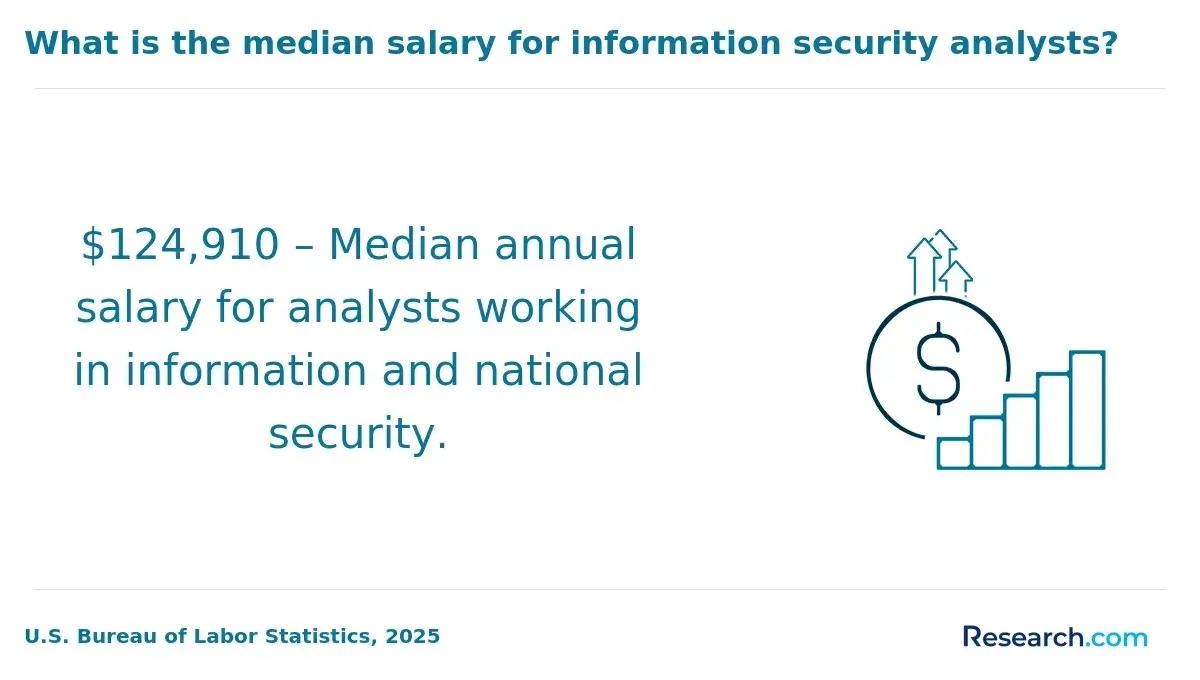
Demand for security, preparedness, and cyber resilience continues to shape hiring across government agencies, nonprofits, critical infrastructure organizations, and private employers. The United States Bureau of Labor Statistics (BLS) predicts 14,000 job openings for emergency management directors and 580,200 for information security analysts by 2034 (U.S. Bureau of Labor Statistics, 2024). A homeland security graduate degree can also support advancement into a military career, public administration, intelligence work, or security leadership.
Graduates may pursue opportunities with agencies such as the U.S. Department of Homeland Security, which was created in 2002 after the September 11 attacks and now employs almost 240,000 individuals. This guide explains how online master’s programs in homeland security work, what they cost, how employers view them, which programs stand out, and how to compare your options before enrolling.
Quick Answer: Is an Online Master’s in Homeland Security Worth Considering?
An online master’s in homeland security can be worth it if you already work in public safety, emergency management, defense, law enforcement, cybersecurity, intelligence, public policy, or a related field and want to qualify for leadership or specialized roles. Most programs require about 30 credit hours, and some include a capstone, thesis, final exam, practicum, or field-based project.
The degree is not automatically the best choice for everyone. If your goal is highly technical cyber defense, a specialized cybersecurity program may be a stronger fit. If you want broad government or policy leadership, a public administration or online masters in public policy may be more appropriate. The best choice depends on your target role, employer expectations, specialization, cost, accreditation, and whether the online format fits your work schedule.
Online Master’s Degree Programs in Homeland Security Table of Contents
- Can you complete a homeland security master’s degree fully online?
- Do employers respect online homeland security degrees?
- Are online homeland security degrees recognized internationally?
- Online vs. Traditional Master’s Degree in Homeland Security
- How much does an online Master’s Degree in Homeland Security cost?
- What are the requirements for an online Master’s Degree in Homeland Security?
- Courses to Expect in Online Master’s Degree in Homeland Security
- Things to Look for in an Online Master’s Degree in Homeland Security
- Best Online Master’s Degree in Homeland Security Programs for 2027
- What Are the Most In-Demand Jobs for Homeland Security Graduates?
- What career paths can you pursue with an online master's degree in homeland security?
- What Are the Long-Term Career Development and Networking Benefits of an Online Master’s in Homeland Security?
- What professional certifications can complement your online Master’s in Homeland Security?
- How can interdisciplinary learning enhance your Homeland Security expertise?
- How do online programs leverage advanced technology for practical training?
- How do law enforcement pathways complement a Homeland Security degree?
- How Can Legal Expertise Enhance Homeland Security Practices?
- Financial Aid and Scholarship Opportunities for Online Master’s in Homeland Security
- How to choose the right online Master’s in Homeland Security program?
- How can you measure the ROI of an online Master’s in Homeland Security?
- The Role of Homeland Security Education in Addressing Emerging Global Threats
Can you complete a homeland security master’s degree fully online?
Yes. Many colleges and universities offer online master’s programs in homeland security, national security, emergency management, intelligence studies, or closely related areas. A typical program requires about 30 credit hours, although some programs require more. Depending on the school, you may also complete a thesis, comprehensive exam, capstone project, applied research assignment, or practicum.
Online does not always mean no in-person requirements. Some programs add short residencies, applied field experiences, internships, or local placements. Before applying, ask whether you can complete every requirement from your current location, especially if you work full time or live far from campus. If you are new to remote study, Research.com’s guide to distance learning can help you understand the expectations of online coursework.
Do employers respect online homeland security degrees?
Employers are more likely to take an online degree seriously when it comes from an accredited institution, uses the same academic standards as the campus program, and gives students relevant skills. In homeland security, employers usually care less about whether you studied online and more about whether you can analyze threats, communicate under pressure, work across agencies, understand policy, and lead during high-risk situations.
An online degree can also signal discipline and time management, particularly if you completed it while working. Still, the degree alone will not guarantee a promotion or job offer. Experience, security clearances where required, certifications, writing ability, technical skills, and professional references can all influence hiring.
Are online homeland security degrees recognized internationally?
An online homeland security degree may be recognized outside the United States if the awarding institution is properly accredited and the credential meets the employer’s or country’s evaluation requirements. Recognition is not automatic everywhere. Government agencies, international employers, and graduate schools may review institutional accreditation, transcript details, course content, and credential equivalency.
Homeland security is also a U.S.-specific term in many contexts. Internationally, similar roles may be labeled national security, civil protection, intelligence analysis, emergency management, public safety, crisis management, counterterrorism, or resilience planning. If you plan to work outside the U.S., compare the curriculum with the job titles and government structures used in your target country.
Online vs. Traditional Master’s Degree in Homeland Security
Both online and campus-based homeland security master’s programs can prepare students for advanced study in public safety, counterterrorism, emergency preparedness, biosecurity, cyber risk, intelligence, public policy, and infrastructure protection. The major difference is delivery format. Online programs are often better for working professionals, military learners, first responders, and government employees who cannot relocate or attend campus during standard hours.
| Factor | Online Master’s in Homeland Security | Campus-Based Master’s in Homeland Security |
| Best for | Working adults, military personnel, public safety professionals, and students who need location flexibility | Students who prefer face-to-face learning, campus networking, and structured weekly schedules |
| Schedule | May be asynchronous, synchronous, accelerated, part-time, or full-time | Often follows set class times and campus calendars |
| Networking | Can include virtual events, alumni groups, faculty mentoring, and local field placements | Offers in-person faculty access, campus events, and local agency connections |
| Field experience | May allow internships or applied work near the student’s home or workplace | May connect students to nearby agencies and campus-affiliated partners |
| Main risk | Students may underestimate time demands or miss hidden residency requirements | Students may face commuting, relocation, or scheduling barriers |
Same faculty and comparable curriculum
Many online programs use the same faculty, academic departments, and course outcomes as their campus equivalents. Students may study the same core topics, complete similar assessments, and interact with faculty through learning management systems, video meetings, discussion boards, and group projects. However, some schools still require in-person residencies, labs, simulations, or applied experiences.
Career advancement potential
A bachelor’s degree can be enough for some entry-level roles in security, law enforcement support, emergency services, or public administration. A graduate degree may help professionals compete for supervisory, analytical, policy, training, or specialized positions. It can also help with structured career exploration if you are deciding between emergency management, intelligence, cyber risk, or public safety leadership.
Is an online degree cheaper?
Not always. Some online programs charge the same tuition as campus programs, while others add technology, distance learning, or proctoring fees. Online students may save on commuting, relocation, parking, or housing, but those savings can be offset by higher out-of-state tuition or mandatory fees. Compare the full cost of attendance, not just cost per credit.
Is an online degree as good as a regular degree?
An online degree can be as academically credible as a campus degree when the institution is accredited, the curriculum is rigorous, and the program aligns with your career goals. Accreditation matters because it signals that the school has been reviewed against recognized academic standards. Employers, doctoral programs, and government agencies may also look for accredited credentials when evaluating applicants.
How much does an online Master’s Degree in Homeland Security cost?
Costs vary by institution, residency status, credit load, and program structure. Online and on-campus tuition are often similar, although online students may pay additional technology fees. For example, Pennsylvania State University World Campus lists its Master of Professional Studies in Homeland Security at $12,082 per semester (The Pennsylvania State University, n.d.). Private universities may charge more than public institutions.
The U.S. government also offers a homeland security master’s program for eligible local, state, federal, tribal, and territorial employees, as well as active U.S. military officers. Depending on the agency, a student may qualify for free tuition. If you work in government or the military, ask your human resources office about tuition assistance, service commitments, and application eligibility before you pay out of pocket.
| Cost factor | Why it matters | Question to ask before enrolling |
| Tuition per credit or semester | This is the largest expense and varies widely by school type and residency status. | Is tuition charged per credit, per term, or by enrollment status? |
| Fees | Online programs may charge technology, platform, proctoring, graduation, or student service fees. | What mandatory fees are not included in the advertised tuition? |
| Residency or fieldwork | Travel, lodging, background checks, or local placement costs can add to the total price. | Are there any required campus visits, simulations, or practicum expenses? |
| Completion time | Longer enrollment can increase fees and delay career benefits. | Can I study part time without extra penalties or course availability problems? |
| Employer or military benefits | Tuition assistance can reduce the amount you borrow. | Does my employer, agency, or military benefit program cover this degree? |
Is an online Master’s Degree in Homeland Security worth it?
It can be worth it for students who need graduate-level preparation for homeland security leadership, public safety administration, emergency management, cyber risk, intelligence analysis, policy work, or critical infrastructure protection. The value is strongest when the program matches a clear career goal, the school is accredited, and the total cost is reasonable compared with your expected career path.
Federal organizations such as the Federal Emergency Management Agency (FEMA), the Department of Homeland Security, intelligence-related employers, and agencies connected to infrastructure protection may offer relevant opportunities. Private sectors tied to critical systems, including IT and energy, may also hire professionals who understand security planning and risk management.
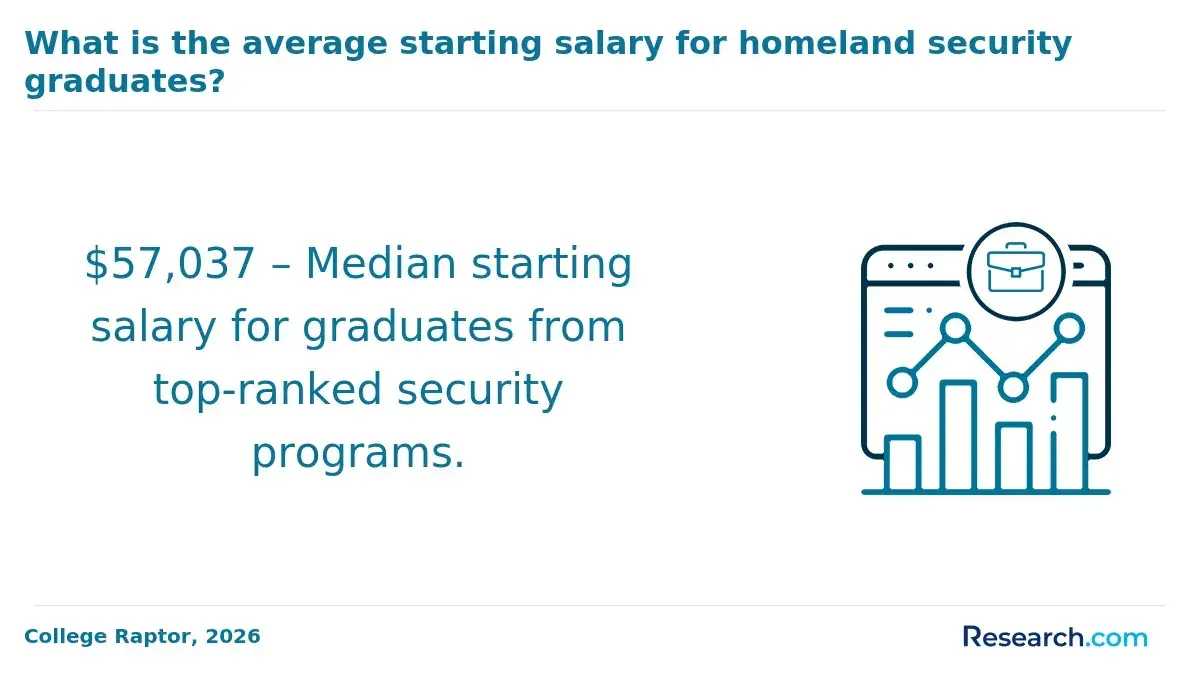
According to Payscale data, employees at the Department of Homeland Security earn an average base salary of $81,000 per year (Payscale, n.d.). Salaries can vary based on agency, location, experience, clearance requirements, technical skills, and job level. If your interest is specifically technical security, you may also want to compare homeland security programs with cyber security schools online.
What are the requirements for an online Master’s Degree in Homeland Security?
Admission standards differ by school, but most online master’s programs expect applicants to show academic readiness, professional maturity, and an interest in public safety, national security, emergency management, cyber defense, or related work. Some programs are designed for experienced professionals, while others accept students who recently completed a bachelor’s degree.
Common admission requirements
- A bachelor’s degree from an accredited institution
- A GPA of 3.0 or higher
- 1 to years of professional experience
- A background check, when required by the program or placement site
Typical application materials
- Official college transcripts
- GRE scores, if the school requires them
- Letters of recommendation
- A statement of purpose explaining your goals
- A current professional resume
Technology requirements for online learning
Online students usually need a reliable computer, a stable high-speed internet connection, webcam and audio capability, and access to standard productivity software. You should be comfortable browsing the web, using email, writing and formatting documents, managing files, downloading course materials, and installing required software.
Homeland security students should also expect to engage with evolving technologies and security risks. A 2024 article in Injury Epidemiology titled “Ghost guns: spookier than you think they are” discusses emerging firearm-production concerns described by Garen J. Wintemute, director of UC Davis Medical Center’s Violence Prevention Research Program. The article notes that GhostGunner3 is a computer-controlled milling machine roughly the size of a desktop laser printer and can produce finished lower receivers for AR-type rifles or frames for Glock-type pistols at the rate of 1 every 35 min, with tooling for AK-type rifles in development.
The example illustrates why homeland security education increasingly intersects with technology, law, public health, intelligence gathering, and community risk assessment. Students should be prepared to study threats that combine digital access, physical safety, regulation, and public policy.
Courses to Expect in Online Master’s Degree in Homeland Security
Coursework varies by institution and concentration, but online homeland security master’s programs commonly cover national security policy, terrorism, public health emergencies, infrastructure risk, intelligence, cyber threats, emergency planning, and civil liberties. Many programs conclude with a capstone, thesis, practicum, or applied project.
| Course area | What students usually study | Career relevance |
| U.S. Homeland Security Policy | Students examine current homeland security challenges, institutional roles, interagency networks, and the legal and policy environment surrounding threat reduction. | Useful for policy analysts, agency leaders, public administrators, and security planners. |
| Critical National Infrastructure | Students analyze systems such as commerce, transportation, and energy while learning how to assess risk and plan mitigation, response, and recovery. | Relevant to infrastructure protection, continuity planning, transportation security, and emergency preparedness. |
| Software and Network Security | Students learn core concepts in network defense, software vulnerabilities, threat identification, and security controls. | Helpful for students interested in cyber risk, incident response, and protection of digital infrastructure. |
| Disaster Response and Community Health | Students study how disasters affect communities, public health systems, emergency communication, and recovery planning. | Important for emergency management directors, public health preparedness staff, and nonprofit disaster-response roles. |
| Strategic and Tactical Planning | Students review planning models, response frameworks, maritime security, critical infrastructure, cyber strategy, and scenario-based decision-making. | Supports leadership roles in security operations, preparedness planning, and crisis coordination. |
Things to Look for in an Online Master’s Degree in Homeland Security
Most online master’s degrees in homeland security require 30 to 40 credits and about two years of full-time study, though accelerated and part-time formats vary. Because program titles and concentrations differ, compare schools by fit rather than name alone.
Availability in your state or region
Your location can still affect tuition and eligibility. A public university outside your state may charge non-resident tuition, and some programs may not accept students from every state due to authorization rules. Confirm state eligibility before applying.
Program format
Review whether classes are live, self-paced, or a mix of both. Synchronous and asynchronous classes work differently: live courses offer structure and direct interaction, while asynchronous courses may be better for shift workers, deployed military personnel, or students with unpredictable schedules.
Onsite requirements
Some “online” programs still require campus visits, field exercises, intensive residencies, internships, or supervised applied projects. Ask how often in-person attendance is required, where it happens, and whether travel costs are included in the estimated price.
Accreditation
Choose an accredited institution. Accreditation can affect employer recognition, transfer credit, doctoral admissions, and federal financial aid eligibility. The Council for Higher Education Accreditation and the Middle States Commission on Higher Education are two recognized names in higher education accreditation discussions.
Student support
Look for advising, tutoring, library access, writing support, career coaching, internship help, faculty mentoring, alumni connections, and technical support. Online students should not have to navigate a graduate program alone.
Career alignment
A program focused on emergency management may not be ideal if you want intelligence analysis. A policy-heavy program may not provide enough technical training for cyber roles. Review electives, faculty backgrounds, capstone options, and employer partnerships before deciding.
| If your goal is... | Look for a program with... | Be cautious if... |
| Emergency management leadership | Disaster response, continuity planning, public administration, and community resilience coursework | The curriculum is mostly intelligence or counterterrorism with little disaster planning |
| Cybersecurity or critical infrastructure protection | Network security, digital forensics, infrastructure risk, and cyber policy courses | The program only includes one introductory technology course |
| Intelligence or threat analysis | Analytic methods, intelligence collection, terrorism studies, regional security, and policy analysis | There is limited writing, research, or analytic training |
| Public safety or law enforcement advancement | Legal frameworks, interagency coordination, leadership, ethics, and homeland security policy | The program does not connect coursework to operational public safety roles |
Best Online Master’s in Homeland Security Programs for 2027
Research.com evaluated online master’s programs in homeland security and related fields for the 2026 rankings using factors such as admissions requirements, cost, accreditation, and program features. Use this list as a starting point, then verify current tuition, course availability, admissions requirements, and concentration options directly with each school. Students comparing security-focused degrees may also want to review what makes the best degree for cyber security depending on their career goals.
1. George Washington University Online Master of Professional Studies in Homeland Security
The Master of Professional Studies in Homeland Security at George Washington University focuses on homeland security practice through areas such as counterterrorism, intelligence analysis, and national security threats. The program may appeal to students connected to law enforcement, private security, public policy, emergency response, or military service.
- Program Length: 16 months
- Tracks/concentrations: Popular Public Affairs, Public Policy, Law Programs, International Diplomacy
- Cost per Credit: $1,090
- Required Credits to Graduate: 36
- Accreditation: Middle States Commission on Higher Education
2. Northeastern University Master of Arts in Security and Intelligence Studies
Northeastern University offers a Master of Arts in Security and Intelligence Studies that blends security, diplomacy, politics, and law. Students develop skills in intelligence collection, analysis, threat assessment, and policy evaluation for use in crisis and security environments.
- Program Length: 2 to 3 years
- Tracks/concentrations: Geospatial Services for Homeland Security, Organization and Infrastructure Continuity, and Port Security or Emergency Management
- Cost per Credit: $726.67
- Required Credits to Graduate:
- Accreditation: New England Commission on Higher Education
3. Pennsylvania State University-Main Campus Online Master of Professional Studies in Homeland Security
Pennsylvania State University delivers a fully online Master of Professional Studies in Homeland Security through Penn State World Campus. The program is designed for bachelor’s degree holders and may fit local, state, and federal officials who want a broader understanding of homeland security challenges through a geopolitical lens.
- Program Length: Varies
- Tracks/concentrations: Government Policy, Operational Organization, Counterterrorism, Cybersecurity, Public Health, Agricultural Biosecurity, Information Security and Digital Forensics, and Geospatial Intelligence
- Cost per Credit: $1,007 (for 11 or fewer credits)
- Required Credits to Graduate: 33
- Accreditation: Middle States Commission on Higher Education
4. American Public University Online Master of Arts in Homeland Security
American Public University offers an Online Master of Arts in Homeland Security with coursework in emergency management, homeland defense, interagency issues, and strategic leadership. The university offers more than 200 degrees and certificates designed for online learners.
- Program Length: 8 to 16 weeks
- Tracks/concentrations: Business Administration, Criminal Justice, Emergency Management and Public Health, Transportation Security, Counterterrorism Studies, Cyber, General, and Intelligence Studies
- Cost per Credit: $370; $250 for students with military grants
- Required Credits to Graduate: 36
- Accreditation: Council for Higher Education Accreditation
5. Florida International University Online Master’s in Mass Communication in Global Strategic Communications
The Master of Science in Mass Communication: Global Strategic Communications program from Florida International University provides graduate training in global strategic communications, digital expertise, and communication strategy. The program includes two options and offers an optional certificate in conflict resolution and consensus-building.
- Program Length: 1 year
- Tracks/concentrations: Mass Communication: Global Strategic Communications and Global Strategic Communications
- Cost per Credit: $833
- Required Credits to Graduate: 30
- Accreditation: Southern Association of Colleges and Schools Commission on Colleges
What Are the Most In-Demand Jobs for Homeland Security Graduates?
Homeland security graduates can pursue careers across emergency management, cybersecurity, intelligence, border security, transportation security, public safety, and consulting. For a broader role-by-role breakdown, see Research.com’s guide to what jobs can you get with a homeland security degree.
| Role | Primary focus | Best-fit background |
| Emergency Management Director | Preparedness, response coordination, recovery planning, and interagency communication | Emergency services, public administration, disaster response, military, or nonprofit response work |
| Information Security Analyst | Cyber risk, network protection, incident response, and security monitoring | IT, cybersecurity, digital forensics, infrastructure protection, or technical security operations |
| Intelligence Analyst | Threat assessment, data interpretation, national security research, and reporting | Research, military intelligence, policy, languages, analytics, or law enforcement support |
| Transportation Security Manager | Airport, port, rail, and logistics security planning and compliance | Transportation, logistics, public safety, security operations, or regulatory compliance |
| Homeland Security Consultant | Risk assessment, planning, training, and security strategy for organizations | Security leadership, emergency planning, cyber risk, law enforcement, or government operations |
What career paths can you pursue with an online master’s degree in homeland security?
An online master’s in homeland security can support several career directions, but each path values different experience and skills. Students should choose electives, internships, certifications, and capstone topics based on the roles they want after graduation.
- Emergency Management Director. Emergency management directors plan, coordinate, and evaluate responses to natural disasters, public health emergencies, infrastructure failures, and other crises. They often work with government agencies, nonprofits, community organizations, and private employers to improve preparedness and recovery.
- Intelligence Analyst. Intelligence analysts review information about potential threats, including terrorism, cyber attacks, geopolitical instability, and domestic security risks. They may work for agencies such as the FBI, CIA, or DHS, depending on qualifications, hiring needs, and clearance requirements.
- Cybersecurity Specialist. Cybersecurity specialists help protect networks, systems, and critical infrastructure from digital threats. Homeland security students who want this path should prioritize programs with strong coursework in information security, network defense, incident response, and digital forensics.
- Transportation Security Manager. Transportation security managers oversee safety and security procedures in airports, seaports, rail systems, and other transportation environments. Their work may include screening processes, regulatory compliance, staff supervision, and threat prevention.
- Border Patrol Agent. Border patrol agents work to protect national borders and respond to issues such as unauthorized entry, smuggling, trafficking, and other illegal activity. This pathway may involve fieldwork, enforcement duties, and agency-specific training requirements.
- Homeland Security Consultant. Consultants advise agencies, companies, and nonprofits on threat assessment, emergency planning, risk reduction, continuity operations, and compliance. This path is often stronger for professionals who already have field experience and specialized expertise.
What Are the Long-Term Career Development and Networking Benefits of an Online Master’s in Homeland Security?
A strong online homeland security program should offer more than recorded lectures. The most useful programs help students build professional networks, refine leadership goals, connect with alumni, access career coaching, and apply classroom learning to real security problems. Mentoring, employer partnerships, career counseling, resume support, and virtual networking events can be especially valuable for students who are changing sectors or seeking promotion.
Networking matters because homeland security work often depends on interagency collaboration. Students may benefit from classmates who work in military units, police departments, emergency management offices, cyber teams, healthcare systems, utilities, ports, and local government. If cost is a major concern, compare the career-service value of homeland security programs with related options such as an online criminal justice degree; Research.com’s guide to criminal justice degree online cost can help with that comparison.
What professional certifications can complement your online Master’s in Homeland Security?
Certifications can strengthen a homeland security graduate degree when they match your target job. They can show applied knowledge in cybersecurity, emergency management, physical security, continuity planning, or risk management. Examples include Certified Information Systems Security Professional (CISSP), Certified Protection Professional (CPP), and Certified Emergency Manager (CEM).
Before pursuing any credential, review eligibility rules, exam requirements, experience requirements, renewal cycles, continuing education obligations, and employer recognition. A certification should support a specific career move rather than simply add letters after your name. Students interested in adjacent public safety and justice roles may also explore criminology careers.
How can interdisciplinary learning enhance your Homeland Security expertise?
Homeland security problems rarely fit into one discipline. A cyberattack may affect hospitals, transportation systems, public trust, law enforcement, emergency communications, and legal compliance at the same time. For that reason, useful programs often integrate policy, technology, criminal justice, public health, communications, law, data analysis, and ethics.
Interdisciplinary learning can help students understand evidence, evaluate risk, communicate with different agencies, and make decisions when information is incomplete. For example, forensic methods can support investigations and incident analysis, while communication strategy can help agencies manage public messaging during emergencies. Students who want complementary technical or investigative training may compare options such as the most affordable forensic science school programs.
How do online programs leverage advanced technology for practical training?
Many online homeland security programs use digital tools to make practical training possible at a distance. These may include virtual simulations, scenario-based exercises, case-study platforms, collaborative planning tools, online mapping resources, data analysis assignments, and remote incident-management activities. The goal is to help students practice decision-making, communication, and analysis without requiring constant campus attendance.
Technology-based learning is most valuable when it is tied to realistic assignments. Look for programs that ask students to write threat assessments, build continuity plans, analyze incident data, brief decision-makers, or manage simulated emergencies. These applied experiences can support advancement into security leadership and related high paying criminal justice jobs, depending on experience and employer requirements.
How do law enforcement pathways complement a Homeland Security degree?
Homeland security and law enforcement overlap in areas such as intelligence sharing, counterterrorism, border security, emergency response, public safety planning, transportation security, and legal compliance. A homeland security master’s can help law enforcement professionals better understand policy, interagency coordination, infrastructure risk, and crisis leadership.
The degree can also support administrative and specialized roles that require knowledge of public safety systems and legal procedures. For example, professionals interested in court security and public safety operations can compare related roles such as court bailiff duties responsibilities. Students should remember that sworn law enforcement roles may have separate academy, fitness, background, citizenship, and agency-specific requirements.
How Can Legal Expertise Enhance Homeland Security Practices?
Legal knowledge is valuable in homeland security because professionals must often operate within constitutional limits, privacy rules, emergency authorities, procurement requirements, interagency agreements, and regulatory mandates. Poor legal judgment can weaken a response plan, damage public trust, or expose an agency to liability.
Programs that include legal studies can help students understand statutory frameworks, compliance duties, administrative procedures, and policymaking. This background can be useful for roles in regulatory oversight, security policy, emergency planning, government advising, and risk management. Students who want a stronger legal foundation may also review Research.com’s guide to jobs for legal studies degree.
Financial Aid and Scholarship Opportunities for Online Master’s in Homeland Security
Graduate school can be expensive, so build a financing plan before you apply. Do not assume that online study is automatically cheaper, and do not compare programs only by advertised tuition. Include fees, books, technology, travel, lost work hours, and the time required to complete the degree.
- Federal financial aid: Graduate students may qualify for federal loans and work-study options. Completing the Free Application for Federal Student Aid (FAFSA) is usually the first step.
- Scholarships: Some universities, departments, and partner organizations offer awards for students in homeland security, cybersecurity, emergency management, public safety, or related fields. Check whether online students are eligible.
- Employer tuition assistance: If you work for a government agency, defense contractor, police department, emergency services office, healthcare system, utility, or security-related employer, ask about reimbursement or tuition assistance.
- Military benefits: Active military members, veterans, and eligible family members may have access to education benefits, including programs such as the GI Bill or Yellow Ribbon Program.
- Grants and fellowships: Some schools and private organizations offer graduate funding, though awards may be competitive and may include service obligations.
Accelerated study can sometimes reduce total cost by shortening time in school, but it can also create a heavy workload. If speed is important, compare homeland security programs with one year online master's degree programs and confirm whether the faster schedule is realistic for your work and family responsibilities.
How to choose the right online Master’s in Homeland Security program?
The best online master’s in homeland security is the one that fits your career objective, schedule, budget, and learning needs. A highly ranked program is not automatically the right program if it lacks your desired concentration, requires travel you cannot manage, or costs more than you can reasonably repay.
- Start with your target role. Decide whether you are aiming for emergency management, intelligence, cybersecurity, public safety leadership, transportation security, consulting, or policy work.
- Check accreditation first. Verify institutional accreditation through a recognized accrediting body before reviewing tuition or course lists.
- Compare the curriculum with job postings. Look at real job descriptions and identify recurring skills, technologies, certifications, and experience requirements.
- Review concentrations carefully. Cybersecurity, counterterrorism, disaster management, intelligence, and public health tracks can lead to different outcomes.
- Confirm the format. Ask whether courses are synchronous, asynchronous, accelerated, part-time, or cohort-based.
- Ask about in-person requirements. Clarify residencies, internships, fieldwork, background checks, and travel expectations.
- Calculate the full cost. Include tuition, fees, books, technology, travel, and time away from work.
- Evaluate support services. Strong advising, faculty access, technical help, writing support, career coaching, and alumni networks can affect completion and career outcomes.
- Ask about outcomes data. Request available information on graduation rates, placement support, alumni roles, and employer connections.
| Common mistake | Why it can hurt you | Better approach |
| Choosing a program without checking accreditation | It may affect employer recognition, financial aid, transfer credit, or doctoral admission. | Verify accreditation before applying. |
| Focusing only on tuition | Fees, residency travel, books, and technology can change the true cost. | Request a full cost estimate from each school. |
| Assuming all online programs are fully remote | Some programs require campus visits or local placements. | Ask for a written list of all in-person requirements. |
| Ignoring specialization fit | A general program may not prepare you for a technical or highly specialized role. | Match electives and capstone work to your intended career path. |
| Relying only on rankings | A ranked program may still be too expensive or poorly aligned with your goals. | Use rankings as one input, not the final decision. |
| Assuming salary outcomes are guaranteed | Pay depends on experience, location, employer, clearance, and job level. | Compare degree cost with realistic roles you can pursue after graduation. |
If you are comparing other advanced STEM or security-adjacent degrees, Research.com’s guide to online biotechnology master’s programs can provide another example of how to evaluate online graduate programs by format, cost, and career fit.
How can you measure the ROI of an online Master’s in Homeland Security?
Return on investment is not just salary after graduation. For homeland security students, ROI should include promotion potential, eligibility for specialized roles, employer tuition assistance, reduced commuting or relocation costs, certification preparation, professional network growth, and the degree’s usefulness in your current agency or industry.
Ask each program for verified outcomes where available, including alumni job titles, completion rates, career services access, and employer partnerships. Compare the program’s cost and curriculum against related credentials, especially if you are deciding between homeland security and cyber-focused pathways such as the cheapest online cyber security degree. The best ROI usually comes from a program that strengthens skills you can use immediately and aligns with roles you are realistically qualified to pursue.
The Role of Homeland Security Education in Addressing Emerging Global Threats
Homeland security education is changing because threats are no longer limited to physical attacks or isolated emergencies. Professionals must understand cyberattacks, infrastructure failures, terrorism, public health emergencies, natural disasters, misinformation, supply chain disruption, climate-related risks, transnational crime, and the legal limits of government response.
1. Cybersecurity and cyberterrorism
- Programs increasingly address cyber threats against government systems, critical infrastructure, and private organizations.
- Students may study vulnerabilities, risk reduction, incident response, and the policy environment surrounding digital threats.
2. Terrorism and counterterrorism strategy
- Students examine terrorism, radicalization, threat assessment, intelligence, and prevention strategies.
- Case studies and simulations can help students practice crisis decision-making and policy analysis.
3. Emergency and disaster management
- Coursework often covers preparedness, response, recovery, continuity planning, and resource coordination.
- Students learn how public agencies, nonprofits, healthcare systems, and private organizations work together during emergencies.
4. Domestic and global policy analysis
- Programs may examine U.S. homeland security policy as well as international cooperation, border issues, intelligence sharing, and global risk.
- This training is relevant for students interested in policy advising, public administration, security analysis, or agency leadership.
5. Flexibility for working professionals
- Online programs can serve students who already work in public safety, military, government, emergency services, or security roles.
- Asynchronous coursework and part-time options may help working adults continue employment while earning a graduate credential.
6. Emerging threat awareness
- Programs may cover bioterrorism, climate-related security issues, transnational crime, critical infrastructure vulnerability, and other evolving risks.
- The strongest curricula teach students how to analyze unfamiliar threats rather than memorize only current examples.
Preparing for future security challenges
Homeland security professionals help protect communities, infrastructure, information systems, and public institutions. Flexible options from online colleges for working adults can make graduate education more accessible for professionals who need to study while continuing to serve in demanding roles.
Key Insights
- An online master’s in homeland security is best for students who have a clear target role in emergency management, intelligence, cybersecurity, public safety, policy, infrastructure protection, or security leadership.
- Accreditation should be your first screening factor. It can affect employer recognition, financial aid, transfer credit, and future doctoral study.
- Online programs are not automatically cheaper. Compare tuition, fees, residency costs, technology costs, and completion time before committing.
- Most programs require about 30 credit hours, and many include a thesis, capstone, final exam, practicum, or applied project.
- Specialization matters. Cybersecurity, emergency management, counterterrorism, intelligence, public health, and infrastructure protection tracks can prepare students for different jobs.
- Salary and advancement are not guaranteed by the degree alone. Experience, agency requirements, certifications, clearances, technical skills, location, and networking also shape outcomes.
- Before enrolling, ask schools about accreditation, total cost, online format, in-person requirements, career services, alumni outcomes, and whether the curriculum matches your career goal.
References:
- College Factual. (2025). 2025 Best Homeland Security Bachelor's Degree Schools. https://www.collegefactual.com/majors/protective-security-safety-services/homeland-security/
- College Raptor. (2026). The Best Homeland Security Colleges 2026. https://www.collegeraptor.com/
- Coursera. (2025). Cybersecurity Analyst Salary Guide: How Much Can You Make?. https://www.coursera.org/articles/cybersecurity-analyst-salary
- edX. (2025). Top-paying states for cybersecurity analysts. https://www.edx.org/resources/top-paying-states-for-cybersecurity-analyst
- U.S. Bureau of Labor Statistics. (2025). Occupational Outlook Handbook: Information Security Analysts. https://www.bls.gov/ooh/
- U.S. Bureau of Labor Statistics. (2025). Occupational Outlook Handbook: Emergency Management Directors. https://www.bls.gov/ooh/https://www.bls.gov/ooh/https://www.edx.org/resources/top-paying-states-for-cybersecurity-analysthttps://www.coursera.org/articles/cybersecurity-analyst-salaryhttps://www.collegeraptor.com/https://www.collegefactual.com/majors/protective-security-safety-services/homeland-security/
Other Things You Should Know About the Best Online Master's in Homeland Security Degree Programs
In 2027, graduates of an Online Master's in Homeland Security can pursue diverse roles. Common positions include emergency management directors, cybersecurity analysts, and border patrol agents. These roles demand expertise in risk assessment, crisis management, and security technologies, and they offer opportunities in government, private sector, and nonprofit organizations.
The best online Master's in Homeland Security programs in 2027 often feature advanced curriculum integration of cutting-edge technology, expert faculty, and strategic partnerships with government agencies. Interactive courses utilizing simulations and real-world case studies are also key components, preparing students for the dynamic landscape of homeland security threats.