
2027 Best Homeland Security Degree Programs

Co-Founder and Chief Data Scientist
Choosing a homeland security degree is not simply a question of finding a program with the right title. The field includes emergency management, cybersecurity, intelligence analysis, border security, counterterrorism, critical infrastructure protection, data analytics, public policy, and private-sector risk work. That breadth creates opportunity, but it also makes it easy to choose a degree that does not match your career target.
The scale of the work is significant. More than two and a half million encounters were reported at the US southwest border in the fiscal year 2023, illustrating just one part of the operational environment connected to homeland security. At the same time, digital infrastructure, public health preparedness, disaster response, and intelligence-driven threat prevention have become central to national resilience.
This guide explains how to evaluate the best homeland security degree programs, what different degree levels can lead to, how online and campus options compare, what costs and timelines to expect, and which specializations may offer the strongest fit for your goals. It is designed for students, military-connected learners, first responders, working adults, and career changers who want a practical path into homeland security or a related security profession.
Quick answer: What is the best homeland security degree for most students?
The best homeland security degree depends on the career you want. A bachelor's degree is usually the broadest starting point for entry-level roles in emergency management, public safety, law enforcement support, security operations, intelligence support, and related government or private-sector positions. A master's degree is often better for professionals seeking leadership, policy, intelligence, cybersecurity, or emergency management advancement. Students aiming for highly technical security roles may be better served by cybersecurity, data analytics, or cybersecurity engineering programs rather than a general homeland security major.
| Goal | Degree path that often fits best | Why it makes sense |
| Enter the field with broad options | Bachelor's in homeland security, emergency management, criminal justice, public safety, or related fields | Builds a foundation in threats, policy, risk, emergency planning, and security operations. |
| Move into leadership or policy work | Master's in homeland security, national security, intelligence, emergency management, or public administration | Emphasizes strategy, analysis, program management, and decision-making. |
| Work in cyber defense or digital infrastructure protection | Cybersecurity, cybersecurity engineering, information security, or data analytics degree | Employers often prioritize technical skills, labs, tools, and certifications for cyber roles. |
| Focus on disasters and public preparedness | Emergency management degree | Prepares students for mitigation, response, recovery, continuity planning, and coordination roles. |
| Teach, research, or influence high-level policy | Doctorate in homeland security, public policy, emergency management, or a related discipline | Supports advanced research, academic roles, and senior policy analysis. |
What is a homeland security degree?
A homeland security degree is an interdisciplinary program focused on protecting communities, infrastructure, institutions, and national systems from natural, human-made, physical, and digital threats. Programs may cover terrorism, emergency planning, intelligence, public policy, law, cybersecurity, border operations, disaster response, public health preparedness, and risk management.
Because homeland security is not one single occupation, the degree should be evaluated by its curriculum and outcomes rather than its name alone. A program titled "homeland security" may be policy-heavy, while another may emphasize emergency response, intelligence, or cyber risk. Likewise, degrees in cybersecurity, data analytics, political science, emergency management, and national security can also lead to homeland security-related careers when they align with the work you want to do.
Who should consider a homeland security degree?
- Students interested in public safety or national security who want a broad academic foundation before choosing a specialization.
- First responders, military personnel, and law enforcement professionals who want academic credentials for promotion or transition into planning, intelligence, or management roles.
- Working adults who need an online or part-time program that connects prior experience to career advancement.
- Career changers who want to move into cybersecurity, emergency management, risk analysis, corporate security, or public-sector roles.
- Policy-focused learners who want to study the legal, ethical, and administrative side of domestic security.
Who may want a different degree?
- Students who want hands-on cybersecurity jobs may be better served by cybersecurity, information security, computer science, or cybersecurity engineering programs with technical labs.
- Students aiming for sworn law enforcement roles should verify agency hiring requirements, academy requirements, age requirements, physical standards, and background check rules before assuming a degree is enough.
- Students focused on analytics-heavy intelligence work may want data analytics, statistics, political science, international relations, or intelligence studies programs with strong research methods training.
- Students seeking licensure-based careers should confirm whether the program meets any state or agency-specific requirements, since homeland security degrees themselves do not automatically confer a license.
What are the benefits of enrolling in the best homeland security degree programs?
Strong homeland security programs help students understand how threats are identified, assessed, prevented, and managed across public and private organizations. A well-designed curriculum usually combines risk analysis, policy, intelligence, cybersecurity, emergency planning, legal frameworks, and ethics. The strongest programs also connect classroom learning to current practice through simulations, case studies, internships, capstone projects, or faculty with professional experience.
The main value of a reputable program is career alignment. Employers may look for candidates who can analyze complex situations, communicate clearly under pressure, understand interagency coordination, and apply security principles without ignoring civil liberties, public accountability, and organizational constraints. A degree can also support networking through faculty, alumni, internships, professional associations, and agency-connected projects.
| Benefit | What it means in practice | What to verify before enrolling |
| Structured knowledge | You learn the core language of security, emergency management, policy, intelligence, and risk. | Check whether the curriculum matches your target role rather than only listing broad security topics. |
| Career mobility | A degree can help current professionals qualify for advancement or broader roles. | Ask whether graduates work in the specific agencies, companies, or roles that interest you. |
| Specialization options | You may be able to focus on cybersecurity, intelligence, emergency management, or counterterrorism. | Compare electives, labs, faculty expertise, and capstone options. |
| Professional network | Programs may connect you to peers, alumni, instructors, and internship partners. | Review career services, employer connections, and internship availability. |
| Preparation for graduate study | A bachelor's program can prepare you for master's-level work in security, public policy, analytics, or emergency management. | Confirm transfer policies, prerequisites, and research or writing requirements. |
What can I expect from the best homeland security degree programs?
High-quality homeland security programs should do more than introduce security terminology. Students should expect coursework that builds analytical judgment, ethical reasoning, policy awareness, and operational problem-solving. Depending on the program, assignments may include threat assessments, emergency response plans, intelligence briefs, policy memos, tabletop exercises, cybersecurity scenarios, or research projects.
Undergraduate programs usually emphasize foundations: terrorism and counterterrorism, emergency management, risk analysis, homeland security law, public administration, infrastructure protection, and research methods. Graduate programs often go deeper into strategy, leadership, intelligence analysis, advanced policy, program evaluation, crisis communication, and specialized research.
| Program feature | Why it matters |
| Applied projects | They help you translate theory into plans, briefings, analyses, or operational recommendations. |
| Current threat coverage | Modern homeland security includes cyber threats, infrastructure vulnerability, disasters, misinformation, terrorism, and public health emergencies. |
| Ethics and law | Security professionals must understand privacy, civil liberties, jurisdiction, and accountability. |
| Faculty experience | Instructors with agency, military, emergency management, cybersecurity, or policy backgrounds can add practical context. |
| Career support | Internships, resume support, employer events, and alumni connections can affect job readiness. |
Where can I work after graduating from the best homeland security degree programs?
Homeland security graduates can work in federal, state, local, nonprofit, international, and private-sector settings. Federal agencies such as the Department of Homeland Security, the FBI, and the National Security Agency are common aspirations, but they are not the only options. Many graduates also pursue emergency management offices, transportation agencies, public health preparedness units, fusion centers, law enforcement support roles, cybersecurity teams, consulting firms, corporate security departments, and critical infrastructure organizations.
The private sector is especially relevant for students interested in cybersecurity, business continuity, supply chain security, risk management, fraud prevention, and physical security. Nonprofit and humanitarian organizations may need professionals who understand disaster response, logistics, crisis coordination, and community resilience. Academic and research roles are also possible, particularly for students who continue into graduate or doctoral study.
How much can I make with a degree from the best homeland security degree programs?
Compensation varies widely because homeland security is a career family, not a single job title. Pay depends on role, employer, location, clearance requirements, technical skills, experience, certifications, and degree level. Government roles may offer structured pay scales and benefits, while private-sector cybersecurity, consulting, and risk roles may offer higher starting salaries for candidates with in-demand technical skills.
For a salary benchmark in a related high-demand area, the US Bureau of Labor Statistics reports that the median annual salary for information security analysts was around $120,360 in 2023. Technical roles often require specialized training, practical experience, and sometimes certifications. Another related data-intensive path is analytics: the Bureau of Labor Statistics indicates that the annual median salary for data scientists was around $108,020 as of 2023.
Students should avoid assuming that a degree title guarantees a salary. A homeland security degree may lead to very different outcomes depending on whether you pursue emergency management, cyber defense, intelligence support, corporate security, law enforcement support, public administration, or consulting. Graduate education can help with leadership and specialized roles, but it should be evaluated against cost, time, experience requirements, and actual job postings.
- Best Homeland Security Degree Programs for 2027
- How long does it take to complete the best homeland security degree program?
- How does an online homeland security degree program compare to an on-campus program?
- What is the average cost of the best homeland security degree programs?
- What are the financial aid options for students enrolling in the best homeland security degree programs?
- What are the prerequisites for enrolling in the best homeland security degree programs?
- What courses are typically in the best homeland security degree programs?
- What types of specializations are available in the best homeland security degree programs?
- How does cybersecurity enhance homeland security careers?
- How do internships and practical experiences impact homeland security education?
- How important is accreditation for homeland security degree programs?
- Is a Homeland Security Degree a Sound Financial Investment?
- Can a 1 year masters degree online accelerate my homeland security career?
- How to choose the best homeland security degree program?
- Are there international career opportunities for homeland security graduates?
- What career paths are available for graduates of the best homeland security degree programs?
- How can additional certifications enhance my homeland security career?
- What emerging trends are shaping homeland security careers?
- How can I successfully apply to homeland security degree programs?
- What is the job market for graduates with the best homeland security degree?
- Should I Pursue a Doctorate Degree in Homeland Security?
- How can working professionals successfully balance career commitments with earning a homeland security degree?
Best Homeland Security Degree Programs for 2027
The programs below represent different ways to prepare for homeland security-related careers. Some are direct homeland security programs, while others focus on intelligence, cybersecurity, emergency management, data analytics, or security policy. Use this list as a starting point, then compare each program against your target role, budget, schedule, and preferred learning format.
| Program | Best fit | Key consideration |
| Northeastern University - MA Security and Intelligence Studies | Graduate students interested in intelligence, analysis, security policy, and strategic roles. | Offers multiple tracks and an 18-month timeline. |
| University of Maryland - BS Homeland Security | Online bachelor's students who want a broad homeland security foundation. | Designed as a flexible undergraduate option. |
| University of Delaware - BS Cybersecurity Engineering | Students targeting technical cyber and infrastructure protection roles. | More technical than a general homeland security degree. |
| George Washington University - Homeland Security Bachelor’s Degree Completion | Professionals or transfer students completing a bachelor's degree. | Strong fit for learners with prior college credit or work experience. |
| Texas A&M University - Master of National Security & Intelligence | Graduate students focused on national security, intelligence, and regional studies. | Suitable for government, military, and intelligence-oriented paths. |
1. Northeastern University - MA Security and Intelligence Studies
Northeastern University offers an MA in Security and Intelligence Studies for students and professionals who want to study threat analysis, intelligence work, policy, and national security strategy. The program connects security, diplomacy, law, and politics, which can be valuable for roles that require both analytical skill and policy awareness. Students can build expertise in open-source intelligence, threat assessment, intelligence analysis, and policy development while learning from faculty with national security experience.
Program Length: 18 months
Credits: 45 semester hours
Cost per Credit: $884.00
Tracks/Concentrations: Corporate Security Management, Homeland Security and Emergency Management, Strategic Intelligence and Analysis
Accreditation: New England Commission of Higher Education (NECHE)
2. University of Maryland - BS Homeland Security
The online BS in Homeland Security at the University of Maryland is built for students who need flexibility while studying current and emerging security issues. The curriculum emphasizes practical learning, ethics, and awareness of the changing threat environment. Its practitioner-scholar approach may appeal to learners who want applied knowledge connected to real homeland security work rather than a purely theoretical program.
Program Length: 4 years
Credits: 120 credits
Cost per Credit: $324.00 (in-state); $499.00 (out-of-state)
Tracks/Concentrations: N/A
Accreditation: National Security Agency (NSA)
3. University of Delaware - BS Cybersecurity Engineering
The University of Delaware offers a BS in Cybersecurity Engineering for students who want to protect systems, software, networks, and data connected to critical services. This is a strong option for learners who see homeland security through a cyber and infrastructure lens. Students study secure application design, breach analysis, vulnerabilities, and technical defense strategies relevant to cyberterrorism, espionage, infrastructure disruption, and digital risk.
Program Length: 4 years
Credits: 126 credits
Cost per Credit: $14,600.00 (in-state); $39,190.00 (out-of-state) billed by semester
Tracks/Concentrations: N/A
Accreditation: National Security Agency (NSA)
4. George Washington University - Homeland Security Bachelor’s Degree Completion
George Washington University offers a Homeland Security Bachelor’s Degree Completion program for professionals and transfer students who want to advance in security, intelligence, law enforcement, or related fields. The curriculum follows a Threats, Analysis, and Response model, moving from domestic and national security threats to evidence interpretation and response planning. This structure can help students connect threat awareness with practical decision-making.
Program Length: 4 years
Credits: 120 credits
Cost per Credit: $2,170 if registered for less than 12 credit hours; $67,420/academic year for students taking 12-18 credits per semester
Tracks/Concentrations: N/A
Accreditation: Middle States Commission on Higher Education (MSCHE)
5. Texas A&M University - Master of National Security & Intelligence
Texas A&M offers a Master of National Security and Intelligence designed for students preparing for analytical, military, government, intelligence, and leadership roles. The program examines how intelligence informs policy and how national security issues affect domestic and international safety. Students can study global threats, regional issues, and intelligence practices through a curriculum shaped by scholars and practitioners.
Program Length: 2 years
Credits: 42 credits
Cost per Credit: $77.00 (in-state); $497.00 (out-of-state)
Tracks/Concentrations: National Security, Intelligence, Regional/Area Studies
Accreditation: Southern Association of Colleges and Schools Commission on Colleges (SACSCOC)
6. Jacksonville State University - BS Emergency Management
The BS in Emergency Management at Jacksonville State University prepares students for roles in public agencies, private organizations, and voluntary-sector disaster work. The curriculum includes 120 semester hours, with 30 hours in emergency management. Students can support the major with minors such as Homeland Security or Public Safety Telecommunications, making this a practical option for learners focused on preparedness, response, recovery, and public safety operations.
Program Length: 4 years
Credits: 120 credits
Cost per Credit: $333.00 (in-state); $665.00 (out-of-state)
Tracks/Concentrations: Homeland Security Minor, Public Safety Telecommunications Minor
Accreditation: Southern Association of Colleges and Schools Commission on Colleges (SACSCOC)
7. Carnegie Mellon University - BS Political Science, Security, and Technology
Carnegie Mellon offers a BS in Political Science, Security, and Technology for students interested in the relationship between emerging technology, policy, ethics, and security. This path is especially relevant for learners who want to understand how technology affects public safety, governance, infrastructure, and national security decision-making. The program’s research-oriented environment can support students interested in policy analysis, technology governance, and security strategy.
Program Length: 4 years
Credits: 120 credits
Cost per Credit: $898.00
Tracks/Concentrations: N/A
Accreditation: Higher Learning Commission (HLC)
8. University of Texas at San Antonio - MS Data Analytics
The MS in Data Analytics at the University of Texas at San Antonio can support homeland security careers that rely on data-driven analysis. Students study algorithms, predictive modeling, and data architecture management, which can be applied to threat detection, resource allocation, crisis forecasting, and operational analysis. This program is a strong fit for students who want to enter security-adjacent analytics roles rather than traditional emergency management or policy positions.
Program Length: 18 months to 2 years
Credits: 30 credits
Cost per Credit: $370.82 (in-state); $1,393.47 (out-of-state)
Tracks/Concentrations: N/A
Accreditation: Southern Association of Colleges and Schools Commission on Colleges (SACSCOC)
9. Penn State World Campus - Master of Professional Studies - Homeland Security
Penn State World Campus offers a Master of Professional Studies in Homeland Security that connects homeland security concepts with applied professional practice. Students work on research-based problem solving, leadership, ethics, analysis, and evidence-informed decision-making. The program also offers several concentrations, making it useful for students who want a graduate homeland security degree with a defined focus area.
Program Length: 2 years
Credits: 33 credits
Cost per Credit: $1,027.00
Tracks/Concentrations: Agricultural Biosecurity and Food Defense, Counterterrorism, Threat Analytics and Prevention, Intelligence and Geospatial Analysis, Public Health Preparedness
Accreditation: Southern Association of Colleges and Schools Commission on Colleges (SACSCOC)
10. Purdue University Global - Online Master's Degree in Homeland Security and Emergency Management
Purdue University Global offers an online Master's in Homeland Security and Emergency Management for students seeking leadership preparation in public protection, crisis response, and security coordination. The program uses project-oriented coursework and examines how public and private organizations, economics, policy, and psychology intersect during security and emergency management challenges. Its 1 year format may appeal to working professionals who can manage an intensive schedule.
Program Length: 1 year
Credits: 55 quarter credits
Cost per Credit: $420.00
Tracks/Concentrations: N/A
Accreditation: Higher Learning Commission (HLC)
How long does it take to complete the best homeland security degree program?
Completion time depends on degree level, enrollment status, transfer credits, and program format. Associate degrees often take about two years of full-time study and can serve as a lower-cost starting point before transferring into a bachelor's program. NCES data shows that the average time to completion for an associate's degree is 2.1 years for full-time students.
A bachelor's program, including a bachelor's in emergency management online or a homeland security-related field, usually requires around four years of full-time enrollment. NCES data indicates that the average time to complete a bachelor's degree is 4.2 years for full-time students. Part-time students should expect a longer timeline, especially if they take breaks or balance school with work.
Master's programs commonly take one to two years, while doctoral programs typically require three to five years. For graduate-level programs, NCES does not provide the exact time of completion for "homeland security" or related fields. However, they provide a report showing the completion time for graduate degrees, with an average of 1.5 to 3 years depending on the program.
| Degree level | Typical full-time timeline | Best for |
| Associate degree | About two years; NCES average time to completion is 2.1 years for full-time students | Students seeking an affordable start or transfer pathway. |
| Bachelor's degree | About four years; NCES average time to completion is 4.2 years for full-time students | Entry-level and early-career homeland security-related roles. |
| Master's degree | Usually one to two years | Career advancement, specialization, leadership, policy, or intelligence roles. |
| Doctorate | Usually three to five years | Research, academia, senior policy, or executive-level work. |
Accelerated formats can reduce time in school, but they often require heavier course loads and less schedule flexibility. Before choosing one, confirm whether you can realistically manage the pace alongside work, family, internships, military obligations, or shift schedules.
How does an online homeland security degree program compare to an on-campus program?
Online and on-campus homeland security programs can both be academically rigorous, but the better choice depends on how you learn, whether you work, and what experiences you need. The best master's in homeland security online programs can be especially useful for working professionals, military-connected students, first responders, and learners who do not live near a campus with the right specialization.
| Factor | Online program | On-campus program |
| Schedule | Often more flexible, especially with asynchronous coursework. | Usually follows set class times and campus schedules. |
| Access | Removes geographic barriers and may allow students to stay employed. | Requires commuting or relocation unless the campus is nearby. |
| Networking | Depends heavily on virtual events, discussion boards, group work, and career services. | May offer easier access to in-person events, faculty, guest speakers, and peers. |
| Hands-on learning | Can include simulations, virtual labs, capstones, and local internships. | May provide direct access to labs, campus facilities, and local agency partnerships. |
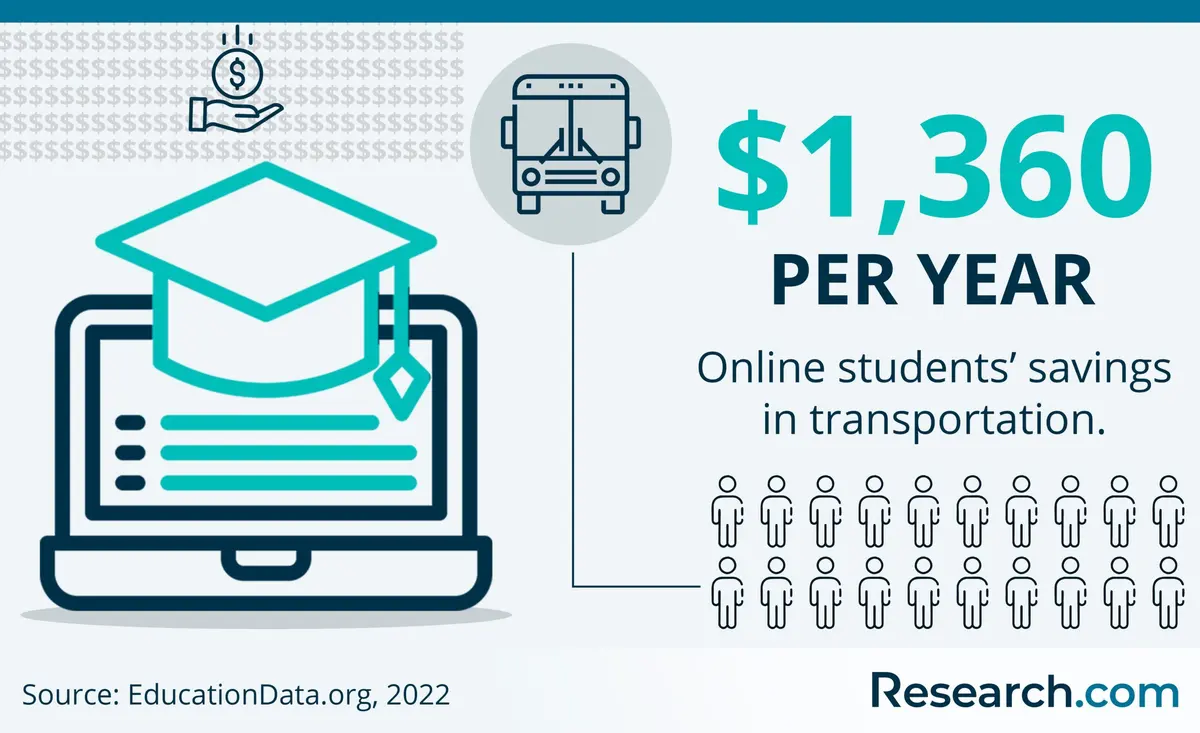
| Cost | May reduce commuting, housing, and some campus-related expenses. | May involve additional housing, transportation, and campus fees. |
| Best fit | Working adults, remote learners, military students, and self-directed learners. | Students who want face-to-face instruction and campus-based networking. |
Neither format is automatically better. The right question is whether the program provides the curriculum, accreditation, faculty access, career support, and practical experience needed for your intended homeland security career.
What is the average cost of the best homeland security degree programs?
Homeland security degree costs vary by institution type, residency status, degree level, delivery format, transfer credit policy, and fees. Public universities typically charge lower tuition to in-state students, while private universities and out-of-state enrollment can be substantially more expensive. Online programs may reduce living and commuting costs, but they are not always cheaper on a per-credit basis.
Based on the program data listed here, in-state tuition can range from as low as $77 per credit at Texas A&M University for its Master of National Security and Intelligence program to as high as $14,600 per year at the University of Delaware for its bachelor's degree in cybersecurity engineering. For online graduate study, Purdue University Global's online master’s degree in homeland security and emergency management lists a cost of $420 per credit.
According to the College Board, the average tuition for a four-year public college in 2023-2024 is around $11,260 for in-state residents and $29,150 for out-of-state residents. For private non-profit colleges, the average is around $41,540 [1].
Graduate costs can also vary sharply. The listed programs include master’s-level costs from $77 per credit at Texas A&M University to $2,170 per credit at George Washington University for its bachelor’s degree completion program, where the per-credit cost is higher than many graduate options. Because the range is wide, students should compare total program cost, not just tuition per credit.
| Cost item | Why it affects your total price |
| Tuition per credit | The most visible cost, but not the only one. |
| Number of required credits | A lower per-credit price may still be expensive if the program requires many credits. |
| Fees | Technology, student services, online learning, graduation, and lab fees can add up. |
| Residency status | Public universities often charge different rates for in-state and out-of-state students. |
| Transfer credits | Accepted credits can reduce both time and cost. |
| Books and materials | Some programs require specialized texts, software, or tools. |
| Lost income | Full-time study may affect work hours or overtime opportunities. |
What are the financial aid options for students enrolling in the best homeland security degree programs?
Students may be able to combine several funding sources to reduce out-of-pocket costs. The best approach is to complete required aid forms early, compare school-specific scholarships, and ask each program how aid applies to online, part-time, graduate, or certificate enrollment.
- Federal aid. Eligible students may qualify for federal grants, such as Pell grants, and federal loans, including direct loans.
- State aid. Some states provide grants, scholarships, or tuition assistance for residents.
- Institutional aid. Colleges may offer scholarships, grants, assistantships, tuition waivers, or awards based on need, merit, military status, public service, or academic program.
- Private scholarships. Foundations, companies, professional associations, and community organizations may support students studying security, emergency management, cybersecurity, public service, or related fields.
- Work-study. Federal work-study can provide part-time employment that helps students cover education-related expenses.
- Military and veteran benefits. Veterans, service members, and eligible dependents may qualify for GI bill benefits and related military education programs.
- Employer tuition assistance. Public safety agencies, government employers, and private security or technology firms may help pay for job-related degrees.
Before borrowing, ask the financial aid office for a full cost estimate and confirm whether aid changes if you enroll part time, study online, transfer credits, or take an accelerated course load.
What are the prerequisites for enrolling in the best homeland security degree programs?
Admission requirements differ by school, degree level, and program selectivity. Undergraduate programs usually focus on prior academic preparation, while graduate programs often evaluate academic history, professional experience, writing ability, recommendations, and fit with the program’s goals.
| Requirement | Commonly applies to | What to prepare |
| High school diploma or GED | Associate and bachelor's programs | Official transcripts and any required placement or application materials. |
| Bachelor's degree | Master's programs | Transcript from an accredited institution and proof of degree completion. |
| Master's degree | Some doctoral programs | Graduate transcripts, writing samples, and research interests. |
| Minimum GPA | Undergraduate and graduate programs | Many programs may look for a GPA from 2.5 to 3.0 or higher. |
| Standardized tests | Some graduate programs | GRE or GMAT scores may be requested, although many universities have waived them lately. |
| Letters of recommendation | Often graduate programs | Choose recommenders who can speak to your judgment, writing, leadership, or professional reliability. |
| Personal statement | Many undergraduate completion, master's, and doctoral programs | Explain your career goals and why the program matches them. |
| Resume or CV | Often graduate and professional programs | Highlight public safety, military, cybersecurity, emergency management, security, leadership, or analytical experience. |
Do not rely on general admission pages alone. Homeland security-related programs may have additional requirements for internships, background-sensitive placements, technical courses, graduate standing, or transfer credit evaluation.
What courses are typically in the best homeland security degree programs?
Coursework varies by specialization, but strong programs usually combine security foundations with applied analysis, legal and ethical frameworks, emergency management, and research. Technical programs may add cybersecurity labs, data analysis, secure systems, or digital forensics, while policy-focused programs may emphasize law, governance, intelligence, and strategy.
- Introduction to Homeland Security. Covers the development, purpose, structure, and major concepts of homeland security.
- Risk Analysis and Management. Teaches students how to identify threats, assess vulnerability, evaluate consequences, and recommend mitigation strategies.
- Intelligence Analysis. Introduces methods for collecting, evaluating, interpreting, and communicating intelligence information.
- Cybersecurity Fundamentals. Explores digital threats, defensive practices, network security concepts, and cyber risk.
- Emergency Management Planning. Focuses on preparedness, response, recovery, mitigation, continuity planning, and coordination.
- Critical Infrastructure Protection. Examines how to protect essential systems such as energy, water, transportation, communications, and related services.
- Terrorism and Counterterrorism. Studies terrorist motivations, tactics, prevention strategies, response considerations, and policy issues.
- Homeland Security Law and Policy. Reviews the legal, constitutional, administrative, and policy environment that shapes security decisions.
- Research Methods. Builds skills in evidence evaluation, data interpretation, policy research, and analysis, including techniques relevant to data scientist work.
- Ethics in Homeland Security. Addresses privacy, civil liberties, use of authority, discrimination risks, public trust, and accountability.
What types of specializations are available in the best homeland security degree programs?
Specializations help turn a broad degree into a more targeted career strategy. Choose a concentration based on the job postings you want to qualify for, not just the topic that sounds most interesting.
| Specialization | What it focuses on | Potential career direction |
| Cybersecurity | Protecting systems, networks, data, and digital infrastructure, including the difference between information security and cybersecurity. | Information security, cyber risk, security operations, infrastructure defense. |
| Intelligence | Collecting, evaluating, analyzing, and presenting information about threats. | Intelligence analyst, threat analyst, security researcher, policy support. |
| Emergency Management | Preparing for, responding to, recovering from, and reducing the impact of disasters. | Emergency management, continuity planning, disaster response, public safety coordination. |
| Border Security | Movement of people and goods, border operations, and related enforcement and policy issues. | Border operations support, policy analysis, transportation security, enforcement support. |
| Critical Infrastructure Protection | Security of energy, water, transportation, communications, and other essential systems. | Infrastructure risk, resilience planning, corporate security, public-sector infrastructure roles. |
| Counterterrorism | Terrorist threats, prevention, response, policy, and strategic analysis. | Threat analysis, intelligence support, policy research, security planning. |
| Transportation Security | Protecting aviation, ports, transit, logistics, and transportation systems. | Transportation security, logistics risk, infrastructure planning. |
| Legal and Policy Studies | Laws, regulations, administrative systems, ethics, and governance. | Policy analyst, compliance, public administration, legislative or agency support. |
How does cybersecurity enhance homeland security careers?
Cybersecurity has become one of the most important skill areas in homeland security because critical services now depend on digital systems. Power grids, hospitals, transportation networks, public agencies, communications systems, and financial services all face cyber risk. A homeland security professional with cyber literacy can better understand how digital attacks affect physical operations, public safety, continuity planning, and national resilience.
Students interested in this path should look for technical coursework, labs, cloud security exposure, incident response practice, and faculty with cyber experience. If cost is a major concern, comparing cyber security schools online can help identify programs that focus more directly on digital security skills.
How do internships and practical experiences impact homeland security education?
Practical experience can be the difference between understanding homeland security concepts and being ready to use them. Internships, field placements, simulations, tabletop exercises, research projects, and capstones help students practice writing briefs, coordinating with stakeholders, analyzing risks, and making decisions with incomplete information.
Experiential learning also helps students test career fit. A student may discover that emergency management is more appealing than intelligence analysis, or that cybersecurity requires more technical preparation than expected. When evaluating programs, ask whether internships are required, optional, locally arranged, or available to online students. Students who need flexible study and aid eligibility may also want to review online colleges that take financial aid.
How important is accreditation for homeland security degree programs?
Accreditation is one of the first quality checks students should make. Institutional accreditation helps show that a college or university meets recognized academic and administrative standards. It can affect credit transfer, graduate school admission, employer recognition, and access to federal financial aid.
Students should verify accreditation directly through official sources and should be careful with programs that use vague language about recognition, approval, or membership. If you are considering distance learning, reviewing accredited online colleges can help you understand how institutional accreditation fits into the broader school-selection process.
Is a Homeland Security Degree a Sound Financial Investment?
A homeland security degree can be a worthwhile investment when the program is affordable, accredited, aligned with your career goals, and paired with practical experience or specialized skills. The return is less clear when students choose an expensive program without checking job requirements, employer expectations, transfer policies, or likely career outcomes.
The strongest ROI often comes from matching your degree to a high-demand skill area such as cybersecurity, emergency management, intelligence analysis, data analytics, or infrastructure risk. Students should compare total program cost, expected time to completion, work experience requirements, internship access, and whether faster credentials such as quick online degrees would meet their goals at a lower cost.
Can a 1 year masters degree online accelerate my homeland security career?
A short online master's program can help some professionals move faster, but it is not automatically the best choice. A 1 year masters degree online may be useful if you already have relevant experience, can handle an intensive workload, and need a graduate credential for advancement or specialization.
Before enrolling, ask whether the accelerated format includes meaningful projects, faculty access, networking, career services, and enough time to master complex material. A shorter program may be efficient, but students without experience may still need internships, certifications, or entry-level roles before moving into higher responsibility positions.
How to choose the best homeland security degree program?
The best program is the one that fits your target job, budget, schedule, and learning needs. Rankings can help you discover options, but they should not replace direct comparison. Use job postings, agency requirements, alumni outcomes, curriculum details, and total cost to guide your decision.
- Define the role you want. Decide whether you are aiming for emergency management, cybersecurity, intelligence, policy, corporate security, public safety, or infrastructure protection.
- Compare curricula. Look for required courses and electives that match the skills employers request.
- Verify accreditation. Confirm institutional accreditation and understand any program-level designations or recognition.
- Calculate total cost. Include tuition, fees, books, technology, travel, residency rates, and lost income.
- Check transfer credit policies. Prior college, military training, professional certifications, or work-based learning may reduce cost and time.
- Evaluate practical experience. Ask about internships, simulations, capstones, labs, and local partnerships.
- Review faculty backgrounds. Look for expertise in the specialization you want.
- Ask about career outcomes. Request information about employers, job titles, alumni pathways, and career services.
- Choose the right format. Decide whether online, hybrid, or campus-based study fits your responsibilities and learning style.
- Plan for certifications if needed. Cybersecurity, emergency management, and risk roles may value credentials in addition to degrees.
| Question to ask the school | Why it matters |
| What jobs have recent graduates entered? | Shows whether the program has outcomes related to your target role. |
| Are online students eligible for the same career services? | Important for remote learners who need employer connections. |
| How many credits can I transfer? | Can reduce both cost and time to completion. |
| Are internships required or optional? | Practical experience may improve readiness and clarify career fit. |
| Does the curriculum include cybersecurity, data, or emergency management skills? | Specialized skills may improve competitiveness. |
| What is the full estimated cost? | Prevents surprises from fees, books, and residency differences. |
Are there international career opportunities for homeland security graduates?
Homeland security skills can apply beyond domestic agencies, especially in multinational corporations, international organizations, humanitarian groups, logistics companies, cybersecurity firms, and disaster response organizations. Risk assessment, crisis management, intelligence analysis, public safety planning, and infrastructure resilience are useful in many global contexts.
Students who want international mobility should choose programs with global security content, regional studies, language options, international policy coursework, or internship pathways. It can also help to align the degree with broadly recognized fields listed among the most useful degrees, especially if you want flexibility across sectors and countries.
What career paths are available for graduates of the best homeland security degree programs?
Graduates can pursue many paths, but entry requirements vary. Some positions require citizenship, background checks, security clearances, physical standards, prior experience, specialized certifications, or technical skills. Always review actual job postings before choosing a specialization.
| Career area | Common employers | Useful preparation |
| Federal homeland security | Department of Homeland Security, FBI, National Security Agency, and related federal agencies | Policy knowledge, analysis, writing, internships, relevant experience, and background suitability. |
| State and local government | Emergency management offices, law enforcement agencies, public health departments, infrastructure agencies | Emergency planning, public administration, response coordination, grants, and community resilience. |
| Cybersecurity | Government agencies, contractors, security firms, technology companies, critical infrastructure organizations | Cybersecurity coursework, labs, incident response, technical certifications, and hands-on tools. |
| Corporate security and risk | Large companies, consulting firms, financial institutions, transportation and logistics firms | Risk management, business continuity, investigations, crisis communication, compliance, and data analysis. |
| Intelligence and threat analysis | Government, defense contractors, fusion centers, consulting firms, corporate intelligence teams | Research methods, writing, regional knowledge, open-source intelligence, and analytical tradecraft. |
| Nonprofit and disaster relief | Humanitarian organizations, disaster response nonprofits, advocacy groups | Emergency management, logistics, community engagement, grants, and crisis coordination. |
| Academia and research | Universities, policy institutes, research centers | Graduate study, research methods, publishing, teaching, and policy expertise. |
| Data science in security contexts | Agencies, contractors, analytics teams, cybersecurity firms | Statistics, programming, data visualization, predictive modeling, and security domain knowledge. |
How can additional certifications enhance my homeland security career?
Certifications can strengthen a homeland security resume when they match the job target. They are especially useful in cybersecurity, emergency management, risk management, project management, business continuity, and physical security. A degree shows academic preparation; a certification can signal specific applied skills or professional commitment.
Students should not collect credentials randomly. Review job postings first, then choose credentials that employers actually mention. For flexible options, compare certifications online that pay well and consider how each one supports your degree, experience, and desired role.
What emerging trends are shaping homeland security careers?
Homeland security work is being shaped by more complex digital threats, growing reliance on data analytics, advanced simulation-based training, interagency coordination, infrastructure resilience planning, and closer collaboration between government and private organizations. Artificial intelligence and advanced analytics are also changing how threats are identified, monitored, prioritized, and communicated.
These shifts do not eliminate the need for human judgment. They increase the need for professionals who can interpret data responsibly, understand technology limits, communicate risk clearly, and make decisions within legal and ethical boundaries. Industry-recognized credentials, including some certifications that pay the most, can help professionals keep pace with changing employer expectations.
How can I successfully apply to homeland security degree programs?
A strong application connects your background, goals, and chosen program. Admissions teams should be able to see why homeland security fits your interests and why their curriculum fits your plan. This is especially important for graduate and degree-completion programs, where professional experience, writing ability, and career direction may carry significant weight.
- Review admission requirements early. Confirm deadlines, transcripts, GPA expectations, test policies, recommendations, and writing requirements.
- Tailor your personal statement. Explain your interest in homeland security and connect it to risk analysis, cybersecurity, emergency management, intelligence, public service, or policy.
- Choose recommenders strategically. Select people who can discuss your judgment, reliability, leadership, writing, analytical ability, or public service experience.
- Organize documentation. Gather transcripts, resumes, military records if relevant, certifications, test scores if required, and proof of prior learning.
- Address weaknesses honestly. If your GPA or background is uneven, explain improvement, experience, or preparation without making excuses.
- Compare affordability before committing. Working adults and nontraditional learners may also want to review cheapest online colleges when cost and aid access are major concerns.
What is the job market for graduates with the best homeland security degree?
The job market is strongest for graduates who combine homeland security knowledge with specialized, employer-recognized skills. Cybersecurity, intelligence analysis, emergency management, risk management, data analytics, and infrastructure protection can all be relevant, but demand varies by role and location.
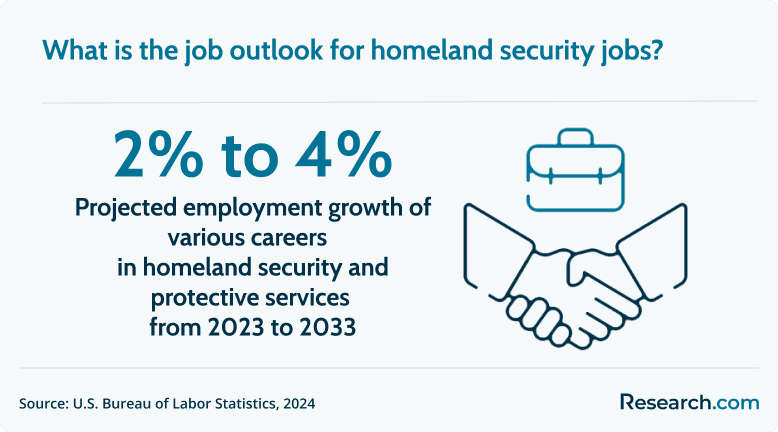
The US Bureau of Labor Statistics projects a growth rate of 33% for information security analysts from 2023 to 2033. This reflects strong demand for professionals who can protect digital systems and infrastructure. The Bureau of Labor Statistics also projects a 4% growth rate for emergency management directors in the same period. Police and detectives are projected at 4% growth in the same period.
These differences matter. A general homeland security degree may provide a useful foundation, but students who want stronger labor-market positioning should build specialized skills, pursue internships, network early, and review real job descriptions. Some students search for the easiest homeland security degrees, but easier coursework is not the same as stronger career preparation. Employers still need candidates who can analyze problems, write clearly, act ethically, and apply specialized knowledge.
What Graduates Have to Say About Their Best Homeland Security Degrees
My interest in homeland security came from wanting work that had a public purpose. The degree helped me understand national security from more than one angle, including policy, data, and operations. I now work in a government agency, and the analytical and policy skills I built in school are part of my everyday work. - Clay
I focused on cybersecurity during my homeland security program, and that choice gave me a clearer career direction. The coursework was demanding, but it helped me understand current threats and vulnerabilities. I now work with a private security firm, where the technical and risk-focused training from my program helps me contribute to cyber defense. - Olivia
My program gave me a wide view of homeland security, from emergency management to intelligence. I appreciated the flexibility because I could shape my studies around disaster relief. Today I work with a nonprofit organization, and the degree gave me a strong base for meaningful, challenging work. - Meredith
Should I Pursue a Doctorate Degree in Homeland Security?
A doctorate in homeland security or a related field is best for professionals who want to conduct advanced research, teach at the college level, shape policy, lead complex organizations, or contribute to high-level strategy. It is usually not necessary for most entry-level or midcareer practitioner roles.
Before committing, compare the opportunity cost, research expectations, dissertation requirements, faculty expertise, funding, and career payoff. Professionals who need flexibility and cost control may want to explore cheap doctorate degree online options, but they should still verify accreditation, faculty fit, and research quality.
How can working professionals successfully balance career commitments with earning a homeland security degree?
Working adults should prioritize programs built for adult learners, not just programs that happen to be online. Look for asynchronous coursework, predictable deadlines, part-time enrollment, responsive faculty, strong advising, technical support, and policies that allow temporary schedule adjustments when work demands increase.
Professionals should also ask about employer tuition support, transfer credit, credit for military or professional training, and career services designed for experienced learners. Comparing the best affordable online universities for job holders can help identify programs that balance flexibility, cost, and academic quality.
Common mistakes to avoid when choosing a homeland security degree
| Mistake | Why it can hurt you | Better approach |
| Choosing by title alone | Two homeland security programs can have very different curricula. | Compare courses, concentrations, projects, and job outcomes. |
| Ignoring accreditation | It can affect aid, transfer credit, employer recognition, and graduate school options. | Verify institutional accreditation before applying. |
| Looking only at tuition | Fees, credit requirements, books, and lost income can change the real cost. | Request a full cost-of-attendance estimate. |
| Assuming online means easier | Online programs can be rigorous and require strong time management. | Ask about weekly workload, synchronous requirements, and support services. |
| Skipping internships or applied projects | Graduating without experience can make the job search harder. | Choose programs with practical learning or build experience through volunteering, internships, or relevant work. |
| Assuming salaries are guaranteed | Pay depends on role, location, clearance, skills, employer, and experience. | Use salary data as a benchmark, then research specific job postings. |
| Overlooking technical skills | Many high-growth security roles require cyber, data, or systems knowledge. | Add technical electives, labs, or certifications when relevant. |
Key Insights
- Homeland security is not one career. It spans cybersecurity, emergency management, intelligence, law, policy, infrastructure protection, border operations, data analysis, and private-sector risk.
- The best degree depends on your target role. A general homeland security degree can be useful, but technical roles may require cybersecurity, data analytics, or engineering-focused training.
- Program fit matters more than program title. Compare curriculum, accreditation, internships, faculty expertise, career services, and total cost before enrolling.
- Bachelor's degrees are common entry points. Some roles may accept an associate degree or experience, but many homeland security-related positions prefer or require a bachelor's degree.
- Graduate study can support advancement. A master's degree may help with leadership, intelligence, policy, emergency management, or specialized roles, while doctoral study is best for research, academia, or senior policy work.
- Cybersecurity is a major opportunity area. The US Bureau of Labor Statistics projects 33% growth for information security analysts from 2023 to 2033, making technical preparation especially valuable.
- Costs vary widely. Listed programs range from $77 per credit to much higher tuition structures, so students should calculate the full price before committing.
- Practical experience is essential. Internships, simulations, capstones, certifications, and relevant work experience can make a degree more useful in a competitive job market.
References:
- College Board. (2025). Trends in college pricing and student aid 2024. collegeboard.org
- US Bureau of Labor Statistics. (29 Aug 2024). Data scientists. bls.gov
- US Bureau of Labor Statistics. (29 Aug 2024). Emergency management. bls.gov
- US Bureau of Labor Statistics. (29 Aug 2024). Information security analysts. bls.gov
- US Bureau of Labor Statistics. (29 Aug 2024). Police and detectives. bls.gov
Other Things You Should Know About the Best Homeland Security Degree
Yes, many top homeland security degree programs in 2027 offer scholarships to eligible students. These financial aids can be based on merit, financial need, or specific criteria set by the program. Check individual program websites for detailed scholarship opportunities and application procedures.
The best homeland security degree programs in 2027 offer cutting-edge courses in cybersecurity, emergency management, and counterterrorism. They also provide practical internships, access to experienced faculty, and a strong network of industry connections, placing graduates in an advantageous position for career advancement.
Enrollment in 2027's top homeland security degree programs typically requires high school completion, a minimum GPA of 3.0, and standardized test scores. Some programs may also require prior coursework in criminal justice or government studies as prerequisites.
No, CAE accreditation is not required for most federal jobs, but it is a strong signal of quality. The Department of Homeland Security and NSA designate CAE schools, and many employers value that recognition when hiring for security, emergency management, and intelligence roles.


