2027 Best Online Master’s in Criminology Degree Programs

Co-Founder and Chief Data Scientist
An online master’s in criminology is designed for professionals who want deeper expertise in crime, justice systems, victimization, research, policy, and public safety without leaving their current job or relocating. The decision is not simply whether graduate school sounds useful. You need to know whether the program is accredited, whether online learning fits your schedule, what the degree can realistically do for your career, how much it may cost, and how to compare programs that often look similar on the surface.
This guide explains how online master’s programs in criminology work, what employers usually look for, how online and campus-based formats compare, what courses and admissions requirements to expect, and how to evaluate cost, quality, flexibility, field experience, and career relevance. It also highlights selected programs and related pathways for students considering criminology careers, criminal justice leadership, policy work, forensic specializations, homeland security, research, or community safety roles.
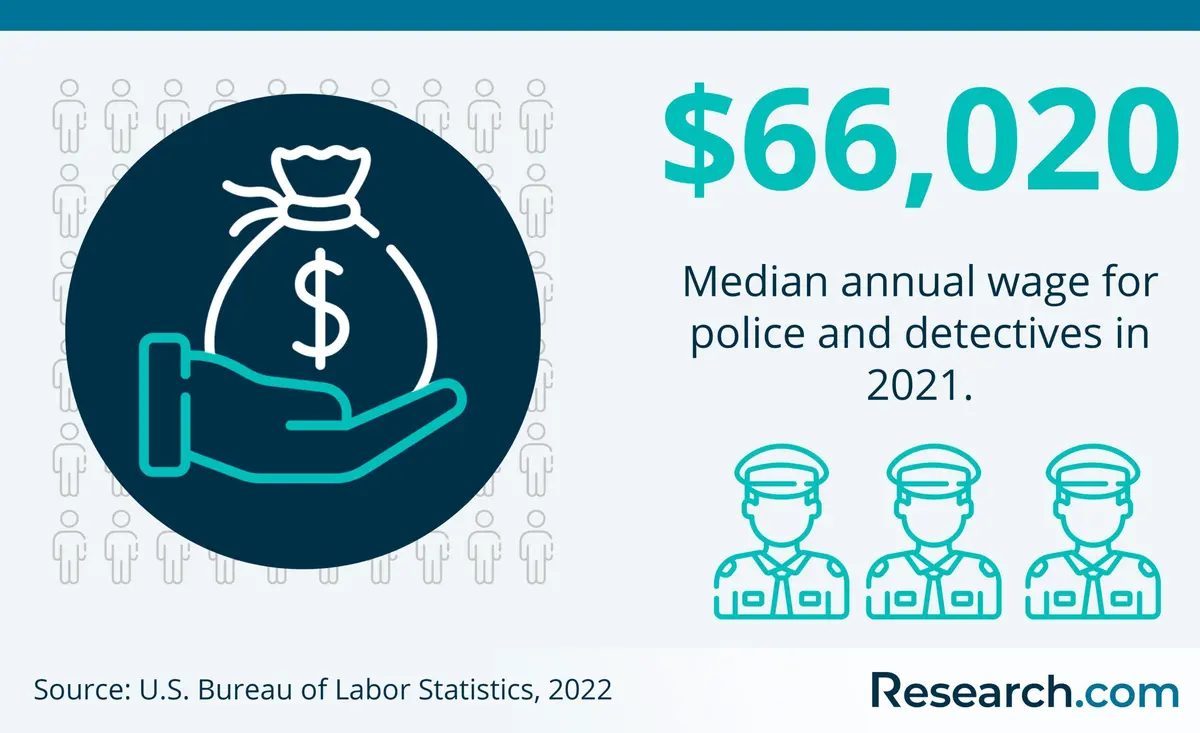
According to the U.S. Bureau of Labor Statistics, employment for police and detectives is projected to grow by 3% from 2021-2031, which is slower than the average for all occupations. Even with modest growth, the agency projected about 68,500 openings for police and detectives each year over the decade, largely because workers transfer to other occupations or retire. A graduate-level criminologist degree can help some professionals qualify for advancement, specialized assignments, research-focused work, teaching-adjacent roles, or leadership responsibilities, but outcomes depend on role, employer, experience, location, and credentials beyond the degree.
Online Masters Degree in Criminology Table of Contents
- Can a criminology master’s degree be completed fully online?
- Do employers respect online criminology master’s degrees?
- Are online criminology degrees accepted internationally?
- Online vs. campus-based master’s in criminology
- How much does an online master’s in criminology cost?
- Admission and technology requirements
- Common courses in online criminology master’s programs
- How to choose an online master’s in criminology
- Best Online Masters in Criminology Programs for 2027
- How internships and applied experiences strengthen online criminology programs
- How online criminology programs maintain quality and career relevance
- How criminology study supports community safety and prevention
- Benefits of accelerated one-year online criminology programs
- Forensic science specializations and criminology careers
- Online criminology master’s degrees and homeland security careers
- Interdisciplinary accelerated options in criminology education
- Interdisciplinary collaboration in online criminology programs
- Current and future trends in criminology education
- How an online master’s in criminology may affect earning potential
- Easiest online criminology and criminal justice degree options
- Career paths for graduates of online master’s in criminology programs
Quick Answer: Is an Online Master’s in Criminology Worth Considering?
An online master’s in criminology can be worth considering if you want advanced knowledge in crime analysis, criminal behavior, research methods, justice policy, victim services, corrections, law enforcement administration, or public safety leadership and need a flexible format. The strongest programs come from accredited institutions, use qualified faculty, provide research and applied learning opportunities, and align with the kinds of roles you want after graduation.
| Best fit | Use caution if | What to verify before enrolling |
| Working professionals in law enforcement, corrections, courts, probation, policy, nonprofit work, or public safety who need schedule flexibility. | You need a license, certification, or agency-specific credential and assume the degree alone will qualify you. | Institutional accreditation, curriculum, faculty expertise, total cost, online support, transfer policies, and any in-person requirements. |
| Students who want research, policy, leadership, cybercrime, forensic, victimology, or community safety expertise. | You prefer frequent face-to-face discussion, campus networking, or in-person fieldwork built into every course. | Whether internships, practicums, capstones, simulations, or local field placements are available to online students. |
| Career changers who already have related experience or want to build a stronger foundation for criminal justice roles. | You are choosing only because the program is fast, inexpensive, or ranked highly without checking fit. | Career services, alumni outcomes where available, employer reputation, and whether courses match your target role. |
Can a Criminology Master’s Degree Be Completed Fully Online?
Yes. Many universities now offer master’s programs in criminology, criminal justice, or closely related fields through online delivery. In many cases, online students complete the same academic requirements as campus students, including graduate seminars, research assignments, policy analysis, exams, discussion participation, and a capstone, thesis, or applied project.
Online programs usually use one or both of the following formats:
- Asynchronous learning: Students access lectures, readings, assignments, and discussions on their own schedule within weekly deadlines. This format is often best for working adults with changing shifts or family obligations.
- Synchronous learning: Students attend live online sessions at set times. This option provides more real-time discussion but requires stronger schedule control.
- Hybrid or blended learning: Some programs combine online coursework with limited campus visits, residencies, orientation sessions, or local field experiences.
A study published in the Journal of Hospitality, Leisure, Sport & Tourism Education noted that asynchronous interaction through learning platforms such as Blackboard and multimedia microblogging tools had long been central to distance education. The same research also observed that COVID-19 increased the use of synchronous online instruction, where class sessions occur live at the original scheduled time and distance becomes less important. The study further pointed to blended and hybrid learning as an important direction for future course delivery.
If you are comparing criminal justice degrees online or criminology master’s programs, do not stop at the word “online.” Look at how courses are delivered, how often students interact with instructors, whether the program has live expectations, and whether the school provides advising, library access, writing support, career services, and technical help to distance learners.
Do Employers Respect Online Criminology Master’s Degrees?
Most employers are more likely to take an online master’s in criminology seriously when it comes from an accredited institution and the curriculum is comparable in rigor to the school’s campus-based programs. The delivery format matters less than the credibility of the university, the relevance of the coursework, the skills you can demonstrate, and your experience in the field.
This is true even when a student selects the cheapest criminal justice degree online. A lower tuition price does not automatically mean lower quality, but affordability should never replace due diligence. Before enrolling, confirm accreditation, review faculty qualifications, examine required courses, and ask whether online students receive the same academic and career support as other graduate students.
Employers in criminal justice and public safety may also value practical evidence of skill. Internships, volunteer work, research projects, data analysis samples, policy memos, capstone work, military or law enforcement experience, and professional certifications can help make an online degree more compelling during hiring or promotion reviews.
Are Online Criminology Degrees Accepted Internationally?
Recognition of online degrees varies by country, employer, agency, and university. There is no single global rule that guarantees a criminology master’s degree will be treated the same everywhere. In general, degrees from accredited and well-established institutions are more likely to be recognized by employers and academic institutions, whether the courses were completed online or on campus.
Students planning to work outside the country where the degree is awarded should verify requirements before applying. Some employers, government agencies, immigration authorities, or professional bodies may require credential evaluation, additional training, local certification, or a license. This is especially important for students comparing criminology with related options such as a masters in forensic psychology online, where psychology-related roles may be more tightly regulated.
Online vs. Campus-Based Master’s Degree in Criminology
The best format depends on your work schedule, learning style, location, budget, and career goals. Online criminology programs are often attractive to professionals who need flexibility, while campus programs may appeal to students who want frequent face-to-face interaction, campus-based networking, or structured in-person experiences.
| Factor | Online master’s in criminology | Campus-based master’s in criminology |
| Schedule | Often more flexible, especially when courses are asynchronous. | Usually requires attendance at scheduled class times. |
| Location | May allow students to study without relocating. | Requires commuting or living near campus. |
| Interaction | Uses discussion boards, video meetings, email, group platforms, and virtual office hours. | Provides in-person discussion, campus events, and direct classroom interaction. |
| Applied learning | May include local internships, virtual simulations, capstones, or research projects. | May offer easier access to campus labs, agency partnerships, and in-person fieldwork. |
| Best for | Working adults, military students, parents, and students far from campus. | Students who learn best in structured, face-to-face environments. |
Schedule and Flexibility
Online programs often make graduate study more manageable for students who work full time, rotate shifts, serve in the military, or have caregiving responsibilities. Asynchronous courses allow students to complete weekly work around their schedule, while synchronous courses provide more structure through scheduled live sessions.
Campus programs usually require students to be available at specific times and locations. That structure can be helpful for students who want routine and direct contact, but it may be difficult for professionals whose work hours change frequently.
Learning Experience
Online learning does not have to mean learning alone. Many programs use live sessions, small-group projects, instructor feedback, virtual office hours, peer discussion, and collaborative research assignments. Still, students need to be comfortable writing frequently, managing deadlines, and communicating through digital platforms.
Campus programs provide immediate in-person interaction with faculty and classmates. Students who want spontaneous discussion, campus-based mentoring, in-person research meetings, or direct access to university events may prefer this model.
Pacing
Online criminology master’s programs may offer accelerated, part-time, or standard pacing. Accelerated formats can shorten completion time but often require heavier weekly workloads. Part-time options may be better for students balancing demanding jobs or family responsibilities.
Campus programs typically follow semester or quarter calendars. This predictable structure can help students plan, but it may offer fewer options for changing course load from term to term.
Teaching Methods
Online master’s programs in criminology and related online master’s degree programs in criminal justice may use recorded lectures, live seminars, case studies, discussion boards, policy briefs, statistical exercises, simulations, and capstone projects. Strong programs make expectations clear and provide timely faculty feedback.
Campus programs may emphasize seminar discussion, in-person presentations, field visits, internships, and classroom debate. The main advantage is immersion; the main trade-off is reduced flexibility.
Is an Online Degree Cheaper?
An online master’s in criminology can cost less than an on-campus program, but that is not guaranteed. Some schools charge lower online tuition, while others charge the same rate for online and campus students. Online students may save on commuting, relocation, parking, or housing, but they may still pay technology fees, online course fees, books, software costs, and graduation fees.
Always compare the total program cost, not just tuition per credit. A program with a lower per-credit rate may become more expensive if it requires more credits, travel, or extra fees.
Is an Online Degree as Strong as a Campus Degree?
An online degree can be academically strong when it is offered by an accredited institution, taught by qualified faculty, and built around rigorous graduate-level outcomes. Many reputable universities now offer online graduate programs that mirror the expectations of campus programs.
However, some employers, agencies, or roles may still prefer certain forms of in-person experience. If your target career involves highly specialized technical work, sworn law enforcement advancement, licensing, or agency-specific training, ask employers or professional contacts how they evaluate online graduate credentials before enrolling.
How Much Does an Online Master’s Degree in Criminology Cost?
The cost of an online master’s in criminology depends on the institution, tuition model, number of required credits, program length, residency status, fees, technology requirements, and whether the school is public or private. Graduate tuition varies widely, so students should calculate the full cost before applying.
Cost Factors to Compare
| Cost factor | Why it matters | Question to ask |
| Tuition per credit | Graduate programs often price tuition by credit hour. | How many credits are required to graduate? |
| Fees | Online, technology, library, graduation, and student service fees can add up. | What mandatory fees apply to online students? |
| Program length | A shorter program may reduce some expenses, but accelerated courses can be more intense. | Can I finish part time, full time, or at an accelerated pace? |
| Books and software | Courses may require textbooks, statistical software, databases, or secure testing tools. | Are course materials included in tuition? |
| Travel requirements | Some online programs require campus visits, residencies, or presentations. | Will I need to travel at any point? |
| Financial aid | Scholarships, grants, loans, employer benefits, and military benefits can change net cost. | What aid is available specifically for graduate online students? |
Average Pricing for Online and Campus Graduate Programs
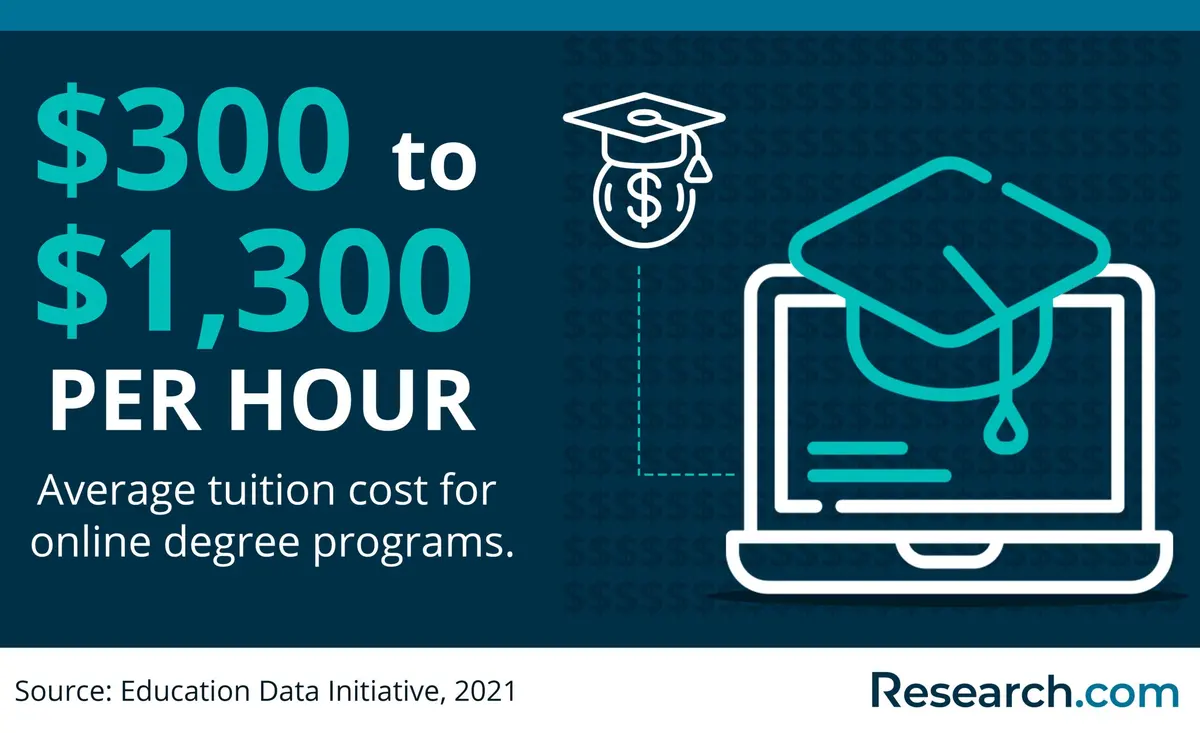
Graduate tuition differs substantially by school, location, specialization, and program structure. An online degree program can range from $300 to $1,300 per credit hour, according to Hanson (2022). That range does not include possible costs for books, online resources, technology, software, or personal equipment such as a computer, internet service, and peripherals.
Public and private institutions also differ significantly. Graduate degrees at public institutions cost around $29,150 for two-year programs, while private schools charge around $62,000 on average for many advanced programs, according to Hanson (2022b).
Hidden Costs Online Students Often Miss
Online study can reduce commuting and housing expenses, but it is not automatically inexpensive. Students should check for technology charges, online platform fees, proctoring fees, required software, digital textbooks, database access, printing needs, and travel for any required campus sessions.
Some students also overlook opportunity costs. Accelerated programs may require fewer months in school but more weekly study time. Part-time programs may be easier to manage but extend tuition payments over a longer period. The best financial choice is the one that fits both your budget and your realistic workload.
Is an Online Criminology Degree Worth the Cost?
An online master’s in criminology may be a good investment if it supports a specific professional goal: promotion, transition into analysis or policy work, preparation for doctoral study, specialization in cybercrime or victimology, or stronger qualifications for leadership in criminal justice organizations. It is less likely to be worthwhile if you enroll without a career plan, ignore accreditation, or assume the degree alone guarantees a salary increase.
To evaluate value, compare total cost with the roles you are targeting. Review job postings, talk with supervisors, ask alumni about outcomes where available, and identify whether employers in your field reward graduate education, experience, certifications, or agency training more heavily.
Admission and Technology Requirements for an Online Master’s in Criminology
Admission requirements vary by school, but most online criminology master’s programs expect applicants to show academic preparation, writing ability, and interest in criminal justice, criminology, public safety, or a related field.
Common Admission Requirements
- Bachelor’s degree: Most programs require a bachelor’s degree from an accredited institution. Common preparation includes criminology, criminal justice, sociology, psychology, public administration, political science, or forensic psychology.
- Minimum GPA: Many programs expect at least a 3.0 GPA on a 4.0 scale, although some schools may review applicants with lower GPAs if they have strong work experience, recommendations, or other evidence of readiness.
- Application materials: Applicants commonly submit transcripts, a statement of purpose, letters of recommendation, and a résumé or curriculum vitae.
- Standardized tests: Some programs may request GRE scores, although this requirement has become less common at many institutions.
- Professional experience: Certain programs prefer or require experience in law enforcement, corrections, courts, probation, victim services, social work, military service, public administration, or related settings.
Skills That Strengthen an Application
- Writing and communication: Online graduate study requires frequent written discussion, research papers, policy analysis, and professional communication.
- Analytical thinking: Criminology students must evaluate research, identify patterns, interpret data, and connect theory to practice.
- Relevant work experience: Experience in criminal justice, social services, public safety, nonprofit work, or public policy can help applicants connect coursework to real problems.
- Leadership and teamwork: Criminal justice professionals often work across agencies and teams, making collaboration and leadership valuable admissions signals.
- Cultural competence: Criminology and criminal justice work involves diverse communities, so applicants benefit from demonstrating awareness of equity, ethics, and community context.
Technology Requirements for Online Learning
Students need reliable technology before starting an online program. At minimum, expect to need a dependable computer, high-speed internet, a webcam, a microphone, and access to the school’s learning management system.
- Operating system: Most programs support Windows or Mac systems, but students should check the school’s technical specifications before enrolling.
- Software: Programs may require word processing software, PDF tools, secure browsers, statistical software, presentation tools, or discipline-specific applications.
- Hardware: A webcam, headset, microphone, and sufficient storage may be necessary for video meetings, presentations, and recorded assignments.
- Learning management system: Students should be prepared to use platforms for readings, quizzes, discussions, assignment submission, grades, and faculty communication.
- Technical support: Before classes begin, confirm how to reach technical support, when support is available, and what help is provided for remote students.
Courses to Expect in an Online Master’s Degree in Criminology
Curricula differ by program, but most online criminology master’s degrees combine theory, research, justice policy, ethics, and applied analysis. Specializations may add courses in cybercrime, digital evidence, homeland security, forensic psychology, victim services, corrections, policing, or public administration.
| Course area | What students usually learn | Why it matters professionally |
| Criminological theory | Major explanations of crime, deviance, victimization, and justice system responses. | Helps professionals interpret crime problems beyond individual incidents. |
| Research methods | Research design, data collection, literature review, statistics, and evidence evaluation. | Supports policy analysis, grant writing, program evaluation, and crime analysis. |
| Criminal justice policy | How law enforcement, courts, corrections, and community agencies operate. | Prepares students to assess reforms, procedures, and organizational decisions. |
| Crime prevention | Strategies for reducing crime, juvenile delinquency, victimization, and community risk. | Connects graduate study to community safety and prevention planning. |
| Victimology | Victim experiences, trauma-informed response, advocacy, and services. | Useful for victim services, nonprofit work, policing, courts, and policy roles. |
| Ethics and professionalism | Ethical issues involving discretion, justice, bias, accountability, and public trust. | Essential for leadership roles in high-stakes public systems. |
- Introduction to Criminology: A foundational course covering major concepts, history, theories, and debates in criminological study.
- Research Methods in Criminology: A graduate-level introduction to designing studies, collecting evidence, analyzing information, and critiquing research.
- Criminal Justice Policy and Practice: A course examining policing, courts, corrections, and reform from a policy and operational perspective.
- Crime and Delinquency Prevention: A study of prevention programs, juvenile justice concerns, risk factors, and evaluation methods.
- Victimology: An exploration of victims’ needs, services, rights, trauma, and the justice system’s response.
- Criminological Theory: A deeper review of biological, psychological, sociological, and interdisciplinary theories of crime.
- Ethics and Professionalism in Criminal Justice: A course focused on ethical decision-making, justice, equity, accountability, and professional standards.
How to Choose an Online Master’s Degree in Criminology
The right program is the one that fits your career goal, budget, schedule, and learning needs. A program may be highly ranked or well known but still be a poor fit if it lacks your desired specialization, requires travel you cannot manage, or does not provide enough support for online students.
Accreditation and Reputation
Start with institutional accreditation. Accreditation helps signal that a school meets recognized academic standards and is more likely to be accepted by employers, licensing bodies, and other universities. For U.S. institutions, students may encounter regional accreditors such as the Higher Learning Commission. Criminal justice-related programs may also reference organizations such as the Accrediting Council for Criminal Justice Education.
Reputation should be evaluated carefully. Look beyond marketing language. Review faculty backgrounds, student support, employer connections, course requirements, and whether the program publishes useful outcome information.
Availability, Accessibility, and Student Support
Online learning works best when the school has systems built for remote students. Check whether courses are asynchronous, synchronous, or hybrid; whether advising is available outside standard business hours; and whether students have access to online library services, tutoring, writing help, mental health resources, disability services, and career advising.
Teaching Methods and Faculty Fit
Review sample course descriptions and faculty profiles. If you want crime analysis, look for quantitative methods and data-focused faculty. If you want victim services, policy, corrections, cybercrime, or policing leadership, make sure the curriculum reflects that interest.
Costs and Financial Assistance
Compare tuition, fees, required credits, books, technology costs, and travel requirements. Ask about scholarships, assistantships for online students, employer tuition benefits, military benefits, grants, and loans. The lowest tuition is not always the best value if the program lacks support or relevant coursework.
In-Person or Field Requirements
Some online programs include internships, residencies, campus visits, practicums, or local field placements. These can be valuable, but they can also create scheduling and travel challenges. Ask early whether these requirements are mandatory and whether they can be completed near your home.
| Question to ask | Why it matters |
| Is the institution accredited? | Accreditation affects credibility, transferability, and employer confidence. |
| Are courses asynchronous, synchronous, or mixed? | The format determines whether the program fits your work schedule. |
| What is the total cost to graduate? | Tuition per credit does not show the full financial commitment. |
| Are internships or capstones available online? | Applied work can strengthen your résumé and professional network. |
| Who teaches the courses? | Faculty expertise should match your target specialization. |
| What career support is available to online students? | Remote students need access to advising, job search support, and networking resources. |
Best Online Masters in Criminology Programs for 2027
The programs below were selected after Research.com reviewed available information on tuition, learning outcomes, schedule flexibility, faculty expertise, and overall institutional profile. Program details can change, so students should verify current tuition, accreditation, curriculum, admissions requirements, and online delivery format directly with each school before applying.
United States
1. University of Cincinnati Online Master of Science in Criminal Justice
The University of Cincinnati offers an Online Master of Science in Criminal Justice that approaches crime and justice from multiple disciplines, including sociology, criminology, psychology, and law. The program is intended for criminal justice professionals seeking advancement and emphasizes applied learning, field connections, best practices, and leadership preparation. Students examine how theories and concepts connect to real criminal justice settings and career pathways.
- Program Length: about 2 years
- Tracks/concentrations: criminal justice
- Cost per Credit: $662
- Required Credits to Graduate: 33
- Accreditation: No information available
2. Arizona State University Online Master of Arts in Criminology and Criminal Justice
Arizona State University offers a Master of Science in Criminology and Criminal Justice designed for students who want advanced theoretical, empirical, and research training. The program develops skills in statistical analysis, policy analysis, program planning, and administration. It may support preparation for criminal justice research, leadership roles in justice-related agencies and organizations, or further study in Ph.D. programs in criminology and criminal justice.
- Program Length: about 2 years
- Tracks/concentrations: criminology and criminal justice
- Cost per Credit: $561 to $1,343
- Required Credits to Graduate: 33
- Accreditation: Higher Learning Commission
3. Sam Houston State University Online Master of Science in Criminal Justice
The Sam Houston State University Master of Science in Criminal Justice combines online flexibility with the reputation of SHSU’s College of Criminal Justice. Designed for working professionals, the program can be completed in two years. The college’s faculty connections with local, state, and national criminal justice agencies support a professional focus, and graduates have pursued roles in areas such as courts, police administration, victim advocacy, and other criminal justice settings.
- Program Length: 2 years
- Tracks/concentrations: criminal justice
- Cost per Credit: around $320
- Required Credits to Graduate: 36
- Accreditation: Southern Association of Colleges and Schools Commission on Colleges
4. University of Cambridge Online Master of Studies in Applied Criminology and Police Management
The University of Cambridge Master of Studies in Applied Criminology and Police Management is a part-time program delivered over two years and beginning each spring. Students complete modules through lectures, symposia, seminars, practical exercises, group projects, and independent study. Each student receives a personal supervisor for academic guidance, including essay and dissertation planning, source evaluation, time management, and development support.
- Program Length: 2 years
- Tracks/concentrations: applied criminology and police management
- Cost per Credit: £12,000 per year
- Required Credits to Graduate: no information available
- Accreditation: no information available
5. University of Essex Online Master of Science in Criminology and Criminal Justice
The University of Essex Online Master of Science in Criminology and Criminal Justice helps students build skills in complex investigation, evidence-based reasoning, critical judgment, criminological theory, and leadership. The program is relevant to professionals in policing, prisons, probation, and other criminal justice systems. Students complete an original research project in criminology and criminal psychology and engage with peers who bring professional experience to course discussions.
- Program Length: 2 years
- Tracks/concentrations: criminology and criminal justice
- Cost per Credit: £11,836
- Required Credits to Graduate: 160
- Accreditation: no information available
How Internships and Applied Experiences Strengthen Online Criminology Programs
Applied experience matters in criminology because the field connects theory with real people, agencies, policies, and communities. Online programs can still provide practical learning when they include internships, local placements, simulations, capstones, research projects, or agency-based assignments.
- Internships with justice agencies: Some programs help students pursue placements with police departments, courts, corrections agencies, federal agencies, or public safety organizations. These experiences help students understand procedures, organizational culture, and real operational constraints.
- Fieldwork in community settings: Placements with probation, reentry programs, social service agencies, victim services, or nonprofits can show how criminology applies outside traditional law enforcement.
- Virtual simulations: Some online programs use digital scenarios to practice investigative decisions, evidence review, case analysis, and ethical judgment in a controlled environment.
- Capstone projects: A strong capstone asks students to examine an actual criminal justice problem, analyze evidence, and propose practical solutions.
How Online Criminology Programs Maintain Quality and Career Relevance
Quality online criminology programs use accreditation standards, curriculum review, faculty oversight, learning assessment, and employer-informed updates to keep coursework academically sound and professionally relevant. Strong programs also hire faculty with research expertise, field experience, or both, and they connect students with applied projects, simulations, research assignments, and justice-sector case studies.
Students should be cautious with programs that rely on broad claims but provide little detail about outcomes, faculty, accreditation, course design, or student support. Some learners also compare criminology with legal education options, including an easiest law degree, when they want broader exposure to courts, policy, compliance, or justice administration.
How Studying Criminology Supports Community Safety and Crime Prevention
Criminology is not only about understanding why crime occurs. It also helps professionals design prevention strategies, evaluate programs, improve justice responses, and support safer communities. Graduate study can strengthen a student’s ability to interpret data, understand community risk factors, assess policy, and recommend evidence-informed interventions.
- Community safety initiatives: Graduates may use knowledge of crime patterns, victimization, and community dynamics to support neighborhood safety programs, awareness campaigns, and community policing strategies.
- Crime prevention policy: Criminology training helps professionals analyze risk factors, evaluate interventions, and advise agencies or policymakers on prevention-focused approaches.
- Public education: Criminology professionals may contribute through workshops, reports, public presentations, or consultation with agencies and nonprofits.
- Interdisciplinary collaboration: Crime problems often involve psychology, sociology, law, public health, technology, and public administration. Criminology graduates are better prepared when they can work across disciplines.
Students interested in science-heavy investigative work may also explore complementary fields such as online biotechnology master's programs, especially when their long-term interests include forensic science, biological evidence, or laboratory-adjacent criminal justice work.
Benefits of Accelerated One-Year Online Criminology Programs
Accelerated one-year online master’s programs in criminology can appeal to students who want to finish graduate study quickly and apply new credentials to advancement, specialization, or a career transition. These programs compress the academic timeline, which can reduce the total time spent in school but often increases weekly workload.
The main advantage is speed. A shorter format may help working professionals avoid a multi-year commitment and move more quickly into new responsibilities. Online delivery can also make an accelerated schedule more practical by removing commuting and relocation barriers.
The trade-off is intensity. Accelerated courses may require frequent reading, writing, discussion, research, and group work. Students should be realistic about work schedules, family responsibilities, and burnout risk before choosing a one-year path. Those comparing fast options can review one year online masters degree programs to understand how accelerated graduate study is structured across fields.
Can Forensic Science Specializations Strengthen a Criminology Career?
Forensic science can complement criminology when a student’s goals involve evidence, investigations, crime scene work, digital evidence, laboratory coordination, or technical analysis. Criminology provides the theory, policy, and system-level perspective; forensic science adds scientific and technical context.
This combination may be especially useful for students interested in investigative analysis, cybercrime, evidence management, or forensic-adjacent roles. Students who want an affordable path into this area can compare options such as the cheapest online masters in forensic science degree.
Can an Online Master’s in Criminology Support Homeland Security Careers?
An online master’s in criminology can be relevant to homeland security when the curriculum includes risk analysis, terrorism, emergency management, intelligence, cybercrime, policy, public safety, or interagency coordination. Graduates may use criminological training to analyze threats, evaluate prevention strategies, and support decision-making in public or private security environments.
Students specifically targeting national security or emergency preparedness should compare criminology programs with dedicated best homeland security degrees. The better choice depends on whether you want a broad crime-and-justice foundation or a security-focused curriculum from the start.
Are There Interdisciplinary Accelerated Options That Enhance Criminology Education?
Some students benefit from combining criminology with related fields such as psychology, homeland security, intelligence, public administration, social work, data analytics, or forensic science. Interdisciplinary study can make sense when your target role requires both criminal justice knowledge and specialized expertise.
Accelerated interdisciplinary options can be useful, but they should be chosen carefully. A faster program is not automatically better if it sacrifices depth or does not match employer expectations. Students comparing condensed pathways may also review masters in psychology accelerated programs and related accelerated options to understand how short-format graduate programs differ by field.
How Can Interdisciplinary Collaboration Improve Online Criminology Programs?
Modern criminology increasingly overlaps with data science, psychology, cybersecurity, public health, emergency management, sociology, law, and intelligence studies. Programs that encourage interdisciplinary collaboration can help students examine crime from multiple angles rather than relying on a single explanation or response strategy.
For example, combining criminological theory with intelligence analysis can help students think more strategically about threats, prevention, and organizational response. Students interested in that direction may compare criminology programs with masters in intelligence online options.
Current and Future Trends in Criminology Education
Criminology programs are adapting as crime, technology, public safety, and justice policy become more complex. Students choosing an online master’s should look for curricula that reflect current professional needs while still providing a strong theoretical and research foundation.
Cybercrime and Digital Evidence
Technology-related crime has become a major concern for agencies, businesses, and communities. Programs with courses in cybercrime, digital forensics, online fraud, cybersecurity policy, or electronic evidence can be valuable for students targeting investigative or analytical roles.
Data-Driven Criminology
Crime analysis, program evaluation, predictive tools, and policy research require stronger quantitative skills. Students should look for coursework in statistics, research methods, data interpretation, and ethical use of data.
Interdisciplinary Learning
Criminology increasingly draws from psychology, sociology, public administration, law, technology, and community development. Interdisciplinary coursework can help students understand the broader causes and consequences of crime.
Access for Working Adults
Flexible online formats have expanded access for students who cannot attend campus full time. This shift is visible across higher education, including options such as an online bachelor's degree for working adults, and it continues into graduate-level criminology programs.
Global and Comparative Perspectives
Online platforms can expose students to different justice systems, policy models, and international crime issues. Global perspective is useful for students interested in transnational crime, migration, cybersecurity, human trafficking, terrorism, or international policy.
Simulation and Applied Technology
Virtual simulations, case platforms, digital labs, and remote collaboration tools can help online students practice decision-making and analysis. These tools are most effective when paired with feedback from faculty and real-world case context.
How Can an Online Master’s in Criminology Affect Earning Potential?
A master’s degree may improve earning potential when it helps a graduate qualify for higher-level responsibilities, specialized assignments, supervisory roles, policy positions, research work, or competitive promotions. However, salary outcomes are never guaranteed. Pay depends on role, employer, location, bargaining agreements, experience, certifications, agency requirements, and prior professional background.
Students should evaluate earning potential by researching specific jobs rather than relying on broad degree claims. Compare job postings, review preferred qualifications, ask whether graduate education affects promotion points or pay grades, and examine salary information for roles that match your target path. For related compensation research, review Research.com’s guide to criminal justice jobs salary.
What Are the Easiest Online Criminology Degrees to Pursue?
“Easiest” should not mean unaccredited, low-quality, or career-limiting. For most students, an easier program is one with flexible scheduling, clear requirements, responsive faculty, strong advising, manageable course pacing, and admissions criteria that fit their background.
If you need flexibility, compare programs based on format, workload, transfer policies, support services, and whether the curriculum matches your goals. Students who want a more accessible criminal justice pathway can also review the easiest criminal justice degree online, but they should still verify accreditation, total cost, and career relevance.
Career Paths for Graduates of Online Master’s in Criminology Programs
An online master’s in criminology can support several professional directions, especially when paired with relevant experience. Graduates may pursue or advance in law enforcement administration, corrections leadership, probation and parole, victim services, crime analysis, policy research, program evaluation, homeland security, nonprofit leadership, cybercrime-related work, teaching support roles, or preparation for doctoral study.
| Career direction | How the degree may help | Additional preparation to consider |
| Law enforcement or corrections leadership | Builds policy, ethics, management, and analytical skills. | Agency experience, supervisory training, and required certifications. |
| Crime analysis or research | Strengthens research methods, statistics, and data interpretation. | Data tools, GIS, statistics software, and portfolio projects. |
| Victim services and advocacy | Provides grounding in victimology, trauma-informed systems, and justice policy. | Advocacy training, nonprofit experience, and community partnerships. |
| Policy and program evaluation | Develops ability to assess evidence, write reports, and evaluate interventions. | Grant writing, public administration, and applied research experience. |
| Homeland security or intelligence-adjacent roles | Supports threat analysis, prevention strategy, and interagency understanding. | Security studies, emergency management, cybercrime, or intelligence coursework. |
Students exploring broader justice-sector options can compare degree-to-career pathways in Research.com’s guide to careers with a criminal justice degree.
Common Mistakes to Avoid When Choosing an Online Master’s in Criminology
- Choosing without checking accreditation: Accreditation should be one of the first items you verify, not an afterthought.
- Comparing only tuition per credit: Required credits, fees, books, software, and travel can change the real cost.
- Assuming online means self-paced: Many online courses still have strict weekly deadlines or live class meetings.
- Ignoring field experience: Internships, capstones, research projects, and simulations can make the degree more useful professionally.
- Relying only on rankings: Rankings can help with discovery, but fit matters more than name recognition alone.
- Assuming salary gains are automatic: A graduate degree may help, but raises and promotions depend on employer rules, experience, performance, and available roles.
- Overlooking licensure or agency requirements: Some roles require separate certifications, academy training, security clearances, or professional credentials.
Practical Steps Before You Apply
- Define your target outcome. Decide whether you want promotion, specialization, career change, doctoral preparation, or stronger research skills.
- Collect job postings. Review actual requirements for roles you want and note whether a master’s degree is required, preferred, or optional.
- Verify accreditation. Confirm institutional accreditation and any program-specific recognition that matters in your field.
- Calculate total cost. Include tuition, fees, books, technology, travel, and lost income if you reduce work hours.
- Ask about online student support. Confirm advising, library access, tutoring, writing help, career services, and technical support.
- Review the curriculum closely. Match courses to your goal, whether that is research, policing, corrections, cybercrime, victimology, policy, or homeland security.
- Ask about applied learning. Find out whether internships, practicums, simulations, research projects, or capstones are available to online students.
- Plan your schedule honestly. Estimate weekly study time and decide whether full-time, part-time, or accelerated pacing is realistic.
Taking the Next Step with an Online Master’s Degree in Criminology
An online master’s degree in criminology can be a strong option for students who need flexibility and want deeper preparation for criminal justice, public safety, research, policy, victim services, or related roles. It is especially useful when the program is accredited, affordable for your situation, academically rigorous, and aligned with the kind of work you want to do after graduation.
Online education continues to evolve, and broader online education trends have made graduate study more accessible for working professionals. Still, the best decision comes from careful comparison. Look beyond convenience and marketing claims. Focus on accreditation, curriculum, faculty, applied learning, cost, student support, and career fit.
Key Insights
- An online master’s in criminology can be credible when it comes from an accredited institution and offers rigorous coursework, qualified faculty, and meaningful student support.
- Flexibility is the main advantage of online study, but students should confirm whether courses are asynchronous, synchronous, hybrid, accelerated, or tied to field requirements.
- Total cost matters more than tuition alone. Online programs may reduce commuting or relocation expenses, but fees, software, books, and travel can still affect affordability.
- Career value depends on fit. The degree is most useful when it supports a clear goal such as leadership, policy, research, crime analysis, victim services, cybercrime, homeland security, or doctoral preparation.
- Applied experience strengthens outcomes. Internships, capstones, simulations, agency projects, and research portfolios help connect online coursework to professional practice.
- Do not assume the degree guarantees a raise or job. Employer requirements, experience, location, certifications, and agency policies all influence outcomes.
- The best program is not always the fastest or cheapest. Choose the option that balances accreditation, cost, flexibility, academic quality, and relevance to your target career.
References:
- Agyeiwaah, E., Badu Baiden, F., Gamor, E., & Hsu, F. C. (2022). Determining the attributes that influence students’ online learning satisfaction during COVID-19 pandemic. Journal of Hospitality, Leisure, Sport &Amp; Tourism Education, 30, 100364. DOI
- Hanson, M. (2022a, March 2). Average cost of online college. Education Data Initiative
- Hanson, M. (2022b, December 29). Average cost of a master’s degree. Education Data Initiative
- U.S. Bureau of Labor Statistics. (2022, September 8). Police and detectives: Occupational outlook handbook: U.S. bureau of labor statistics. BLS
Other Things You Should Know About the Best Online Master's in Criminology Degree Programs
Online criminology master's programs in 2027 help students enhance critical thinking, analytical reasoning, and data interpretation skills. These programs also strengthen students' understanding of criminal justice systems, research methodologies, and ethical practices, preparing them for diverse roles in the criminology field.
The top online Master's in Criminology degree programs in 2027 can include institutions known for comprehensive curricula and strong faculty, like Arizona State University and the University of California-Irvine. These programs often emphasize flexible learning and robust student support services, ideal for those seeking career advancement without disrupting their current employment.
Yes, online criminology programs in 2027 are often designed with flexibility in mind, making them ideal for working professionals. These programs usually offer asynchronous courses, allowing students to balance their education with work and personal responsibilities efficiently.