2027 Best Online Public Policy Degree Programs

Co-Founder and Chief Data Scientist
Choosing an online public policy degree is not just a question of convenience. It is a decision about how you want to influence laws, programs, budgets, regulations, and public services in a world where governments, nonprofits, and private organizations are expected to respond faster to social, economic, health, environmental, and technology-driven challenges.
This guide is for students, working professionals, public servants, nonprofit employees, and career changers who want to understand whether an online public policy degree is the right investment. You will learn what these programs teach, how online and campus formats compare, what the best online public policy degree programs offer, how much they cost, what financial aid may be available, and which career paths can follow after graduation.
Quick Answer: Is an Online Public Policy Degree Worth It?
An online public policy degree can be worth it if you want a flexible path into policy analysis, public administration, nonprofit leadership, government affairs, advocacy, research, or regulatory work. The strongest programs combine policy theory with economics, statistics, budgeting, ethics, law, data analysis, and real-world projects. The degree is most valuable when it comes from an accredited institution, aligns with your target policy area, and gives you opportunities to build a portfolio, internship experience, or professional network.
What are the benefits of getting an online Public Policy degree?
- Career flexibility: Graduates can work in government agencies, nonprofits, advocacy organizations, think tanks, consulting firms, research centers, and private companies that need policy and regulatory expertise.
- Relevant earning potential: Salary data from Glassdoor shows that the median annual salary for public policy professionals is $92,000, while reported salaries range from $70,000 to $123,000 per year depending on role, location, employer, and experience.
- Access without relocation: Online study can make it possible to enroll in a public policy program outside your local area while continuing to work or manage family responsibilities.
- Same credential when properly accredited: In most cases, employers focus more on the institution, accreditation, skills, and experience than whether the degree was completed online or on campus.
- Practical skill development: Strong programs teach students how to interpret data, evaluate programs, write policy briefs, assess trade-offs, and communicate recommendations to decision-makers.
What can I expect from an online Public Policy degree?
An online public policy degree teaches students how public decisions are made, implemented, funded, evaluated, and improved. Instead of focusing only on political debate, the field emphasizes evidence, trade-offs, stakeholder impact, legal constraints, budgets, and measurable outcomes.
Most programs draw from political science, economics, public administration, law, sociology, ethics, statistics, and data analytics. Students usually learn how to identify a public problem, research policy options, compare costs and benefits, evaluate program results, and communicate findings clearly to elected officials, agency leaders, nonprofit executives, or community stakeholders.
| What you study | Why it matters in public policy work |
| Policy analysis | Helps you compare solutions, assess evidence, and recommend practical options. |
| Economics and budgeting | Prepares you to understand public finance, resource allocation, and fiscal constraints. |
| Statistics and data analytics | Builds the ability to evaluate programs and support decisions with evidence. |
| Public administration | Explains how agencies, nonprofits, and public programs are managed. |
| Law, ethics, and governance | Helps you understand legal authority, accountability, transparency, and public trust. |
| Capstone, internship, or applied project | Gives you a work sample that can be useful for job applications or career advancement. |
Online public policy programs may use asynchronous courses, live virtual classes, discussion boards, case studies, simulations, group projects, and faculty advising. The best fit depends on whether you need maximum scheduling flexibility or prefer more direct interaction with faculty and classmates.
Where can I work with an online Public Policy degree?
Public policy graduates can work wherever organizations must understand public problems, comply with regulations, design programs, evaluate outcomes, communicate with stakeholders, or influence policy decisions. This includes local, state, and federal government, nonprofit organizations, advocacy groups, consulting firms, think tanks, research institutions, private companies, international organizations, and nongovernment organizations.
| Sector | Common roles | Best fit for students interested in |
| Government | Policy analyst, legislative aide, public administrator, program specialist | Public service, agency operations, legislation, regulation, budgeting |
| Nonprofit and advocacy | Program manager, advocacy coordinator, grant writer, outreach coordinator | Social impact, community work, fundraising, public campaigns |
| Consulting and private sector | Policy consultant, government relations specialist, regulatory affairs specialist | Compliance, strategy, business-government relations, data-driven advising |
| Research and think tanks | Research associate, policy fellow, program evaluator | Evidence-based recommendations, reports, surveys, policy modeling |
| International organizations and NGOs | International development specialist, human rights advocate, global policy analyst | Global governance, development, diplomacy, humanitarian issues |
How much can I make with an online Public Policy degree?
Public policy salaries vary widely because the field includes entry-level analysts, government employees, nonprofit managers, consultants, policy directors, researchers, and executives. Salary data from Glassdoor shows that public policy salaries range from $70,000 to $123,000 per year, with a median annual salary of $92,000 for public policy professionals.
Professionals with a Master’s in Public Policy (MPP) may see higher compensation in some roles. Based on 2025 salary data from ZipRecruiter, individuals with a Master’s in Public Policy have an annual average wage of around $131,000.
Higher salaries are more common in senior positions, specialized policy areas, consulting, metropolitan labor markets with higher living costs, and roles requiring advanced analytical or leadership skills. Specialized positions such as health policy analyst, environmental policy director, regulatory affairs specialist, and senior policy consultant may pay more than general entry-level roles.
However, salary should not be the only measure of return on investment. Public policy degrees can also lead to work that affects housing, healthcare, education, transportation, climate resilience, public safety, economic development, and equity. For many students, the degree’s value comes from both career mobility and the ability to influence public outcomes.
- List of the Best Online Public Policy Degree Programs for 2027
- How long does it take to complete an online Public Policy degree program?
- How does an online Public Policy degree compare to an on-campus program?
- What is the average cost of an online Public Policy degree program?
- What are the financial aid options for students enrolling in an online Public Policy degree program?
- What are the prerequisites for enrolling in an online Public Policy degree program?
- What courses are typically in an online Public Policy degree program?
- What types of specializations are available in online Public Policy degree programs?
- How to choose the best online Public Policy degree program?
- What future trends are shaping online Public Policy degree programs?
- What additional certifications and professional training opportunities can boost career prospects?
- How Can Interdisciplinary Learning Enhance an Online Public Policy Degree?
- What challenges do online Public Policy degree students face?
- What career paths are available for graduates of online Public Policy degree programs?
- What is the job market for graduates with an online Public Policy degree?
List of the Best Online Public Policy Degree Programs for 2027
How do we rank schools?
The right online public policy program depends on your current education level, career goals, preferred schedule, budget, and desired specialization. A bachelor’s degree can prepare students for entry-level policy, administrative, advocacy, and research support roles. A master’s degree is often better suited for professionals pursuing management, senior analyst, consulting, or leadership positions.
To identify strong online public policy options, the Research.com team reviewed bachelor’s and master’s programs using information from credible education databases, including the College Scorecard database, the IPEDS database, the National Center for Education Statistics (NCES), and Peterson’s database, including the Distance Learning Licensed Data Set. You can read more about the Research.com ranking methodology.
| Program | Degree level | Best for | Required credits or courses |
| University of Missouri-St. Louis Accelerated Public Policy and Administration Dual Degree | Bachelor’s and master’s | Students who want an accelerated route to graduate-level preparation | 148 credits for the dual degree |
| Liberty University BS in Law and Policy – Public Policy | Bachelor’s | Students interested in law, policy, and American jurisprudence | 120 credits |
| University of Arizona BS in Public Affairs | Bachelor’s | Students planning for law, graduate study, or administrative work | 120 credits |
| University of Missouri-Columbia BA in Public Administration and Policy | Bachelor’s | Students who want communication-heavy public administration training | 120 credits; eligible transfer students need to complete only 57 credits |
| Oregon State University BS in Public Policy | Bachelor’s | Students seeking interdisciplinary policy training with multiple focus areas | 120 credits |
| University of Massachusetts Dartmouth Master’s in Public Policy | Master’s | Working adults seeking a fully online MPP with asynchronous coursework | 34 or 36 credits |
| Northwestern University Master’s in Public Policy and Administration | Master’s | Students who want online, campus, full-time, part-time, or accelerated options | 13 courses |
| American University Master’s in Public Administration and Policy | Master’s | Students seeking a combined public administration and policy curriculum | 36 credits |
| University of Pittsburgh Master of Public Policy and Management | Master’s | Professionals with at least five years of experience beyond entry-level roles | 30 credits |
| University of Northern Iowa Online Master of Public Policy | Master’s | Working professionals who prefer a cohort-based online format | 37 credits |
1. University of Missouri-St. Louis Accelerated Public Policy and Administration Dual Degree
The University of Missouri-St. Louis (UMSL) offers an online accelerated public policy and administration pathway for students who want to earn both undergraduate and graduate credentials more efficiently than completing the two degrees separately. Graduates receive a Bachelor of Science in Public Policy and Administration (BSPPA) and a Master’s in Public Policy Administration (MPPA). This structure can be especially useful for students who are planning for careers in government agencies, nonprofit organizations, or public service leadership.
- Program Length: 10 semesters
- Tracks/concentrations:
- Public Administration
- Public Policy
- Nonprofit Management
- Cost per Credit: $504 per credit for undergraduate courses; $645 per credit for graduate courses
- Required Credits to Graduate: 148 credits for the dual degree
- Accreditation: Higher Learning Commission (HLC); the MPPA program is accredited by the Network of Schools of Public Policy, Affairs and Administration (NASPAA)
2. Liberty University BS in Law and Policy – Public Policy
Liberty University (LU) describes itself as a distance education provider dating back to 1985. Its 100% online Bachelor of Science in Law and Policy with a Public Policy focus is designed for students who want to study public policy through the lens of law, governance, and American jurisprudence. The curriculum can fit students interested in civic leadership, advocacy, legal policy, or community impact. Liberty University also allows students to transfer up to 75% of the total credits for an undergraduate degree.
- Program Length: Four years
- Tracks/concentrations: BS in Law and Policy - Public Policy
- Cost per Credit: $390 per credit
- Required Credits to Graduate: 120 credits
- Accreditation: Southern Association of Colleges and Schools Commission on Colleges (SACSCOC)
3. University of Arizona BS in Public Affairs
The University of Arizona offers an online Bachelor of Science in Public Affairs, formerly known as the BS in Public Management and Policy. The program is a strong option for students considering future graduate study in public administration, planning, or law, as well as students preparing for administrative or managerial public service roles. Coursework covers areas such as administrative reform, budgeting and financial management, policy implementation, and management. The program also includes an internship that can be completed online or in person.
- Program Length: Four years
- Tracks/concentrations:
- Environmental Policy
- Public Management
- Public Policy
- Cost per Credit: $525 per credit
- Required Credits to Graduate: 120 credits
- Accreditation: WASC Senior College and University Commission (WSCUC)
4. University of Missouri-Columbia BA in Public Administration and Policy
The University of Missouri-Columbia (Mizzou) offers a fully online Bachelor of Arts in Public Administration and Policy. The program is notable for its emphasis on applied learning and communication, with coursework in areas such as organizational communication, advocacy, and political communication. Students can adjust their course load by enrolling in the number of courses they can manage each semester, which may help working adults and transfer students progress at a realistic pace.
- Program Length: Approximately four years
- Tracks/concentrations: BA in Public Administration and Policy
- Cost per Credit: $569.10 per credit
- Required Credits to Graduate: 120 credits; Eligible transfer students need to complete only 57 credits
- Accreditation: Higher Learning Commission (HLC)
5. Oregon State University BS in Public Policy
Oregon State University (OSU) offers an online Bachelor of Science in Public Policy with four start dates each year. The program combines political science, economics, and sociology, making it a good choice for students who want a broad view of public problems and policy responses. Students complete supervised work experience in a public policy program. OSU also offers an Accelerated Master’s Platform track, allowing eligible students to take online graduate-level courses that apply to the bachelor’s degree and can transfer to OSU’s Master of Public Policy (MPP) program.
- Program Length: Approximately four years
- Tracks/concentrations:
- General Policy
- Environmental Policy
- Rural Policy
- Social Policy
- Accelerated Master's Platform
- Cost per Credit: $366 per credit
- Required Credits to Graduate: 120 credits
- Accreditation: Northwest Commission on Colleges and Universities (NWCCU), Network of Schools of Public Policy, Affairs and Administration (NASPAA)
6. University of Massachusetts Dartmouth Master’s in Public Policy
The University of Massachusetts Dartmouth offers a fully online Master of Public Policy. Most courses are delivered asynchronously, which can be useful for working professionals. Students with less than two years of relevant and substantial experience in public policy or public management must complete three credits of internship. Students who meet the two-year minimum experience requirement may have two credits of the internship waived.
- Program Length: Two years
- Tracks/concentrations:
- Educational Policy
- Environmental Policy
- Public Management
- Cost per Credit: $599 per credit
- Required Credits to Graduate: 34 or 36 credits
- Accreditation: New England Commission of Higher Education (NECHE)
7. Northwestern University Master’s in Public Policy and Administration
Northwestern University (NU) offers a flexible Master of Public Policy and Administration that can be completed part-time, full-time, fully online, or through a combination of online and campus study. Students may start in any quarter and choose from five specializations. NU also provides an accelerated MPPA option that can be completed in one year. All tracks include a capstone or thesis project, giving students a culminating policy or administrative research experience.
- Program Length: One or two years
- Tracks/concentrations:
- Data Analytics for Public Policy
- Global Health
- Global Policy
- Public Administration
- Public Policy
- Cost per Credit: NU provides an estimate of $3,944 per course
- Required Credits to Graduate: 13 courses
- Accreditation: Higher Learning Commission (HLC), Network of Schools of Public Policy, Affairs and Administration (NASPAA)
8. American University Master’s in Public Administration and Policy
American University (AU) offers an online Master of Public Administration and Policy (MPAP) that blends public policy and public administration training from AU’s NASPAA-accredited programs. The curriculum includes a capstone in which students complete an administrative project or policy analysis for a real-world client. Students also earn a Certificate in Analytics and Management through the MPAP degree.
- Program Length: Two years
- Tracks/concentrations: Master of Public Administration and Policy
- Cost per Credit: $2,000 per credit
- Required Credits to Graduate: 36 credits
- Accreditation: Network of Schools of Public Policy, Affairs and Administration (NASPAA), Middle States Commission on Higher Education (MSCHE)
9. University of Pittsburgh Master of Public Policy and Management
The University of Pittsburgh offers a Master of Public Policy and Management in both online and on-campus formats. The online version can be completed in just five terms. This degree is intended for professionals with at least five years of experience beyond entry-level roles, preferably in areas such as budgeting and finance, human resource management, policy formulation or implementation, and program management. Coursework includes topics such as grant writing and fundraising, nonprofit management, quantitative methods, law, policy, and the Internet.
- Program Length: Approximately 20 months
- Tracks/concentrations: Master of Public Policy and Management
- Cost per Credit: $1,058 per credit
- Required Credits to Graduate: 30 credits
- Accreditation: Middle States Commission on Higher Education (MSCHE); Pitt is a member of the National Council for State Authorization Reciprocity Agreements (SARA)
10. University of Northern Iowa Online Master of Public Policy
The University of Northern Iowa (UNI) offers a fully online Master of Public Policy for working professionals who want to strengthen their skills across levels of government. The program uses a cohort model, allowing students to move through the curriculum with the same group of peers. Courses are delivered in six-week modules during Summer and eight weeks during Fall and Spring.
- Program Length: Two years
- Tracks/concentrations: Master of Public Policy
- Cost per Credit: $569 per credit
- Required Credits to Graduate: 37 credits
- Accreditation: Network of Schools of Public Policy, Affairs and Administration (NASPAA)
How long does it take to complete an online Public Policy degree program?
Completion time depends on degree level, transfer credits, enrollment status, course availability, and whether the program is accelerated, cohort-based, or self-paced.
| Degree level | Typical time to complete | Who it usually fits |
| Bachelor’s degree | About four years of full-time study; some accelerated options may reduce this to around three years | First-time college students, transfer students, and adults seeking entry-level policy or public administration roles |
| Master’s degree | Usually two years full-time; part-time programs may take three to four years; accelerated programs may take 12 to 20 months | Professionals seeking analyst, management, consulting, or leadership roles |
| Doctoral degree | Often three to seven years depending on research requirements and enrollment pace | Students aiming for advanced research, academic, executive, or high-level policy roles |
Transfer students may shorten the timeline if the institution accepts previous credits. Students planning to begin with a lower-cost credential may want to compare associate-level options, including the easiest associates degree programs, before transferring into a bachelor’s in public policy.
Before enrolling, ask whether courses are offered every term, whether prerequisites can delay progress, whether internships are required, and whether part-time students have a maximum time limit for completion.
How does an online Public Policy degree compare to an on-campus program?
Online and on-campus public policy programs often cover similar academic content, but the student experience can be very different. The better option depends on your schedule, learning style, networking needs, budget, and access to local policy internships or public service opportunities.
| Factor | Online public policy degree | On-campus public policy degree |
| Curriculum | Usually covers the same core subjects, including policy analysis, economics, research methods, and public administration. | Typically includes similar academic requirements, often with more in-person seminars or campus-based projects. |
| Flexibility | Best for students balancing work, caregiving, military service, or geographic limitations. | Best for students who can attend scheduled classes and participate in campus activities. |
| Interaction | Requires intentional participation in discussion boards, live sessions, group projects, and virtual office hours. | Provides more spontaneous face-to-face interaction with faculty, classmates, and guest speakers. |
| Networking | Can be strong if the program offers cohorts, virtual events, alumni access, and career services. | Often easier through campus events, research centers, local internships, and policy speaker series. |
| Cost considerations | May reduce commuting and housing costs, but tuition is not always lower. | May include added housing, transportation, parking, and campus fees. |
| Best for | Self-directed learners who need flexibility and can actively build connections. | Students who prefer structured schedules, in-person discussion, and campus immersion. |
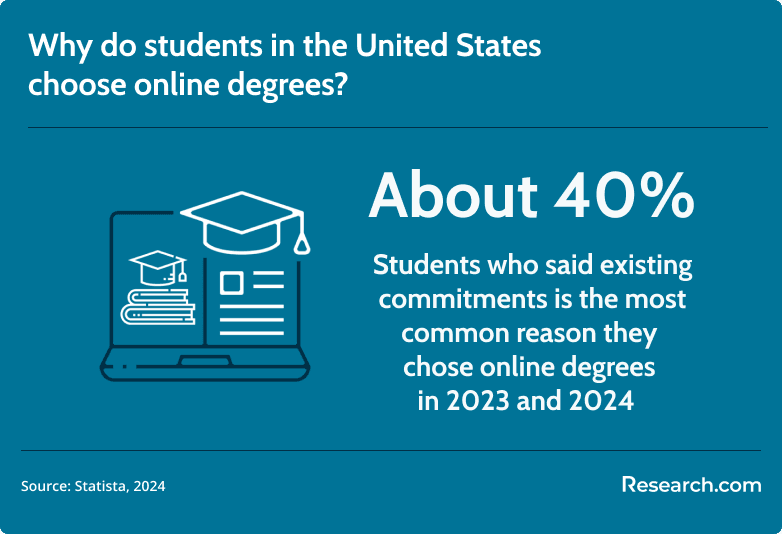
According to 2023 and 2024 data from Statista, the most common reason students choose online degree programs is they have existing commitments, such as work and family, that prevent them from attending courses on campus. The key is to choose an online program that does not leave you isolated. Look for live access to faculty, meaningful group work, internship support, career advising, and active alumni networks.
What is the average cost of an online Public Policy degree program?
Online public policy tuition varies by school, degree level, residency rules, fees, transfer credits, and full-time or part-time enrollment status. Based on the programs reviewed for this guide, the tuition price for the best online bachelor’s public policy programs costs about $360 to $570 per credit.
Those figures are generally consistent with Education Data Initiative’s reported averages: the average cost for an online degree from a public institution is $337 per credit hour, while online education from a private college or university is $516 per hour.
For graduate study, the tuition price for the best online master’s in public policy programs reviewed for this guide costs around $600 to $2,000 per credit.
| Cost factor | Why it changes your real price |
| Tuition per credit | This is the base price, but it does not always include mandatory fees. |
| Flat-rate tuition | Some schools charge a flat semester rate for full-time students, which may reduce the cost per course. |
| Transfer credits | Accepted credits can reduce the number of courses you must pay for. |
| Fees | Technology, library, college, graduation, and course fees can increase total cost. |
| Residency rules | Some public universities charge different rates for in-state and out-of-state students, while others use one online rate. |
| Books and materials | Policy programs may require software, data tools, case materials, or textbooks. |
For example, Mizzou charges part-time students taking one to 11 credits $569.10 per credit hour, while full-time students taking 12 to 18 credits pay a flat rate of $6,825 per semester. That structure may benefit students who can handle a heavier course load.
Fees can also change the real cost. UMass Dartmouth lists $599 per credit tuition for its MPP degree, but also charges a technology fee ($50), library access fee ($6), and college fee ($19) per credit, bringing the real cost to $674 per credit.
Before choosing a program, calculate total cost rather than looking only at advertised tuition. This is especially important as reporting indicates that online college is becoming more expensive.
What are the financial aid options for students enrolling in an online Public Policy degree program?
Online public policy students may qualify for the same broad categories of financial aid as campus students, as long as the school and program meet eligibility requirements. The best approach is to complete financial aid steps early and compare net cost after grants, scholarships, discounts, and employer support.
1. Federal Financial Aid
- FAFSA: The Free Application for Federal Student Aid is the starting point for federal grants, loans, and work-study eligibility.
- Federal Work-Study Programs: Some schools may offer work-study opportunities, although they are less common in online graduate programs and may vary by institution.
2. Institutional Aid
- University scholarships and grants: Schools may award merit-based or need-based aid to online students. The UNI Online & Distance Education Scholarship from the University of Northern Iowa awards $1,000 per year to qualified graduate students, including students in UNI’s online MPP program.
- Tuition discounts: Some institutions reduce tuition for military students, alumni, partner employees, or public servants. The University of Pittsburgh offers a 20% tuition discount to students in its online MPPM program if they are employed full-time by a local, state, or federal government agency.
3. External Scholarships and Grants
- Public Policy and International Affairs Program (PPIA) Fellowship: This program supports students pursuing graduate study in public policy and related fields.
- The American Society for Public Administration (ASPA) Scholarships and Awards: ASPA provides awards that may include stipends for the ASPA annual conference, cash awards, and other support for education and professional development.
- Obama Foundation Scholarships: These scholarships are designed to support emerging leaders addressing global challenges.
- Morris K. Udall and Stewart L. Udall Foundation Scholarships: This foundation supports students pursuing careers related to the environment, tribal public policy, or Native American health care.
- Government and nonprofit scholarships: Agencies and nonprofit organizations may offer awards tied to specific policy areas such as health policy, education, environment, or community development.
4. Employer Tuition Reimbursement
- Working students should ask human resources whether tuition reimbursement, professional development funding, public service benefits, or agency-sponsored education support is available.
Even the affordable online master's in public policy options can still require careful planning. Use each school’s net price calculator, ask whether online students qualify for the same institutional aid as campus students, and compare total out-of-pocket cost after all awards.
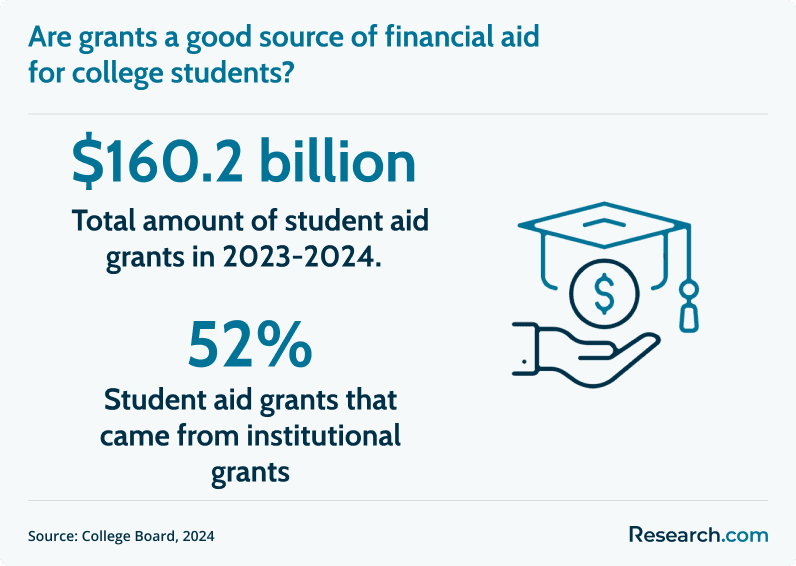
The Trends in College Pricing and Student Aid 2024 report from the College Board shows that undergraduate and graduate students received a total of $160.2 billion in student aid in the form of grants in 2023-2024, and 52% of sources came from institutional grants.
What are the prerequisites for enrolling in an online Public Policy degree program?
Admission requirements depend on degree level and institution. Some programs are designed for first-time college students, while others expect professional experience or prior graduate preparation.
| Degree level | Common admission requirements | What can strengthen an application |
| Bachelor’s in public policy | High school diploma or GED, minimum GPA usually around 2.5 to 3.0, optional SAT or ACT scores at some schools, personal statement or essay, and sometimes letters of recommendation | Community service, student government, debate, volunteer work, strong writing, transfer credits, or public affairs interest |
| Master’s in public policy | Bachelor’s degree from an accredited institution, minimum GPA often 3.0 or higher, GRE scores at some schools, resume or curriculum vitae, statement of purpose, and two to three letters of recommendation | Public service, nonprofit, government, research, advocacy, data, legal, or administrative experience |
| Doctoral degree in public policy | Master’s degree in public policy, political science, or a related field; strong academic record with GPA of 3.5 or higher; GRE scores sometimes required; research proposal; writing samples; and letters of recommendation, usually to five from academic or professional sources | Published research, advanced methods coursework, policy experience, faculty fit, and a focused research agenda |
Applicants to graduate programs may come from many academic backgrounds. Social science preparation can be helpful, including an online degree in political science, but many programs also admit students from business, economics, sociology, law, education, healthcare, data analytics, and public administration backgrounds.
Always confirm requirements directly with the school because test policies, GPA expectations, transfer rules, and experience requirements can change.
What courses are typically in an online Public Policy degree program?
Public policy curricula are designed to help students move from identifying a problem to recommending, implementing, and evaluating a solution. Courses vary by school, but most programs combine theory, analysis, communication, and applied practice.
Bachelor’s Degree Courses
- Introduction to Public Policy: Covers the policy process, institutions, stakeholders, and the role of evidence in decision-making.
- Political Science and Government: Examines political systems and how power, institutions, and public opinion affect policy.
- Economics for Public Policy: Applies economic reasoning to public problems, incentives, markets, and government intervention.
- Ethics in Public Administration: Explores fairness, accountability, transparency, conflict of interest, and public trust.
- Data Analysis and Statistics: Teaches students to interpret data, evaluate outcomes, and support policy recommendations with quantitative evidence.
Master’s Degree Courses
- Policy Analysis and Program Evaluation: Focuses on assessing whether policies and programs are effective, efficient, and equitable.
- Public Budgeting and Finance: Covers public revenue, spending decisions, budget constraints, and fiscal accountability.
- Research Methods in Public Policy: Introduces qualitative and quantitative methods used in policy research.
- Leadership and Management in Public Service: Builds skills for managing agencies, teams, nonprofit organizations, and public programs.
- Advanced Data Analytics for Policy: Uses data-driven tools to analyze public issues and guide decision-making.
Doctoral Degree Courses
- Advanced Policy Theory: Examines how policies are developed, adopted, implemented, and changed over time.
- Quantitative Methods in Policy Research: Develops advanced statistical skills for empirical policy research.
- Policy Implementation and Evaluation: Studies how policies operate in practice and how results are measured.
- Comparative Public Policy: Compares policy systems and outcomes across countries or regions.
- Dissertation Research and Writing: Guides students through original research that contributes to the field.
What types of specializations are available in online Public Policy degree programs?
Specializations help students connect broad policy skills to a specific career market. Choose a concentration based on the problems you want to solve, the employers you want to work for, and the technical skills required in that area.
| Specialization | Focus area | Potential career direction |
| Health Policy | Healthcare access, cost, quality, public health systems, and reform | Health policy analyst, public health program specialist, healthcare advocate |
| Environmental Policy | Environmental regulation, sustainability, climate change, and natural resources | Environmental policy analyst, climate policy specialist, sustainability program manager |
| Social Policy | Poverty, inequality, welfare, education, social justice, and human services | Program evaluator, social policy analyst, nonprofit program manager |
| Urban Policy | Housing, transportation, planning, land use, and economic development | City planning support, urban policy analyst, community development specialist |
| International Policy | Global governance, diplomacy, development, and cross-border policy issues | International development specialist, global policy analyst, NGO program officer |
| Nonprofit Management | Fundraising, program design, leadership, grants, and mission-based strategy | Nonprofit manager, grant writer, advocacy director |
| Education Policy | Policy issues across K-12, higher education, funding, access, and outcomes | Education policy analyst, school system program specialist, advocacy researcher |
| Criminal Justice Policy | Law enforcement, courts, corrections, sentencing, and justice reform | Justice policy analyst, legal policy researcher, corrections program evaluator |
| Economic Policy | Government economic decisions, regulation, labor markets, taxation, and development | Economic policy analyst, budget analyst, public finance researcher |
| Data Analytics for Public Policy | Data science, statistics, visualization, modeling, and evidence-based policy | Policy data analyst, program evaluator, research associate |
Students interested in social policy may also compare related pathways such as affordable online sociology degree programs. Those drawn to criminal justice policy may consider whether ABA paralegal programs or related legal training would better support their goals.
Beyond personal interest, consider labor market demand. Using the latest data from O*NET OnLine, the chart below presents the projected employment growth for certain public policy jobs between 2023 and 2033.
How to choose the best online Public Policy degree program?
The best online public policy degree is the one that matches your career target, budget, academic background, schedule, and learning needs. Rankings can help you build a shortlist, but they should not replace careful program comparison.
Step-by-step checklist for comparing programs
- Confirm institutional accreditation. Verify that the school is accredited by a recognized accreditor such as HLC, MSCHE, SACSCOC, WSCUC, NECHE, or NWCCU.
- Check program-level recognition. For graduate public affairs programs, NASPAA accreditation can be an important quality signal, especially for students pursuing public administration or policy leadership roles.
- Match the curriculum to your career goal. A student targeting data-heavy policy analysis should prioritize statistics, research methods, analytics, and program evaluation. A future nonprofit leader should look for budgeting, grants, fundraising, and management courses.
- Compare online delivery formats. Decide whether you prefer asynchronous flexibility, live evening classes, cohort-based learning, or a hybrid option.
- Calculate total cost. Include tuition, fees, books, residency rules, travel, technology, and lost work time if applicable.
- Ask about career support. Look for internship help, capstone projects, policy brief development, alumni access, resume support, and public service job guidance.
- Review faculty expertise. Faculty with public sector, nonprofit, legal, economic, health, environmental, or data experience may offer stronger applied guidance.
- Examine transfer and credit policies. Transfer credits, prior learning assessments, and accelerated pathways can reduce both time and cost.
| Ask the school | Why the answer matters |
| Is the online degree transcripted differently from the campus degree? | Helps you understand how the credential will appear to employers or graduate schools. |
| Do online students receive the same career services as campus students? | Career support can be critical for internships, networking, and job placement. |
| Are internships required or optional, and can they be completed locally or remotely? | Applied experience can help you compete for entry-level or advancement roles. |
| What software, statistics, or data tools are used? | Technical skills can strengthen your policy analysis portfolio. |
| How often are required courses offered? | Limited course availability can delay graduation. |
| What is the total program cost including fees? | Advertised tuition may not reflect the actual price. |
Common mistakes to avoid when choosing a program
- Choosing only by tuition: A low per-credit price may not be the best value if the program lacks career support, applied projects, or relevant coursework.
- Ignoring accreditation: Accreditation affects financial aid eligibility, transferability, employer recognition, and graduate school options.
- Assuming all online formats are the same: Asynchronous, synchronous, cohort-based, and self-paced programs require different study habits.
- Overlooking fees: Technology and college fees can significantly increase total cost.
- Skipping the internship question: A program without applied experience may require you to build practical experience on your own.
- Relying only on rankings: A highly ranked program is not automatically the best fit for your schedule, specialization, or budget.
What future trends are shaping online Public Policy degree programs?
Public policy education is becoming more analytical, interdisciplinary, and technology-aware. Students are increasingly expected to understand not only how institutions make decisions, but also how data, artificial intelligence, public trust, regulation, and cross-sector collaboration shape those decisions.
Many online programs now emphasize data-driven policy analysis, applied simulations, virtual collaboration, and hybrid learning structures that combine flexible coursework with live interaction. AI tools may help policy professionals analyze large datasets, summarize public comments, model possible outcomes, or identify implementation risks, but human judgment remains essential for ethics, equity, political feasibility, and community impact.
Policy programs are also borrowing ideas from related fields such as healthcare administration, business analytics, public management, and nonprofit leadership. Students interested in health systems policy may compare public policy pathways with options such as the cheapest MHA programs online, especially if their career goal is closer to healthcare operations than policy research.
What additional certifications and professional training opportunities can boost career prospects?
Additional credentials can help public policy graduates demonstrate job-ready skills, especially in technical or specialized areas. The best add-on training depends on your target role.
| Training area | Useful for | Why it helps |
| Data analytics | Policy analyst, program evaluator, research associate | Shows that you can work with evidence, datasets, and measurable outcomes. |
| Project management | Program manager, public administrator, nonprofit leader | Supports planning, implementation, timelines, budgets, and stakeholder coordination. |
| Grant writing | Nonprofit manager, advocacy coordinator, community program specialist | Helps organizations secure funding for policy-related initiatives. |
| Regulatory compliance | Government relations specialist, regulatory affairs specialist, consultant | Builds knowledge of rules, risk, reporting, and organizational accountability. |
| Healthcare administration | Health policy analyst, healthcare program specialist, public health administrator | Connects policy knowledge with the operational realities of healthcare systems. |
Students who want an accelerated interdisciplinary credential related to health systems can compare public policy study with the quickest online bachelor's degree in healthcare administration. This may be useful for learners who want to work at the intersection of policy, healthcare delivery, and management.
How Can Interdisciplinary Learning Enhance an Online Public Policy Degree?
Public problems rarely fit neatly into one academic field. Housing policy involves economics, law, urban planning, and social equity. Health policy requires knowledge of finance, public health, regulation, and organizational management. Climate policy draws on science, economics, political feasibility, and community engagement.
For this reason, interdisciplinary learning can make a public policy degree more practical. Students who combine policy analysis with business, healthcare, data science, law, sociology, or public administration may be better prepared to work across agencies, nonprofits, private employers, and community stakeholders.
For example, students focused on healthcare strategy may want to compare policy programs with business-oriented options such as the quickest online MBA healthcare management programs. The right choice depends on whether you want to design and evaluate policy or manage organizations operating within a policy environment.
What challenges do online Public Policy degree students face?
Online public policy students can succeed, but the format requires planning and self-direction. The biggest challenge is not usually the academic content alone. It is staying engaged, building a network, gaining experience, and turning coursework into career evidence.
| Challenge | Why it matters | Better strategy |
| Limited spontaneous networking | Public policy careers often depend on relationships, referrals, and professional visibility. | Attend virtual events, join professional associations, contact alumni, and participate actively in live sessions. |
| Self-directed learning demands | Asynchronous courses require discipline and time management. | Create a weekly study schedule and use office hours before problems accumulate. |
| Balancing work, school, and family | Many online students are working adults with competing responsibilities. | Choose a realistic course load and confirm whether part-time pacing is allowed. |
| Finding applied experience | Employers often want evidence of writing, analysis, data, or program experience. | Prioritize programs with internships, capstones, client projects, or local placement flexibility. |
| Translating coursework into a portfolio | A degree alone may not show your practical skills. | Save policy briefs, evaluation reports, data visualizations, budget analyses, and capstone work. |
Students seeking broader leadership training may also compare policy education with related management programs, including the top MBA sports management programs, if their interests include organizational strategy, public-private partnerships, or policy issues in sports and community development.
What career paths are available for graduates of online Public Policy degree programs?
Public policy graduates can pursue analytical, administrative, advocacy, research, consulting, and leadership roles. Your degree level, specialization, professional experience, writing ability, quantitative skills, and network will strongly affect which roles are realistic immediately after graduation.
Public Sector Careers
- Policy Analyst: Studies public problems, evaluates evidence, and develops policy recommendations for agencies or elected officials.
- Legislative Assistant: Researches policy issues, tracks legislation, prepares briefs, and supports lawmakers.
- Public Administrator: Manages programs, services, staff, budgets, or operations inside government agencies.
- City Planner: Supports planning and development work related to land use, transportation, housing, and communities.
- Government Relations Specialist: Monitors policy developments and communicates an organization’s position to public officials or agencies.
Nonprofit and Advocacy Roles
- Program Manager: Oversees community, social service, education, health, or policy-focused nonprofit programs.
- Advocacy Coordinator: Organizes campaigns, coalition work, public messaging, and policy influence efforts.
- Grant Writer: Develops funding proposals for programs, research, advocacy, or community initiatives.
- Community Outreach Coordinator: Builds relationships with residents, organizations, and stakeholders affected by policy decisions.
- Research Associate: Collects and analyzes information to support reports, evaluations, and policy recommendations.
Private Sector and Consulting Jobs
- Policy Consultant: Advises organizations on policy risks, compliance, strategy, and public impact.
- Corporate Social Responsibility (CSR) Manager: Designs initiatives that connect business goals with social, environmental, and governance priorities.
- Data Analyst: Uses data to evaluate programs, identify trends, and measure social or policy outcomes.
- Regulatory Affairs Specialist: Helps organizations comply with public rules and industry-specific regulations.
- Market Research Analyst: Studies how policies, regulations, and public trends affect markets and organizations.
International and Global Policy Careers
- Foreign Service Officer: Represents government interests abroad and supports diplomatic work.
- International Development Specialist: Designs or manages programs focused on economic development, governance, health, education, or social improvement.
- Human Rights Advocate: Works on policy and advocacy issues related to rights, justice, and international accountability. This path may also interest graduates of legal studies degree online programs who add public policy training.
- Global Policy Analyst: Assesses how international policies affect economic, social, political, or humanitarian systems.
Academic and Research Positions
- Research Scientist: Conducts studies and produces reports on public policy issues.
- University Lecturer or Professor: Teaches public policy and conducts academic research, usually requiring advanced graduate education.
- Policy Fellow: Works with think tanks, universities, government offices, or nonprofit research organizations on policy recommendations.
The chart below shows the average annual earnings of certain public policy jobs.
What is the job market for graduates with an online Public Policy degree?
The job market for public policy graduates is broad but competitive. According to the U.S. Bureau of Labor Statistics (BLS), individuals with degrees in public policy and social services held approximately 964,960 jobs in 2022.
Employment opportunities vary by role. The projected annual job openings for legislators in 2023-2033 is 2,700, while social and community managers are projected to have 17,800 annual openings. Climate change policy analysts can expect 8,500 job openings per year, and public relations specialists have 27,100 annual job openings projected until 2033.
Some roles are specialized and competitive. For example, political scientists tend to earn higher salaries, but the expected employment growth offers only 500 job openings annually in 2023-2033. By contrast, market research analysts may not always reach six-figure average annual salaries, but the projected job openings until 2033 are anticipated to be 88,500 per year.
What affects hiring for public policy graduates?
- Government hiring and public budgets: Local, state, and federal agencies hire policy analysts, program managers, administrators, and specialists, but openings can depend on funding and political priorities.
- Nonprofit demand: Organizations addressing housing, health, education, environment, poverty, and civil rights need professionals who can design, fund, evaluate, and advocate for programs.
- Private-sector regulation: Healthcare, technology, energy, finance, and infrastructure employers often need professionals who understand government rules and policy risk.
- Data-driven decision-making: Employers increasingly value graduates who can work with evidence, metrics, dashboards, surveys, and evaluation methods.
- Career readiness: Graduates with internships, applied projects, policy writing samples, and strong communication skills often compete more effectively.
Graduates who develop specialized skills, score high on career readiness, and build strong professional networks generally have better prospects. Randstad Enterprise’s 2024 Talent Trends report identifies ethical judgment, intuitive insight, and decision-making as among the competitive inherent skills for job seekers. The chart below provides additional details.
Here’s What Graduates Have to Say About Their Online Public Policy Degree
-
: "
"Earning my Public Policy degree online allowed me to balance my full-time job while advancing my career. The flexibility to study at my own pace made it possible to gain invaluable skills in policy analysis and leadership without sacrificing my personal life. I couldn’t have achieved this without the online format." - Niles
"
-
: "
"Studying Public Policy online gave me access to world-class courses and expert professors without having to relocate. The interactive virtual discussions helped me build a strong professional network, and I immediately applied what I learned to my nonprofit role. It was a life-changing experience." - Matilda
"
-
: "
"Completing my Public Policy degree online was one of the best decisions I’ve made. The program’s flexibility let me pursue internships while studying, giving me real-world experience and academic knowledge at the same time. I feel well-prepared for a career in public service." - Misha
"
Key Insights
- An online public policy degree is strongest when it combines accredited academic training, applied projects, quantitative skills, policy writing, and career support.
- According to data from Statista, 40% of students choose online degree programs over traditional ones because of existing commitments.
- The tuition price for the best online bachelor’s public policy programs costs about $360 to $570 per credit, while reviewed online master’s programs cost around $600 to $2,000 per credit.
- Do not compare programs by tuition alone. Fees, transfer credits, course availability, internship requirements, and financial aid can change the real cost and timeline.
- Online public policy degrees are increasingly respected by employers when they come from accredited and reputable institutions.
- Students in the US received a total of $160.2 billion in student aid in the form of grants in 2023-2024, and institutional grants accounted for 52% of sources.
- The best career outcomes usually go to graduates who pair the degree with a specialization, strong writing samples, data skills, internships or capstones, and an active professional network.
- Before enrolling, ask whether the program’s specialization, faculty expertise, online format, internship structure, and alumni network match the specific policy career you want.
References:
- Glassdoor (June 2024). Salary: Public Policy in United States 2025. https://www.glassdoor.com/Salaries/public-policy-salary-SRCH_KO0,13.htm
- Hanson, M. (February 2025). Average Cost of Online College. Education Data Initiative. https://educationdata.org/average-cost-of-online-college
- Korhonen, V. (December 2024). Concerns about choosing online education in the U.S. 2024. Statista. https://www.statista.com/statistics/731089/reasons-why-students-chose-online-versus-on-campus-degree-programs
- Ma, J. et al. (2024). Trends in College Pricing and Student Aid 2024. College Board. https://research.collegeboard.org/media/pdf/Trends-in-College-Pricing-and-Student-Aid-2024-ADA.pdf
- O*NET OnLine (n.d.). O*NET OnLine Help. https://www.onetonline.org/help/online/find_occ Data Retrieved on March 2025
- Randstad Enterprise (2024). 2024 Global In-Demand Skills Report. https://www.randstadenterprise.com/insights/white-paper-and-report/global-in-demand-skills-highlights
- University of Massachusetts Dartmouth (n.d.). Tuition and Fees, UMass Dartmouth Online tuition & fees for the 2024-2025 academic year. https://www.umassd.edu/online/tuition-and-fees
- University of Missouri (n.d.). Public Administration and Policy Tuition and fees. https://online.missouri.edu/degrees-programs/mu/arts-and-sciences/public-administration-and-policy/ba/financial
- U.S. Bureau of Labor Statistics (August 2024). Field of degree: Public policy and social services. https://www.bls.gov/ooh/field-of-degree/public-policy-and-social-services/public-policy-and-social-services-field-of-degree.htm
- ZipRecruiter (2025). Master Public Policy Salary. https://www.ziprecruiter.com/Salaries/Master-Public-Policy-Salary
Other Things You Need to Know About Online Public Policy Degrees
Many online public policy programs require a supervised internship or practicum, often worth 3 to 6 credits. Students commonly complete fieldwork with government agencies, nonprofit organizations, or legislative offices, and programs may require a minimum GPA, background check, or faculty approval before placement.
Yes, 2027 programs typically require courses in political analysis, public administration, and policy evaluation. Some may also include economic theory and statistical methods, offering a well-rounded curriculum designed to prepare students for policy-making roles in various sectors.