
2027 Best Online Master’s in Criminal Justice Degree Programs

Co-Founder and Chief Data Scientist
An online master’s degree in criminal justice is usually considered by professionals who already work in law enforcement, corrections, public safety, investigations, military service, homeland security, or related public-sector roles and want to move into leadership, analysis, policy, research, or specialized investigative work. The decision is not simply “online or on campus.” You also need to weigh accreditation, cost, schedule fit, employer recognition, specialization options, technology requirements, and whether the degree supports the role you actually want.
This guide explains how online master’s programs in criminal justice work, how they compare with campus-based programs, what they may cost, what admissions requirements to expect, which courses and specializations are common, and how to judge whether the investment makes sense for your career goals. It also covers employer perceptions, global recognition, financing options, advancement strategies, and common mistakes to avoid before enrolling.
For some professionals, the degree can support advancement into roles such as detective, forensic technician, researcher, homeland security officer, criminal justice administrator, instructor, or policy-focused practitioner. Some roles may require additional training, experience, certification, agency approval, or licensure-like credentials depending on the employer and jurisdiction. A master’s degree can strengthen your profile, but it does not guarantee promotion, salary growth, or eligibility for every criminal justice position.
Online Master’s Degree in Criminal Justice Table of Contents
- Can you complete a criminal justice master’s degree fully online?
- Do employers respect online criminal justice degrees?
- Are online criminal justice degrees accepted internationally?
- Online vs. campus-based master’s programs in criminal justice
- How much does an online master’s in criminal justice cost?
- What are the requirements for an online master’s in criminal justice?
- Common courses in an online master’s in criminal justice
- How to choose a strong online criminal justice master’s program
- Emerging specializations in online criminal justice master’s programs
- How to move from an associate degree to a master’s in criminal justice
- What is the earning potential in specialized criminal justice careers?
- How can you finance an online master’s degree in criminal justice?
- Career advancement strategies with a master’s in criminal justice
- Can forensic science coursework strengthen a criminal justice career?
- How can homeland security specializations support your criminal justice degree?
- How do networking and alumni support affect career outcomes?
- How can intelligence studies complement a criminal justice career?
- What are alternatives to a traditional master’s degree in criminal justice?
- What trends are shaping criminal justice careers?
Quick Answer: Is an Online Master’s in Criminal Justice Worth Considering?
An online master’s degree in criminal justice can be worthwhile if you need graduate-level credentials for advancement, want to specialize in areas such as cybercrime, homeland security, corrections leadership, forensic analysis, or policy, and can manage graduate coursework while working. It is usually a better fit for self-directed students who need flexibility and already understand the type of criminal justice role they are pursuing.
It may not be the best choice if your target job primarily values academy training, field experience, agency-specific promotion exams, or certifications more than a graduate degree. Before enrolling, confirm that the school is accredited, compare total program costs, ask whether online students receive career support, and verify that the curriculum aligns with your intended career path.
| Decision Point | What It Means for You |
| Best fit | Working professionals seeking leadership, policy, investigative, research, homeland security, corrections, or academic pathways. |
| Watch-outs | Some jobs may still require academy training, field experience, security clearance, certifications, or employer-specific promotion processes. |
| Employer perception | Online credentials are more accepted than in the past, but school reputation, accreditation, and graduate outcomes still matter. |
| Cost question | Do not compare tuition alone; include fees, technology costs, books, lost overtime, travel for any required residency, and time to completion. |
| Career value | The strongest return usually comes when the degree is paired with relevant experience, a specialization, strong writing skills, and professional networking. |
Can you get a degree completely online?
Yes. Many students can now complete a master’s degree in criminal justice fully online, although the exact format depends on the university. Some programs are 100% online, while others may include optional or required live sessions, proctored exams, field-based projects, internships, or short campus visits.
The growth of online learning has made graduate education more accessible to working adults. Before the pandemic, online education statistics already pointed to major expansion in digital learning. The global elearning market was projected to reach $336.98 billion by 2026 at a compound annual growth rate (CAGR) of 9.1% (Syngene Research, 2019).
Many online criminal justice programs use asynchronous teaching, which allows students to review lectures, readings, discussions, and assignments on their own schedule. This format is helpful for police officers, corrections professionals, military personnel, and public-sector employees whose shifts may change. It may also explain why 41% of students said their online learning experience was better than their classroom experience (Statista, 2020).
Online formats you may encounter
| Program Format | How It Works | Best For |
| Fully asynchronous | You complete weekly modules, discussions, readings, and assignments without scheduled class meetings. | Students with rotating shifts, family obligations, or unpredictable work schedules. |
| Synchronous online | You attend live video classes at set times while completing assignments online. | Students who want real-time interaction and can commit to regular meeting times. |
| Hybrid or low-residency | Most coursework is online, but the program may require occasional campus sessions, intensives, or in-person assessments. | Students who want online flexibility but can travel occasionally. |
| Project-based online | You complete applied research, agency-focused projects, policy analysis, or a capstone tied to professional practice. | Working professionals who want coursework connected to their current role. |
Will employers take my online degree seriously?
Many employers now view accredited online degrees more favorably than they did in the early years of online education. Still, acceptance is not automatic. Hiring managers may look closely at the institution, accreditation, program rigor, faculty credentials, internship or capstone quality, and whether the degree comes from a school they recognize.
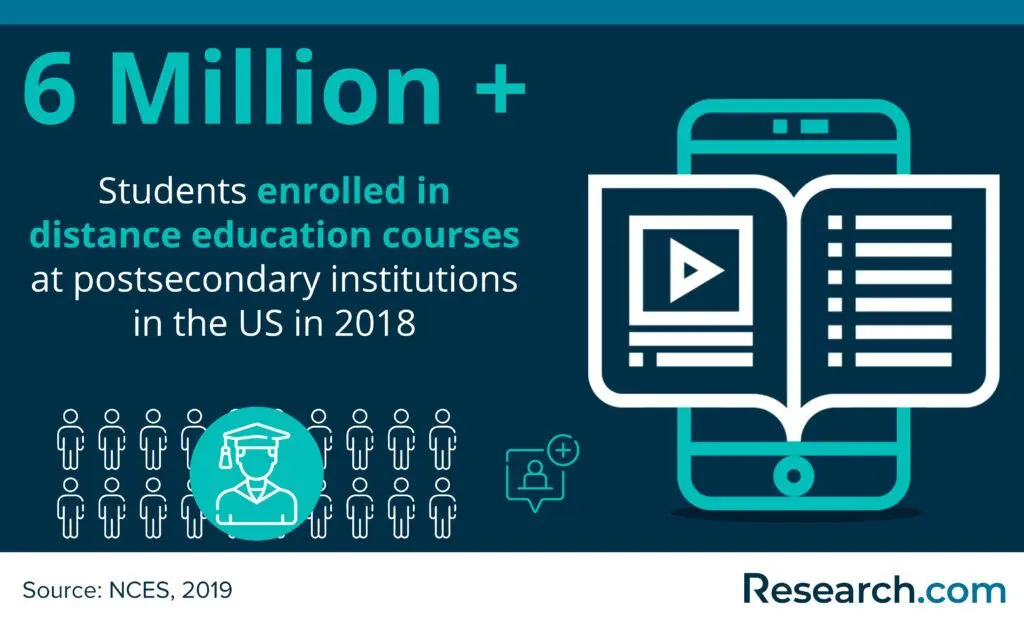
There are still organizations that question online credentials, including some criminal justice degree online programs. However, with 6,932,074 students enrolled in any distance education courses at degree-granting postsecondary institutions in 2018 (NCES, 2019), and with respected universities offering MOOCs, online MBAs, online graduate certificates, and full online degrees, employers increasingly encounter qualified candidates who studied online.
Employer perception is improving, but it remains mixed. Some students who complete an online masters public policy program or a criminal justice graduate program through a nontraditional format may find that employers focus less on modality and more on competence. At the same time, 39% of HR leaders still viewed online degrees as generally lower quality than in-person credentials (Gallagher, 2019). This is why program credibility matters.
How to make an online degree more credible to employers
- Choose an accredited institution. Accreditation is one of the first signals that a school meets recognized academic standards.
- Check whether the diploma says “online.” Some universities do not distinguish online and campus programs on the diploma, but policies vary.
- Look for practitioner-connected coursework. Capstones, applied research, agency partnerships, and field projects can help you show practical value.
- Use your experience strategically. A graduate degree is stronger when paired with law enforcement, corrections, military, investigative, policy, or public service experience.
- Build a portfolio. Policy memos, research projects, data analysis, grant proposals, or emergency management plans can help demonstrate graduate-level skills.
Are online degrees recognized all over the world?
Not always. Recognition of online degrees depends on the country, employer, licensing or government agency, education ministry, and field. The same issue can apply to campus-based degrees: a credential accepted in one country may need evaluation, translation, equivalency review, or additional coursework in another.
If you plan to work internationally, ask three questions before enrolling: Will the degree be recognized by the country where you want to work? Does the school hold the type of accreditation or approval that credential evaluators expect? Does the role require local exams, security clearance, civil service eligibility, language proficiency, or country-specific legal training?
Criminal justice is one of the leading fields of study for online college students. Its online popularity is understandable because graduate study can help working students prepare for senior roles in law enforcement, criminal investigation, homeland security, scientific research, higher education, or related public safety functions.
Online vs. Traditional Master’s Degree in Criminal Justice
A master’s degree in criminal justice examines the institutions and processes that shape public safety, including courts, policing, corrections, criminal behavior, crime prevention, research methods, ethics, policy, and administration. Students may use the degree to pursue advancement in careers in criminology, public agencies, nonprofit organizations, private security, investigations, research, or higher education.
According to the Bureau of Labor Statistics, there were 813, 500 jobs in the criminal justice field, and the sector was projected to have job growth of 5% from 2019 to 2029, which is faster than the average for all jobs (BLS, 2021). Because many professionals in this sector work irregular schedules, online programs can be attractive alternatives to programs at the top cop schools or other campus-based institutions.
The right format depends on your schedule, learning style, employer expectations, budget, and access to campus resources. Use the comparison below to evaluate the trade-offs.
| Factor | Online Master’s in Criminal Justice | Campus-Based Master’s in Criminal Justice |
| Schedule flexibility | Often better for working adults, shift workers, caregivers, and out-of-state students. | Requires attendance at scheduled classes and may be harder to manage with irregular work hours. |
| Learning pace | Some programs offer accelerated or part-time options; others follow standard terms. | Usually follows fixed semesters, quarters, or cohort schedules. |
| Interaction | May rely on discussion boards, video meetings, group projects, email, and virtual office hours. | Provides face-to-face discussion, campus events, and easier access to in-person faculty interaction. |
| Networking | Can be strong if the program has active online cohorts, alumni events, agency partnerships, and career services. | Often easier for students who want campus organizations, local internships, and in-person networking. |
| Cost considerations | May reduce commuting, housing, and meal expenses, but tuition and fees vary widely. | May include campus fees, transportation, relocation, and schedule-related opportunity costs. |
| Best fit | Students who are self-motivated, comfortable with technology, and need flexibility. | Students who prefer structured class meetings and in-person support. |
Flexibility
Online programs typically offer more scheduling freedom because students do not need to commute to campus for every class. This is useful for people who want to keep working while earning a graduate credential, especially those in public safety roles with nights, weekends, rotating shifts, or overtime. Students who live far from the host institution may also gain access to programs they could not otherwise attend. For students considering related legal support pathways, the best online paralegal programs may also be worth comparing.
Pacing
Some online master’s programs are designed for part-time study, while others allow motivated students to move faster. However, “online” does not always mean “self-paced.” Many universities still require weekly deadlines, group discussions, scheduled exams, and term-based progression. Ask whether the program is truly self-paced, cohort-based, accelerated, or semester-based before assuming it will fit your calendar.
Format
Most online criminal justice master’s programs use asynchronous learning, but many also include synchronous meetings, live presentations, virtual group work, proctored testing, or instructor-led seminars. Some schools require occasional on-campus meetings or applied experiences. Read the program handbook carefully so you are not surprised by travel, residency, internship, or fieldwork expectations.
Is an online degree cheaper?
An online degree can be less expensive in some cases because students may avoid commuting, relocation, campus housing, parking, and meal costs. However, online programs are not automatically cheap. Tuition, technology fees, course materials, proctoring fees, graduation fees, and out-of-state online rates can still make the total cost substantial.
For comparison, NCES reported average graduate tuition and fees of $12,000 for in-state public schools, $27,350 for private nonprofit colleges, and $200,000 for the most prestigious schools (NCES, 2019). NCES does not provide a separate average cost for online master’s programs, so students should use these figures only as reference points when comparing actual program prices.
Is an online degree as good as a regular degree?
An online degree can be academically strong when it comes from an accredited institution with qualified faculty, rigorous curriculum, reliable student support, and meaningful assessments. The delivery method alone does not determine quality. A weak online program can be a poor investment, but so can a weak campus program.
The 2018 Northeastern University Center for the Future of Higher Education and Talent Strategy report, Educational Credentials Come of Age: A Survey on the Use and Value of Educational Credentials in Hiring, described online degrees as “mainstream” and examined how hiring leaders evaluate online credentials (Gallagher, 2019).
- : "“The online delivery of degrees is one of the most significant innovations in higher education over the last 20 years,” wrote Gallagher, the Center’s Executive Director. “In the early days, online degrees were often stigmatized by employers and associated with ‘online schools’ in a market dominated by for-profit universities. Today’s online education landscape includes thousands of degree and certificate offerings from colleges of all types—including many of the world’s most well-known and prestigious institutions.”"
The same report found that, as of 2018, 61% of HR leaders believed credentials earned online were generally equal in quality to those completed in person. It also reported that 71% of HR leaders had personally hired someone with a degree or credential completed online. In addition, 52% of HR leaders believed that most advanced degrees would be completed online in the future.
How much does an Online Master’s Degree in Criminal Justice cost?
The cost of an online master’s in criminal justice depends on the institution, tuition model, program length, residency classification, fees, course materials, technology requirements, and whether the student transfers credits or receives employer support. Public universities, private nonprofit institutions, and for-profit schools may use different pricing structures.
College Board data showed that average tuition for in-state public schools was $10,560, compared with $27,020 for out-state public schools and $37,650 for private colleges (College Board, 2020). These figures are not specific to online criminal justice master’s programs, but they are useful benchmarks when estimating affordability.
Online students may save on transportation, housing, and meals, but they may still pay application fees, online learning fees, software costs, books, exam proctoring costs, and technology fees related to learning management systems.
Cost factors to compare before enrolling
| Cost Item | Why It Matters | Question to Ask |
| Tuition rate | Some schools charge per credit; others charge flat term rates or separate online rates. | Is tuition charged per credit, per course, per semester, or as a program package? |
| Residency pricing | Out-of-state students may pay more unless the school offers a special online rate. | Do online students pay in-state, out-of-state, or a separate distance-learning rate? |
| Fees | Technology, graduation, library, proctoring, and student service fees can increase the total cost. | What mandatory fees apply to online graduate students? |
| Books and materials | Graduate courses may require textbooks, case materials, databases, or software. | What is the estimated cost of course materials each term? |
| Time to completion | Taking fewer courses per term may be manageable but can extend total time and fees. | How long do part-time and full-time students usually take to graduate? |
| Employer support | Tuition reimbursement or professional development funds can reduce out-of-pocket cost. | Does my agency or employer reimburse graduate criminal justice coursework? |
Is an online master’s degree in criminal justice worth it?
It can be worth it when the program supports a clear professional goal, such as promotion, specialization, research work, agency leadership, teaching, policy analysis, or transition into federal, state, nonprofit, or private-sector public safety roles. It is less likely to pay off if you choose a program without confirming accreditation, career relevance, total cost, and employer expectations.
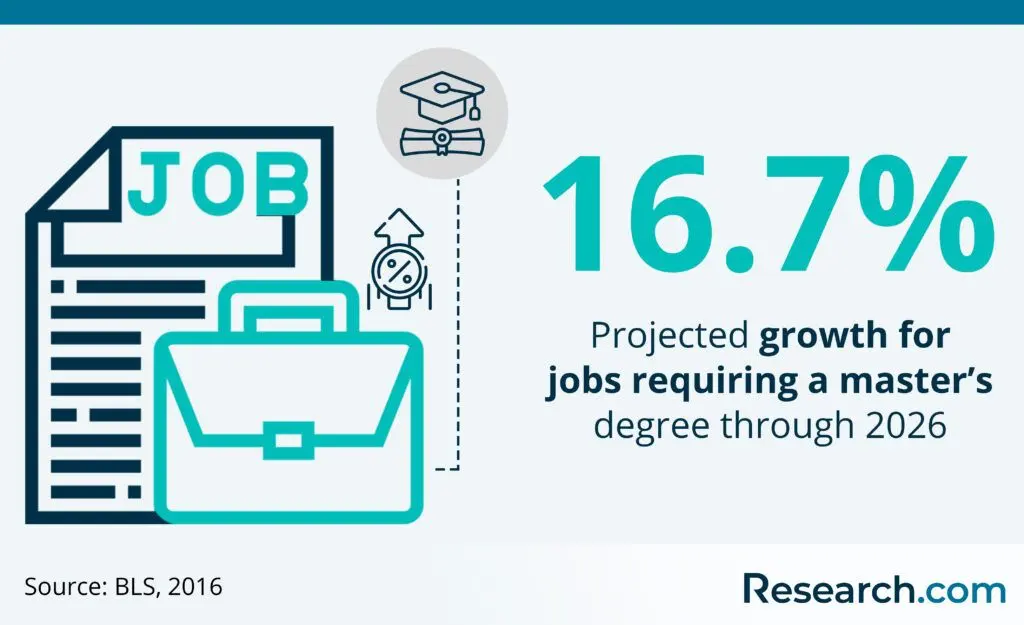
Graduate education can help candidates stand out in competitive hiring environments. The U.S. Bureau of Labor Statistics projected jobs requiring a master’s degree to grow at a rate of 16.7% through 2026 (BLS, 2016). Still, the value of the degree depends on how you use it. Internships, agency projects, leadership experience, certifications, and strong writing or analytical skills can make the credential more powerful.
Skills-based and competency-based hiring is also influencing the labor market. Gallagher (2019) reported that 23% of HR leaders were already using this approach, and 39% were considering moving in that direction. For criminal justice students, this means the degree should help you demonstrate capabilities, not just list a credential.
What are the requirements of an Online Master’s Degree in Criminal Justice?
Admissions requirements vary by school, but most online master’s programs in criminal justice require evidence that applicants can handle graduate-level research, writing, analysis, and professional discussion. Some programs are designed for working criminal justice professionals, while others accept recent bachelor’s graduates from related fields.
Admission Requirements
- Bachelor’s Degree in Criminal Justice or a related field. Most master’s programs require a completed bachelor’s degree from an accredited institution. Some prefer criminal justice, criminology, sociology, psychology, public administration, political science, homeland security, or a related field, while others accept applicants from broader academic backgrounds.
- Transcript and Other School Records. Applicants are usually asked to submit official transcripts, proof of degree completion, and sometimes documents showing prior academic standing. These materials help schools verify preparation for graduate study.
- Minimum GPA. Many graduate programs review undergraduate GPA, often looking for a minimum between 2.75 and 3.0. Some programs may consider applicants below that range if they have meaningful professional experience or submit additional materials.
- Related Work Experience. Experience is not always required, but it can strengthen an application. Law enforcement, corrections, military, legal support, victim services, public administration, emergency management, or nonprofit justice work may all be relevant.
- Standardized Test Score. Some schools still request GRE or MAT scores, while others waive standardized tests or do not require them. Always verify the current policy for your target program.
- Other Documents. Common supporting materials include recommendation letters, a personal statement, resume or curriculum vitae, writing sample, and application essay explaining career goals.
General Requirements for Success
- Critical Thinking and Decision-Making Skills. Criminal justice decisions can affect individuals, communities, agencies, and public policy. Graduate students need sound judgment, careful reasoning, ethical awareness, and attention to evidence.
- Written Communication Skills. Clear writing is essential in criminal justice. Reports, policy briefs, court-related documents, research papers, and administrative memos must be organized, precise, and defensible.
- Time Management Skills. Many students balance graduate school with cases, shifts, court dates, fieldwork, family responsibilities, or agency duties. Planning weekly study blocks is often necessary to stay on track.
What are the technological requirements of students for online learning?
Online learning depends heavily on reliable technology. Students should confirm device requirements, software access, internet needs, and technical support before the first day of class. The education technology market was projected to reach $342 billion by 2025 (World Economic Forum, 2020), which reflects how central digital tools have become in education.
- Reliable Internet Connection. You need a stable connection for streaming lectures, joining video meetings, submitting assignments, taking exams, and accessing library databases.
- Up-To-Date Devices. Ask the school for minimum computer specifications. You may need a laptop or desktop that can run video conferencing tools, the learning platform, productivity software, and any specialized applications.
- Basic Proficiency in Technology. Online students should be comfortable using file uploads, discussion boards, email, virtual meetings, digital libraries, document formats, and troubleshooting resources. This skill also transfers to public safety work, where professionals may use forensic tools, databases, body camera platforms, digital evidence systems, and police record management system solutions.

Courses to Expect in Online Master’s Degree in Criminal Justice
Online master’s programs in criminal justice typically combine theory, research, policy, ethics, administration, and applied analysis. The exact curriculum differs by school and specialization, but the following subjects are common.
Ethics
Ethics courses examine the professional responsibilities of people working in policing, courts, corrections, investigations, and public safety administration. Students may analyze use of authority, conflicts of interest, civil rights, impartiality, professional misconduct, officer discretion, relationships with incarcerated people, and the balance between public safety and individual rights.
Criminological Theory
Criminological theory courses explore why crime occurs and how theories influence prevention, investigation, punishment, rehabilitation, and policy. Students may draw from sociology, psychology, biology, political science, and public administration to evaluate criminal behavior and institutional responses.
Homeland Security
Homeland security coursework focuses on emergency preparedness, terrorism, critical infrastructure, cybersecurity, border security, interagency coordination, and public safety policy. Students often study how agencies respond to threats while protecting civil liberties. According to the Department of Homeland Security, 65% of Americans who went online received at least one online scam offer, 47% had their personal information exposed by cybercriminals, and 44% of millennials had been victims of online crime (DHS, n.d.).
Criminal Justice Policy
Policy courses ask students to evaluate current justice practices, legislative proposals, agency reforms, sentencing, diversion, policing strategies, correctional policy, and evidence-based interventions. These classes often require research papers, case analysis, and recommendations based on data and legal or ethical considerations.
Capstone
Many master’s programs end with a capstone, thesis, applied research project, or agency-based project. A capstone may involve analyzing a real criminal justice problem, designing a policy proposal, evaluating a program, or completing research that benefits the student’s employer or community.
Cybercrime Facts

Things to Look for in an Online Master’s Degree in Criminal Justice
Choosing the right online program requires more than comparing tuition and course titles. Online programs can be flexible, but they can also be demanding. Completion can be a challenge: 40% to 80% of online students do not finish their programs (eLearning Industry, 2018).
The strongest program for you is the one that fits your goals, schedule, learning style, budget, and career stage. Use the criteria below before submitting an application.
- Faculty and Staff Support. Graduate students need access to faculty advising, research guidance, library support, writing help, technology support, and administrative assistance. Ask whether online students receive the same level of support as campus students.
- Virtual Community. Online study can feel isolating if the program lacks interaction. Look for discussion groups, cohort models, virtual events, student organizations, alumni panels, and opportunities to collaborate with classmates.
- Student-Centered Online Learning. A good online program should anticipate student needs. Orientation, LMS training, tutoring, career advising, disability services, and responsive help desks can make the difference between persistence and withdrawal.
- Accreditation. Accreditation is essential. It helps protect the value of your degree, supports transfer or doctoral study possibilities, and gives employers more confidence that the institution meets recognized standards.
Questions to ask before applying
| Question | Why It Matters |
| Is the institution accredited? | Accreditation affects credibility, financial aid eligibility, transfer options, and employer confidence. |
| What careers do graduates pursue? | Graduate outcomes help you judge whether the program aligns with your goals. |
| Are there live class requirements? | Live sessions can be valuable, but they may conflict with shift work. |
| Does the program require an internship, practicum, or campus visit? | These requirements can add time, travel, and scheduling challenges. |
| Can you specialize? | Specializations can make the degree more relevant to cybercrime, corrections, homeland security, policy, or forensic work. |
| What career services are available to online students? | Resume review, interview preparation, alumni connections, and job boards can improve career outcomes. |

Emerging Specializations in Online Master’s Degree Programs in Criminal Justice
Specializations help students tailor a general criminal justice degree toward specific roles. They can also help graduates compete for some of the highest paying criminal justice jobs, although compensation depends on employer, location, experience, clearance requirements, union rules, and job duties.
| Specialization | What You Study | Potential Career Direction |
| Cybercrime and Digital Forensics | Cyber investigations, digital evidence, cyber threats, incident response, and technology-enabled crime. | Cybercrime investigation, digital evidence support, fraud investigation, intelligence analysis. |
| Homeland Security | Counterterrorism, disaster response, border security, critical infrastructure, and interagency coordination. | Emergency management, homeland security analysis, public safety planning. |
| Criminal Behavior Analysis | Psychological theories, behavioral patterns, profiling concepts, victimology, and prevention strategies. | Investigative support, threat assessment, behavioral research, corrections programming. |
| Forensic Science | Evidence collection, laboratory concepts, forensic methods, and investigative applications. | Forensic support, crime laboratory administration, investigative analysis. |
| Corrections and Rehabilitation | Prison administration, reentry, rehabilitation, supervision, and recidivism-related policy. | Corrections leadership, probation or parole administration, rehabilitation program management. |
| Public Policy and Leadership | Policy development, ethics, organizational leadership, budgeting, and justice reform. | Agency leadership, policy analysis, nonprofit advocacy, public administration. |
Bridging the Gap from Associate's to Master's in Criminal Justice
If you currently have an associate degree, you usually cannot move directly into a master’s program unless a school offers an unusual pathway. Most graduate programs require a bachelor’s degree first. The practical route is to finish a bachelor’s degree, build experience, and then apply to graduate school.
- Map the education pathway. If you completed an associates degree criminal justice online or on campus, your next step is usually a bachelor’s completion program. Look for schools that accept transfer credits and offer criminal justice, criminology, public safety, or related majors.
- Confirm transfer credits early. Do not assume all credits will transfer. Ask for a written transfer evaluation before enrolling in a bachelor’s program.
- Build relevant experience while studying. Internships, volunteer work, cadet programs, dispatch work, victim services, legal support roles, security, or public agency employment can strengthen later graduate applications.
- Prepare for graduate admissions. Maintain a strong GPA, develop relationships with faculty, save major writing samples, and document work achievements that show leadership or analytical ability.
- Select the right master’s program. Compare curriculum, faculty background, online format, specialization options, capstone requirements, student support, and career outcomes.
- Look for bridge or prerequisite options. Some schools may offer prerequisite coursework for students who need stronger preparation before graduate-level criminal justice study.
What is the earning potential in specialized criminal justice careers?
Earning potential varies widely across criminal justice roles. Specialized areas such as forensic accounting, cyber investigations, intelligence analysis, homeland security, and administrative leadership may offer different compensation patterns depending on location, employer type, experience, clearance needs, union rules, and market demand.
Students interested in financial investigations can compare compensation expectations with related roles such as forensic accountant salary benchmarks. The key is to evaluate the actual jobs you want, not the degree title alone. Review job postings, required qualifications, preferred certifications, salary bands, and advancement rules before choosing a specialization.
How can I finance my online master’s degree in criminal justice?
Financing should start before you apply. Graduate school can affect your budget for several years, so compare total program cost, likely time to completion, employer reimbursement, federal aid eligibility, scholarship availability, and loan repayment obligations.
- Submit financial aid forms if eligible. Federal student aid may be available for qualifying graduate students at eligible institutions.
- Ask your employer about tuition reimbursement. Public safety agencies, military benefits, government employers, and private security firms may provide education support.
- Search for field-specific scholarships. Criminal justice associations, public safety organizations, universities, and community foundations may offer awards.
- Compare total cost, not sticker tuition. Include fees, books, software, exam costs, travel, and possible lost overtime.
- Avoid borrowing more than necessary. A master’s degree may support advancement, but salary outcomes are not guaranteed.
If affordability is your top concern, compare formats and program requirements carefully. Some students may also review the easiest criminal justice degree online options, but “easiest” should not replace accreditation, rigor, and career fit as your main criteria.
Career Advancement Strategies with a Master’s in Criminal Justice
A master’s degree is most valuable when you use it as part of a broader career strategy. Employers often want evidence of leadership, judgment, ethical decision-making, communication, technical competence, and field experience.
- Choose a specialization that matches your target role. Cybercrime, homeland security, criminal psychology, corrections leadership, and policy tracks can all lead in different directions. Select electives based on job postings and promotion criteria, not just personal interest.
- Use internships, capstones, or field projects strategically. If the program offers applied work, connect it to a real agency problem, such as staffing, recidivism, digital evidence, community policing, emergency response, or policy evaluation.
- Build a professional network. Join associations, attend virtual events, participate in alumni groups, and connect with practitioners in your area of interest.
- Add targeted certifications when appropriate. Certifications in crisis intervention, forensic accounting, emergency management, intelligence analysis, cyber investigations, or related areas may strengthen your profile for specific roles.
- Prepare for leadership requirements. Supervisory roles often require communication, budgeting, conflict resolution, performance management, labor relations, and policy implementation skills.
- Consider adjacent fields. Criminal justice overlaps with social work, emergency management, forensic science, public administration, cybersecurity, intelligence, and legal support. Students comparing broader academic options can review the most lucrative majors in college for additional context.
Can Complementary Forensic Science Studies Enhance Your Criminal Justice Career?
Forensic science coursework can be useful for criminal justice professionals who want stronger evidence analysis, investigative reasoning, crime scene awareness, laboratory literacy, or digital evidence knowledge. It may be especially relevant for students interested in investigative support, crime laboratory administration, cybercrime, forensic interviewing, or multidisciplinary casework.
Students who want a deeper technical foundation may compare related programs, including the cheapest online bachelors in forensic science degree options. Before adding another credential, confirm whether your target jobs require forensic science training, laboratory experience, certification, or a science-heavy academic background.
How Can Homeland Security Specializations Complement Your Criminal Justice Degree?
Homeland security coursework can broaden a criminal justice degree by adding topics such as terrorism, emergency response, cybersecurity, risk assessment, infrastructure protection, intelligence coordination, and disaster management. This combination may fit students interested in public safety planning, federal or state agencies, emergency management, security operations, or interagency coordination.
If your goals involve national security or emergency preparedness, compare criminal justice programs with the top homeland security degrees. Some students may be better served by a homeland security degree, while others may prefer a criminal justice degree with homeland security electives.
How Do Networking and Alumni Support Enhance Career Outcomes?
Networking matters in criminal justice because many opportunities are shaped by professional trust, agency reputation, referrals, field experience, and specialized knowledge. A strong online program should not leave students isolated. Look for career centers, alumni panels, mentorship, employer events, practitioner lectures, virtual networking sessions, and internship support.
Alumni support can help students understand hiring expectations, promotion pathways, agency culture, and emerging needs. Students interested in adjacent public safety education can also compare the fastest online homeland security degree programs to see how related credentials develop emergency management and security-focused skills.
How Can Intelligence Studies Complement Your Criminal Justice Career?
Intelligence studies can strengthen a criminal justice career by adding training in threat assessment, risk analysis, data interpretation, open-source intelligence, national security, terrorism studies, and strategic communication. This combination may be useful for law enforcement analysts, homeland security professionals, investigators, emergency planners, and public safety leaders.
Students who want more specialized preparation can compare online intelligence masters programs with criminal justice programs. The better choice depends on whether you want a broad justice-system education or a more focused intelligence and security curriculum.
What are the Alternatives to a Traditional Master's Degree in Criminal Justice?
A traditional master’s degree is not the only route to advancement. Depending on your role, an alternative credential may be faster, cheaper, or more directly aligned with employer expectations.
| Alternative | When It May Make Sense | Trade-Off |
| Graduate certificate | You need targeted training in cybercrime, homeland security, corrections, intelligence, or public administration. | Shorter than a master’s degree, but may not meet promotion requirements that specify a graduate degree. |
| Professional certification | Your target role values technical or practice-based credentials. | Usually narrower than a degree and may require renewal or experience. |
| Executive master’s program | You are an experienced professional seeking leadership-focused graduate education while working. | Executive masters degrees may be structured differently and may not fit early-career students. |
| Public administration or public policy degree | You want broader government, nonprofit, or policy leadership roles. | May include less criminal justice-specific coursework. |
| Homeland security or intelligence degree | You want a security, emergency management, or analysis-focused pathway. | May be less focused on courts, corrections, criminology, or policing. |
Is an Online Master’s Degree in Criminal Justice right for you?
An online master’s in criminal justice is a serious commitment. It may offer flexibility, but it still requires graduate-level reading, research, writing, discussion, technology use, and sustained time management. Even the fastest criminal justice degree online options require careful planning.
In their 2019 study “Factors That Influence Students’ Decision to Dropout of Online Courses,” Pedro A. Willging and Scott D. Johnson found that students often left after completing only a few courses, with the highest number of dropouts leaving after the first course.
The study, published in the Online Learning Journal, grouped reasons for withdrawal into personal, job-related, program-related, and technology-related categories. Students cited a depersonalized online environment, too much reliance on technology, and limited one-to-one interaction with instructors and classmates.
Other reasons included difficulty working full-time while studying at the graduate level, changes in job responsibilities that made the program less relevant, and technology problems or limitations. These findings are important for prospective students: success depends not only on admission but also on fit.
Before enrolling, assess your weekly schedule, motivation, family responsibilities, employer support, technology setup, learning preferences, and career goals. If you are still comparing graduate options, this overview of the types, costs, and requirements of master’s degree programs can help you evaluate broader choices.
Common mistakes to avoid
| Mistake | Better Approach |
| Choosing a program based only on tuition | Compare total cost, accreditation, graduation requirements, student support, and career fit. |
| Assuming online means easy | Review workload expectations, weekly deadlines, writing requirements, and capstone demands. |
| Ignoring accreditation | Verify institutional accreditation before applying or borrowing money. |
| Picking a specialization without checking job postings | Study real job requirements and preferred qualifications in your target region or agency. |
| Assuming the degree guarantees promotion | Confirm how your employer weighs graduate education, exams, seniority, performance, and field experience. |
| Overlooking technology needs | Make sure you have reliable internet, required software, and a suitable study environment. |
What Emerging Trends are Shaping Criminal Justice Careers?
Technology, data, cybersecurity, digital evidence, and interagency collaboration are changing criminal justice work. Many agencies increasingly need professionals who can interpret information, understand digital risks, communicate findings clearly, and apply ethical judgment to complex public safety problems.
Emerging areas include artificial intelligence for predictive policing, cybersecurity measures, digital evidence management, cybercrime investigations, and data-informed policy analysis. These trends do not eliminate the need for human judgment. Instead, they increase demand for professionals who can evaluate tools critically, understand bias and privacy concerns, and connect technical findings to legal and ethical standards.
Students who want a broader view of occupational options can review careers in criminal justice to compare roles, responsibilities, and possible pathways.
Key Insights
- An online master’s in criminal justice can be valuable, but only when it fits a clear goal. It is strongest for professionals seeking leadership, policy, research, homeland security, corrections, cybercrime, forensic, or academic pathways.
- Employer acceptance has improved, but credibility still matters. Accreditation, school reputation, faculty quality, applied projects, and your professional experience influence how employers interpret the degree.
- Online does not always mean cheaper or easier. Compare total cost, fees, technology needs, program length, and time demands before enrolling.
- Specialization should be job-driven. Choose tracks such as cybercrime, homeland security, forensic science, corrections, or public policy based on the roles you want and the qualifications employers request.
- Student support is not optional. Online learners need advising, faculty access, technology help, career services, library support, and meaningful peer interaction to stay engaged.
- The degree works best with experience and demonstrable skills. Capstones, certifications, writing samples, leadership achievements, internships, and professional networks can make the credential more useful in the job market.
References:
- Bureau of Labor Statistics (BLS). (2016). Occupational Employment Projections Through The Perspective Of Education And Training. Retrieved from https://www.bls.gov/spotlight/2019/education-projections/pdf/education-projections.pdf
- Bureau of Labor Statistics (BLS). (2021). Occupational Outlook Handbook, Police and Detectives. Retrieved from https://www.bls.gov/ooh/protective-service/police-and-detectives.htm
- College Board. (2020). Trends in College Pricing and Student Aid. Retrieved from https://research.collegeboard.org/trends/college-pricing
- Department of Homeland Security (DHS). (n.d.). The Facts. Get clued in to the cyber world reality. Retrieved from https://www.dhs.gov/be-cyber-smart/facts
- eLearning Industry. (2018). How To Cut High Dropout Rates Of Online Courses. Retrieved from https://elearningindustry.com/dropout-rates-of-online-courses-cut-high
- Gallagher, S. (2018). Educational Credentials Come of Age: A Survey on the Use and Value of Educational Credentials in Hiring. Retrieved from https://cps.northeastern.edu/wp-content/uploads/2021/03/Educational_Credentials_Come_of_Age_2018.pdf
- NCES. (2019). Average and percentiles of graduate tuition and required fees in degree-granting postsecondary institutions, by control of institution: 1989-90 through 2018-19. Retrieved from https://nces.ed.gov/programs/digest/d19/tables/dt19_330.50.asp
- NCES. (2019). Digest of Education Statistics 2019. Retrieved from https://nces.ed.gov/fastfacts/display.asp?id=80
- Peterson’s. (2018). Is the Cost of a Graduate Degree Worth It? Retrieved from https://www.petersons.com/blog/is-the-cost-of-a-graduate-degree-worth-it/
- Statista. (2020). How would you compare the instruction of your college-level online learning experiences with your college-level classroom experiences? Retrieved from https://www.statista.com/statistics/956123/opinions-online-college-students-quality-online-education/
- Statista. (2020). Leading fields of study for online college students in the U.S. in 2020, by level of education. Retrieved from https://www.statista.com/statistics/956085/leading-fields-study-online-college-students-level-education-us/
- Syngene Research. (2019). Global E-Learning Market Analysis 2019. Retrieved from https://www.researchandmarkets.com/reports/4769385/global-e-learning-market-analysis-2019
- Willging, P. and Johnson, S. (2019). Factors That Influence Students’ Decision to Dropout of Online Courses. Online Learning Journal. Retrieved from DOI: http://dx.doi.org/10.24059/olj.v13i3.1659
- World Economic Forum. (2020). Learning through play: how schools can educate students through technology. Retrieved from https://www.weforum.org/agenda/2020/01/technology-education-edtech-play-learning/
Other Things You Should Know About Online Master’s in Criminal Justice Degree Programs
In 2027, a master's degree in criminal justice can lead to advanced roles in law enforcement, corrections, forensics, and homeland security. Graduates may qualify for federal positions, policy development roles, and leadership positions within their current organizations.
Many do. A capstone usually requires 3 to 6 credits and a final applied project, while a thesis often involves original research and faculty approval. Some programs let students choose one option; others require a capstone for graduation.
Typical admission requirements include a bachelor’s degree in criminal justice or a related field, transcripts and other school records, a minimum GPA (usually between 2.75 and 3.0), related work experience, standardized test scores (if required), and other documents such as recommendation letters and personal statements.
Students need a reliable computer, high-speed internet, and software like Microsoft Office for most online criminal justice programs in 2027. Some courses may require specific applications for virtual labs or communications, providing key tools for coursework and interaction.
An online master's in criminal justice typically requires between 30 to 36 credit hours to complete. This can vary by program, but most institutions in 2027 maintain a curriculum within this range to provide a comprehensive education while ensuring timely completion.
Yes, one of the significant advantages of online master’s programs is their flexibility, allowing students to balance their studies with full-time jobs or other commitments. Many programs offer asynchronous learning, enabling students to complete coursework at their own pace.
An online master's degree in criminal justice typically takes 1.5 to 2 years to complete. However, this duration can vary based on the program structure and whether a student is enrolled part-time or full-time.
In 2027, the cost of an online master’s degree in criminal justice typically ranges from $10,000 to $40,000, depending on the institution. Tuition varies based on factors like in-state or out-of-state status, program length, and additional fees.


