
2027 Best Online Master’s in Public Policy Degree Programs

Co-Founder and Chief Data Scientist
An online master’s degree in public policy is designed for people who want to move beyond entry-level policy work and qualify for roles that require stronger skills in analysis, leadership, economics, law, research, and program evaluation. It can support careers in government, nonprofit advocacy, consulting, urban planning, research organizations, public affairs, and private-sector policy teams.
The decision is not only academic. It is also financial and professional. A public policy master’s can require one to two years of study, 30 to 40 credits, and a tuition investment that often ranges from $350 to $565 per credit, or about $11,000 to $24,000 in total tuition for online public policy programs (US News, n.d.). Before enrolling, students should compare accreditation, cost, curriculum, flexibility, career outcomes, and whether the program fits their target role.
This guide explains how online master’s programs in public policy work, how they compare with campus-based options and other college degree types, what they cost, what courses to expect, how employers view online credentials, and how to decide whether the degree is worth it for your career goals.
Quick Answer: Is an Online Master’s in Public Policy Worth It?
An online master’s in public policy can be worth it for professionals who want to qualify for higher-level policy, research, public administration, advocacy, planning, or public affairs roles while continuing to work. The degree is most useful when it comes from an accredited institution, offers relevant policy concentrations, includes applied projects or internships, and has strong career support.
The financial case depends on total cost, time to completion, employer support, and your target career path. According to a U.S. Census Bureau report, master’s degree holders in public policy make an average of $19,000 more than those with a bachelor’s degree (U.S. Census Bureau, 2025). However, salary outcomes vary by employer, location, experience, sector, and job title, so students should avoid assuming that the degree alone guarantees a raise or promotion.
Online Master’s Degree in Public Policy Table of Contents
- Can you complete a public policy master’s fully online?
- Do employers respect online public policy degrees?
- Are online degrees accepted internationally?
- Online vs. campus public policy master’s programs
- How much does an online master’s in public policy cost?
- What are the admission requirements?
- What courses are common in public policy master’s programs?
- How to choose the right online public policy program
- How can the degree support social impact work?
- How can students pay for an online public policy master’s?
- What jobs can graduates pursue?
- What is the career demand for public policy graduates?
- How public policy education helps address global challenges
- Alternatives to a master’s in public policy
- Can this degree lead to doctoral study?
- What challenges do online public policy students face?
- How should students evaluate return on investment?
- How do online programs provide practical experience?
- How do online programs support networking?
- How do programs use emerging technology?
Can You Complete a Public Policy Master’s Fully Online?
Yes. Many universities now offer public policy master’s programs online, including programs built for working adults who need to study outside traditional weekday class hours. Depending on the school, courses may be asynchronous, synchronous, or a blend of both. Some programs are fully remote, while others may include short residencies, fieldwork, internships, or project-based requirements.
Online graduate education has become especially common at the master’s level because many students are already employed and need a format that fits around professional and family responsibilities. The latest college statistics show that the share of students enrolled in online master's degree programs reached 31%, with online-available master's degree conferrals exceeding classroom-only programs by nearly 100,000 (NCES, IPEDS, 2024).
Online study is also well suited to fields such as public policy because much of the work involves reading policy reports, interpreting data, writing briefs, analyzing laws, debating alternatives, and presenting recommendations. Students considering graduate study may also find it useful to review why professionals pursue advanced degrees through resources such as this discussion of master’s-level education.
John Sandars and his co-authors captured the institutional shift toward online learning this way: “For some schools, this comes as a shift in emphasis for a curriculum that already has a well-integrated online presence. For others, the shift is challenging in that it requires both cultural and technological adaptations that might otherwise have been planned out over a much longer period, but have been forced to rapidly implement changes to accomplish the educational mission despite the disruption."
The key question is not whether an online degree is possible. It is whether a specific program offers the academic rigor, accreditation, policy focus, faculty access, applied learning, and career support you need.
Will Employers Take an Online Public Policy Degree Seriously?
Employers increasingly evaluate online degrees based on the institution, accreditation, curriculum, reputation, and relevance to the job rather than the delivery format alone. A report from the Center for the Future of Higher Education & Talent Strategy found that 55% of employers think there are no differences in the quality of online and traditional education (Gallagher, 2018).
For public policy roles, employers often care most about whether candidates can analyze complex problems, use evidence responsibly, write clearly, communicate with stakeholders, understand government processes, and evaluate programs. A well-designed online program can build those skills, but students should still check whether the degree is from an accredited school and whether the curriculum matches their career goals.
A master’s degree can also help professionals compete for senior policy, management, research, or advisory roles. It may support salary growth and promotion opportunities, but outcomes depend on experience, sector, location, employer needs, and the strength of the student’s professional network.
Are Online Degrees Recognized Internationally?
Online degrees can be recognized by employers and institutions outside the United States, but recognition is not automatic in every country, employer, or regulated profession. Students who hope to work internationally should verify how the degree will be viewed by target employers, government agencies, credential evaluators, or graduate schools in the country where they plan to work.
Hiring practices are also changing. As of January 2024, only 17.8% of U.S. job postings on Indeed required a four-year degree or higher, down from 20.4% in recent years (Indeed Hiring Lab, 2024). This does not make degrees irrelevant. Instead, it shows that many employers are becoming more focused on demonstrable skills, credentials, experience, and job-specific competencies.
Online public policy programs can support this shift by helping working professionals build advanced analytical and leadership skills through a format that may align with competency-based education models. Students seeking international mobility should choose recognized institutions, keep documentation of coursework and accreditation, and confirm whether additional credential evaluation will be required.
Online vs. Traditional Master’s Degree in Public Policy
Both online and campus-based public policy master’s programs can prepare students for advanced policy work. The better choice depends on your schedule, learning preferences, budget, location, need for campus networking, and access to local policy internships or government agencies.
Demand for advanced skills is a major reason professionals consider graduate education. According to the World Economic Forum's Future of Jobs Report 2025, 63% of employers cite the skills gap as the key barrier they face (World Economic Forum, 2025). For public policy students, this means programs that build data literacy, economic reasoning, communication, legal understanding, and cross-sector collaboration may be especially valuable.
A master’s degree in public policy typically prepares students for roles that require deeper research, analysis, and leadership capacity. These may include positions related to urban or regional planning, political science, survey research, program management, and policy evaluation. According to the BLS, master’s degree holders in public policy can earn up to $139,380 annually, which is the equivalent of $67.01 per hour (Bureau of Labor Statistics, 2024).
| Factor | Online Master’s in Public Policy | Traditional Campus Program | Best Fit |
| Schedule | Often designed for working professionals, with asynchronous or evening options | Usually follows a fixed campus schedule | Online is better for students balancing work, family, or relocation limits |
| Networking | Virtual networking, online discussion groups, alumni events, and remote mentorship | In-person access to classmates, faculty, campus events, and local organizations | Campus may be stronger for students who want daily face-to-face interaction |
| Learning style | Requires independence, planning, and strong written communication | Provides more built-in structure and immediate classroom interaction | Online works best for self-directed learners |
| Practical experience | May include virtual projects, local internships, remote consulting assignments, or simulations | May offer campus-based research centers, nearby government placements, and policy labs | Compare each program’s applied learning requirements, not just format |
| Cost | May reduce relocation, commuting, and some campus-related expenses | May include additional living and transportation costs | Online can be more affordable, but total fees still vary by school |
Learning Schedule
Online programs usually offer more control over when coursework is completed. Asynchronous courses allow students to watch lectures, complete readings, and contribute to discussion boards on their own schedule. Synchronous courses require live attendance at set times, often through video conferencing.
Campus programs offer a more predictable rhythm and may be easier for students who prefer face-to-face class meetings, immediate discussion, and structured deadlines. The trade-off is less flexibility for those who work full time or live far from campus.
Learning Experience
Public policy education relies heavily on debate, evidence, writing, and collaboration. Campus programs can make this interaction feel more natural because students meet in classrooms, attend public events, join student organizations, and participate in simulations or policy debates in person.
Online programs must recreate that experience through live seminars, group projects, discussion boards, virtual office hours, shared documents, polling tools, case simulations, and recorded lectures. A strong online program should not feel like a set of isolated readings. It should create regular opportunities to analyze current policy problems with faculty and peers.
Skills and Knowledge Developed
Whether students study online or on campus, a public policy master’s should build the skills needed to investigate public problems, compare policy alternatives, interpret evidence, communicate recommendations, and understand how political, economic, legal, and administrative systems affect policy outcomes.
Students also develop practical skills for a career in public policy, including policy memo writing, stakeholder analysis, data interpretation, program evaluation, budget analysis, advocacy strategy, and public-sector leadership. Online students may also strengthen self-management, digital collaboration, and remote communication skills because of the format.
Is an Online Degree Cheaper Than a Campus Degree?
Online degrees can be less expensive, especially when students avoid relocation, commuting, parking, housing, and some campus-related costs. However, online programs are not automatically cheap. Tuition, technology fees, course materials, residency costs, application fees, and graduation fees can all affect the final price.
School type also matters. Fully online institutions may have different cost structures than universities that operate both campus and online programs. Students should compare total program cost, not only the advertised per-credit tuition rate. The average tuition costs for online degree programs typically range from $38,496 to $60,593 (US News, n.d.).
Is an Online Degree as Good as a Regular Degree?
An online degree can be academically comparable to a campus degree when it comes from an accredited institution, uses qualified faculty, includes rigorous assignments, and provides meaningful interaction and assessment. The format itself is less important than program quality.
Online master’s programs may be especially useful for students who need flexibility, want to continue working, or want to interact with classmates from different regions and professional backgrounds. Students should still be cautious. A weak online program with little faculty access, limited advising, poor graduation outcomes, or unclear accreditation can be a poor investment.
How Much Does an Online Master’s Degree in Public Policy Cost?
Online master’s programs in public policy commonly charge tuition by the credit. Tuition costs for an online master’s degree in public policy typically range from $350 to $565 per credit. In total, students should expect to pay between $11,000 and $24,000 for their tuition (US News, n.d.).
The listed tuition price is only part of the cost. Students should also ask about technology fees, books or digital materials, proctoring fees, internship expenses, travel for required residencies, graduation fees, and whether tuition differs for in-state and out-of-state students.
| Cost Factor | Why It Matters | Question to Ask Before Enrolling |
| Per-credit tuition | Determines the main academic cost of the degree | How many credits are required, and is tuition locked for the cohort? |
| Program fees | Technology, course, or student service fees can raise the total price | What fees are mandatory for online students? |
| Residency or fieldwork | Some online programs require travel or local placements | Are there any in-person requirements, and who pays for travel? |
| Transfer credits | Accepted credits may reduce time and cost | Can graduate credits from another accredited institution transfer? |
| Employer support | Tuition reimbursement can lower out-of-pocket cost | Does my employer fund graduate study related to policy, government, or leadership? |
Students can reduce costs by applying for scholarships, comparing public and private institutions, asking about payment plans, using employer tuition benefits, and choosing programs that accept transfer credits when appropriate. A survey by InStride indicated that 2% of employees actually participate in their employers' tuition reimbursement programs (InStride, 2025). Students whose employers offer this benefit should review eligibility rules before enrolling.
Is an Online Public Policy Degree Worth It Financially?
The degree may be worth the investment if it helps you move into a role that requires graduate-level policy analysis, management, research, public affairs, planning, or advocacy skills. It can also be valuable for professionals already working in government or nonprofits who need a graduate credential to compete for leadership roles.
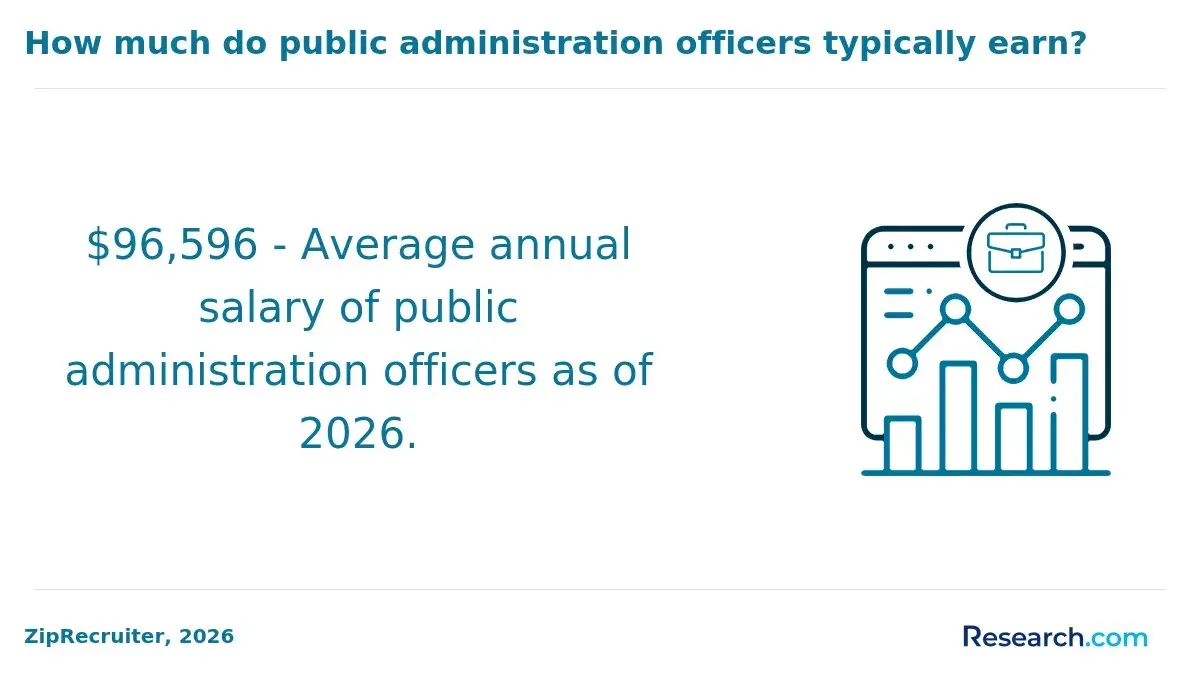
Public policy is broader than government employment. Graduates may work in legal analysis, nonprofit strategy, corporate public affairs, program evaluation, research organizations, and consulting. According to ZipRecruiter, master’s degree holders in public policy can earn up to $145,000 (ZipRecruiter, 2026).
Still, students should evaluate ROI carefully. The strongest financial case usually belongs to students who choose an affordable accredited program, continue working while enrolled, receive employer funding or scholarships, and enter roles where the master’s degree is valued.
What Are the Requirements for an Online Master’s Degree in Public Policy?
Admission requirements vary by university, but most online public policy master’s programs evaluate academic background, writing ability, professional goals, and readiness for graduate-level research and analysis. Competitive programs may also consider work experience, recommendations, and quantitative preparation.
Common Admission Requirements
- Bachelor’s degree: Applicants usually need a bachelor’s degree from an accredited institution. Many programs accept applicants from any major, although backgrounds in public policy, public administration, economics, sociology, law, political science, or related fields can be helpful. Students interested in the political side of policy may also compare the field with a political science degree.
- Official undergraduate transcripts: Schools typically require records of completed courses and grades. Many institutions accept applicants with a 2.5 undergraduate grade point average (GPA) or above, although more selective programs and scholarship awards may require stronger academic performance.
- Statement of purpose: Applicants often explain why they want to study public policy, what policy areas interest them, and how the degree supports their goals.
- Letters of recommendation: Programs may ask for academic or professional references who can speak to the applicant’s analytical ability, communication skills, leadership, and readiness for graduate study.
- Resume or professional history: Work or volunteer experience in government, nonprofits, advocacy, research, education, healthcare, business, or community service can strengthen an application.
- GRE score: Some schools require or accept Graduate Record Examination scores, which assess verbal reasoning, analytical writing, critical thinking, and quantitative reasoning. Policies differ, so applicants should check current requirements at each school.
A study published in i-manager’s Journal of Technology links some college-level academic performance to teaching effectiveness, distraction factors, personality traits, study habits, and motivation. Nisha Arora and Neetu Singh note that “with the increasing number of educational institutes, there is a need to give emphasis on imparting specialized knowledge and technical skills to students to increase their productivity and opportunities for better living which leads towards the economic growth of a country."
Skills That Help Students Succeed
- Research and analytical ability: Public policy students must interpret reports, evaluate evidence, compare policy options, and recognize the limits of data.
- Persuasive communication: Policy work often requires explaining complicated problems to decision-makers, community members, funders, journalists, and agency leaders.
- Leadership: Many public policy students aim for supervisory, management, or strategic roles where they will coordinate teams, manage programs, or guide public initiatives.
- Quantitative comfort: Students do not always need to be advanced statisticians before enrolling, but they should be willing to work with data, budgets, and economic reasoning.
- Ethical judgment: Policy decisions affect communities, budgets, access to services, and public trust, so students need to think carefully about consequences and equity.
Technology Requirements for Online Study
Most online master’s programs require reliable internet access, a laptop or desktop computer, a webcam, a microphone or headset, and the ability to use a learning management system. Public policy coursework may also require word processing tools, presentation software, spreadsheets, video conferencing platforms, online library databases, and collaboration tools.
Courses to Expect in an Online Master’s Degree in Public Policy
A public policy master’s program usually combines economics, political analysis, law, ethics, management, statistics, and applied policy research. Programs commonly take one to two years and require 30 to 40 credits.
Online courses are often asynchronous, which gives students more control over weekly study time. This flexibility is one reason 54% of graduate students in the United States choose to pursue their education online (National Center for Education Statistics, 2024).
| Course Area | What Students Learn | How It Applies at Work |
| Economics of public policy | How policies affect markets, income distribution, resource allocation, and public finance | Useful for budget analysis, tax policy, social programs, and economic development |
| Politics of public policy | How political institutions, interest groups, public opinion, and elected officials shape policy | Useful for advocacy, legislative analysis, public affairs, and stakeholder strategy |
| Public management | How public agencies and nonprofit organizations operate, lead teams, and manage programs | Useful for agency leadership, program administration, and nonprofit management |
| Law and public policy | How statutes, courts, regulations, and constitutional principles affect policy design | Useful for compliance, regulatory analysis, legal policy, and public-sector decision-making |
| Policy analysis | How to define problems, compare options, evaluate evidence, and recommend solutions | Useful for policy analyst, consultant, researcher, and advisor roles |
How to Choose an Online Master’s Degree in Public Policy
The best online public policy program is not necessarily the most famous or the cheapest. It is the program that matches your career target, budget, schedule, learning style, and desired policy specialization.
Recent data from Coursera shows that 65% of online learners are experienced professionals, while 44% identify as career switchers aiming to transition from one industry specialization to another. Conversely, 38% of those enrolled in digital programs are working professionals seeking advanced credentials to secure promotions and leadership roles in their current fields (Coursera, 2024).
Key Factors to Compare
- Accreditation: Choose an institution with recognized accreditation. For public policy and public affairs programs, the Network of Schools of Public Policy, Affairs, and Administration (NASPAA) is the main accrediting body to know.
- Specializations: Look for concentrations that match your intended path, such as healthcare policy, environmental policy, economic policy, local government management, nonprofit management, or public administration.
- Applied learning: Strong programs include capstones, consulting projects, policy labs, internships, simulations, or client-based assignments.
- Faculty expertise: Review whether faculty research and professional experience align with your policy interests.
- Student support: Online students should have access to advising, library services, technical support, writing help, career coaching, and faculty office hours.
- Career outcomes: Ask about graduation rates, job placement information, employer partnerships, alumni networks, and the sectors where graduates work.
- Total cost: Compare tuition, fees, travel requirements, financial aid, employer reimbursement, and time to completion.
Common Mistakes to Avoid
| Mistake | Why It Can Hurt You | Better Approach |
| Choosing only by tuition price | A cheaper program may offer limited support, weak networking, or fewer applied projects | Compare total value, including accreditation, faculty access, outcomes, and career services |
| Ignoring accreditation | Unrecognized programs may create problems for employment, transfer credits, or future doctoral study | Confirm institutional accreditation and review NASPAA relevance for public policy programs |
| Assuming online means self-paced | Some online programs still require live attendance and strict weekly deadlines | Ask whether courses are asynchronous, synchronous, or hybrid |
| Skipping career outcome questions | A program may be academically interesting but poorly connected to your target roles | Request data on graduate employers, internships, capstones, and alumni support |
| Overlooking hidden costs | Fees, residencies, software, and materials can raise the final price | Ask for a complete cost estimate before committing |
| Relying only on rankings | Rankings may not reflect your goals, budget, or specialization needs | Use rankings as one input, not the entire decision |
How Can an Online Master’s Degree in Public Policy Support Social Impact Initiatives?
An online master’s in public policy can help students turn concern about public problems into practical strategies for change. The degree teaches students how to define social problems, evaluate evidence, understand institutions, write policy recommendations, and work with communities, agencies, nonprofits, and private partners.
- Policy advocacy: Students learn to frame public problems, prepare arguments, brief stakeholders, and advocate for policy changes related to poverty, inequality, sustainability, healthcare access, education, and other public issues.
- Data-informed decisions: Courses in research methods, statistics, and evaluation help students use evidence rather than assumptions when designing or assessing social programs.
- Community engagement: Public management and organizational courses can prepare students to work with local groups, public agencies, and nonprofit partners.
- Cross-sector collaboration: Many social problems require cooperation among government, business, philanthropy, and nonprofit organizations. Public policy training helps students understand how these sectors interact.
- Global and comparative thinking: Exposure to international policy examples helps students consider how strategies from one context might be adapted carefully to another.
How Can I Finance My Online Master’s in Public Policy?
Students should build a funding plan before applying. Common options include scholarships, grants, federal financial aid, employer tuition reimbursement, payment plans, military or public-service benefits where applicable, and lower-cost public university options. Comparing related graduate programs can also help students understand cost differences; for example, reviewing the cheapest MPH programs may provide a useful benchmark for evaluating public-service-oriented graduate tuition.
Before borrowing, students should calculate monthly repayment estimates, expected time to completion, whether they can keep working while enrolled, and how likely the degree is to help them qualify for their target roles.
What Career Options Are Available for Graduates of an Online Master’s in Public Policy?
Graduates can pursue policy-focused roles in government, nonprofits, think tanks, consulting firms, advocacy organizations, public affairs teams, research institutions, and private companies affected by regulation or public-sector decisions. These public policy careers often require strong writing, data analysis, stakeholder communication, and problem-solving skills.
| Career Path | Typical Focus | Good Fit For |
| Policy analyst | Evaluates policies, researches alternatives, writes briefs, and recommends evidence-based solutions | Students who enjoy research, writing, and data interpretation |
| Public affairs specialist | Communicates policy positions, works with stakeholders, and supports organizational advocacy | Students interested in communication, media, government relations, or advocacy |
| Urban or regional planner | Helps communities plan land use, transportation, housing, sustainability, and economic development | Students interested in cities, infrastructure, local government, and community development |
| Public administration consultant | Advises agencies or nonprofits on program design, operations, performance, and policy implementation | Students with management, consulting, or organizational improvement interests |
| Political scientist | Studies political systems, government behavior, public opinion, institutions, and policy trends | Students interested in research, academia, forecasting, or high-level policy analysis |
Career Demand for Graduates of an Online Master’s in Public Policy
Public policy graduates are needed in settings where organizations must interpret laws, respond to social problems, evaluate programs, manage public resources, and communicate with policymakers or communities. Demand is shaped by government priorities, nonprofit funding, regulatory changes, public health needs, environmental challenges, economic development goals, and the increasing use of data in decision-making.
Students seeking lower debt exposure can compare an affordable online master's in public policy with more expensive programs and evaluate whether the difference in cost is justified by stronger career services, faculty access, internships, alumni networks, or specialization options.
The Role of Public Policy Education in Addressing Global Challenges
Public policy education prepares students to approach large-scale problems with evidence, ethics, institutional knowledge, and implementation skills. Global challenges are rarely solved by one agency or one policy. They require coordination across governments, nonprofits, businesses, international organizations, and communities.
Climate Change and Environmental Policy
- Students examine how public decisions affect energy, conservation, emissions, land use, infrastructure, and environmental regulation.
- Policy analysis and advocacy training can help graduates participate in climate-related planning and sustainability initiatives.
Global Health Crises
- Public policy programs can prepare students to analyze healthcare access, emergency response, public health systems, and health equity.
- Students interested in public health policy may also compare public policy programs with healthcare-focused graduate options.
Economic Inequality
- Coursework in economics, taxation, social policy, labor, and public finance helps students study strategies for addressing inequality.
- Case studies and data analysis help students evaluate whether policy interventions are achieving their intended outcomes.
International Relations and Security
- Policy education may address diplomacy, international law, cyber threats, conflict, migration, and national security concerns.
- Students learn to consider how political systems and international institutions shape policy choices.
Social Justice and Equity
- Public policy programs often examine how laws and public programs affect communities differently.
- Graduates may use this training in advocacy, civil rights work, community development, education policy, and public administration.
Students concerned about affordability can also explore institutions offering affordable online college classes, especially if they need prerequisite coursework, certificate study, or lower-cost pathways before committing to graduate school.
What Are the Alternatives to a Master’s in Public Policy?
A public policy master’s is not the only graduate path for people interested in public service, government, advocacy, or leadership. The right alternative depends on whether you want to analyze policy, manage agencies, conduct research, practice law, lead nonprofits, or specialize in health, environment, education, or international affairs.
| Alternative | Best For | How It Differs From Public Policy |
| Master of Public Administration | Students focused on public-sector leadership and agency management | Often emphasizes administration, budgeting, organizational leadership, and implementation |
| Master of Public Health | Students interested in health systems, epidemiology, and health policy | Focuses more specifically on population health and healthcare-related policy |
| Master of Political Science | Students interested in institutions, elections, theory, and political behavior | May be more research- or theory-oriented than applied public policy |
| Law degree | Students who want legal practice, litigation, or regulatory legal work | Provides legal training and may be required for attorney roles |
| Executive master’s degree | Experienced professionals seeking leadership training while working | Executive masters degrees are often structured around applied leadership and professional experience |
Can an Online Master’s in Public Policy Lead to Doctoral Study?
Yes. A public policy master’s can provide a foundation for doctoral work, especially for students interested in policy research, academia, think tank roles, or high-level institutional analysis. Doctoral programs often require stronger research design, quantitative methods, theory, and independent scholarship than master’s programs, so students should choose master’s courses and capstone projects carefully if they plan to continue.
Students considering advanced academic paths can compare policy-related doctoral options with PhD programs online to understand differences in format, duration, research expectations, and career outcomes.
What Challenges Do Students Face in Online Master’s in Public Policy Programs?
Online learning can be convenient, but it is not effortless. Public policy coursework can be reading-heavy, writing-intensive, and analytically demanding. Students must manage deadlines, participate consistently, and stay engaged without the daily structure of a campus environment.
- Time management: Working professionals may struggle to balance policy readings, writing assignments, group projects, and live sessions.
- Limited in-person interaction: Students who learn best through face-to-face discussion may need to be more intentional about joining virtual events and office hours.
- Technical issues: Reliable internet, software access, and comfort with digital tools are essential.
- Group coordination: Policy projects often require teamwork, and remote collaboration across time zones can be challenging.
- Motivation: Online students must create structure and accountability, especially in asynchronous courses.
Some students look for accelerated formats, including an online masters degree 6 months pathway, but speed should not come at the expense of quality, accreditation, learning depth, or career relevance.
What Is the Return on Investment of an Online Master’s in Public Policy?
ROI should be evaluated by comparing total program cost with likely career benefits. Those benefits may include higher earnings, eligibility for senior roles, stronger analytical skills, career mobility, and access to policy networks. A rigorous ROI calculation should include tuition, fees, time commitment, lost income if reducing work hours, loan repayment, and realistic job outcomes.
Students should not rely on salary averages alone. Instead, compare the program’s cost with your target role, sector, location, and experience level. Reviewing best accelerated programs can also help students think about how time to completion affects overall value, especially if finishing sooner reduces opportunity costs.
Questions to Ask Before Enrolling
- What roles do graduates typically enter after completing the program?
- Does the program publish job placement, graduation, or alumni outcome information?
- Are internships, capstones, or consulting projects available to online students?
- How much will I pay in total, including fees and materials?
- Can I continue working while enrolled?
- Does my employer offer reimbursement or promotion pathways for graduate study?
- Does the curriculum align with my preferred policy area?
How Do Online Public Policy Programs Deliver Practical, Hands-On Experience?
Strong online public policy programs go beyond lectures and readings. They give students opportunities to apply policy tools to real or realistic problems through simulations, case studies, capstone projects, internships, consulting assignments, and research briefs.
Examples may include writing a policy memo for a local agency, evaluating a nonprofit program, analyzing a proposed regulation, preparing a budget recommendation, or working with classmates on a simulated legislative negotiation. Students comparing short-term credentials may also encounter related questions such as what is the fastest associates degree to get?, but graduate public policy training should be judged by depth, rigor, and applied relevance rather than speed alone.
How Can Online Public Policy Programs Foster Networking and Professional Growth?
Online students should not assume networking will happen automatically. The best programs intentionally connect students with faculty, alumni, employers, guest speakers, mentors, and peers through virtual events, group projects, career panels, professional associations, and alumni platforms.
Students can strengthen their professional growth by attending online seminars, joining policy associations, asking faculty about research opportunities, building a portfolio of policy writing samples, and staying active in discussion forums. Learners earlier in their education journey may also compare lower-cost undergraduate options, such as a cheap online bachelor degree, before deciding when to pursue graduate study.
How Do Online Public Policy Programs Integrate Emerging Technologies into the Curriculum?
Public policy work increasingly depends on digital tools, data analysis, online public services, and technology governance. Many online programs now include exposure to big data analytics, artificial intelligence, digital government, online service delivery, privacy concerns, and technology-driven policy problems.
Students should look for programs that teach technology as a policy tool and as a policy challenge. Useful coursework may include data visualization, program evaluation software, geographic or demographic analysis, digital governance, and ethical issues in automated decision-making. Students exploring technology-enabled learning more broadly may also compare accelerated online bachelor degrees as part of a longer academic pathway.
The Future of Master’s Degree Holders in Public Policy
A master’s degree is not required for every public policy job, but it can be an important credential for people seeking more influential roles in analysis, management, advocacy, research, planning, or public-sector leadership. It can help professionals move from supporting policy work to shaping, evaluating, and leading it.
The strongest candidates will combine graduate education with practical experience, strong writing samples, data skills, policy specialization, and a professional network. Students interested in related programs can compare broader online degree options before deciding whether public policy is the best fit.
Key Insights
- An online public policy master’s is best for working professionals who need flexibility. Many programs are designed around asynchronous or blended learning, making it possible to study while employed.
- Accreditation matters. Students should verify institutional accreditation and consider the relevance of NASPAA for public policy, public affairs, and public administration programs.
- Cost should be evaluated beyond tuition. Public policy master’s tuition commonly ranges from $350 to $565 per credit, or $11,000 to $24,000 total, but fees, materials, residencies, and time away from work can change the real cost.
- Employer acceptance depends on program quality. Employers are more likely to respect an online degree from a recognized, accredited institution with rigorous coursework and relevant applied experience.
- Career outcomes vary by role and sector. Government, nonprofits, consulting, public affairs, planning, and research organizations may all value public policy training, but salary and advancement are not guaranteed.
- Applied learning is essential. Prioritize programs with capstones, internships, policy labs, simulations, or client-based projects that produce work samples.
- ROI is strongest when the program fits a clear career goal. The degree is most valuable when students choose an affordable accredited program, keep working if possible, use employer or scholarship funding, and target roles where graduate policy training is rewarded.
References:
- Gitnux. (2026). Public affairs industry statistics. https://gitnux.org/public-affairs-industry-statistics/
- PayScale (2026). Master of public policy (MPP) salary. Retrieved from https://www.payscale.com/research/US/Degree=Master_of_Public_Policy_(MPP)/Salary
- US News. (n.d.). Online Master’s Degree in Public Policy. Retrieved from https://www.usnews.com/education/online-education/public-policy-masters-degree
- US News online public policy master’s degree resource. ZipRecruiter. (2025, July). Salary: Public Affairs (July, 2025) – United States. https://www.ziprecruiter.com/Salaries/Public-Affairs-Salary
- ZipRecruiter. (2026). What is public administration salary by state https://www.ziprecruiter.com/Salaries/Public-Administration-Salary
Other Things You Should Know About Online Master’s in Public Policy Degree Programs
The cost of an online master’s degree in public policy varies but typically ranges from $11,000 to $24,000 in total tuition. Factors affecting cost include the institution, the number of credits required, and additional fees for materials or on-site requirements.
No. Most online Master of Public Policy programs do not require an internship for graduation, though some offer one as an elective or practicum option. Common degree requirements are 36 to 48 credit hours, core coursework in policy analysis, and a final capstone or thesis approved by the faculty.
Graduates can pursue various careers such as policy analysts, political scientists, urban planners, nonprofit managers, and public administrators. These roles are available in government agencies, private companies, and nonprofit organizations.
In 2027, common capstone projects for top online public policy master's programs include policy analysis, development of strategic plans for public sector challenges, and research studies on contemporary policy issues, allowing students to apply theoretical knowledge to real-world problems.
Students will develop skills in policy analysis, public management, leadership, research, and persuasive communication. These skills are essential for advancing careers in public policy and related fields.
For 2027, top programs typically require a bachelor's degree, a minimum GPA (usually 3.0), and possibly GRE scores. Strong personal statements, letters of recommendation, and relevant work experience can enhance an application. Some may request a recent resume or specific prerequisites related to public policy.


