
2027 What Can You Do with a Master’s in Public Administration Degree: Costs & Job Opportunities

Co-Founder and Chief Data Scientist
A master’s in public administration is for people who want to manage public programs, lead mission-driven organizations, analyze policy, or move from frontline public service into decision-making roles. The degree matters because government agencies, nonprofits, healthcare systems, schools, and regulated industries need leaders who can manage budgets, evaluate programs, communicate with stakeholders, and make ethical decisions under public scrutiny. In 2024, the public administration sector employed approximately 7.56 million people (Data USA, n.d.), and many leadership roles in this space prefer or require graduate-level preparation.
This guide explains what an MPA covers, how much it can cost, what jobs it can support, and how to decide whether the degree fits your career goals. If you are still comparing undergraduate and graduate pathways, you can also review how a public administration degree builds the foundation for later public-sector leadership.
Master's in Public Administration Degree Table of Contents
- MPA degree overview
- MPA tuition and cost comparison
- Jobs for MPA graduates
- Admission and skill requirements
- How to choose an MPA program
- Using an accelerated associate degree as a starting point
- When an accelerated MPA makes sense
- MPA versus online business degrees
- Ways to finance an MPA
- Project management skills for public administrators
- Accreditation and professional credentials
- Future challenges and opportunities
- 2026 MPA program examples
- Public policy career paths
- How a bachelor’s degree prepares you for an MPA
- Technology and data analytics in public administration
- Business skills that strengthen public-sector leadership
Quick Answer: Is a Master's in Public Administration Worth Considering?
A master’s in public administration can be worth it if your goal is to lead public programs, manage nonprofit or government teams, work in policy, or move into administrative roles in healthcare, education, compliance, or public service. The degree is most useful when it connects directly to a role that values public finance, policy analysis, program evaluation, ethics, and leadership. It is less useful if your main goal is purely private-sector corporate management, where an MBA or specialized business degree may be a better fit.
| Choose an MPA if you want to... | Consider another path if you want to... |
| Lead government, nonprofit, public policy, or community service programs | Focus mainly on corporate finance, marketing, entrepreneurship, or private-sector operations |
| Work with public budgets, regulations, policy implementation, and stakeholder accountability | Build technical expertise in a narrow field such as engineering, accounting, or software development |
| Advance from public service or nonprofit work into management | Enter a licensed profession that requires a different graduate degree |
| Develop skills in policy analysis, ethics, program evaluation, and public leadership | Earn a credential only for salary growth without a clear target role |
What is a master's in public administration degree?
A master’s in public administration, commonly called an MPA, is a graduate degree focused on managing organizations that serve the public interest. It prepares students to work in government agencies, nonprofit organizations, public policy groups, healthcare administration, education, compliance, and other fields where decisions affect communities and public resources.
If you are asking, “What degree should I get for public-sector leadership?” an MPA is one of the most direct options. Unlike a general management degree, an MPA usually emphasizes public accountability, policy design, budgeting, ethics, intergovernmental systems, and service delivery.
MPA programs commonly include coursework in public policy, budgeting and financial management, research methods, data analytics, public health, ethics, and organizational leadership. Many programs also include an internship, consulting project, capstone, or applied policy analysis assignment so students can connect classroom learning to real administrative problems.
Common MPA course topics include:
- Leadership during public health emergencies and community crises
- Ethics, transparency, and accountability in public institutions
- Policy development, implementation, and evaluation
- Nonprofit management and public-private partnerships
- Organizational behavior and administrative analysis
- Project management for public programs and services
What skills does an MPA help you build?
An MPA is valuable because it develops leadership and analysis skills that are difficult to gain from experience alone. Public administrators must often persuade stakeholders, defend budgets, coordinate teams, evaluate outcomes, and communicate decisions to communities. These are not purely technical tasks; they require judgment, credibility, and the ability to balance competing priorities.
Influencing and negotiation skills are especially relevant. In a global survey on skills employees want to develop, almost 50% of employees identified these abilities as important. In public administration, they matter because leaders rarely act alone. They must build coalitions, work across departments, respond to elected officials, and gain trust from community groups.
MPA students also learn program evaluation. This skill helps administrators ask whether a program is reaching the right people, using resources responsibly, meeting legal requirements, and producing measurable results. Combined with strategic planning and public communication, evaluation skills help leaders make stronger recommendations before policies or programs are expanded.
Typical MPA outcomes
| Skill Area | How It Is Used in Public Administration |
| Budgeting and finance | Preparing, reviewing, and defending budgets for agencies, departments, grants, or nonprofit programs |
| Policy analysis | Comparing policy options, estimating effects, and recommending practical solutions |
| Data analysis | Using evidence to identify problems, monitor performance, and improve service delivery |
| Leadership | Managing teams, coordinating stakeholders, and guiding change in complex organizations |
| Ethics and accountability | Making decisions that comply with laws, professional standards, and public expectations |
| Communication | Writing reports, presenting recommendations, responding to public concerns, and explaining trade-offs |
Cost of a Master's in Public Administration Degree
The price of an MPA depends heavily on school type, residency status, delivery format, fees, and whether you study full time or part time. Public universities often charge lower tuition than private institutions, and in-state students at public schools usually pay less than out-of-state students. Online programs may reduce relocation and commuting costs, but they can still include technology fees, course fees, and residency requirements.
If affordability is a primary concern, compare total program cost rather than tuition per credit alone. You can also review broader options for affordable online master programs when building your shortlist.
How much does a master's in public administration degree cost?
Based on published university rates reviewed by our research team, MPA costs vary widely across public and private institutions. For context, an undergraduate degree costs around $8,000 for in-state students, $15,000 for out-of-state students, and $27,000 at a private university.
| In-State | Out-of-State | Private | |
| Least Expensive | $10,750 | $20,800 | $36,200 |
| Average cost | $25,200 | $35,400 | $62,100 |
| Most Expensive | $39,650 | $50,000 | $88,000 |
Cost factors students often overlook
- Fees: Graduate programs may charge technology, student service, graduation, or course-specific fees.
- Residency rules: Some online public universities charge different tuition for residents and nonresidents, while others use a flat online rate.
- Time to completion: A cheaper per-credit program may cost more if it requires extra prerequisites or additional credits.
- Internship requirements: Field placements can affect work schedules, transportation, and income.
- Employer support: Tuition reimbursement can change the real cost of attendance significantly.
Is a master's in public administration degree worth it?
An MPA may be worth the investment if it helps you qualify for roles that require graduate-level management, policy, or public finance training. It is especially relevant if you are pursuing public policy careers or leadership work in government, healthcare, education, finance, social services, or nonprofit administration.
Salary potential depends on your role, employer, location, experience, and sector. The Bureau of Labor Statistics reported that administrative services managers had a median annual salary of $108,390 in May 2024. That figure should not be treated as a guaranteed outcome for all MPA graduates, but it shows that some management roles aligned with public administration can offer strong earning potential.
Master's in Public Administration Degree Jobs
Is a master's in public administration in high demand?
Demand for MPA-related roles is steady rather than explosive. The Bureau of Labor Statistics projects 4% job growth for administrative services and facilities managers from 2024 to 2034, about as fast as the average for all occupations (BLS, 2026). That outlook suggests continued need for administrators who can manage facilities, operations, budgets, compliance, and services, though competition can vary by region and role.
Public administration is also changing because agencies and organizations are expected to respond more effectively to crises, fiscal pressure, misinformation, technology adoption, and public trust concerns. In the study “The Erosion of Trust During a Global Pandemic and How Public Administrators Should Counter It,” published in The American Review of Public Administration, Aaron Deslatte argued that “Public administrators can no longer be content playing the role of behind-the-scenes implementers of public policy.”
For students comparing leadership degrees, an MPA and an online masters in organizational leadership can both support management goals, but they are not identical. The MPA is stronger for public service, policy, budgeting, and government or nonprofit systems. Organizational leadership programs may be broader and more adaptable across industries.
What jobs can you get with a master's in public administration degree?
MPA graduates can pursue roles in public agencies, nonprofits, healthcare organizations, schools, consulting firms, regulatory environments, and mission-driven private companies. The best-fit role depends on your prior experience and chosen concentration.
| Role | What the Work Involves | MPA Skills That Matter |
| Urban and Regional Planner | Evaluates land use, community needs, development plans, and long-term growth priorities while working with government staff, developers, and local leaders | Policy analysis, stakeholder engagement, planning, data interpretation |
| Budget Analyst | Reviews spending plans, supports budget decisions, analyzes program costs, and may help evaluate public budgets or legislation | Public finance, quantitative analysis, reporting, policy evaluation |
| Health Services Manager | Coordinates healthcare operations, manages staff, supports regulatory compliance, and may represent an organization before boards or agencies | Operations management, leadership, compliance, healthcare policy awareness |
| Compliance Manager | Helps an organization follow laws, regulations, and internal policies while identifying and reducing regulatory risk | Ethics, risk assessment, communication, organizational analysis |
What salary can you earn with a master's in public administration degree?
Reported MPA-related salaries vary by source, job title, industry, location, and experience. PayScale listed a salary range of $81,000 to more than $155,000 for master’s in public administration degree holders (PayScale, 2026). Lightcast reported salary examples of $83,300 for a compliance officer, around $79,100 for a budget analyst, $89,900 for a policy analyst, and around $81,300 for a health care administrator (Lightcast, 2026).
Industry also affects pay. Public administration professionals working in the management of companies and enterprises have a median annual salary of $125,690, while those in educational services have a median annual salary of $94,410. These figures are useful benchmarks, but they should be compared with local job postings and your own background before estimating return on investment.
| Salary Question | How to Evaluate It Before Enrolling |
| Will the degree increase my pay? | Compare job postings for your target role and note whether an MPA is required, preferred, or optional. |
| How fast can I recover the cost? | Use total program cost, expected salary change, employer reimbursement, and lost income if you reduce work hours. |
| Does location matter? | Yes. Government pay scales, cost of living, and local hiring demand can change the value of the credential. |
| Do concentrations affect salary? | They can. Public finance, healthcare administration, analytics, and compliance may align with different salary ranges. |
Master's in Public Administration Degree Requirements
Admission requirements vary by university, but most MPA programs expect applicants to show academic readiness, professional motivation, and the ability to write clearly about their goals. Some programs are designed for working professionals, while others admit recent graduates who have strong academic preparation or public service experience.
Common admission requirements
- Completed undergraduate degree. Applicants usually need a bachelor’s degree from an accredited institution. Whether you chose one of the highest paying bachelor degrees or a lower-cost online program, the key requirement is that your prior degree meets the school’s standards.
- Minimum undergraduate GPA. Many programs set a minimum GPA between 2.5 and 3.0 on a 4.0 scale.
- Standardized test scores. Some schools no longer require the GRE or GMAT, but others may still request standardized test results.
- Letters of recommendation. Programs often ask for at least two recommendations from professors, supervisors, or professional contacts who can speak to your readiness for graduate study.
- Professional work experience. Not every program requires it, but many schools state that two to three years of related experience can improve a student’s preparation for MPA coursework.
- Statement of purpose. This essay is especially important if you are changing fields or do not have at least three years of professional experience. It should explain why you want the degree and how it connects to your career goals.
- Application fee. Review application costs, enrollment deposits, and other required charges before applying.
Skills that help students succeed in an MPA program
- Analytical ability. Public administrators must interpret complex information, weigh evidence, and make recommendations under uncertainty.
- Communication. Graduate-level public administration work requires clear writing, persuasive speaking, and the ability to explain decisions to different audiences.
- Leadership. Students preparing for management roles need to understand team dynamics, motivation, delegation, and conflict resolution.
- Critical thinking. Public problems are rarely simple. Administrators must identify root causes, test assumptions, and evaluate possible consequences.
- Ethical judgment. Public service work requires decisions that protect fairness, transparency, compliance, and community trust.
- Time management. Many MPA students work while studying, so planning, prioritization, and deadline management are essential.
What to Look for in a Master's in Public Administration Program
Choosing an MPA should involve more than comparing tuition or name recognition. The right program should match your career goal, schedule, budget, preferred learning format, and target sector. Before applying, review the curriculum, faculty, accreditation, student support, internship options, alumni outcomes, and how well the program serves working adults.
Key factors to compare
- Curriculum. Look for coursework in public budgeting, policy analysis, research methods, program evaluation, leadership, ethics, and data use. If you already know your target career, check whether the program offers a relevant concentration.
- Accreditation. Confirm that the institution or program is accredited by a recognized body, such as the National Association of Schools of Public Affairs and Administration (NASPAA) or The New England Commission of Higher Education (NECHE). Accreditation helps signal that the program meets accepted academic standards.
- Faculty experience. Review whether professors have public administration research, agency leadership, nonprofit management, policy, or consulting experience. Faculty connections can matter for mentorship, applied projects, and career direction.
- Financial aid options. Compare scholarships, assistantships, employer tuition support, grants, and payment plans. A program with a higher sticker price may be more affordable if aid is stronger.
| Question to Ask | Why It Matters |
| Is the program accredited by a recognized agency? | Accreditation can affect employer trust, transferability, and eligibility for some forms of aid. |
| Does the curriculum match my target role? | A nonprofit management concentration differs from public finance, policy analysis, or healthcare administration. |
| Can I complete the program while working? | Evening, asynchronous, part-time, and online options can make a major difference for working adults. |
| Are internships or capstones required? | Applied work can strengthen your resume, but it may also affect scheduling and cost. |
| What career support is available? | Public-sector job searches often depend on networking, writing samples, internships, and targeted applications. |
Common mistakes to avoid when choosing an MPA
- Choosing only by tuition. A low-cost program is not a bargain if it lacks the courses, support, or flexibility you need.
- Ignoring accreditation. Always verify institutional and program-level accreditation before applying.
- Assuming every online program fits every state or employer. Online delivery does not automatically mean the curriculum meets every employer preference or local requirement.
- Overvaluing rankings. Rankings can help you discover programs, but they should not replace a close review of curriculum, cost, outcomes, and fit.
- Skipping the ROI calculation. Estimate total cost, likely salary change, time to completion, and whether your employer can help pay.
Can an accelerated associate degree pave the way to a career in public administration?
An accelerated associate pathway can be a practical first step for students who want to enter college quickly, build transferable credits, or test their interest in public service before committing to a bachelor’s or master’s degree. Options such as 1-year associate degree programs online may introduce students to management, budgeting, communication, and basic data skills.
This route is most useful for learners who do not yet have an undergraduate degree. It will not replace the bachelor’s degree normally required for MPA admission, but it can help students move toward that requirement faster if credits transfer smoothly. Before enrolling, confirm whether the associate program is accredited, whether credits apply to a bachelor’s program, and whether the schedule is realistic.
Are accelerated master's programs in public administration a viable option?
Accelerated MPA programs can work well for focused students who already have relevant experience, strong writing skills, and enough time to manage a compressed workload. These programs typically condense coursework into a shorter period, which can reduce time away from career advancement. However, faster does not always mean easier or cheaper.
Students considering 1-year master's programs online should ask whether the program includes the same core courses, capstone expectations, faculty access, and career support as a longer option. Accelerated formats are best for organized learners with clear goals. They may be challenging for students who need more time for internships, networking, or foundational coursework.
| Accelerated MPA May Fit If... | A Standard Timeline May Be Better If... |
| You have related work experience and a clear target role | You are changing careers and need time to build experience |
| You can handle intensive reading, writing, and group work | You work unpredictable hours or have heavy outside responsibilities |
| You want to finish quickly and minimize time in school | You want internships, research opportunities, or a slower academic pace |
| Your employer supports the schedule | You need maximum flexibility to balance work and study |
How does a Master’s in Public Administration compare to online business degrees?
An MPA and an online business degree can both develop leadership ability, but they prepare students for different environments. The MPA centers on public service, policy, governance, public finance, ethics, and community impact. Business programs usually emphasize corporate strategy, markets, profitability, operations, and financial performance. If you are comparing cost and curriculum across business options, Research.com also provides information on online colleges for business.
| Program Type | Best For | Primary Focus |
| Master’s in Public Administration | Government, nonprofit, policy, public service, public finance, and mission-driven leadership | Policy implementation, ethics, public budgeting, stakeholder accountability, program evaluation |
| Online business degree | Corporate management, private-sector strategy, operations, finance, marketing, or entrepreneurship | Business growth, market analysis, profitability, organizational performance |
| Public policy-focused graduate study | Research, policy design, legislative analysis, and advocacy | Policy research, quantitative analysis, evidence-based recommendations |
How can you finance your Master's in Public Administration?
Financing an MPA starts with knowing the full cost and then layering funding sources. Students should review institutional aid, public service scholarships, grants, assistantships, employer tuition reimbursement, federal aid options, and private loans. Some professionals also compare shorter graduate business pathways, such as 1 year business masters programs, when time and total cost are major concerns.
Practical ways to reduce MPA cost
- Apply early for scholarships. Some graduate awards have priority deadlines that arrive before admission decisions.
- Ask about employer reimbursement. Government agencies, universities, healthcare systems, and nonprofits may offer tuition support for job-related study.
- Compare part-time and full-time enrollment. Part-time study may allow you to keep earning, while full-time study may help you finish sooner.
- Check transfer and waiver policies. Some programs may waive prerequisites or accept limited transfer credits.
- Calculate total cost, not just tuition. Include fees, books, travel, residency requirements, and potential income changes.
How can project management skills complement an MPA?
Project management strengthens an MPA because public administrators are often responsible for turning plans into results. They may coordinate grant-funded initiatives, technology rollouts, community programs, facility improvements, policy implementation, or emergency response efforts. Skills such as scheduling, risk assessment, budgeting, stakeholder communication, and performance tracking help administrators manage these responsibilities more effectively.
Professionals who want a business-oriented project management path can compare options such as cheapest MBA project management programs. For MPA students, the key is to connect project management methods to public accountability, not just operational efficiency.
What Accreditation and Professional Certifications Should I Consider?
Accreditation should be one of your first checks when reviewing MPA programs. Institutional accreditation confirms that the college or university meets recognized academic standards. Programmatic accreditation, such as NASPAA accreditation, can add field-specific credibility for public affairs and administration programs. NECHE is another recognized accreditor referenced by some institutions.
Professional certifications can also support career growth, especially in areas such as public management, project management, budgeting, grants, compliance, or policy analysis. The right credential depends on your target role. If you are comparing broader management options, an affordable online MBA program no GMAT may provide another route to leadership skills, though it will not have the same public administration focus as an MPA.
Accreditation checklist
- Confirm the institution is accredited by a recognized accrediting agency.
- Check whether the MPA program has NASPAA or another relevant program-level recognition.
- Ask whether online and campus students earn the same degree title.
- Review whether accreditation affects employer requirements in your target field.
- Verify information through the school and accreditor rather than relying only on marketing pages.
What are the future challenges and opportunities in public administration?
Public administration is being reshaped by technology, fiscal pressure, public trust concerns, workforce change, cybersecurity risk, and the need for faster crisis response. Leaders are expected to make decisions with better data, explain trade-offs transparently, and manage programs that involve multiple agencies and community stakeholders.
Some administrators also benefit from targeted skills outside a traditional MPA curriculum. For example, infrastructure, facilities, emergency preparedness, and public works roles may reward knowledge of construction, procurement, or operations. Students exploring that direction may review programs such as the fastest construction management degree online as a complementary option, depending on career goals.
2026 Best Master’s in Public Administration Program Examples
Research.com’s review team used current public datasets from reliable sources to prepare 2026 program evaluations. Factors considered included academic ratings, enrollment rate, affordability, online reliability, and related indicators. Use the examples below as starting points, not as a substitute for your own accreditation, cost, curriculum, and career-fit review.
1. Harvard Kennedy School Master in Public Administration
The Harvard University Kennedy School Master in Public Administration allows students to shape the program around academic interests and professional goals. It is interdisciplinary and gives students the option to pursue a concurrent degree in fields such as business, law, medicine, or other professional areas.
- Program Length: 2 years
- Tracks/Concentrations: Local Government, Nonprofit, State and Federal Government
- Tuition: $57,660
- Accreditation: NECHE
2. Brigham Young University Master of Public Administration
The Brigham Young University Master of Public Administration is designed for students committed to public and nonprofit service. The program emphasizes leadership and service-oriented skills that students can apply in professional and community settings.
- Program Length: 2 years
- Tracks/Concentrations: Economics, Management, Public Ethics
- Tuition: $54, 172
- Accreditation: NWCCU
3. North Carolina State University Master of Public Administration
The North Carolina State University Master of Public Administration focuses on applied problem-solving and public service values such as efficiency, effectiveness, equity, and accountability. Many courses meet in the evening, which can support full-time students completing internships and part-time students working in policy or nonprofit roles.
- Program Length: 2 years
- Tracks/Concentrations: Public management, Nonprofit management
- Tuition: $31,675 (in-state), $51,995 (out-of-state)
- Accreditation: NASPAA
4. Rutgers University Online Master of Public Administration
The Rutgers University Online Master of Public Administration is fully online and delivered asynchronously. The program prepares students for roles in government, nonprofit organizations, international organizations, and private-sector settings that interact with public systems. Students work on leadership, management, evidence-based decision-making, the policy process, public service values, and engagement with diverse communities.
- Program Length: 2 years
- Tracks/Concentrations: Public management, Nonprofit management
- Tuition: $9,348 (in-state), $15,408 (out-of-state)
- Accreditation: NASPAA
5. Leiden University Master of Public Administration
The Leiden University Master of Public Administration offers a multi-level perspective on the management of political, economic, and social institutions. Students study how to manage, guide, and coordinate organizations and systems within their broader administrative environments.
- Program Length: 1 year
- Tracks/Concentrations: Economics, International Governance, Public Management
- Tuition:€2,209 (Dutch, EU/EEA, Swiss, and Surinamese students), €19,300 (Non-EU/EEA students)
- Accreditation: NVAO8
Exploring Public Policy Career Paths with a Master’s in Public Administration
An MPA can support public policy careers because it combines policy analysis with implementation and management. Policy work is not only about writing recommendations; it also involves understanding budgets, legal limits, administrative capacity, community needs, and political feasibility. Graduates may work in government agencies, nonprofits, advocacy organizations, think tanks, legislative offices, or international organizations.
Public policy roles to consider
- Policy Analyst: Researches social, economic, environmental, or administrative problems; reviews data; evaluates alternatives; and recommends policy changes for agencies, nonprofits, or research organizations.
- Legislative Assistant: Supports elected officials or legislative teams by researching issues, drafting materials, preparing reports, and tracking whether proposed policies align with public priorities and legal requirements.
- Program Director: Oversees public health, economic development, education, housing, or social service initiatives by combining policy knowledge with staff management, budgeting, and performance evaluation.
Students who want to compare policy-focused roles can explore Research.com’s guide to careers in public policy, especially if they are deciding between policy analysis, program management, and advocacy work.
How can a bachelor’s in public administration help prepare you for a master’s program?
A bachelor’s in public administration can make graduate study easier by introducing students to government systems, public policy, organizational management, economics, political science, and research methods. It can also help students build writing, analysis, and internship experience before applying to MPA programs.
Students trying to control education costs may want to compare the cheapest online bachelor degree in public administration options before moving into graduate study. The main goal is to choose an accredited undergraduate program with transferable credits, relevant coursework, and enough academic rigor to prepare for master’s-level expectations.
The Role of Technology and Data Analytics in Public Administration
Technology and data analytics are now central to public administration. Agencies and nonprofits use digital tools to evaluate services, manage resources, automate processes, monitor outcomes, communicate with residents, and protect public data. This shift does not remove the need for human judgment; it makes ethical oversight and data literacy more important.
How technology is changing public administration
- Data-driven decision-making: Administrators use data to identify service gaps, track outcomes, forecast needs, and support evidence-based recommendations.
- Smart cities and urban management: Public leaders may work with transportation, energy, housing, waste, and infrastructure systems that depend on connected technology and real-time data.
- Automation in public services: Online portals and automated systems can improve efficiency, but administrators must ensure access, accuracy, privacy, and fairness.
- Policy simulation tools: Predictive models can help evaluate possible effects before policies are implemented, especially in public health, environmental planning, and urban development.
- Cybersecurity: Public agencies handle sensitive information, making data protection and system integrity essential leadership concerns.
- Performance measurement: Administrators use metrics and evaluation tools to determine whether programs meet public needs and use resources responsibly.
Students interested in policy, technology, and affordability may also compare an affordable online master's in public policy. Whether you choose an MPA or a public policy program, look for coursework that teaches data interpretation, ethics, digital governance, and program evaluation.
How can complementary business skills enhance leadership in public administration?
Business skills can strengthen public administration when they are applied carefully and ethically. Public leaders often manage budgets, contracts, procurement, operations, human resources, performance targets, and strategic plans. Understanding finance, operations, negotiation, and organizational strategy can make administrators more effective, especially in roles that involve cross-sector partnerships or large service systems.
However, public administration is not the same as private-sector management. Public agencies must balance efficiency with equity, transparency, legal compliance, and democratic accountability. Professionals who want additional business training can review short MBA programs, but they should choose based on whether the curriculum supports their public service goals.
Step-by-Step: How to Decide Whether an MPA Is Right for You
- Define your target role. Write down the job titles you want, then review current postings to see whether an MPA is required, preferred, or simply helpful.
- Compare degree alternatives. Consider whether an MPA, MBA, public policy degree, organizational leadership degree, or specialized credential best matches the work you want to do.
- Check accreditation first. Do not invest time in applications until you verify institutional accreditation and, when relevant, program-level recognition.
- Estimate total cost. Include tuition, fees, books, travel, lost income, and the number of terms required.
- Review curriculum fit. Make sure the program includes the skills your target role needs, such as budgeting, analytics, policy, ethics, or nonprofit management.
- Ask about applied experience. Capstones, internships, consulting projects, and practicums can help career changers build evidence of readiness.
- Evaluate flexibility. Choose a format that matches your work schedule and learning style, not just the fastest or cheapest option.
- Talk to current students or alumni. Ask what support they received, how demanding the workload was, and whether the degree helped them reach their goals.
Key Insights
- An MPA is a leadership degree for public-impact work. It is best suited for students who want to manage public programs, evaluate policy, lead nonprofits, improve services, or move into administrative roles in government-adjacent sectors.
- Cost varies widely. Based on reviewed tuition rates, average costs were $25,200 for in-state public options, $35,400 for out-of-state public options, and $62,100 for private institutions.
- Career outcomes depend on role and sector. Reported salary examples include $83,300 for a compliance officer, around $79,100 for a budget analyst, $89,900 for a policy analyst, and around $81,300 for a health care administrator.
- Demand is steady, not guaranteed. The BLS projects 4% job growth for administrative services and facilities managers from 2024 to 2034, which is about as fast as the average for all occupations.
- Accreditation and fit matter more than rankings alone. Before enrolling, confirm accreditation, compare total cost, review the curriculum, and check whether the program supports your target role.
- Technology is changing public administration. Data analytics, automation, cybersecurity, and performance measurement are becoming core competencies for modern public leaders.
- The degree is most valuable with a clear plan. An MPA can be a strong investment when it connects to specific job requirements, employer expectations, and a realistic return-on-investment calculation.
References:
- Bureau of Labor Statistics (2025). Administrative Services and Facilities Managers. BLS
- Data USA (n.d.). Public Administration. datausa.io
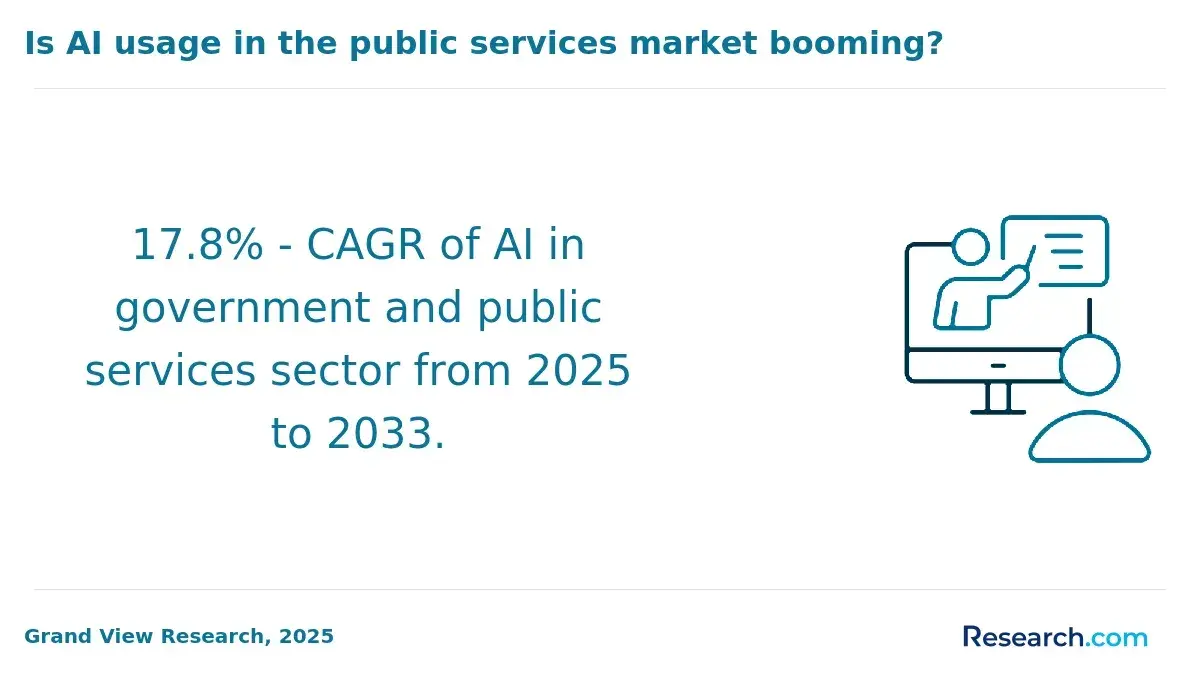
- Grand View Research. (2025). AI in government and public services market report, 2033. https://www.grandviewresearch.com/industry-analysis/ai-government-public-services-market-report
- Intuit (n.d.). Compliance Manager Salary. Intuit
- Salary.com (2026). Budget Analyst Salary. Salary.com
Other Things You Should Know About a Master’s in Public Administration Degree
Common MPA concentrations include public finance, nonprofit management, urban policy, health administration, and emergency management. Many programs require 36 to 48 credit hours, and concentration courses usually make up 9 to 15 credits. Students should check whether the track is aligned with state or federal career goals.
The cost of an MPA degree varies depending on the institution and residency status. On average, the cost at public universities ranges from $25,200 (in-state) to $35,400 (out-of-state), while private institutions average around $62,100. The least expensive programs can cost as low as $10,750 for in-state students, while the most expensive can exceed $88,000 at private universities.
Yes, an MPA degree is worth it, especially for those seeking managerial roles in public administration. The degree provides essential skills for leadership and program management and opens doors to various high-paying job opportunities in multiple sectors, including government, healthcare, and education.
Graduates with an MPA can pursue a wide range of careers, including urban and regional planners, budget analysts, health services managers, compliance managers, and public relations managers. These roles involve managing public programs, ensuring regulatory compliance, and leading teams to achieve organizational goals.
To enroll in a master's in public administration program in 2027, applicants typically need a bachelor's degree from an accredited institution and may need to submit GRE scores, letters of recommendation, and a statement of purpose. Specific prerequisites can vary by university.
Emerging trends for 2027 include increased digitization of public services, a focus on data-driven policy-making, and the growing need for sustainability and crisis management expertise. These trends can enhance job prospects for public administration graduates, especially in government agencies and non-profit organizations.
When evaluating master's in public administration programs in 2027, prioritize institutions with robust alumni networks, diverse courses on new technologies in governance, and strong internship partnerships. These aspects ensure comprehensive preparation for emerging public sector challenges.


