
2027 What Can You Do with a Political Science Degree?

Co-Founder and Chief Data Scientist
Choosing a political science degree is not just a question of liking politics. It is a decision about whether you want to build a career around research, policy, law, government, public affairs, diplomacy, teaching, advocacy, or social analysis. The degree can be flexible, but that flexibility also means students need to plan carefully: the best job options, salary potential, and advancement opportunities often depend on graduate education, internships, writing samples, quantitative skills, and professional networks.
This guide explains what you can do with a political science degree in 2027, how much common roles pay based on US Bureau of Labor Statistics data, which specializations fit different career goals, how online programs compare, and what to check before enrolling. It is designed for prospective students, current political science majors, working adults considering an online degree, and graduates deciding whether additional credentials are worth the cost.
Quick Answer: Is a Political Science Degree a Good Choice?
A political science degree can be a strong choice if you want a career in policy analysis, government, law, public administration, research, education, nonprofit leadership, international affairs, or related social science fields. It develops writing, research, evidence evaluation, public communication, and analytical skills that transfer across sectors. However, the degree is most valuable when paired with practical experience, statistics or data skills, internships, graduate study, law school preparation, or a clear specialization.
According to the US Bureau of Labor Statistics, political scientists in the US had a median annual wage of $132,350 in 2023, and employment for political scientists is projected to grow by 3% from 2023 to 2033. That growth rate is as fast as the average for all occupations in the US during the same period.
Key Things You Should Know about Getting a Political Science Degree
- A political science degree builds practical skills in research, argumentation, policy analysis, communication, and interpretation of political systems. Students typically study government institutions, international relations, public policy, political theory, comparative politics, and public administration.
- A bachelor’s degree in political science usually requires 4 years of full-time study. Accelerated formats may reduce the timeline, while part-time enrollment, double majors, transfer issues, or dual-degree plans can extend it.
- Political scientists earned a median annual wage of $132,350 in 2023, according to US BLS data published in 2024. Salary outcomes vary widely by role, education level, employer type, location, and experience.
- What jobs can I get with a political science degree for 2027?
- Is a political science degree worth it for career advancement?
- How much can I earn with a political science degree?
- How does a political science degree increase my earning potential?
- What specializations can I choose for a political science degree program?
- How long does it take to complete a political science degree program?
- What certifications can I pursue after completing a political science degree program?
- What are the advantages of an online political science degree program?
- Which online political science degree programs offer enhanced accessibility and flexibility?
- What financial aid options are available for political science graduate students?
- What is the job outlook for political science professionals?
- What professional certifications can complement my online political science degree?
- Does an online political science degree offer a strong return on investment?
- How does a political science degree compare to other lucrative online degrees?
- How can I verify that my online political science program is accredited and maintains high quality?
- Can I accelerate my political science education through short online programs?
- What practical experiences and career readiness skills do online political science programs offer?
What jobs can I get with a political science degree for 2027?
A political science degree can lead to several career directions, but the best fit depends on your education level and experience. Bachelor’s graduates often start in research support, legislative offices, campaigns, nonprofits, communications, public administration, or legal support. Master’s and doctoral graduates are more likely to qualify for advanced research, policy analysis, teaching, and leadership roles. Students comparing careers for political science majors should look closely at degree requirements because some roles require graduate training.
| Career path | What the role usually involves | Best preparation |
| Political scientists | Study political systems, public opinion, government operations, policy outcomes, elections, and political behavior. Many work in research organizations, government agencies, consulting, or think tanks. | Strong research methods, statistics, policy writing, graduate education, and experience with public-sector or research projects. |
| Postsecondary teachers | Teach college-level political science courses, advise students, publish research, and contribute to academic programs in areas such as political theory, public policy, and international relations. | Usually an advanced degree, teaching experience, research specialization, and academic writing credentials. |
| Historians | Research historical records, political movements, institutions, laws, and social change. They may work in archives, museums, universities, government, or research organizations. | Archival research, historical methods, writing, subject specialization, and often graduate-level study. |
| Sociologists | Analyze social behavior, institutions, inequality, civic participation, voting behavior, public opinion, and social movements. Their work can inform policy, advocacy, and program design. | Social research methods, survey design, data analysis, theory, and graduate training for many research roles. |
Political science graduates also commonly move into law school, public relations, campaign strategy, journalism, urban planning, nonprofit management, public administration, and diplomacy-related work. These options may not always carry the job title “political scientist,” but they use many of the same skills: reading complex information, explaining trade-offs, evaluating evidence, and communicating recommendations clearly.
Is a political science degree worth it for career advancement?
A political science degree is worth considering if your career goals involve government, policy, law, research, civic institutions, international affairs, advocacy, or education. The degree is especially useful for people who want to understand how laws, institutions, political behavior, and public decisions affect communities and organizations. It can also support broader social science careers where research, communication, and analytical reasoning are central.
The degree is less likely to pay off automatically if you treat it as a general credential without a career plan. Political science is not as linear as nursing, accounting, or engineering. Employers often look for evidence that you can apply what you learned: internships, policy memos, campaign experience, legal or legislative exposure, data analysis, foreign language ability, writing samples, or graduate-level specialization.
| A political science degree may be a good fit if... | You may want another path if... |
| You want to work in policy, law, government, public affairs, education, diplomacy, research, or advocacy. | You want a degree with one fixed occupational outcome and minimal need for further specialization. |
| You enjoy reading dense material, comparing arguments, writing clearly, and analyzing evidence. | You strongly dislike writing, public issues, theory, government processes, or research-heavy assignments. |
| You are willing to build experience through internships, campaigns, fellowships, research assistantships, or public service roles. | You expect the degree alone to guarantee a high-paying role immediately after graduation. |
| You may pursue law school, a master’s degree, a PhD, public administration, or another advanced credential. | You need the fastest possible route into a licensed occupation with clearly defined entry requirements. |
How much can I earn with a political science degree?
Pay depends heavily on the job title, employer, location, education level, and experience. A political science graduate working in an entry-level nonprofit role may earn very differently from a senior policy analyst, university professor, federal researcher, or political scientist with advanced training. The field rewards strong writing, research credibility, subject-matter expertise, and the ability to translate complex issues into practical recommendations.
The US BLS reported the following 2023 median annual wages for selected roles connected to political science training:
| Occupation | 2023 median annual wage | Important context |
| Political scientists | $132,350 | Many positions require advanced education or substantial research and policy experience. |
| Postsecondary teachers | $84,380 | Academic roles often require graduate credentials, teaching ability, and research output. |
| Historians | $72,890 | Roles may be available in research, archives, museums, government, and education-related settings. |
| Sociologists | $101,770 | Advanced research training and quantitative or qualitative methods can be important for higher-level roles. |
Three factors usually have the greatest effect on earnings:
- Career path: Policy research, federal roles, consulting, academia, and specialized analysis may pay differently from campaign, nonprofit, or communications roles.
- Professional experience: Graduates who build strong portfolios, research experience, internships, and employer networks are generally better positioned for advancement than those who rely only on coursework.
- Education level: Master’s degrees, PhDs, law degrees, and specialized graduate credentials can improve access to advanced roles, particularly in research, teaching, law, government, and public administration.
The chart below visualizes the 2023 median annual wages for selected professions available to individuals with a political science background, based on 2024 US BLS data.
How does a political science degree increase my earning potential?
A political science degree can raise earning potential when it helps you qualify for more specialized, analytical, or leadership-oriented work. The strongest financial outcomes usually come from combining the degree with experience, advanced study, technical skills, or a focused career track.
- It can open the door to higher-responsibility roles: Political science graduates may pursue policy analysis, public administration, government research, consulting, teaching, or leadership positions. Political scientists earned a median annual wage of $132,350 in 2023, according to the US BLS.
- It can support advancement into management or advisory work: With experience, graduates may move into roles such as senior analyst, policy advisor, program director, legislative director, or professor. Some professionals also consider related leadership-focused graduate options, such as a doctorate in organizational leadership, when their goals involve executive, administrative, nonprofit, or academic leadership.
- It can prepare you for graduate or professional school: Political science is a common foundation for law school, public administration, international affairs, political science graduate study, and doctoral research. Those advanced pathways can lead to roles that are difficult to access with only a bachelor’s degree.
The key is alignment. A political science degree increases earning potential most effectively when your courses, internships, writing samples, and graduate plans all point toward the same professional direction.
What specializations can I choose for a political science degree program?
Specialization matters because political science covers many different career paths. A student interested in diplomacy should not choose the same electives as someone preparing for city government, legal advocacy, campaign strategy, or academic research. Before choosing a concentration, compare the curriculum with the type of work you want to do after graduation.
| Specialization | What you study | Career directions it may support |
| International relations | Foreign policy, diplomacy, international organizations, conflict, global governance, trade, and relations among states. | Diplomacy-related work, global policy, international nonprofits, international law preparation, research, and security-focused roles. |
| Public policy and administration | Policy design, implementation, budgeting, public institutions, regulation, administrative systems, and program evaluation. | Government agencies, policy analysis, nonprofit management, public-sector leadership, and administrative roles. Students who need flexibility can compare a public administration degree online with political science programs that emphasize public management. |
| Comparative politics | Political systems across countries, regime types, political development, elections, institutions, and governance models. | Research, international organizations, consulting, global affairs, political risk analysis, and academic pathways. |
Other possible focus areas include American politics, political theory, constitutional studies, political economy, campaign politics, public law, security studies, and quantitative political analysis. If you are unsure, choose electives that strengthen broadly marketable skills: statistics, research design, public writing, data visualization, economics, and policy evaluation.
How long does it take to complete a political science degree program?
The timeline depends on degree level, transfer credits, enrollment status, program format, and political science major requirements. Most full-time bachelor’s students finish in 4 years, but the actual pace can change if you study part time, switch majors, add a second major, complete an internship requirement, or enter with prior college credits.
| Degree level | Typical completion time stated in the source article | What can affect the timeline |
| Bachelor’s degree | Usually 4 years of full-time study | Accelerated programs, transfer credits, part-time enrollment, dual degrees, and required internships or capstone projects. |
| Master’s degree | Usually 1 to 2 years | Full-time or part-time study, thesis or non-thesis format, work schedule, and concentration requirements. |
| PhD | Can take 4 to 7 years | Coursework, comprehensive exams, research design, dissertation progress, teaching requirements, and funding structure. |
Students trying to finish faster should ask schools about transfer policies, prior learning credit, summer courses, accelerated terms, and whether required courses are offered often enough to avoid delays.
What certifications can I pursue after completing a political science degree program?
Political science is not a certification-driven field in the same way as accounting, teaching, or information technology. Still, targeted credentials can be useful when they match your career direction. Certifications may help demonstrate specialized preparation in political analysis, teaching, public administration, data analysis, project management, or a related professional area.
- Political Science Certification of the Global Academy of Finance and Management (GAFM): GAFM offers a political science certification through the Academy of Certified Political Analysts and Certified Political Scientists. The academy is described as the first to issue the Certified Political Scientist (CPS) professional designation in 1996. Applicants must complete political science coursework with a minimum GPA of 2.5 and have at least 2 years of experience in political, government, or public services, among other requirements.
- Teacher licensure: Graduates who want to teach in public schools should review state-specific licensure rules. Requirements differ by state and may include a teacher preparation program, supervised teaching experience, background checks, and exams such as the Praxis tests.
Before paying for any credential, verify whether employers in your target field recognize it. A certification is most valuable when it fills a clear skills gap or satisfies a known requirement.
What are the advantages of an online political science degree program?
Online political science programs can be a practical option for students who need flexibility, live far from campus, work full time, serve in the military, or manage family responsibilities. The best online programs do more than post lecture videos; they provide structured writing feedback, research support, advising, internship guidance, and access to faculty.
| Advantage | Why it matters | What to verify before enrolling |
| Flexible scheduling | Asynchronous or evening coursework can help students balance classes with work and personal obligations. Students interested in public communication, advocacy, or media strategy may also compare an accelerated communications degree online with political science options. | Whether courses are asynchronous, synchronous, self-paced, cohort-based, or offered only in specific terms. |
| Access to more programs | Online study can allow students to consider schools outside their immediate geographic area without relocating. | Whether the program offers the specialization, faculty expertise, advising, and internship support you need. |
| Potential cost savings | Online students may reduce commuting, housing, relocation, and some campus-related expenses. | Total cost of attendance, technology fees, residency requirements, tuition differences, and financial aid eligibility. |
Online study is not automatically easier. Political science courses can require extensive reading, frequent writing, discussion participation, research projects, and careful time management. Students who need high structure should look for programs with proactive advising, clear weekly deadlines, tutoring, library access, and faculty availability.
Which online political science degree programs offer enhanced accessibility and flexibility?
The most accessible online political science programs are not simply the shortest or least expensive. They are programs designed so students can realistically complete the degree while meeting academic standards. Look for clear course sequencing, multiple start dates, asynchronous options, disability support, online library access, responsive advising, career services, and transparent transfer-credit rules.
Students who want flexible entry routes can use resources on the easiest online degree programs as a starting point, but “easy” should not be the main criterion. A better question is whether the program is manageable, accredited, well-supported, and aligned with your career goals. Compare graduation requirements, faculty availability, internship options, alumni outcomes, and whether the curriculum includes practical research and writing assignments.
What financial aid options are available for political science graduate students?
Graduate political science students may use several funding sources, including fellowships, scholarships, assistantships, grants, employer tuition support, and federal loans. The right mix depends on whether you are pursuing a master’s degree, doctoral study, public administration program, law-adjacent pathway, or research-focused PhD.
- American Political Science Association (APSA) Minority Fellowship Program (MFP): The APSA MFP provides fellowship opportunities for individuals from minority groups who are applying to or have recently started doctoral programs in political science. More than 600 fellows have participated in the program, and over 100 have completed their doctoral programs.
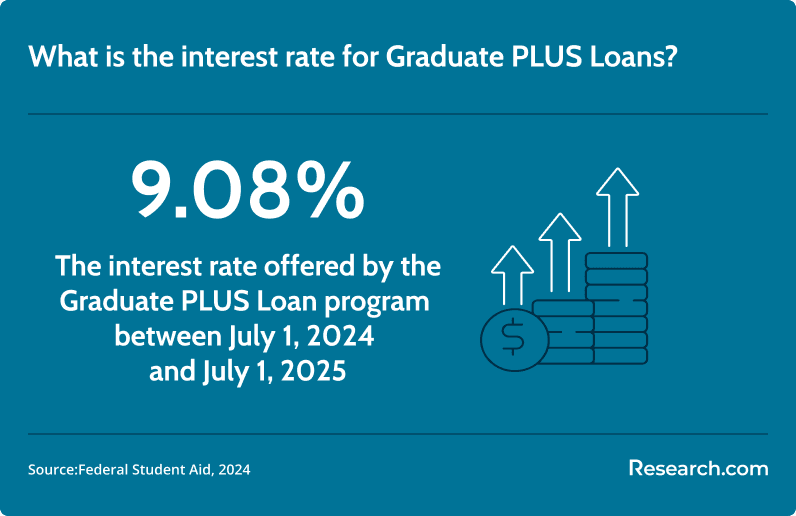
- Federal Direct Graduate PLUS Loan Program: The US Department of Education funds the Graduate PLUS Loan Program to help students pay for graduate education and training. These loans must be repaid. For loans first disbursed between July 1, 2024, and July 1, 2025, the interest rate is 9.08%.
How to reduce the cost of a political science graduate degree
- Ask departments about teaching assistantships, research assistantships, tuition waivers, and stipends.
- Compare total program cost, not just tuition. Fees, books, technology, travel, and lost work time can change the real price.
- Check whether part-time students are eligible for the same funding as full-time students.
- Prioritize programs with strong placement support if you are borrowing for graduate school.
- Submit the FAFSA if you plan to use federal student aid and confirm that the school participates in eligible aid programs.
What is the job outlook for political science professionals?
The employment outlook depends on the occupation. Political science graduates may work in several related roles, and each has a different projected growth rate. US BLS data from 2024 indicates that employment in the selected occupations below is expected to grow from 2023 to 2033.
| Occupation | Projected employment growth, 2023 to 2033 | Openings or job context stated in the source article |
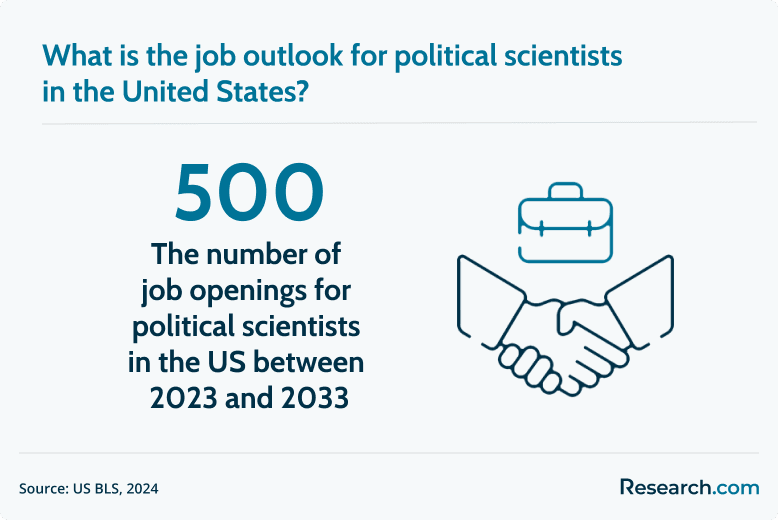
| Political scientists | 3% | About 500 new jobs for the role annually over the decade. Demand is tied to policy analysis needs in government agencies and research organizations. |
| Postsecondary teachers | 8% | About 118,900 job openings every year during the same period, with demand connected to higher education instruction. |
| Historians | 6% | About 300 vacancies yearly between 2023 and 2033, with opportunities in research institutions, museums, and government agencies. |
| Sociologists | 7% | About 300 new jobs annually during the decade, with demand in research, policy analysis, and social justice organizations. |
Students should interpret these projections carefully. A growth rate does not guarantee easy entry into a field. Many political science-related careers are competitive, and candidates with internships, strong writing samples, advanced research skills, data literacy, or graduate credentials may have an advantage.
What professional certifications can complement my online political science degree?
A political science degree gives you a broad academic base, but complementary credentials can help you signal practical skills. The best certification depends on your target role. A future policy analyst may benefit from data analysis or program evaluation training, while an aspiring public manager may focus on budgeting, leadership, or public administration. A student interested in advocacy or campaigns may benefit from communications, digital strategy, or nonprofit management credentials.
When comparing options, focus on employer recognition, skill relevance, assessment quality, and cost. A credential listed among certificate for high paying jobs options may be useful only if it fits your career plan and is respected in the field you want to enter.
Does an online political science degree offer a strong return on investment?
An online political science degree can offer a strong return on investment when the program is affordable, accredited, career-aligned, and paired with experience that improves employability. ROI is weaker when students borrow heavily for a program that lacks advising, practical training, internship access, or a clear connection to their intended career.
To evaluate ROI, compare the full cost of attendance with realistic career outcomes. Include tuition, fees, books, technology costs, time away from work, loan interest, and the opportunity cost of studying. Then weigh those costs against the roles you are preparing for, the education level those roles require, and whether the program helps you build marketable evidence such as research projects, policy memos, data work, internships, or a capstone portfolio. Students who already know they want graduate study may also compare shorter pathways, including 1 year masters degree programs, when appropriate for their goals.
How does a political science degree compare to other lucrative online degrees?
A political science degree differs from many technical, healthcare, and business degrees because it is less tied to a single occupation. Its value comes from transferable skills, institutional knowledge, policy understanding, writing ability, research training, and preparation for graduate or professional study. That can be powerful, but it requires intentional career planning.
| Degree type | Typical strength | Trade-off to consider |
| Political science | Strong preparation for policy, government, law, public affairs, research, and civic leadership pathways. | Career outcomes may be less direct without internships, graduate study, or specialized skills. |
| Business-oriented online degrees | Often connect to management, operations, finance, marketing, or organizational roles. | May offer less depth in public policy, political systems, law, and governance. |
| Technical online degrees | Can provide job-specific technical skills for defined roles. | May not match students whose main interest is public service, law, policy, or political institutions. |
If income is your main priority, compare political science with programs listed among the best paying degrees online. If your main goal is public impact, law, government, international affairs, or policy influence, political science may be a better intellectual and professional fit even if the career path is less automatic.
How can I verify that my online political science program is accredited and maintains high quality?
Accreditation should be one of your first checks before applying to an online political science program. Accreditation affects credit transfer, graduate school eligibility, employer confidence, and access to federal student aid. Do not rely only on advertising language from the school. Verify the institution through recognized accreditation sources and confirm that the program is housed at a legitimate college or university.
Resources related to accredited online colleges that accept FAFSA can help you understand how institutional legitimacy and financial aid participation intersect. In addition to accreditation, review faculty credentials, curriculum updates, student services, graduation requirements, online learning support, internship guidance, and career outcomes.
Questions to ask before choosing an online political science program
- Is the institution accredited by a recognized accrediting body?
- Will credits transfer if I later change schools or pursue graduate study?
- Does the curriculum include research methods, statistics, policy writing, and practical projects?
- Are internships, capstones, simulations, or research assistant opportunities available to online students?
- How often are required courses offered?
- What advising, tutoring, library, and career services are available remotely?
- What is the total cost of attendance after fees and required materials?
- Does the program align with law school, public administration, research, teaching, or government career goals?
Can I accelerate my political science education through short online programs?
Accelerated online programs may help motivated students finish faster, especially if they transfer previous credits, take courses year-round, or enroll in shorter academic terms. However, speed should not come at the expense of accreditation, academic quality, advising, or career preparation. Political science requires substantial reading and writing, so compressed courses can be demanding.
Students exploring ways to get degree in 6 months should confirm what type of credential is being offered, whether credits are transferable, and whether the program fits their long-term goals. A short program may be useful for completing an associate degree, earning transfer credits, or building momentum, but it may not replace the depth required for advanced political science, law, policy, or teaching pathways.
What practical experiences and career readiness skills do online political science programs offer?
Career-ready political science programs give students opportunities to apply political analysis beyond textbook discussion. Strong online programs may include policy briefs, legislative research, debate simulations, public opinion analysis, case studies, research methods projects, capstones, virtual teamwork, and instructor feedback on professional writing. Some also help students find internships, mentorships, public service projects, or networking events.
Students considering accelerated bachelor's degree programs should pay close attention to practical learning opportunities. A fast degree is more valuable when it still helps you graduate with evidence of skill: a writing portfolio, data project, research paper, policy memo, internship evaluation, or capstone that can be discussed in interviews.
Common Mistakes to Avoid When Choosing a Political Science Degree
- Choosing a program without checking accreditation: Accreditation affects financial aid, transfer credits, graduate school options, and employer trust.
- Focusing only on tuition: Fees, books, travel, technology, course availability, and time to completion can change the real cost.
- Assuming the degree alone guarantees a policy job: Experience, networking, writing samples, and applied skills often matter.
- Ignoring quantitative skills: Statistics, data analysis, survey research, and evaluation methods can strengthen your profile for policy and research roles.
- Waiting too long to get experience: Internships, campaign work, public service, research assistance, and volunteer roles can clarify your career direction before graduation.
- Choosing a specialization too randomly: Concentrations should connect to a target career, not just an interesting course list.
- Assuming all online programs offer equal support: Online students should verify advising, faculty access, library resources, career services, and internship support.
Key Insights
- Political science is a versatile degree, but it works best with a clear career plan. Law, public policy, government, research, education, international affairs, and nonprofit work all require different preparation.
- Political scientists earned a median annual wage of $132,350 in 2023, but that figure should not be treated as a guaranteed outcome for all political science graduates.
- Employment for political scientists is projected to grow by 3% from 2023 to 2033, according to US BLS data, which matches the average growth rate for all US occupations.
- Graduate education can improve access to advanced roles in political science, academia, policy research, and public administration, but students should compare costs, funding, and likely career benefits before enrolling.
- Online political science programs can be a good option for working adults and remote learners, provided the institution is accredited and offers strong academic and career support.
- Political scientists seeking certification through the GAFM pathway must complete political science coursework with a minimum GPA of 2.5 and meet experience requirements, including at least 2 years in political, government, or public services, among other criteria.
- The APSA Minority Fellowship Program is one funding option for doctoral students; more than 600 fellows have participated, and over 100 have completed doctoral programs.
References:
- Federal Student Aid. (2024, May 14). (DL-24-03) Interest Rates for Direct Loans First Disbursed Between July 1, 2024 and June 30, 2025. https://fsapartners.ed.gov/knowledge-center/library/electronic-announcements/2024-05-14/interest-rates-direct-loans-first-disbursed-between-july-1-2024-and-june-30-2025
- US Bureau of Labor Statistics. (2024, August 29). Historians. Occupational Outlook Handbook. https://www.bls.gov/ooh/life-physical-and-social-science/historians.htm
- US Bureau of Labor Statistics. (2024, December 02). Political Scientists. Occupational Outlook Handbook. https://www.bls.gov/ooh/life-physical-and-social-science/political-scientists.htm
- US Bureau of Labor Statistics. (2024, August 29). Postsecondary Teachers. Occupational Outlook Handbook. https://www.bls.gov/ooh/education-training-and-library/postsecondary-teachers.htm
- US Bureau of Labor Statistics. (2024, December 02). Sociologists. Occupational Outlook Handbook. https://www.bls.gov/ooh/life-physical-and-social-science/sociologists.htm
Other Things You Should Know About Getting a Political Science Degree
In 2027, political science graduates can explore careers as policy analysts, legislative assistants, public relations specialists, and campaign managers. The growing importance of data-driven decision-making also opens roles in political data analysis, thereby expanding opportunities in both governmental and non-governmental sectors.
In 2027, political science graduates may explore non-traditional career paths such as data analytics in political campaigns, roles in tech companies focusing on regulatory compliance, or positions in international organizations advocating for digital rights and freedom of information.
Yes, a political science degree can lead to a tech career in 2027. Graduates can apply their skills in positions like data analyst, where understanding policy impacts on tech, or in roles focusing on the ethical implications of technology use, combining political insights with tech industry needs.





