
2027 Fastest Online Master’s Degrees

Co-Founder and Chief Data Scientist
Choosing a fast online master’s degree is not just a question of speed. The real decision is whether an accelerated format will help you reach a specific career goal without creating problems around cost, workload, accreditation, licensure, or employer recognition. For working adults, career changers, teachers, nurses, business professionals, and technology workers, the appeal is clear: finish sooner, keep working, and apply new skills quickly.
That does not mean every quick master’s program is a good investment. Some fields reward graduate credentials more than others. Some online programs require clinical hours, internships, residencies, or licensure-aligned coursework. Others are built for experienced professionals who already understand the basics and can handle compressed graduate-level work.
This guide explains how fast online master’s programs work, which degree areas are commonly available in accelerated formats, how to compare schools, what costs and admissions requirements to expect, and how to decide whether a fast master’s degree fits your career plan. As of 2021, approximately 24.1 million Americans, or 13% of the workforce, held a master’s degree, so the credential is common enough to be recognized but still meaningful in many professional fields.
Quick Answer: Are Fast Online Master’s Degrees Worth It?
A fast online master’s degree can be worth it if the program is accredited, aligns with your career goal, fits your weekly schedule, and leads to a credential employers or licensing boards recognize. It is usually most useful for professionals who already have relevant work experience and need a graduate degree for promotion, specialization, salary growth, or a career transition.
It may be a poor fit if you need extensive hands-on training, cannot dedicate consistent study time, are unsure about your career direction, or choose a program only because it is short. The best fast online master’s programs combine flexible delivery, clear academic standards, strong student support, transparent pricing, and respected accreditation.
- Fastest Online Master’s Degrees for 2027
- Benefits of Completing a Fast Online Master’s Degree
- Traditional Master’s vs. Fast Online Master’s Degree
- Time Management in an Accelerated Online Master’s Program
- Pros and Cons of Fast Online Master’s Programs
- Networking in Fast Online Master’s Programs
- Student Support Services That Matter
- Challenges of Accelerated Online Graduate Study
- How to Choose the Best University
- Admission Requirements
- Why Accreditation Matters
- Return on Investment for Fast Online Master’s Programs
- Building an Accelerated Education Pathway
- Mistakes to Avoid
- Experiential Learning in Online Master’s Programs
- Industry Partnerships and Mentorship
- Academic Rigor in Fast Programs
- Financial Considerations
- Career Outcomes for Graduates
- Supplemental Certifications
- Future of Fast Online Master’s Programs
- Key Insights
Affordable Quick Online Degree Programs With High Acceptance Rates for 2027
The fastest online master’s degrees are often found in fields where coursework can be delivered effectively through digital platforms, project-based learning, case studies, simulations, and asynchronous assignments. Programs tied to licensure or clinical practice may still be accelerated, but students should expect additional requirements such as fieldwork, supervised practice, or state-specific approvals.
| Field | Common Career Direction | Typical Online Acceptance Rate Range | Best Fit For |
| Business Administration | Management, operations, finance, marketing, entrepreneurship | 60% to 80% | Professionals seeking broad leadership mobility |
| Management | Project management, operations, team leadership | 55% to 75% | Working adults moving into supervisory or executive tracks |
| Accounting | Accounting, auditing, financial analysis, tax | 55% to 75% | Students needing deeper financial and compliance expertise |
| Economics | Policy, financial consulting, analytics, research | 50% to 70% | Analytical students interested in markets, policy, and data |
| Social Work | Case management, counseling support, community services | 60% to 80% | Students committed to human services and community impact |
| Special Education | Teaching, instructional coordination, student support | 60% to 80% | Educators serving students with diverse learning needs |
| Computer Science | Software, data, cybersecurity, IT consulting | 50% to 70% | Students building advanced technical and programming skills |
| Management Information Systems | Business systems, IT management, analytics, consulting | 50% to 70% | Professionals bridging business needs and technology solutions |
| Healthcare Administration | Hospital, clinic, insurance, and public health administration | 50% to 75% | Healthcare workers pursuing management roles |
| Nursing | Registered nursing, nurse education, healthcare leadership | 60% to 80% | Licensed nurses or healthcare professionals seeking advancement |
1. Business Administration
Business administration is one of the most common accelerated online master’s options because it applies across industries. Students usually study management, finance, marketing, operations, accounting, economics, organizational behavior, strategic planning, and business ethics. Graduates may pursue roles such as management analyst, marketing manager, financial coordinator, human resources specialist, operations leader, or business consultant. Online business administration programs often use practical projects, case studies, and team assignments designed for working professionals. Acceptance rates for online Business Administration degrees are relatively high, typically ranging between 60% and 80% across U.S. institutions.
2. Management
Management programs focus on how organizations plan, lead, staff, communicate, and improve performance. Coursework commonly includes management theory, human resources, organizational behavior, leadership, and business strategy. Graduates often move toward project manager, operations manager, department leader, team supervisor, or executive-track roles in sectors such as finance, technology, manufacturing, healthcare, and professional services. Online Management degrees generally have acceptance rates between 55% and 75% across U.S. institutions.
3. Accounting
Accounting master’s programs are built around financial reporting, auditing, managerial accounting, taxation, compliance, and financial decision-making. Graduates may work as accountants, auditors, financial analysts, tax professionals, or finance specialists. Pairing accounting knowledge with business administration can strengthen both technical financial judgment and management ability. Online Accounting degrees typically have acceptance rates between 55% and 75% across U.S. institutions.
4. Economics
Economics graduate programs examine how individuals, firms, markets, and governments make decisions. Students typically study microeconomics, macroeconomics, statistics, econometrics, economic policy, and behavioral economics. Career paths may include economic analyst, financial consultant, policy advisor, research associate, or roles in government agencies, financial institutions, research firms, and international organizations. Online Economics degrees often use data projects, applied analysis, and real-world case studies. Acceptance rates for online Economics degrees generally range from 50% to 70% across U.S. institutions.
5. Social Work
Social work programs prepare students to support individuals, families, groups, and communities facing social, economic, health, or behavioral challenges. Common roles include case manager, counselor support professional, community outreach coordinator, nonprofit program worker, or government services specialist. Coursework typically covers human behavior, social welfare policy, ethics, practice methods, and community systems. Online Social Work degrees generally enjoy acceptance rates between 60% and 80% across U.S. institutions.
6. Special Education
Special education programs train educators to design instruction and support services for students with varied learning, behavioral, developmental, and accessibility needs. Graduates may become special education teachers, instructional coordinators, learning support specialists, or education consultants. Programs usually include inclusive teaching, behavioral management, assessment, instructional strategies, legal requirements, and collaboration with families and school teams. Online Special Education degrees typically have acceptance rates between 60% and 80% across U.S. institutions.
7. Computer Science
Computer science master’s programs emphasize advanced computing concepts such as programming, algorithms, databases, cybersecurity, systems design, and software engineering. Graduates may pursue software developer, data analyst, IT consultant, systems specialist, or technical leadership roles in technology companies, startups, research organizations, and corporate IT departments. Acceptance rates for online Computer Science degrees generally range from 50% to 70% across U.S. institutions.
8. Management Information Systems
Management Information Systems, often called MIS, sits between business and technology. While computer science is more focused on programming and technical development, MIS concentrates on using information systems to solve business problems. Students typically study database management, information systems design, business intelligence, project management, analytics, and IT strategy. Career options include systems analyst, IT manager, business intelligence specialist, technology consultant, and corporate systems leader. Online MIS degrees generally have acceptance rates between 50% and 70% across U.S. institutions.
9. Healthcare Administration
Healthcare administration programs prepare students to manage healthcare organizations, departments, clinics, hospitals, insurance operations, and public health systems. Coursework commonly includes healthcare policy, finance, law, quality improvement, organizational management, and health systems operations. Graduates may pursue hospital administrator, clinic manager, healthcare consultant, operations director, or health services manager roles. Acceptance rates generally range from 50% to 75% across U.S. institutions.
10. Nursing
Online nursing master’s programs are designed for students who need advanced healthcare knowledge while maintaining clinical or professional responsibilities. Depending on the program and prior credentials, graduates may pursue registered nursing advancement, nurse educator roles, healthcare administration positions, or leadership in hospitals, clinics, and community health settings. Coursework often includes anatomy, pharmacology, patient care, healthcare ethics, leadership, and evidence-based practice. Acceptance rates for online Nursing degrees typically range from 60% to 80% across U.S. institutions.
What Should You Expect From a Fast Online Master’s Program?
A fast online master’s program compresses graduate coursework into a shorter calendar timeline. Instead of following a slower semester structure, many programs use shorter terms, year-round enrollment, heavier course loads, asynchronous modules, live online sessions, intensive projects, or competency-based progression.
Students can expect core graduate courses, online discussions, recorded lectures, live virtual meetings, digital assignments, faculty feedback, and in many programs, applied capstone projects. Some programs are fully online, while others require residencies, clinical placements, student teaching, internships, practicums, or proctored exams.
Traditional master’s programs often take 18 months to two years, and some take 2-3 years depending on the field and enrollment status. Fast online programs are commonly structured for completion in 12-18 months. The shorter format can help students apply new credentials sooner, but it also means less downtime between assignments and less room to fall behind.
Where Can You Work With a Fast Online Master’s Degree?
Career options depend more on the field of study than on the accelerated format itself. A fast online master’s degree can support advancement in several industries when the program is reputable and relevant to the role.
- Technology: Software developer, data analyst, IT manager, systems analyst, cybersecurity specialist
- Healthcare: Healthcare administrator, clinical manager, health informatics specialist, public health professional
- Finance: Financial analyst, risk manager, investment banker, accounting manager
- Education: Educational consultant, curriculum developer, academic advisor, instructional coordinator
- Marketing: Digital marketing manager, market research analyst, brand manager
- Business: Project manager, operations manager, business consultant, human resources leader
- Engineering: Systems engineer, project engineer, quality assurance manager
The best approach is to start with job postings in your target field. Look for whether employers require a master’s degree, prefer one, require licensure, value certifications, or emphasize experience over education.
How Much Can You Make With a Fast Online Master’s Degree?
A graduate degree can improve earning potential, but salary outcomes are not guaranteed. Pay depends on your occupation, employer, location, experience, technical skills, industry, and whether the credential is required for advancement. According to the Bureau of Labor Statistics (2023), individuals with a master’s degree typically earn higher median salaries than those with only a bachelor’s degree. Examples include:
- Software Developers: $120,730 per year
- Healthcare Administrators: $104,280 per year
- Financial Managers: $134,180 per year
- Data Analysts: $99,660 per year
- Project Managers: $95,260 per year
These figures show why many students consider graduate study, but they should be used as benchmarks rather than promises. A fast online master’s degree can shorten the time before you qualify for advanced roles, but the degree must match real labor market demand.
List of 10 Fastest Online Master’s Degrees for 2027
How We Rank Schools
Because graduate school requires a major investment of time and money, program comparisons should rely on transparent data rather than marketing claims. Research.com uses sources such as the IPEDS database, Peterson's database, the College Scorecard database, and the National Center for Education Statistics when evaluating online master’s programs. Readers can review the broader process on Research.com's methodology page.
| School | Approximate Cost Listed | Typical Credits Listed | What to Check Before Applying |
| Western Governors University | Approximately $4,225 per six-month term | Typically 36 | Whether competency-based pacing fits your learning style |
| Southern New Hampshire University | Approximately $627 per credit | Typically 36 | Course length, transfer policy, and concentration options |
| The University of Texas Rio Grande Valley | Approximately $600 per credit | Typically 30 | State authorization and program-specific requirements |
| Capella University | Approximately $495 per credit | Typically 30 | How prior credits and accelerated pathways are evaluated |
| California Baptist University | Approximately $550 per credit | Typically 30 | Business school requirements and available support services |
| Regis University | Approximately $1,500 per credit | Typically 60 | Whether a dual-degree load is realistic and financially justified |
| Walden University | Approximately $450 per credit | Typically 36 | Field placement, licensure, and program outcome details where applicable |
| Boston University | Approximately $1,700 per credit | Typically 30 | Faculty access, academic expectations, and networking options |
| Northcentral University | Approximately $1,200 per term | Typically 36 | One-to-one learning model, pacing, and total term count |
| Purdue University Global | Approximately $600 per credit | Typically 36 | Personalized learning structure and degree requirements |
1. Western Governors University
Western Governors University is known for online graduate programs that use a competency-based model. Rather than advancing only by calendar time, students move forward after demonstrating mastery of required material. This format may benefit disciplined students who already have professional knowledge and want to progress efficiently.
- Cost: Approximately $4,225 per six-month term
- Master's Programs: Master of Business Administration (MBA), Master of Science in Information Technology Management (MSITM), Master of Science in Data Analytics (MSDA), Master of Education (M.Ed.) in various specializations, Master of Science in Accounting (MSA)
- Credits: Typically 36
2. Southern New Hampshire University
Southern New Hampshire University offers online master’s programs designed for adults who need flexible scheduling and a clear course sequence. Students considering SNHU should compare total tuition, credit requirements, term length, and whether the chosen concentration matches their target job path.
- Cost: Approximately $627 per credit
- Master's Programs: Master of Business Administration (MBA), Master of Science in Project Management, Master of Science in Information Technology, Master of Arts in Criminal Justice, Master of Education (M.Ed.)
- Credits: Typically 36
3. The University of Texas Rio Grande Valley
The University of Texas Rio Grande Valley provides accelerated online options for professionals who want a structured graduate pathway with intensive coursework. Applicants should review whether the program has field-specific requirements, such as clinical, practicum, or project components.
- Cost: Approximately $600 per credit
- Master's Programs: Master of Business Administration (MBA), Master of Science in Nursing (MSN), Master of Education (M.Ed.), Master of Public Health (MPH), Master of Science in Information Technology (MSIT)
- Credits: Typically 30
4. Capella University
Capella University offers accelerated graduate pathways that may allow students to use prior credits and intensive coursework to shorten completion time. This can be useful for career-focused adults, but students should confirm the exact transfer, pacing, and tuition rules before enrolling.
- Cost: Approximately $495 per credit
- Master's Programs: Master of Business Administration (MBA), Master of Science in Information Technology, Master of Public Health (MPH), Master of Science in Nursing (MSN), Master of Education (M.Ed.)
- Credits: Typically 30
5. California Baptist University
California Baptist University offers accelerated online graduate options through its business-focused programs. These degrees may appeal to professionals who want a concentrated curriculum in finance, management, accounting, or business leadership while continuing to work.
- Cost: Approximately $550 per credit
- Master's Programs: Master of Business Administration (MBA), Master of Science in Accounting (MSA), Master of Science in Finance (MSF), Master of Science in Management (MSM)
- Credits: Typically 30
6. Regis University
Regis University offers Fast-Forward dual degree options that let students work toward two graduate credentials at the same time. This path can make sense when two credentials directly support a career goal, but the workload, cost, and credit total require careful planning.
- Cost: Approximately $1,500 per credit
- Master's Programs: Master of Business Administration (MBA) & Master of Science in Information Technology (MSIT), Master of Nursing (MSN) & MBA, Master of Education (M.Ed.) & Master of Counseling, etc.
- Credits: Typically 60
7. Walden University
Walden University offers online graduate programs with flexible scheduling and accelerated coursework in several professional fields. Students should pay special attention to accreditation, practicum requirements, licensure alignment, and total program cost in fields such as nursing, social work, education, and public health.
- Cost: Approximately $450 per credit
- Master's Programs: Master of Business Administration (MBA), Master of Science in Education (MSE), Master of Social Work (MSW), Master of Public Health (MPH), Master of Criminal Justice (MCJ)
- Credits: Typically 36
8. Boston University
Boston University offers online graduate programs for students who want a recognized institution and are prepared for a demanding academic environment. Applicants should compare tuition, faculty access, course format, and how the degree supports their intended industry.
- Cost: Approximately $1,700 per credit
- Master's Programs: Master of Arts in Communication, Master of Arts in Psychology, Master of Arts in International Relations, Master of Arts in Leadership Studies, Master of Arts in English
- Credits: Typically 30
9. Northcentral University
Northcentral University uses a personalized one-to-one learning model in its online graduate programs. This can work well for students who prefer direct faculty interaction and self-directed progress, but prospective students should understand term pricing and expected completion pace.
- Cost: Approximately $1,200 per term
- Master's Programs: Master of Business Administration (MBA), Master of Science in Psychology, Master of Education (M.Ed.), Master of Information Technology (MSIT), Master of Public Administration (MPA)
- Credits: Typically 36
10. Purdue University Global
Purdue Global offers online master’s programs with personalized learning options for students balancing graduate study with work and family responsibilities. Before enrolling, compare program length, course expectations, transfer credit policy, and whether the curriculum matches employer expectations in your field.
- Cost: Approximately $600 per credit
- Master's Programs: Master of Business Administration (MBA), Master of Information Technology (MSIT), Master of Criminal Justice (MCJ), Master of Education (M.Ed.), Master of Healthcare Administration (MHA), Master of Public Administration (MPA)
- Credits: Typically 36
What Graduates Say About Fast Online Master’s Degrees
“Finishing my master’s in one year helped me compete for a role I had been targeting for a long time. The online format still gave me access to classmates and faculty support when I needed it.” — Gerard
“The accelerated schedule let me use what I was learning almost immediately at work. Within months, I was able to take on more responsibility and move toward a promotion.” — Pauline
“Completing the degree faster than a traditional timeline gave me momentum. The workload was intense, but the flexible schedule helped me keep my job and manage personal responsibilities.” — Nathan
Key Findings
- Fast online master’s programs are commonly designed for completion in 12-18 months, compared with traditional programs that may take 2-3 years.
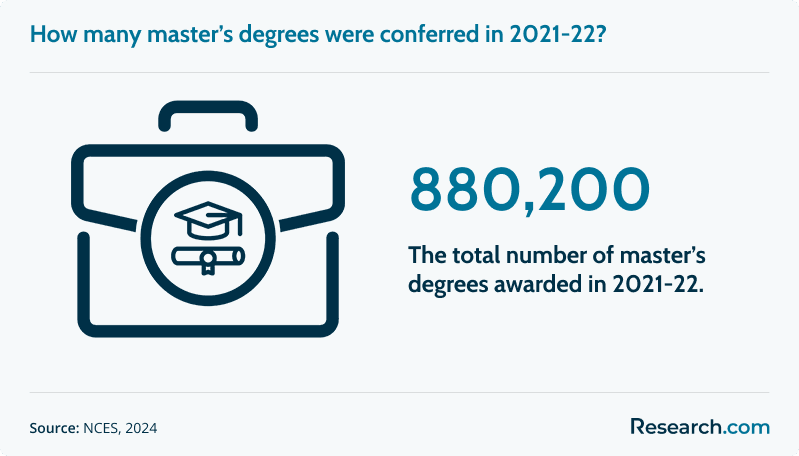
- More than 880,000 master’s degrees were awarded in 2021/22, and projections suggest the number could exceed 1 million by 2032.
- Graduate degree holders often earn more than bachelor’s degree holders. In 2022, people with a master’s degree earned a median weekly salary of $1,661, compared with $1,432 for those with a bachelor’s degree.
- Accelerated programs can save time and reduce commuting costs, but students still need to evaluate tuition, fees, financial aid, technology requirements, and opportunity cost.
- Success in a fast online program usually requires disciplined scheduling, reliable technology, active communication with instructors, and enough weekly study time. Many students should plan for 10-20 hours per week.
- Accreditation is essential. A short program is not valuable if employers, licensing boards, or future schools do not recognize the credential.
What Are the Benefits of Completing a Fast Online Master’s Degree?
The main benefit of a fast online master’s degree is time efficiency. If you already know your career direction and need a graduate credential to move forward, an accelerated program may help you reach that goal sooner than a conventional format.
Faster Access to Career Opportunities
Some students pursue an accelerated master’s to qualify for leadership, technical, education, healthcare, or public sector roles more quickly. For example, healthcare professionals interested in public health may compare accelerated MPH programs online if they want graduate-level preparation without leaving the workforce.
Immediate Application at Work
Working students often choose fast online programs because assignments, projects, and case studies can connect directly to their current roles. A manager might use coursework to improve team operations, while a nurse may use graduate learning to prepare for advanced responsibility. Registered nurses planning a step-by-step education path may also review the fastest RN to BSN online programs before moving into graduate study.
Stronger Long-Term Mobility
A master’s degree can support promotions, specialized roles, or transitions into new areas. Educators asking what can I do with a master’s in education should compare job requirements before enrolling, because outcomes vary by state, school district, licensure status, and specialization. Business students may also want to compare the highest paying business major options before committing to a graduate concentration.
A Signal of Focus and Persistence
Completing a compressed graduate program can show employers that you can manage pressure, deadlines, independent learning, and advanced content. That signal matters most when paired with relevant experience and a degree from an accredited institution.
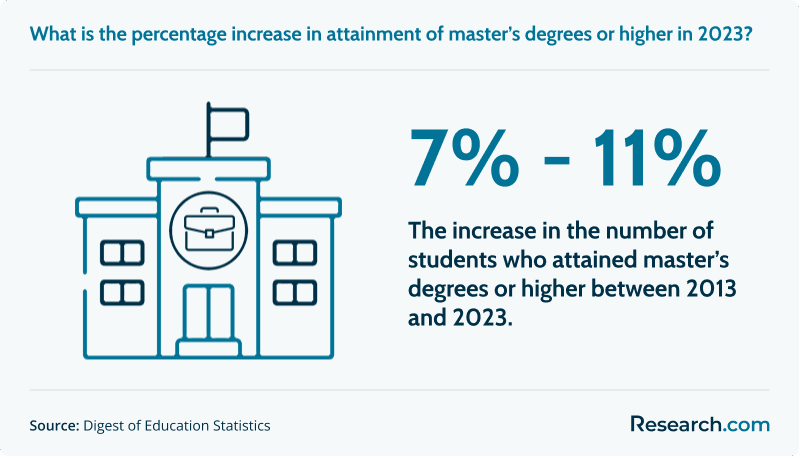
Graduate education is also becoming more common. As more students earn master’s degrees — with projections showing over 1 million students could receive their degrees annually by 2032 — the strategic value comes from choosing the right degree, not merely earning any master’s quickly.
How Does a Traditional Master’s Degree Compare to a Fast Online Master’s Degree?
The better choice depends on your learning style, field, schedule, finances, and career objective. A fast online program prioritizes flexibility and speed. A traditional program may offer deeper campus immersion, in-person networking, and a more gradual academic pace.
| Comparison Point | Traditional Master’s Degree | Fast Online Master’s Degree |
| Typical timeline | Often 2-3 years, depending on field and enrollment status | Often structured for 12-18 months |
| Schedule | More likely to use fixed class times and campus-based requirements | Usually more flexible, with asynchronous or short-term formats |
| Cost factors | May include campus fees, commuting, housing, and a longer payment timeline | May reduce travel and campus costs, but fees and tuition vary widely |
| Networking | More in-person contact with faculty, peers, and campus employers | Networking depends on virtual events, group projects, alumni access, and mentorship |
| Best fit | Students who want a more immersive academic experience | Working professionals who need speed and schedule control |
| Main risk | Longer time commitment and potentially higher total cost | Heavy workload, less recovery time, and fewer in-person interactions |
Employer recognition depends on accreditation, school reputation, program quality, and industry norms. Some employers still value traditional campus-based programs, especially where in-person training or networking is central. However, employer views are evolving as online graduate education becomes more common. With over 880,000 master’s degrees awarded in 2021/22 and projections suggesting this will exceed 1 million by 2032, online credentials are increasingly part of the mainstream education landscape.
Students targeting technology and business systems roles may want to ask, what is the best online MIS degree, because MIS programs can offer a practical mix of business strategy, analytics, systems design, and IT management.
How Can You Manage Time Effectively in an Accelerated Online Master’s Program?
Time management is the difference between finishing an accelerated online master’s program and falling behind early. The pace is usually unforgiving, so students need a weekly system before classes begin.
Set a Weekly Study Budget
Many students should expect to spend 10-20 hours per week on coursework, though the actual load depends on the program, course difficulty, and whether projects, clinical hours, or group assignments are required. Block study time on your calendar as if it were a work meeting.
Protect Your Highest-Energy Hours
Use your best mental energy for the hardest work: reading complex material, writing papers, coding, data analysis, or exam preparation. Save easier tasks, such as discussion replies or formatting references, for lower-energy periods.
Use Simple Planning Tools
Digital tools such as Trello, Todoist, Microsoft To Do, and Google Calendar can help you track weekly deadlines, assignment stages, exams, and group meetings. The tool matters less than consistency. Review deadlines at the beginning and end of each week.
Communicate Early With Work and Family
Tell your employer, family, or support network when your busiest terms will occur. Students pursuing complex pathways, including dual masters degrees, should be especially realistic about workload and recovery time.
Plan for Burnout Before It Happens
Accelerated programs reward consistency, not all-night cramming. Build in breaks, sleep, exercise, and at least one weekly reset period. If you fall behind, contact the instructor or advisor quickly rather than waiting until the end of the term.
What Are the Pros and Cons of Fast Online Master’s Programs?
Fast online master’s programs, including 1 year masters options, are attractive because they reduce time to completion. The trade-off is intensity. Students should weigh the benefits against the academic and personal demands.
| Pros | Cons |
| Shorter completion time, often 12 to 18 months | Compressed coursework can create a heavy weekly workload |
| Online delivery can help students keep working while enrolled | Less face-to-face contact may limit informal networking |
| Skills may be applied quickly in a current job | Some topics may feel rushed if the student needs more foundational support |
| Potential savings on commuting and campus-related costs | Technology fees, materials, and proctoring costs may still apply |
| Can support promotions, specialization, or career changes | Not every accelerated program is suitable for licensure-based fields |
Individuals with a master's degree enjoy a much lower unemployment rate — around 1% — and more than 55% of those with a master’s degree are employed in professional positions. These figures help explain the appeal of graduate study, but students should still choose based on program quality, employer demand, and career fit.
Do Fast Online Master’s Programs Provide Effective Networking Opportunities?
They can, but the networking experience is different from a campus-based program. Strong online programs create structured opportunities through virtual career events, alumni panels, professional webinars, online discussion groups, team projects, and faculty-led mentoring. Weak programs may leave networking mostly up to the student.
Before enrolling, ask whether students interact with alumni, employers, faculty, and peers outside of required discussion boards. Also ask whether group projects reflect real workplace problems. Students building a longer education pathway may also compare earlier accelerated options, such as the fastest associates degree online, before moving into graduate work.
What Student Support Services Improve Success in Fast Online Master’s Programs?
Accelerated students need fast, reliable support because a delayed answer can derail a short term. The most useful services include academic advising, technical support, online library access, writing help, tutoring, career counseling, disability accommodations, mental health resources, and faculty availability.
When comparing schools, ask how quickly advisors respond, whether technical help is available during evenings or weekends, and whether online students receive the same career resources as campus students. Students looking for institutions with broader online infrastructure can review the most accredited online colleges as part of their research.
What Are the Potential Challenges of Fast Online Master’s Programs?
The main challenges are pace, self-discipline, limited in-person interaction, and the need to learn through digital platforms. Students may have less time to absorb complex ideas, revise major assignments, or recover from personal disruptions.
Some fields also require hands-on experience that cannot be fully replaced by online coursework. Before enrolling, verify whether the program includes practicums, clinical placements, internships, student teaching, labs, residencies, or state authorization requirements. Adults who are not ready for graduate study yet may consider accelerated bachelor's degree programs for adults as an earlier step.
How Do You Select the Best University for a Fast Online Master’s Degree?
The best university is not always the most famous or the shortest. The right choice is the school that offers an accredited program in your field, fits your budget, supports online learners, and has requirements you can realistically complete.
Use This Checklist Before Applying
- Accreditation: Confirm institutional accreditation and any required programmatic accreditation.
- Total cost: Compare tuition, fees, books, technology requirements, travel, residencies, and lost work time.
- Program length: Check whether the advertised completion time assumes full-time enrollment, transfer credits, or year-round study.
- Course format: Ask whether classes are asynchronous, synchronous, hybrid, competency-based, or cohort-based.
- Career alignment: Match courses and outcomes to actual job descriptions in your target field.
- Student support: Look for advising, tutoring, faculty access, technical support, and career services.
- Licensure or certification fit: Confirm state requirements before enrolling in nursing, teaching, counseling, social work, nutrition, or other regulated fields.
- Transfer policy: Ask how graduate credits, professional experience, and prior learning are evaluated.
How Much Should Rankings Matter?
Rankings can help you identify options, but they should not replace your own evaluation. A highly ranked program may be too expensive, too rigid, or poorly aligned with your goal. A less prominent school may be a better fit if it is accredited, affordable, and strong in your specialization.
Examples of Well-Known Universities With Fast Online Options
Institutions such as the University of Southern California, Northeastern University, and Georgia Tech are often recognized for online and accelerated graduate offerings in areas such as business, engineering, technology, healthcare, and professional studies. Always verify current program details directly with the school before applying.
What Are the Admission Requirements for Fast Online Master’s Programs?
Admission requirements vary by school and field, but accelerated online master’s programs usually focus on whether applicants are academically prepared and professionally ready for a compressed graduate curriculum.
| Common Requirement | What It Shows | What to Prepare |
| Official undergraduate transcripts | Academic background and prerequisite completion | Request transcripts early from every prior college |
| Resume or CV | Professional experience and career direction | Highlight leadership, technical skills, certifications, and relevant projects |
| Statement of purpose | Fit between your goals and the program | Explain why this degree, why now, and how you will manage the pace |
| Letters of recommendation | Academic or professional readiness | Choose recommenders who can speak to your discipline and reliability |
| Standardized test scores | Additional academic evidence when required | Check whether the program waives scores for experienced professionals |
Some programs waive standardized tests for applicants with strong academic records or substantial work experience. Students comparing the fastest graduate options can also review the shortest masters program guide for additional context.
How Important Is Accreditation for Fast Online Master’s Degrees?
Accreditation is one of the most important checks when evaluating any online master’s degree. It helps confirm that a school or program has been reviewed against recognized academic standards. For students in regulated fields, programmatic accreditation may also affect licensure, certification eligibility, employer recognition, and transferability.
Accelerated online programs can be accredited just like traditional programs. For example, students comparing specialized health-related degrees such as the cheapest online masters in nutrition should verify both institutional accreditation and any field-specific requirements.
To check accreditation, use the U.S. Department of Education’s Database of Accredited Postsecondary Institutions and Programs or consult the Council for Higher Education Accreditation (CHEA). Do not rely only on a school’s marketing language. If your field requires licensure, confirm requirements with the appropriate state board before enrolling.
What Is the Return on Investment for Fast Online Master’s Programs?
ROI is the relationship between what you spend and what the degree helps you gain. A fast online master’s can improve ROI by shortening time to completion, but only if the credential leads to a meaningful career benefit.
How to Estimate ROI
- List the full program cost, including tuition, fees, books, software, travel, residencies, and exam costs.
- Identify whether you will reduce work hours or lose income while enrolled.
- Compare current salary with realistic salary ranges for roles that require or prefer the master’s degree.
- Check whether your employer offers tuition assistance or promotion pathways tied to graduate education.
- Estimate how long it would take to recover the cost after graduation.
Students should also compare alternatives. In some fields, certificates, licenses, or lower-cost credentials may produce a faster payoff. To broaden the value comparison, review options such as easy online degrees that pay well, but avoid choosing a program only because it appears simple or short.
Can Combining Accelerated Programs Create a Seamless Educational Pathway?
Yes, but only when each credential builds logically toward the next. A student might begin with an accelerated online associates degree, finish a bachelor’s program, and later enter a fast master’s program. This approach can work well for adults who need stackable progress and cannot pause their careers for long periods.
The risk is collecting credentials without a strategy. Before combining programs, map the sequence to a specific career goal, confirm transfer policies, and ask whether each credential is recognized by employers in your field.
What Pitfalls Should You Avoid in Fast Online Master’s Programs?
Fast programs leave less room for correction, so early mistakes can be expensive. Avoid these common problems:
| Mistake | Why It Hurts | Better Approach |
| Choosing the shortest program without checking accreditation | The degree may not be accepted by employers, licensing boards, or future schools | Verify institutional and programmatic accreditation before applying |
| Looking only at tuition | Fees, books, software, residencies, and lost income can change the true cost | Calculate total cost of attendance |
| Assuming online means self-paced | Many online programs have strict weekly deadlines | Ask about course format and assignment timing |
| Ignoring licensure requirements | The program may not meet requirements in your state | Contact the relevant state board before enrolling |
| Underestimating workload | Accelerated courses can quickly become overwhelming | Plan weekly study hours before the first term starts |
| Relying only on rankings | A ranked program may not fit your schedule, budget, or field goals | Compare outcomes, support, curriculum, and employer relevance |
Students who need a lower-cost foundation before graduate school may want to compare a cheap online bachelor's degree before committing to a master’s program.
Do Fast Online Master’s Programs Include Experiential Learning?
Many accelerated online master’s programs include practical learning through capstone projects, simulations, virtual labs, consulting-style assignments, case studies, research projects, internships, practicums, or employer-sponsored projects. These experiences are especially important in fields where employers want proof that students can apply concepts, not just complete exams.
Ask whether the program helps students build a portfolio, complete industry-relevant projects, or work with real organizations. Professionals who want more targeted skill development may also explore the most lucrative certificate programs as a supplement to graduate coursework.
Do Fast Online Master’s Programs Offer Industry Partnerships and Mentorship?
Some do. Strong programs may bring in guest speakers, employer projects, advisory boards, career events, alumni mentors, and faculty with current industry experience. These connections can help students understand hiring expectations and build professional relationships even in an online environment.
Students should ask whether mentorship is formal or informal, whether employers participate in projects, and whether career services are available to online learners after graduation. In some technical and professional fields, adding credentials related to the highest paying certifications without degree may also strengthen a master’s degree by validating specific skills.
Is Academic Rigor Maintained in Fast Online Master’s Programs?
A fast program should not mean an easy program. Rigorous accelerated master’s degrees use graduate-level readings, research assignments, applied projects, faculty feedback, exams, presentations, and capstone work. The difference is pacing, not academic seriousness.
To assess rigor, review syllabi when available, ask about faculty qualifications, check whether courses require original research or applied work, and look for independent evidence of student outcomes. Students comparing value across degree types may also review the best-paying degrees online to understand how different credentials connect to earnings.
What Financial Considerations Matter Most?
Fast online master’s programs can reduce some expenses, but they are not automatically cheap. As with easy masters degrees online, students should separate marketing claims from actual costs.
- Tuition structure: Determine whether you pay per credit, per course, per term, or through a flat-rate model.
- Total credits: A lower per-credit price may still be expensive if the program requires more credits.
- Fees: Look for technology fees, graduation fees, proctoring fees, residency costs, clinical placement costs, and course materials.
- Financial aid: Federal student loans, grants, scholarships, and employer-sponsored programs may be available, depending on the institution and student eligibility.
- Scholarships: Some schools offer awards for online students based on need, merit, field of study, or professional background.
- Opportunity cost: Consider whether you will reduce work hours, pause overtime, or take unpaid time for residencies, exams, or clinical placements.
Always ask the financial aid office for a full cost estimate before enrolling. If the program is accelerated, also ask what happens financially if you need to slow down, repeat a course, or take a break.
How Do Graduates of Accelerated Online Master’s Programs Fare in Their Careers?
Graduates can do well when the degree is relevant to their career path, the institution is accredited, and the student already has or builds the experience employers want. The accelerated format itself does not guarantee better outcomes; the value comes from the combination of credential, skills, experience, and labor market demand.
According to the U.S. Bureau of Labor Statistics (BLS), in 2022, individuals with a master’s degree earned a median weekly salary of $1,661, compared to $1,432 for those with just a bachelor’s degree. This difference helps explain why many professionals pursue graduate education, but individual salary gains vary.
Industries such as technology, healthcare, business, finance, and education often value advanced training. In 2024, tech companies lead with 30%, followed by healthcare (25%), finance (15%), and education (10%) among top employing industries cited for fast online master’s degree holders. Among STEM master’s degrees awarded in 2020-2021, 25% were to Asian students, 13% to multiracial students, and 10% to White students, reflecting the importance of graduate education across diverse student populations.
Can Supplemental Certifications Boost a Fast Online Master’s Degree?
Yes, a targeted certification can make a fast online master’s degree more marketable when it adds a specific skill employers request. Examples may include project management, data analytics, cybersecurity, healthcare quality, human resources, cloud computing, financial analysis, or instructional design, depending on your field.
The best certifications are not random add-ons. They should fill a clear gap between your degree curriculum and job postings. Students looking for eligible online credential options may review FAFSA approved online certificate programs as part of a broader affordability and credential strategy.
What Is the Future of Fast Online Master’s Programs?
Fast online master’s programs are likely to remain important because adult learners want flexibility, employers need specialized skills, and universities are expanding digital delivery. The strongest programs will not simply be shorter; they will be more targeted, better supported, and more closely connected to workplace needs.
Current trends include more specialized curricula, hybrid learning options, project-based coursework, digital simulations, virtual collaboration, and stronger use of technology in advising and student support. Programs may also continue to serve a broader range of students. In the 2021-22 academic year, master's degrees were awarded to students from various backgrounds: 61.6% to White students, 13.3% to Hispanic students, and 13.0% to Black students.
AI and automation may also increase demand for graduate programs that teach advanced judgment, data interpretation, leadership, ethics, systems thinking, and technical fluency. However, students should be cautious of programs that market speed without evidence of quality, career relevance, or student outcomes.
Key Insights
- A fast online master’s degree is most valuable when it solves a defined career problem: promotion, licensure preparation, specialization, career change, or advanced technical development.
- Speed should never outweigh accreditation. Always verify institutional and, when needed, programmatic accreditation before applying.
- Accelerated programs commonly require strong self-management. Plan for 10-20 hours per week and confirm whether courses are asynchronous, synchronous, cohort-based, or competency-based.
- ROI depends on total cost, salary potential, employer demand, financial aid, and whether the degree is actually required for your target role.
- Online graduate programs can offer networking, mentorship, and applied learning, but you must verify these services before enrolling.
- Students in nursing, education, social work, counseling, nutrition, and other regulated fields should confirm state licensure rules before choosing any online program.
- The best fast online master’s program is not simply the shortest. It is the one that is accredited, affordable, well-supported, career-aligned, and realistic for your life.
References
- Faulkner University & Written by: Faulkner University. (2024, April 4). Bachelor’s Degree vs. Master’s Degree: Understanding the Difference. Faulkner University. https://www.faulkner.edu/news/bachelors-degree-vs-masters-degree-understanding-the-difference/
- Hanson, M. (2023, October 15). Educational Attainment Statistics [2023]: Levels by Demographic. Education Data Initiative. https://educationdata.org/education-attainment-statistics
- National Center for Education Statistics. (n.d.). Fast Facts: Degrees conferred by race/ethnicity and sex (72). https://nces.ed.gov/fastfacts/display.asp?id=72
- Prestianni, T. (2023a, October 4). 61 Masters Degree Statistics and Facts. National University. https://www.nu.edu/blog/masters-degree-statistics/
Other Things You Should Know About the Fastest Online Master's Degrees
The fastest online master’s degrees usually require 30 to 36 credit hours, with some accelerated programs at 24 credits. Universities may shorten time to completion by allowing heavier term loads, eight-week courses, or prior graduate credit transfer. Accreditation and residency rules still apply.
Fast online master's degrees in 2027 typically range from 12 to 18 months, significantly shorter than traditional programs, which often take 24 months or more. These accelerated programs are designed to expedite learning, allowing students to enter the workforce sooner while maintaining rigorous academic standards.





