2027 Best Online Dental Assistant to Dental Hygienist Bridge Programs

Co-Founder and Chief Data Scientist
Dental assistant to dental hygienist bridge programs are designed for working dental assistants who want to advance their careers by becoming licensed dental hygienists. These programs build on prior clinical experience, allowing students to complete their education faster while gaining deeper knowledge of oral health, patient care, radiography, and preventive dentistry.
In this guide, I’ll explore the best online dental assistant to dental hygienist programs available today. You'll learn about each program’s format, admission requirements, curriculum focus, and how long it typically takes to complete.
What are the benefits of completing an online dental assistant to dental hygienist bridge program?
- Completing a dental hygienist degree can lead to roles in private dental offices, public health clinics, and school-based dental programs.
- Online bridge programs offer flexibility for working dental assistants to study while keeping their current jobs.
- Dental hygienists earn a median salary of about $94,260 per year (BLS, 2025), significantly more than dental assistants.
- Online programs can reduce costs associated with commuting, housing, and campus fees while still meeting licensure requirements.
What can I expect from an online dental assistant to dental hygienist bridge program?
An online dental assistant to dental hygienist bridge program is designed to build on your existing knowledge and experience as a dental assistant. These programs typically lead to an associate degree in dental hygiene and prepare students for state licensure exams.
Coursework includes subjects such as oral anatomy, periodontology, radiography, pharmacology, and patient care. Students also complete hands-on clinical training at approved local sites, even when enrolled in online programs. This hybrid format balances convenience with essential hands-on experience.
In addition to clinical skills, programs focus on communication, ethics, and preventive care strategies. You’ll learn how to educate patients, conduct cleanings, and identify oral health issues. These skills are vital for independent patient care roles.
Expect flexible scheduling, online lectures, and digital resources, allowing you to study while continuing to work. Some programs offer part-time options, making them ideal for working professionals seeking career advancement without stepping away from their current jobs.
Where can I work with an online dental assistant to dental hygienist bridge program?
Graduates of an online dental assistant to dental hygienist bridge program typically find employment in a variety of healthcare settings. Most commonly, they work in private dental practices, providing preventive care and assisting dentists with patient treatment and education. They may also be employed in:
- Public health clinics
- School-based dental health programs
- Hospitals and long-term care facilities
These professionals can also pursue roles in specialized areas like periodontics or pediatric dentistry, where their advanced training and clinical skills are highly valued. Some dental hygienists work in research, sales, or education, particularly if they continue their education.
Opportunities may include:
- Dental product companies
- Community health outreach programs
- Colleges and vocational schools teaching dental hygiene courses
How much can I make with an online dental assistant to dental hygienist bridge program?
Graduates of a dental assistant to dental hygienist bridge program can significantly increase their earning potential. According to the U.S. Bureau of Labor Statistics, the median annual wage for dental hygienists was $94,260 as of May 2023, with the top 10% earning over $107,000. In contrast, dental assistants earned a median wage of about $47,300, showing the financial benefit of advancing into a hygienist role.
Earnings can vary based on location, experience, and workplace setting. For example:
- Dental hygienists in physicians’ offices earn an average of $84,720 annually.
- Those working in dentists’ offices typically make around $94,750 per year.
- Hygienists employed in educational services or public health may earn slightly less but often receive additional benefits.
Completing a bridge program not only expands your career options but also puts you in a higher salary bracket with long-term earning growth potential.
- List of the Best Online Dental Assistant to Dental Hygienist Bridge Programs for 2027 List of Programs
- How long does it take to complete an online dental assistant to dental hygienist bridge program? Completion Time
- How does an online dental assistant to dental hygienist bridge compare to an on-campus program? How does an online dental assistant to dental hygienist bridge compare to an on-campus program?
- What is the average cost of an online dental assistant to dental hygienist bridge program? Program Cost
- What are the financial aid options for students enrolling in an online dental assistant to dental hygienist bridge program? Financial Aid
- What are the prerequisites for enrolling in an online dental assistant to dental hygienist bridge program? Program Requirements
- What courses are typically in an online dental assistant to dental hygienist bridge program? What courses are typically in an online dental assistant to dental hygienist bridge program?
- What types of specializations are available in online dental assistant to dental hygienist bridge programs? What types of specializations are available in online dental assistant to dental hygienist bridge programs?
- How to choose the best online dental assistant to dental hygienist bridge program? How to choose the best online dental assistant to dental hygienist bridge program?
- What career paths are available for graduates of online dental assistant to dental hygienist bridge programs? Career Paths
- What is the job market for graduates with an online dental assistant to dental hygienist bridge program? Job Outlook
- Are these bridge programs accredited and state-approved? Are these bridge programs accredited and state-approved?
- What student support services and career networking opportunities are available? What student support services and career networking opportunities are available?
- How can this program pave the way to leadership roles? How can this program pave the way to leadership roles?
Best Online Dental Assistant to Dental Hygienist Bridge Programs for 2027
Moving from dental assisting into dental hygiene is a major career step because the hygienist role usually requires different education, clinical preparation, board exams, and state licensure. For working dental assistants, the central question is not simply “Can I study online?” but “Which programs actually move me toward hygienist licensure or a higher dental hygiene credential without wasting time or tuition money?”
This guide explains how online dental assistant to dental hygienist bridge pathways work, how they compare with campus-based programs, what they cost, what prerequisites to expect, and how to evaluate accreditation, clinical requirements, and career outcomes. It is written for dental assistants, dental hygiene students, and licensed dental hygienists comparing online completion and bridge options.
One important distinction matters from the start: many programs marketed as “bridge,” “completion,” or “degree advancement” programs are designed for licensed dental hygienists who already have an associate degree or certificate. Dental assistants who are not yet licensed hygienists should confirm whether a program leads to initial dental hygiene licensure in their state or whether it is only for current RDHs seeking a bachelor’s or master’s degree.
Quick Answer: Can You Become a Dental Hygienist Through an Online Bridge Program?
You can complete some dental hygiene coursework online, but becoming a licensed dental hygienist still requires in-person clinical education and state licensure steps. Most fully online dental hygiene bridge and completion programs are intended for licensed dental hygienists who already hold an associate degree and want to earn a bachelor’s or master’s degree. Dental assistants who want to become hygienists should look for CODA-accredited dental hygiene programs that clearly include clinical training and meet state licensure requirements.
| Student Type | Best-Fit Program Type | What to Verify Before Enrolling |
| Dental assistant without dental hygiene licensure | Entry-level dental hygiene associate or bachelor’s pathway with required clinical training | CODA accreditation, clinical placement rules, state licensure eligibility, and transfer-credit policies |
| Dental hygiene associate-degree student | Dual-enrollment or BSDH completion option | Whether credits transfer, whether the program accepts students before RDH licensure, and total remaining credits |
| Licensed RDH with an associate degree | Online bachelor’s completion or AS-to-MS bridge program | Program level, specialization options, cost, timeline, and career support |
How Research.com Evaluates Programs
Research.com built this guide for students who need clear, practical information rather than sales language. Our evaluation considers academic quality, affordability, flexibility, accreditation signals, and career relevance so that working dental professionals can compare programs more confidently.
Our ranking methodology uses established education data sources, including the IPEDS database, Peterson’s database and its Distance Learning Licensed Data Set, the College Scorecard database, and the National Center for Education Statistics.
Use the list below as a starting point, not a final decision. Before applying, confirm directly with each school whether the program is designed for dental assistants seeking first-time dental hygiene licensure, current dental hygiene students, or already licensed dental hygienists pursuing degree completion.
Program Comparison at a Glance
| School | Program Type | Program Length | Estimated Total Cost | Best For |
| Old Dominion University | Bachelor of Science in Dental Hygiene Post-Licensure | 1 to 2 years | $16,080 for Virginia residents; $26,640 for non-Virginia residents/online students | Licensed dental hygienists seeking a bachelor’s degree and possible graduate acceleration |
| Massachusetts College of Pharmacy and Health Sciences | Dental Hygiene Bridge AS to MS | 2 to 2.5 years | $65,340 | Associate-prepared dental hygienists who want to move directly into a master’s program |
| Ferris State University | Online Bachelor of Science in Dental Hygiene Completion Program | 1 to 2 years | $33,780 | Licensed hygienists who want leadership, research, and evidence-based practice training |
| Northern Arizona University | Online Dental Hygiene Degree Completion Program | About 2 years | Approximately $11,688 | Licensed hygienists, dental hygiene students, or waitlisted students seeking a flexible BSDH pathway |
| Texas Woman’s University | Online RDH-to-BSDH Degree Completion Program | 1 to 2 years | Approximately $11,000 to $13,000 | Registered dental hygienists or final-year associate students using a completion or dual-enrollment route |
1. Old Dominion University
Old Dominion University offers an online Bachelor of Science in Dental Hygiene Post-Licensure program for licensed dental hygienists who already completed an accredited associate degree or certificate. The program is not an entry-level dental assisting-to-RDH route; it is built for RDHs who want broader career options in public health, education, research, and healthcare leadership.
Students may study fully online or through a hybrid format and can choose full-time or part-time enrollment. Qualified learners may also use a linked bachelor’s-to-master’s option to shorten the path toward graduate study.
- Program Length: 1 to 2 years
- Tracks/Concentrations: Post-licensure pathway for licensed dental hygienists; optional bachelor’s-to-master’s linked program
- Estimated Total Cost: $16,080 for Virginia residents; $26,640 for non-Virginia residents/online students
- Required Credits to Graduate: Approximately 60 upper-division credits
- Accreditation: Commission on Dental Accreditation (CODA); institutionally accredited by the Southern Association of Colleges and Schools Commission on Colleges (SACSCOC)
2. Massachusetts College of Pharmacy and Health Sciences
Massachusetts College of Pharmacy and Health Sciences (MCPHS) offers an online Dental Hygiene Bridge AS to MS program described as the only online Dental Hygiene Bridge AS to MS program in the nation. It is intended for working dental hygienists with an associate degree who want to move into a Master of Science in Dental Hygiene without completing a bachelor’s degree first.
The program emphasizes public health, education, and research. Students can select an education or public health concentration, making it most useful for hygienists who want to move beyond chairside clinical practice into teaching, policy, leadership, or community oral health roles.
- Program Length: 2 to 2.5 years
- Tracks/Concentrations: Education Concentration; Public Health Concentration
- Estimated Total Cost: $65,340
- Required Credits to Graduate: 54 total credits
- Accreditation: New England Commission of Higher Education (NECHE)
3. Ferris State University
Ferris State University provides an online Bachelor of Science in Dental Hygiene Completion Program for licensed dental hygienists who already hold an associate degree. The curriculum strengthens research literacy, critical thinking, leadership, and evidence-based decision-making.
This option is designed for RDHs who want an online route to a bachelor’s degree while continuing to work. Graduates may use the degree to pursue roles in education, public health, administration, advocacy, or future graduate study.
- Program Length: 1 to 2 years
- Tracks/Concentrations: No specific tracks or concentrations. This is a general completion program.
- Estimated Total Cost: $33,780
- Required Credits to Graduate: 121 to 122 credits
- Accreditation: Higher Learning Commission (HLC) and Commission on Dental Accreditation (CODA)
4. Northern Arizona University
Northern Arizona University offers an online Dental Hygiene Degree Completion Program for licensed dental hygienists, current dental hygiene students, and students on a waitlist. The program can be completed fully online and does not require campus visits or additional clinical requirements.
Students may transfer up to 90 credits and may be eligible for up to 26 nontraditional credits based on state licensure. The structure is especially useful for working professionals who want a bachelor’s degree without pausing employment.
- Program Length: About 2 years
- Tracks/Concentrations: No specific tracks or concentrations. This is a general completion program designed to advance licensed dental hygienists with an associate degree to a full B.S. in Dental Hygiene.
- Estimated Total Cost: Approximately $11,688
- Required Credits to Graduate: 120 credits
- Accreditation: Higher Learning Commission (HLC) and Commission on Dental Accreditation (CODA)
5. Texas Woman’s University
Texas Woman’s University offers a fully online RDH-to-BSDH degree completion program for registered dental hygienists who earned an associate degree from a CODA-accredited program. Students in the final year of an associate program may also be eligible, making this pathway useful for learners planning ahead before completing the RDH credential.
TWU also provides a dual-enrollment option through a community college partnership, allowing students to work toward associate and bachelor’s requirements at the same time. This can be a practical route for students who want to reduce delays between initial hygiene training and bachelor’s completion.
- Program Length: 1 to 2 years
- Tracks/Concentrations: No formal concentrations; general RDH-to-BSDH degree completion.
- Estimated Total Cost: Approximately $11,000 to $13,000
- Required Credits to Graduate: 120 total credits
- Accreditation: CODA and Southern Association of Colleges and Schools Commission on Colleges (SACSCOC)
How Long Does an Online Dental Assistant to Dental Hygienist Bridge Program Take?
An online dental assistant to dental hygienist bridge program typically takes 15 to 24 months, depending on the curriculum, transfer credits, clinical schedule, and whether the student enrolls full time or part time. Some learners finish faster when they bring in eligible college credits, while part-time students may need up to three years.
For dental assistants, the timeline can be longer if prerequisite science courses, general education requirements, or clinical placements must be completed before entering the dental hygiene sequence. Students comparing the move from dental assistant to dental hygienist should map every required step: prerequisites, program admission, clinical training, graduation, board exams, and state licensure.
| Factor | How It Can Affect Completion Time |
| Transfer credits | Previously completed general education or science courses may reduce the number of remaining credits. |
| Enrollment status | Full-time study may shorten the timeline, while part-time study can make the program more manageable for working students. |
| Clinical availability | Programs requiring in-person clinical work may move more slowly if placement sites or required hours are limited. |
| Licensure status | Licensed RDHs entering completion programs usually face a different timeline than dental assistants seeking initial hygiene licensure. |
Online vs. On-Campus Dental Hygiene Bridge Programs
Online bridge and completion programs are usually more flexible than campus-based programs because lectures, assignments, and discussions may be completed around work schedules. This flexibility is valuable for dental assistants and RDHs who cannot stop working to return to school full time. Students exploring short healthcare training options sometimes compare this flexibility with a 4-week online medical assistant certification, but dental hygiene training is more regulated and requires substantial clinical preparation.
The biggest limitation is that dental hygiene is not an online-only clinical profession. If a program leads to initial licensure, hands-on practice, patient care, and competency assessments generally must occur in person through campus labs, affiliated clinics, or approved local sites. On-campus programs may offer easier access to faculty, simulation labs, and scheduled clinical experiences, while online programs may be better for students who need geographic or schedule flexibility.
| Format | Advantages | Limitations | Best For |
| Online | Flexible scheduling, reduced commuting, better fit for working students | Clinical work may still require in-person attendance or local placement coordination | Licensed RDHs completing a degree or students with strong time-management skills |
| Hybrid | Balances online coursework with scheduled labs or clinical sessions | May require travel on specific days or for intensive sessions | Students who need flexibility but also benefit from structured hands-on support |
| On-campus | Direct access to labs, faculty, peer practice, and campus-based clinical sites | Less flexible for full-time workers or students far from campus | Dental assistants seeking first-time dental hygiene licensure and extensive clinical preparation |
What Is the Average Cost of an Online Dental Assistant to Dental Hygienist Bridge Program?
The average cost of an online dental assistant to dental hygienist bridge program typically ranges from $10,000 to $35,000 in total tuition. The final price depends on the school, residency status, credit requirements, transfer credits, clinical fees, and whether the program is offered by a public or private institution.
Some programs charge by credit hour, with rates between $275 and $500 per credit, and many require 30 to 36 credits to graduate. Students should also budget for textbooks, uniforms or clinical supplies, background checks, immunization documentation, liability insurance, licensure exam fees, and travel for any required clinical or campus sessions.
Cost comparisons should focus on total program cost rather than tuition alone. A cheaper program may become more expensive if it accepts fewer transfer credits, requires travel, or does not help students secure clinical placements. Similar to evaluating a cyber security bootcamp online, students should compare the full price against the credential earned, required hands-on training, and career relevance.
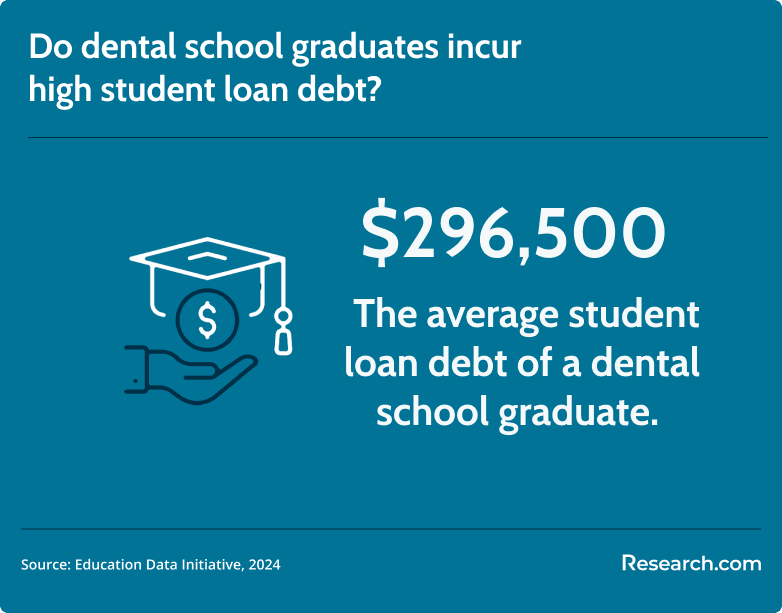
Dental hygiene bridge programs are still far less expensive than dental school. According to the Education Data Initiative, average dental school debt for dentists is nearly $300,000, which is substantially higher than the typical cost of dental hygiene bridge or completion programs.
| Cost Item | Why It Matters |
| Tuition | The largest expense, usually based on credit hours or a flat program rate. |
| Clinical and lab fees | May cover equipment, simulation tools, or supervised practice requirements. |
| Books and digital materials | Can add recurring costs each term. |
| Background checks and health records | Often required before clinical placement. |
| Licensure exams | Separate from tuition and required for practice as a dental hygienist. |
| Travel | Important for hybrid programs, campus intensives, or distant clinical placements. |
Financial Aid Options for Online Dental Hygiene Bridge Students
Students in eligible online dental hygiene bridge or completion programs may be able to use several funding sources. Aid availability depends on the institution, program level, enrollment status, accreditation, and the student’s financial profile.
- Federal financial aid: Eligible students can submit the FAFSA to be considered for federal grants, loans, and work-study programs.
- State grants and scholarships: Some states provide need-based or workforce-related aid for residents enrolled in accredited programs, including some online options.
- Institutional aid: Colleges may offer scholarships, tuition discounts, payment plans, or adult-learner awards for dental hygiene students.
- Professional association scholarships: Organizations such as the American Dental Hygienists’ Association and state dental hygiene associations may offer scholarships or grants.
- Employer tuition assistance: Dental practices may help current dental assistants or hygienists pay for additional education when the credential benefits the workplace.
- Military and veteran benefits: Active-duty service members, veterans, and eligible family members may be able to use GI Bill® benefits or military tuition assistance.
Students comparing healthcare training costs can also review how funding works for medical assistant online schools with financial aid, while remembering that dental hygiene programs have different accreditation and clinical requirements. Learners exploring other skill-based online education options, such as a jewelry design and repair online school, should apply the same principle: verify whether the program is aid-eligible before assuming loans, grants, or scholarships will apply.
According to the chart below, common ways students finance dental education include federal student loans at 66% and help from family and friends at 19%. Reviewing funding sources early can prevent last-minute borrowing decisions after admission.
Prerequisites for Online Dental Assistant to Dental Hygienist Bridge Programs
Admission requirements vary significantly because some programs serve licensed dental hygienists, while others may accept dental assistants preparing for entry-level hygiene education. Applicants should read the admissions page carefully and ask whether the program leads to initial licensure or only to degree completion after RDH licensure.
- Dental assisting experience or credentials: Some bridge pathways expect applicants to be Certified Dental Assistants (CDA) or Registered Dental Assistants (RDA), often with 1 to 2 years of documented experience.
- Accredited prior education: Programs may require completion of a CODA-accredited dental assisting program, an associate degree in dental assisting, or an accredited dental hygiene associate degree, depending on the pathway.
- General education coursework: Common prerequisites include anatomy and physiology, English composition, psychology, and other college-level courses.
- Minimum GPA: Many programs require a cumulative GPA, usually 2.5 to 3.0.
- CPR or BLS certification: Current Basic Life Support CPR certification is often required before clinical participation.
- Health and safety clearance: Immunization records, health screenings, background checks, and drug screening may be required before clinical placement.
Specialized healthcare programs often have stricter entry rules than general online courses. For example, an online MSN in forensic nursing has advanced professional prerequisites, while the fastest online medical billing and coding certificate programs may have a different admissions structure because they do not prepare students for the same kind of hands-on dental licensure.
Courses in an Online Dental Assistant to Dental Hygienist Bridge Program
Coursework usually combines biomedical science, dental hygiene theory, patient care, prevention, ethics, and clinical practice. Program names and credit requirements vary, but students should expect both academic learning and hands-on skill development if the pathway leads to dental hygiene licensure.
Core Dental Hygiene Courses
- Dental Radiology
- Periodontology
- Oral Pathology
- Dental Materials
- Pharmacology for the Dental Hygienist
- Pain Control and Local Anesthesia
- Head and Neck Anatomy
- Clinical Dental Hygiene I, II, and III
General Education and Science Prerequisites
- Anatomy and Physiology I and II
- Microbiology
- General or Organic Chemistry
- Nutrition
- Psychology or Sociology
- English Composition
- Public Speaking or Communication
Public Health, Law, and Research
- Community Dental Health
- Dental Hygiene Theory
- Ethics and Law in Dental Hygiene
- Evidence-Based Practice or Dental Hygiene Research
Capstone, Practicum, or Clinical Experience
- Senior Capstone Project
- Clinical Internship or Externship, which may require in-person participation
Technical programs in other fields, such as online gunsmith courses, also combine theory with applied skills, but dental hygiene has an added licensure dimension because students must demonstrate patient-care competence. Bridge programs are typically designed to build on prior dental knowledge and prepare eligible students for the National Board Dental Hygiene Examination (NBDHE) and state licensure requirements.
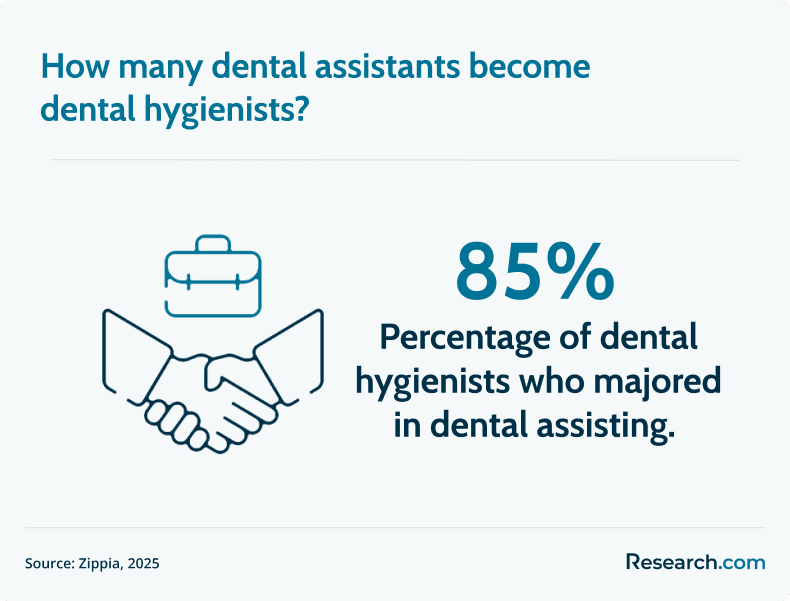
According to Zippia, 85% of dental hygienists majored in dental assisting.
Specializations in Online Dental Hygiene Bridge and Completion Programs
Many bridge or completion programs focus on general dental hygiene, but some allow students to shape their studies through concentrations, electives, projects, or field experiences. Specialization matters most for students who want to move into education, public health, administration, research, or specialized patient populations.
- Public or community health dentistry: Focuses on prevention, outreach, education, screenings, and oral health programs for underserved communities.
- Education and teaching: Prepares students for instructional roles in dental hygiene or dental assisting programs, including curriculum design and clinical teaching methods.
- Pediatric dentistry: Emphasizes age-appropriate care for children and adolescents, including communication and behavior guidance.
- Geriatric or special needs care: Builds skills for working with older adults and medically complex patients.
- Periodontics: Provides deeper preparation in gum disease prevention, periodontal therapy, and ongoing maintenance.
- Dental hygiene administration or business: Covers leadership, practice operations, finance, compliance, and management within dental settings.
Not every school offers formal tracks. If specialization is important, ask whether students can choose electives, design a capstone around an interest area, or complete clinical or community work aligned with that goal.
Students still deciding between healthcare support careers should compare the roles carefully. The difference between a medical assistant and dental assistant is not just workplace setting: dental assisting is focused on oral healthcare and dental procedures, while medical assisting supports broader clinical and administrative functions in physician offices and other healthcare settings. A dental hygiene bridge pathway is specifically for those pursuing the licensed dental hygiene role.
How to Choose the Best Online Dental Assistant to Dental Hygienist Bridge Program
The best program is the one that matches your current credential, licensure goal, schedule, budget, and state requirements. Do not choose a program only because it is online or inexpensive. Dental hygiene is a regulated clinical profession, so the wrong program can delay licensure or leave you with credits that do not apply to your goal.
| Decision Factor | Questions to Ask | Why It Matters |
| Accreditation | Is the dental hygiene program CODA-accredited? Is the institution properly accredited? | Accreditation can affect licensure eligibility, credit transfer, graduate study, and financial aid. |
| Licensure pathway | Does this program qualify dental assistants for initial RDH licensure, or is it only for current RDHs? | Many online programs are completion programs, not entry-level licensure programs. |
| Clinical training | Where are clinical hours completed? Does the school arrange placements or must students find their own? | Clinical access can determine whether you can complete the program from your location. |
| Transfer credits | How many credits will the school accept from prior dental assisting or general education coursework? | Transfer rules affect both timeline and total cost. |
| Total cost | What is the full cost after tuition, fees, books, exams, supplies, and travel? | The lowest tuition rate is not always the lowest overall cost. |
| Student support | Are advising, tutoring, clinical coordination, career services, and board-exam support available online? | Support services can make a major difference for working adults. |
| Outcomes | What are graduation rates, licensure exam pass rates, and employment support options? | Outcomes help you judge whether the program delivers practical value. |
Students looking primarily for affordability may also compare resources such as the cheapest online medical assistant program, but dental hygiene decisions should always weigh cost against accreditation, licensure eligibility, and clinical training quality.
Common Mistakes to Avoid
- Assuming “online” means no clinical work: Dental hygiene requires hands-on patient care preparation, even when lectures are online.
- Confusing RDH completion with initial licensure: A bachelor’s completion program may be excellent for licensed hygienists but unsuitable for dental assistants who still need entry-level hygiene training.
- Skipping state approval checks: Licensure rules vary, so confirm requirements with your state dental board before enrolling.
- Looking only at tuition: Fees, books, exams, supplies, travel, and lost work hours can change the real cost.
- Ignoring transfer-credit policies: A program that accepts more prior credits may save more money than one with a lower sticker price.
- Relying only on rankings: Rankings help narrow choices, but your best option depends on licensure fit, clinical access, schedule, and support.
Career Paths After an Online Dental Hygiene Bridge Program
Graduates of dental hygiene bridge and completion programs may pursue clinical, educational, public health, administrative, and industry roles. The right path depends on degree level, licensure status, experience, and any specialization completed during the program.
- Registered Dental Hygienist (RDH): Delivers preventive oral care, performs screenings, educates patients, and works with dentists in private practices, clinics, and community settings.
- Public Health Dental Hygienist: Supports oral health programs in schools, public clinics, nonprofit organizations, and underserved communities.
- Dental Hygiene Educator: Teaches in dental hygiene or dental assisting programs, often requiring a bachelor’s or master’s degree.
- Clinical Dental Hygiene Specialist: Builds expertise in areas such as periodontal therapy, pediatric hygiene, or geriatric care.
- Dental Office Manager or Administrator: Uses clinical knowledge and administrative experience to manage practice operations.
- Sales or Product Representative: Works with dental product companies to educate providers and support equipment, technology, or supply adoption.
- Research Assistant or Coordinator: Supports oral health studies in academic, clinical, or public health environments.
- Advanced Degree Candidate: Pursues master’s-level study in dental hygiene, public health, education, health studies, or leadership.
Most dental hygienists work in the private sector, as shown in the chart below.
Job Market for Dental Hygienists
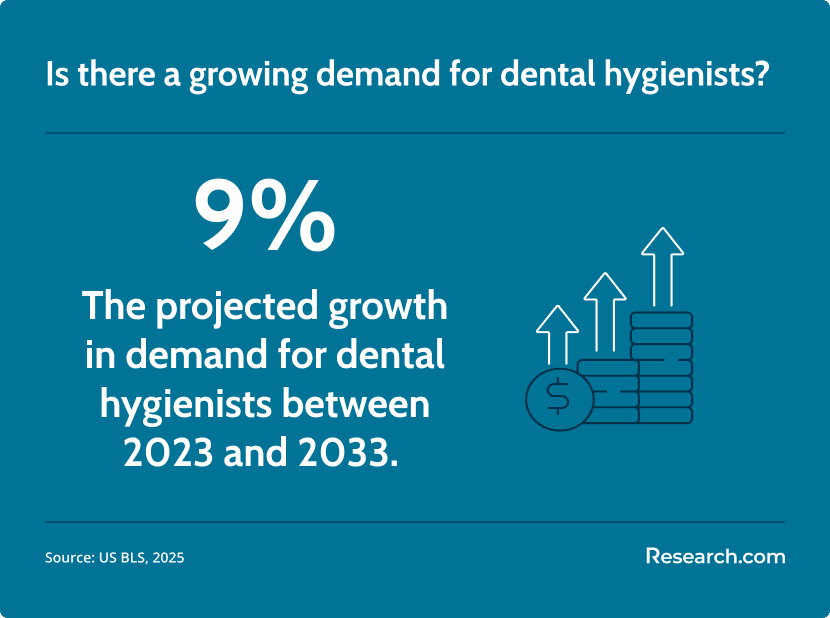
The job market for dental hygienists remains favorable. According to the U.S. Bureau of Labor Statistics, employment of dental hygienists is projected to grow 7% from 2022 to 2032, which is faster than the average for all occupations.
Demand is supported by the continuing need for preventive oral healthcare, expanded attention to oral health, and an older adult population that often requires ongoing dental services. However, job availability, schedules, and pay can vary by state, practice type, and local dental workforce conditions.
- Private dental offices: The most common setting, with full-time and part-time opportunities.
- Community health clinics: Often focused on access to care for underserved populations.
- Schools and public health programs: Emphasize oral health education, prevention, and screenings.
- Group practices and dental chains: May offer larger teams, benefits structures, and advancement options.
For working dental assistants, an appropriate bridge or entry-level dental hygiene pathway can make career advancement possible without immediately leaving employment. The BLS reports a median annual wage of $94,260 for dental hygienists (BLS, 2025), but individual earnings depend on location, experience, hours worked, employer type, and scope of practice.
Are Online Dental Hygiene Bridge Programs Accredited and State-Approved?
Accreditation and state approval should be verified before applying. For dental hygiene licensure, students should confirm whether the program is accredited by the Commission on Dental Accreditation (CODA) and whether it satisfies the requirements of the state where they plan to practice. Institutional accreditation also matters for federal financial aid, credit transfer, and graduate school eligibility.
Ask the admissions office direct questions: Is this program for first-time dental hygiene licensure or for licensed RDHs only? Are clinical hours required? Where are they completed? Will graduates be eligible for the National Board Dental Hygiene Examination and state or regional clinical exams? Similar quality checks are important in other advanced healthcare programs, such as an online PharmD degree, where accreditation and professional requirements determine whether the credential is usable.
Student Support and Career Networking in Online Bridge Programs
Strong online programs do more than post lectures. They provide advising, tutoring, faculty access, clinical coordination, board-exam preparation, career coaching, and technical support. For working adults, support services can be the difference between completing the program and stopping out during a difficult term.
Career-focused services may include resume reviews, interview preparation, employer connections, virtual career fairs, mentoring, and alumni networking. Students interested in broader oral health education may also compare related fields, such as a bachelor's degree in nutritional science, because nutrition, prevention, and patient education often intersect with oral health promotion.
How a Dental Hygiene Bridge Program Can Support Leadership Goals
A bridge or completion program can help licensed dental professionals move beyond entry-level clinical responsibilities. Bachelor’s and master’s-level dental hygiene education may strengthen skills in evidence-based practice, public health planning, teaching, program development, and practice leadership.
Graduates interested in supervising teams, managing operations, improving patient-care systems, or moving into healthcare administration may benefit from additional management education. For example, an accelerated healthcare administration degree online can complement dental hygiene experience with training in leadership, finance, operations, and healthcare strategy.
Student Perspectives on Online Dental Hygiene Bridge Programs
- Cheyene: "The online bridge format helped me keep my full-time dental job while working toward the next stage of my career. I studied after work, stayed connected with instructors, and eventually moved into a licensed hygienist role with greater responsibility and higher pay."
- Samuela: "Online learning made it possible to balance school with parenting. I could replay lectures, participate in virtual discussions, and finish my degree without relocating or stepping away from my family responsibilities."
- Benjie: "The program pushed me academically while still being manageable online. Courses in advanced hygiene care and patient education helped me feel more prepared, more confident, and more satisfied with my career direction."
Key Insights
- Not every “bridge” program is for dental assistants. Many online dental hygiene bridge or completion programs are designed for licensed RDHs who already completed associate-level dental hygiene education.
- Initial dental hygiene licensure still requires clinical training. Online coursework can improve flexibility, but hands-on patient-care requirements cannot usually be completed entirely online.
- CODA accreditation and state licensure eligibility are nonnegotiable. Dental assistants should confirm that a program qualifies them for the exams and licensure process in the state where they intend to work.
- Costs commonly range from $10,000 to $35,000, but total cost matters more than tuition alone. Students should include fees, books, supplies, background checks, exams, and travel in their budget.
- Program fit depends on your current credential. A dental assistant, current dental hygiene student, associate-prepared RDH, and licensed hygienist seeking a master’s degree may each need a different pathway.
- The job outlook is favorable, but outcomes are not guaranteed. The BLS projects 7% employment growth from 2022 to 2032 and reports a median annual wage of $94,260 for dental hygienists (BLS, 2025), but local demand and pay vary.
- The best program is the one that aligns accreditation, clinical access, transfer credits, cost, schedule, and career goals. Rankings can help you shortlist schools, but direct verification with admissions and your state dental board is essential.
References:
- California Dental Assistant. (n.d.). Highest paying dental assistant specialties. https://www.californiadentalassistant.com/articles/highest-paying-dental-assistant-specialties
- US BLS. (2025). Dental Assistants. https://www.bls.gov/ooh/healthcare/dental-assistants.htm
- US BLS. (2025). Dental Hygienists. https://www.bls.gov/ooh/healthcare/dental-hygienists.htm
- Zippia. (2024). 13 of the highest-paying dental assistant jobs in 2024. https://www.zippia.com/advice/highest-paying-dental-assistant-jobs
Other Things You Need to Know About Online Dental Assistant to Dental Hygienist Bridge Programs
It should be accredited by the Commission on Dental Accreditation, or CODA. CODA accreditation matters because state dental boards typically require graduation from a CODA-accredited dental hygiene program before you can apply for licensure and sit for the National Board Dental Hygiene Examination.
Yes, you need a license to work as a dental hygienist after a bridge program. This includes graduating from a CODA-accredited program, passing the national and clinical board exams, and meeting your state’s specific licensure requirements.