
2027 ESL Teaching Certification Online and Requirements

Co-Founder and Chief Data Scientist
Choosing an online ESL teaching certification is not just a question of finding the cheapest certificate. The right program can help you qualify for online teaching jobs, teach abroad, support English learners in schools, or move toward curriculum, training, or leadership roles. The wrong program may leave you with a credential employers do not recognize, no supervised teaching practice, or a certificate that does not meet local licensing rules.
This guide explains what online ESL certification means in 2026, how TEFL, TESOL, CELTA, Trinity CertTESOL, and ESOL endorsements differ, what employers usually expect, how much programs cost, how long they take, and how to compare programs before enrolling. It is written for career changers, current teachers, online tutors, prospective teachers abroad, and education professionals deciding whether ESL certification is a worthwhile next step.
Quick Answer: What Online ESL Certification Do Most Teachers Need?
Most new ESL teachers should look for a reputable 120-hour TEFL or TESOL certificate that includes training in lesson planning, classroom management, language teaching methods, assessment, and ideally observed teaching practice. CELTA and Trinity CertTESOL are more intensive and carry strong international recognition, especially for competitive language school jobs. U.S. K-12 teachers usually need a state-approved ESOL endorsement or license addition rather than only a general online TEFL certificate.
Online ESL certificates can be useful for teaching English online, tutoring, teaching abroad, corporate English training, and some community-based programs. However, certification alone does not guarantee employment, a work visa, or public school eligibility. Requirements depend on the employer, country, state, student age group, and whether the position is online, private, public, or licensed.
Key Things You Should Know About Online ESL Teaching Certification and Requirements
- Accreditation and recognition should come first: Prioritize providers connected to recognized awarding or quality assurance bodies, including Cambridge Assessment, Trinity College London, Ofqual, TESOL International, or ACCET where applicable.
- 120 hours is the common baseline: Many employers look for at least 120 hours of coursework in teaching methodology, lesson design, classroom management, and assessment.
- Observed practice makes a certificate stronger: Programs with a practicum, live teaching, observation, or trainer feedback are generally more valuable than theory-only certificates.
- A bachelor’s degree may still be required: Some online platforms do not require a degree, but work visas in countries such as China, South Korea, and Japan often do.
- Typical online costs vary widely: Many online certificates cost between $200 to $2,000 and can often be completed in 4 to 12 weeks, depending on pace and program depth.
- Career options are broader than online tutoring: Certified ESL teachers may work abroad, online, in public or private schools, in community programs, or in corporate and business English settings.
- Advanced credentials matter for advancement: Experienced teachers may later pursue DELTA or Trinity DipTESOL for roles in teacher training, academic management, or curriculum leadership.
- Not all certificates carry equal weight: Reputable online TEFL/TESOL providers such as International TEFL Academy and BridgeTEFL may be accepted by many employers, while CELTA and Trinity CertTESOL are among the most internationally recognized options.
- What is ESL teaching certification, and why does it matter in 2026?
- What types of ESL certifications are available online?
- How do online and classroom-based ESL certifications compare?
- What are the educational requirements for online ESL certification?
- How long does online ESL certification take?
- What do online ESL certification courses teach?
- What challenges should online ESL certification candidates expect?
- How do regional licensing requirements affect ESL certification?
- How should you choose a reputable online ESL certification program?
- Can online ESL certification support advanced academic goals?
- Do online ESL courses include practical teaching experience?
- How can ESL certification connect to educational leadership?
- Can ESL certification lead to interdisciplinary education careers?
- How much does online ESL certification cost?
- What jobs can you pursue with online ESL certification?
- Can ESL certification help you move into education leadership?
- What is the job outlook for online ESL certified teachers?
- How can additional academic qualifications strengthen an ESL career?Job market detailsLeadership pathwaysCareer options
What is ESL teaching certification, and why does it matter in 2026?
ESL teaching certification is a professional credential showing that a teacher has studied how to teach English to learners whose first language is not English. A good program trains candidates in how languages are learned, how to plan lessons, how to teach grammar and vocabulary, how to manage classes, and how to assess student progress.
The most common credentials include TESOL, TEFL, CELTA, Trinity CertTESOL, and ESOL endorsements. These terms are sometimes used loosely, but they are not identical. TEFL is usually associated with teaching English in countries where English is not the main language. TESOL is broader and may refer to teaching English learners domestically or internationally. CELTA and Trinity CertTESOL are structured initial teacher-training qualifications with strong global recognition. An ESOL endorsement is typically tied to a state teaching license in the United States.
Certification matters because ESL teaching is a skills-based profession. Employers want evidence that you can do more than speak English fluently. They want to know you can explain language clearly, adapt instruction to different proficiency levels, support multilingual learners, and use appropriate teaching strategies. In 2023, 88% of public school teachers in America had a major, minor, or certification in ESL, showing how common ESL-related preparation has become in school settings.
ESL certification may also be part of a broader career plan. For readers comparing credentials across industries, ESL training is one of several career-focused certificate programs that can support employment mobility when chosen carefully.
| Certification | Best fit | Common use | Key caution |
| TEFL | New teachers who want to teach English abroad or online | Private language schools, online ESL platforms, tutoring, overseas teaching | Quality varies significantly by provider |
| TESOL | Teachers who want a broader credential for domestic or international contexts | Adult education, community programs, online teaching, international roles | Employer recognition depends on provider and course depth |
| CELTA | Candidates seeking a highly recognized initial teaching qualification | Adult ESL/EFL teaching and competitive language school positions | Usually more intensive and more expensive than basic certificates |
| Trinity CertTESOL | Candidates wanting a widely respected teacher-training route | International English teaching, language centers, adult learners | Requires serious time commitment and assessed teaching practice |
| ESOL Endorsement | Licensed U.S. K-12 teachers | Public school English learner instruction | State rules differ, and a general TEFL certificate may not satisfy them |
What types of ESL certifications are available online?
Online ESL teaching certification options range from short introductory courses to globally recognized teacher-training qualifications. The right choice depends on where you want to teach, who you want to teach, and whether you need the credential for employment, professional development, visa eligibility, or licensure.
- TESOL: TESOL stands for Teaching English to Speakers of Other Languages. It is often used for programs that prepare teachers for English learners in both English-speaking and non-English-speaking environments.
- TEFL: TEFL stands for Teaching English as a Foreign Language. It is commonly used by teachers seeking jobs abroad or online with learners based outside English-speaking countries.
- CELTA: The Certificate in English Language Teaching to Adults is awarded by Cambridge University and focuses primarily on adult English learners.
- ESOL endorsement: This is usually added to a U.S. state teaching license and is designed for K-12 educators working with English learners in public school systems.
Most certification courses include language acquisition, instructional methods, lesson planning, classroom management, assessment, and teaching practice or simulated practice. Candidates who are drawn to ESL because of its communication, support, and learner-centered work may also compare it with adjacent helping professions, such as the path to becoming a domestic violence counselor, though the training and licensing requirements are different.
How do online and classroom-based ESL certifications compare?
Online and classroom-based ESL certifications can both prepare teachers well, but they differ in structure, feedback, practicum access, cost, and employer perception. The key question is not simply whether a program is online. It is whether the program is rigorous, recognized, current, and connected to real teaching practice.
Course delivery and learning format
Online ESL teaching certification usually delivers instruction through learning platforms, recorded lessons, readings, assignments, quizzes, discussion boards, and sometimes live webinars. Many programs are self-paced, which helps working adults, parents, and career changers study around other responsibilities.
Classroom-based programs use scheduled in-person training, direct instructor interaction, peer collaboration, and immediate discussion. They may be easier for candidates who learn best through structure, live modeling, and frequent face-to-face feedback.
Teaching practice
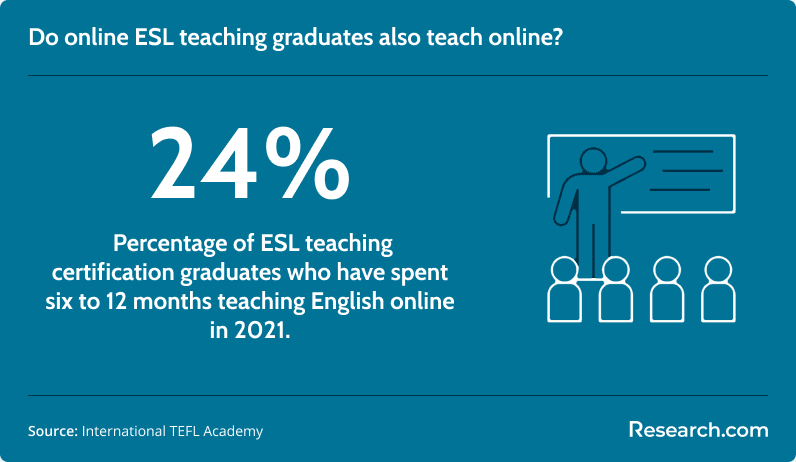
The strongest distinction is often the practicum. Some online certificates include virtual teaching practice, recorded teaching demonstrations, peer teaching, or independently arranged local observation. Among online ESL teaching certification graduates, 24% have spent six to 12 months teaching English online, which reflects how often online training connects to remote teaching opportunities.
In-person programs, especially CELTA and Trinity CertTESOL formats, typically include observed lessons with real English learners and trainer feedback. This can be valuable for teachers who have never managed a class or delivered a full language lesson.
Interaction and professional network
Online programs may offer forums, instructor messaging, live sessions, or alumni communities, but the networking experience varies. Classroom-based programs naturally create more direct contact with trainers and classmates, which can help candidates find mentors, references, or job leads.
Accreditation and employer acceptance
Online accreditation is inconsistent across providers. Some online programs are well respected, while others are little more than low-cost certificates with limited assessment. Employers may prefer CELTA, Trinity CertTESOL, or a robust TEFL/TESOL course with observed practice for competitive roles.
Cost and access
Online certificates are usually more accessible because candidates do not need to relocate, commute, or attend fixed in-person sessions. Classroom-based programs often cost more because they require physical facilities, trainers, and live teaching arrangements.
| Factor | Online ESL certification | Classroom-based ESL certification | Best choice when... |
| Flexibility | Often self-paced or partly asynchronous | Usually fixed schedule | Choose online if you need to study while working |
| Teaching practice | May be virtual, simulated, optional, or independently arranged | More likely to include observed live teaching | Choose classroom-based if you need intensive supervised practice |
| Networking | Depends on forums, webinars, and alumni access | Stronger face-to-face peer and trainer contact | Choose classroom-based if networking is a priority |
| Recognition | Strong if the provider is reputable; weak if unaccredited | Often favored for internationally known programs | Choose based on employer requirements, not marketing claims |
| Cost | Often lower | Often higher | Choose online if affordability and access are major constraints |
What are the educational requirements for online ESL certification?
Entry requirements depend on the certificate and on the job you want after finishing. English language instruction for non-native speakers is a $63 billion a year industry, and that scale has increased the number of teachers seeking recognized preparation. Still, a certificate provider’s admission rules may be less demanding than an employer’s hiring or visa requirements.
TEFL and TESOL requirements
- Education: Many programs accept applicants with a high school diploma, but a bachelor’s degree is often preferred or required by overseas employers. If your long-term goal is higher education teaching, review the requirements to become a college professor to understand how academic roles differ from ESL certificate-based work.
- English proficiency: Candidates need strong English skills. Non-native English speakers may be asked for TOEFL or IELTS scores, depending on the program or employer.
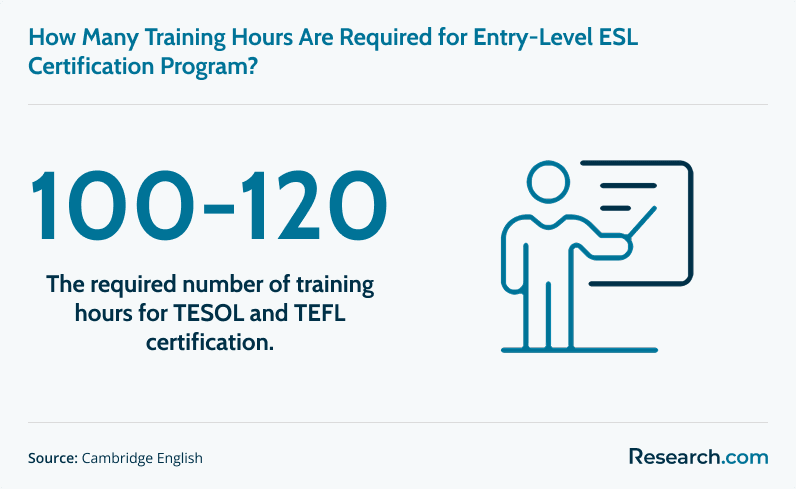
- Coursework: Many standard courses require 100-120 hours of training in methods, planning, grammar, classroom management, and assessment.
- Practicum: Some providers include observation or teaching practice, while others make it optional.
- Age: Programs commonly require candidates to be at least 18 years old.
CELTA requirements
- Education: A high school diploma or equivalent may be enough for admission, although many employers prefer candidates with a bachelor’s degree.
- English proficiency: Applicants must have a high level of English, whether they are native or non-native speakers.
- Selection process: Applicants usually complete an interview and may submit a pre-course task to show language awareness and readiness for teacher training.
- Course length: CELTA includes 120 hours and observed teaching practice.
- Practicum: Teaching practice with real ESL students is mandatory.
ESOL endorsement requirements for U.S. K-12 teachers
- Education: A bachelor’s degree in education or a related field and a valid state teaching license are generally required.
- Coursework: Teachers complete state-approved study in ESL methods, cultural diversity, language acquisition, and related areas.
- Testing: Some states require an exam such as Praxis ESOL.
- Continuing education: State rules may require ongoing professional learning to keep the endorsement active.
How long does online ESL certification take?
Online ESL certification timelines vary by course level, weekly study time, practicum requirements, and whether the program is self-paced or scheduled. A short certificate may take only weeks, while an advanced diploma can take much longer.
| Program type | Typical duration | Course hours | Best for |
| Short introductory TEFL/TESOL course | 1 to 4 weeks | 40 to 60 hours | Volunteer teaching, informal tutoring, or exploring ESL before committing |
| Standard TEFL/TESOL certificate | 4 to 12 weeks | 120 hours | Most entry-level online or international ESL teaching goals |
| Advanced or specialized certificate | 3 to 6 months | 150 to 300 hours | Teachers who want specialized training in areas such as Business English or Young Learners |
| Diploma-level qualification | 6 months to 2 years | 300+ hours | Experienced teachers moving toward training, leadership, curriculum, or academic roles |
Short introductory courses
Introductory programs usually require 40 to 60 hours and may be finished in 1 to 4 weeks. These courses can be useful for beginners, tutors, or volunteers, but they are often too limited for employers that expect a full 120-hour certificate.
Standard 120-hour TEFL or TESOL programs
A 120-hour certificate is the most common entry-level option. Many self-paced learners finish in 4 to 12 weeks. A candidate studying about 10 hours per week may finish in about 3 months, while someone studying more intensively may finish in a month or less.
Advanced and specialized programs
Certificates of 150 to 300 hours may take 3 to 6 months. These often include deeper training, specialty modules, and sometimes a practicum. Online CELTA is intensive and may be completed in about 3 months part-time or six to eight weeks full-time.
Diploma-level study
Qualifications such as DELTA are designed for experienced teachers and may take 6 months to 2 years. These programs usually combine advanced coursework, practical teaching, reflection, and academic research.
Completion time is affected by pacing, weekly study hours, assignment deadlines, practicum scheduling, and whether instructor feedback is built into the course. If you are comparing education credentials more broadly, reviewing physical education teacher certification requirements can help you see how certification timelines differ across teaching fields.
What do online ESL certification courses teach?
A strong ESL certification course teaches candidates how to turn English knowledge into clear, learner-centered instruction. It should cover more than grammar rules. It should show you how to diagnose learner needs, plan effective lessons, teach all language skills, manage participation, use feedback, and adapt to age, culture, level, and learning purpose.
Technology is also changing ESL training. Among ESL teachers, 65% agree that AI can help them plan effective English language lessons, and many modern courses now address responsible use of AI for lesson planning, materials adaptation, feedback support, and classroom preparation.
Core topics in a standard ESL certification course
| Course area | What you should learn | Why it matters |
| Language acquisition | How learners develop second-language skills over time | Helps teachers set realistic goals and choose appropriate activities |
| Teaching methods | Approaches such as Communicative Language Teaching, Task-Based Learning, and the Direct Method | Gives teachers a toolkit instead of relying on one teaching style |
| Lesson planning | How to set objectives, sequence activities, manage timing, and assess learning | Prevents unfocused lessons and helps students make measurable progress |
| Listening and speaking | Activities for comprehension, fluency, pronunciation, role play, and discussion | Supports communication skills learners often need for work, school, and daily life |
| Reading and writing | Strategies for skimming, scanning, close reading, sentence structure, paragraphs, and essays | Builds academic, professional, and functional literacy |
| Grammar and vocabulary | How to teach grammar and word meaning in context | Helps learners use language accurately and naturally |
| Classroom management | How to organize groups, encourage participation, set expectations, and handle mixed levels | Creates productive learning conditions in online and in-person settings |
| Assessment and feedback | How to create quizzes, evaluate performance, and give useful correction | Shows learners what to improve and helps teachers adjust instruction |
Intensive English Programs, or IEPs, are a specialized part of English language teaching. They often serve learners who need concentrated language preparation for academic or professional goals. In 2023, ICEF noted an increase in IEPs, with students from Japan owning 16% of the total enrollment.
Some candidates combine ESL teaching with business, entrepreneurship, or education management goals. If you are weighing a broader academic path and asking what degree is useful for entrepreneurship, ESL experience can pair well with tutoring businesses, curriculum products, language coaching, or international education services.
What challenges should online ESL certification candidates expect?
Online ESL certification is convenient, but it requires discipline. Candidates may struggle with self-paced coursework, limited immediate feedback, time management, inconsistent instructor access, technology problems, or fewer networking opportunities than in-person programs. The risk is highest in low-support courses that provide readings and quizzes but little feedback on actual teaching.
To reduce those risks, choose a program with clear deadlines, accessible instructors, sample lesson plans, observed or recorded teaching, peer interaction, and career guidance. Build a study schedule before enrolling, save examples of lesson plans for your portfolio, and join teacher communities where you can ask practical classroom questions. Teachers who want deeper pedagogical preparation may later consider an affordable online master's degree in teaching.
How do regional licensing requirements affect ESL certification?
Regional rules can determine whether an online ESL certificate is enough. A private online tutoring company may accept a 120-hour TEFL certificate, while a U.S. public school may require a state teaching license plus an ESOL endorsement. International employers may also require a bachelor’s degree for visa purposes even when the teaching certificate itself does not.
Before enrolling, check the requirements for the specific country, state, school system, or platform where you want to work. U.S. teachers should compare state rules through teacher certification requirements by state before assuming that a general online ESL certificate will satisfy licensure expectations.
How should you choose a reputable online ESL certification program?
A reputable online ESL certificate should be transparent about accreditation, course hours, practicum options, instructor qualifications, assessment methods, refund policies, job support, and employer recognition. Avoid choosing solely because a provider advertises a large discount or promises easy employment.
| Question to ask | Why it matters | Red flag |
| Who accredits, awards, or externally validates the program? | Recognition affects employer trust | The provider uses vague claims such as “internationally accepted” without details |
| How many course hours are included? | Many employers expect at least 120 hours | The certificate is very short but marketed as equivalent to full certification |
| Is there observed teaching practice? | Feedback on teaching improves job readiness | No practicum, no teaching demo, and no trainer feedback |
| Who teaches or evaluates the course? | Instructor expertise affects course quality | No information about trainers or assessors |
| What job support is offered? | Career guidance can help new teachers enter the market | Guaranteed job claims with no clear employer partnerships |
| Will it meet my target employer or licensing requirements? | Requirements differ by region and role | The provider gives one-size-fits-all answers |
Educators planning beyond entry-level teaching may compare ESL certification with graduate-level education routes, including fast-track online EdD programs, but doctoral study is a separate path and not required for most ESL teaching jobs.
Can online ESL certification support advanced academic goals?
Online ESL certification can be a starting point for further academic and professional development. Teachers who begin with ESL instruction may later move into curriculum design, academic coordination, teacher training, educational technology, adult education, or policy-related work. For these paths, an initial certificate is usually not enough on its own, but it can help clarify your interests and build practical teaching experience.
If leadership, research, or higher-level administration is part of your plan, compare graduate options carefully by cost, accreditation, workload, and career alignment. Reviewing affordable online EdD programs can help you understand one possible route for advanced education leadership preparation.
Do online ESL courses include practical teaching experience?
Some online ESL courses include practical teaching, but not all do. The strongest programs provide live virtual teaching, observed lessons with real English learners, recorded teaching demonstrations, peer teaching, or structured local practicum options. Trainer feedback is especially important for candidates with no previous teaching experience.
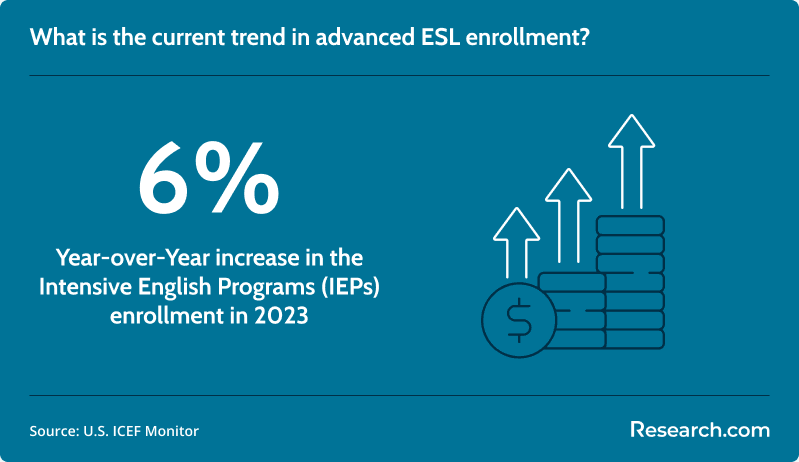
Intensive English Programs enrollment in 2023 reached 67,924 within the U.S. ELT sector, representing a 6% year-over-year increase. As demand continues in parts of the English language training sector, teacher preparation quality matters because students expect organized, effective instruction.
Programs over 150 hours and online versions of recognized credentials such as CELTA or Trinity CertTESOL are more likely to include assessed teaching practice. Short introductory courses and low-cost theory-only programs often omit practical training entirely.
If you are comparing affordable online education options, do not look only at tuition. Ask whether the program includes observed teaching, who evaluates it, how many practice hours are required, and whether the practicum format matches your career goal.
- Check recognition first: Look for credible accreditation, awarding bodies, or external validation.
- Confirm the practice requirement: Many employers value 6-20 hours of observed teaching practice.
- Ask how feedback works: A practicum is more useful when an experienced trainer observes and critiques your teaching.
- Match the format to your goal: Virtual practice may suit online teaching, while in-person practice may better prepare you for classroom-based roles.
How can ESL certification connect to educational leadership?
ESL certification can support leadership development when it is paired with experience, mentoring, and additional training. Teachers who understand multilingual learners may move into roles such as lead teacher, academic coordinator, curriculum specialist, teacher trainer, or program manager. These positions usually require more than a basic certificate; employers often look for demonstrated teaching success, curriculum knowledge, communication skills, and the ability to support other educators.
If your goal is to supervise programs or lead instructional teams, explore graduate study or leadership-focused credentials alongside teaching experience. One option to compare is an online master's degree in educational leadership.
Can ESL certification lead to interdisciplinary education careers?
ESL training develops skills that apply beyond language classrooms: cross-cultural communication, learner assessment, instructional design, digital content creation, and resource adaptation. These skills can be useful in education technology, tutoring businesses, academic support services, library programming, international student services, and adult learning.
Professionals who enjoy organizing learning resources and supporting diverse communities may also explore library science degree pathways, where communication, information access, and community education often intersect.
How much does online ESL certification cost?
The cost of online ESL certification depends on course length, recognition, instructor support, practicum requirements, specialization, and provider reputation. A low-cost course may be sufficient for informal tutoring, but it may not be enough for competitive employers. A higher-cost program may be worthwhile if it includes observed teaching practice and stronger recognition.
Before paying, compare the credential to your intended job market. It can also help to review which education careers are currently in demand so you understand where ESL fits into broader education employment options.
| Certification level | Typical cost range | What it usually includes | Who it may suit |
| Basic TEFL/TESOL certification | $100 to $500 | 40 to 120 hours, usually without a practicum | New tutors, volunteers, or candidates testing interest in ESL |
| Standard TEFL/TESOL certification | $200 to $1,000 | 120 to 150 hours with core teaching modules | Most entry-level online or international teaching candidates |
| Advanced TEFL/TESOL certification | $500 to $2,000 | 150+ hours, specialized modules, and sometimes a practicum | Teachers targeting better preparation or specialty niches |
| CELTA or Trinity CertTESOL | $1,500 to $3,500 | Recognized training with teaching practice and assessment | Candidates seeking stronger international recognition |
What jobs can you pursue with online ESL certification?
Online ESL certification can lead to several teaching and education-related roles, but outcomes depend on your degree, experience, location, target learners, work authorization, and employer standards. An ESL certificate can also pair with graduate study; teachers seeking advanced specialization may compare online master's programs in ESL.
Teaching English abroad
- Common destinations include Asia, the Middle East, Europe, and Latin America, with examples such as China, South Korea, Japan, Vietnam, Saudi Arabia, UAE, Spain, Italy, Mexico, and Brazil.
- Salary range: $1,000 to $4,000+ per month, depending on country, employer, qualifications, housing benefits, and experience.
Online ESL teaching
- Online teachers work with children, teenagers, adults, test-prep learners, and business professionals. In 2021, 43.66% of International TEFL Academy graduates were teaching English online from their home country.
- Salary range: $10 to $40 per hour, depending on platform, experience, schedule, demand, and specialization.
Domestic ESL teaching
- Teachers may work in public schools, private schools, charter schools, adult education, community programs, or language centers.
- Some positions require a state teaching license, endorsement, or a related degree such as an English degree.
- Salary range: $30,000 to $70,000+ annually, depending on location, credentials, institution, and experience.
Corporate or business English training
- Business English trainers help professionals improve communication for meetings, presentations, negotiations, interviews, and international collaboration.
- Salary range: $25 to $100 per hour, depending on client type, specialization, and whether work is freelance or employer-based.
Curriculum developer or instructional designer
- These professionals create lessons, digital materials, assessments, and full ESL courses for schools, publishers, tutoring companies, or education technology providers.
- Salary range: $50,000 to $80,000+ annually for full-time positions; freelance rates vary by project.
ESL program coordinator or director
- Coordinators and directors manage programs, support teachers, review curriculum, oversee placement, and improve learner outcomes. A broader education degree may strengthen preparation for these roles.
- Salary range: $60,000 to $100,000+ annually, depending on institution, responsibility level, and experience.
Can ESL certification help you move into education leadership?
ESL certification can contribute to leadership readiness, especially when a teacher gains experience working with multilingual learners, adapting curriculum, mentoring peers, and using data to improve instruction. However, leadership roles usually require a broader portfolio: teaching results, supervisory experience, graduate education, administrative skills, and knowledge of institutional policy.
Teachers who want senior leadership roles may eventually compare advanced credentials such as an online doctorate in organizational leadership. That path is not necessary for most ESL teaching jobs, but it may fit educators aiming for executive, administrative, consulting, or organizational development roles.
What is the job outlook for online ESL certified teachers?
The ESL job market is shaped by digital learning platforms, international mobility, demand for English in academic and professional settings, and changing policy environments. Online teaching has made the field more accessible, but it has also increased competition. Employers increasingly value candidates who combine certification with strong digital teaching skills, classroom management ability, practical experience, and adaptability.
The U.S. Intensive English Program sector has shown signs of recovery, including the 2023 enrollment figure of 67,924 and a 6% year-over-year increase. Internationally, demand differs by region and policy conditions, so teachers should research specific countries, visa rules, and employer expectations before committing to a program.
ESL skills can also support adjacent education and information roles. Candidates interested in learning support, resource organization, and community education may want to compare ESL pathways with library science careers.
How can additional academic qualifications strengthen an ESL career?
Additional credentials can help ESL teachers move beyond entry-level instruction. A bachelor’s degree may support visa eligibility and school employment. A master’s degree may strengthen expertise in applied linguistics, TESOL, curriculum, or education. Leadership degrees may help experienced teachers move into administration or program management.
Interdisciplinary study can also be useful for teachers who want to combine ESL with business, technology, international education, social services, or community programming. For example, an online interdisciplinary studies degree may help some learners connect language teaching with broader professional interests.
Common Mistakes to Avoid When Choosing an Online ESL Certification
| Mistake | Why it can hurt you | Better approach |
| Choosing only by lowest price | The course may lack recognition, feedback, or teaching practice | Compare cost with accreditation, hours, practicum, and employer acceptance |
| Assuming any online certificate is internationally accepted | Employers and visa offices may have specific requirements | Check job ads and official country requirements before enrolling |
| Ignoring practicum requirements | You may feel unprepared for real learners | Look for observed teaching, recorded demos, or supervised practice |
| Confusing TEFL/TESOL with state licensure | A general certificate may not qualify you for U.S. public school roles | Verify ESOL endorsement and licensing rules in your state |
| Trusting guaranteed job claims | No certificate can guarantee employment or salary | Review placement support, alumni outcomes, and employer partnerships carefully |
| Overlooking technology preparation | Online teaching requires more than subject knowledge | Build skills in video instruction, digital whiteboards, feedback tools, and online engagement |
Step-by-Step Guide to Choosing the Right Online ESL Certification
- Define your teaching goal: Decide whether you want to teach online, abroad, in U.S. schools, in adult education, or in business English.
- Check employer requirements: Review real job postings for your target role and note required hours, degree expectations, practicum rules, and preferred credentials.
- Verify recognition: Look for credible accreditation, awarding bodies, external moderation, or industry acceptance.
- Prioritize at least 120 hours for entry-level teaching: Shorter courses may be useful for exploration, but they may not meet common employer expectations.
- Look for teaching practice: Choose observed practice whenever possible, especially if you have never taught before.
- Compare total cost: Include tuition, materials, practicum fees, extension fees, exam fees, and any job placement services.
- Assess support: Confirm whether instructors answer questions, review assignments, provide feedback, and help with job preparation.
- Plan your next credential: If your goal is school teaching, leadership, or curriculum work, map how the certificate connects to licensure, a degree, or graduate study.
Key Insights
- A 120-hour TEFL or TESOL certificate is the common starting point for many online and international ESL jobs, but it is not a substitute for state licensure where licensure is required.
- CELTA and Trinity CertTESOL generally offer stronger international recognition and supervised teaching practice, making them better fits for competitive language school roles.
- Observed teaching practice is one of the clearest quality signals in an ESL certification program, especially for candidates without classroom experience.
- Online ESL certification costs vary from $100 to $500 for basic courses, $200 to $1,000 for standard programs, $500 to $2,000 for advanced options, and $1,500 to $3,500 for CELTA or Trinity CertTESOL.
- Certification can support roles in online teaching, teaching abroad, domestic ESL programs, business English, curriculum development, and program coordination, but salaries and eligibility depend on location, degree level, experience, and employer requirements.
- The ESL field is being affected by online learning and AI-assisted lesson planning; teachers who combine certification with digital teaching skill and practical experience will be better positioned.
- Before enrolling, verify accreditation, course hours, practicum structure, instructor support, job-market relevance, and whether the credential matches your target country, state, or employer.
References
- Bureau of Labor Statistics. (2024). Adult literacy and GED teachers.
- EF Education First. (2024). EF EPI 2024 English Proficiency Index.
- ICEF Monitor. (2023). U.S. English language training providers reach 70% of pre-pandemic volumes.
- ICEF Monitor. (2024). U.S. ELT sector continues a gradual recovery.
- ICEF Monitor. (2024). Report reveals continued recovery for ELT sector in 2023 but also policy headwinds in 2024.
- International TEFL Academy. (n.d.). TEFL and ESL teacher job market report.
- National Center for Education Statistics. (n.d.). Fast facts: English learners.
- National Center for Education Statistics. (n.d). Literacy levels of adults.
- TeachingEnglish. (2024). AI and ELT.
- University of California, Berkeley. (n.d.). Global demand for English language skills.
Other Things You Should Know About ESL Teaching Certification Online and Requirements
In 2027, online ESL certification programs typically require a reliable internet connection, a computer with a webcam and microphone, and updated browsers. Specific platforms like Zoom or Google Meet might also be used for interactive classes and assessments.
Most online ESL certification classes require a reliable computer, broadband internet, a webcam, microphone, and updated browser. Programs that include live teaching practice may also require Zoom or similar video software. Some providers ask for a laptop or desktop rather than a tablet to complete assignments and assessments.


