2027 Online Communication Disorders Bachelor's Degree Programs With No Application Fee

Co-Founder and Chief Data Scientist

Reviewed by Rhea Paul, PhD
SLP Education & Research Expert
If you want to move into communication disorders, the first decision is not simply which online bachelor's program looks convenient. You also need to know whether the program is accredited, whether credits will transfer, how much the full degree will cost, and whether a no-application-fee policy actually lowers your risk when comparing schools. For career changers, working adults, first-generation students, and transfer students, even modest application fees can make it harder to apply broadly and compare real options.
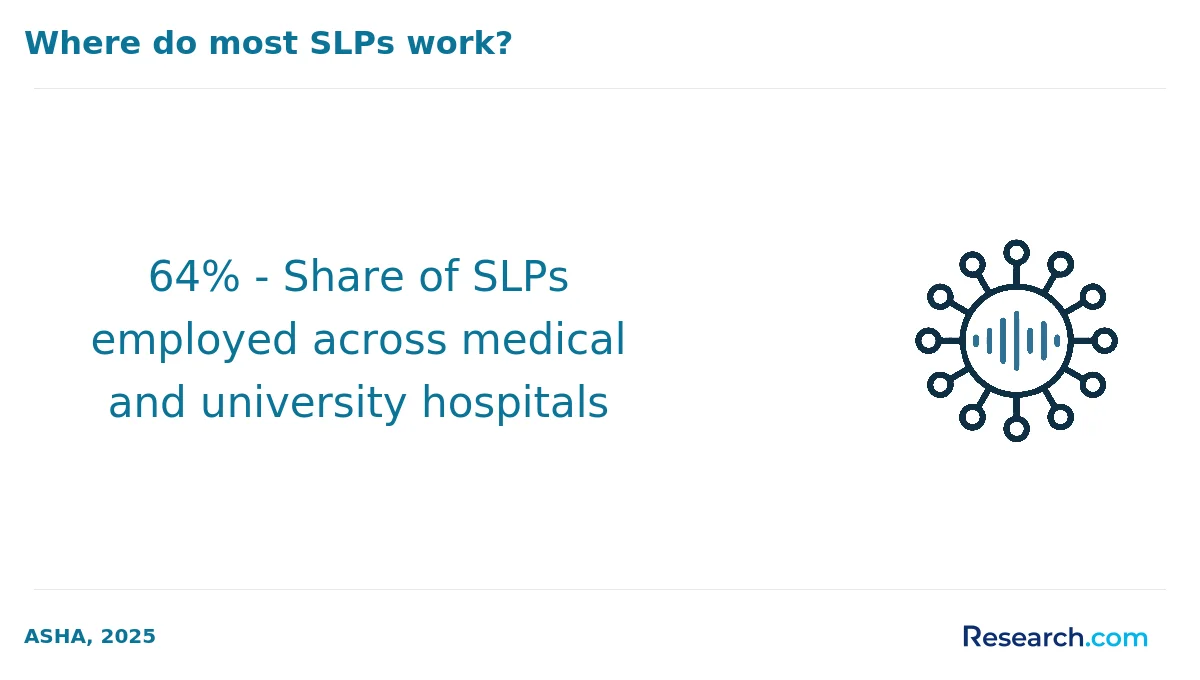
Online communication disorders bachelor's programs can prepare students for graduate study in speech-language pathology, audiology, education, health services, and related support roles. They do not all lead directly to licensure, and policies vary by state and profession, so students should treat the bachelor's degree as one step in a longer academic and career plan. With demand for speech-language pathologists expected to grow 17% by 2035, choosing an affordable, legitimate pathway matters.
This guide explains what “no application fee” means, how to verify accreditation, what admission requirements to expect, how tuition compares after the fee is waived, and how transfer credit, financial aid, technology needs, and employer recognition should affect your decision.
Key Benefits of Online Communication Disorders Bachelor's Degree Programs With No Application Fee
- Evaluating program accreditation and transfer credit policies ensures your no-application-fee online communication disorders degree fits academic standards and accelerates degree completion without unnecessary costs.
- Comparing tuition rates alongside financial aid options helps balance budget constraints while identifying affordable degrees that offer strong career preparation in speech-language pathology and audiology fields.
- Researching career outcomes and state licensure requirements verifies alignment of online programs with your professional goals, especially important for career changers seeking clinical certification and job placement support.
What Does 'No Application Fee' Really Mean for an Online Communication Disorders Bachelor's Program?
A no-application-fee online communication disorders bachelor's program lets you submit an admissions application without paying the upfront fee that many colleges charge before reviewing your materials. The policy can be permanent, temporary, or conditional. That distinction matters because a “free application” advertised on a program page may require a promo code, a specific deadline, attendance at an information session, or a waiver request.
Data from the National Center for Education Statistics (NCES) and College Scorecard show that about 40% of accredited institutions charge an application fee, while nearly 60% waive it permanently or offer temporary fee waiver opportunities. Examples of accredited institutions with permanently waived application fees include Oregon State University Ecampus, University of Florida Online, and University of North Dakota, each of which emphasizes accessibility for online applicants on its admissions pages.
- Permanent waiver: The school does not charge an application fee as a standing policy. This is the easiest option to budget around because there is no code, deadline, or special request.
- Temporary waiver: The school waives the fee during a defined period, often during an enrollment campaign. Students should confirm the expiration date before starting the application.
- Conditional waiver: The school may waive the fee for veterans, low-income applicants, transfer students, webinar attendees, or applicants using a specific code.
- Not the same as low tuition: A waived application fee reduces upfront cost, but it does not prove the degree is affordable. Tuition, fees, required credits, books, software, and transfer policies usually have a much larger effect on total cost.
For cost-conscious students, the best approach is to treat the waived fee as a useful screening factor, not the deciding factor. Confirm the fee policy in writing, then compare accreditation, tuition per credit, total credits required, financial aid eligibility, and whether the program prepares you for your next academic step. Students considering related behavioral, education, or communication-focused credentials may also compare affordability information in resources such as BCBA certification.
Which Nationally and Regionally Accredited Schools Offer Online Communication Disorders Bachelor's Degrees With No Application Fee?
Accredited online communication disorders bachelor's programs with no application fee are available, but students should verify the current policy directly with each admissions office before applying. Application fee policies can change, and some schools advertise waivers only during certain enrollment periods.
Accreditation should come before convenience in this decision. Institutional accreditation affects federal financial aid eligibility, graduate school admission, credit transfer, and employer confidence. For students who plan to pursue speech-language pathology or audiology later, accreditation and graduate admission prerequisites are especially important because a bachelor's degree alone may not meet professional licensure requirements.
| School | Accreditation noted | Online program | Estimated tuition noted | What to verify |
| Fort Hays State University | Regionally accredited by the Higher Learning Commission (HLC) | Online BA in communication sciences and disorders | Estimated total tuition for out-of-state students is around $20,000, with lower fees for Kansas residents | Current application fee policy, residency pricing, and transfer credit limits |
| Eastern New Mexico University | Accredited by HLC | Fully online Bachelor of Science in Communication Sciences and Disorders | Estimated tuition near $15,000 for non-residents | Whether required courses are fully online and whether any field experiences apply |
| National University | WASC Senior College and University Commission (WSCUC) | Online Bachelor of Arts in Communication emphasizing speech and hearing sciences | Estimated tuition totals about $39,000 | Total program cost, transfer evaluation, and graduate school alignment |
| University of Louisiana at Monroe | Accredited by the Southern Association of Colleges and Schools Commission on Colleges (SACSCOC) | Online bachelor's in communication disorders | Tuition approximately $20,000 for out-of-state students | Current fee waiver status, course sequencing, and prerequisite planning |
Regional accreditation is often preferred when students want broad credit transfer, graduate school flexibility, and recognition across states. National accreditation may be appropriate in some career-focused settings, but students should be careful if they intend to transfer credits later or apply to graduate programs. Always ask whether credits from the institution are commonly accepted by the graduate programs you may target.
When comparing schools, create a short list that includes only accredited institutions, then rank them by total projected cost, transfer credit acceptance, course availability, and support for online students. A broader comparison of an affordable online bachelor's degree can help students benchmark cost beyond communication disorders programs.
How Much Money Can Students Save by Choosing an Online Communication Disorders Bachelor's Program With No Application Fee?
Students who apply to several online communication disorders bachelor's programs can save meaningful upfront money by choosing schools with no application fee. Application fees usually range from $25 to $75 per school. Applying to eight to ten programs can therefore cost $200 to $750 before a student is admitted, receives a transfer evaluation, or sees a final financial aid offer.
Those savings are especially useful for applicants who are comparing multiple schools, uncertain about transfer credits, or trying to avoid paying fees before knowing whether a program fits their schedule and budget. According to the College Board, these fees are only one part of college cost, and the Georgetown Center on Education and the Workforce estimates total degree cost to exceed $100,000 when tuition, fees, and living expenses are included. A fee waiver helps at the front end, but it should not distract from the larger cost picture.
| Cost factor | Why it matters | How to evaluate it |
| Application fee | Can cost $25 to $75 per school and $200 to $750 across eight to ten applications | Confirm whether the waiver is permanent, temporary, or conditional |
| Tuition per credit | Usually drives the largest direct education cost | Multiply per-credit tuition by required credits after transfer evaluation |
| Transfer credits | Can reduce time and total tuition if accepted toward degree requirements | Request an official or preliminary transfer review early |
| Fees and materials | Technology, books, labs, and online course fees can change the real cost | Ask for a full program cost sheet, not just tuition |
| Financial aid | Grants, loans, scholarships, and employer support affect out-of-pocket cost | File FAFSA and compare net price after aid |
- Application savings: Avoiding fees can preserve hundreds of dollars during the search stage, especially for students applying to multiple schools.
- More room to compare: No-fee applications may allow students to apply to a wider range of accredited programs before choosing the best fit.
- Lower early risk: Students do not have to pay before learning whether their transcripts, schedule, and goals match the program.
- Not a complete affordability measure: A school with no fee may still be more expensive overall than a school that charges a modest application fee but offers lower tuition or stronger transfer credit acceptance.
A professional who enrolled in an online communication disorders bachelor's program with no application fee said the waiver reduced stress during the application stage. “Submitting multiple applications would have stretched my budget,” he explained. The waived fees allowed him to focus on accreditation, course fit, and transfer policies instead of immediate costs. He also noted that the more important financial decision came later, when he compared tuition, aid, and total degree cost.
Are Online Communication Disorders Bachelor's Programs That Charge No Application Fee Accredited and Legitimate?
Yes, many online communication disorders bachelor's programs that charge no application fee are accredited and legitimate. A waived application fee is not a warning sign by itself. According to the Council for Higher Education Accreditation (CHEA) and the U.S. Department of Education, accredited schools may waive application fees to reduce barriers, support adult learners, or increase access to online programs.
The real question is whether the institution is properly accredited and whether the curriculum supports your goals. Students should verify both institutional accreditation and any relevant program-level recognition before applying.
- Institutional accreditation: The college or university should be accredited by an agency recognized by CHEA or the U.S. Department of Education. This affects federal aid eligibility, transfer options, and degree recognition.
- Programmatic accreditation and alignment: Communication disorders students should review whether the program aligns with expectations from relevant professional or educational bodies such as the Council on Academic Accreditation (CAA), the Council for Accreditation of Educator Preparation (CAEP), or similar discipline-specific accreditors where applicable.
- Graduate school readiness: If your goal is speech-language pathology, audiology, or another licensed profession, ask whether graduates commonly meet prerequisites for relevant graduate programs.
- State authorization: Online students should confirm that the school is authorized to enroll students in their state, especially if fieldwork, clinical observation, or education-related requirements are involved.
How to check legitimacy before applying
- Search the CHEA database: Confirm the institution and accreditor appear in the CHEA database.
- Use the U.S. Department of Education's tool: Check current institutional accreditation status and recognized accrediting agencies.
- Review the school website carefully: Legitimate schools should clearly list accreditation details, accreditor names, and contact information.
- Ask direct questions: Contact admissions or the department to ask whether the program prepares students for graduate study, certification pathways, or state-specific requirements.
- Watch for red flags: Be cautious if a school emphasizes “no fee” or “fast degree” language but avoids accreditation details, transfer policies, faculty qualifications, or total cost disclosure.
No-application-fee programs can be a smart option, but the fee waiver should never replace due diligence. Compare total cost, accreditation, degree outcomes, and curriculum transparency. Students evaluating affordability across fields can see how cost information is presented in resources such as construction management masters degree online listings.
What Are the Admission Requirements for Online Communication Disorders Bachelor's Programs That Waive the Application Fee?
No-application-fee online communication disorders bachelor's programs usually have the same academic requirements as comparable programs that charge a fee. The waiver reduces the cost of applying; it does not necessarily make admission easier. Students should expect to document prior education, meet GPA standards, submit transcripts, and complete any program-specific steps.
- Educational credentials: Most programs require a high school diploma or GED. Transfer students and second-degree students usually need official college transcripts from every institution attended.
- GPA expectations: Applicants typically must meet a minimum GPA around 2.5 to 3.0 on a 4.0 scale. More selective programs may expect stronger academic records.
- Testing policies: Many online programs are test-optional, so SAT or ACT scores are not always required. Some institutions may still request scores from recent high school graduates with limited college coursework.
- Prerequisite courses: Programs may expect foundational coursework such as biology or psychology before students begin upper-division communication disorders classes.
- Transcripts and transfer review: Transfer applicants should be ready for a course-by-course evaluation, especially if they hope to apply prior credits to major requirements.
- Admissions selectivity: Some no-fee programs have open or broad-access admissions, while others waive the fee but still review applicants competitively.
Application flexibility: Online programs often use rolling admissions, multiple annual start dates, or accelerated terms. This can help working adults apply when their schedule allows, but students should still confirm transcript deadlines, financial aid priority dates, and course start dates.
Common application mistakes to avoid
- Assuming that no application fee means automatic admission.
- Waiting too long to request official transcripts.
- Applying before confirming whether the program is available in your state.
- Ignoring prerequisite requirements for future graduate study.
- Comparing tuition before knowing how many transfer credits will count.
A graduate of an online communication disorders bachelor's program with no application fee described the process this way: “The absence of an application fee made applying less stressful financially, but the admissions process was thorough. Gathering prerequisite transcripts and meeting GPA requirements required careful planning. I appreciated the program's rolling admissions since it gave me the flexibility to apply after adjusting my work schedule. Although the process was detailed, the school's support made it manageable, and I never felt the fee waiver implied relaxed standards.”
How Does Per-Credit-Hour Tuition at Online Communication Disorders Bachelor's Programs Compare When the Application Fee Is Already Waived?
Once the application fee is waived, tuition becomes the more important cost variable. Online communication disorders bachelor's programs that waive application fees show a broad per-credit range, from about $210 to $410. That range sits slightly below and above the national average tuition of approximately $360 per credit hour for online bachelor's degrees across disciplines.
Because most bachelor's degrees require between 120 and 124 credits, even a small per-credit difference can change the total bill substantially. Students should compare tuition only after accounting for accepted transfer credits, required major courses, online fees, books, software, and any residency-based pricing.
| Tuition issue | Why it matters after the fee is waived | Question to ask the school |
| Per-credit rate | Programs vary from about $210 to $410 per credit hour | What is the exact online tuition rate for my residency status? |
| Total credits | Programs generally require between 120 and 124 credits | How many credits will I need after transfer evaluation? |
| Flat-rate tuition | Can simplify budgeting for out-of-state online students | Is online tuition the same for residents and non-residents? |
| Fees and materials | Online, technology, course, and software fees can add cost beyond tuition | Can you provide the full estimated cost of attendance? |
| Graduate pathway | Students planning on speech-language pathology may need further study | Does this bachelor's curriculum support admission to graduate programs? |
- Application fee vs. tuition: A waived application fee lowers immediate cost, but it does not guarantee low tuition. A no-fee program can still be expensive if the per-credit rate is high.
- Credit requirements impact: Since programs generally require between 120 and 124 credits, students should calculate total tuition using their actual remaining credits, not the standard full-degree credit count.
- Flat-rate tuition benefits: Flat-rate tuition models, offered by institutions such as University A and University D for their online communication disorders programs, can help online students avoid residency-based price differences.
- Planning for the next degree: Students who intend to pursue graduate study should compare bachelor's affordability with future costs as well; for example, those researching a future online slp program should make sure the undergraduate curriculum supports common prerequisite expectations.
Trend increase: In the past five years, the number of online bachelor's programs waiving application fees has risen by 18%, demonstrating growing efforts to reduce barriers for nontraditional and cost-sensitive applicants, according to a 2023 National Center for Education Statistics report.
What Financial Aid and Scholarships Are Available for Online Communication Disorders Bachelor's Students at No-Fee Programs?
Students at accredited no-application-fee online communication disorders bachelor's programs may still qualify for the same major forms of financial aid as students at schools that charge application fees. Federal Student Aid confirms that FAFSA eligibility, including Pell Grants and federal loans, both subsidized and unsubsidized, is tied to enrollment at an eligible accredited institution, not to whether the school charges an application fee.
- Federal aid: Eligible students can submit the FAFSA to be considered for Pell Grants, federal loans, and other federal aid. The application fee policy does not determine FAFSA eligibility.
- Institutional scholarships: Colleges may offer merit scholarships, need-based grants, transfer scholarships, adult learner awards, or department-specific support for communication disorders students.
- Discipline-specific scholarships: Professional associations, educational foundations, and communication sciences-related organizations may offer awards for students preparing for careers in speech, hearing, language, education, or health support fields.
- Third-party scholarship tools: Databases such as Fastweb and College Board's Scholarship Search can help students locate awards. Searches should include terms such as communication disorders, speech and hearing sciences, language development, disability services, and education.
- Employer tuition assistance: Working adults should ask employers about tuition reimbursement, professional development funds, or education benefits. These can reduce out-of-pocket costs when combined with grants or scholarships.
- State and local aid: Some students may qualify for state grants, workforce development funding, or community foundation scholarships, depending on residency and career goals.
The National Center for Education Statistics reports that nearly 84% of undergraduates filed FAFSA to access federal aid in 2022. Students should file early, even if they are unsure which program they will attend, because some aid is limited or awarded by priority deadline.
How to compare aid offers
- Separate grants and scholarships from loans, since loans must be repaid.
- Check whether scholarships renew automatically or require a minimum GPA.
- Ask whether aid applies to summer or accelerated terms.
- Confirm whether part-time enrollment changes eligibility.
- Compare net price after aid, not just advertised tuition.
How Long Does It Take to Complete an Online Communication Disorders Bachelor's Degree at a No-Application-Fee School?
Most online communication disorders bachelor's degrees require about 120 credit hours. A full-time student taking a traditional course load can often finish in roughly four years, or eight traditional semesters. Transfer students may finish sooner if prior credits apply to general education, electives, or major prerequisites.
The no-application-fee policy does not determine program length. Completion time depends on credit load, term format, transfer credits, course availability, and whether the student studies full time, part time, or year-round.
- Full-time pacing: Students taking 12 to 15 credits per semester often follow a four-year plan if they begin with no transfer credits.
- Accelerated programs: Some no-fee schools offer year-round enrollment or eight-week modules, allowing motivated students to finish in two to three years when they can handle a heavier pace.
- Part-time enrollment: Students taking six to nine credits per term may need five or more years, but this route can be more realistic for those balancing work, caregiving, or military obligations.
- Asynchronous learning: Many online courses allow students to complete weekly work without fixed class meeting times, though deadlines still apply.
- Competency-based models: Some programs emphasize demonstrated mastery rather than seat time, which may help faster learners progress more quickly.
- Transfer credits: Prior college credits, CLEP exams, and prior learning assessments may reduce the number of credits required, depending on school policy.
Students should request a degree plan before enrolling. A useful plan should show remaining credits, course sequence, expected graduation term, and any courses that are offered only once per year. This is especially important in communication disorders programs because upper-division courses may need to be taken in order.
Students curious about accelerated online education models beyond the bachelor's level may also review resources on a master degree in 6 months, while keeping in mind that program length, rigor, and professional suitability vary widely by field.
Can Transfer Students Apply for Online Communication Disorders Bachelor's Degrees With No Application Fee?
Yes. Transfer students can often apply to online communication disorders bachelor's programs with no application fee. According to NC-SARA and NCES data, most institutions waiving application fees also welcome transfer credits from other colleges, which can make degree completion more affordable for adult learners, career changers, and students returning after a break.
- Transfer credit acceptance rates: Over 85% of four-year institutions accept transfer credits, especially from accredited community colleges, prior bachelor's coursework, and sometimes military training. Acceptance still depends on course content, grades, age of credits, and program rules.
- Common credits accepted: General education courses from accredited community colleges often transfer well. Prior bachelor's coursework may satisfy electives or foundational requirements. Military training may apply to elective credit but rarely replaces core communication disorders courses.
- Major-course limits: Some communication disorders courses may not transfer if they are outdated, too different in content, or not equivalent to the receiving school's curriculum.
- Articulation agreements: Many schools have agreements with community colleges that identify which courses transfer and how they apply to the bachelor's degree.
- Transcript evaluation: Most institutions complete an official review after application submission. Because the application is free, transfer students may be able to request evaluations from several schools without paying multiple application fees.
Transfer student checklist
- Request official transcripts from every college attended.
- Ask whether unofficial transcript reviews are available before applying.
- Confirm the maximum number of credits the school will accept.
- Ask how many transferred credits will count toward the major, not just electives.
- Compare remaining tuition based on credits still needed to graduate.
Early communication with admissions and academic advising can prevent costly surprises. Transfer-friendly no-fee programs may reduce both application costs and total tuition, but only if credits apply efficiently toward the degree. Students comparing broader low-cost options can also review the cheapest online colleges to understand how tuition, transfer policy, and accreditation interact.
Are Online Communication Disorders Bachelor's Degrees With No Application Fee Recognized by Employers?
Employers generally care more about accreditation, institutional reputation, skills, and relevant experience than whether a student paid an application fee. Labor market research from Georgetown CEW and employer surveys by SHRM show growing acceptance of online degrees when they are earned from accredited institutions. In communication disorders-related roles, the delivery format is usually less important than whether the degree is legitimate and aligned with the position.
- Accreditation focus: Degrees from regionally accredited schools and programs aligned with recognized professional standards carry more weight than degrees from unaccredited providers.
- Online degree perception: Hiring managers increasingly view accredited online degrees from reputable institutions as comparable to on-campus degrees, especially when the transcript and diploma come from the same accredited university.
- Licensure and graduate study: Many advanced roles in speech-language pathology, audiology, and education require graduate education, supervised experience, certification, or state licensure. A bachelor's degree may support entry-level or preparatory roles, but students should verify requirements for their target career.
- Experience matters: Volunteer work, school-based experience, disability services work, research assistance, tutoring, and relevant internships can strengthen a graduate's profile.
- Resume strategy: Graduates should list the university, degree title, accreditation-relevant details if useful, major coursework, and applied projects. There is usually no need to highlight that the degree was earned online unless the employer asks.
A no-application-fee policy does not appear on the diploma and should not affect employer recognition. The stronger question is whether the program helps students build a credible academic record, prepare for graduate study if needed, and demonstrate communication, documentation, analysis, and service-oriented skills.
What Technology Requirements and Online Learning Tools Are Used in No-Fee Online Communication Disorders Bachelor's Programs?
Online communication disorders bachelor's students need reliable technology because coursework may include video lectures, recorded presentations, virtual discussions, quizzes, research assignments, audio activities, and instructor meetings. A no-application-fee program can still require students to pay for hardware, software, books, or online course materials, so technology costs should be included in the budget.
- Computer and internet: Students should have reliable broadband internet and a reasonably current laptop or desktop. A mobile phone alone is usually not enough for completing coursework efficiently.
- Webcam and microphone: Many programs require video participation, recorded presentations, or virtual advising. A webcam and microphone are important for clear communication.
- Learning management systems: Programs commonly use Canvas, Blackboard, or D2L for assignments, announcements, grades, discussions, quizzes, and course materials.
- Specialized software: Some courses may use tools for speech analysis, audiology concepts, phonetics, language development, or simulations. Schools may include licenses in tuition or charge separate fees.
- Audio equipment: Headphones or earbuds with a built-in microphone can improve sound quality during live sessions, recordings, and listening-based activities.
- Productivity tools: Students may need word processing, presentation, spreadsheet, PDF, citation, and cloud storage tools for assignments and group work.
- Technical support: Strong online programs provide help desk support, LMS tutorials, library access, remote advising, and troubleshooting resources.
Before enrolling, ask for a technology requirements list and confirm whether any required software has additional fees. This prevents a “low-cost” program from becoming more expensive than expected after classes begin.
What Graduates Say About Their Online Communication Disorders Bachelor's Degree Programs With No Application Fee
- Axton: "Choosing an online communication disorders bachelor's program with no application fee was a game-changer for me, especially since I was transitioning from a completely different field. The affordability meant I could invest more in quality study materials rather than application costs. Most importantly, the flexibility helped me balance work and school, which really accelerated my career shift into speech therapy."
- Jaime: "I appreciated how the no-application-fee policy removed a common barrier when I was exploring new career paths. The cost-effectiveness of the online communication disorders program allowed me to pursue my passion without worrying about financial strain. Reflecting on my progress, the degree opened doors to professional roles that I never thought possible before making the move."
- Roman: "When I decided to pursue an online communication disorders bachelor's degree, the zero application fee made the initial step easy and accessible. The overall program cost was reasonable, which was crucial since I was funding my education independently. Today, I see how this qualification has elevated my professional credibility and given me confidence to excel in this rewarding sector."
Other Things You Should Know About Communication Disorders Degrees
Yes, in 2027, several reputable universities offer online bachelor's degree programs in communication disorders with no application fee. Look for nationally accredited programs, such as those affiliated with the American Speech-Language-Hearing Association (ASHA), to ensure quality and credibility.
Students typically need a reliable internet connection, a computer or tablet with updated software, and specific programs like video conferencing tools. Some programs may also require access to specialized software for speech analysis tasks related to communication disorders courses.
Many programs require supervised clinical observation before graduation, often 25 to 50 hours, plus local practicum or fieldwork arranged near the student’s home. Check whether the program gives written placement support and whether hours meet American Speech-Language-Hearing Association guidelines.
References
- U.S. Bureau of Labor Statistics - Speech-Language Pathologists https://www.bls.gov/ooh/healthcare/speech-language-pathologists.htm
- ASHA EdFind - Accredited Speech-Language Pathology Programs https://find.asha.org/ed/
- ETS Praxis - Speech-Language Pathology (5331) https://praxis.ets.org/test/speech-language-pathology-5331.html
- Baylor University - Master of Science in Speech-Language Pathology (Online) https://csd.robbins.baylor.edu/graduate/online-csd-graduate-program
- California State University-San Marcos - Online MS in Speech-Language Pathology https://www.csusm.edu/slp/programs/mastersonline/index.html
- University of Nebraska at Kearney - Speech-Language Pathology, Master of Science in Education (Online Track) https://www.unk.edu/online/degrees-programs/speech-language-pathology-online.php
- Emerson College - Master of Science (M.S.) in Communication Disorders (Speech@Emerson, online) https://speech.emerson.edu/
- California State University-East Bay - Online Master of Science in Speech-Language Pathology https://ce.csueastbay.edu/programs/speech-language-pathology/