
2027 Best Accelerated Paramedic to RN Online Bridge Programs

Co-Founder and Chief Data Scientist
A significant shift is happening in healthcare. With more than a quarter of all registered nurses planning to retire within the next five years, an experience gap is emerging across the industry. This creates a powerful opportunity for skilled professionals, and experienced paramedics are uniquely positioned to fill this void.
This guide, developed by career planning experts, serves as your strategic blueprint. It moves beyond a simple list of online paramedic to RN bridge programs to provide a clear plan for leveraging your hard-won experience into a more sustainable and rewarding nursing career.
What are the benefits of getting an accelerated paramedic to RN online bridge program?
- Unlock access to high-acuity nursing roles in the ER, ICU, and critical care, where your expertise allows you to manage long-term patient outcomes and broaden your professional impact.
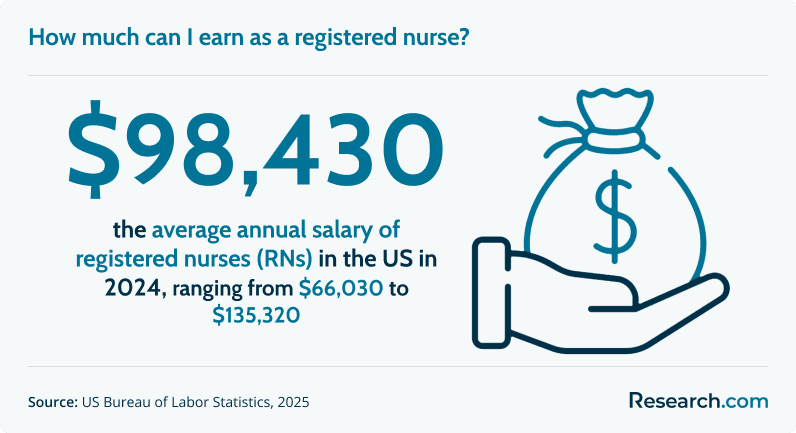
- Achieve significant financial advancement by entering a profession where the average annual salary is $98,430, representing a substantial step up in earning potential.
- Earn a fully accredited RN qualification through a flexible format designed to accommodate the demanding schedule of a working professional, allowing you to advance your career without pausing your life.
What can I expect from an accelerated paramedic to RN online bridge program?
The first thing to understand is that these are hybrid programs, not fully remote ones. The “online” component provides the flexibility to manage lectures and coursework around your job. But your clinical training is always in-person. You will be on-site at a hospital or clinic, getting the essential hands-on experience. There are no exceptions.
Many people get hung up on the “online” label, but that’s focusing on the wrong detail. Here’s the reality from an industry standpoint: employers and state licensing boards have one primary concern—accreditation. It qualifies you for the exact same NCLEX exam and the same RN license.
So, your focus shouldn’t be on the delivery format. It should be on verifying that the program has the proper ACEN or CCNE accreditation. That is the only true measure of quality.
Where can I work with an accelerated paramedic to RN online bridge program?
Your background makes you a strong candidate for high-acuity roles, such as the ER, ICU, and critical care. Hiring managers in those units actively seek out candidates with your experience in rapid assessment and poise under pressure. You have a significant competitive advantage for those jobs from day one.
That said, the RN license opens up the entire field of healthcare. While general and surgical hospitals are the largest employers of nurses, there is a massive demand in other settings. More than 221,000 RNs work in physicians' offices, and another 166,000 are in outpatient care centers, offering a more predictable work-life balance.
This is what the RN license truly gives you: the choice to build a career that fits your long-term goals, not just your current skillset.
How much can I make with an accelerated paramedic to RN online bridge program?
The average annual salary for a paramedic is currently around $60,610. For a registered nurse, that average jumps to $98,430.
That is a substantial increase in earning potential from the moment you are licensed. Completing one of the accredited online paramedic to RN bridge programs is one of the most direct and effective ways to secure this kind of financial advancement. This isn't just a career change; it's a strategic move designed to significantly enhance your long-term financial security and earning potential.
- List of the Best Accelerated Paramedic to RN Online Bridge Programs for 2027 List of Programs
- How long does it take to complete an accelerated paramedic to RN online bridge program? Program Length
- How does an accelerated paramedic to RN online bridge program compare to an on-campus program? How does an accelerated paramedic to RN online bridge program compare to an on-campus program?
- What is the average cost of an accelerated paramedic to RN online bridge program? Program Cost
- What are the financial aid options for students enrolling in an accelerated paramedic to RN online bridge program? Financial Aid
- What are the prerequisites for enrolling in an accelerated paramedic to RN online bridge program? What are the prerequisites for enrolling in an accelerated paramedic to RN online bridge program?
- What courses are typically in an accelerated paramedic to RN online bridge program? What courses are typically in an accelerated paramedic to RN online bridge program?
- What types of specializations are available in an accelerated paramedic to RN online bridge program? What types of specializations are available in an accelerated paramedic to RN online bridge program?
- How to choose the best accelerated paramedic to RN online bridge program? How to choose the best accelerated paramedic to RN online bridge program?
- What career paths are available for graduates of an accelerated paramedic to RN online bridge program? What career paths are available for graduates of an accelerated paramedic to RN online bridge program?
- What is the job market for graduates with an accelerated paramedic to RN online bridge program? Job Market
- What challenges might I face during an accelerated paramedic to RN online bridge program? What challenges might I face during an accelerated paramedic to RN online bridge program?
- What advanced academic opportunities can I pursue after earning my RN license? What advanced academic opportunities can I pursue after earning my RN license?
- How can I transition directly into an NP role without a BSN? How can I transition directly into an NP role without a BSN?
- Should I pursue a DNP program to further advance my nursing career? Should I pursue a DNP program to further advance my nursing career?
Best Accelerated Paramedic to RN Online Bridge Programs for 2027
Paramedics who want a broader nursing scope, more predictable career mobility, or a pathway into advanced practice often look for one question first: which bridge program can turn field experience into an RN credential without starting from scratch? Accelerated paramedic to RN online bridge programs are designed for licensed paramedics who already understand emergency assessment, medication administration, and high-pressure patient care but need nursing coursework, clinical rotations, and NCLEX-RN preparation.
This guide explains how these programs work, what they cost, how long they take, which prerequisites usually apply, and how to compare online, hybrid, and campus-based options. It also highlights common mistakes that can delay licensure, including overlooking accreditation, misunderstanding clinical placement requirements, and assuming that “online” means fully remote.
Quick Answer: Is an Accelerated Paramedic to RN Online Bridge Program Worth It?
For many licensed paramedics, an accelerated paramedic to RN bridge program can be worth it because it uses prior emergency medical training to shorten the path to RN eligibility. The strongest programs are accredited, prepare graduates for the NCLEX-RN, include supervised clinical experiences, and clearly explain whether graduates meet state board requirements. The best choice is not always the fastest or cheapest program; it is the program that fits your state, schedule, transfer credits, clinical access, and long-term nursing goals.
How We Evaluate Paramedic to RN Bridge Programs
A nursing bridge program is a major financial and professional decision, so rankings should be read as a starting point rather than a substitute for your own due diligence. Research.com reviews program information using institutional and federal education data sources such as IPEDS, Peterson’s, College Scorecard, and the National Center for Education Statistics.
These sources help compare schools using available information on programs, costs, completion data, and institutional characteristics. You can review Research.com’s broader ranking approach on the methodology page. Before applying, always verify current tuition, admission requirements, accreditation, state board approval, and clinical placement policies directly with the school.
Top Accelerated Paramedic to RN Online Bridge Programs
The programs below serve licensed paramedics who want to transition into registered nursing through an accelerated, online, hybrid, or flexible bridge format. Program details can change, so use the listed information as a comparison framework and confirm all requirements before enrolling.
| School and Program | Length | Credits | Cost | Accreditation Listed |
| Southwest Tennessee Community College - Paramedic to RN Mobility Track Program | Approximately 1 year | 67 | In-State: $216.00; Out-of-State: $356.00 | Accreditation Commission for Education in Nursing (ACEN) |
| Arkansas Tech University - Paramedic to RN Program | Approximately 1 year | 73 | In-State: $257.27; Out-of-State: $514.54 | Accreditation Commission for Education in Nursing (ACEN) |
| Mesa Community College - Paramedic to AAS Degree Bridge (RN) Program | 1 year | 90 | In-State: $97.00; Out-of-State: $253.00 | Accreditation Commission for Education in Nursing (ACEN) |
| Hutchinson Community College - Paramedic to RN Online Bridge Program | 9 months | 69 | $128.00 | Kansas Board of Nursing; Accreditation Commission for Education in Nursing (ACEN) |
| Herzing University - Paramedic to ASN/BSN Bridge Option | 20–28 months | 72–120 | $515.00 per credit | Accreditation Commission for Education in Nursing (ACEN) |
| Stark State College - Paramedic to RN Bridge Program | 12–18 months | 54 | $194.60 | Commission on Accreditation of Allied Health Education Programs (CAAHEP) |
| Mississippi Gulf Coast Community College - EMS/Paramedic to RN (Hybrid) Option Program | 2 years | 66 | In-State: $255.00; Out-of-State: $305.00 | Accreditation Commission for Education in Nursing (ACEN) |
| NorthWest Arkansas Community College - LPN/Paramedic to RN Bridge Program | Approximately 1 year | 68 | In-State: $103.00; Out-of-State: $169.00 | Commission on Accreditation of Allied Health Education Programs (CAAHEP) |
| Albany State University - Healthcare Professionals (Paramedics) to RN Program | 1 year, 6 months | 60 | $185.00 | Commission on Accreditation of Allied Health Education Programs (CAAHEP) |
| Blinn College District - Paramedic-to-RN Transition Pathway | Approximately 1 year | 60 | In-State: $123.00; Out-of-State: $279.00 | Accreditation Commission for Education in Nursing (ACEN) |
1. Southwest Tennessee Community College - Paramedic to RN Mobility Track Program
Southwest Tennessee Community College offers a three-semester mobility track for licensed paramedics who want to move into registered nursing. The program recognizes prior paramedic preparation while adding nursing theory, clinical judgment, and RN-level patient care responsibilities.
- Program Length: Approximately 1 year
- Required Credits to Graduate: 67
- Cost per Credit: In-State: $216.00; Out-of-State: $356.00
- Accreditation: Accreditation Commission for Education in Nursing (ACEN)
2. Arkansas Tech University - Paramedic to RN Program
Arkansas Tech University provides a bridge route for licensed paramedics who are ready to build on emergency care experience with nursing-focused coursework. Admission includes a six-credit transition course, 37 hours of prerequisites, and a minimum 2.75 GPA.
- Program Length: Approximately 1 year
- Required Credits to Graduate: 73
- Cost per Credit: In-State: $257.27; Out-of-State: $514.54
- Accreditation: Accreditation Commission for Education in Nursing (ACEN)
3. Mesa Community College - Paramedic to AAS Degree Bridge (RN) Program
Mesa Community College admits qualified paramedics with at least one year of experience into an RN bridge pathway. Students may enter the second or third semester of the nursing sequence after meeting requirements such as the HESI A2 exam and fingerprint clearance.
- Program Length: 1 year
- Required Credits to Graduate: 90
- Cost per Credit: In-State: $97.00; Out-of-State: $253.00
- Accreditation: Accreditation Commission for Education in Nursing (ACEN)
4. Hutchinson Community College - Paramedic to RN Online Bridge Program
Hutchinson Community College offers an online bridge option for paramedics preparing for RN licensure and the NCLEX-RN. The program combines nursing coursework with required clinical preparation and lists both state board and ACEN accreditation.
- Program Length: 9 months
- Required Credits to Graduate: 69
- Cost per Credit: $128.00
- Accreditation: Kansas Board of Nursing; Accreditation Commission for Education in Nursing (ACEN)
5. Herzing University - Paramedic to ASN/BSN Bridge Option
Herzing University gives licensed paramedics a bridge option toward either an ASN or BSN. Its flexible format and transfer credit policies may appeal to working paramedics who want to continue employment while progressing toward nursing credentials.
- Program Length: 20–28 months
- Degree Pathways: Associate of Science in Nursing; Bachelor of Science in Nursing
- Required Credits to Graduate: 72–120
- Total Tuition: $515.00 per credit
- Accreditation: Accreditation Commission for Education in Nursing (ACEN)
6. Stark State College - Paramedic to RN Bridge Program
Stark State College uses a concept-based bridge curriculum for paramedics who qualify for advanced standing. The pathway includes 13 credits of prerequisite coursework and 41 credits of nursing coursework over three semesters.
- Program Length: 12–18 months
- Required Credits to Graduate: 54
- Cost per Credit: $194.60
- Accreditation: Commission on Accreditation of Allied Health Education Programs (CAAHEP)
7. Mississippi Gulf Coast Community College - EMS/Paramedic to RN (Hybrid) Option Program
Mississippi Gulf Coast Community College offers a hybrid RN bridge option for Nationally Registered Paramedics who need evening and weekend flexibility. Students complete summer transition courses, receive nine credit hours for prior experience, and then enter the third semester with a cohort.
- Program Length: 2 years
- Required Credits to Graduate: 66
- Cost per Credit: In-State: $255.00; Out-of-State: $305.00
- Accreditation: Accreditation Commission for Education in Nursing (ACEN)
8. NorthWest Arkansas Community College - LPN/Paramedic to RN Bridge Program
NorthWest Arkansas Community College offers a three-semester bridge program with online coursework and evening or weekend clinical requirements. Students should pay close attention to the on-site requirement: three weeks of clinicals in Arkansas are required regardless of where the student lives.
- Program Length: Approximately 1 year
- Required Credits to Graduate: 68
- Cost per Credit: In-State: $103.00; Out-of-State: $169.00
- Accreditation: Commission on Accreditation of Allied Health Education Programs (CAAHEP)
9. Albany State University - Healthcare Professionals (Paramedics) to RN Program
Albany State University offers an accelerated ADN bridge for paramedics through a format that combines lectures, clinical learning, and online assignments into one day each week. The pathway runs for four consecutive semesters and prepares graduates for entry-level RN practice in multiple care settings.
- Program Length: 1 year, 6 months
- Required Credits to Graduate: 60
- Cost per Credit: $185.00
- Accreditation: Commission on Accreditation of Allied Health Education Programs (CAAHEP)
10. Blinn College District - Paramedic-to-RN Transition Pathway
Blinn College District provides a three-semester transition pathway for paramedics with one year of experience. Students receive five credits for previous paramedic training while completing RN-focused coursework and clinical preparation.
- Program Length: Approximately 1 year
- Required Credits to Graduate: 60
- Cost per Credit: In-State: $123.00; Out-of-State: $279.00
- Accreditation: Accreditation Commission for Education in Nursing (ACEN)
How Long Does an Accelerated Paramedic to RN Online Bridge Program Take?
The realistic timeline from prerequisites to RN licensure is usually longer than the advertised bridge-program length. The accelerated nursing portion may take 9 months to 2 years, but the full path can take between two and four years when prerequisite coursework, admissions timing, clinical schedules, graduation, and NCLEX-RN testing are included.
| Stage | Typical Timeframe | What Happens | What to Watch For |
| Prerequisites | 6-12+ months | Students complete required science and general education courses such as Anatomy & Physiology, Microbiology, Chemistry, English Composition, Psychology, and Sociology. | Transfer rules vary widely. Ask for a written credit evaluation before paying deposits. |
| Core Bridge Program | 12-24 months | Paramedics complete nursing theory, labs, skills validation, and in-person clinical rotations that move them from emergency-response practice into the nursing model of care. | “Online” usually applies to lecture coursework, not clinicals or labs. |
| Licensure | 1-3 months | Graduates apply for authorization, prepare for the NCLEX-RN, pass the exam, and meet state board requirements to become registered nurses. | State board rules can affect eligibility, especially for out-of-state online programs. |
Paramedics can often move faster than traditional students because they already understand patient assessment, emergency pharmacology, triage, and team-based clinical communication. However, accelerated does not mean optional. Accredited programs still require the nursing coursework and supervised clinical competencies needed for RN licensure.
Online vs. Campus Paramedic to RN Bridge Programs: What Is the Difference?
An accredited online or hybrid paramedic to RN bridge program can lead to the same RN licensure pathway as a campus program, but the learning experience is different. The key distinction is how didactic coursework is delivered. Clinical rotations, skills checks, labs, and state board requirements still involve hands-on learning.
| Factor | Online or Hybrid Bridge Program | Campus-Based Bridge Program | Best Fit |
| Course delivery | Lectures and assignments may be online, with scheduled labs or clinicals in person. | Most instruction, labs, and student services happen on campus. | Online or hybrid formats suit working paramedics who need schedule flexibility. |
| Clinical requirements | In-person clinical hours are still required and may be arranged locally or at designated sites. | Clinical sites are often tied to the school’s local healthcare partners. | Campus programs may be easier if you live near the school’s clinical network. |
| Licensure preparation | Accredited programs prepare students for the NCLEX-RN under the same professional expectations. | Students prepare for the same NCLEX-RN and RN licensure process. | Choose based on outcomes, accreditation, and state approval rather than format alone. |
| Employer perception | Employers typically focus on RN licensure, program quality, clinical readiness, and experience. | Employers evaluate the same license and clinical competencies. | Your paramedic background can be a major advantage in either format. |
The most important issue is not whether the program uses online classes. It is whether the program is properly accredited, approved for your licensure goals, transparent about clinical placement, and strong enough to prepare you for RN practice. Healthcare employers rely on clear role boundaries and credentials; for example, understanding the difference between medical assistant and medical administrative assistant matters because titles, training, and scopes of practice are not interchangeable.
How Much Does an Accelerated Paramedic to RN Online Bridge Program Cost?
Program cost depends on residency status, transfer credits, program length, fees, books, uniforms, background checks, exams, lab costs, and travel for clinicals. Tuition is only one part of the total cost, so paramedics should compare the complete price of attendance before choosing a program.
- In-State Students: The total tuition typically ranges from approximately $7,000 to $18,800, with an average tuition cost of around $11,800.
- Out-of-State Students: The cost is generally higher, with a typical range of $8,800 to $37,600 per year. The average for out-of-state students is approximately $18,000.
Cost should be evaluated against licensure eligibility and career goals, not just sticker price. With an average RN salary of $98,430, a lower-cost in-state program may offer a strong return if it leads to RN licensure without unnecessary delays. However, salary outcomes are not guaranteed and vary by employer, location, schedule, specialty, and experience.
Students comparing healthcare or science pathways often use a similar return-on-investment approach when reviewing options such as fastest online natural sciences degrees. For paramedics, the main question is whether the bridge program reliably moves you from EMS practice to RN eligibility at a cost you can manage.
| Cost Item | Why It Matters | Question to Ask |
| Tuition and fees | Per-credit tuition may not include nursing program fees, testing, labs, or graduation costs. | What is the estimated total program cost after transfer credits? |
| Clinical travel | Online students may still need to travel to approved clinical sites. | Where are clinicals completed, and who arranges them? |
| Lost work hours | Accelerated courses and clinicals may limit overtime or shift availability. | Can the schedule work with my current EMS shifts? |
| Licensure costs | NCLEX-RN preparation, application, and state board requirements can add expenses. | What licensure-related costs should I budget for? |
Financial Aid Options for Paramedic to RN Bridge Students
Most students use more than one funding source. The strongest plan usually combines federal aid eligibility, school-based aid, scholarships, employer reimbursement, and careful borrowing only when necessary.
- Federal Financial Aid: Start with the Free Application for Federal Student Aid (FAFSA). The FAFSA determines eligibility for federal grants and federal student loans, which may offer stronger borrower protections than private loans.
- Nursing Scholarships: Nursing associations, hospitals, community foundations, and schools may offer scholarships for students entering RN programs. Some awards favor applicants with prior healthcare experience.
- Employer Tuition Reimbursement: EMS agencies, hospitals, and health systems may help fund RN education for employees who agree to continue working for the organization.
- Lower-Cost Program Selection: Community college pathways can reduce borrowing when they meet accreditation and licensure requirements. Students in other allied health fields often take a similar approach when searching for the cheapest online associate’s degree in surgical tech.
Before borrowing, ask the financial aid office whether your bridge program qualifies for federal aid, whether you must be enrolled full time, and how prerequisite courses are handled. Also ask your employer’s HR department whether reimbursement applies to online or hybrid programs and whether there is a work-commitment agreement after graduation.
Common Admission Requirements and Prerequisites
Most accelerated paramedic to RN bridge programs require a current paramedic credential plus college-level prerequisites. Requirements vary by school and state, but applicants should expect nursing programs to verify academic readiness, clinical eligibility, and professional standing.
| Requirement | Why Programs Require It | How to Prepare |
| Current, unencumbered paramedic license | Bridge programs are built for students who already have EMS training and field experience. | Confirm your license status and gather documentation before applying. |
| Anatomy & Physiology I and II with labs | RN coursework requires detailed understanding of body systems, pathophysiology, and assessment. | Complete both courses early because they are common prerequisites and often sequence-dependent. |
| Microbiology with lab | Nurses need a strong foundation in infection control, disease processes, and clinical safety. | Check whether online labs are accepted by the program. |
| College-level Chemistry | Chemistry supports medication, fluid, and physiologic concepts used in nursing care. | Ask whether a specific chemistry course is required. |
| General education courses | Courses such as English Composition, Psychology, and Sociology support communication and patient-centered care. | Submit transcripts for transfer review before retaking courses. |
Paramedic experience is valuable, but it does not replace all nursing prerequisites. EMS practice emphasizes rapid assessment and intervention, while nursing education adds care planning, patient teaching, interdisciplinary coordination, documentation, and long-term management. Some healthcare professionals later pursue additional clinical education, including fast track online pharmacy doctorate programs, but the RN bridge first requires the scientific base expected of nursing students.
Typical Courses in a Paramedic to RN Bridge Curriculum
The curriculum is designed to shift experienced paramedics from prehospital emergency response into the broader nursing role. You will still use your assessment skills, but you will apply them within care plans, medication management, patient education, and ongoing monitoring.
- Foundations of Professional Nursing: Introduces nursing ethics, legal responsibilities, scope of practice, documentation, and professional standards.
- Health Assessment Across the Lifespan: Expands assessment from emergency presentation to comprehensive evaluation of patients from infancy through older adulthood.
- Pharmacology for Nurses: Builds on medication knowledge by emphasizing long-term therapy, patient education, interactions, contraindications, and nursing monitoring.
- Medical-Surgical Nursing: Covers care of adults with acute and chronic conditions across hospital and clinical settings.
- Maternal-Newborn, Pediatric, and Mental Health Nursing: Introduces specialty populations and care environments that may be less familiar to paramedics.
Paramedics interested in perioperative or procedural settings may also compare nursing pathways with related credentials such as accelerated online surgical tech certification programs. Nursing, however, leads to a distinct RN scope that includes care planning, patient education, and coordination across the healthcare system.
The transition is partly academic and partly professional. Paramedics are trained to stabilize and transport; RNs often manage patients over hours, days, or longer. That shift matters in the settings where many RNs work, including the 1.8 million nurses in general and surgical hospitals as well as nurses in home health and outpatient care centers.
The chart below lists the industries with the highest employment levels for RNs, as published by the BLS in 2025.
Can You Specialize During a Paramedic to RN Bridge Program?
Most paramedic to RN bridge programs do not offer formal nursing specializations inside the bridge curriculum. Their purpose is to prepare you for general RN licensure. Specialization usually comes after graduation, NCLEX-RN success, and experience in a clinical setting.
This is usually an advantage. You can use clinical rotations and early RN employment to decide whether you prefer emergency care, critical care, flight nursing, perioperative nursing, pediatrics, oncology, labor and delivery, or another specialty. Paramedics often have a strong foundation for high-acuity specialties because they are already comfortable with rapid assessment, unstable patients, and urgent decision-making.
For students considering operating room careers, shortest surgical tech associate’s degree programs online can provide a useful comparison point, but surgical technology and registered nursing prepare students for different roles.
- Emergency Room (ER) Nursing
- Intensive Care Unit (ICU) Nursing
- Flight Nursing
- Surgical / Operating Room Nursing
- Labor and Delivery Nursing
- Pediatric Nursing
- Oncology Nursing
Specialty choice can also affect earning potential and career direction. Some high-paying RN roles are found outside traditional bedside hospital units, including the federal government, medical device manufacturing, and computer systems design, where average annual salaries can exceed $110,000 to $124,000.
How to Choose the Best Accelerated Paramedic to RN Online Bridge Program
The best program is the one that protects your licensure eligibility, fits your schedule, supports clinical placement, and gives you a realistic path to graduation. Do not choose a program based only on speed, tuition, or marketing language.
- Verify nursing accreditation and state approval. Look for recognized nursing accreditation, such as ACEN or CCNE when applicable, and confirm that the program meets your state board of nursing requirements. You can review CCNE-listed programs through the CCNE websites. Also contact your state board directly if you plan to enroll out of state.
- Review first-time NCLEX pass rates. NCLEX performance is one indicator of how well a program prepares graduates for licensure. Compare the school’s rate with your state average and ask what support is available for students who struggle.
- Ask exactly how clinical placements work. Some online programs help arrange clinicals; others expect students to identify sites. A program that leaves clinical placement entirely to the student can create serious delays.
- Request a written transfer credit review. Do not rely on verbal estimates. A preliminary transcript evaluation can show how many prerequisites or general education courses you still need.
- Confirm schedule compatibility. Accelerated programs can be difficult for paramedics working rotating shifts, overtime, or 24-hour schedules. Ask for sample calendars.
- Check total cost, not just tuition. Include program fees, labs, books, travel, uniforms, testing, and potential lost income.
| Red Flag | Why It Matters | Better Move |
| The school is vague about accreditation or state approval. | Licensure eligibility may be at risk. | Confirm status with the accreditor and your state board before applying. |
| Clinical placement is “your responsibility.” | You may struggle to find approved clinical sites on time. | Ask for placement agreements, support processes, and recent examples. |
| Only the fastest timeline is advertised. | Prerequisites and licensure steps may not be included. | Ask for a start-to-licensure timeline based on your transcripts. |
| Tuition looks low but fees are unclear. | Nursing program fees can change the real cost. | Request a full cost sheet in writing. |
Career Paths After Completing a Paramedic to RN Bridge Program
After passing the NCLEX-RN and receiving RN licensure, former paramedics can pursue bedside roles, emergency and critical care pathways, leadership positions, and advanced nursing education. The RN license becomes the foundation for career mobility.
| Career Direction | Typical Next Step | Why It Fits Former Paramedics |
| Emergency or critical care nursing | Start in ER, ICU, trauma, or step-down units when qualified. | Paramedics already bring crisis management, assessment, and triage experience. |
| Clinical leadership | Move into charge nurse, nurse manager, or unit director roles after RN experience. | Field experience often develops delegation, communication, and rapid decision-making. |
| Advanced practice | Pursue graduate education for roles such as Nurse Practitioner, Clinical Nurse Specialist, or Certified Registered Nurse Anesthetist. | Advanced roles build on both RN practice and prior high-acuity patient care. |
| Education, recruitment, or workforce roles | Move into nurse education, onboarding, or recruitment after gaining RN experience. | Former paramedics can help train or recruit clinicians who thrive under pressure. |
- Charge Nurse: Coordinates staff and patient flow during a shift while supporting clinical decisions on the unit.
- Nurse Manager or Unit Director: Oversees staffing, budgeting, compliance, quality initiatives, and daily operations for a unit or clinic.
- Nurse Practitioner (NP): Requires graduate education and allows qualified nurses to diagnose, treat, prescribe, and manage patient care within state rules.
- Certified Registered Nurse Anesthetist (CRNA): A highly autonomous advanced nursing role that requires doctoral preparation and focuses on anesthesia care.
- Clinical Nurse Specialist (CNS): Uses advanced clinical expertise to improve outcomes, nursing practice, and systems of care within a specialty.
More than 8% of RNs now hold a master's degree, reflecting the role graduate education can play in moving into advanced practice, leadership, or specialized roles. Some RNs also explore non-bedside paths, including learning how to become a nurse recruiter after gaining clinical experience.
The chart below illustrates the distribution of RNs by their degree type, as published by the BLS in 2025.
Job Market Outlook for Paramedic to RN Bridge Graduates
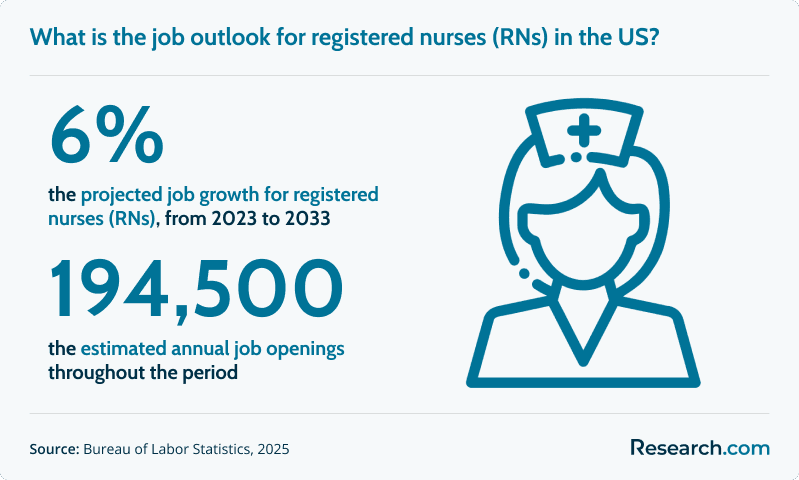
The RN job market is strong, with projected 6% growth and nearly 195,000 openings expected each year through 2033. Former paramedics can be especially competitive when they clearly explain how EMS experience translates into nursing strengths, including calm performance under pressure, rapid assessment, airway awareness, medication familiarity, and patient handoff communication.
Your job search should not frame you as a beginner starting over. Frame the transition as a move from prehospital emergency care into broader patient management.
- Use your resume summary strategically: State that you are an experienced paramedic with RN licensure or RN eligibility, and highlight years of field experience if applicable.
- Translate EMS skills into nursing language: Connect rapid assessment to nursing assessment, radio reports to clinical handoffs, and scene management to interdisciplinary teamwork.
- Prepare interview examples: Use structured stories from EMS calls to show judgment, composure, prioritization, and communication.
- Explain your motivation clearly: Employers want to know why you moved into nursing. A strong answer focuses on expanding from immediate intervention to ongoing patient care, education, and coordination.
Paramedics who are interested in teaching, precepting, or staff development later in their careers may also benefit from understanding what does a nurse educator do.
Challenges to Expect in an Accelerated Paramedic to RN Online Bridge Program
Accelerated bridge programs can be demanding because they compress nursing theory, lab expectations, clinical rotations, and exam preparation into a shorter timeline. The academic challenge is real, even for experienced paramedics.
| Challenge | Why It Happens | How to Handle It |
| Moving from EMS protocols to nursing care plans | Paramedics are trained for rapid intervention; nurses also manage long-term care, education, and documentation. | Practice writing care plans and ask instructors for feedback early. |
| Balancing school with shifts | Clinical schedules may conflict with EMS work, overtime, or rotating shifts. | Share sample calendars with your employer before classes begin. |
| Science-heavy coursework | A&P, microbiology, pharmacology, and med-surg content require sustained study. | Build weekly study blocks instead of relying on last-minute review. |
| Clinical placement logistics | Online students may need approved sites, preceptors, background checks, and health documentation. | Start clinical paperwork immediately and keep copies of all records. |
| Financial pressure | Tuition, fees, travel, and reduced work hours can add up. | Compare aid options and program costs, including lower-cost routes such as cheapest BSN programs online when a BSN pathway fits your goals. |
What Graduates Say About Accelerated Paramedic to RN Bridge Programs
- Fern: "I worried that being away from college science courses for years would put me behind. What helped was realizing that my field experience gave me real context. When cardiac medications came up, I already knew how patients looked after receiving them; the program helped me understand the deeper physiology behind those responses."
- Kylie: "Leaving work for a traditional full-time program was not realistic for my family. The online format let me study after my kids were asleep and keep earning while I finished the nursing coursework. It was not easy, but the flexibility made the transition possible."
- Sanna: "After many years in EMS, I wanted a role that used my clinical instincts without the same physical strain. Nursing gave me that option. In pre-op, I still assess patients constantly, but the environment is more controlled and the schedule is more sustainable for me."
Advanced Academic Options After Earning Your RN License
After becoming an RN, former paramedics can pursue academic pathways that lead to advanced practice, leadership, education, or specialty roles. Some RNs complete a BSN first, while others evaluate graduate options depending on admission requirements, prior degree status, state rules, and employer expectations.
Programs such as direct-entry MSN nurse practitioner programs may appeal to students planning for advanced practice roles, but applicants should read requirements carefully. Direct-entry and bridge terminology varies by school, and not every pathway is designed for licensed RNs with paramedic backgrounds.
Can You Move Toward an NP Role Without a BSN?
Some experienced clinicians look for pathways that do not follow the traditional BSN-to-MSN sequence. Options may exist, but they require careful review because advanced practice licensure, graduate admission, clinical hours, and state board rules are strict. If you are exploring this route, compare programs that clearly explain how RN licensure, prior credits, and clinical experience are evaluated.
One place to begin researching is direct NP programs no BSN requirement. Before enrolling, confirm whether the pathway leads to the specific NP population focus you want and whether it meets licensing requirements in the state where you plan to practice.
Should You Pursue a DNP After Becoming an RN?
A DNP can make sense for nurses who want advanced clinical practice, systems leadership, quality improvement, or high-level roles in healthcare delivery. It is not usually the immediate next step for every new RN. Most paramedics transitioning into nursing should first focus on bridge program completion, NCLEX-RN success, and gaining RN experience in a setting aligned with their goals.
If your long-term plan includes doctoral-level advanced practice or leadership, compare accredited options carefully, including formats such as a 1 year DNP program online. Make sure any accelerated doctoral route matches your licensure background, clinical requirements, and career timeline.
Common Mistakes to Avoid
- Choosing the fastest program without checking licensure eligibility: A short program is not useful if it does not meet your state board requirements.
- Assuming online means fully remote: Nursing programs still require in-person clinicals, labs, or skills validation.
- Ignoring clinical placement support: Lack of placement help can delay graduation even if coursework is online.
- Comparing only tuition: Fees, travel, reduced work hours, testing, uniforms, and books can change the true cost.
- Retaking courses unnecessarily: Always request a transfer credit review before enrolling in prerequisites.
- Assuming paramedic experience replaces nursing education: EMS experience is a strength, but RN practice includes a broader care-planning and patient-education role.
- Relying only on rankings: Rankings can help identify options, but your best program depends on state approval, schedule, clinical access, and cost.
Questions to Ask Before Applying
- Is the nursing program accredited, and is it approved by the state board where I plan to seek RN licensure?
- What is the first-time NCLEX-RN pass rate?
- How many credits will transfer from my prior coursework and paramedic training?
- Where are clinicals completed, and does the school arrange placements?
- Are any campus visits, labs, intensives, or out-of-state clinical periods required?
- What is the total estimated cost after tuition, fees, books, testing, supplies, and travel?
- Can the program schedule work with EMS shifts or family responsibilities?
- What academic support is available for pharmacology, med-surg, and NCLEX preparation?
- Does the program lead to an ADN, ASN, or BSN, and how will that affect my next career step?
References
- American Association of Colleges of Nursing. (2025). Nursing shortage. Retrieved July 11, 2025, from https://www.aacnnursing.org/news-data/fact-sheets/nursing-shortage
- Bureau of Labor Statistics. (1905, July). Medical assistants. Occupational Outlook Handbook. Retrieved July 11, 2025, from https://www.bls.gov/ooh/healthcare/medical-assistants.htm
- Bureau of Labor Statistics. (2025a). EMTs and paramedics. Occupational Outlook Handbook. Retrieved July 11, 2025, from https://www.bls.gov/ooh/healthcare/emts-and-paramedics.htm
- Bureau of Labor Statistics. (2025b). Licensed practical and licensed vocational nurses. Occupational Outlook Handbook. Retrieved July 11, 2025, from https://www.bls.gov/ooh/healthcare/licensed-practical-and-vocational-nurses.htm
- Bureau of Labor Statistics. (2025c). Nursing assistants and orderlies. Occupational Outlook Handbook. Retrieved July 11, 2025, from https://www.bls.gov/ooh/healthcare/nursing-assistants.htm
- Bureau of Labor Statistics. (2025d). Occupational employment and wage statistics (OEWS) profiles. Retrieved July 11, 2025, from https://data.bls.gov/oesprofile/
- Bureau of Labor Statistics. (2025e). Registered nurses. Occupational Outlook Handbook. Retrieved July 11, 2025, from https://www.bls.gov/ooh/healthcare/registered-nurses.htm
- Data USA. (2025). Registered nursing. Retrieved July 11, 2025, from https://datausa.io/profile/cip/registered-nursing
- National Council of State Boards of Nursing. (2025a). 2024 study highlights. Retrieved July 11, 2025, from https://www.ncsbn.org/research/recent-research/workforce/2024-workforce-pn.page
- National Council of State Boards of Nursing. (2025b). Active RN licenses. Retrieved July 11, 2025, from https://www.ncsbn.org/nursing-regulation/national-nursing-database/licensure-statistics/active-rn-licenses.page
- University of St. Augustine for Health Sciences. (2024). Nursing shortage: A 2024 data study reveals key insights. Retrieved July 11, 2025, from https://www.usa.edu/blog/nursing-shortage/
- US Census Bureau. (2021, April 5). Who are our health care workers? Retrieved July 11, 2025, from https://www.census.gov/library/stories/2021/04/who-are-our-health-care-workers.html
Key Insights
- Accelerated paramedic to RN bridge programs can shorten the route to RN eligibility, but the full timeline includes prerequisites, the bridge curriculum, clinicals, graduation, and NCLEX-RN licensure.
- The best program is not automatically the cheapest or fastest. Accreditation, state board approval, NCLEX preparation, clinical placement support, and transfer credit policy matter more.
- Online bridge programs still require in-person clinical learning. Before enrolling, confirm where clinicals happen and whether the school helps secure placements.
- Paramedic experience is a strong advantage in nursing school and the job market, especially for emergency, critical care, flight, and high-acuity roles.
- Costs vary by residency status and program structure. Compare total cost, not just tuition, and use FAFSA, scholarships, employer reimbursement, and transfer credits to reduce borrowing.
- RN licensure can open paths into bedside care, leadership, advanced practice, education, recruitment, and specialty nursing, but advanced roles usually require additional education and experience.
Other Things You Should Know About Accelerated Paramedic to RN Online Bridge Programs
In 2027, most accelerated paramedic to RN online bridge programs take approximately 12 to 18 months to complete. This duration depends on the institution and the student's pace, with some programs offering flexible schedules to accommodate working professionals.
The program should hold regional institutional accreditation and nursing-program approval from the state board of nursing, with ACEN accreditation preferred. Graduates must be eligible to apply for RN licensure and take the NCLEX-RN, so verify approval with the board in the state where you plan to practice.


