
2027 Best CNA to RN Online Bridge Programs

Co-Founder and Chief Data Scientist
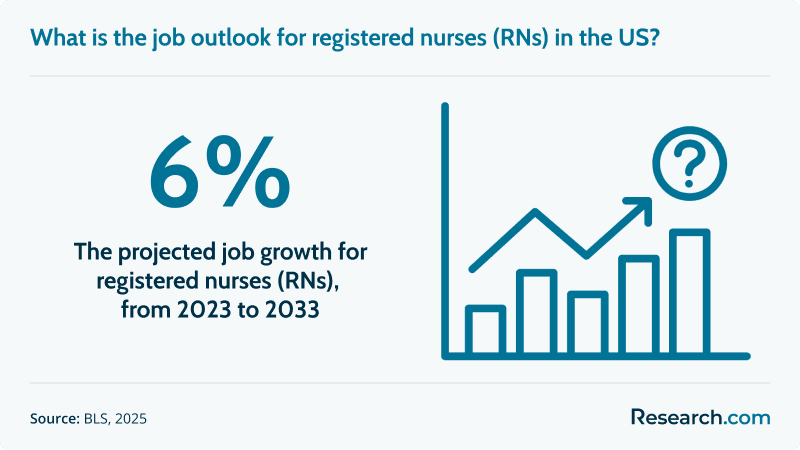
With the demand for registered nurses projected to grow by 6% in the coming years, the opportunity for career advancement in healthcare is clear. For many experienced Certified Nursing Assistants, the challenge isn't a lack of skill but finding a practical way to step into those RN roles while managing a demanding work schedule. You have the hands-on experience, but you need a flexible path forward.
That path is through online CNA to RN bridge programs. To help you navigate this critical career move, our team of career planning experts, with more than 10 years of experience, has developed this comprehensive guide. It’s a complete roadmap designed to give you the clarity and confidence to take the next step.
What are the benefits of enrolling in a CNA to RN online bridge program?
- This credential allows you to take on advanced clinical responsibilities and access a wider range of respected nursing roles in hospitals, outpatient clinics, and community health settings.
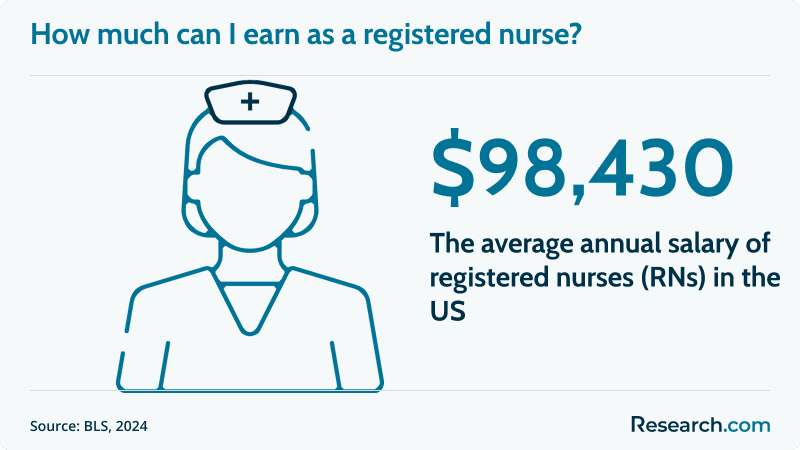
- You can expect to significantly increase your earning potential, with the average salary for registered nurses reaching $98,430 annually.
- The online format offers the flexibility to complete your coursework on your schedule, making it possible to advance your education without leaving your current job.
What can I expect from a CNA to RN online bridge program?
When you enroll in a CNA to RN online bridge program, you can expect a blend of flexible learning and hands-on training. It’s a structure designed specifically for working professionals like you.
The core of your coursework, including subjects like anatomy, pharmacology, and nursing theory, is delivered online. This allows you to study and attend lectures on a schedule that fits around your work and family commitments. You can log in when it works for you, whether that's after a shift or on a weekend.
However, nursing is a hands-on profession, so you will also be required to complete clinical hours in person. These are not optional. Your program will work with you to arrange these clinical placements at approved local healthcare facilities, like hospitals or clinics. This ensures you get the essential real-world experience needed to graduate and succeed as a registered nurse.
Where can I work with an RN degree?
Earning your RN license opens up a much wider range of career options, taking you far beyond the traditional hospital floor. While hospitals are certainly a primary employer for registered nurses, your new credential makes you a valuable professional in many different healthcare environments.
You could find yourself working in an outpatient clinic, a physician's office, or a long-term care facility, roles that often come with more predictable schedules. Many RNs also build careers in home healthcare, providing dedicated one-on-one care.
Beyond direct patient care, you could work for a public health agency, focusing on community wellness, or serve as a school nurse. The RN license gives you the flexibility to find a setting that truly fits your long-term professional and personal goals.
How much can I make with an RN degree?
Earning your RN license leads to a significant increase in salary. The average annual salary for a registered nurse is around $98,430, a substantial jump from a CNA wage. While your exact pay will depend on your location, the type of facility you work in, and your experience, the change is transformative.
This financial step up not only provides greater security but also recognizes the critical value you bring to the healthcare system. It's a direct return on the investment you make in your education.
Best CNA to RN Online Bridge Programs for 2026
If you are a Certified Nursing Assistant (CNA), becoming a registered nurse can raise your scope of practice, increase your earning potential, and open the door to hospital, clinic, long-term care, public health, travel nursing, and leadership roles. The hard part is choosing a bridge pathway that fits your schedule, budget, state licensure rules, and long-term career goal.
This guide explains how CNA-to-RN and related bridge programs work, how long they take, what they cost, what to check before enrolling, and how to compare online, hybrid, and campus-based options. It also highlights programs that may help CNAs move toward RN licensure directly or through an intermediate nursing credential such as practical nursing.
Quick Answer: What Is the Best CNA to RN Online Bridge Path?
The best CNA to RN bridge path depends on your current education, state requirements, and whether you want an ADN or BSN. A direct CNA-to-RN pathway can lead to an Associate Degree in Nursing or Bachelor of Science in Nursing, but many programs require in-person labs and clinical rotations even when lectures are online. Some CNAs first complete a CNA-to-LPN or CNA-to-PN bridge, then continue into an LPN-to-RN program.
Before applying, confirm three things: the program is properly accredited or approved for nursing licensure, its graduates are eligible for the NCLEX-RN in your state, and the school provides realistic clinical placement support near where you live.
List of the Best CNA to RN Online Bridge Programs for 2026
How Research.com Evaluates Schools
A nursing bridge program is not just an academic choice. It affects your licensure eligibility, clinical training, work schedule, debt level, and career options. Research.com reviews factors that matter to working healthcare students, including tuition, graduation outcomes, student-to-faculty ratios, curriculum design, accessibility, and program format.
Our methodology uses objective and current data from reliable sources, including the IPEDS database, Petersons database and its Distance Learning Licensed Data Set, the College Scorecard database, and the National Center for Education Statistics.
| School | Pathway Type | Program Length | Cost Information | Accreditation or Approval Listed |
| Washington State University Tri-Cities | CNA preparatory pathway into BSN admission | 2 years | $610 in-state; $1,465 out-of-state per credit | Commission on Collegiate Nursing Education (CCNE) |
| North Palm College of Nursing | CNA fast-track pathway to Associate of Science in Nursing | 9-12 months | $42,109.28 total tuition | Florida Board of Nursing |
| Herzing University | CNA to LPN pathway | 12 months | $25,000 estimated total tuition | Higher Learning Commission (HLC) |
| University of Hawaiʻi Maui College | CNA to Practical Nurse bridge | 12 months | $173 per credit | Accreditation Commission for Education in Nursing (ACEN) |
| Lincoln Land Community College | CNA to Clinical Medical Assistant bridge | 3 months | $2,149 total tuition | Higher Learning Commission (HLC) |
| Community College of Rhode Island | CNA to LPN bridge option | 12 months | $245 in-state; $728 out-of-state per credit | Accreditation Commission for Education in Nursing (ACEN) |
1. Washington State University Tri-Cities
Washington State University Tri-Cities offers a two-year preparatory route for CNAs who want structured support before entering the WSU College of Nursing’s full-time BSN program. The pathway combines prerequisite coursework, mentorship, and paid hospital work, making it a strong fit for CNAs who want a supported transition into a bachelor’s-level nursing track.
- Program Length: 2 years
- Required Prerequisite Credits: 32
- Cost per Credit: $610 (in-state); $1,465 (out-of-state)
- Accreditation: Commission on Collegiate Nursing Education (CCNE)
2. North Palm College of Nursing
North Palm College of Nursing offers a fast-track online route for CNAs pursuing an Associate of Science in Nursing. The program is designed for students who want a short timeline, online coursework, and preparation for RN licensure in as little as nine months.
- Program Length: 9-12 months
- Required Credits to Graduate: 74
- Total Tuition: $42,109.28
- Accreditation: Florida Board of Nursing
3. Herzing University
Herzing University provides a CNA-to-LPN pathway for CNAs who want to advance their nursing responsibilities before pursuing RN licensure later. The program combines online general education coursework with hands-on campus instruction and can lead to a PN diploma in as few as 12 months.
- Program Length: 12 months
- Required Credits to Graduate: 37-48
- Estimated Total Tuition: $25,000
- Accreditation: Higher Learning Commission (HLC)
4. University of Hawaiʻi Maui College
University of Hawaiʻi Maui College offers a hybrid bridge option for CNAs and other healthcare workers who want to become Practical Nurses. Built with local healthcare employer partnerships, the program is especially relevant for students on Maui and Oʻahu who need career mobility while remaining employed.
- Program Length: 12 months
- Required Credits to Graduate: 46
- Cost per Credit: $173
- Accreditation: Accreditation Commission for Education in Nursing (ACEN)
5. Lincoln Land Community College
Lincoln Land Community College offers a short bridge for experienced CNAs who want to move into Clinical Medical Assistant work. This is not an RN pathway, but it can be useful for CNAs interested in outpatient care, medical office operations, and a broader mix of administrative and clinical duties.
- Program Length: 3 months
- Required Credits to Graduate: 5
- Total Tuition: $2,149
- Accreditation: Higher Learning Commission (HLC)
6. Community College of Rhode Island
Community College of Rhode Island provides a CNA-to-LPN bridge option for qualified applicants. Students must complete prerequisite coursework in areas such as science and English before beginning the focused nursing curriculum, making this path a practical step for CNAs who want to enter licensed nursing and potentially continue to RN education later.
- Program Length: 12 months
- Required Credits to Graduate: 38
- Cost per Credit: $245 (in-state); $728 (out-of-state)
- Accreditation: Accreditation Commission for Education in Nursing (ACEN)
What Is a CNA to RN Online Bridge Program?
A CNA to RN online bridge program is an educational pathway that helps certified nursing assistants move toward registered nurse licensure. It builds on the patient care experience CNAs already have, then adds college-level nursing theory, pharmacology, health assessment, care planning, leadership, and supervised clinical practice.
The phrase “online bridge program” can be confusing. Nursing programs may deliver lectures, assignments, discussions, and exams online, but RN preparation still requires hands-on clinical training. That means even a highly flexible online program will usually include in-person labs, simulations, or supervised clinical rotations in approved healthcare settings.
Some programs are direct CNA-to-RN options. Others are related bridge pathways, such as CNA-to-LPN or CNA-to-PN programs, that may help students move step by step toward RN licensure. If your goal is specifically to become a registered nurse, ask the school whether the program directly qualifies graduates for the NCLEX-RN or whether additional education will be required.
CNA to RN, CNA to LPN, or RN to BSN: Which Path Makes Sense?
| Pathway | Best For | Main Credential Goal | Important Trade-Off |
| CNA to RN ADN | CNAs who want the fastest direct route to RN licensure through an associate degree | Associate Degree in Nursing and RN licensure eligibility | May offer fewer leadership or BSN-preferred opportunities than a bachelor’s pathway |
| CNA to RN BSN | CNAs who want a bachelor’s degree and broader long-term advancement options | Bachelor of Science in Nursing and RN licensure eligibility | Usually takes longer and may cost more than an ADN route |
| CNA to LPN or PN | CNAs who want an intermediate licensed nursing credential before becoming an RN | LPN or Practical Nurse licensure eligibility | Does not replace an RN program if your final goal is registered nursing |
| RN to BSN | Licensed RNs who already have an ADN or diploma and want a bachelor’s degree | BSN completion | Not designed for CNAs who are not already registered nurses |
How Long Does It Take to Complete a CNA to RN Online Bridge Program?
A CNA to RN bridge program often takes one to three years, depending on the credential, enrollment pace, transfer credits, and prerequisite requirements. ADN-focused routes are commonly completed by full-time students in 18 to 24 months, while BSN bridge options typically require about two to three years of full-time study.
Part-time enrollment can make school more manageable for CNAs who work shifts, support families, or need to keep employer benefits. The trade-off is time. A slower pace can reduce stress but may delay RN licensure and the salary growth associated with becoming a registered nurse.
If you are still early in your healthcare career, starting with one of the cheapest online certified nursing assistant programs can be a lower-cost way to enter patient care before committing to a longer nursing pathway.
Factors That Can Shorten or Lengthen Your Timeline
Your personal timeline depends on more than the program’s advertised length. Transfer credits, completed science prerequisites, clinical availability, minimum grade requirements, and whether you attend full time or part time can all change your graduation date.
| Timeline Factor | How It Affects Completion | What to Ask Before Enrolling |
| Transfer credits | Accepted credits may reduce the number of courses you need to take | Which courses transfer, and is there a maximum number of credits accepted? |
| Prerequisites | Missing anatomy, physiology, microbiology, or English courses can add semesters | Can prerequisites be completed online or before formal admission? |
| Enrollment status | Full-time study is faster; part-time study is often more realistic for working CNAs | Does the program offer evening, weekend, or asynchronous options? |
| Clinical placements | Limited placement availability can delay progression | Who arranges clinical sites, and how far might students need to travel? |
How Does a CNA to RN Online Bridge Program Compare to an On-Campus Program?
Online and campus-based nursing programs can lead to the same licensure goal when they are properly accredited or approved and meet state requirements. The biggest difference is delivery. Online programs move lecture-based learning to a digital format, while campus programs require students to attend scheduled in-person classes more frequently.
Clinical education is the equalizer. Whether you study online or on campus, RN programs require supervised hands-on clinical experience. You cannot become practice-ready as an RN through online coursework alone.
| Feature | Online or Hybrid CNA to RN Program | On-Campus CNA to RN Program |
| Schedule flexibility | Often better for working CNAs, especially when courses are asynchronous | Usually follows fixed class meeting times |
| Clinical training | Completed in person at approved healthcare sites | Completed in person at approved healthcare sites |
| Student interaction | Requires initiative through discussion boards, virtual meetings, and faculty outreach | Offers more face-to-face contact with classmates and instructors |
| Best fit | Self-directed students who need flexibility | Students who prefer structured schedules and in-person accountability |
| Main risk | Underestimating the time management required | Difficulty balancing fixed class times with CNA shifts |
Why Self-Discipline Matters in Online Nursing Education
Online nursing students need strong time management. You may be responsible for watching lectures, completing assignments, joining virtual discussions, preparing for exams, and coordinating clinical paperwork without the daily structure of a campus schedule. The format works best for students who can plan weekly study blocks, communicate early with instructors, and avoid falling behind during heavy clinical weeks.
What Is the Average Cost of a CNA to RN Online Bridge Program?
Based on our research, total in-state tuition for a CNA to RN online bridge program averages around $17,700. For out-of-state students, the average is closer to $24,300.
Actual costs vary widely. Community college options may cost only a few thousand dollars, while private institutions can exceed $40,000. Tuition is also only one part of the total cost. Students should budget for fees, textbooks, uniforms, background checks, drug screening, immunizations, supplies, exam preparation, NCLEX-related costs, transportation to clinical sites, and possible lost income if work hours need to be reduced.
The investment can be significant, but RN earnings are generally higher than CNA earnings. The average annual salary for a registered nurse is about $98,430, though individual pay depends on state, employer, specialty, shift differential, experience, and degree level.
| Cost Category | Why It Matters | Question to Ask the School |
| Tuition | The largest direct academic expense | Is tuition charged per credit, per semester, or as a total program price? |
| Fees | Online, lab, simulation, testing, and nursing program fees can add up | Can you provide a full estimated cost of attendance? |
| Clinical expenses | Students may pay for travel, parking, uniforms, health records, and screenings | Where are clinical sites located, and what extra costs should I expect? |
| Time away from work | Clinical schedules may conflict with CNA shifts | How far in advance are clinical schedules released? |
| Licensure preparation | NCLEX preparation and exam-related expenses should be planned early | Does the program include NCLEX preparation in tuition? |
What Financial Aid Options Are Available for CNA to RN Online Bridge Students?
Financial aid can make a bridge program more realistic, especially for CNAs balancing school with work and family obligations. Start by building a funding plan before you enroll, not after tuition is due.
- Federal student aid: Complete the FAFSA to determine eligibility for federal grants, loans, and other aid options.
- Nursing scholarships: Schools, hospitals, foundations, and professional organizations may offer scholarships for nursing students, including students moving up from CNA roles.
- Employer tuition assistance: Hospitals, skilled nursing facilities, and healthcare systems may offer tuition reimbursement or education benefits to employees who commit to continued service.
- Payment plans: Some colleges allow students to spread tuition payments across the term, reducing the need for upfront payment.
- Workforce funding: Depending on your location and employer, healthcare workforce programs may help cover training for in-demand nursing roles.
When comparing costs, do not look at tuition alone. A useful RN to BSN online cost comparison also considers transfer credits, fees, financial aid, employer reimbursement, and how quickly the credential may help you qualify for better-paying roles.
What Are the Prerequisites for Enrolling in a CNA to RN Online Bridge Program?
Admission requirements vary by school, but many CNA to RN bridge programs expect applicants to have a current CNA credential, healthcare experience, completed prerequisites, and a strong academic record in science and general education courses.
- Active CNA license: Most programs require a current, unencumbered Certified Nursing Assistant license in good standing.
- Work experience: Some schools require or prefer one to two years of CNA experience.
- Prerequisite college courses: Programs commonly require courses such as Anatomy and Physiology, Microbiology, and English Composition, often with a minimum GPA such as 2.5 or higher.
- High school diploma or GED: Applicants generally need proof of secondary education before entering a college-level nursing pathway.
- Health and background requirements: Nursing students are often required to complete immunization records, CPR certification, background checks, drug screening, and physical health documentation before clinical placement.
If you are deciding whether to become an LPN first or pursue RN preparation directly, review the differences between CNA and LPN roles before choosing a program.
What Courses Are Typically Included in a CNA to RN Online Bridge Program?
CNA to RN coursework expands your role from assisting with basic care to planning, delivering, documenting, and evaluating nursing care. You will move beyond task-based support into clinical judgment, medication knowledge, assessment, care coordination, and patient education.
Common courses include:
- Advanced Human Anatomy and Physiology
- Pharmacology and Medication Administration
- Comprehensive Patient Health Assessment
- Nursing Ethics and Legal Standards
- Care for Adult, Pediatric, and Geriatric Populations
Students should also expect clinical rotations, skills labs, simulations, and NCLEX-RN preparation. The strongest programs connect classroom learning to real patient scenarios so students can practice prioritization, communication, documentation, and safe decision-making.
What Nursing Specializations Are Available After a CNA to RN Online Bridge Program?
Most ADN and BSN programs prepare students as generalist nurses. You usually do not choose a specialty before becoming licensed. Instead, specialization develops after RN licensure through job experience, employer training, graduate education, or professional certification.
Common Nursing Specializations
- Critical Care: Caring for seriously ill patients in intensive care units.
- Pediatrics: Working with infants, children, and adolescents.
- Gerontology: Supporting older adults and addressing age-related health needs.
- Emergency Nursing: Providing rapid assessment and treatment in emergency departments.
- Oncology: Caring for patients receiving cancer diagnosis, treatment, and follow-up care.
How to Choose the Best CNA to RN Online Bridge Program
The best program is not always the fastest or cheapest. It is the one that prepares you for licensure, fits your life, provides clinical access, and offers a realistic return on your investment.
- Confirm licensure eligibility. Ask whether graduates are eligible to sit for the NCLEX-RN in your state. If you may move, ask how the program handles out-of-state licensure questions.
- Check accreditation and approval. Look for recognized nursing accreditation such as Accreditation Commission for Education in Nursing (ACEN) or Commission on Collegiate Nursing Education (CCNE), along with state board approval where applicable.
- Review NCLEX pass rates. A strong pass rate can indicate that the curriculum, faculty support, and exam preparation are aligned with licensure expectations.
- Ask who secures clinical placements. Some online programs arrange placements; others expect students to find sites. This difference can make or break your timeline.
- Compare total cost, not just tuition. Include fees, books, supplies, clinical travel, exam costs, and lost wages.
- Evaluate schedule fit. Make sure lecture format, assignment deadlines, lab requirements, and clinical shifts are compatible with your work schedule.
- Look at student support. Advising, tutoring, technical help, career services, and faculty availability are especially important for online learners.
Common Mistakes to Avoid
| Mistake | Why It Can Hurt You | Better Approach |
| Choosing a program because it is advertised as fast | A short timeline may be unrealistic if prerequisites or clinical sites are limited | Ask for a semester-by-semester plan based on your transcript |
| Ignoring accreditation or state approval | You could risk licensure, transfer credit, or employer acceptance problems | Verify accreditation and board approval before applying |
| Assuming online means fully remote | Nursing programs require in-person clinical learning | Ask where labs and clinical rotations take place |
| Comparing only tuition | Fees and clinical expenses can change the true cost | Request a full cost-of-attendance estimate |
| Not asking about clinical placement support | Students may face delays if they cannot secure approved sites | Get the school’s placement policy in writing |
| Relying only on rankings | A highly ranked school may not fit your state, schedule, or budget | Use rankings as a starting point, then verify fit and licensure details |
What Career Paths Are Available After a CNA to RN Online Bridge Program?
RN licensure expands your career options well beyond CNA responsibilities. Many graduates begin in hospitals, long-term care, rehabilitation centers, outpatient clinics, or home health. Over time, RNs may move into specialties, leadership, care coordination, education, public health, or technology-focused roles.
Some nurses later pursue a BSN to qualify for broader advancement opportunities. If you already become licensed as an RN through an associate pathway, an RN to BSN fast track may help you complete bachelor’s-level education more quickly.
Examples of RN Career Directions
- Hospital staff nurse: Provides direct care, monitors patient conditions, administers medications, and coordinates with care teams.
- Public health nurse: Supports community health initiatives, prevention programs, and population-level care.
- Case management nurse: Coordinates services for patients with complex or chronic conditions.
- Nursing informatics: Combines nursing knowledge with health data, electronic health records, and clinical technology.
- Travel nursing: Takes temporary assignments in different locations, often in facilities with staffing needs.
- Forensic nursing: Provides patient care connected to legal cases, violence response, and evidence collection.
- Nurse educator: Trains nursing students or healthcare staff after gaining professional experience.
What Is the Job Market for CNA to RN Bridge Graduates?
Registered nursing remains one of the central occupations in U.S. healthcare. With nearly 5 million RNs in the U.S. workforce, demand is influenced by patient care needs, chronic health conditions, retirements, and healthcare access across communities.
The U.S. Bureau of Labor Statistics projects RN employment to grow by 6% over the next decade, with approximately 194,500 registered nurse job openings each year. These figures do not guarantee a job for every graduate, but they do show that RN preparation aligns with a large and continuing labor market.
For CNAs, the RN pathway can be a meaningful career step because it builds on existing bedside experience while expanding legal scope of practice, clinical judgment, autonomy, and advancement potential.
What Graduates Say About CNA to RN Online Bridge Programs
-
: "I spent eight years as a CNA and knew I needed a path forward, but I could not leave work or stop caring for my children. Online coursework made school possible because I could study after bedtime and keep earning while I moved toward becoming an RN.
— Danielle"
-
: "Cost was the reason I delayed nursing school. Once I talked with financial aid, I found options I did not know existed, including scholarships for CNAs. Passing the NCLEX changed my income quickly, and the investment became easier to justify.
— Roberta"
-
: "Night shift made a traditional class schedule impossible. The online format let me complete coursework after work or on days off. It was still demanding, but it was built around the reality that many nursing students already have jobs.
— Geraldine"
What Accreditation and Outcome Metrics Should You Review?
Accreditation and outcomes should be checked before you apply. Look for recognized nursing accreditation from the Commission on Collegiate Nursing Education (CCNE) or the Accreditation Commission for Education in Nursing (ACEN), and confirm that the program meets the state requirements needed for NCLEX-RN eligibility.
Important metrics include NCLEX-RN pass rates, completion rates, job placement information, student satisfaction, faculty access, and clinical partnership strength. Programs that offer advanced routes, including an accelerated BSN program, often publish outcomes to help students understand program quality and career preparation.
What Student Support Services Should Online CNA to RN Students Expect?
Support services matter because online nursing students must manage difficult coursework, clinical requirements, work schedules, and licensure preparation at the same time. Strong programs provide academic advising, tutoring, technical support, library access, faculty office hours, clinical coordination, and career counseling.
Students comparing options such as the easiest accelerated online BSN programs should look beyond admissions requirements and ask how the school helps students persist through clinical placement, exam preparation, and graduation.
Questions to Ask Before Enrolling
- Does this program directly prepare students for RN licensure, or is it a CNA-to-LPN, CNA-to-PN, or other healthcare bridge?
- Are graduates eligible to sit for the NCLEX-RN in my state?
- Is the nursing program accredited by ACEN or CCNE, or approved by the relevant state board?
- What is the most recent NCLEX-RN pass rate?
- Who arranges clinical placements for online students?
- How many campus visits, labs, simulations, or in-person sessions are required?
- What is the full estimated cost, including fees and clinical expenses?
- How many of my prior credits will transfer?
- Can I attend part time while working as a CNA?
- What happens if I fail a course, cannot secure a clinical site, or need to pause enrollment?
Key Insights
- A CNA to RN online bridge program can be a practical path to registered nursing, but no legitimate RN pathway is entirely online because clinical training must be completed in person.
- Direct CNA-to-RN options and step-by-step routes such as CNA-to-LPN or CNA-to-PN serve different goals. Confirm which credential the program actually leads to before enrolling.
- Typical timelines range from one to three years, with ADN pathways often taking 18 to 24 months and BSN options usually taking about two to three years full time.
- Based on our research, average total in-state tuition is around $17,700, while out-of-state tuition averages closer to $24,300, but individual programs can cost much less or exceed $40,000.
- Accreditation, NCLEX-RN eligibility, clinical placement support, and total cost are more important than speed or convenience alone.
- The RN labor market is large, with nearly 5 million RNs in the U.S. workforce and projected employment growth of 6% over the next decade.
- The strongest choice is the program that fits your state licensure needs, accepts your prior credits, supports your clinical placement, and gives you a realistic path from CNA work to RN practice.
References:
- American Association of Colleges of Nursing. (2025). Nursing shortage. Retrieved August 29, 2025, from https://www.aacnnursing.org/news-data/fact-sheets/nursing-shortage
- National Council of State Boards of Nursing. (2025). 2024 study highlights. Retrieved August 29, 2025, from https://www.ncsbn.org/research/recent-research/workforce/2024-workforce-pn.page
- University of St. Augustine for Health Sciences. (2024). Nursing shortage: A 2024 data study reveals key insights. Retrieved August 29, 2025, from https://www.usa.edu/blog/nursing-shortage/
- U.S. Bureau of Labor Statistics. (2025). Nursing assistants and orderlies. In Occupational Outlook Handbook. Retrieved August 29, 2025, from https://www.bls.gov/ooh/healthcare/nursing-assistants.htm
- U.S. Bureau of Labor Statistics. (2025). Occupational employment and wage statistics (OEWS) profiles. Retrieved August 29, 2025, from https://data.bls.gov/oesprofile/
- U.S. Bureau of Labor Statistics. (2025). Registered nurses. In Occupational Outlook Handbook. Retrieved August 29, 2025, from https://www.bls.gov/ooh/healthcare/registered-nurses.htm
- U.S. Census Bureau. (2021, April 5). Who are our health care workers? Retrieved August 29, 2025, from https://www.census.gov/library/stories/2021/04/who-are-our-health-care-workers.html
Other Things You Should Know About CNA to RN Online Bridge Programs
CNA to RN online bridge programs in 2027 require clinical experiences in approved healthcare settings. Typically, students must complete a certain number of hours, such as 200–300, supervised by a registered nurse, to gain hands-on patient care skills necessary for RN licensure.
Admission requirements for CNA to RN online bridge programs in 2027 typically include a valid CNA certification, a high school diploma or GED, and completion of prerequisite courses in anatomy and physiology. Some programs may also require a minimum GPA and healthcare experience.
Clinical hours are completed in person at an approved healthcare site under faculty or preceptor supervision. Most RN bridge programs require 400 to 700 clinical hours, plus skills lab or simulation time, to meet state board of nursing requirements for licensure eligibility.


