2027 Best LVN to RN Online Bridge Programs

Co-Founder and Chief Data Scientist
The nursing profession is facing a profound demographic shift, with over 25% of all Registered Nurses projected to retire or leave the field within the next five years, and 41% of LPNs/LVNs also planning to depart. This creates both a critical workforce demand and a clear opportunity for current LVNs to strategically advance. Pursuing accredited online LVN to RN programs, whether for an Associate Degree in Nursing (ADN) or a Bachelor of Science in Nursing (BSN), offers a pathway to expanded roles and greater impact.
This comprehensive guide, crafted by seasoned career planning experts, provides a personalized roadmap covering program details, costs, and career paths, helping you choose the best fit for your accelerated journey to becoming a Registered Nurse.
What are the benefits of getting an LVN to RN online bridge program?
- Becoming a Registered Nurse through online LVN to RN programs unlocks advanced clinical roles in acute care, leadership positions, and specialized services, allowing for greater patient impact and professional autonomy.
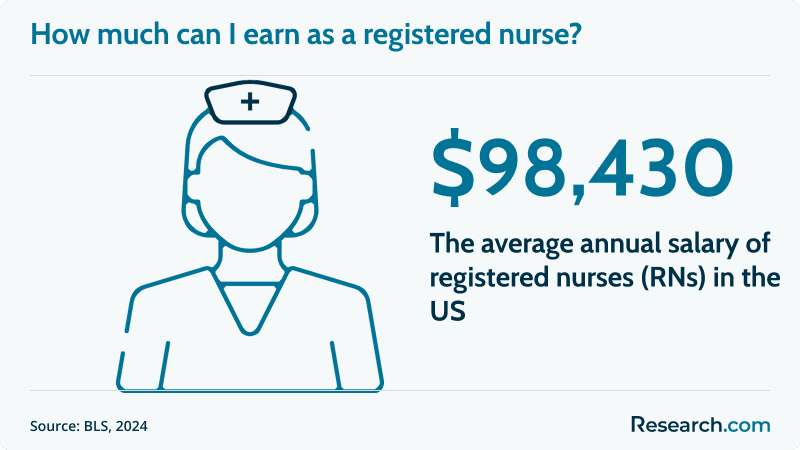
- Graduates can expect a significant increase in earning potential, with Registered Nurses earning an average annual salary of $98,430, a substantial leap from the LPN/LVN average.
- Pursuing an online degree offers the crucial flexibility needed to balance demanding work schedules and personal responsibilities while achieving academic advancement.
What can I expect from an LVN to RN online bridge program?
Expect an intense but profoundly rewarding pace combining rigorous online theory with mandatory, hands-on clinical training. The core of an accelerated LVN to RN bridge program involves a significant cognitive shift, moving beyond task-oriented implementation to developing the analytical judgment of a Registered Nurse.
This means un-learning some familiar approaches and re-learning how to apply critical thinking frameworks to complex patient situations. The curriculum is designed to challenge you, preparing you for the expanded scope of practice and leadership responsibilities that come with an RN license.
Strategies for Balancing Work, Life, and School
Success in these demanding online LVN to RN programs requires proactive planning. Establish a dedicated study space, communicate clear boundaries with family and employers, and actively build a support system.
Many students find success by scheduling study time as non-negotiable appointments and leveraging program resources like tutoring and academic advising. This strategic approach helps manage the workload and prevents burnout, ensuring a smoother transition to your new professional identity.
Where can I work with an LVN to RN online bridge program?
The RN credential dramatically expands your professional landscape, opening doors beyond traditional LVN roles into acute care units in hospitals, specialized outpatient surgery centers, and diverse specialty clinics.
With an Associate Degree in Nursing (ADN) or a Bachelor of Science in Nursing (BSN) from an online LVN to RN program, you gain the scope of practice to assess, plan, and evaluate patient care autonomously, leading care teams and making critical decisions. This shift empowers you to take on more complex patient populations and contribute at a higher level within any healthcare setting.
How much can I make with an LVN to RN online bridge program?
Earning your Registered Nurse credential significantly elevates your earning potential. While Licensed Vocational Nurses (LVNs) average an annual salary of $64,150, Registered Nurses command an average annual salary of $98,430, representing a substantial financial upgrade.
This figure reflects the expanded responsibilities and complex skills acquired through an online LVN to RN program, whether it leads to an ADN or BSN.
- What is the job market for graduates with an LVN to RN online bridge program? Job Market
- Is Pursuing an Accelerated BSN Program Online the Next Step for Career Growth? Is Pursuing an Accelerated BSN Program Online the Next Step for Career Growth?
- Do Employers Value LVN to RN Online Bridge Degrees Equally? Do Employers Value LVN to RN Online Bridge Degrees Equally?
Best Accelerated LVN to RN Online Bridge Programs for 2027: What to Know Before You Apply
Moving from Licensed Vocational Nurse or Licensed Practical Nurse to Registered Nurse is one of the most practical ways to expand your clinical responsibilities, improve long-term career mobility, and qualify for RN roles without starting nursing school from the beginning. Accelerated LVN to RN online bridge programs are designed for working nurses who already have bedside experience but need the academic credits, clinical training, and licensure preparation required for RN practice.
This guide is for LVNs and LPNs comparing online, hybrid, and campus-based bridge options. You will learn how these programs work, how long they take, what they cost, which schools stand out, how clinical placements are handled, what employers look for, and how to avoid choosing a program that does not support your licensure or career goals.
Quick Answer: What Is the Best Accelerated LVN to RN Online Bridge Program?
The best LVN to RN online bridge program is the one that is accredited, approved for RN licensure in your state, affordable for your situation, and able to provide reliable clinical placement support. Many programs use online coursework for lectures and theory, but all reputable RN bridge programs still require in-person labs, simulations, clinical rotations, or campus intensives because nursing licensure depends on supervised hands-on training.
If your priority is speed, compare associate degree pathways that take as little as 3 semesters to 1.5 years after prerequisites. If your priority is long-term advancement, a BSN pathway may take longer but can improve competitiveness for leadership roles, Magnet hospital employment, and future graduate study.
How We Evaluated These LVN to RN Bridge Programs
Because an RN bridge program requires a major commitment of time, money, and clinical effort, our evaluation focuses on factors that matter to working nurses: accreditation, program format, completion time, tuition, credit requirements, flexibility, and whether the program recognizes prior LVN or LPN learning. Our broader ranking methodology is designed to help students compare programs using transparent criteria rather than marketing claims alone.
To build this list, we reviewed institutional and program information using recognized education data sources, including the IPEDS database from the National Center for Education Statistics, Peterson’s Distance Learning Licensed Data Set, the College Scorecard, and the National Center for Education Statistics. Students should still confirm current tuition, state authorization, clinical requirements, and licensure eligibility directly with each school before applying.
List of the Best Accelerated LVN to RN Online Bridge Programs for 2027
1. Azusa Pacific University
Azusa Pacific University offers an LVN-to-BSN pathway for nurses who want a structured route into professional nursing practice and future leadership. The program uses a cohort model, which can be helpful for students who want consistent peer support rather than a highly self-directed format. Its simulation-based training also gives students opportunities to practice complex clinical scenarios before working with patients in live care settings. The program is best suited for LVNs who want the broader career foundation of a BSN and can commit to a more intensive, higher-cost university pathway. The school also offers a 30-unit non-degree option that provides eligibility for the California RN licensure exam.
- Program Length: 2 years
- Required Credits to Graduate: 120
- Total Tuition: $100,200
- Accreditation: Commission on Collegiate Nursing Education (CCNE)
2. Herzing University
Herzing University gives LPNs multiple online bridge options, including ASN and BSN pathways. Its asynchronous lecture format is designed for students who need to study around work shifts, family responsibilities, or unpredictable schedules. However, the program is not entirely remote: students must complete required in-person intensives at a designated campus, along with clinical training. This option may work well for independent learners who want online theory coursework but still value structured hands-on preparation and career coaching.
- Program Length: 28 months (BSN track)
- Required Credits to Graduate: 120
- Total Tuition: $90,600
- Accreditation: Commission on Collegiate Nursing Education (CCNE)
3. Jersey College
Jersey College offers an LPN to RN Bridge Program that leads to an Associate's Degree in Nursing. The curriculum emphasizes patient-centered care and prepares students to move from a narrower practical nursing scope into broader RN responsibilities, including assessment, care planning, and coordination. This program may appeal to LPNs who want an associate degree route and prefer a nursing philosophy that considers the patient’s physical, emotional, and social needs. It is especially relevant for students who want RN eligibility without immediately pursuing a BSN.
- Program Length: 6 semesters
- Required Credits to Graduate: 75
- Total Tuition: $44,263
- Accreditation: Commission of the Council on Occupational Education (COE)
4. Georgia State University
Georgia State University provides an LPN to BSN Bridge Program in a hybrid format that combines online learning with in-person coursework. A major advantage is the automatic award of 18 articulation credits for prior LPN knowledge, which can reduce duplication and help students move more efficiently through the degree. This program is a strong fit for LPNs in Georgia who want the academic depth of a university BSN while maintaining some scheduling flexibility. Admission is competitive and offered once per year, so applicants should plan prerequisites, transcripts, and application materials early.
- Program Length: 3 years
- Required Nursing Credits to Graduate: 47
- Cost per Credit: In-State: $306; Out-of-State: $980
- Accreditation: Commission on Collegiate Nursing Education (CCNE)
5. Western Kentucky University
Western Kentucky University offers an Online LPN to ASN Bridge Program for nurses who want a more customized associate degree pathway. Students may be able to use challenge exams, CLEP, and prior learning credit to shape an individualized plan, which can be useful for experienced LPNs who do not want to repeat material they have already mastered. The program combines online lectures with local clinical experiences, making it a practical option for students who want to advance while remaining connected to their community.
- Program Length: 4 semesters
- Required Credits to Graduate: 61
- Cost per Credit: $309
- Accreditation: Accreditation Commission for Education in Nursing (ACEN)
6. Texas State Technical College
Texas State Technical College offers an LVN to RN Transition Nursing Program that leads to an Associate of Applied Science (AAS). The program is built for LVNs seeking a direct applied pathway to RN preparation, with a strong emphasis on clinical experience and workforce readiness. Students should review the admissions requirements closely because transition programs often have specific prerequisites, testing requirements, and documentation standards. Graduates are prepared to pursue NCLEX-RN eligibility after completing the required curriculum.
- Program Length: 20 months
- Total Tuition: $18,420
- Accreditation: Southern Association of Colleges and Schools Commission on Colleges (SACSCOC)
7. Hutchinson Community College
Hutchinson Community College provides an LPN to RN Online Bridge program with a partnership option through the University of Kansas. This pathway can allow students to complete an Associate of Applied Science (AAS) from HutchCC while also working toward a Bachelor of Science in Nursing from KU. It is a practical choice for students who want the cost advantages of a community college while keeping a BSN pathway in view. The program blends online and face-to-face learning, so applicants should confirm travel, clinical, and scheduling expectations before enrolling.
- Program Length: 1.5 years
- Required Credits to Graduate: 69
- Cost per Credit: In-State: $131; Out-of-State: $162
- Accreditation: Accreditation Commission for Education in Nursing (ACEN)
8. Missouri State University - West Plains
Missouri State University - West Plains offers an LPN-to-RN Bridge Program that can be completed in one academic year and leads to an Associate of Science in Nursing (ASN). Students may choose between seated and online cohort options, making the program relevant to different learning preferences. The curriculum recognizes previous LPN education by awarding 15 credit hours for the LPN license. This route is well suited for disciplined students who are ready for an intensive transition into RN-level coursework and clinical expectations.
- Program Length: 1 year
- Required Credits to Graduate: 65
- Cost per Credit: In-State: $212; Out-of-State: $289.50
- Accreditation: Accreditation Commission for Education in Nursing (ACEN)
9. Johnson County Community College
Johnson County Community College offers an LPN to RN Bridge that grants advanced standing to qualified LPNs. The structure allows prepared students to bypass the first year of the traditional RN sequence after completing required transition coursework. This makes it a strong option for students who have already completed general education requirements and want a focused three-semester path toward Associate of Applied Science completion. Students who complete two transition courses automatically receive credit for the first two foundational nursing courses.
- Program Length: 3 semesters
- Required Credits to Graduate: 56
- Total Tuition: In-State: $6,861.42; Out-of-State: $6,861.42
- Accreditation: Accreditation Commission for Education in Nursing (ACEN)
10. Lehigh Carbon Community College
Lehigh Carbon Community College offers an LPN to RN Transition Program leading to an Associate in Applied Science (AAS). Its dedicated transition course is designed to help LPNs adjust to the broader assessment, planning, and decision-making responsibilities expected of RNs. The program may be especially useful for students who want an associate degree now but may later transfer into a BSN program through established agreements. A required Virtual ATI NCLEX-RN review course is included, giving students structured preparation for the licensure exam.
- Program Length: 3 semesters
- Required Credits to Graduate: 66
- Cost per Credit: In-State: $135; Out-of-State: $405
- Accreditation: Accreditation Commission for Education in Nursing (ACEN)
Program Comparison: Which LVN to RN Bridge Option Fits Your Goal?
| Program | Best Fit | Credential | Key Consideration |
| Azusa Pacific University | LVNs seeking a BSN and structured cohort learning | BSN | Higher total tuition but broader degree pathway |
| Herzing University | Working LPNs who need asynchronous online lectures | ASN or BSN pathway | Requires multi-day in-person campus intensives |
| Jersey College | LPNs focused on patient-centered associate degree preparation | Associate's Degree in Nursing | Check state-specific clinical and licensure requirements |
| Georgia State University | LPNs in Georgia who want a BSN from a university | BSN | Admission is competitive and offered once per year |
| Western Kentucky University | LPNs who want credit for prior learning and local clinicals | ASN | Requires proactive planning around transfer and challenge credits |
| Texas State Technical College | LVNs seeking an applied RN transition route | AAS | Review unique admission requirements carefully |
| Hutchinson Community College | Students who want an affordable AAS with a BSN pathway | AAS with KU BSN option | Blends face-to-face and online learning |
| Missouri State University - West Plains | Disciplined LPNs wanting a one-academic-year bridge | ASN | Offers seated and online cohort formats |
| Johnson County Community College | LPNs ready to enter with advanced standing | AAS | Designed for students with general education completed |
| Lehigh Carbon Community College | LPNs who want transition support and future BSN transfer options | AAS | Includes Virtual ATI NCLEX-RN review |
How Long Does an LVN to RN Online Bridge Program Take?
Most accelerated LVN-to-RN bridge programs take 12 to 24 months after all prerequisites are complete. Your actual timeline depends on your starting education, transfer credits, whether you choose an ADN, ASN, AAS, or BSN route, and how many clinical or campus requirements are built into the program.
LVNs who completed a certificate or diploma program often need additional college-level prerequisites before entering the nursing sequence. Common requirements include anatomy, physiology, microbiology, English composition, psychology, sociology, and college-level math. Completing these courses can add several months to a year before the bridge curriculum begins.
If you already hold an Associate of Applied Science (AAS), you may have completed many general education credits. In that case, your first move should be to request transcript evaluations from multiple schools so you can see which program gives you the most usable credit. A strong transfer policy can shorten your timeline and reduce total cost.
Unlike very short healthcare training options, such as a medical assistant degree online 6 weeks, RN bridge programs require deeper scientific coursework, supervised clinical practice, and NCLEX-RN preparation. The time commitment is larger because the license carries a broader scope of practice and greater clinical responsibility.
Online vs. On-Campus LVN to RN Bridge Programs
An online LVN to RN bridge program usually means that lectures, readings, discussions, and some exams are delivered online. It does not mean the entire program can be completed from home. Nursing programs must include in-person learning experiences such as labs, simulations, skills checkoffs, clinical rotations, or campus intensives because RN licensure requires demonstrated clinical competence.
Employers generally focus on whether the program is accredited, whether graduates are eligible for the NCLEX-RN, and whether students completed appropriate clinical training. Delivery format matters less than program quality. This is similar to other healthcare education decisions, where students must verify accreditation and outcomes before enrolling in accredited medical billing and coding schools online.
| Format | Advantages | Trade-Offs | Best For |
| Online or hybrid bridge program | More flexibility for theory coursework; useful for working nurses | Still requires clinicals, labs, or intensives in person | Self-motivated students with strong time-management skills |
| Campus-based bridge program | More face-to-face instruction and immediate access to faculty | Less scheduling flexibility and more commuting | Students who prefer structured classroom learning |
| Community college ADN, ASN, or AAS route | Often lower cost and shorter path to RN eligibility | May require later BSN completion for some employers | Students focused on affordability and speed |
| University BSN route | Stronger foundation for leadership, graduate study, and competitive hospitals | Usually longer and more expensive | Students planning long-term advancement |
How Clinical Placements Usually Work for Online Students
Online bridge students complete clinical training in approved healthcare settings under qualified supervision. Some schools arrange placements through established partnerships, while others expect students to help identify potential clinical sites. This distinction is important because weak clinical placement support can delay graduation.
Before applying, ask whether the school assigns placements, helps coordinate preceptors, verifies site approvals, and has options near your location. Clinical access is especially important for rural students, since only 16% of the nation's RNs currently live in rural areas. A well-supported online bridge pathway can help experienced LVNs train closer to home and later serve their local communities as RNs.
How Much Does an LVN to RN Online Bridge Program Cost?
The total cost of an LVN-to-RN bridge program can range from around $10,000 to over $40,000, depending on institution type, residency status, degree level, and program length. Public community college ADN, ASN, or AAS pathways usually cost less than private university BSN routes, but the lower-tuition option is not automatically the best choice for every student.
A student who wants the fastest route to RN licensure may prefer an associate degree bridge program. A student who wants access to BSN-preferred employers, management roles, or graduate education may decide that a BSN pathway is worth the larger investment. The right decision depends on total cost, time to completion, employer expectations in your region, and how much tuition support you can access.
Costs Students Often Forget to Include
Tuition is only one part of the price. When comparing online LVN to RN programs, build a full budget that includes student fees, technology fees, textbooks, online learning materials, scrubs, stethoscope, clinical supplies, immunizations, background checks, drug screening, liability insurance, standardized entrance exams such as the TEAS, and NCLEX-RN preparation or testing expenses.
Clinical travel can also become expensive if your placement is far from home or if the program requires campus intensives. Ask each school for a written estimate of required non-tuition costs so you can compare programs accurately.
Financial Aid Options for LVN to RN Bridge Students
LVN to RN students may qualify for several funding sources, including employer tuition assistance, federal aid, grants, scholarships, and student loans. The best strategy is to start with money that does not have to be repaid, then use loans only if needed to close a remaining gap.
- Employer tuition reimbursement: Ask your current healthcare employer whether it offers tuition assistance, reimbursement, scholarships, loan repayment, or schedule accommodations for LVNs becoming RNs. Many facilities support career advancement because retaining experienced nursing staff benefits both the employer and patients.
- FAFSA-based aid: Complete the Free Application for Federal Student Aid to determine eligibility for federal grants, work-study, and federal student loans. Some students may qualify for the Pell Grant depending on financial need and program eligibility.
- Nursing scholarships and grants: Search for nursing-specific awards from hospitals, state nursing associations, professional organizations, foundations, and workforce programs. Government bodies such as the Health Resources and Services Administration (HRSA) also offer funding opportunities for nursing students.
- Federal student loans: If you still need funding after grants, scholarships, and employer aid, federal loans are often preferable to private loans because they typically include more flexible repayment options.
LVN to RN Bridge Program Prerequisites
Every LVN to RN bridge program requires an active, unencumbered LVN or LPN license. Beyond that, admissions requirements vary by school, state, and degree level. Applicants should expect transcript reviews, prerequisite coursework, entrance testing, background checks, immunization documentation, and proof of clinical eligibility.
If You Hold an LVN or LPN Certificate or Diploma
If your nursing education was certificate- or diploma-based, you may need to complete more college prerequisites before starting RN coursework. About 75% of LPNs hold this type of prior preparation, so this is a common pathway rather than an exception.
- Anatomy and Physiology I & II with labs
- Microbiology with lab
- College-Level English Composition
- Introductory Psychology or Sociology
- College-Level Mathematics, often Statistics
Many programs also require the Test of Essential Academic Skills (TEAS) or another entrance exam. Since retake policies and minimum scores vary, verify testing rules before you schedule your exam.
If You Already Hold an AAS Degree
Students with an Associate of Applied Science may already have some of the required general education credits. Do not assume all credits will transfer, however. Send official transcripts to each school you are considering and ask for a formal evaluation before making a final decision.
Short skill-based healthcare credentials, such as a 4-week online course for medical coding and billing, are built around a narrower technical objective. RN bridge prerequisites are broader because registered nursing requires scientific knowledge, clinical judgment, patient assessment, and decision-making across many care settings.
Typical Courses in an LVN to RN Online Bridge Program
LVN to RN bridge coursework is designed to shift your thinking from task completion to full-cycle patient care. As an LVN or LPN, you already understand bedside routines, medication administration within scope, documentation, and patient interaction. RN education expands that foundation into assessment, care planning, delegation, leadership, research use, and independent clinical judgment.
How RN Coursework Changes Your Role
Many bridge programs emphasize the nursing process: assessment, diagnosis, planning, implementation, and evaluation. Students learn to interpret clinical data, identify changes in patient status, coordinate care, apply evidence-based practice, and make decisions that affect outcomes. These skills also create a foundation for future advancement, including education roles where understanding the nurse educator salary and career path may become relevant.
- Health Assessment
- Pharmacology for Professional Nursing
- Nursing Research and Evidence-Based Practice
- Community and Public Health Nursing
- Leadership and Management in Nursing
Can You Specialize During an LVN to RN Bridge Program?
Most LVN to RN bridge programs provide generalist RN preparation rather than a formal specialty in pediatrics, emergency nursing, oncology, labor and delivery, or critical care. The purpose of the bridge program is to qualify you for RN practice and prepare you for the NCLEX-RN. Specialization usually comes after graduation, licensure, and clinical experience in a focused setting.
Typical Path from RN Licensure to Specialty Practice
- Earn RN eligibility and pass the NCLEX-RN: Complete your bridge program and meet your state board of nursing requirements for licensure.
- Work in your target clinical area: Apply for RN positions in units such as emergency care, cardiac care, pediatrics, labor and delivery, perioperative services, or intensive care.
- Build specialty experience: Spend one to two years developing unit-specific judgment, technical skill, and patient population expertise.
- Pursue certification: After meeting experience requirements, sit for a national specialty certification exam through an organization such as the American Nurses Credentialing Center (ANCC), depending on your specialty area.
Industries With the Highest Annual Average Salary for Registered Nurses (RNs) in 2024
| Industry | Annual Average Salary |
| Federal Executive Branch | $124,460 |
| Medical Equipment and Supplies Manufacturing | $116,040 |
| Navigational, Measuring, Electromedical, and Control Instruments Manufacturing | $115,210 |
| Computer Systems Design and Related Services | $111,790 |
| Facilities Support Services | $109,120 |
How to Choose the Best LVN to RN Online Bridge Program
Start with licensure and accreditation, then compare cost, timeline, clinical placement support, transfer credit, and NCLEX-RN preparation. A program that looks convenient online may not be the right choice if it lacks approval for your state, requires travel you cannot manage, or leaves students to find their own clinical sites.
1. Confirm Accreditation and State Approval
Accreditation should be treated as non-negotiable. Look for nursing program accreditation from ACEN or the Commission on Collegiate Nursing Education (CCNE), and confirm that the program meets requirements for RN licensure in the state where you plan to practice. Accreditation and state board approval can affect your ability to sit for the NCLEX-RN exam, transfer credits, pursue higher degrees, and qualify for certain jobs.
2. Ask Direct Questions About Clinical Placement
Before applying, ask: “Does the school arrange clinical placements, or am I responsible for finding them?” Also ask how far students typically travel, what happens if a site falls through, whether the school has approved sites in your area, and whether out-of-state students face restrictions. Poor placement support can turn a flexible online program into a frustrating delay.
3. Compare Total Cost, Not Just Tuition
Two programs with similar tuition can have very different total costs once fees, supplies, travel, lost work hours, testing, and prerequisite courses are included. Ask for a complete cost breakdown and compare it with your available aid, employer support, and expected timeline to RN employment.
4. Match the Degree Level to Your Career Plan
An ADN, ASN, or AAS bridge can be the quickest path to RN licensure for many students. A BSN bridge may be better if you plan to work in competitive hospitals, pursue leadership roles, apply to graduate school, or move into specialty practice. If cost is a concern, consider whether an associate degree now and RN-to-BSN later is more realistic than a direct BSN route.
Common Mistakes to Avoid When Choosing an LVN to RN Bridge Program
| Mistake | Why It Matters | Better Approach |
| Choosing a program before checking accreditation | You may risk licensure, transfer, employment, or graduate school eligibility | Verify ACEN or CCNE accreditation and state board approval before applying |
| Assuming “online” means no campus or clinical travel | RN programs require in-person clinical preparation | Ask for all required campus, lab, simulation, and clinical dates |
| Looking only at tuition | Fees, supplies, testing, and travel can change the real price | Build a full budget before comparing programs |
| Ignoring transfer credit policies | You may repeat coursework and spend more time in school | Request official transcript evaluations from multiple programs |
| Assuming every program works in every state | State authorization and board requirements vary | Confirm eligibility with the school and your state board of nursing |
| Choosing the fastest program without considering support | An accelerated pace can be difficult while working | Evaluate tutoring, advising, faculty access, and NCLEX-RN preparation |
Career Paths After an LVN to RN Bridge Program
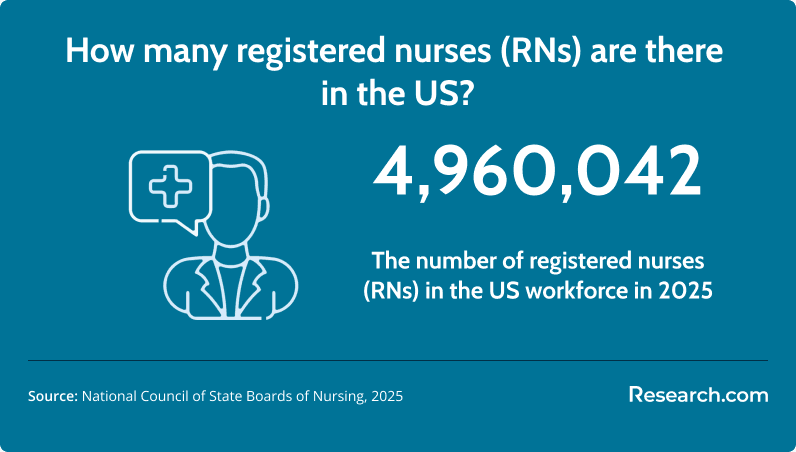
After earning RN licensure, graduates can move into broader patient-care roles, specialty units, leadership tracks, and non-bedside nursing positions. The RN credential expands scope of practice and can open opportunities in hospitals, clinics, long-term care, home health, public health, ambulatory care, and specialty departments. With nearly 5 million RNs in the U.S. workforce, nursing offers many possible directions after the bridge program.
Bedside and Specialty RN Roles
Many graduates begin in medical-surgical units, rehabilitation, long-term care, emergency departments, perioperative services, cardiac units, or critical care settings. Your prior LVN or LPN experience can be an asset because you already understand patient care routines, documentation, and communication with healthcare teams.
Leadership and Administrative Pathways
Experienced LVNs who become RNs may be well positioned for charge nurse roles after gaining RN experience. Over time, some move into nurse manager, director of nursing, care coordination, quality improvement, staff development, or recruitment roles. If you are interested in non-bedside options, comparing paths such as how much do nurse recruiters make can help you understand alternatives within the nursing workforce.
Job Market Outlook for LVN to RN Bridge Graduates
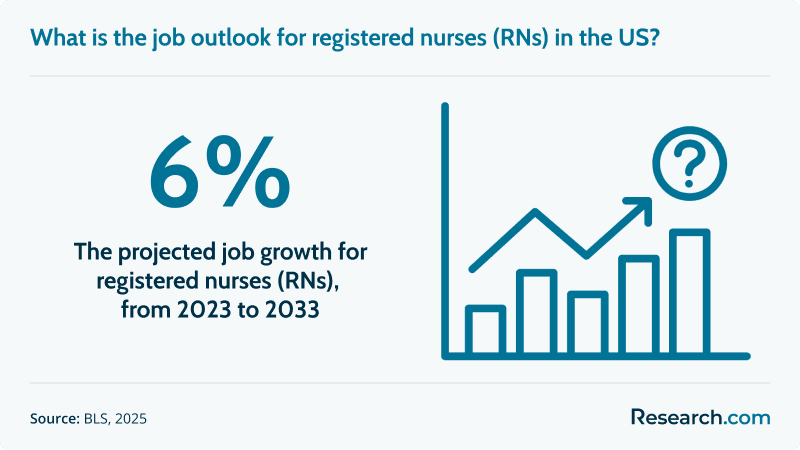
The RN job market remains strong, with the U.S. Bureau of Labor Statistics projecting about 194,500 openings each year over the next decade. Demand is supported by retirements, population aging, chronic disease management, and continued need for preventive and acute care services. For LVNs and LPNs, moving into RN practice can improve access to a wider range of positions and settings.
Why a BSN May Matter in Some Markets
Although associate degree graduates can become licensed RNs if they meet state requirements and pass the NCLEX-RN, some employers prefer or require a BSN. This is especially common in competitive urban markets and Magnet-designated hospitals. With 71.7% of the current RN workforce holding a bachelor's degree or higher, a BSN can strengthen long-term mobility even if an associate degree is the fastest initial route to RN licensure.
Should You Consider an Accelerated BSN Program After Becoming an RN?
For some bridge graduates, the next logical step is a BSN. An accelerated BSN program online can help deepen clinical reasoning, leadership preparation, population health knowledge, and evidence-based practice skills. This path may be useful if you want to qualify for BSN-preferred jobs, prepare for graduate nursing education, or move toward management and specialty roles.
Do Employers Respect Online LVN to RN Bridge Degrees?
Employers are primarily concerned with whether your program is accredited, whether you passed the NCLEX-RN, how you performed clinically, and whether you can practice safely within the RN role. A well-designed online or hybrid bridge program can be respected when it includes rigorous coursework, supervised clinical practice, and strong licensure preparation. The online format itself is not the deciding factor; program quality is.
That said, employer expectations vary by region and facility. Some hospitals may prefer BSN-prepared nurses, while others hire associate degree RNs and support later BSN completion. Students comparing future pathways may also explore options such as the easiest BSN accelerated nursing programs, especially if long-term advancement is a major goal.
Questions to Ask Before Applying to an LVN to RN Online Bridge Program
- Is the program accredited by ACEN or CCNE?
- Is the program approved for RN licensure in the state where I plan to practice?
- What is the current NCLEX-RN pass rate?
- Does the school arrange clinical placements, or must students find their own sites?
- How many campus visits, labs, simulations, or intensives are required?
- How many of my prior credits will transfer?
- What prerequisites must I complete before starting nursing courses?
- What is the total cost, including fees, supplies, travel, and testing?
- Can I keep working while enrolled, or is the schedule too intensive?
- Does the program lead to an ADN, ASN, AAS, or BSN, and does that match my career plan?
What Graduates Say About LVN to RN Online Bridge Programs
- Damon: "I had worked as an LVN for 15 years, so returning to school felt intimidating at first. The science classes worried me the most. Being able to review lectures after work and study at my own pace helped me rebuild confidence and prove to myself that I was ready for the RN role."
- Teri: "The program changed how I approached patient care. As an LVN, I was used to focusing on tasks. RN coursework pushed me to think through assessment, evidence, leadership, and the reasons behind each decision. I now feel more prepared to lead care at the bedside."
- Irene: "Working full time while raising two children was exhausting, but online coursework made it possible. Most nights, I studied after everyone went to bed. It was difficult, but my family watched me keep going, and that made the achievement even more meaningful."
Key Insights
- Accelerated LVN to RN online bridge programs are usually hybrid in practice: theory may be online, but clinical training must be completed in person.
- Program fit depends on your goal. Associate degree routes can be faster and less expensive, while BSN routes may offer stronger long-term advancement options.
- Accreditation and state licensure eligibility are the most important checks before applying. Do not rely on convenience or speed alone.
- Clinical placement support can make or break an online bridge experience. Ask exactly how sites and preceptors are secured.
- Total cost includes more than tuition. Budget for fees, supplies, testing, background checks, clinical travel, and possible campus intensives.
- The RN job market offers strong opportunity, with about 194,500 openings projected each year over the next decade, but BSN preference can vary by employer and location.
- The best decision is not simply the fastest program. Choose the accredited bridge pathway that matches your state, schedule, finances, clinical access, and long-term nursing plan.
References:
Sources reviewed for program and labor-market context include IPEDS, Peterson’s Distance Learning Licensed Data Set, College Scorecard, the National Center for Education Statistics, institutional program pages, nursing accreditation information, and NCLEX-RN licensure resources.
Other Things You Should Know About LVN to RN Online Bridge Programs
Yes. Most LVN to RN online bridge programs require some in-person components, such as skills labs, simulation sessions, and clinical rotations at approved sites. Nursing boards usually require supervised clinical hours before eligibility for the NCLEX-RN, so fully online completion is uncommon.
In 2027, reputable LVN to RN online bridge programs are accredited by organizations such as the Accreditation Commission for Education in Nursing (ACEN) or the Commission on Collegiate Nursing Education (CCNE). These programs are recognized by state nursing boards, ensuring compliance with educational standards essential for licensure.