2027 Best LPN Programs in Massachusetts – Accredited Online LPN Programs

Co-Founder and Chief Data Scientist
Choosing an LPN program in Massachusetts is not just a school decision; it is a licensure, cost, schedule, and career decision. Practical nursing can be a faster route into patient care than becoming an RN, but students still need to complete a Board-approved program, meet clinical requirements, pass the NCLEX-PN, and apply for licensure before they can practice.
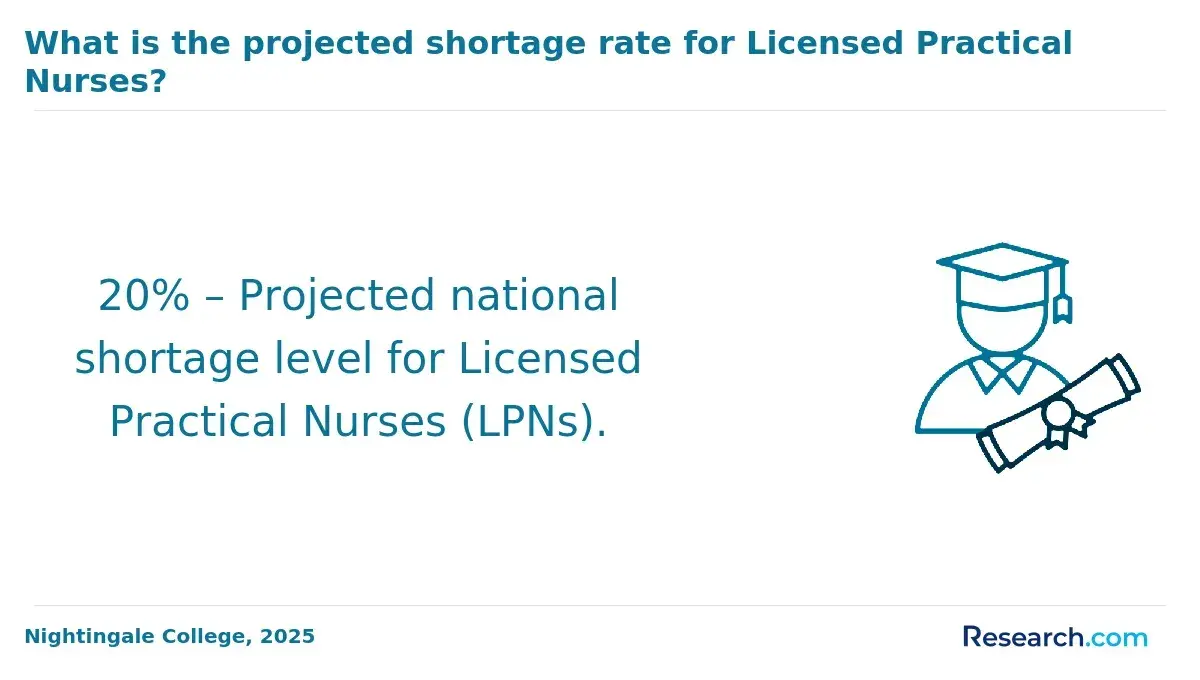
Massachusetts is a strong but demanding market for practical nurses. The state has 15,210 LPNs, yet workforce projections point to continued pressure on healthcare staffing. The state is projected to face a 17.9% shortage in licensed practical nurses by 2030, with demand for 20,100 LPNs and a supply of only 16,500. At the same time, students must weigh tuition, admission requirements, in-person clinical training, and the state’s higher cost of living before enrolling.
This guide explains how LPN programs in Massachusetts work, what they cost, how long they take, whether online study is realistic, how to evaluate program quality, and what career options may follow. It also connects practical nursing to related types of nursing degrees and levels so you can decide whether LPN training is the right first step or whether another nursing pathway fits your goals better.
Best LPN Programs in Massachusetts Table of Contents
- How to Become an LPN in Massachusetts
- What is the typical cost of an LPN program in Massachusetts?
- How long does it take to become an LPN in Massachusetts?
- Can you become a LPN in Massachusetts with an online degree?
- Online LPN Programs in Massachusetts for 2027
- What are the admission requirements for LPN programs in Massachusetts?
- Is Massachusetts good for LPNs?
- How can I evaluate the quality of an LPN program in Massachusetts?
- How can dual degree opportunities expand an LPN’s role in Massachusetts?
- Can LPNs transition into allied health fields such as nutrition?
- How Can LPNs Transition to Advanced Roles via BSN to NP Programs?
- What regulatory factors impact LPN practice in Massachusetts?
- What can I do with an LPN degree in Massachusetts?
- How is technology reshaping LPN training and practice in Massachusetts?
- How do LPN programs in Massachusetts integrate quality assurance and innovative training methods?
- Can LPNs Transition to a Nurse Midwife Role in Massachusetts?
- What challenges do LPNs face in Massachusetts?
- What are the career advancement opportunities for LPNs in Massachusetts?
- How much do LPNs earn in Massachusetts compared to other states?
- What are the professional development and certification support options for LPNs in Massachusetts?
Quick Answer: Are LPN Programs in Massachusetts Worth Considering?
LPN programs in Massachusetts can be a practical choice if you want a relatively direct route into nursing, can attend required in-person clinical training, and are prepared for the NCLEX-PN and state licensure process. Most full-time programs take about 10 to 12 months, but the full path to becoming licensed may take a year and a half to three years when exam preparation and application processing are included.
The trade-off is cost and flexibility. Tuition and fees for LPN training programs in Massachusetts average $16,761, while public college averages vary by residency status. Fully online LPN programs are unlikely because practical nursing education requires supervised clinical experience. Hybrid coursework may be available, but clinical hours must be completed in person.
| Decision factor | What it means for Massachusetts LPN students |
| Licensure path | Complete a Board-approved practical nursing program, pass the NCLEX-PN, and apply through the Massachusetts Board of Registration in Nursing. |
| Program format | Expect in-person clinical training even if some theory courses are online or hybrid. |
| Typical timeline | Full-time coursework often takes 10 to 12 months; the full education-to-license process can take longer. |
| Salary picture | The average LPN salary in Massachusetts is cited as $76,400, while Indeed lists $70,341 and ZipRecruiter lists $70,268. |
| Best fit | Students who want hands-on patient care, can meet clinical scheduling demands, and may later bridge to RN, BSN, or advanced nursing roles. |
How to Become a LPN in Massachusetts
To become an LPN in Massachusetts, you must complete an approved practical nursing program, pass the NCLEX-PN, and receive a license from the state. Because LPNs provide direct patient care under established scopes of practice, the state requires formal nursing education and supervised clinical experience before licensure.
The Massachusetts nursing shortage has created serious staffing pressure for healthcare employers, including multimillion-dollar costs for hospitals. LPNs help fill essential roles in long-term care, rehabilitation, clinics, residential care, and other healthcare settings. Before enrolling, confirm that the program meets the state’s educational standards and review the Massachusetts Board of Registration in Nursing license requirements.
- Choose a Board-approved practical nursing program. Start by verifying that the program is approved by the Massachusetts Board of Registration in Nursing. Approval matters because completing an unapproved program may prevent you from qualifying for licensure.
- Complete classroom, laboratory, and clinical requirements. LPN programs cover foundational nursing concepts, patient safety, medication administration, basic pharmacology, anatomy, health assessment, and supervised clinical practice.
- Prepare for the NCLEX-PN. After graduation, you must pass the National Council Licensure Examination for practical nurses. This exam tests whether you are ready to provide safe entry-level nursing care.
- Apply for Massachusetts LPN licensure. Once you pass the exam, submit your online application through the Board’s process. The application fee as of the latest update is $230. Make sure transcripts, identity documentation, and other required materials are complete.
- Verify license issuance before working. You can begin practice only after your license number appears on the Massachusetts Health Professions License Verification site.
- Plan your next step early. Many LPNs later pursue RN, BSN, MSN, or advanced practice pathways. If your long-term goal is advanced practice, review nurse practitioner education requirements before choosing a bridge route.
What is the typical cost of an LPN program in Massachusetts?
The typical cost of an LPN program in Massachusetts depends on the school type, residency status, fees, supplies, and whether you qualify for financial aid. Tuition is only one part of the total price. Students should also budget for books, uniforms, background checks, immunizations, CPR certification, transportation to clinical sites, exam fees, and licensure expenses.
- Tuition and fees: The average tuition and fees for LPN training programs in Massachusetts add up to $16,761.
- Public college costs: For residents attending public colleges, the average tuition is $12,887, while out-of-state students can expect to pay an average of $31,880 for the academic year 2025-2026.
- Online or hybrid coursework: Some classroom content may be offered online, but clinical education must be completed in person. Costs for nursing programs online may be similar to campus-based options, although online coursework can reduce commuting or scheduling costs for some students.
- Financial aid: Scholarships, grants, employer tuition support, state initiatives, and school-based aid may lower out-of-pocket costs. Recent full-tuition scholarships and free community college tuition programs for 3,000 nursing students show how Massachusetts is trying to expand the nursing pipeline.
- Other expenses: Books, equipment, testing fees, transportation, childcare, and lost wages can change the real cost of nursing education. Ask schools for a full cost-of-attendance estimate, not just tuition.
| Cost category | What to ask before enrolling |
| Tuition and mandatory fees | Is the quoted price for the full program or only one term? |
| Books, uniforms, and supplies | Are clinical uniforms, lab kits, background checks, and testing platforms included? |
| Clinical travel | Where are clinical placements located, and will you need a car or public transit budget? |
| Exam and licensure costs | Does the school include NCLEX-PN review or application guidance? |
| Financial aid | Which grants, scholarships, employer benefits, or payment plans are available? |
How long does it take to become an LPN in Massachusetts?
Becoming an LPN in Massachusetts generally takes a year and a half to three years when you include school, NCLEX-PN preparation, and licensure processing. The classroom portion can be much shorter, especially for full-time students, but licensing is a separate step that should be built into your timeline.
- Practical nursing education: Full-time LPN programs in Massachusetts usually run 10 to 12 months. The Massachusetts Board of Registration in Nursing also references a minimum of 40 academic weeks for sequenced learning experiences.
- NCLEX-PN preparation: Some graduates test soon after finishing the program, while others spend a few months reviewing content and taking practice exams.
- Licensure application: Processing time can range from several weeks to a couple of months depending on application completeness, background checks, and Board processing.
| Stage | Typical planning range | What can slow you down |
| Prerequisites and admission | Varies by school | Missing biology, math, English, CPR, immunization, or testing requirements |
| LPN program coursework | 10 to 12 months for many full-time programs | Part-time schedules, failed courses, clinical absences, or limited cohort availability |
| NCLEX-PN preparation | A few months is common | Weak exam readiness, delayed authorization, or repeat testing |
| Licensure processing | A few weeks to a couple of months | Incomplete forms, missing documents, or background review issues |
Can you become an LPN in Massachusetts with an online degree?
You should not expect to become an LPN in Massachusetts through a fully online program. Practical nursing requires hands-on clinical training, and those clinical experiences must be completed in person. Some schools may place lecture-based coursework online or use hybrid delivery, but laboratory skills and patient care training cannot be replaced by online modules alone.
Online education is more widely accepted when it comes from a reputable, accredited institution, especially one with strong academic oversight and appropriate clinical partnerships. However, LPN training is different from many nonclinical online degrees because state licensure depends on supervised practice. For that reason, the best question is not “Is the program online?” but “Does the program meet Massachusetts practical nursing approval and clinical placement requirements?”
Online or hybrid options may help working adults manage theory courses, but students should verify clinical schedules, commute distance, attendance rules, and whether the program is approved for Massachusetts licensure. This is especially important because the state is projected to face a 17.9% shortage in licensed practical nurses by 2030, with demand for 20,100 LPNs but a supply of only 16,500. RNs, by contrast, are projected to have a surplus of 2.2% over the same period.
Online LPN Programs in Massachusetts for 2027
Despite the heading many students search for, fully online LPN programs in Massachusetts are not generally available because clinical learning must happen in person. What students may find are campus-based or hybrid practical nursing programs that use online tools for coursework, testing, simulations, or supplemental instruction.
Massachusetts LPN schools report a first-time NCLEX-PN pass rate of 88.43%, compared with the national average of 86.6%. Pass rates are useful, but they should not be the only factor you consider. Look at Board approval, clinical sites, graduation support, schedule fit, costs, and student outcomes before applying.
- Practical Nursing Certificate, MassBay Community College: MassBay Community College offers a Practical Nursing Certificate designed for students preparing for entry-level practical nursing roles. Review current admission requirements, clinical expectations, program length, and NCLEX-PN preparation support directly with the college before applying.
- Practical Nurse Program, Diman Regional Vocational Technical High School: Diman Regional’s Practical Nurse Program provides classroom, lab, and clinical preparation for practical nursing practice. Prospective students should confirm cohort schedules, clinical placement structure, and current licensure outcomes.
- Practical Nurse Program, Blackstone Valley Regional Vocational Technical High School: Blackstone Valley Regional offers practical nursing training that covers core patient care knowledge and skills. Applicants should ask about program completion rates, NCLEX-PN support, and clinical site expectations.
- Practical Nursing Program, Greater Lowell Technical School: Greater Lowell Technical School provides practical nursing education with a focus on essential nursing competencies. Students should compare tuition, admission testing, program schedule, and student support services before selecting this option.
- Practical Nursing Certificate Program, Northern Essex Community College: Northern Essex Community College offers a Practical Nursing Certificate Program for students seeking preparation for the NCLEX-PN and practical nursing employment. Confirm whether courses, labs, and clinical placements fit your work and transportation needs.
What are the admission requirements for LPN programs in Massachusetts?
Admission requirements vary by school, but Massachusetts LPN programs commonly require a high school diploma or GED, prerequisite coursework, health documentation, and evidence that you are academically ready for nursing coursework. Competitive programs may use entrance exams, interviews, or point-based admission systems.
- Academic background: Most programs expect a high school diploma or equivalent and may require biology, math, and English with passing grades.
- Entrance testing: Some schools use the TEAS or another assessment to evaluate reading, math, science, and academic readiness.
- Health and safety documentation: Programs may require immunization records, physical exams, CPR certification, and proof that you can meet clinical participation standards.
- Background screening: Background checks are common, and some programs may require drug testing before clinical placement.
- Professional readiness: Interviews, essays, references, or prior healthcare experience may help schools assess whether you understand the demands of nursing.
Before applying, ask whether admission is first-come, first-served or selective. Also ask whether prerequisites must be completed before application or only before the first nursing course.
Is Massachusetts good for LPNs?
Massachusetts can be a good state for LPNs, particularly for students who want stable healthcare employment and are prepared for the state’s cost of living. The average LPN salary in Massachusetts is cited as $76,400, and salary sources such as Indeed and ZipRecruiter list $70,341 and $70,268. These figures are competitive, but take-home value depends on housing, transportation, childcare, commuting distance, and shift availability.
The job outlook is also supported by workforce need. Massachusetts is projected to need 20,100 practical nurses by 2030 while supply is projected at 16,500. That gap may create opportunities, especially in long-term care, residential care, rehabilitation, and community-based healthcare. Still, job offers, schedules, and wages vary by region and employer.
| Massachusetts may be a strong fit if... | You may want another path if... |
| You want to enter nursing faster than a traditional RN pathway. | You need a fully online program with no in-person clinical work. |
| You can manage clinical schedules, commuting, and hands-on training. | You cannot attend daytime, evening, weekend, or rotating clinical assignments. |
| You are interested in long-term care, rehabilitation, clinics, or residential care. | Your primary goal is independent advanced practice without additional degrees. |
| You plan to use LPN training as a bridge toward RN, BSN, or NP education. | You want the broadest nursing scope immediately, in which case RN education may fit better. |
How can I evaluate the quality of an LPN program in Massachusetts?
The best LPN program is not always the cheapest, closest, or highest ranked. It is the program that is approved for Massachusetts licensure, fits your schedule, supports NCLEX-PN success, provides reliable clinical placements, and has transparent costs and outcomes.
- Confirm Board approval. Do not enroll until you verify that the program is approved for Massachusetts practical nursing licensure.
- Review NCLEX-PN outcomes. Compare first-time pass rates, but also ask how the school supports students who struggle academically.
- Ask about clinical placements. Find out where clinicals occur, how far you may travel, whether placements are guaranteed, and what schedules are typical.
- Compare completion support. Tutoring, skills lab access, advising, remediation, and exam review can matter as much as lecture quality.
- Look beyond marketing claims. Speak with current students or graduates when possible and review independent feedback carefully.
If you are comparing nursing with other healthcare training routes, reviewing the best medical assistant programs in Massachusetts can help you understand how program length, clinical training, and career outcomes differ across allied health options.
Questions to Ask an LPN Program Before You Apply
| Question | Why it matters |
| Is the program approved by the Massachusetts Board of Registration in Nursing? | Approval is essential for licensure eligibility. |
| What is the current first-time NCLEX-PN pass rate? | It helps you assess exam preparation strength. |
| Where are clinical sites located? | Clinical travel can affect your budget and schedule. |
| What percentage of students finish on time? | Completion rates reveal whether students receive enough support. |
| What costs are not included in tuition? | Books, uniforms, fees, and transportation can change affordability. |
| Can credits transfer into an RN or BSN program later? | Transfer policies affect long-term career mobility. |
How can dual degree opportunities expand an LPN’s role in Massachusetts?
Dual degree programs are usually not the next immediate step for new LPNs, but they can make sense later for nurses who move into RN-level or graduate-level study and want leadership responsibilities. Combining nursing knowledge with business training can support roles in operations, healthcare administration, quality improvement, staffing, and policy implementation.
Programs such as MSN MBA dual degree programs are generally designed for nurses pursuing advanced academic and leadership preparation. For an LPN, the usual sequence would be LPN to RN or BSN first, followed by graduate-level education if management or executive roles become the goal.
Can LPNs transition into allied health fields such as nutrition?
LPNs who enjoy patient education may find allied health areas such as nutrition appealing, especially in long-term care, chronic disease management, wellness, and community health settings. However, nutrition practice has its own education, credentialing, and scope-of-practice rules. LPN experience can be useful, but it does not automatically qualify someone for nutrition-focused professional roles.
If you are interested in this direction, compare nursing advancement with nutrition-specific education and certification requirements. A good starting point is this guide on how to become a nutritionist in Massachusetts.
How Can LPNs Transition to Advanced Roles via BSN to NP Programs?
LPNs can eventually move toward advanced nursing roles, but the path usually requires several educational steps. Nurse practitioner roles require advanced nursing education and appropriate RN preparation before graduate-level practice. An LPN who wants to become an NP should plan a staged route: LPN to RN, RN to BSN if needed, then graduate education aligned with the desired NP specialty.
When comparing pathways, focus on accreditation, transfer credit rules, clinical placement support, and whether the curriculum meets Massachusetts licensure expectations. For a broader look at advanced pathways, review BSN to NP programs.
What regulatory factors impact LPN practice in Massachusetts?
LPN practice in Massachusetts is shaped by state licensure rules, scope-of-practice expectations, employer policies, renewal requirements, documentation standards, and clinical supervision structures. Regulations can affect what tasks LPNs may perform, which settings hire them, and what continuing education or competency requirements apply.
Students should not rely only on school admissions staff for licensure answers. Before enrolling, review state guidance directly and keep track of application, renewal, and documentation requirements. For a detailed overview, see Massachusetts nursing license requirements.
What can I do with an LPN degree in Massachusetts?
An LPN credential prepares graduates for practical nursing roles in settings that need direct patient care, medication support, monitoring, basic procedures, documentation, and communication with RNs, physicians, patients, and families. Employment of LPNs is projected to grow by 3% through 2034. According to BLS figures cited for Massachusetts, LPNs earn an average of $76,400, while Indeed lists $70,341 and ZipRecruiter lists $70,268.
LPNs commonly work in nursing and residential care facilities, hospitals, and healthcare services. Responsibilities vary by employer, but many roles involve checking vital signs, assisting with activities of daily living, administering certain medications, observing patient changes, documenting care, and supporting care plans.
| Work setting | Typical LPN responsibilities | Good fit for students who... |
| Nursing and residential care facilities | Daily patient care, medication support, monitoring, documentation, family communication | Want consistent patient relationships and long-term care experience |
| Hospitals | Support nursing teams, monitor patients, assist with procedures within scope | Prefer faster-paced settings and team-based care |
| Healthcare services and clinics | Vitals, intake, patient education, records, basic clinical support | Want more predictable schedules than some facility-based roles |
| Rehabilitation or post-acute care | Monitor recovery, assist with mobility and care plans, coordinate with therapy teams | Enjoy helping patients regain function after illness or injury |
Transitioning from Medical Assistant to LPN in Massachusetts
Medical assistants who want more direct nursing responsibility may consider moving into practical nursing. The transition can offer a broader clinical role, stronger nursing identity, and a foundation for later RN or BSN study. However, it also requires formal practical nursing education, clinical training, NCLEX-PN passage, and Massachusetts licensure.
Some bridge-style options, including MA to LPN Bridge Program Online pathways, may recognize prior healthcare coursework or experience. Students should be careful with the word “online,” though. Massachusetts still requires hands-on clinical preparation for LPN licensure, so any legitimate pathway must include in-person clinical components.
This route is often best for medical assistants who already know they enjoy patient care but want to deepen their nursing skills. Before enrolling, ask whether prior credits are accepted, how clinical placements are arranged, and whether graduates are eligible for Massachusetts LPN licensure.
How is technology reshaping LPN training and practice in Massachusetts?
Technology is changing both how LPN students learn and how practical nurses work. Many programs use simulation labs, electronic health record practice, digital testing tools, virtual case studies, and telehealth-related instruction to help students build confidence before working with patients.
In practice settings, LPNs increasingly use electronic documentation systems, digital medication records, remote communication tools, and patient monitoring technology. These tools do not replace bedside nursing judgment, but they do raise expectations for accuracy, privacy, documentation, and digital communication. LPNs who later want advanced practice should also understand how technology affects RN and NP roles; this guide on how to become a nurse practitioner in Massachusetts explains one possible long-term pathway.
How do LPN programs in Massachusetts integrate quality assurance and innovative training methods?
Quality LPN programs use more than lectures. They combine structured coursework, skills labs, simulation, supervised clinical placements, assessment checkpoints, and NCLEX-PN preparation. Strong programs also use feedback from clinical partners and accreditation or approval reviews to keep training aligned with current patient care standards.
When comparing schools, look for evidence that faculty evaluate skills consistently, clinical experiences are organized, and students receive support before small problems become dismissal risks. Students who want to compare practical nursing with broader nursing education options can review the best nursing schools in Massachusetts.
Can LPNs Transition to a Nurse Midwife Role in Massachusetts?
An LPN can eventually pursue nurse midwifery, but not directly from practical nursing alone. Nurse midwife roles require advanced nursing education and licensure preparation beyond the LPN level. The typical route involves becoming an RN, completing BSN or equivalent preparation if required, entering graduate-level midwifery education, and meeting Massachusetts credentialing requirements.
If this is your long-term goal, choose an LPN program with transfer-friendly policies and plan your bridge steps early. Review the nurse midwife education requirements in Massachusetts before assuming that any one program will lead directly to midwifery practice.
What challenges do LPNs face in Massachusetts?
LPN work can be meaningful, but it is physically and emotionally demanding. Staffing shortages, high patient loads, shift work, documentation requirements, and changing regulations can contribute to stress and burnout. Some LPNs also find that advancement requires additional education because practical nursing has a more limited scope than RN practice.
Common challenges include unpredictable schedules, weekend or evening shifts, physically demanding patient care, limited specialty options in some regions, and the need to keep skills current. LPNs who want more flexibility or advancement may consider additional education through the best online nursing programs in Massachusetts, while remembering that clinical requirements may still be in person.
What are the career advancement opportunities for LPNs in Massachusetts?
LPN training can be a first nursing credential rather than a final destination. Many practical nurses remain in the role long term, while others use it as a bridge to registered nursing, specialty credentials, supervisory work, or graduate nursing education. The right advancement route depends on your desired scope of practice, time, budget, and tolerance for additional schooling.
- LPN to RN or BSN: Bridge programs can help practical nurses build on prior training and prepare for RN licensure. Some students later pursue LPN to BSN bridge programs online, although clinical requirements and state authorization should always be checked.
- Specialty experience: LPNs may focus on geriatrics, rehabilitation, long-term care, pediatrics, or other practice areas depending on employer needs and state scope rules.
- Charge or supervisory roles: Experienced LPNs in some settings may take on coordination, mentoring, or shift leadership responsibilities, although titles and authority vary.
- Additional certifications: Wound care, IV therapy, and other focused training may improve employability when aligned with employer policies and Massachusetts regulations.
- Education and training roles: Experienced LPNs may help train new staff, support clinical onboarding, or contribute to patient education within their scope.
How much do LPNs earn in Massachusetts compared to other states?
Massachusetts is cited as a high-paying state for LPNs. The median annual wage for LPNs in Massachusetts is $76,400, compared with the national average of $62,340. Other salary sources report different figures: Indeed lists $70,341, and ZipRecruiter lists $70,268. Differences are normal because sources use different datasets, dates, job postings, and calculation methods.
Location also matters. Urban areas such as Boston may offer higher wages because of labor competition and cost of living, while other regions may offer different schedules, commute patterns, or facility types. Entry-level LPNs can start with salaries near $57,000, while experienced practitioners may earn upwards of $75,000 annually. Some positions may include bonuses, overtime, or shift differentials, especially in specialized or hard-to-staff settings.
Salary should be considered alongside living costs. Massachusetts has a higher-than-average cost of living, so a strong wage may not stretch equally across all cities. If your goal is higher long-term earning potential and a broader scope of practice, review how to move from practical nursing toward RN preparation in this guide on how to become a registered nurse in Massachusetts.
What are the options for LPNs in Massachusetts who want to advance their education and career?
LPNs who want more responsibility can pursue several routes: LPN to RN, LPN to BSN, specialty certification, leadership training, or eventually graduate nursing education. The most common academic next step is RN preparation because many advanced roles require an RN license before graduate study.
If your long-term goal is advanced practice, research requirements early. Nurse practitioner programs generally require higher-level nursing preparation and clinical experience beyond the LPN role. You can compare options using this guide to the best nurse practitioner programs in Massachusetts.
| Advancement path | Best for | Main caution |
| LPN to RN | LPNs who want broader clinical authority and more job options | Admission can be competitive, and clinical hours remain required. |
| LPN to BSN | Students planning for hospital roles, leadership, or graduate study | Costs and time commitments are higher than certificate-level training. |
| Specialty certification | LPNs who want to strengthen skills in a current practice setting | Not every certification changes scope of practice or pay. |
| MSN or NP pathway | Nurses pursuing advanced practice or leadership after RN/BSN preparation | LPN licensure alone is not enough for advanced practice admission. |
What are the professional development and certification support options for LPNs in Massachusetts?
Professional development helps LPNs keep skills current, maintain compliance, and qualify for more specialized responsibilities. Options may include employer-based training, continuing education providers, workshops, professional associations, hospital education departments, and certification preparation programs.
Useful areas for continuing development include wound care, medication safety, infection control, documentation, geriatrics, IV-related training where permitted, behavioral health basics, and technology used in clinical records. LPNs should confirm whether a course is recognized by their employer and whether it fits Massachusetts practice rules. For a step-by-step overview of the credentialing route, see how to become a certified LPN in Massachusetts.
Common Mistakes to Avoid When Choosing an LPN Program in Massachusetts
- Choosing a program before verifying Board approval. Approval is essential for licensure. Do not rely only on advertisements or informal recommendations.
- Focusing only on tuition. A lower tuition price may not include books, fees, uniforms, clinical travel, exam preparation, or licensure costs.
- Assuming “online” means fully remote. Massachusetts LPN training requires in-person clinical experience.
- Ignoring schedule realities. Clinical shifts may start early, run late, or require travel. Confirm expectations before paying deposits.
- Overlooking NCLEX-PN support. Ask how the school helps students prepare, remediate weak areas, and schedule the exam.
- Assuming credits will transfer later. If you plan to become an RN or BSN-prepared nurse, ask bridge programs how they evaluate LPN coursework.
- Treating salary figures as guarantees. Reported averages such as $76,400, $70,341, and $70,268 do not guarantee a specific job offer.
Navigate LPN Programs in Massachusetts for a Successful Healthcare Career
LPN programs in Massachusetts can offer a focused route into nursing at a time when practical nurses remain important to the healthcare workforce. The strongest candidates choose programs carefully, verify licensure eligibility, plan for clinical schedules, compare total costs, and think beyond the first job.
If you want a faster entry point into nursing and are comfortable with hands-on patient care, an LPN program may be a reasonable investment. If your long-term goal is advanced practice, hospital leadership, or a broader clinical scope, use LPN training as one step in a larger plan. Understanding whether nursing school is worth it for you depends on your finances, schedule, career goals, and willingness to continue learning after licensure.
Key Insights
- Massachusetts needs practical nurses, but preparation still matters. The state has 15,210 LPNs and is projected to need 20,100 practical nurses by 2030, with supply projected at 16,500.
- Licensure is a three-part process. You must complete an approved LPN program, pass the NCLEX-PN, and receive a Massachusetts license before practicing.
- Fully online LPN study is not realistic. Some coursework may be hybrid, but clinical training must be completed in person.
- Costs vary by institution and residency. LPN training tuition and fees average $16,761, public resident tuition averages $12,887, and out-of-state public tuition averages $31,880 for 2025-2026. Some summaries also cite program costs between $12,887 and $25,453, so students should verify current totals directly with schools.
- Program length is shorter than the full licensure timeline. Many full-time programs take 10 to 12 months, but the full path can take a year and a half to three years when prerequisites, NCLEX-PN preparation, and licensure processing are included.
- Salary data is favorable but not uniform. Massachusetts LPN pay is cited as $76,400, while other sources list $70,341, $70,268, and older summaries may cite $68,170. Compare wages with local cost of living before deciding.
- LPN can be a starting point. Many LPNs later pursue RN, BSN, specialty certification, nurse practitioner, management, or allied health pathways, but each requires its own education and licensure planning.
Related Articles for Nearby States
- 2027 Best LPN Programs in Connecticut – Accredited Online LPN Programs
- 2027 Best LPN Programs in New Hampshire – Accredited Online LPN Programs
- 2027 Best LPN Programs in New York – Accredited Online LPN Programs
- 2027 Best LPN Programs in Vermont – Accredited Online LPN Programs
- 2027 Best LPN Programs in New Jersey – Accredited Online LPN Programs
- 2027 Best LPN Programs in Maine – Accredited Online LPN Programs
- 2027 Best LPN Programs in Pennsylvania – Accredited Online LPN Programs
- 2027 Best LPN Programs in Delaware – Accredited Online LPN Programs
- 2027 Best LPN Programs in Maryland – Accredited Online LPN Programs
- 2027 Best LPN Programs in Virginia – Accredited Online LPN Programs
References:
- BLS. (2025, August 28). Licensed Practical and Licensed Vocational Nurses. U.S. Bureau of Labor Statistics.
- BLS. (2024, May). Occupational Employment and Wage Statistics. Area: Massachusetts. U.S. Bureau of Labor Statistics.
- College Board (2025). Trends in College Pricing: Highlights. College Board
- Drexel University. (n.d.). Online Degree vs On-Campus Degrees. Drexel University Online.
- Indeed (2026, February 23). Licensed practical nurse salary in Massachusetts. Indeed
- NCSBN. (2026). NCLEX Pass Rates NCSBN.
- NursingEducation (2024, January 19). States that will need nurses the most by 2030. NursingEducation
- Rent Cafe. (n.d.). Cost of Living in Massachusetts. RentCafe.
- ZipRecruiter (2026, March 5). Lpn Salary in Massachusetts. ZipRecruiter
Other Things You Should Know About LPN Programs in Massachusetts
Massachusetts LPN graduates must pass the NCLEX-PN exam to earn licensure. The license is issued by the Massachusetts Board of Registration in Nursing, and applicants must also submit the required fee, background information, and proof of graduating from an approved practical nursing program.
The typical cost of an LPN program in Massachusetts ranges from $12,887 for residents attending public colleges to $25,453 for out-of-state students. Additional costs may include books, supplies, and living expenses.
It generally takes between one and three years to become an LPN in Massachusetts. This includes completing a 10 to 12-month LPN program, preparing for and passing the NCLEX-PN exam, and completing the licensure application process.
While fully online LPN programs are not available in Massachusetts due to clinical practice requirements, some programs offer hybrid models with online coursework combined with in-person clinical experiences.
To enroll in an online LPN program in Massachusetts, you typically need a high school diploma or GED, completion of prerequisite courses in biology and chemistry, and sometimes prior healthcare experience. Programs may also require passing a background check and meeting specific GPA requirements.
In 2027, organizations like the Accreditation Commission for Education in Nursing (ACEN) and the Commission on Collegiate Nursing Education (CCNE) accredit online LPN programs in Massachusetts, ensuring they meet high educational standards and are recognized by the state's nursing board for licensure.