2027 Most Affordable Medical Assistant to RN Online Bridge Programs

Co-Founder and Chief Data Scientist
Medical assistants who want more clinical responsibility, stronger pay potential, and a broader nursing career often look for “medical assistant to RN” programs. The important reality is that MA-to-RN is not usually a single standardized bridge program in the way LPN-to-RN or RN-to-BSN programs are. Instead, medical assistants typically enter an ADN, ASN, pre-licensure BSN, accelerated BSN, or another nursing pathway after meeting the school’s prerequisites and state nursing board requirements.
This guide explains how the transition works, what to check before enrolling, which online or hybrid nursing options may fit different backgrounds, and how to compare cost, accreditation, clinical placement, licensure eligibility, and career outcomes. It is designed for working medical assistants who want a practical path toward becoming registered nurses without choosing a program that does not match their state, schedule, or long-term goals.
Quick answer: Can a medical assistant become an RN online?
Yes, a medical assistant can pursue an RN pathway through an online or hybrid nursing program, but the degree cannot be completed fully online if it leads to first-time RN licensure. Nursing programs require in-person labs, simulation, and supervised clinical experiences. Your MA experience may help you adjust to patient care coursework, but it usually does not replace nursing prerequisites, clinical hours, or the NCLEX-RN requirement.
The best route depends on your education level. Students without a prior nursing license often pursue an ADN, ASN, pre-licensure BSN, or accelerated BSN if they already hold a non-nursing bachelor’s degree. Licensed RNs who want a bachelor’s degree may choose an RN-to-BSN program, which is different from an MA-to-RN pathway because it requires current RN licensure.
Why medical assistants pursue RN programs
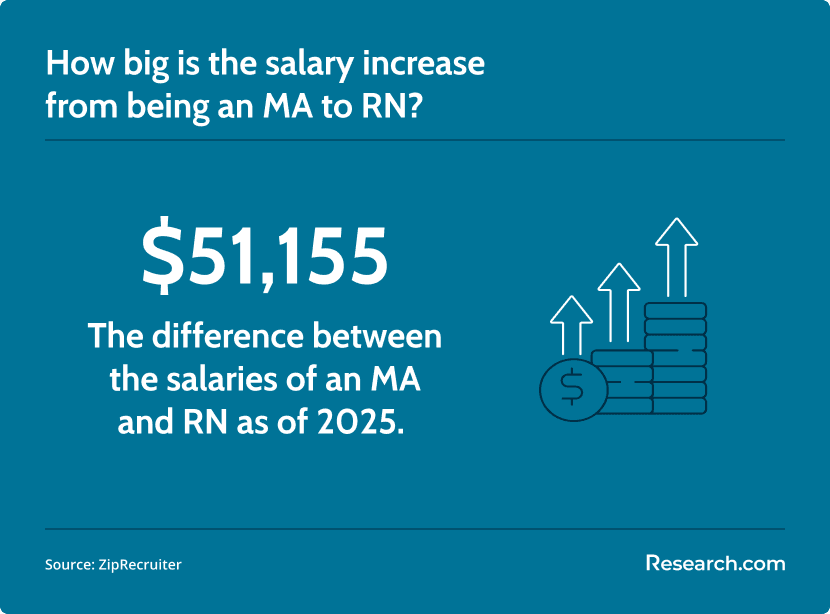
- Higher earning potential: Medical assistants earn an average of $41,370 per year, while registered nurses make approximately $92,525 annually, according to ZipRecruiter (n.d.).
- Expanded clinical scope: RNs perform assessments, develop care plans, administer medications, educate patients, coordinate care, and take on more complex responsibilities than medical assistants.
- More career mobility: RN licensure can lead to hospital roles, specialty nursing, care coordination, leadership, advanced practice preparation, and graduate nursing pathways.
- Flexible learning options: Many online nursing programs allow students to complete didactic coursework remotely while attending required labs and clinical rotations in person.
What can I expect from an online medical assistant to RN program?
An online medical assistant to RN pathway is best understood as a nursing degree program that accepts students with healthcare experience, not as a guaranteed shortcut from MA certification to RN licensure. Your medical assistant background can help with patient communication, vital signs, charting familiarity, and clinic workflow, but RN programs still require college-level science, nursing theory, clinical judgment training, and supervised practice.
| Program feature | What it usually means | What medical assistants should verify |
| Online coursework | Lectures, assignments, exams, care planning, and discussion activities may be delivered remotely. | Ask whether courses are asynchronous, live online, or a mix of both. |
| In-person clinicals | Students must complete supervised clinical practice in approved healthcare settings. | Confirm who arranges placements and whether clinical sites are available near you. |
| Skills labs or intensives | Programs may require campus visits or partner-site intensives for nursing skills and simulation. | Ask about travel, scheduling, fees, and required attendance dates before enrolling. |
| NCLEX-RN preparation | Pre-licensure programs should prepare graduates to sit for the NCLEX-RN after meeting state requirements. | Review the program’s NCLEX-RN pass rates and state board approval status. |
| Prerequisite review | Applicants often need anatomy, physiology, microbiology, math, English, and other general education courses. | Request a transcript evaluation before assuming prior credits will transfer. |
Expect a heavier academic and clinical workload than most medical assistant training programs. RN education focuses on clinical reasoning, pharmacology, pathophysiology, patient safety, evidence-based care, delegation, and legal responsibility. That shift matters because RNs carry a broader scope of practice and must meet state licensure standards.
Where can I work after completing an online medical assistant to RN pathway?
After graduating from a state-approved nursing program, passing the NCLEX-RN, and receiving RN licensure, you can pursue the same registered nursing roles as graduates of campus-based programs. Employers generally care about licensure, program quality, clinical readiness, and fit for the setting more than whether some coursework was delivered online.
- Hospitals: RNs work in medical-surgical units, emergency departments, intensive care, perioperative care, maternity units, and specialty floors.
- Outpatient clinics: Former medical assistants may find ambulatory care familiar because they already understand patient flow, scheduling pressures, and front-line communication.
- Home healthcare: RNs provide assessments, medication education, wound care, care coordination, and patient teaching in home-based settings.
- Long-term care and rehabilitation facilities: These workplaces rely on RNs for care planning, medication management, supervision, documentation, and coordination with providers.
- Schools and community health centers: RNs may focus on prevention, chronic condition support, health education, screenings, and access to care.
- Telehealth and care coordination: Experienced RNs may move into remote triage, patient navigation, chronic care management, or digital health support roles.
How much can I make with an online medical assistant to RN program?
The financial reason to move from medical assisting to registered nursing is clear: RN roles generally offer a much higher income ceiling. However, salary is never guaranteed. Actual earnings depend on state, city, employer type, shift differentials, specialty, union status, experience, and whether you work full time, part time, per diem, or travel assignments.
ZipRecruiter (n.d.) reports the following registered nurse salary figures:
| RN salary level | Annual amount | How to interpret it |
| Top earners | $137,500/year | This level is more common among experienced RNs, specialized nurses, leadership roles, or high-paying markets. |
| 75th percentile | $108,000/year | RNs in this range may work in high-demand regions, advanced specialty units, or roles with premium pay. |
| Average salary | $92,525/year | This figure reflects broad national RN earnings across many employers and practice settings. |
| 25th percentile | $70,000/year | Newer RNs, lower-cost labor markets, or less specialized positions may fall closer to this range. |
For comparison, medical assistants earn an average of $41,370 per year. When estimating ROI, compare your current income with likely starting RN wages in your local area, not only national averages.
- Universities Offering Online Medical Assistant to RN Pathways for 2027
- How long does it take to complete an online medical assistant to RN program?
- How does an online medical assistant to RN program compare to an on-campus program?
- What are the financial aid options for students enrolling in online medical assistant to RN programs?
- What are the prerequisites for enrolling in an online medical assistant to RN program?
- What courses are typically in an online medical assistant to RN program?
- Do RN to BSN programs have clinicals?
- What types of specializations are available in online medical assistant to RN programs?
- What advanced education opportunities can elevate my nursing career?
- What is the return on investment for an online medical assistant to RN program?
- How to choose the best online medical assistant to RN program?
- What career paths are available for graduates of an online medical assistant to RN program?
- What is the job market for graduates with an online medical assistant to RN program?
- How these programs support student success and career growth
- Questions to ask before enrolling
List of Universities Offering Online Medical Assistant to RN Programs for 2027
How to use this list
The schools below include online or hybrid nursing options that may be relevant to medical assistants depending on prior education, licensure status, state authorization, and prerequisites. Not every program listed is a direct MA-to-RN bridge. Some are pre-licensure programs, some are designed for current RNs, and some serve applicants with previous degrees or healthcare credentials. Always confirm whether a program leads to first-time RN licensure in your state before applying.
How do we rank schools?
Research.com evaluates programs with an emphasis on affordability, academic quality, flexibility, and student outcomes. Because nursing licensure is state-regulated, program approval, accreditation, clinical access, and NCLEX-RN preparation are especially important when comparing online options.
Our process uses information from sources such as the IPEDS database, Peterson’s database, the College Scorecard database, and the National Center for Education Statistics. To understand the evaluation framework in more detail, review our ranking methodology.
1. Weber State University
Weber State University offers an online Bachelor of Science in Nursing option that emphasizes holistic nursing practice, clinical reasoning, therapeutic concepts, management principles, and the use of research in patient care. The program is designed to strengthen professional nursing judgment and prepare graduates for broader responsibilities across healthcare settings.
- Program Length: 2-3 semesters
- Total Costs: $25,000-$66,000
- Required Credits to Graduate: Unspecified
- Accreditation: Northwest Commission on Colleges and Universities (NWCCU)
2. Grand Canyon University
Grand Canyon University offers nursing programs taught by faculty with experience in clinical care, healthcare management, leadership, and professional practice. Its BSN curriculum combines academic instruction with applied learning so students can build the nursing knowledge and practical skills expected in professional roles.
- Program Length: 5 weeks
- Total Costs: $40,800
- Required Credits to Graduate: 120 credits
- Accreditation: Higher Learning Commission (HLC)
3. John A. Logan College
John A. Logan College offers an Associate Degree Nursing pathway for licensed practical nurses who want to earn an associate degree in nursing and become eligible for the NCLEX-RN. The program builds on prior nursing education in communication, anatomy, physiology, pathophysiology, pharmacology, the nursing process, and fundamental nursing skills while aligning with professional expectations in Illinois.
- Program Length: 2 semesters
- Total Costs: $10,320
- Required Credits to Graduate: 64.5 credits
- Accreditation: Accreditation Commission for Education in Nursing (ACEN)
4. Herzing University
Herzing University offers an online Associate of Science in Nursing option in select states. The program includes online didactic coursework delivered in both live and on-demand formats, along with required clinical experiences and two in-person intensives at Herzing or partner locations. It is structured for eligible students without prior RN experience and may also offer flexible pathways for licensed practical nurses, paramedics, military medics, cardiovascular techs, and respiratory techs.
- Program Length: 24 months
- Total Costs: $66,600
- Required Credits to Graduate: 72 credits
- Accreditation: Higher Learning Commission (HLC)
5. Bellevue College
Bellevue College offers an ADN program that prepares students for entry-level RN practice. Graduates may become eligible to take the NCLEX-RN and apply for licensure through the Washington State Board of Nursing, provided they satisfy state requirements such as health disclosures and criminal background considerations.
- Program Length: 6 quarters
- Total Costs: $13,724-$13,994 (Resident), $25,854-$26,124 (Non-Resident)
- Required Credits to Graduate: Unspecified
- Accreditation: Northwest Commission on Colleges and Universities (NWCCU)
6. Cleveland State University
Cleveland State University offers an online Accelerated Bachelor of Science in Nursing for individuals who already hold a non-nursing bachelor’s or master’s degree. The program combines intensive coursework with integrated clinical placements and student support services to help career changers transition into professional nursing.
- Program Length: 16 months
- Total Costs: $21,196.80 + $8,708 in fees (In-State), $30,081.60 + $8,708 in fees (Out-of-State)
- Required Credits to Graduate: 69 credits
- Accreditation: Higher Learning Commission (HLC)
7. University of Central Florida
University of Central Florida offers an online BSN option focused on clinical practice, health promotion, leadership, and preparation for continued nursing education. The curriculum is intended to support both current professional goals and future graduate study.
- Program Length: 5 semesters
- Total Costs: $21,502.8
- Required Credits to Graduate: 120 credits
- Accreditation: Southern Association of Colleges and Schools Commission on Colleges (SACSCOC)
8. Texas A & M International University
Texas A&M International University offers an online RN-to-BSN program for registered nurses who want to expand their professional preparation. The curriculum focuses on nursing leadership, communication, ethics, quality improvement, conflict resolution, and critical thinking. Because this is an RN-to-BSN pathway, applicants should confirm the current RN licensure requirement before considering it as part of a long-term plan.
- Program Length: 12 months
- Total Costs: $8,995
- Required Credits to Graduate: 32 credits
- Accreditation: Southern Association of Colleges and Schools Commission on Colleges (SACSCOC)
9. Western Governors University
Western Governors University offers a Pre-Licensure BSN program for eligible students in select states, including Arkansas, Florida, Idaho, Indiana, and others. Students complete online coursework and progress through competency-based assessments while also completing seven in-person clinical rotations at partnered healthcare facilities with clinical coaches and preceptors.
- Program Length: 4 years
- Total Costs: $8,755 per 6 months
- Required Credits to Graduate: 90 credits
- Accreditation: Northwest Commission on Colleges and Universities (NWCCU)
10. University of Wisconsin - Madison
University of Wisconsin–Madison offers the BSN Home online program for students building on prior associate-degree nursing preparation. The program strengthens critical thinking, professional perspective, leadership readiness, and preparation for advanced study, including graduate nursing programs.
- Program Length: 18 to 30 months
- Total Costs: $10,848-$13,560
- Required Credits to Graduate: 24-30 credits
- Accreditation: Higher Learning Commission (HLC)
Key findings for medical assistants considering RN programs
- Medical assistants earn an average of $41,370 per year, while registered nurses make approximately $92,525 annually.
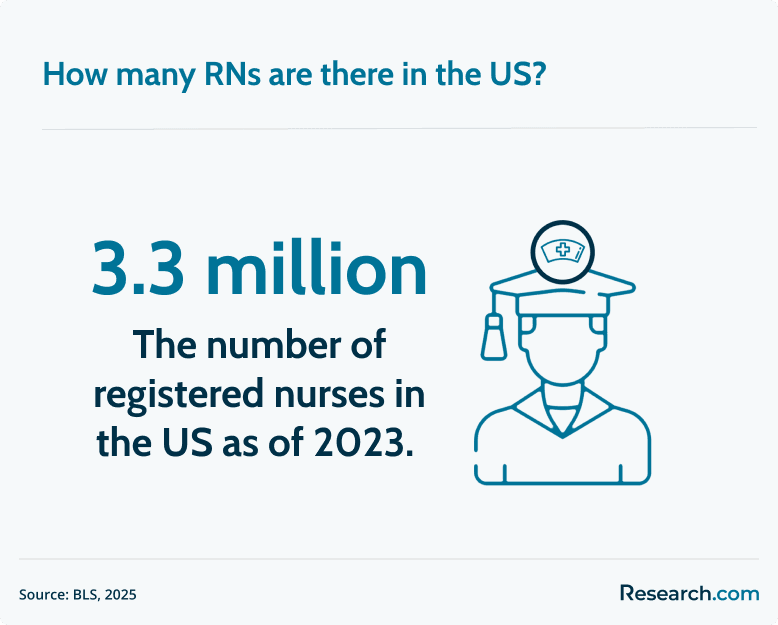
- There are over 3.3 million nurses in the United States as of 2023.
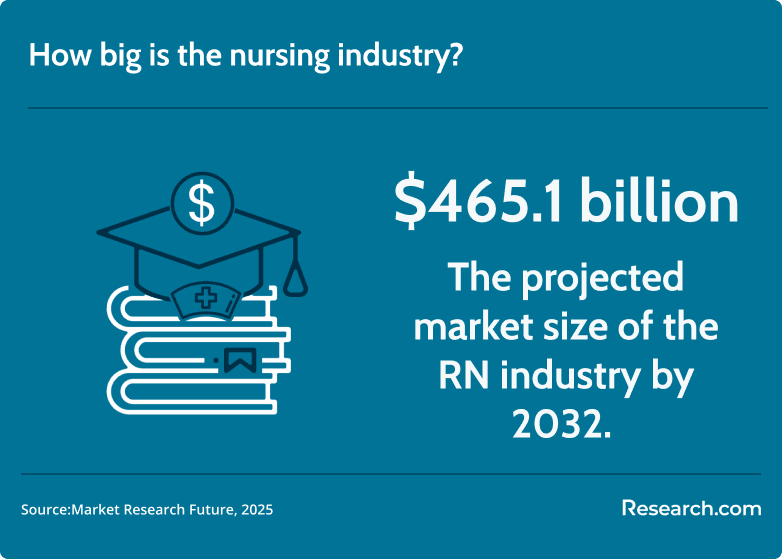
- The registered nursing industry is projected to grow from $339.55 billion in 2024 to $465.1 billion by 2032.
- Employment of registered nurses is expected to increase by 6% from 2023 to 2033, outpacing the average growth rate for all occupations.
- Over half of RNs—52%—have less than two years of experience, indicating continued demand for newly licensed nurses.
How long does it take to complete an online medical assistant to RN program?
The timeline depends on your prior college credits, whether you already have a degree, whether you hold a nursing license, and whether you attend full time or part time. Medical assistant experience alone does not automatically shorten a nursing program, but completed science and general education credits may reduce the time to graduation if they transfer.
Students starting without RN licensure may need up to 4 years in a traditional BSN pathway. Career changers with a non-nursing bachelor’s degree may consider accelerated BSN options, which can often be completed in 16–20 months. If you are comparing this route, Research.com also covers affordable online accelerated BSN programs for non nurses.
Licensed RNs pursuing a bachelor’s degree may finish an online RN-to-BSN program in up to 2 years, while part-time students may take around 24 months. For a deeper look at shorter completion options, review our guide to fast track RN to BSN online programs.
| Program Type | Typical Duration | Best fit |
| Traditional BSN (no prior RN license) | Up to 4 years | Students seeking a bachelor’s-level route to initial RN licensure |
| Accelerated Second-Degree BSN | 16–20 months | Career changers who already hold a non-nursing bachelor’s degree |
| Online RN to BSN | Up to 2 years | Licensed RNs who want to earn a bachelor’s degree |
| Online RN to BSN (Part-Time) | Around 24 months | Working RNs who need a lighter course load |
Source: Oklahoma City University (n.d.)
How does an online medical assistant to RN program compare to an on-campus program?
Online and campus-based RN pathways can lead to the same licensure goal when they are properly accredited, state-approved, and designed for NCLEX-RN eligibility. The difference is not whether you complete clinical training; both formats require it. The real difference is how coursework, labs, scheduling, faculty contact, and clinical coordination are handled.
| Factor | Online or hybrid RN pathway | On-campus RN pathway |
| Schedule | Often better for working medical assistants because lectures may be asynchronous or partly remote. | More fixed class, lab, and clinical schedules may require reducing work hours. |
| Clinical training | Still completed in person, usually through approved local or regional sites. | Often coordinated through established campus and hospital partnerships. |
| Skills practice | May require campus intensives, simulation weekends, or partner-site labs. | More routine access to on-campus labs and in-person faculty demonstrations. |
| Faculty access | Support may happen through video meetings, email, virtual office hours, and learning platforms. | Face-to-face access can be easier, especially during lab-heavy courses. |
| Networking | Students may need to be proactive with virtual study groups, clinical contacts, and career services. | Daily in-person contact can make peer support and local employer exposure easier. |
| Best for | Disciplined learners who need flexibility and can manage independent study. | Students who prefer structure, frequent in-person instruction, and campus resources. |
Before choosing a format, make sure you understand the degree type. An ADN, AAD, and AAS can differ by school and state, so reviewing ADN program vs AAD and AAS nursing degrees can help you avoid enrolling in a path that does not match your licensure or transfer goals.
What are the financial aid options for students enrolling in online medical assistant to RN programs?
Online nursing students may be eligible for federal aid, institutional aid, scholarships, grants, employer tuition assistance, and nursing workforce programs. The key is to compare total cost after aid, not just the advertised tuition. Nursing students should also budget for uniforms, background checks, immunizations, testing fees, lab supplies, technology, travel to clinicals, and NCLEX-RN costs.
- HRSA Nursing Scholarship Program: This federal option can provide support for nursing students who commit to service in critical shortage facilities after graduation.
- NURSE Corps Scholarship Program: This program supports eligible nursing students in exchange for service in underserved communities and may cover tuition, eligible fees, and living expenses.
- American Association of Colleges of Nursing (AACN) Scholarships: AACN provides scholarship opportunities through partnerships, including awards for students enrolled in AACN member schools.
- National Student Nurses’ Association (NSNA) Scholarships: NSNA scholarships range from $1,000 to $7,500 and may consider academic performance, financial need, and nursing student involvement.
- Employer tuition assistance: If you currently work as a medical assistant, ask your clinic, hospital, or health system whether it reimburses nursing prerequisites or RN degree coursework.
- Community college transfer strategy: Completing lower-cost prerequisites before entering a nursing program may reduce total cost, but only if the target school accepts the credits.
What are the prerequisites for enrolling in an online medical assistant to RN program?
Prerequisites vary by school and state, but most RN programs expect applicants to show readiness for rigorous science coursework, safe clinical participation, and professional nursing standards. The salary difference is one reason this pathway attracts medical assistants: according to ZipRecruiter, medical assistants earn an average of $41,370 per year, while registered nurses make approximately $92,525 annually.
- High school diploma or GED: Programs require proof that you meet basic college-entry requirements.
- College prerequisites: Common requirements include anatomy, physiology, microbiology, English composition, math, and general education coursework, often with a minimum grade requirement.
- Minimum GPA: Competitive ADN and BSN programs commonly evaluate cumulative and science GPAs, often expecting applicants to fall within stated minimum ranges.
- Healthcare experience: Medical assistant work may strengthen an application, but it usually does not replace nursing prerequisites or clinical hours.
- Entrance testing: Some schools require nursing entrance exams or placement assessments before admission.
- Background check and drug screening: Clinical partners typically require clearance before students can work with patients.
- CPR or BLS certification: Basic Life Support through an approved provider is commonly required before clinical rotations.
- Immunizations and health documentation: Students usually need TB testing, immunization records, health clearance, and proof of physical ability to participate safely in clinical settings.
If your long-term plan includes advanced nursing practice, a BSN can also position you for graduate nursing education later. Students who eventually want to become nurse practitioners may want to understand future options such as the cheapest online BSN to MSN programs.
What courses are typically in an online medical assistant to RN program?
RN coursework moves far beyond the task-based training common in medical assisting. You will learn to assess patients, connect symptoms to disease processes, administer medications safely, prioritize care, recognize deterioration, document nursing decisions, and collaborate with interprofessional teams.
| Course area | What you learn | Why it matters for future RNs |
| Physiology | How body systems function and respond to illness, injury, and treatment. | Supports clinical reasoning and accurate interpretation of patient changes. |
| Microbiology | Microorganisms, infection transmission, infection control, and prevention practices. | Prepares nurses to reduce healthcare-associated infection risks. |
| Pharmacology | Medication classes, actions, side effects, contraindications, and safe administration. | Medication safety is a major RN responsibility in many practice settings. |
| Foundations of Nursing Practice | Basic nursing care, the nursing process, documentation, hygiene, mobility, and patient safety. | Builds the practical and professional base for clinical rotations. |
| Pathophysiology | How disease alters normal body function and produces patient symptoms. | Helps RNs anticipate complications and plan appropriate interventions. |
| Health Assessment | Patient histories, physical assessments, vital signs, and clinical findings. | Assessment is central to nursing judgment and care planning. |
| Mental Health Nursing | Therapeutic communication, behavioral health conditions, crisis care, and psychiatric nursing concepts. | Supports safe, compassionate care for patients with mental health needs. Students interested in deeper behavioral health research can explore online PhD programs in psychology. |
Even when lectures are online, clinical skill development is hands-on. Expect supervised practice, simulation, lab checkoffs, and direct patient care requirements before graduation.
Do RN to BSN programs have clinicals?
Many RN-to-BSN programs include some form of practice-based learning, but these requirements often differ from pre-licensure clinical rotations. Because RN-to-BSN students are already licensed registered nurses, programs may use community health projects, leadership practicums, case studies, virtual simulation, quality improvement assignments, or limited field experiences rather than the full clinical sequence required for initial RN licensure.
If you are already an RN and want to compare programs with reduced or alternative clinical formats, review this guide on whether do RN to BSN programs have clinicals. If you are still a medical assistant seeking first-time RN licensure, do not assume an RN-to-BSN program will qualify you; those programs usually require an active RN license first.
What types of specializations are available in online medical assistant to RN programs?
Initial RN programs usually focus on generalist nursing preparation, not deep specialization. Specialization often happens through clinical placements, elective experiences, employer training, residency programs, certifications after licensure, or graduate education. With 3.3 million nurses in the US as of 2023 (BLS, 2025), building a focused area of expertise can help nurses differentiate themselves over time.
- Pediatric nursing: Focuses on infants, children, adolescents, development, family-centered care, and age-appropriate communication.
- Emergency nursing: Emphasizes rapid assessment, triage, trauma response, stabilization, and high-pressure decision-making. If this setting interests you, see our ER nurse career path guide.
- Psychiatric nursing: Involves assessment, therapeutic communication, crisis intervention, medication support, and care for patients with mental health conditions.
- Critical care nursing: Centers on patients with life-threatening conditions who need close monitoring, advanced interventions, and fast clinical judgment.
- Geriatric nursing: Focuses on older adults, chronic disease management, mobility, cognition, medication concerns, and quality of life. Nurses who later pursue adult-gerontology advanced practice may compare options such as the cheapest adult gerontology primary care NP graduate certificate programs online.
- Community health nursing: Addresses prevention, health education, screening, social determinants of health, and population-level care.
What advanced education opportunities can elevate my nursing career?
After becoming an RN, additional education can open doors to advanced clinical practice, leadership, teaching, research, informatics, and specialized patient care. The right next step depends on whether you want to remain in bedside care, move into management, teach future nurses, or become an advanced practice registered nurse.
Students who already know they want an advanced practice role may eventually compare options such as a direct admit nurse practitioner program. Before enrolling in any graduate or bridge pathway, verify accreditation, state authorization, clinical placement support, certification eligibility, and state licensure alignment.
What is the return on investment for an online medical assistant to RN program?
ROI depends on more than tuition. A low-cost program may still be expensive if it delays graduation, lacks local clinical placement support, requires frequent travel, or does not meet your state’s licensure rules. A higher-cost program may be reasonable if it has strong clinical partnerships, transparent outcomes, and a realistic schedule that lets you keep working.
| ROI factor | Why it matters | What to ask |
| Total program cost | Tuition is only one part of the expense. | What are the full costs, including fees, supplies, testing, travel, and clinical requirements? |
| Time to completion | Longer timelines can increase opportunity cost and delay RN earnings. | How long do students with my transfer credits usually take to graduate? |
| Ability to keep working | Working while enrolled can reduce debt but may slow progress. | Can I realistically work my current MA schedule while completing labs and clinicals? |
| Licensure eligibility | A program that does not qualify you for your state license can undermine ROI. | Does this program meet my state Board of Nursing requirements? |
| Long-term career path | RN licensure can lead to higher-level roles and graduate education. | Will this degree support future BSN, MSN, NP, or doctoral goals? |
For students considering advanced practice beyond the RN role, reviewing the best direct-entry NP programs for non-nurses can help clarify longer-term education and income planning.
How to choose the best online medical assistant to RN program?
The best program is not simply the cheapest, fastest, or highest ranked. It is the program that is approved for your state, fits your current credentials, provides accessible clinical training, prepares you for the NCLEX-RN, and supports your career plan without creating unnecessary debt or delays.
- Check institutional and nursing accreditation: Look for recognized institutional accreditation such as HLC, NWCCU, or SACSCOC and nursing-specific accreditation where applicable, such as ACEN.
- Verify state Board of Nursing approval: This is essential for pre-licensure programs. Do not rely only on marketing language.
- Confirm the program type: Make sure you are not applying to an RN-to-BSN program if you are not already licensed as an RN.
- Ask about clinical placement responsibility: Some schools arrange clinicals; others expect students to help secure sites. This can make or break an online program.
- Review NCLEX-RN pass rates: Strong pass rates can indicate solid preparation, though they should be considered alongside admission selectivity and student support.
- Compare total cost: Include tuition, fees, books, supplies, uniforms, background checks, immunizations, travel, and exam costs.
- Evaluate flexibility honestly: Online does not mean easy. Clinical days, labs, exams, and group work may still require fixed availability.
- Look for support services: Advising, tutoring, clinical coordination, exam preparation, and career services are especially important for working adults.
If you are still deciding between patient care careers, comparing respiratory therapy vs nursing degree programs can help you choose the path that best fits your interests, tolerance for stress, scope of practice preferences, and long-term goals.
Common mistakes to avoid
| Mistake | Why it can hurt you | Better approach |
| Assuming “online” means no campus or clinical attendance | Pre-licensure nursing requires in-person practice. | Get all lab, intensive, and clinical requirements in writing. |
| Choosing only by tuition | Hidden fees, travel, delayed graduation, or weak clinical support can raise the real cost. | Compare total cost and time to completion. |
| Ignoring state authorization | You may not be eligible for licensure where you live. | Contact your state Board of Nursing before enrolling. |
| Confusing MA-to-RN, LPN-to-RN, and RN-to-BSN pathways | Each pathway has different admission and licensure requirements. | Ask admissions to confirm exactly what credential the program leads to. |
| Overestimating transfer credits | Science courses may expire or fail to meet program standards. | Request an official transcript evaluation early. |
| Underestimating workload | Nursing coursework and clinical rotations are demanding. | Plan work hours, childcare, transportation, and study time before classes begin. |
What career paths are available for graduates of an online medical assistant to RN program?
After earning RN licensure, former medical assistants can pursue a wider range of roles than they had in clinic-based MA positions. The registered nursing industry is projected to grow from $339.55 billion in 2024 to $465.1 billion by 2032, reflecting broad demand for nursing services across healthcare settings.
- Staff registered nurse: Provides direct care in hospitals, clinics, long-term care facilities, surgical centers, and other settings.
- Occupational health nurse: Supports employee wellness, workplace safety, injury prevention, screenings, and compliance programs.
- Legal nurse consultant: Uses clinical knowledge to review records, interpret healthcare issues, and assist legal teams.
- Nursing supervisor: Oversees nursing staff, patient care operations, scheduling, quality standards, and policy compliance.
- Research nurse: Supports clinical trials, patient safety, study coordination, and data collection. Nurses interested in research-intensive careers may later compare affordable online BSN to PhD programs.
- Nurse midwife: Provides care related to pregnancy, childbirth, postpartum health, and reproductive wellness after completing the required advanced education and credentials.
- Paramedic: Although this is not a traditional RN role, some nurses work in emergency response, transport, or EMS leadership contexts.
- School nurse: Manages student health needs, chronic conditions, medication support, health education, and emergency response in school settings.
- Telehealth nurse: Provides remote triage, education, follow-up, and care coordination using digital platforms.
RNs who want to move into advanced primary care may later explore options such as a 12-month FNP program online, but these pathways generally require RN licensure and graduate-level preparation.
What is the job market for graduates with an online medical assistant to RN program?
According to the US Bureau of Labor Statistics (2025), employment of registered nurses is projected to increase by 6% from 2023 to 2033, which is faster than the average growth rate for all occupations. The BLS also reports approximately 194,500 job openings each year, reflecting both demand for healthcare services and replacement needs as nurses retire or move into other careers.
Workforce turnover also creates openings for new graduates. Registered nurse tenure data shows that 52% of RNs have less than two years of experience, while only 11% have been practicing for more than a decade. For medical assistants entering nursing, this suggests that employers continue to bring new nurses into the field, though competitiveness will still vary by region, specialty, and employer.
How Do These Programs Enhance Student Success and Career Advancement?
Strong online nursing programs do more than post lectures online. They help students manage prerequisites, prepare for clinical rotations, practice NCLEX-RN-style thinking, connect with faculty, and transition into employment. For medical assistants, that support can be especially valuable because the shift to RN practice involves a major increase in clinical accountability.
- Academic advising: Helps students sequence prerequisites, nursing courses, clinical requirements, and graduation milestones.
- Tutoring and exam support: Supports success in difficult subjects such as pharmacology, pathophysiology, and health assessment.
- Simulation and skills practice: Builds confidence before students enter direct patient care environments.
- Career services: Can assist with resumes, interview preparation, employer connections, and RN residency applications.
- Pathways to further education: Some students continue into BSN completion, MSN, NP, or doctoral pathways after licensure. If cost is a major concern, compare affordable online BSN programs as part of your long-term plan.
Questions to ask before enrolling
- Does this program lead to first-time RN licensure, or is it only for people who are already RNs?
- Is the program approved by the Board of Nursing in the state where I plan to practice?
- Who arranges clinical placements, and are placements available near my home?
- How many campus visits, labs, simulations, or intensives are required?
- What prerequisites do I still need, and will my previous credits transfer?
- What are the program’s NCLEX-RN pass rates and graduation outcomes?
- What is the total cost after fees, supplies, travel, testing, and lost work time?
- Can I realistically keep working as a medical assistant while enrolled?
- What happens if I fail a course, cannot secure a clinical placement, or need to pause enrollment?
- Will this degree support future BSN, MSN, NP, or leadership goals?
References:
- American Association of Colleges of Nursing. (n.d.). Scholarships & financial aid. AACN scholarship and financial aid resources. Retrieved 2 June 2025.
- Bellevue College. (n.d.). Associate degree in nursing (ADN). Bellevue College nursing ADN information. Retrieved 2 June 2025.
- Cleveland State University. (n.d.). Online accelerated BSN program. Cleveland State University online ABSN program. Retrieved 2 June 2025.
- Elmhurst University. (n.d.). Seven things to consider when picking an online nursing program. Elmhurst University online nursing program advice. Retrieved 2 June 2025.
- Grand Canyon University. (n.d.). Online nursing degrees. Grand Canyon University online nursing degrees. Retrieved 2 June 2025.
- Health Resources and Services Administration. (n.d.). Nurse Corps scholarship program. HRSA Nurse Corps Scholarship Program. Retrieved 2 June 2025.
- Herzing University. (n.d.). ASN - Associate degree in nursing: Online option. Herzing University online ASN option. Retrieved 2 June 2025.
- John A. Logan College. (n.d.). Nursing ADN full-time program (AAS degree). John A. Logan College ADN program. Retrieved 2 June 2025.
- Market Research Future. (n.d.). Registered nurses market research report – Forecast to 2032. Registered nurses market forecast. Retrieved 2 June 2025.
- Oklahoma City University. (n.d.). How long does it take to get a BSN? Oklahoma City University BSN timeline guide. Retrieved 2 June 2025.
- Texas A&M International University. (n.d.). RN to BSN online. Texas A&M International University RN to BSN online. Retrieved 2 June 2025.
- Weber State University. (n.d.). RN to BSN. Weber State University RN to BSN. Retrieved 2 June 2025.
- Western Governors University. (n.d.). Prelicensure BSN. Western Governors University prelicensure BSN. Retrieved 2 June 2025.
- University of Central Florida. (n.d.). Nursing, B.S. (online). University of Central Florida online BSN. Retrieved 2 June 2025.
- University of Wisconsin–Madison. (n.d.). BSN Home: Online. University of Wisconsin–Madison BSN Home online. Retrieved 2 June 2025.
- US Bureau of Labor Statistics. (2025). Registered nurses. BLS registered nurses occupational outlook. Retrieved 2 June 2025.
- Zippia. (2025). Registered nurse demographics and statistics. Zippia registered nurse demographics. Retrieved 2 June 2025.
- ZipRecruiter. (n.d.). Medical assistant salary. ZipRecruiter medical assistant salary data. Retrieved 2 June 2025.
- ZipRecruiter. (n.d.). Registered nurse salary. ZipRecruiter registered nurse salary data. Retrieved 2 June 2025.
Key Insights
- There is usually no universal “medical assistant to RN” bridge. Most MAs become RNs by entering an ADN, ASN, pre-licensure BSN, or accelerated BSN pathway after meeting prerequisites.
- Online RN pathways are almost always hybrid for pre-licensure students because labs, simulations, and supervised clinical rotations must be completed in person.
- The most important enrollment checks are state Board of Nursing approval, accreditation, NCLEX-RN eligibility, clinical placement support, transfer credit policy, and total cost.
- RN licensure can significantly increase earning potential, but salary outcomes depend on location, specialty, experience, employer, and schedule.
- Do not confuse RN-to-BSN programs with MA-to-RN pathways. RN-to-BSN programs are typically for nurses who already hold RN licensure.
- The best program is the one that fits your current credentials, your state’s licensure rules, your ability to attend clinicals, and your long-term nursing goals.
Other Things You Need to Know About Pursuing an Online Medical Assistant to RN Program
Yes. Most bridge programs require prerequisite anatomy and physiology, microbiology, and basic algebra or statistics before admission. Many also require a minimum GPA of 2.5 to 3.0, a current CNA or MA license in some states, and proof of CPR certification.
To verify accreditation, check the program's status with recognized accrediting bodies such as the Accreditation Commission for Education in Nursing (ACEN) or the Commission on Collegiate Nursing Education (CCNE). Look for schools that are listed on the U.S. Department of Education's database of accredited postsecondary institutions.