
2027 Best Online Certified Nursing Assistant (CNA) Programs

Co-Founder and Chief Data Scientist
With over half of registered nurses now over 50 and nearing retirement, the need for new healthcare professionals is more critical than ever. This opens up a major opportunity, but for many people exploring a new career or balancing life's demands, the traditional path into healthcare feels too rigid. An online certified nursing assistant (CNA) program offers a flexible, practical entry point to test your fit for the field and launch a stable career without putting your life on hold.
This is more than just a list of programs. The career planning experts who created this guide have over 10 years of experience helping people like you find their footing. We've laid out a clear path to help you make a confident, informed decision.
What are the benefits of getting an online certified nursing assistant program?
- You gain a direct path to providing essential, hands-on care for patients in stable environments like hospitals, nursing facilities, and home healthcare.
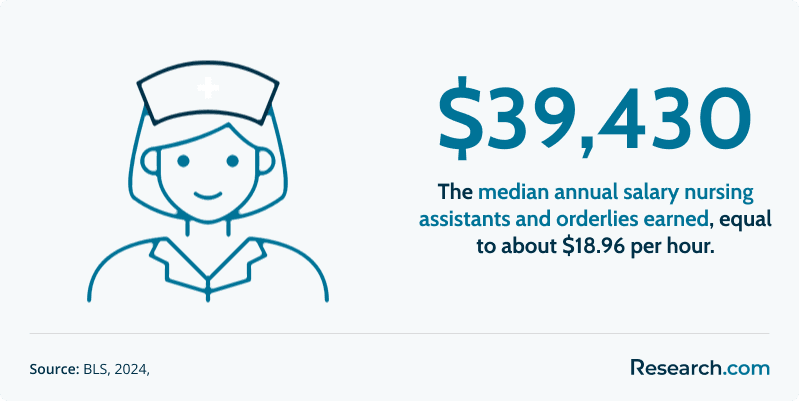
- Graduates can expect to earn a median salary of around $39,430 per year, providing a solid return on a quick and affordable training program.
- The online format offers the flexibility to complete your coursework around your current job or family commitments, making a career change more manageable.
What can I expect from an online certified nursing assistant program?
You can expect a program that blends flexible online learning with essential hands-on training. All your core coursework, from patient safety to anatomy, is completed online at a pace that fits your schedule. However, this is not a fully remote program. You will be required to complete a set number of clinical hours in person at a local healthcare facility, which is where you'll translate theory into real-world skills.
Being a CNA is physically and emotionally demanding work. You will be on your feet for long hours, assisting patients with intimate daily needs. The work requires deep compassion, patience, and resilience. While challenging, it is also one of the most direct ways to make a tangible, positive impact on people's lives every single day.
Where can I work with an online certified nursing assistant program?
Once you are certified, you can work in a variety of healthcare environments. The most common setting is in nursing and residential care facilities, where you'll build long-term relationships with residents who depend on your daily support.
Hospitals are another major employer. There, the environment is often faster-paced, and you'll work as a vital part of a larger care team, assisting patients with short-term needs. You can also find roles in assisted living communities or with home health agencies, which offer more one-on-one patient interaction. This variety allows you to find a workplace that truly fits your personality and career goals.
How much can I make with an online certified nursing assistant program?
As a certified nursing assistant, you can expect to earn a median annual salary of around $39,430. Your specific pay will depend on your location, the type of facility you work in, and your experience level. This is a solid starting wage that provides a stable financial base as you enter the healthcare field. It's an excellent return on a short-term educational investment and serves as a strong launchpad for a career with significant opportunities for financial and professional growth.
- List of the Best Online Certified Nursing Assistant Programs for 2027 List of Programs
- How long does it take to complete an online CNA program? Completion Time
- What is the average cost of an online CNA program? Program Cost
- What are the financial aid options for students enrolling in an online CNA program? Financial Aid
- What are the prerequisites for enrolling in an online CNA program? What are the prerequisites for enrolling in an online CNA program?
- What courses are typically in an online CNA program? What courses are typically in an online CNA program?
- What types of specializations are available in an online CNA program? Specializations
- How to Choose the Best Online CNA Program How to Choose the Best Online CNA Program
- What career paths are available for graduates of an online CNA program? Career Paths
- Can an online CNA program be a stepping stone to advanced nursing education? Can an online CNA program be a stepping stone to advanced nursing education?
- What is the job market for graduates of an online CNA program? Job Market
- Are online CNA programs accredited and compliant with healthcare standards? Are online CNA programs accredited and compliant with healthcare standards?
Best Online Certified Nursing Assistant Programs for 2027
Choosing an online certified nursing assistant program is not the same as choosing a fully online academic course. CNA training can move lectures, readings, quizzes, and some skills demonstrations online, but every legitimate path still requires in-person lab practice and supervised clinical hours. That matters because state approval, local clinical placement, exam eligibility, and total cost determine whether the program actually helps you become certified.
This guide is for students who want a fast, lower-cost entry into healthcare, working adults who need a flexible schedule, and future nursing students who want hands-on patient care experience before pursuing an LPN, ADN, BSN, or accelerated nursing pathway. You will learn which online and hybrid CNA programs stand out, how long training takes, what it costs, what financial aid may be available, how certification works, and how to avoid choosing a program that does not meet your state’s requirements.
Quick answer: What is the best online CNA program?
The best online CNA program is a state-approved hybrid program that combines online theory with required in-person labs and clinical training. For most students, the right choice is not simply the cheapest or fastest option; it is the program approved in the state where they plan to certify, close enough for clinical attendance, transparent about fees, and aligned with the state nurse aide exam.
Most online CNA programs take four to twelve weeks, although some listed programs run as short as 2 weeks or as long as 1 semester. Costs in this guide range from Free (Grant-funded) to $2,300, based on the program details provided by each school or training provider.
How to use this ranking
Use this list as a starting point, then verify three details before enrolling: whether the program is approved for your state’s CNA exam, where the in-person clinical hours take place, and whether tuition includes supplies, testing, background checks, immunizations, and registry fees. CNA certification rules are state-specific, so a program that works well for one student may not be valid or practical for another.
How do we rank schools?
Research.com evaluates programs with an emphasis on transparency, affordability, academic quality, and student decision-making value. Because paying for training can affect both short-term finances and long-term career options, our ranking approach draws from established education datasets and institutional information rather than promotional claims.
Data sources used in our broader school evaluation process include the IPEDS database, Peterson's database, the College Scorecard database, and The National Center for Education Statistics. To understand how Research.com evaluates institutions and programs, review our ranking methodology.
| Rank | Program | Format and Best Fit | Length | Cost | Accreditation or Approval Listed |
| 1 | Pratt Community College - Certified Nurse Aide | Hybrid option for students who want online theory with required campus labs and local clinical practice | 1 semester | $76 (In-state); $92 (Out-of-state) per credit | Higher Learning Commission (HLC) |
| 2 | Johnson County Community College - Certified Nurse Aide | Short, skills-focused Kansas CNA preparation with classroom and hands-on components | 4 weeks | $121 (In-county); $237 (Out-of-state/International) per credit | Higher Learning Commission (HLC) |
| 3 | Northern Essex Community College - Certified Nurse Assistant/Certified Nurse Aide | Accelerated hybrid program for students preparing for the Massachusetts Nurse Aide Certification Exam | 4 weeks | Free (Grant-funded) | New England Commission of Higher Education (NECHE) |
| 4 | California Preparatory College Program - Certified Nurse Assistant | State-approved online instruction with live classes, exam preparation, and clinical training | 12 weeks | $2,300 total tuition | Western Association of Schools and Colleges Accrediting Commission for Community and Junior Colleges (WASC-ACCJC) |
| 5 | Minnesota State College Southeast - Nursing Assistant Training | Fast-paced online and practical training option for Minnesota Nurse Aide Registry preparation | 2 weeks | ~$875 total tuition | Higher Learning Commission (HLC) |
| 6 | South Denver School of Nursing Arts - Certified Nursing Assistant | Four-week virtual class schedule with required labs, clinicals, CPR, and first aid | 4 weeks | $1,800 total tuition | Colorado State Board of Nursing |
| 7 | Heart to Heart Healthcare Training - Certified Nurse Assistant | 100-hour state-approved program combining online coursework with lab and clinical experience | 2 weeks | $850 total tuition | Texas Workforce Commission |
| 8 | Legacy Career Institute - Certified Nurse Aide | Texas-focused training for students seeking a direct route toward nurse aide licensure | 2-6 weeks | $950 total tuition | Texas Department of Health and Human Services |
| 9 | Rogue Community College - Nursing Assistant Training | Hybrid, state-approved program with self-paced online coursework and in-person lab and clinical training | 4-5 weeks | $1,750 total tuition | Northwest Commission on Colleges and Universities (NWCCU) |
| 10 | Arise Health Training Institute - Nurse Aide 1 Refresher-Hybrid Program | Short refresher option for people already on the Nurse Aide 1 Registry or with equivalent training | 2 weeks | $480 total tuition | Offers a state-approved Nurse Aide 1 training program |
1. Pratt Community College - Certified Nurse Aide
Pratt Community College offers a hybrid Certified Nurse Aide course that lets students complete part of the classroom content online while still attending required labs and clinical practice in person. The program is built for students preparing to assist patients in hospitals, nursing facilities, and other care settings.
- Program Length: 1 semester
- Required Credits to Graduate: 96
- Cost per Credit: $76 (In-state); $92 (Out-of-state)
- Accreditation: Higher Learning Commission (HLC)
2. Johnson County Community College - Certified Nurse Aide
Johnson County Community College provides a compact CNA course designed around the Kansas CNA test. Students learn patient safety, communication, vital signs, and basic care skills through a combination of instruction and practical training.
- Program Length: 4 weeks
- Required Credits to Graduate: 96
- Cost per Credit: $121 (In-county); $237 (Out-of-state/International)
- Accreditation: Higher Learning Commission (HLC)
3. Northern Essex Community College - Certified Nurse Assistant/Certified Nurse Aide
Northern Essex Community College runs an accelerated hybrid CNA option for students preparing for the Massachusetts Nurse Aide Certification Exam. The program uses online learning, virtual meetings, and in-person clinical experience to cover personal care, safety, and communication skills.
- Program Length: 4 weeks
- Required Credits to Graduate: 90
- Total Tuition: Free (Grant-funded)
- Accreditation: New England Commission of Higher Education (NECHE)
4. California Preparatory College Program - Certified Nurse Assistant
California Preparatory College Program delivers a state-approved CNA program with live online instruction led by registered nurses. Students complete 12 weeks of evening and Sunday classes, then move into a two-week exam preparation course and clinical training.
- Program Length: 12 weeks
- Required Credits to Graduate: 162
- Total Tuition: $2,300
- Accreditation: Western Association of Schools and Colleges Accrediting Commission for Community and Junior Colleges (WASC-ACCJC)
5. Minnesota State College Southeast - Nursing Assistant Training
Minnesota State College Southeast offers a 3-credit nursing assistant course intended to prepare students for placement on the Minnesota Nurse Aide Registry. The training combines online classwork with supervised practical learning focused on safe, competent patient care.
- Program Length: 2 weeks
- Required Credits to Graduate: 3
- Total Tuition: ~$875
- Accreditation: Higher Learning Commission (HLC)
6. South Denver School of Nursing Arts - Certified Nursing Assistant
South Denver School of Nursing Arts offers a four-week CNA program with virtual morning or evening classes plus required in-person labs and clinicals. The curriculum includes patient quality-of-life skills along with CPR and first aid.
- Program Length: 4 weeks
- Total Tuition: $1,800
- Accreditation: Colorado State Board of Nursing
7. Heart to Heart Healthcare Training - Certified Nurse Assistant
Heart to Heart Healthcare Training provides a 100-hour CNA program that pairs online coursework with laboratory and clinical training. The state-approved curriculum is structured around the core competencies students need for entry-level nurse aide work.
- Program Length: 2 weeks
- Required Credits to Graduate: 100
- Total Tuition: $850
- Accreditation: Texas Workforce Commission
8. Legacy Career Institute - Certified Nurse Aide
Legacy Career Institute offers a Texas nurse aide training route focused on the day-to-day responsibilities of CNAs. Students prepare to monitor patients, support care plans, and work as part of a larger healthcare team.
- Program Length: 2-6 weeks
- Total Tuition: $950
- Accreditation: Texas Department of Health and Human Services
9. Rogue Community College - Nursing Assistant Training
Rogue Community College provides a hybrid, state-approved nursing assistant program with self-paced online coursework, in-person lab training, and supervised clinical experience. Topics include patient care, infection control, safety, and preparation for Oregon state certification.
- Program Length: 4-5 weeks
- Required Credits to Graduate: 105
- Total Tuition: $1,750
- Accreditation: Northwest Commission on Colleges and Universities (NWCCU)
10. Arise Health Training Institute - Nurse Aide 1 Refresher-Hybrid Program
Arise Health Training Institute offers a two-week hybrid refresher course for people who are already listed on the Nurse Aide 1 Registry or who have comparable prior training. The structure includes one week online and one week onsite for rapid skills renewal.
- Program Length: 2 weeks
- Total Tuition: $480
- Accreditation: Offers a state-approved Nurse Aide 1 training program
How long does it take to complete an online CNA program?
Most online or hybrid CNA programs can be completed in four to twelve weeks, though the programs in this guide show that some options are shorter and some extend to 1 semester. The online portion usually covers theory, terminology, patient rights, infection control, and basic care principles. The required hands-on portion must be completed in person.
The biggest scheduling advantage is that online coursework can be easier to fit around work, caregiving, or school obligations. However, clinical hours are scheduled at specific times and locations, so students should confirm the clinical calendar before paying a deposit. CNA training is much shorter than many allied health programs; for comparison, students considering another administrative healthcare path may ask how long medical billing and coding school takes before choosing between patient care and revenue-cycle work.
| Program Pace | Typical Student | Main Advantage | Main Risk |
| 2-week program | Student with open availability and strong study habits | Fastest route to training completion | Little room to miss class, labs, or clinical time |
| 4-5 week program | Student balancing training with part-time work or family responsibilities | Short timeline with slightly more breathing room | Clinical scheduling may still be intense |
| 12-week program | Student who prefers a steadier pace or evening schedule | More time to absorb material and prepare for the exam | Longer delay before entering the workforce |
| 1 semester | Student who wants a college-based structure | More traditional academic pacing and campus support | May take longer than private or workforce training options |
How does an online CNA program compare to an on-campus program?
The core difference is how the classroom content is delivered. Online CNA programs move theory instruction to a learning platform or virtual class, while on-campus programs hold lectures and labs in person. Both paths still require hands-on skills practice and supervised clinical experience because CNA work involves direct patient care.
Online CNA programs
An online CNA program is usually best described as hybrid. Students may complete lessons on anatomy basics, patient safety, infection control, ethics, and communication online, then attend labs and clinical rotations at scheduled locations. This option works best for disciplined learners who need flexibility but can still travel for required in-person training.
On-campus CNA programs
An on-campus CNA program gives students a fixed schedule, face-to-face instruction, immediate instructor feedback, and regular interaction with classmates. It may be a better fit for students who learn best through structure, repetition, and direct supervision. The trade-off is less scheduling flexibility.
| Factor | Online or Hybrid CNA | On-Campus CNA |
| Best for | Students who need flexible theory coursework | Students who want a set classroom schedule |
| Clinical training | Still required in person | Still required in person |
| Instructor access | Often through email, virtual sessions, or online office hours | Usually available during class, lab, or campus hours |
| Learning style | Requires self-management and reliable internet access | Offers more direct structure and classroom accountability |
| Key question to ask | Where and when are labs and clinicals held? | Can I attend the required class schedule consistently? |
What is the average cost of an online CNA program?
Online CNA programs are often among the lower-cost ways to begin a healthcare career. Based on the programs listed here, total tuition ranges from Free (Grant-funded) to $2,300, while some colleges charge by credit. Students should look beyond the advertised tuition because testing fees, uniforms, books, background checks, health screenings, immunizations, CPR certification, and state registry costs may be billed separately.
The short training timeline can make CNA certification financially attractive compared with longer nursing degrees. Graduates can earn a median pay of around $39,430 per year, while average in-state tuition alone for a traditional degree can be about $17,674, with some programs costing more. That does not mean a CNA certificate guarantees a specific salary, but it can provide a lower-cost way to enter patient care and decide whether advanced nursing education is worth pursuing.
| Cost Item | Why It Matters | Question to Ask Before Enrolling |
| Tuition | This is the base program price, but it may not include all required expenses. | Is the listed price all-inclusive? |
| Books and online materials | Some programs charge separately for digital platforms or textbooks. | Are learning materials included in tuition? |
| Uniforms and supplies | Clinical sites may require scrubs, shoes, badges, and equipment. | What exactly do I need to purchase before clinicals? |
| Background check and health records | Clinical placement usually requires screening and immunization documentation. | Who pays for the background check, physical exam, and vaccines? |
| Certification exam and registry fees | Training completion and state certification are not always the same step. | Are exam fees included, or do I pay them separately? |
What financial aid options are available for online CNA students?
Financial help may be available, but eligibility depends on the school, program length, funding source, and whether the training is credit-bearing. Before assuming you must pay the full cost yourself, ask the program’s financial aid or workforce office which funding sources apply to CNA students.
- Federal aid: Completing the Free Application for Federal Student Aid (FAFSA) can help determine whether you qualify for aid such as the Pell Grant, which does not have to be repaid.
- State workforce funding: Some states fund short-term healthcare training for occupations with local demand, including CNA roles.
- Private scholarships: Healthcare employers, community foundations, nonprofit groups, and local organizations may offer awards for students entering nursing or allied health.
- School-based aid: Community colleges and training providers may offer grants, payment plans, or limited scholarships directly through the institution.
- Employer sponsorship or reimbursement: Hospitals, long-term care facilities, and home health agencies may help pay for CNA training, especially when they need entry-level care staff.
What are the prerequisites for enrolling in an online CNA program?
CNA admission requirements are usually more accessible than nursing degree admissions, but they are still strict because students will work with vulnerable patients. Requirements vary by state and provider, so confirm the exact checklist before registering.
- High school diploma or GED: Programs commonly ask for proof that you completed high school or an equivalent credential.
- Minimum age: Many state-approved programs require students to be at least 18 years old when they enroll.
- Criminal background check: A background screening is typically required before clinical placement and may affect certification eligibility.
- Health screening: Students may need a recent physical exam showing they can meet the physical demands of patient care.
- Immunization records: Clinical sites often require current immunizations, including MMR and Hepatitis B.
What courses are typically included in an online CNA program?
CNA coursework gives students the knowledge they need before working with patients in labs and clinical settings. Although course names differ, state-approved programs generally cover the same core areas because graduates must be ready for the certification exam and entry-level care responsibilities.
- Patient care fundamentals: Students learn how to assist with bathing, dressing, feeding, toileting, positioning, transferring, and mobility.
- Anatomy and physiology: This introduces basic body systems so students can understand common patient conditions and communicate observations accurately.
- Infection control: Training covers hand hygiene, personal protective equipment, exposure prevention, and procedures that reduce the spread of illness.
- Safety and emergency procedures: Students learn how to prevent falls, respond to urgent situations, and maintain a safe care environment.
- Medical ethics and legal responsibilities: Coursework explains patient rights, privacy, confidentiality, documentation expectations, and the limits of the CNA role.
What types of specializations are available after CNA training?
Entry-level CNA programs usually do not award formal specializations. Instead, graduates build experience in different care environments and may develop a focus through employment, continuing education, or additional certifications. The work setting you choose can shape your future healthcare path.
- Geriatric care: CNAs support older adults with mobility, hygiene, meals, chronic condition monitoring, and daily living needs, often in nursing homes or assisted living facilities.
- Hospice and palliative care: This setting centers on comfort, dignity, symptom support, and compassionate communication with patients and families.
- Pediatric care: CNAs who work with children need patience, family-centered communication skills, and comfort in clinics or pediatric care environments.
- Hospital acute care: CNAs in hospitals assist nurses in fast-moving units where patients may have urgent or changing medical needs.
- Home health care: This path often involves one-on-one support in a client’s home and may require more independence and strong professional boundaries.
- Rehabilitation care: CNAs help patients recovering from surgery, injury, or illness regain mobility, function, and confidence.
These settings can also help you decide whether to remain in direct care or move toward another healthcare field. For example, exposure to electronic health records, patient data, and clinical documentation may lead some workers to explore whether health informatics is a good career for their long-term goals.
How to choose the best online CNA program
The best online CNA program is the one that qualifies you for certification in your state, fits your schedule, and gives you enough hands-on preparation to feel safe and competent with patients. Do not choose based on speed alone. A very short program can be a good option, but only if you can attend every required lab and clinical session.
Checklist before you enroll
- Confirm state approval: Ask whether the program is approved by the state agency that oversees nurse aide training where you plan to certify.
- Verify clinical placement: Find out the clinical site, schedule, transportation expectations, dress code, and attendance rules.
- Ask about certification pass rates: Request the program’s first-time pass rate for the state CNA exam if available.
- Review total costs: Get a written list of tuition, fees, books, supplies, uniforms, testing, background checks, and health requirements.
- Evaluate instructor access: Online students need clear ways to ask questions, receive feedback, and get help before clinicals.
- Check graduate support: Ask whether the school helps with exam registration, resume preparation, employer connections, or job leads.
| If You Need... | Look For... | Avoid... |
| The fastest path to work | A state-approved 2-week or 4-week program with confirmed clinical dates | Programs that are fast but vague about clinical placement |
| The lowest upfront cost | Grant-funded options, workforce training funds, employer sponsorship, or payment plans | Comparing only tuition while ignoring required fees |
| A future nursing pathway | A community college or recognized provider with strong documentation and advising | Training that cannot clearly verify completion or state approval |
| Maximum schedule flexibility | Online theory with evening, weekend, or multiple lab options | Programs with clinical times you cannot realistically attend |
CNA work is hands-on and physically active. If you prefer scheduling, patient records, billing, front-office communication, or administrative workflows, you may want to compare this path with guides on how to become a medical administrative assistant before committing to direct patient care.
What career paths are available after an online CNA program?
After completing a state-approved CNA program and meeting certification requirements, graduates can pursue entry-level patient care roles in hospitals, long-term care facilities, rehabilitation centers, hospice organizations, and home health agencies. The credential can also serve as a practical first step toward nursing school or another healthcare career.
| Career Path | Typical Work Setting | Common Responsibilities | Median Salary |
| Hospital Nursing Assistant | Hospitals and acute care units | Take vital signs, help patients move safely, assist nurses, and support patient comfort | $39,430 per year |
| Long-Term Care CNA | Nursing homes and residential care facilities | Assist residents with bathing, dressing, eating, mobility, and daily routines | $39,430 per year |
| Home Health Aide | Private homes and home health agencies | Provide one-on-one support, companionship, daily care assistance, and supervised care tasks | $39,430 per year |
| Rehabilitation Center CNA | Rehabilitation hospitals and recovery centers | Support patients recovering from illness, surgery, or injury as they rebuild independence | $39,430 per year |
| Hospice and Palliative Care Assistant | Hospice programs, homes, and care facilities | Provide comfort-focused care, emotional support, and help with daily needs | $39,430 per year |
1. Hospital Nursing Assistant
Hospital nursing assistants work with nurses and other clinicians in a busy care environment. They may take vital signs, help patients reposition or walk, answer call lights, and report changes in a patient’s condition.
Median Salary: $39,430 per year
2. Long-Term Care CNA
Long-term care CNAs support residents in nursing homes and residential facilities. The role often involves close relationships with residents because CNAs assist with daily routines and observe changes over time.
Median Salary: $39,430 per year
3. Home Health Aide
Home health aides provide care in a client’s home. This role can offer more one-on-one interaction and independence, but it also requires reliability, communication, and clear boundaries when working outside a facility.
Median Salary: $39,430 per year
4. Rehabilitation Center CNA
Rehabilitation CNAs help patients regain function after surgery, injury, or illness. Students interested in broader public health and community-based support may also compare this route with guidance on how to become a community health worker.
Median Salary: $39,430 per year
5. Hospice and Palliative Care Assistant
Hospice and palliative care assistants focus on comfort, dignity, and support for people with serious or terminal illness. The work can be emotionally demanding, but it is meaningful for CNAs who value compassionate, relationship-centered care.
Median Salary: $39,430 per year
Can an online CNA program help you advance into nursing?
Yes. CNA training can be a practical first step toward advanced nursing education because it gives students direct exposure to patient care, medical teamwork, documentation, and clinical environments. Some students use CNA experience to strengthen future applications to LPN, ADN, BSN, or accelerated BSN programs.
A CNA certificate does not replace nursing prerequisites, nursing school admission requirements, or state licensing exams. However, it can help you confirm whether you enjoy bedside care before investing in a longer and more expensive nursing pathway.
What is the job market for CNA graduates?
The job market for nursing assistants is steady. The U.S. Bureau of Labor Statistics projects nursing assistant employment to grow by 4% over the next decade, which is faster than the average for all occupations.
Demand is tied in part to the healthcare needs of an aging population and the ongoing need for bedside support in long-term care, hospitals, rehabilitation, hospice, and home health. Still, students should evaluate job quality carefully. Pay, staffing levels, patient loads, scheduling, supervision, and respect for CNAs can vary by employer.
When comparing job offers, look beyond hourly pay. Benefits, training, overtime expectations, weekend requirements, and advancement support can affect whether a CNA role is sustainable. Reviewing common medical assistant benefits can give entry-level healthcare workers a useful comparison point when evaluating employer packages.
Are online CNA programs accredited and compliant with healthcare standards?
Accreditation and state approval are not interchangeable. Institutional accreditation, such as regional accreditation for a community college, signals that the school meets broader academic standards. State approval confirms that the CNA program meets nurse aide training rules for certification eligibility. For CNA students, state approval is the non-negotiable requirement.
Before enrolling, contact your state board of nursing, nurse aide registry, or health department to confirm that the program is accepted for certification. This step is especially important if you live in one state but are considering an online or hybrid program based in another. Students planning to continue into nursing should also keep documentation of training, clinical hours, and certification, as recognized training can support future education planning, including research into the easiest BSN accelerated program options that fit their background.
Current trends affecting online CNA students
- Hybrid training is becoming more common: Schools increasingly use online platforms for theory, but patient care skills still require in-person validation.
- Employers value reliability and soft skills: Communication, attendance, professionalism, and emotional resilience can matter as much as technical skills in entry-level care.
- Technology is part of bedside work: CNAs may interact with electronic health records, digital charting systems, remote monitoring tools, and facility communication platforms.
- Staffing pressures affect job experience: CNA demand can create hiring opportunities, but students should ask employers about patient ratios, onboarding, supervision, and burnout prevention.
- Career ladders matter: Some employers support CNAs who want to become medication aides, LPNs, RNs, or BSN-prepared nurses.
Common mistakes to avoid when choosing an online CNA program
| Mistake | Why It Can Hurt You | Better Approach |
| Assuming “online” means fully remote | Legitimate CNA programs require in-person skills practice and clinical hours. | Confirm lab and clinical requirements before enrolling. |
| Skipping state approval verification | You may finish training but be ineligible for the certification exam in your state. | Check with the state nurse aide registry or board before paying. |
| Choosing only by lowest tuition | Extra fees can make a cheap program more expensive than expected. | Request a full written cost breakdown. |
| Ignoring clinical location | A faraway or inconvenient clinical site can make completion difficult. | Ask for clinical site details, dates, attendance rules, and transportation expectations. |
| Assuming salary outcomes are guaranteed | Pay varies by employer, location, shift, experience, and care setting. | Research local job postings and compare wages, benefits, and schedules. |
| Relying only on rankings | A highly ranked program may not fit your state, schedule, budget, or career goal. | Use rankings as a shortlist, then verify fit with your personal requirements. |
Questions to ask before enrolling
- Is this CNA program approved in the state where I plan to become certified?
- How much of the course is online, and which parts must be completed in person?
- Where are labs and clinicals held, and what are the attendance rules?
- Does tuition include books, uniforms, background checks, health screenings, CPR, exam fees, and registry costs?
- What percentage of students pass the certification exam on the first attempt?
- Who teaches the online portion, and how quickly do instructors respond to questions?
- Does the program help students register for the certification exam?
- Are there job placement relationships with hospitals, nursing homes, home health agencies, or rehabilitation centers?
- If I plan to continue into nursing, will this training help me document patient care experience?
What graduates say about online CNA programs
- : "I was raising two children on my own, so a traditional schedule did not feel realistic. The online portion let me study at night after my kids were asleep, and the clinical schedule was something I could plan around. Becoming a CNA gave me work I am proud of without forcing me to put my family life on hold. — Janice"
- : "My long-term plan was nursing school, but I wanted real patient care experience first. Starting as a CNA helped me understand bedside care, communicate with nurses, and feel more confident in clinical settings. When I entered my RN program, I already knew what patient care looked like. — Aaron"
- : "Cost was the deciding factor for me. I did not want to borrow heavily just to get started in healthcare. The CNA program was affordable enough for me to pay for directly, and once I became certified, I was able to begin earning quickly. — Theresa"
Key Insights
- Online CNA programs are usually hybrid, not fully online. Theory may be online, but labs and clinical hours must be completed in person.
- State approval is essential. Do not enroll until you confirm the program qualifies you for certification where you plan to work.
- Fast programs can be effective, but they require availability. A 2-week or 4-week program may be difficult if you cannot attend every lab and clinical session.
- Total cost matters more than tuition alone. Ask about testing, supplies, uniforms, background checks, health records, and registry fees.
- CNA training can be a smart first step into healthcare. It offers direct patient care experience, a relatively short timeline, and a possible bridge toward nursing or related health careers.
- Job quality varies. Compare wages, benefits, staffing levels, schedules, supervision, and advancement support before accepting a position.
References:
- Bureau of Labor Statistics. (n.d.). Occupational employment and wage statistics. Retrieved from BLS.
- Journal of Nursing Regulation. (2023). Factors contributing to the nursing workforce crisis. Journal of Nursing Regulation. Retrieved from Journal of Nursing Regulation.
- National Council of State Boards of Nursing. (n.d.). NCLEX pass rates. Retrieved from NCSBN.
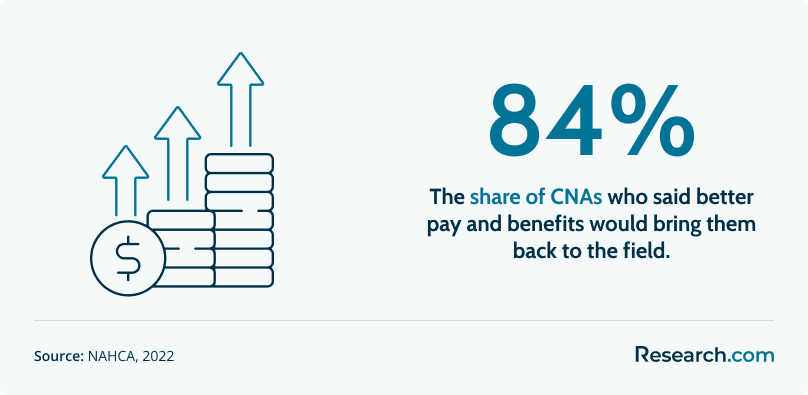
- National Association of Health Care Assistants. (2023). CNAs cite low wages, burnout, and lack of respect as key contributors to the staffing crisis. Retrieved from NAHCA Blog.
Other Things You Need To Know About Online CNA Programs
Yes. CNA training requires hands-on clinical practice under supervision, and most state-approved programs include at least 16 to 40 hours of skills lab plus a clinical rotation in a long-term care or hospital setting. Purely online CNA training is not enough for state certification.
Accreditation ensures online CNA programs meet quality standards set by accrediting bodies like the Commission on Accreditation of Allied Health Education Programs (CAAHEP). It's crucial as it affects eligibility for certification exams and might influence employer perception and financial aid opportunities.
Typically, prerequisites for enrolling in a top online CNA program in 2027 include a high school diploma or GED, a clean background check, and up-to-date immunizations. Some programs may also require CPR certification or a pre-admission test such as the Test of Essential Academic Skills (TEAS).


