
2027 Best Accelerated Online Certified Nursing Assistant (CNA) Programs

Co-Founder and Chief Data Scientist
Aspiring Certified Nursing Assistants (CNAs) often grapple with anxiety about underestimating the role's physical and emotional demands or fear making the wrong first career choice. Fortunately, the healthcare field offers robust opportunities, with over 216,000 CNA job openings projected annually.
This guide, from career planning experts, provides a clear solution: exploring the best online certified nursing assistant programs with a focused, expert-backed roadmap into this vital profession.
What are the benefits of getting an accelerated online certified nursing assistant (CNA) degree?
- Online certified nursing assistant programs offer a faster route to certification compared to traditional training, allowing for quicker entry into the healthcare workforce.
- They provide a cost-effective pathway into healthcare, often with financial aid options available, making the investment highly manageable.
- Graduates gain access to a robust job market with high demand, offering immediate employment opportunities and a stable foundation for future career growth in nursing through quality online certified nursing assistant programs, as over 216,000 job openings are projected annually.
What can I expect from an accelerated online certified nursing assistant (CNA) degree?
When pursuing an accelerated online certified nursing assistant (CNA) program, expect a focused and efficient educational experience designed for rapid entry into healthcare. These programs typically blend online coursework covering foundational principles, patient care skills, safety protocols, and ethical considerations with mandatory, hands-on clinical practice. The accelerated nature means a more intensive pace, requiring dedication to master the material and skills within a shorter timeframe.
In terms of curriculum, you'll delve into essential topics like anatomy and physiology basics, vital signs monitoring, patient hygiene, infection control, and proper documentation. Crucially, the clinical component is vital; you'll gain practical, real-world experience in supervised healthcare settings, applying what you learn and building confidence in patient interaction and care delivery. This hybrid structure prepares you directly for the demands of the CNA role and certification exams.
Where can I work with an accelerated online certified nursing assistant (CNA) degree?
Graduates of accelerated online certified nursing assistant (CNA) programs can find employment in a wide array of healthcare settings, offering diverse work environments and patient populations.
Common workplaces include hospitals, skilled nursing facilities, assisted living communities, and rehabilitation centers. You might also find opportunities in home health agencies, physician's offices, and even in correctional facilities or hospice care. This variety ensures that CNAs can often find roles that align with their personal preferences and career aspirations within the broader healthcare system.
How much can I make with an accelerated online certified nursing assistant (CNA) degree?
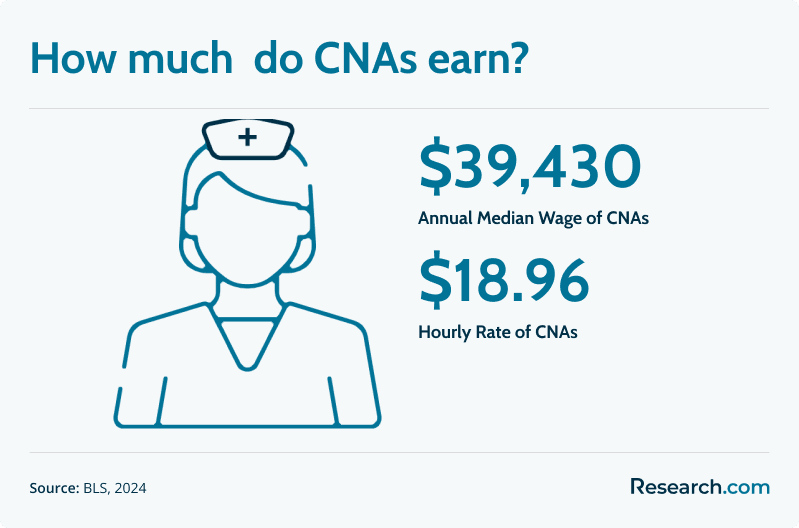
The earning potential for Certified Nursing Assistants (CNAs) typically starts at a moderate level, with a national median wage around $39,430 annually. While this initial figure might seem modest, it's important to view it as a starting point.
Factors like your geographic location, the specific healthcare setting you work in, and your level of experience significantly influence your earnings. Furthermore, the CNA role often serves as a critical stepping stone. With continued education and experience, you can progress to higher-paying roles like Licensed Practical Nurses (LPNs) or Registered Nurses (RNs), substantially increasing your long-term earning potential.
Best Accelerated Online Certified Nursing Assistant (CNA) Programs for 2027
Choosing an accelerated online CNA program is usually about one practical goal: getting into patient care quickly without enrolling in a long nursing degree. The right program can help you qualify for your state nurse aide exam in weeks, but the wrong one can leave you with training that does not meet certification rules, weak clinical preparation, or unexpected costs.
This guide explains how accelerated online CNA programs work, what they cost, how long they take, which programs stand out, and how to compare them before you enroll. It is written for career changers, recent high school graduates, healthcare support workers, and anyone considering CNA training as a first step toward nursing, including future pathways such as accelerated online CNA to RN bridge programs.
Quick Answer: What Is an Accelerated Online CNA Program?
An accelerated online CNA program is a short nurse aide training program that combines online classroom instruction with required in-person skills labs and supervised clinical practice. Most programs are completed in a few weeks, but CNA training cannot be fully online because students must demonstrate hands-on patient care skills before becoming eligible for certification.
A CNA program is typically a certificate or workforce training pathway rather than a degree. The most important factor is not whether the program is online, accelerated, or inexpensive; it is whether the training is approved by the state where you plan to become certified and work.
How We Evaluated Accelerated Online CNA Programs
Because CNA training is a direct pathway into patient care, program quality matters. Our review emphasizes state approval, clinical training structure, schedule flexibility, cost transparency, accreditation or institutional recognition where applicable, and whether the program prepares students for the appropriate state certification exam.
Research.com’s ranking process uses education and institutional data from sources such as the IPEDS database, Peterson's database, the College Scorecard database, and The National Center for Education Statistics. You can review the broader ranking approach on Research.com’s methodology page.
Best Accelerated Online CNA Programs for 2027
The programs below use online or hybrid delivery for part of the CNA training process while still requiring in-person lab or clinical work. Always confirm current tuition, schedules, clinical locations, admission requirements, and state exam eligibility directly with the school before applying.
| Program | Format and Best Fit | Length | Cost | Approval or Accreditation |
| Pratt Community College | Hybrid CNA training for students seeking Kansas-aligned preparation | 1 semester | In-state, $76; Out-of-state, $92 per credit | The Higher Learning Commission (HLC) |
| Johnson County Community College | Short CNA pathway with instruction and training through the Olathe Health Education Center | 4 weeks | In-county, $121; Out-of-county/state, $237 per credit | The Higher Learning Commission (HLC) |
| Northern Essex Community College | Hybrid state-approved program with online lectures, labs, and clinical experience | 4 weeks | Currently offered at no cost through grant funding | New England Commission of Higher Education (NECHE) |
| California Preparatory College | Live online CNA classes with clinical training through an Adventist Health or affiliated facility | 12 weeks | $2,300 | Western Association of Schools and Colleges Accrediting Commission for Community and Junior Colleges (WASC-ACCJC) |
| Minnesota State College Southeast | Online coursework with supervised practical training for Minnesota Nurse Aide Registry preparation | 2 weeks | Approximately $875 | The Higher Learning Commission (HLC) |
| South Denver School of Nursing Arts | Virtual morning or evening classes with campus labs and long-term care clinical shifts | 4 weeks | $1,800 | Approved by the Colorado State Board of Nursing |
| Heart to Heart Healthcare Training | Fast Texas CNA course with online coursework plus in-person lab and clinical training | 2 weeks | $850 | Approved by the Texas Workforce Commission; Not an accredited institution |
| Legacy Career Institute | Flexible nurse aide training for students preparing for direct patient care roles | 2-6 weeks | $950 | Approved by the Texas Department of Health and Human Services |
| Rogue Community College | Self-paced online coursework with in-person labs and clinicals for Oregon certification preparation | 4 weeks | $1,750 | Northwest Commission on Colleges and Universities (NWCCU) |
| Arise Health Training Institute | Hybrid refresher option for students with prior healthcare experience or credentials | 2 weeks | $480 | Not an accredited institution; offers state-approved training |
1. Pratt Community College
Pratt Community College offers a hybrid Certified Nurse Aide course that pairs online theory with required face-to-face labs and clinical placements. The curriculum is built around Kansas state expectations and prepares students for entry-level patient care in settings such as hospitals and long-term care facilities.
- Program Length: 1 semester
- Required Credits to Graduate: 96 credit hours
- Cost per Credit: In-state, $76; Out-of-state, $92
- Accreditation: The Higher Learning Commission (HLC)
2. Johnson County Community College
Johnson County Community College provides CNA training that combines classroom learning with practical instruction at the Olathe Health Education Center. Students focus on core bedside care skills while preparing for the Kansas CNA test and building a foundation that may support later LPN or RN study.
- Program Length: 4 weeks
- Required Credits to Graduate: 96 credit hours
- Cost per Credit: In-county, $121; Out-of-county/state, $237
- Accreditation: The Higher Learning Commission (HLC)
3. Northern Essex Community College
Northern Essex Community College runs an accelerated, state-approved Certified Nurse Assistant program using a hybrid model. Students complete online lectures and virtual meetings, attend campus-based labs, and complete a 25-hour clinical experience focused on safe, ethical, and effective patient care.
- Program Length: 4 weeks
- Required Credits to Graduate: 90 hours
- Total Tuition: Currently offered at no cost through grant funding
- Accreditation: New England Commission of Higher Education (NECHE)
4. California Preparatory College
California Preparatory College offers a Certified Nurse Assistant program approved by the California Department of Public Health. The schedule includes synchronous online evening and Sunday classes taught by registered nurses, followed by clinical training at an Adventist Health or affiliated facility.
- Program Length: 12 weeks
- Required Credits to Graduate: 162 hours
- Total Tuition: $2,300
- Accreditation: Western Association of Schools and Colleges Accrediting Commission for Community and Junior Colleges (WASC-ACCJC)
5. Minnesota State College Southeast
Minnesota State College Southeast provides Nursing Assistant training for students preparing to work in skilled nursing facilities and similar care environments. Its curriculum combines online classes with supervised practical instruction and prepares students for the Minnesota Nurse Aide Registry exam.
- Program Length: 2 weeks
- Required Credits to Graduate: 80 hours
- Total Tuition: Approximately $875
- Accreditation: The Higher Learning Commission (HLC)
6. South Denver School of Nursing Arts
South Denver School of Nursing Arts offers a 4-week Certified Nursing Assistant program with virtual class options in the morning or evening. Students complete online instruction, campus-based skills labs, and two 8-hour clinical shifts in a long-term care facility.
- Program Length: 4 weeks
- Required Credits to Graduate: Not specified
- Total Tuition: $1,800
- Accreditation: Approved by the Colorado State Board of Nursing
7. Heart to Heart Healthcare Training
Heart to Heart Healthcare Training delivers a 100-hour Certified Nurse Assistant course in Texas. The program includes 60 hours of online coursework and 40 hours of in-person lab and clinical experiences, giving students a fast but structured route to state-approved training.
- Program Length: 2 weeks
- Required Credits to Graduate: 100 hours
- Total Tuition: $850
- Accreditation: Approved by the Texas Workforce Commission; Not an accredited institution
8. Legacy Career Institute
Legacy Career Institute offers Certified Nurse Aide training for students preparing to assist patients under the supervision of licensed healthcare professionals. The curriculum emphasizes basic bedside responsibilities, including vital signs, mobility support, and help with activities of daily living.
- Program Length: 2-6 weeks
- Required Credits to Graduate: Not specified
- Total Tuition: $950
- Accreditation: Approved by the Texas Department of Health and Human Services
9. Rogue Community College
Rogue Community College offers a state-approved Nursing Assistant program that blends self-paced online coursework with required labs and clinicals. The 105-hour curriculum covers patient care, safety, legal responsibilities, and preparation for the Oregon state certification exam.
- Program Length: 4 weeks
- Required Credits to Graduate: 105 hours
- Total Tuition: $1,750
- Accreditation: Northwest Commission on Colleges and Universities (NWCCU)
10. Arise Health Training Institute
Arise Health Training Institute provides a state-approved Nurse Aide 1 Refresher-Hybrid program for students who already have relevant healthcare experience or prior credentials. The 2-week format includes one week of online study followed by onsite evening labs.
- Program Length: 2 weeks
- Required Credits to Graduate: Not specified
- Total Tuition: $480
- Accreditation: Not an accredited institution; offers state-approved training
How Long Does an Accelerated Online CNA Program Take?
Accelerated online CNA programs are built for fast completion, with many options taking approximately 4 to 12 weeks. Some listed programs are shorter, including 2-week options, while others extend to a full semester or 12 weeks depending on state requirements, clinical scheduling, and the number of required training hours.
The shorter timeline is useful if you want to enter healthcare quickly, but it also means the workload can be intense. Students must learn patient care theory, practice hands-on skills, complete clinical hours, and prepare for the certification exam in a compressed schedule. Compared with LPN or RN programs, CNA training is a much faster entry point into healthcare, with industry growth projected at 4%.
| Timeline | What Usually Happens | What to Confirm Before Enrolling |
| 2 weeks | Highly compressed online modules, labs, and clinical requirements | Whether you can realistically attend every required in-person session |
| 4 weeks | Common accelerated schedule with structured theory and clinical practice | Clinical dates, exam preparation, and attendance policies |
| 12 weeks | More time for live instruction, review, and clinical placement | Whether the longer schedule better fits work or family obligations |
| 1 semester | College-based pacing that may align with academic calendars | Credit or hour requirements, tuition structure, and state eligibility |
Online vs. On-Campus CNA Programs: Which Format Is Better?
An accelerated online CNA program is usually best understood as a hybrid program. The classroom portion may be delivered online, but labs and clinical training must still happen in person because CNA work involves direct patient care. A traditional on-campus CNA program delivers most or all instruction face to face.
Online or hybrid CNA training can be a strong fit for students who need scheduling flexibility, commute less often, or prefer to study theory independently. On-campus training may work better for students who want more instructor access, structured classroom time, or extra practice before clinicals. If you are still comparing allied health entry points, Research.com also explains how to become a medical administrative assistant, which can help you evaluate patient care and administrative healthcare roles side by side.
| Factor | Accelerated Online or Hybrid CNA Program | On-Campus CNA Program |
| Flexibility | Better for students who need to complete theory online | Better for students who prefer fixed classroom instruction |
| Hands-on practice | Still required through labs and clinicals | Built into the in-person schedule |
| Self-discipline | Requires strong time management and independent study habits | Provides more external structure |
| Clinical access | Depends on approved local or assigned clinical sites | Often coordinated through the school’s local healthcare partners |
| Best for | Working adults, career changers, and students with limited campus access | Students who want frequent face-to-face instruction and immediate feedback |
How Much Does an Accelerated Online CNA Program Cost?
Accelerated online CNA program costs vary by provider, location, tuition model, included materials, exam fees, and whether grant funding is available. In the programs listed above, published tuition examples range from $480 to $2,300, while the broader expected range is approximately $480 to $2,275 depending on the program and location.
CNA training is usually much less expensive than longer healthcare degree programs, but students should compare the full cost rather than tuition alone. Uniforms, background checks, immunizations, testing fees, textbooks, supplies, transportation to clinical sites, and missed work time can affect the real price. For comparison with another short healthcare pathway, students may also review accelerated associates in medical billing and coding programs.
| Cost Item | Why It Matters | Question to Ask |
| Tuition | This is the advertised program price, but it may not include everything | Is tuition charged per credit, per hour, or as a flat program fee? |
| Clinical requirements | Students may need transportation, uniforms, and schedule flexibility | Where are clinicals held, and are all clinical costs included? |
| Testing and certification | Exam and registry fees may be separate from tuition | Does the program fee include the state CNA exam? |
| Health and background requirements | Immunizations, TB testing, and background checks may create extra expenses | Which screenings are required before clinical placement? |
| Materials and supplies | Books, online platforms, and equipment can increase total cost | Are textbooks, scrubs, and supplies included? |
Financial Aid Options for Accelerated Online CNA Students
Financial aid depends on the school, program length, credit status, state workforce funding, and the student’s eligibility. Some CNA programs may qualify for grants or institutional aid, while short noncredit programs may have more limited federal aid options. Students should ask the school’s financial aid or workforce training office before assuming a program is covered.
Where to Look for CNA Training Funding
- Federal aid: Start by completing the Free Application for Federal Student Aid, or FAFSA, if the program is offered through an eligible institution and qualifies for aid.
- State workforce grants: Many states fund short-term training for in-demand healthcare roles, including nurse aide training.
- Employer sponsorship: Some long-term care facilities, hospitals, and home health employers help pay for CNA training or reimburse tuition after hire.
- School-based scholarships: Community colleges and training providers may offer limited scholarships, grant-funded seats, or payment plans.
- Local healthcare organizations: Workforce boards, nonprofit healthcare groups, and community organizations may support students entering direct care roles.
If you are comparing short healthcare credentials, it can also help to understand timelines and funding structures in related fields; Research.com’s guide on how long medical billing and coding school is offers another point of comparison.
Admission Requirements for Accelerated Online CNA Programs
Admission requirements vary by state and provider, but most accelerated online CNA programs ask applicants to show that they can safely participate in patient care training. Requirements are not just paperwork; they help protect patients, clinical sites, classmates, and the student.
- A high school diploma or GED
- A minimum age of 18 years
- A clear criminal background check
- Proof of up-to-date immunizations, often including a TB test
Why These Requirements Matter
Clinical sites serve vulnerable patients, so programs typically require background checks, health documentation, and immunization records before students begin direct care. A past criminal record does not always mean automatic denial, but some convictions may affect clinical placement, certification eligibility, or employment. Applicants should ask the program and state registry how background issues are reviewed before paying tuition.
Health clearance is also important because CNAs work closely with patients who may be older, immunocompromised, or recovering from illness. These patient safety expectations are common across healthcare education, including advanced training routes such as accelerated agpcnp graduate certificate online programs.
What Do You Learn in an Accelerated Online CNA Program?
Accelerated online CNA coursework focuses on the knowledge and skills needed for safe entry-level patient care. Online modules usually cover theory, terminology, procedures, and care principles, while labs and clinicals give students the chance to practice and demonstrate skills in person.
- Patient care fundamentals: Students learn how to assist with bathing, dressing, feeding, toileting, positioning, and mobility.
- Basic anatomy and physiology: Coursework introduces major body systems and the health conditions CNAs commonly encounter.
- Vital signs: Training covers how to measure, record, and report temperature, pulse, respirations, and blood pressure.
- Infection control: Students practice standard precautions, hand hygiene, cleaning procedures, and strategies for reducing disease transmission.
- Patient safety: Lessons cover fall prevention, emergency response, safe transfers, and maintaining a hazard-free environment.
- Communication: CNA students learn how to communicate respectfully with patients, families, nurses, and other members of the healthcare team.
- Resident rights and ethics: Programs address confidentiality, dignity, abuse prevention, legal responsibilities, and advocacy for residents and patients.
The online portion can teach the “why” behind care procedures, but clinical practice is where students learn how to apply those concepts with real patients. That mix of online theory and supervised practice is also common in other people-centered fields, including top educational counseling masters programs online.
Do Accelerated Online CNA Programs Offer Specializations?
Most accelerated online CNA programs do not offer formal specializations because they are designed to prepare students for entry-level certification. However, CNAs often develop practical expertise after graduation based on where they work, the patients they serve, and any employer-provided training they complete.
Geriatric and Long-Term Care
Many CNAs begin in skilled nursing facilities, assisted living communities, or home health. This experience can build strong skills in supporting older adults, assisting with chronic conditions, observing changes in patient status, and providing compassionate daily care.
Hospital and Acute Care
Hospital-based CNAs often work in faster-paced units where they assist nurses with vital signs, patient mobility, post-operative care, hygiene, and monitoring. This setting can be useful for students who want exposure to a broader clinical team and may later pursue nursing education.
Home Health and Community-Based Care
Some CNAs support patients in private homes or community settings. This path may suit students who prefer one-on-one care, more independent routines, and long-term relationships with clients and families.
Technology-Adjacent Healthcare Paths
CNA work can also help students understand clinical workflows before moving into non-bedside roles. If you are interested in healthcare data, systems, or digital records, Research.com’s health informatics career guide explains how clinical knowledge can connect to information-focused healthcare careers.
How to Choose the Best Accelerated Online CNA Program
The best CNA program is the one that qualifies you for certification in your state, fits your schedule, provides legitimate clinical training, and has transparent costs. A fast program is only worthwhile if it leads to exam eligibility and gives you enough hands-on preparation to work safely.
- Confirm state approval first. Ask whether the program is approved by the state board of nursing, health department, or nurse aide registry where you plan to certify.
- Verify the clinical format. Find out where labs and clinicals take place, how many hours are required, and whether the school arranges placements.
- Check total program cost. Ask for a full list of fees, including supplies, screenings, exam fees, uniforms, books, and technology charges.
- Ask about exam preparation. Look for skills checkoffs, practice exams, instructor feedback, and support for the state competency exam.
- Review attendance rules. Accelerated programs often have strict attendance policies; missing a lab or clinical shift can delay completion.
- Evaluate student support. Ask whether the program offers tutoring, instructor access, job search help, resume assistance, or employer connections.
| Question to Ask | Why It Matters |
| Is this program approved for CNA certification in my state? | Without state approval, you may not be eligible for the exam or registry placement. |
| Can I complete clinicals near where I live? | Online coursework does not eliminate in-person training requirements. |
| What happens if I miss a lab or clinical day? | Accelerated schedules may offer limited make-up options. |
| Are background checks and immunizations included in the cost? | These requirements can add time and expense before clinical placement. |
| Does the program help graduates connect with employers? | Career support can make the transition from training to employment smoother. |
If your long-term goal includes public health outreach, prevention, or community services, CNA experience may also help you explore routes such as how to become a community health worker.
Common Mistakes to Avoid When Choosing an Online CNA Program
- Assuming “online” means fully remote: CNA training requires hands-on labs and clinical experience, so plan for travel and fixed in-person dates.
- Choosing only by lowest tuition: A cheaper program may cost more later if it excludes exam fees, supplies, screenings, or clinical expenses.
- Skipping state approval verification: Accreditation and approval are not the same thing. For CNA certification, state approval is essential.
- Ignoring clinical placement details: Students should know where clinicals occur, who arranges them, and what happens if a site changes.
- Underestimating the pace: A 2-week or 4-week CNA program can be demanding, especially for students working full time.
- Assuming salary outcomes are guaranteed: Pay depends on employer, location, shift, experience, and care setting.
- Relying only on rankings: Rankings can help you build a shortlist, but your state requirements and clinical access should drive the final decision.
What Careers Can You Pursue After an Accelerated Online CNA Program?
Graduates of accelerated online CNA programs typically begin in direct patient care roles. CNA certification can lead to immediate employment and can also serve as a practical first step toward more advanced nursing or allied health careers.
| Path | Typical Setting | Why It May Be a Good Fit |
| Certified Nursing Assistant | Hospitals, skilled nursing facilities, assisted living, home health | Best for students who want fast entry into hands-on patient care |
| Home Health Aide or Personal Care Support | Private homes and community-based care | May suit students who prefer one-on-one care relationships |
| Licensed Practical Nurse (LPN) | Clinics, long-term care, hospitals, physician offices | A common next step with more responsibility and a median salary of around $62,340 |
| Registered Nurse (RN) | Hospitals, clinics, public health, specialty care | Fits students who want broader clinical responsibility, advancement, and leadership options |
For students planning ahead, CNA experience can clarify whether nursing is the right long-term path before committing to a larger investment. LPN roles include over 657,800 jobs available and a median salary of around $62,340, while RN pathways require additional formal nursing education and licensure.
What Is the Job Market Like for CNA Graduates?
The CNA field is projected to grow by 4% over the next decade, and federal data indicates about 216,200 job openings for nursing assistants are expected each year. Demand is tied to ongoing patient care needs in hospitals, skilled nursing facilities, assisted living communities, rehabilitation centers, and home health settings.
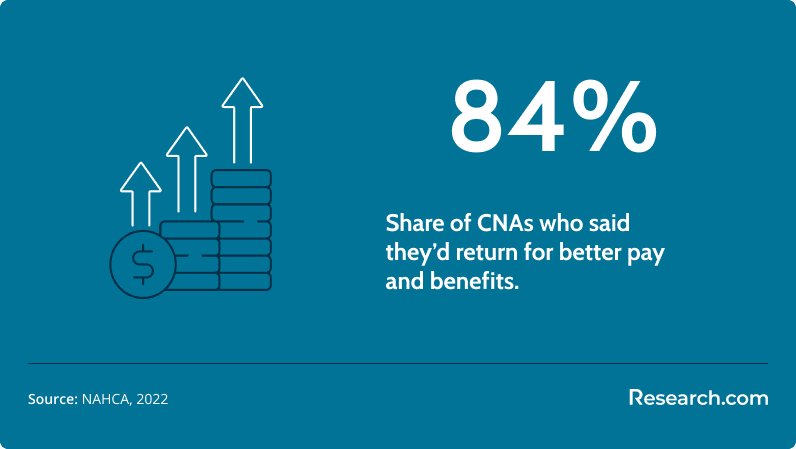
The aging population continues to support demand for workers who can provide daily care, mobility assistance, observation, and basic clinical support. At the same time, many healthcare employers are paying closer attention to retention, scheduling, benefits, and advancement pathways because direct care work can be physically and emotionally demanding.
How AI and Technology Are Affecting CNA Work
AI and automation are changing parts of healthcare, but they do not replace the human presence required for bathing, feeding, mobility support, comfort, and observation. CNAs may increasingly use digital documentation systems, electronic health records, remote monitoring tools, and scheduling platforms. Students who are comfortable with basic healthcare technology may be better prepared for modern care environments.
Graduate Perspectives on Accelerated Online CNA Training
-
: "I needed a way into healthcare without quitting my job first. The online lessons let me study after work, and the in-person clinicals showed me what patient care really feels like. After certification, I was able to move into a hospital role and finally felt I had a career path, not just another job.
Maria"
-
: "After being downsized, I wanted stable work as quickly as possible. I was unsure about online CNA training at first, but the structure helped me learn the theory before practicing skills in person. From enrollment to starting work, the whole transition took less than four months.
Brian"
-
: "I had healthcare experience from another country, but I needed to understand the U.S. system. The online coursework gave me time to learn the terminology, and the clinical training helped me understand team communication. CNA certification helped me start serving patients in my community.
Sam"
Accelerated Online CNA Program vs. Accelerated Online BSN: What Is the Difference?
An accelerated online CNA program is a short training pathway for entry-level patient care and state certification. An accelerated BSN degree online is a much broader nursing degree route that prepares eligible students for registered nursing responsibilities and includes advanced coursework in areas such as leadership, community health, and evidence-based practice.
The CNA route is best for students who want a fast, lower-cost way to enter healthcare, gain bedside experience, and decide whether nursing is the right long-term career. The accelerated BSN route is better for students who are ready for a larger academic, clinical, and financial commitment and whose goal is RN licensure and expanded nursing responsibilities.
| Factor | Accelerated Online CNA Program | Accelerated Online BSN |
| Main goal | Prepare for CNA certification and entry-level patient care | Prepare for registered nursing education outcomes and advanced clinical roles |
| Typical timeline | Weeks to a semester, depending on the program | Longer and more academically intensive |
| Clinical depth | Basic bedside care skills and supervised clinical practice | Comprehensive nursing clinical education |
| Best for | Fast healthcare entry and patient care exposure | Students committed to becoming registered nurses |
How Does Accreditation Affect CNA Career Advancement?
For CNA training, the first priority is state approval because that determines whether the program can prepare you for certification in your state. Institutional accreditation can still matter, especially when the program is offered by a college and you may later want to pursue additional education.
Accredited institutions are reviewed against recognized quality standards, while state-approved CNA programs are evaluated for whether they meet nurse aide training requirements. Students who plan to continue into nursing should ask whether any credits or training experiences will be recognized later. This is especially important for those who may eventually compare RN completion options such as the easiest accredited RN to BSN online programs.
Sources and Data Notes
Program details, tuition, lengths, accreditation statements, and approval information should be confirmed directly with each school because CNA schedules, fees, grant funding, and clinical availability can change. Labor market figures and institutional data referenced in this guide are framed using the sources and program information identified above, including federal education databases and school-published program pages.
Key Insights
- CNA programs are usually certificates, not degrees: The important question is whether the program is state-approved for certification where you plan to work.
- Accelerated online CNA training is not fully online: Online theory can add flexibility, but labs and clinicals must be completed in person.
- Speed comes with trade-offs: A 2-week or 4-week program can help you enter healthcare quickly, but it requires strict attendance, strong study habits, and readiness for intensive training.
- Cost should be evaluated beyond tuition: Ask about exam fees, uniforms, background checks, immunizations, supplies, and transportation to clinical sites.
- State approval matters more than marketing language: Do not enroll until you confirm the program meets your state’s CNA certification requirements.
- CNA work can be a career starter: Many graduates begin in direct care and later decide whether to pursue LPN, RN, community health, healthcare administration, or health technology pathways.
Other Things You Should Know About Accelerated Online Certified Nursing Assistant (CNA) Degree Programs
Yes. Online CNA coursework can be completed remotely, but state-approved programs still require supervised clinical practice and skills lab hours before testing. Many states require about 40 to 60 clinical hours, and the approved training school must document them for the state nursing aide registry.
Essential criteria for selecting the best accelerated online CNA programs in 2027 include curriculum comprehensiveness, state approval, NCLEX pass rates, experienced faculty, access to clinical practice opportunities, student support services, and cost-effectiveness. Programs that blend theory with interactive learning and provide strong support networks tend to be more successful for students.
To apply for an accelerated online CNA program in 2027, start by researching accredited programs. Prepare necessary documents such as your high school diploma or GED. Complete the application form, pay the fee, and submit any required personal statements or recommendation letters. Check if subsequent entrance exams or interviews are required.


