2027 Best LPN Programs in Alabama – Accredited Online LPN Programs

Co-Founder and Chief Data Scientist
Choosing an LPN program in Alabama is not just a question of convenience. You need a program that fits your schedule, prepares you for hands-on patient care, and keeps you eligible for Alabama licensure. This is especially important because practical nursing cannot be learned entirely online: students must complete in-person labs and clinical experiences before they can qualify for the NCLEX-PN and apply for licensure.
This guide explains what “online LPN programs in Alabama” actually means, how hybrid practical nursing programs work, what they cost, how employers view online coursework, and how to compare programs before enrolling. It is written for prospective nursing students, CNAs considering advancement, working adults, parents, and rural students who want a flexible route into nursing. Alabama’s LPN workforce already includes 16,234 licensed practical nurses (Alabama Board of Nursing, n.d.), and employment for in-state LPNs is projected to grow 3% through 2034, according to the U.S. Bureau of Labor Statistics data reported through Projections Central.
If you are still comparing nursing credentials, it may also help to review the different levels of nursing degrees before deciding whether an LPN program, RN pathway, or longer nursing degree makes the most sense for your goals.
Online LPN Programs in Alabama: Guide Contents
- Can you complete an Alabama LPN program fully online?
- Do healthcare employers respect online nursing coursework?
- Can an online LPN credential be used internationally?
- Hybrid vs. campus-based LPN programs in Alabama
- Cost of online and hybrid LPN programs in Alabama
- Admission, technology, and skill requirements
- Common courses in Alabama LPN programs
- How to choose a quality online LPN program
- Financial aid for Alabama LPN students
- Best online and hybrid LPN programs in Alabama for 2027
- Challenges students may face in online LPN programs
- Can an online LPN program support long-term salary growth?
- Certifications that can help Alabama LPNs advance
- Job placement and career support services
- Career advancement options for Alabama LPNs
- How online LPN programs support NCLEX-PN preparation
- Accreditation standards for Alabama LPN programs
- How to evaluate program quality before enrolling
- Career outcomes for online LPN graduates in Alabama
- Next steps after finishing an Alabama LPN program
- Clinical training options in hybrid LPN programs
- Telehealth and digital healthcare preparation
- How online LPN programs align with Alabama licensure
Quick Answer: Can You Become an LPN in Alabama Through an Online Program?
You cannot become an LPN in Alabama through a completely online practical nursing program. Accredited LPN programs require in-person clinical training because students must demonstrate bedside nursing skills, medication administration, assessment techniques, and safe patient care under supervision. However, some Alabama programs use a hybrid format, allowing students to complete selected general education or theory-based courses online while attending campus labs and clinical rotations in person.
The safest way to choose a program is to confirm three things before applying: the program is approved by the Alabama Board of Nursing, the clinical requirements can be completed where you live, and graduates are eligible to sit for the NCLEX-PN.
Can You Complete an Alabama LPN Program Fully Online?
No accredited practical nursing program is delivered entirely online. While some coursework may be available through distance learning, LPN education must include direct patient-care experiences that cannot be replaced by video lectures, discussion boards, or virtual assignments.
The most realistic option is a hybrid LPN program. In this model, students may complete online classes for general education, nursing theory, or related academic requirements, then report in person for skills labs, simulations, and clinical placements. This structure gives students more flexibility without removing the hands-on training required for safe nursing practice.
| Program Component | Can It Usually Be Completed Online? | Why It Matters |
| General education courses | Often yes | These courses may cover foundational academic subjects that do not always require clinical practice. |
| Nursing theory | Sometimes | Students may study concepts online, but they still need supervised practice to apply them safely. |
| Skills lab | No | Students must practice procedures, patient interaction, and clinical judgment in a controlled setting. |
| Clinical rotations | No | Real patient-care experience is required for licensure preparation. |
| NCLEX-PN preparation | Often yes | Practice exams, review modules, and study resources can be delivered online. |
Will Employers Take an Online LPN Degree Seriously?
Employers are generally more concerned with licensure eligibility, program approval, clinical preparation, and NCLEX-PN success than with whether some courses were delivered online. A hybrid LPN credential from an approved and accredited nursing program is typically evaluated as a nursing credential from the awarding institution, not as a lesser version of the same program.
Online education has also become more accepted in hiring. In a report cited by 61% of HR leaders, online credentials were viewed as equal in quality to in-person degrees. In healthcare, however, employer acceptance depends heavily on whether the program includes appropriate clinical training and meets state licensing standards.
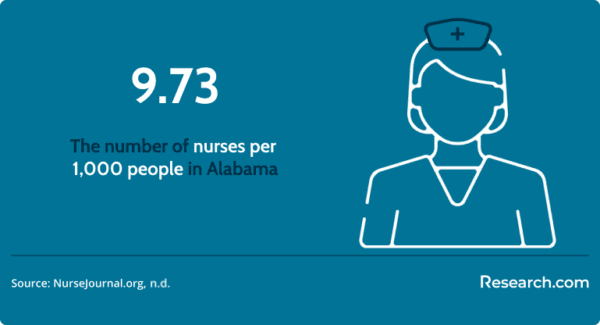
Alabama’s healthcare employers are also operating in a workforce environment where nurses are needed across hospitals, long-term care facilities, clinics, home health agencies, and rural care settings. NurseJournal reports a nurse-to-population measure of 9.73 registered nurses (RNs) per 1,000 people, which helps explain why employers may be open to qualified graduates from accredited hybrid nursing programs.
Still, students should not assume that any online nursing program will be accepted. The program must be properly approved, clinically rigorous, and aligned with Alabama licensure requirements.
Are Online LPN Degrees Recognized Internationally?
A hybrid LPN credential earned in the United States may be respected by some employers outside the country, but nursing licensure is not automatically portable worldwide. Every country sets its own requirements for education, registration, exams, and scope of practice.
For example, the United Kingdom requires LPNs to complete an approved one- or two-year preparation program. In parts of the Middle East, employers may prefer registered nurses with a bachelor’s degree or applicants who completed an approved vocational nursing program. These examples show why international job plans require early research.
If your long-term goal is to work outside the United States, contact the nursing regulator or licensing authority in the destination country before enrolling. Ask whether an Alabama practical nursing credential, NCLEX-PN results, and U.S. clinical hours would meet local requirements.
Online vs. Traditional LPN Programs in Alabama
Hybrid and campus-based LPN programs can both prepare students for practical nursing licensure, but they fit different learning styles and life situations. The right choice depends on your schedule, transportation access, need for structure, comfort with online learning, and ability to attend clinical placements.
Traditional LPN programs are usually best for students who want face-to-face instruction, regular classroom routines, immediate access to faculty, and frequent interaction with classmates. They may also be easier for students who do not want to manage multiple online platforms or who learn best through in-person demonstrations.
Hybrid LPN programs may be better for working adults, parents, commuters, and students in rural areas who need some flexibility. However, hybrid does not mean “study whenever you want.” Students still must meet assignment deadlines, attend scheduled labs, and complete clinical rotations at approved sites.
| Characteristic | Hybrid LPN Program | Traditional LPN Program |
| Delivery format | Combination of online coursework and required in-person training | Primarily face-to-face classes, labs, and clinicals |
| Scheduling | More flexible for selected courses | Usually tied to fixed class meeting times |
| Best for | Students who can work independently and travel for clinicals | Students who prefer structure and regular campus interaction |
| Faculty and peer interaction | More limited in person, with online communication tools | More frequent face-to-face contact |
| Campus resources | Available, but students may use them less often | Easier routine access to labs, offices, tutoring, and facilities |
Is an Online LPN Program Cheaper?
Not always. Online or hybrid study may reduce expenses such as commuting, parking, relocation, or housing, but tuition and fees vary widely by school. Devlin Peck (2025) reported that 54% of colleges charge remote students more than in-person students to help cover technology, maintenance, and course development costs.
Application and enrollment expenses can also matter. Among current online students and graduates, 24% ranked application fees among their five biggest challenges when applying to an education program.
For Alabama LPN students, the real cost comparison should include tuition, clinical fees, uniforms, background checks, immunizations, technology, commuting to clinical sites, exam preparation, and NCLEX-PN-related costs. A hybrid program may be worth the added expense if it allows you to keep working or avoid relocation, but students should calculate the full cost before committing.
Is an Online LPN Program as Good as a Campus Program?
A hybrid LPN program can be as strong as a campus program when it is approved, accredited, clinically supervised, and transparent about outcomes. The delivery format matters less than the quality of instruction, clinical placements, faculty support, and NCLEX-PN preparation.
Online learning also requires a different kind of discipline. Students must manage deadlines, watch lectures or complete modules without constant reminders, communicate proactively with instructors, and keep clinical paperwork organized. In a 2024 survey of U.S. online students, 70% said online education was better than face-to-face instruction, but that does not mean it is the best format for every learner.
If you are comparing practical nursing with other nursing career paths, consider how quickly you want to enter the workforce and whether you plan to continue toward RN or BSN credentials later. Students interested in the administrative side of healthcare may also compare LPN training with an undergraduate degree in medical office management.
How Much Does an Online LPN Program in Alabama Cost?
Costs vary by school, program length, residency status, fees, and whether the institution is public or private. One benchmark is Herzing University’s practical nursing program, which is listed at $650 per credit for a partially online LPN option in Alabama. Program listings may also show different estimated cost-per-credit figures depending on the source, tuition year, or fee structure, so students should verify the current tuition directly with the school before applying.
| Cost Category | Why Students Should Check It |
| Tuition per credit | This is the largest direct education cost and can differ sharply between public and private schools. |
| Program and lab fees | Nursing programs often charge fees for skills labs, simulations, supplies, and clinical coordination. |
| Technology expenses | Hybrid students may need a reliable computer, webcam, headset, software access, and stable internet. |
| Clinical requirements | Background checks, drug screening, immunizations, uniforms, CPR certification, and travel can add costs. |
| Licensure and exam preparation | Budget for NCLEX-PN preparation materials and licensure-related expenses after graduation. |

Is an Online LPN Program Worth It?
A hybrid LPN program can be worthwhile if your goal is to enter nursing faster than an RN or BSN pathway allows, and if the program is approved for Alabama licensure. Practical nursing programs are often designed to be completed in as little as a year, while RN pathways commonly take two to four years. Some fast-track practical nursing programs last as little as six months, although online fast track LPN programs in Alabama are limited.
Students asking how long it takes to become a nurse should compare speed with long-term goals. LPN training may get you into patient care sooner, but RN or BSN programs can offer broader scope of practice and more advancement options.
Licensure outcomes are one useful signal of program value. Herzing University’s hybrid LPN program, one of the online LPN options in Birmingham, Alabama, reported a 100% NCLEX-PN pass rate in 2024, according to Herzing University (2024). Several campus-based Alabama programs also reported 100% pass rates.
| School | Program Type | NCLEX-PN Pass Rate |
| Herzing University | Hybrid Online | 100% |
| Bishop State Community College | On-Campus | 100% |
| Chattahoochee Valley State Community College | On-Campus | 100% |
| Coastal Alabama Community College | On-Campus | 100% |
| Southern Union State Community College | On-Campus | 100% |
What Are the Requirements for an Online LPN Program in Alabama?
Hybrid LPN programs usually have the same academic and compliance requirements as campus-based programs, plus technology requirements for online coursework. Admission can be competitive, so applicants should prepare early and confirm deadlines, required documents, and prerequisite policies with each school.
Common Admission Requirements
- High school diploma or GED. Applicants generally need proof of secondary education before entering a practical nursing program.
- Entrance testing. Some schools require the TEAS exam, which evaluates reading, math, science, and English language skills.
- Background check. Nursing programs commonly require criminal background screening because students will enter clinical settings.
- Prerequisite coursework. Programs may require or recommend courses such as anatomy, physiology, and nursing fundamentals before full admission.
Skills Students Need Before Enrolling
- Basic technology confidence. Online students must navigate learning platforms, upload assignments, use email, attend virtual meetings, and access electronic course materials.
- Critical thinking. LPNs must recognize changes in patient condition, follow care plans, report concerns, and make safe decisions within their scope of practice.
- Team communication. Practical nurses work with RNs, physicians, nursing assistants, therapists, patients, and families, so clear communication is essential.
- Time management. Hybrid students must balance online coursework, lab attendance, clinical schedules, study time, and personal responsibilities.
Technology Requirements for Online Coursework
- Computer access. Students need a computer that meets the school’s learning management system requirements for speed, memory, storage, and operating system compatibility.
- Reliable internet. A stable connection is necessary for lectures, exams, assignments, discussion boards, and video meetings.
- Video tools. Programs may require a webcam, microphone, headset, and video conferencing software for live class sessions or instructor meetings.
Courses to Expect in Online LPN Programs in Alabama
Hybrid LPN programs cover the same nursing foundations as traditional programs. Students study the science of the body, practical nursing skills, medication safety, patient communication, and care across the lifespan. Even when lectures are online, programs typically require in-person labs and clinical practice to verify competency.
| Course or Learning Area | What Students Usually Learn |
| Anatomy and physiology | Body systems, normal function, and how illness or injury affects patient care. |
| Nursing fundamentals | Basic nursing procedures, infection control, documentation, patient safety, and scope of practice. |
| Pharmacology | Medication classifications, dosage safety, side effects, and administration responsibilities. |
| Medical-surgical nursing | Care for adults with acute and chronic health conditions. |
| Maternal, pediatric, or lifespan nursing | Care needs of patients at different stages of life, depending on program design. |
| Clinical practicum | Supervised patient-care experience in approved healthcare settings. |
Things to Look for in an Online LPN Program in Alabama
- Alabama Board of Nursing approval. Do not enroll until you confirm that the program appears on the state-approved program list and supports NCLEX-PN eligibility.
- Recognized accreditation. Accreditation from organizations such as the Accreditation Commission for Education in Nursing (ACEN), the Commission on Collegiate Nursing Education (CCNE), or approval through the State Department of Education helps indicate that the program meets recognized educational standards.
- Clinical placement clarity. Ask where clinicals occur, who arranges them, how far students may need to travel, and whether placement is guaranteed.
- NCLEX-PN outcomes. Review pass rates over multiple years when available, not just one strong year.
- Student support. Strong programs offer academic advising, tutoring, skills lab support, exam preparation, and career assistance.
- Total cost transparency. Ask for a full cost breakdown, including tuition, fees, supplies, background checks, clinical expenses, and technology.
| Common Mistake | Better Approach |
| Choosing a program because it says “online” without checking clinical requirements | Confirm how many in-person labs and clinical hours are required before applying. |
| Assuming all online nursing programs qualify for Alabama licensure | Verify approval with the Alabama Board of Nursing. |
| Comparing only tuition | Calculate the full cost of attendance, including fees, travel, supplies, and exam expenses. |
| Ignoring NCLEX-PN pass rates | Use pass rates as one quality indicator alongside accreditation, faculty support, and clinical placement strength. |
| Relying only on rankings | Use rankings as a starting point, then confirm fit, cost, location, outcomes, and licensure alignment. |
Financial Aid Options for Online LPN Programs in Alabama
Paying for LPN training requires more than finding the lowest tuition. Students should compare federal aid, state aid, school-based awards, employer support, and loan repayment opportunities before choosing a program. The best financial plan is one that covers both direct school charges and the practical costs of completing clinical training.
Federal Financial Aid
Eligible students may use federal aid such as the Pell Grant, Federal Work-Study, and Direct Subsidized or Unsubsidized Loans. Grants and work-study funds generally do not require repayment if requirements are met, while federal loans must be repaid. Students should complete the Free Application for Federal Student Aid (FAFSA) to learn what aid they may qualify for.
Alabama-Specific Aid
Alabama residents may be able to pursue state-supported grants or scholarships for nursing students. The Alabama Nursing Scholarship Program is one example of aid that may support students who agree to work in underserved areas.
School Scholarships and Tuition Waivers
Individual colleges may offer institutional scholarships, nursing awards, grants, or tuition waivers. Ask the financial aid office whether awards are available for practical nursing students, whether they are renewable, and whether separate applications are required.
Employer Tuition Reimbursement
Students already working in healthcare, including certified nursing assistants, should ask employers about tuition reimbursement or education benefits. Some healthcare organizations help employees pay for LPN training in exchange for continued employment or service commitments.
Loan Repayment and Forgiveness Programs
Some LPN graduates may qualify for loan repayment or forgiveness programs if they work in high-need settings. The Nurse Corps Loan Repayment Program is one example of a service-based option that can cover significant portions of qualifying loans for eligible participants.
Private and Community Scholarships
Local foundations, hospitals, civic groups, and professional associations may sponsor nursing scholarships. Students can look for opportunities through community foundations, local healthcare organizations, and programs associated with the Alabama Hospital Association.
If you plan to move from practical nursing to registered nursing later, compare the cost of an LPN program with longer-term RN preparation. Researching how to become a registered nurse in Alabama can help you decide whether to start with LPN training or pursue an RN pathway from the beginning.
Best Online LPN Programs in Alabama for 2027
The Alabama Board of Nursing lists 24 state-approved LPN programs in Alabama. The programs below include hybrid and campus-based practical nursing options from Alabama schools. Use this list as a starting point, then confirm current approval, tuition, admission requirements, program format, and clinical locations directly with each institution.
Herzing University
Herzing University offers a hybrid Diploma in Practical Nursing based in Birmingham. Most nursing coursework is completed on campus, while some general education requirements may be available online. The curriculum combines theory, academic preparation, clinical instruction, and practical nursing skills for caring for patients across the lifespan. Students learn procedures such as vital signs, medication administration, wound care, teamwork, and patient communication.
- Program Length: One year
- Tracks/concentrations: Practical Nursing
- Estimated Cost per Credit: $605
- Required Credits to Graduate: 48
- Accreditation: Accreditation Commission for Education in Nursing (ACEN)
Shelton State Community College
Shelton State Community College offers a Practical Nursing program that blends nursing coursework with general education. Students study the role of the practical nurse, healthcare concepts, technical skills, and patient-care fundamentals. Classroom learning, lab practice, and supervised clinical experiences prepare graduates for licensure.
- Program Length: One year
- Tracks/concentrations: Practical Nursing
- Estimated Cost per Credit: $168
- Required Credits to Graduate: 45
- Accreditation: Accreditation Commission for Education in Nursing (ACEN)
Coastal Alabama Community College
Coastal Alabama Community College provides a full-time, on-campus Practical Nursing (CER-LPN) program at the Atmore and Thomasville campuses. The program is also relevant for students comparing CNA to LPN programs in Alabama. After three successful semesters, students receive a Practical Nursing Certificate and may become eligible to take the licensure exam.
- Program Length: Three Semesters
- Tracks/concentrations: Practical Nursing
- Estimated Cost per Credit: $166
- Required Credits to Graduate: 45
- Accreditation: Accreditation Commission for Education in Nursing (ACEN)
Wallace State Community College
The Wallace State Community College Practical Nursing program is available on campus at the Wallace Campus in Dothan and the Sparks Campus in Eufaula. The program runs for three terms and leads to a certificate. Applications are accepted for fall and spring entry, and admission is competitive.
- Program Length: Three semesters
- Tracks/concentrations: Practical Nursing
- Estimated Cost per Credit: $164
- Required Credits to Graduate: 50
- Accreditation: Accreditation Commission for Education in Nursing (ACEN)
What Challenges Might Students Face in Online LPN Programs in Alabama?
Hybrid nursing study can be convenient, but it is not easier than campus learning. Students may struggle with limited face-to-face time, technology problems, clinical travel, self-paced coursework, and the pressure of balancing work or family responsibilities with strict nursing deadlines.
Clinical scheduling is often the biggest practical issue. Even if lectures are online, students may need to travel to specific hospitals, clinics, or long-term care facilities at assigned times. Before enrolling, ask whether clinicals are available near your home and whether evening or weekend options exist.
Students who are still exploring healthcare roles may also compare LPN training with related allied health pathways, including the best medical assistant programs in Alabama.
Can an Online LPN Program Lead to Long-Term Salary Growth?
An LPN program can help students enter the nursing workforce relatively quickly, but long-term salary growth often depends on experience, work setting, shift differentials, certifications, and additional education. Many LPNs improve their opportunities by moving into specialized roles, supervisory positions, or LPN-to-RN bridge programs.
Students should think beyond the first job. If your long-term goal is advanced practice, administration, or higher-level nursing leadership, compare the LPN pathway with RN, BSN, MSN, and doctoral options. For a broader view of how advanced nursing education can affect earning potential, review trends related to doctor of nursing practice salary.
What Additional Certifications Can Support Career Growth for LPNs in Alabama?
Certifications can help LPNs build focused skills and qualify for more specialized responsibilities, depending on employer policies and Alabama scope-of-practice rules. Common options include IV therapy, geriatric nursing, wound care, pediatric care, and advanced life support training.
Before paying for a certification, confirm that it is recognized by employers in your target setting and allowed within Alabama’s practical nursing scope. LPNs interested in broader patient wellness may also explore related healthcare education, such as how to become a nutritionist in Alabama, although nutrition careers have different credentialing requirements.
| Certification Area | When It May Be Useful |
| IV therapy | Helpful for LPNs working in facilities where IV-related duties are permitted and supervised. |
| Geriatric care | Useful for long-term care, assisted living, rehabilitation, and home health settings. |
| Wound management | Valuable in skilled nursing, home health, rehabilitation, and chronic care environments. |
| Advanced life support | May strengthen readiness for urgent care, clinic, or higher-acuity support roles. |
| Pediatric-focused training | Relevant for LPNs pursuing work in pediatric clinics, school health, or family-care settings. |
What Job Placement and Career Support Services Are Available for Online LPN Programs in Alabama?
Strong LPN programs do more than deliver coursework. They help students prepare for employment through resume support, interview coaching, job boards, employer connections, clinical-site networking, and NCLEX-PN planning. These services can be especially important for online and hybrid students who spend less time on campus.
Ask each school whether career services are specific to nursing students or general to the whole institution. Also ask whether the program has relationships with local hospitals, long-term care facilities, clinics, home health agencies, or staffing organizations. Students interested in mobile nursing roles can also review how to become a travel LPN.
What Career Advancement Opportunities Are Available for LPNs in Alabama?
Alabama LPNs can advance by gaining experience, earning specialty credentials, moving into leadership roles, or continuing their education. The best path depends on whether you want to remain in direct patient care, supervise others, transition into administration, or become an RN.
- LPN-to-RN bridge programs. Bridge programs allow practical nurses to build on prior training and work toward registered nurse licensure. These programs often take one to two years and may include online coursework plus in-person clinical practice.
- Specialized nursing areas. LPNs may pursue additional preparation in gerontology, IV therapy, wound care, pediatrics, rehabilitation, or long-term care.
- BSN or MSN pathways. LPNs who want broader nursing responsibilities may continue toward a Bachelor of Science in Nursing or Master of Science in Nursing, depending on admission requirements and prior credits.
- Healthcare administration. Practical nurses who want to move away from bedside care may pursue roles in medical office management, policy support, scheduling, compliance, or nursing home operations.
- Clinical instruction. Experienced LPNs may support nursing education as clinical instructors or skills mentors, although some teaching roles require higher degrees or additional credentials.
- Supervisory positions. Long-term care facilities, clinics, and home health agencies may offer team lead or supervisory responsibilities to experienced LPNs.
How Do Online LPN Programs Enhance NCLEX-PN Exam Success in Alabama?
Hybrid LPN programs can support NCLEX-PN success by combining nursing theory, clinical practice, skills labs, and structured exam preparation. Online tools may include practice questions, simulated exams, digital flashcards, recorded reviews, and performance dashboards that show weak areas.
Students should ask whether NCLEX-PN preparation is built into the curriculum or offered separately. Also ask about faculty tutoring, remediation policies, exit exams, and recent first-time pass rates. For a step-by-step licensing and exam overview, see how to become a certified LPN in Alabama.
What Are the Accreditation Standards for Online LPN Programs in Alabama?
Accreditation and state approval are essential in nursing education. They help confirm that a program meets recognized standards for curriculum, faculty, clinical training, student outcomes, and continuous review. For Alabama LPN students, approval and accreditation also affect licensure eligibility, transfer options, and employer confidence.
What Accreditation Means
Accreditation is an external quality review conducted by an independent organization. Alabama LPN students should look for programs connected to recognized nursing education bodies such as the Accreditation Commission for Education in Nursing (ACEN) or the Commission on Collegiate Nursing Education (CCNE), along with required state approval.
Why Accreditation and Approval Matter
- Licensure eligibility. Graduating from an approved program is necessary for NCLEX-PN eligibility and practical nursing licensure.
- Credit transfer. Credits from accredited programs are more likely to be reviewed favorably if you later pursue another credential, such as an MA to LPN bridge program online.
- Employment confidence. Employers often prefer graduates of approved and accredited programs because the training has been evaluated against recognized standards.
How to Verify a Program
- Search the program’s website for approval and accreditation details, then confirm them independently.
- Check ACEN or CCNE databases when applicable.
- Use the Alabama Board of Nursing program list to confirm state approval before enrolling.
Accredited programs are reviewed regularly and must keep improving curriculum, faculty qualifications, resources, and student outcomes to remain in good standing.
How Can You Evaluate the Quality of Online LPN Programs in Alabama?
Program quality should be judged by outcomes and fit, not by marketing language. A strong hybrid LPN program should clearly explain its approval status, clinical model, faculty qualifications, NCLEX-PN results, student support, and total cost.
| Question to Ask | Why It Matters |
| Is the program approved by the Alabama Board of Nursing? | Approval is central to licensure eligibility. |
| Who arranges clinical placements? | Students need to know whether the school secures sites or whether they must find them independently. |
| Where are labs and clinical rotations held? | Travel distance can affect cost, scheduling, and program completion. |
| What is the NCLEX-PN pass rate? | Pass rates help show how well the program prepares students for licensure testing. |
| What support is available to online students? | Hybrid students need access to tutoring, advising, technical help, faculty, and career services. |
| What is the full estimated program cost? | Tuition alone does not show the true cost of completing an LPN program. |
Students comparing broader nursing education options can also review the best nursing schools in Alabama for additional context on institutional reputation and program variety.
What Are the Career Outcomes for Online LPN Graduates in Alabama?
Graduates of approved hybrid LPN programs may qualify to take the NCLEX-PN and pursue entry-level practical nursing roles after licensure. Common employment settings include long-term care facilities, rehabilitation centers, home health agencies, outpatient clinics, physician offices, and hospitals, depending on employer needs and scope-of-practice rules.
Career outcomes are strongest when students choose programs with solid clinical partnerships, transparent NCLEX-PN pass rates, career support, and employer relationships. Students comparing online nursing pathways beyond practical nursing can review the best online nursing programs in Alabama.
What Are the Next Steps After Completing an Online LPN Program in Alabama?
After finishing an approved hybrid LPN program, graduates typically prepare for the NCLEX-PN, submit required licensure documentation, complete any remaining state requirements, and begin applying for practical nursing jobs. Students should keep copies of transcripts, clinical completion records, background check documentation, and program verification materials.
Once licensed and employed, LPNs can build experience, pursue certifications, or continue their education toward RN and advanced nursing roles. Those planning a longer nursing career may eventually compare graduate pathways such as the best nurse practitioner programs in Alabama.
What Clinical Training Options Are Available in Online LPN Programs in Alabama?
Clinical training is the part of an LPN program that cannot be fully digitized. Even in a hybrid program, Alabama students must complete supervised in-person experiences that develop safe patient-care skills. The exact model depends on the school, its healthcare partners, and Alabama Board of Nursing requirements.
- Local healthcare facilities. Programs may place students in hospitals, clinics, nursing homes, rehabilitation centers, and long-term care facilities.
- Hybrid clinical schedules. Students may complete theory courses online while reporting in person for labs and clinical rotations during assigned program terms.
- Accelerated formats. Some schools offer accelerated LPN programs with condensed timelines and intensive clinical expectations. These programs may allow completion in 12 to 18 months.
- Simulation labs. Simulation can help students practice scenarios and skills before entering live patient-care settings, but it does not replace required in-person clinicals.
- Regulatory compliance. Clinical experiences must meet Alabama Board of Nursing and accreditor expectations, so students should confirm licensure alignment before enrolling.
How Do Online LPN Programs Equip Students for Telehealth and Digital Healthcare?
Healthcare increasingly depends on electronic records, digital documentation, remote communication, and patient-monitoring technologies. Hybrid LPN programs can help students become comfortable with these tools through online learning platforms, electronic assignments, virtual simulations, and exposure to digital care workflows.
Students should look for coursework or practice experiences involving electronic health records, secure communication, telehealth etiquette, documentation accuracy, and interdisciplinary teamwork. LPNs who later want advanced clinical responsibilities may also explore how to become a nurse practitioner in Alabama.
How Do Online LPN Programs Help You Meet Alabama's Licensure Requirements?
Approved hybrid LPN programs are designed to combine academic coursework, lab practice, clinical hours, and competency assessments in a way that supports Alabama licensure eligibility. The online portion may help with flexibility, but the program must still document that students completed the required nursing education and supervised clinical preparation.
Before enrolling, compare the program’s curriculum, clinical placement process, and graduation requirements with Alabama nursing license requirements. This reduces the risk of finishing coursework that does not qualify you for the NCLEX-PN or state licensure review.
How to Start Your LPN Career in Alabama
The practical next step is to build a shortlist of approved Alabama LPN programs, then compare them by format, cost, location, clinical access, NCLEX-PN results, and student support. If you need flexibility, focus on hybrid programs that clearly explain which courses are online and which requirements must be completed in person.
LPN training can be a direct route into patient care and a foundation for future advancement. After gaining experience, graduates may pursue RN licensure, specialty certifications, supervisory responsibilities, or healthcare administration roles, including high-level medical office management jobs.
Key Insights
- Fully online LPN programs are not available for Alabama licensure. Practical nursing students must complete in-person labs and clinical rotations because bedside skills cannot be verified entirely online.
- Hybrid programs can offer real flexibility. Some programs allow selected coursework online while keeping clinical training in person, which can help working adults, parents, commuters, and rural students.
- Approval matters more than format. Before applying, confirm Alabama Board of Nursing approval, recognized accreditation, clinical placement details, and NCLEX-PN eligibility.
- Cost comparisons should include more than tuition. Students should budget for technology, fees, uniforms, background checks, immunizations, travel to clinical sites, and licensure preparation.
- Employer acceptance depends on program quality. Healthcare employers are generally receptive to graduates of approved hybrid programs when the training includes strong clinical preparation.
- LPN training can be a first step, not the final step. Many Alabama LPNs later pursue certifications, LPN-to-RN bridge programs, BSN pathways, leadership roles, or healthcare administration opportunities.
Related Articles for Nearby States
- 2027 Best LPN Programs in Mississippi – Accredited Online LPN Programs
- 2027 Best LPN Programs in Tennessee – Accredited Online LPN Programs
- 2027 Best LPN Programs in Georgia – Accredited Online LPN Programs
- 2027 Best LPN Programs in Florida – Accredited Online LPN Programs
- 2027 Best LPN Programs in Arkansas – Accredited Online LPN Programs
- 2027 Best LPN Programs in Kentucky – Accredited Online LPN Programs
- 2027 Best LPN Programs in South Carolina – Accredited Online LPN Programs
- 2027 Best LPN Programs in North Carolina – Accredited Online LPN Programs
- 2027 Best LPN Programs in Missouri – Accredited Online LPN Programs
- 2027 Best LPN Programs in Indiana – Accredited Online LPN Programs
References:
- AACN. (2025). 2024-2025 Enrollment and Graduations in Baccalaureate and Graduate Programs in Nursing. https://www.aacnnursing.org/news-data/all-news/schools-of-nursing-enrollment-increases
- Alabama Board of Nursing. (n.d.). Daily Statistics | Alabama Board of Nursing. Alabama Board of Nursing. https://www.abn.alabama.gov/daily-statistics
- Carson-Newman. (2025). By the Numbers: Nursing Statistics 2025. https://onlinenursing.cn.edu/news/nursing-by-the-numbers
- Projections Central. (n.d.). Long-Term Occupational Projections. Projections Central. https://projectionscentral.org/Projections/LongTerm?AreaName=alabama%2C+%22united+states%22&Name=licensed+practical&items_per_page=1000
- NCSBN. (2025). 2024 National Nursing Workforce Study. https://www.ncsbn.org/workforce
Other Things You Should Know About LPN Programs in Alabama
To enroll in an online LPN program in Alabama, applicants must have a high school diploma or GED. They often need to complete prerequisites, such as courses in anatomy and physiology, and may be required to pass an entrance exam. Additionally, prospective students should expect a background check and immunizations as part of the requirements.
The cost varies by institution. For example, Herzing University charges approximately $650 per credit for its hybrid LPN program. Other programs may have different tuition rates and additional fees for technology and online resources.
The Alabama Board of Nursing approves practical nursing programs in the state. To qualify students for the NCLEX-PN, a program must meet board standards for clinical hours, faculty qualifications, and curriculum content before graduates can apply for licensure.
In 2027, online LPN programs in Alabama typically offer courses such as Anatomy and Physiology, Pharmacology, Nutrition, and Fundamentals of Nursing. Students can expect clinical practice components that must be completed in-person at affiliated healthcare facilities.