2027 Best LPN Programs in Maine – Accredited Online LPN Programs

Co-Founder and Chief Data Scientist
Choosing an LPN program in Maine is not just a school decision. It affects how quickly you can enter nursing, whether you qualify for licensure, how much debt you may take on, and what career options you will have after graduation. Maine has also been looking for ways to strengthen its nursing pipeline; in 2025, state legislators proposed a $2.5 million investment to expand nursing education programs as part of broader workforce efforts (Maine DHHS, 2026).
This guide explains how practical nursing works in Maine, what online and hybrid LPN programs can realistically offer, how to compare costs and accreditation, and what to ask before enrolling. If you are comparing LPN, RN, and advanced nursing pathways, you may also want to review broader online nursing degree options before committing to one route.
Best LPN Programs in Maine Table of Contents
- How to Become a Licensed Practical Nurse in Maine
- What is the typical cost of an LPN program in Maine?
- How long does it take to become a licensed practical nurse in Maine?
- Can you become an LPN in Maine with an online degree?
- Online LPN Programs in Maine for 2027
- Is Maine good for LPNs?
- What can I do with an LPN in Maine?
- What makes LPN programs in Maine stand out?
- What options are available for LPNs in Maine who want to pursue advanced nursing degrees?
- Can combining LPN training with Medical Assistant certification enhance career prospects in Maine?
- How can I transition from LPN to RN quickly?
- How can LPNs incorporate nutritional expertise into their practice in Maine?
- What unique career advancement opportunities are available for LPNs in Maine?
- What are the ongoing licensure and renewal obligations for LPNs in Maine?
- How do Maine LPN programs support job placement and professional networking?
- How can technology and online bridge programs elevate LPN career growth in Maine?
- How do Maine LPN programs support continuous professional development?
- How can I balance work and study while pursuing an LPN program in Maine?
- How will evolving healthcare trends shape LPN roles and education in Maine?
- How can LPNs transition to nurse practitioner roles in Maine?
- Can LPNs transition into a nurse midwife role in Maine?
Quick Answer: What Should You Know About LPN Programs in Maine?
Maine students can become licensed practical nurses by completing a state-approved practical nursing program, meeting clinical training requirements, passing the NCLEX-PN, and applying for licensure through the Maine State Board of Nursing. Some coursework may be available online, but LPN programs cannot be fully online because clinical practice, lab work, and supervised patient-care training are required.
The best choice is usually an accredited, board-approved program with transparent costs, strong clinical placements, NCLEX-PN preparation, and scheduling that fits your work and family obligations. Before enrolling, verify approval status, clinical location requirements, graduation outcomes, transfer policies, and whether the program prepares you specifically for practical nursing licensure in Maine.
How to Become a Licensed Practical Nurse in Maine
Becoming an LPN in Maine requires more than completing nursing classes. You need a program that meets state requirements, clinical training that develops safe bedside skills, and a passing score on the NCLEX-PN before you can apply for licensure. If you are still comparing nursing roles, start by understanding the different types of nursing degrees and levels and how LPN training differs from RN, BSN, and graduate nursing pathways.
As of 2026, Maine is projected to have a 103% surplus of registered nurses (RNs) relative to demand, a figure cited as favorable for the state’s broader nursing workforce outlook (Nurse.Org, n.d.). That RN-specific projection does not eliminate the need for practical nurses. LPNs remain important members of care teams because they provide direct patient support, monitor basic health changes, administer certain treatments under supervision, and help maintain continuity of care. The Cleveland Clinic describes LPNs as essential contributors to nursing teams, especially in settings where hands-on patient care is continuous.
In Maine, the practical nursing path usually follows these steps:
- Choose a Maine-approved LPN program. Confirm that the program is approved by the Maine State Board of Nursing and, when applicable, accredited by a recognized nursing accreditor.
- Complete required coursework and clinical training. Expect classroom or online theory, skills lab practice, simulation, and supervised clinical rotations.
- Graduate from the program. Your school must provide official transcripts or documentation showing that you completed the approved curriculum.
- Register for and pass the NCLEX-PN. This national exam measures whether you are prepared for safe entry-level practical nursing practice.
- Apply for Maine licensure. Submit the required application materials, transcripts, NCLEX-PN results, and fees to the Maine State Board of Nursing.
| Pathway | Typical Format | Best For | Important Limitation |
| Practical nursing diploma or certificate | Focused nursing coursework, skills lab, and clinical rotations | Students who want the most direct route to LPN licensure | May offer fewer transferable general education credits than an associate pathway |
| Associate degree nursing pathway | General education plus nursing courses, usually with broader RN preparation | Students who may want to continue into RN roles | Not every associate nursing program is designed for LPN licensure; verify the credential outcome before enrolling |
| Bridge or career-ladder pathway | Builds on prior healthcare training or LPN experience | Medical assistants, CNAs, or LPNs planning future RN advancement | Admission may require prior credentials, work experience, or placement testing |
Students often compare diploma programs with associate-level options. An associate degree in nursing (ADN) typically spans two years, while a practical nursing diploma can often be completed in around nine to 12 months. The faster option may help you enter the workforce sooner, but the longer option may provide a stronger foundation if you plan to continue toward RN or BSN credentials later.
After you pass the NCLEX-PN, you can apply to the Maine State Board of Nursing online or by mail. Be prepared to provide your application, official transcripts from your LPN program, proof of your passing NCLEX-PN result, and the required license fee. The Board then reviews your materials before issuing the license.
What is the typical cost of an LPN program in Maine?
LPN program cost in Maine depends on the school, credential type, residency status, fees, books, supplies, uniforms, testing charges, transportation, and clinical placement expenses. Tuition alone rarely reflects the full cost of attendance, so students should compare the total bill rather than the advertised price. For a broader view of nursing education expenses, see this guide to how much nursing school costs.
Two examples show why direct comparison matters. The estimated total cost for the online LPN program at Maine College of Health Professions is $20,550. The tuition rate for the online LPN program at Central Maine Community College is $2,880 per year for in-state students and $5,760 per year for out-of-state students. These figures are not interchangeable because “estimated total cost” and “tuition rate” may include different expense categories.
| Cost Item | Why It Matters | Question to Ask the School |
| Tuition | This is the base instructional charge, but it may not include program-specific expenses. | Is the quoted tuition per credit, per semester, per year, or for the full program? |
| Program fees | Nursing programs may charge lab, simulation, testing, insurance, or clinical fees. | Can I see a full fee schedule before applying? |
| Books and supplies | Textbooks, uniforms, stethoscopes, background checks, and immunizations can add up. | Which required items are included in the cost estimate? |
| Clinical travel | Even hybrid programs require in-person clinical attendance. | Where are clinical sites, and how often must I travel? |
| Licensure and exam costs | Students must plan for NCLEX-PN registration and state licensure costs. | Are exam preparation or testing fees included? |
Financial aid can make a major difference. Students should complete the FAFSA, ask about institutional scholarships, and research grants, scholarships, and loans through reputable sources such as Mapping Your Future’s nursing financial aid resources. The average aid per full-time undergraduate student was $15,390 (College Board, 2024). Students near state borders should also ask whether tuition reciprocity or regional tuition programs apply.
How long does it take to become a Licensed Practical Nurse in Maine?
The full timeline to become an LPN in Maine is usually about 18 months to three years, depending on the program format, enrollment pace, NCLEX-PN preparation time, and licensure processing. The classroom portion may be shorter, but students should account for admissions prerequisites, clinical scheduling, testing, and state review.
Diploma or certificate programs often take about 12 to 18 months to complete. Associate degree nursing options can take about two years to complete. In a 2024 survey of LPNs, 82.0% reported a diploma or certificate as the entry-level qualification for their first U.S. nursing license (National Council of State Boards of Nursing, 2024).
| Stage | Typical Timeframe | What Can Slow You Down |
| Admissions and prerequisites | Varies by school | Entrance testing, waitlists, immunization records, background checks, or missing prerequisites |
| Diploma or certificate program | About 12 to 18 months | Part-time enrollment, failed courses, or limited clinical availability |
| Associate degree pathway | About two years | General education requirements and sequencing of nursing courses |
| NCLEX-PN preparation and testing | Varies by student | Delayed test registration or insufficient exam preparation |
| Maine licensure processing | A few weeks to a few months | Incomplete documentation or delayed transcript submission |
After graduation, the next major requirement is the NCLEX-PN exam. Students who pass can then apply for licensure with the Maine State Board of Nursing. Because application processing may take a few weeks to a few months, it is smart to prepare documents before graduation rather than waiting until after the exam.
For most students, the practical timeline is not just “how long is the program?” A better question is: “When can I realistically become licensed and employable?” Factoring in school, NCLEX-PN preparation, and state processing, the overall range is about 18 months to three years.
Can you become an LPN in Maine with an online degree?
You can complete some LPN coursework online in Maine, but you cannot become an LPN through a fully online program. Practical nursing requires supervised hands-on skills training, lab practice, simulation, and direct patient-care clinical experiences. Research on nursing education has also emphasized that hands-on clinical preparation is important for the transition into practice.
Hybrid LPN programs can be useful for working adults because lectures, assignments, and some theory courses may be delivered online. However, students must still attend in-person clinical rotations at approved healthcare sites. Before enrolling in any “online LPN” program, confirm where clinicals take place, whether Maine licensure is supported, and whether the program is approved by the Maine State Board of Nursing.
| Program Feature | Online or Hybrid LPN Program | Traditional Campus Program |
| Theory coursework | Often available online or partially online | Usually taught in person |
| Skills labs | Requires scheduled in-person attendance | Completed on campus or at affiliated labs |
| Clinical rotations | Must be completed in person | Must be completed in person |
| Flexibility | May be better for students balancing work and family | May provide more predictable face-to-face support |
| Best fit | Self-directed students with reliable transportation to clinical sites | Students who prefer structured classroom learning and frequent faculty contact |
Online LPN Programs in Maine for 2027
Research.com reviewers identified Maine nursing programs using factors such as program approval, accreditation, graduate outcomes, and NCLEX-PN pass-rate considerations. Students should note that programs described as online or hybrid still require in-person labs and clinical training. The listed programs are accredited by the Accreditation Commission for Education in Nursing (ACEN) and approved by the Maine State Board of Nursing (MSBN), according to the source article.
Maine College of Health Professions
The Maine College of Health Professions practical nursing program is a one-year pathway designed to prepare graduates for licensed practical nursing roles. The curriculum focuses on nursing knowledge, clinical judgment, communication, and hands-on patient-care skills. Graduates may pursue employment in settings such as long-term care, home health, rehabilitation, and other healthcare environments where practical nurses support direct care.
Central Maine Community College
The nursing program at Central Maine Community College combines general education with nursing coursework and supervised clinical experiences. Students learn through lectures, labs, clinical rotations, and practice in a controlled college setting. Graduates are prepared for the NCLEX process connected to nursing licensure, but applicants should verify the exact credential outcome and licensure pathway before enrolling.
Kennebec Valley Community College
The nursing program at Kennebec Valley Community College prepares students for entry-level nursing practice through general education courses, nursing theory, simulation, laboratory learning, and clinical experiences. Students who complete the associate degree nursing course of study are eligible to receive an Associate of Science in Nursing degree and pursue the applicable NCLEX and Maine licensure process.
Northern Maine Community College
The Northern Maine Community College practical nursing program prepares students to provide nursing care across the lifespan. The program uses classroom instruction, campus lab experiences, simulation, and clinical learning opportunities in local healthcare settings. NMCC also offers a career pathway for graduates who want to continue toward an associate of science degree in nursing. Candidates who completed an approved practical nursing program and worked as an LPN for at least one year may qualify for advanced standing.
Southern Maine Community College: Associate Degree in Nursing
The Southern Maine Community College associate degree in nursing program prepares students for registered nursing licensure rather than only practical nursing practice. The curriculum combines general education and nursing courses and includes clinical and didactic learning across four semesters. Students considering this option should confirm whether their goal is LPN licensure, RN licensure, or a longer-term nursing pathway.
Is Maine good for LPNs?
Maine can be a strong option for LPNs who want to work in community-based care, long-term care, clinics, rehabilitation, home health, or smaller healthcare systems. The state’s rural geography can create demand for versatile practical nurses, especially in facilities that need staff who can provide consistent direct care.
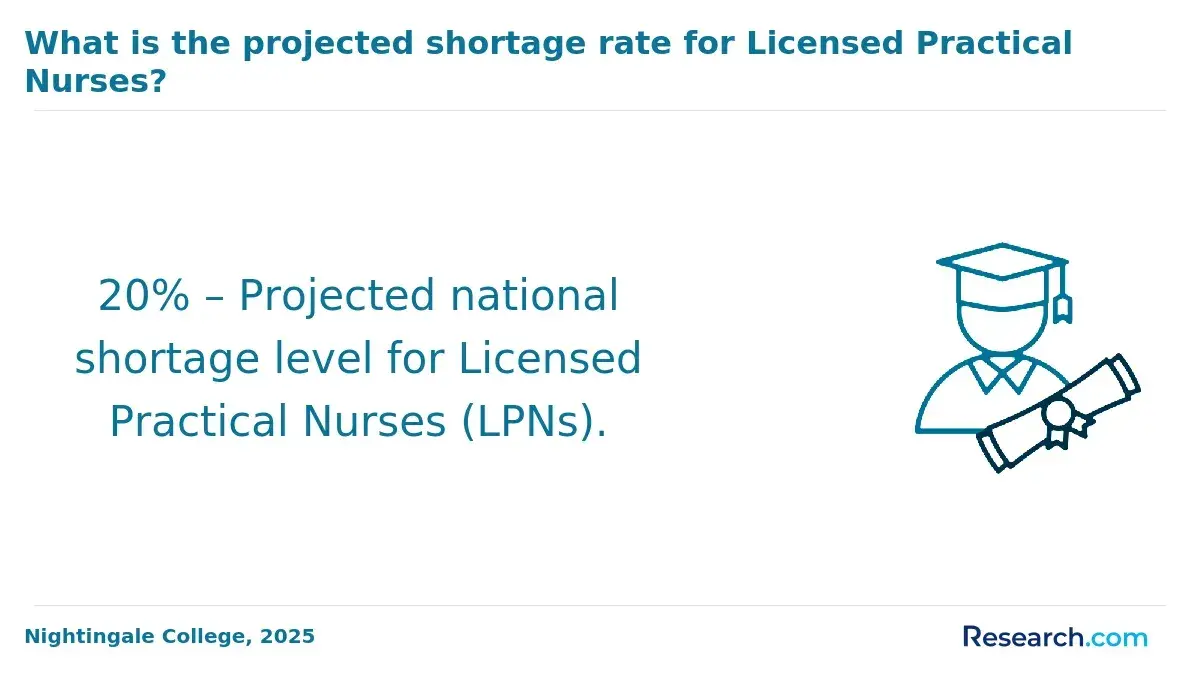
Students should review labor-market claims carefully because outlook figures can vary by source and occupation category. One cited projection says LPN employment in Maine is projected to decline by 14% through 2026 (Nightingale, 2026). Another claim in the source material states demand is projected to grow by 5% through 2032. Because those figures point in different directions, prospective students should check current state labor data and local employer postings before making enrollment decisions.
Cost of living is another major factor. Maine has the 11th highest cost of living in the country, according to World Population Review (World Population Review, 2026). That means salary should be evaluated against housing, transportation, childcare, and commuting costs, especially if clinical placements or jobs are far from home.
What can I do with an LPN in Maine?
An LPN license in Maine can lead to practical nursing jobs in hospitals, long-term care facilities, clinics, rehabilitation centers, home health agencies, physician offices, and community health settings. LPNs often provide bedside care, collect patient information, administer medications within their permitted scope, monitor changes in condition, support care plans, and communicate with RNs, providers, patients, and families.
LPNs in Maine earn an average salary of $53,189 per year, according to Salary.com. The LPN salary in Maine is higher than the national average salary, which is $51,850 (Incredible Health, 2026). Actual pay varies by employer, region, shift, experience, specialty, and benefits package.
| Work Setting | Common LPN Responsibilities | Good Fit For |
| Long-term care | Medication support, wound care, resident monitoring, documentation, care-team communication | Students who want steady patient relationships and structured routines |
| Home health | Patient visits, chronic condition support, basic assessments, family education | LPNs who are independent, organized, and comfortable traveling |
| Clinics and physician offices | Vitals, intake, injections, patient education, care coordination | Those who prefer daytime schedules and outpatient care |
| Rehabilitation centers | Recovery monitoring, mobility support, medication administration, interdisciplinary teamwork | LPNs interested in helping patients regain function |
| Hospitals | Direct care support under RN supervision, documentation, patient monitoring | LPNs who want fast-paced clinical exposure where LPN roles are available |
Some LPNs later move into RN, BSN, MSN, educator, or advanced-practice pathways. If you are already thinking beyond entry-level practice, compare bridge programs and online nursing degree programs that may support future advancement.
What makes LPN programs in Maine stand out?
Maine LPN programs are often appealing because they connect classroom learning with local healthcare needs. Many programs use simulation, campus labs, and clinical partnerships to help students practice patient-care scenarios before working with patients. This matters because practical nursing is skill-based; students need repeated practice in communication, safety, documentation, medication support, and patient observation.
Clinical partnerships are another important advantage. Programs may place students in hospitals, rehabilitation centers, long-term care facilities, and community health settings. These placements help students build confidence, understand employer expectations, and make professional contacts before graduation.
Students who want a broader nursing career should also look for clear progression options. A practical nursing program is valuable on its own, but it can also become the first step toward RN licensure or advanced nursing roles. For a complete state pathway, review Research.com’s guide on how to become a registered nurse in Maine.
How to Choose the Right LPN Program in Maine
The best LPN program is not automatically the cheapest, fastest, or closest. It is the program that is approved for licensure, affordable after aid, realistic for your schedule, and strong enough to prepare you for the NCLEX-PN and entry-level practice.
| Selection Factor | Why It Matters | Red Flag |
| State approval | You need an approved program to qualify for licensure. | The school cannot clearly explain Maine licensure eligibility. |
| Accreditation | Accreditation can affect transfer, employer perception, and future education. | The program uses vague terms like “recognized” without naming an accreditor. |
| Clinical placements | Clinical training is mandatory and affects your schedule and travel costs. | Clinical sites are not confirmed before enrollment. |
| NCLEX-PN support | Strong preparation can improve readiness for licensure testing. | The school will not discuss pass-rate history or exam preparation. |
| Total cost | Fees, supplies, and transportation can change affordability. | The school only advertises tuition and avoids full-cost estimates. |
| Schedule format | Working students need realistic class, lab, and clinical schedules. | “Flexible” means online lectures only, while labs and clinicals conflict with work. |
Common Mistakes to Avoid When Choosing an LPN Program
- Assuming “online” means fully remote. LPN clinicals and labs must be completed in person.
- Looking only at tuition. Compare total cost, including fees, books, uniforms, supplies, transportation, and licensure expenses.
- Skipping approval checks. Always verify Maine State Board of Nursing approval before applying.
- Ignoring clinical logistics. A low-cost program can become difficult if clinical sites require long commutes or daytime availability you do not have.
- Choosing based only on speed. A shorter program is helpful only if it prepares you well for the NCLEX-PN and safe practice.
- Assuming credits will transfer. If you plan to become an RN later, ask in writing how credits apply to bridge or associate programs.
- Relying on salary averages as guarantees. Pay depends on location, employer, shift, experience, and role.
What options are available for LPNs in Maine who want to pursue advanced nursing degrees?
LPNs in Maine can advance by moving into LPN-to-RN, ADN, BSN, MSN, or nurse practitioner pathways. The right choice depends on your timeline, finances, academic background, and desired scope of practice. LPNs interested in advanced clinical authority can explore the best nurse practitioner programs in Maine, but they should understand that becoming an NP requires multiple steps beyond practical nursing, including RN preparation and graduate-level nursing education.
Specialty certifications can also strengthen an LPN’s profile. Areas such as wound care, IV therapy, gerontology, pediatrics, and medical-surgical nursing may help practical nurses qualify for more focused roles, depending on employer requirements and state scope-of-practice rules.
Can combining LPN training with Medical Assistant certification enhance career prospects in Maine?
Combining practical nursing education with medical assistant experience can make a healthcare worker more versatile, especially in outpatient clinics, physician offices, urgent care settings, and small practices where both clinical and administrative skills are valued. Medical assistant training can build comfort with intake, scheduling, electronic records, and front-office workflows, while LPN training expands the clinical scope of practice.
This combination may be especially useful for students who already work as medical assistants and want to move into nursing without abandoning their healthcare experience. To compare related training routes, review the best medical assistant programs in Maine.
How can I transition from LPN to RN quickly?
The fastest realistic route from LPN to RN is usually an LPN-to-RN bridge program or an associate degree pathway that gives credit for prior practical nursing education and experience. These programs may shorten the route by avoiding repeated introductory content, but they still require nursing coursework, clinical hours, and NCLEX-RN preparation.
LPNs who eventually want a bachelor’s degree should compare bridge options carefully. Some students complete an RN pathway first and then pursue BSN completion, while others look for accelerated online options after becoming licensed as RNs. For bachelor-level advancement, compare fast-track RN to BSN online programs.
How can LPNs incorporate nutritional expertise into their practice in Maine?
LPNs often support patients with chronic conditions, medication routines, recovery plans, and wellness goals. Nutrition knowledge can improve patient education, especially when nurses work with older adults, patients with diabetes, cardiovascular risk, wound healing needs, or post-acute recovery plans. However, LPNs should stay within their scope of practice and collaborate with registered dietitians, providers, and RNs when nutrition counseling requires specialized assessment or treatment planning.
LPNs who want formal nutrition credentials can explore education pathways related to how to become a nutritionist in Maine.
What unique career advancement opportunities are available for LPNs in Maine?
LPNs in Maine can build a long-term healthcare career by combining experience, continuing education, bridge programs, and targeted certifications. Advancement does not always require leaving practical nursing immediately; some LPNs deepen their expertise in a specialty, while others use the LPN license as a stepping stone to RN or advanced-practice roles.
- LPN-to-RN bridge programs: These programs help practical nurses work toward registered nursing eligibility, often through an Associate Degree in Nursing.
- Specialty certifications: Wound care, IV therapy, gerontology, pediatrics, and related areas can help LPNs demonstrate focused competence.
- BSN and MSN pathways: LPNs who become RNs can later pursue bachelor’s and master’s degrees for leadership, education, or advanced clinical roles.
- Clinical leadership roles: Experienced LPNs may supervise CNAs, coordinate care tasks, mentor newer staff, or support unit operations.
- Rural and underserved healthcare roles: Maine’s rural communities may offer broad hands-on experience and opportunities to serve patients with limited access to care.
Transitioning from MA to LPN in Maine: Pathways and Benefits
Medical assistants who want a larger clinical role may find LPN training to be a practical next step. Prior healthcare experience can make nursing coursework more familiar, especially in areas such as patient communication, vital signs, documentation, and clinic flow.
Some bridge-style pathways may recognize prior healthcare training, although policies vary by school. Students should ask whether previous coursework, work experience, or certifications reduce program length or only strengthen the admissions application.
A flexible option to research is an online MA to LPN bridge program, especially for working adults who need online theory courses while completing clinical requirements locally.
The main benefit of moving from MA to LPN is expanded nursing responsibility. LPNs generally have a broader clinical role than medical assistants and may work in long-term care, home health, rehabilitation, clinics, and other healthcare settings. The LPN credential can also support future movement into ADN or BSN programs.
What are the ongoing licensure and renewal obligations for LPNs in Maine?
After initial licensure, LPNs must follow Maine’s renewal rules to remain in good standing. Requirements can include renewal applications, fees, and continuing obligations tied to professional practice and patient safety. Because nursing regulations can change, LPNs should rely on current state guidance rather than informal advice from classmates or employers.
For a state-specific overview, review Research.com’s guide to Maine nursing license requirements.
How do Maine LPN programs support job placement and professional networking?
Strong LPN programs do more than teach nursing content. They help students connect with employers, prepare for interviews, understand local hiring expectations, and use clinical rotations as professional networking opportunities. Career fairs, alumni contacts, faculty recommendations, and employer partnerships can all help graduates move from school to work.
Clinical sites can be especially important. A student who performs well during rotations may develop references and learn which settings fit their strengths. For a step-by-step career overview, see Research.com’s guide on how to become a certified LPN in Maine.
How can technology and online bridge programs elevate LPN career growth in Maine?
Technology is changing both nursing education and nursing practice. Hybrid coursework, virtual simulation, telehealth exposure, electronic health record training, and online test-preparation tools can help LPN students build skills that match modern healthcare workflows. Still, technology should supplement—not replace—supervised hands-on clinical learning.
For LPNs planning long-term advancement, online bridge programs may make continued education more realistic while working. Nurses who move through ADN and graduate pathways may eventually consider advanced-practice routes; one option to research is ADN to NP programs.
How do Maine LPN programs support continuous professional development?
Continuous learning is part of safe nursing practice. Maine LPN programs can support professional development through faculty advising, NCLEX-PN preparation, refresher learning, simulation, clinical feedback, and connections to employers. After graduation, LPNs may continue learning through workplace training, specialty certifications, bridge programs, and continuing education.
Students who already know they want to continue beyond practical nursing should compare articulation agreements and transfer pathways among the best nursing schools in Maine.
How can I balance work and study while pursuing an LPN program in Maine?
Working while enrolled in an LPN program is possible, but it requires planning. The hardest part is often not online coursework; it is attending labs, clinical rotations, exams, and skills checkoffs at fixed times. Students should build their work schedule around clinical requirements before committing to a program.
- Compare program pace before enrolling. Accelerated LPN programs can reduce time in school, but they may be difficult for students working full time.
- Ask for the clinical schedule early. Do not assume evening or weekend clinicals are available.
- Build a weekly study system. Block time for reading, skills practice, exam review, and care-plan assignments.
- Talk with your employer. Some employers may offer flexible scheduling, tuition support, or shift adjustments for healthcare students.
- Choose clinical locations strategically. Long commutes can add stress and hidden costs.
- Protect recovery time. Nursing programs are demanding. Fatigue can affect academic performance and clinical safety.
How will evolving healthcare trends shape LPN roles and education in Maine?
Maine LPN education is being shaped by several healthcare trends: hybrid learning, virtual simulation, telehealth, electronic documentation, chronic disease management, aging populations, and rural access challenges. Programs that teach digital communication, safe documentation, team-based care, and patient education can better prepare students for current practice environments.
Policy and funding decisions may also influence program capacity, clinical placements, and workforce development. Students who need flexible pathways should compare the best online nursing programs in Maine while remembering that entry-level LPN training still requires in-person clinical experience.
The Best LPN Programs in Maine Await You
The right Maine LPN program should give you three things: eligibility for licensure, practical clinical confidence, and a realistic path to employment or further education. Do not choose a program only because it is online, fast, or inexpensive. Choose one that is approved, transparent, clinically strong, and aligned with your career plan.
If you already know that practical nursing is only your first step, plan your bridge pathway early. Some students continue from LPN to RN, then BSN, MSN, or advanced practice. Others compare graduate options later, including the fastest NP programs, once they have met the required nursing education and licensure milestones.
How can LPNs transition to nurse practitioner roles in Maine?
An LPN cannot move directly into nurse practitioner practice without completing several additional education and licensure steps. The usual path is LPN to RN, then BSN or equivalent preparation, then graduate nursing education, followed by advanced practice certification and state requirements. Prior LPN experience can be valuable, but it does not replace the RN and graduate-level preparation required for NP practice.
Students interested in this long-term route should seek bridge programs, maintain strong academic records, build broad clinical experience, and look for mentors in Maine’s healthcare system. For a detailed pathway, see how to become a nurse practitioner in Maine.
Can LPNs transition into a nurse midwife role in Maine?
Yes, but the transition requires multiple steps. Nurse midwifery is an advanced nursing role, so an LPN would typically need to become an RN, complete the required bachelor’s or equivalent preparation, enter an accredited graduate nurse-midwifery program, complete specialized clinical training, and satisfy certification and state practice requirements.
LPNs interested in maternal, reproductive, and newborn care can begin by seeking relevant clinical exposure, strong science preparation, and RN bridge options. For role-specific requirements, review nurse midwife education requirements in Maine.
Key Insights
- Maine LPN programs are usually hybrid, not fully online. Online coursework may be available, but labs and clinical rotations must be completed in person.
- State approval matters more than marketing language. Before enrolling, verify Maine State Board of Nursing approval and confirm that the program prepares you for NCLEX-PN eligibility.
- Cost comparisons require full program totals. Maine College of Health Professions lists an estimated total cost of $20,550, while Central Maine Community College lists tuition of $2,880 per year for in-state students and $5,760 per year for out-of-state students; those figures measure different cost categories.
- Program length varies by credential and pace. Diploma or certificate programs often take about 12 to 18 months, while associate pathways may take about two years; the full licensure timeline can run from about 18 months to three years.
- Labor-market claims should be checked locally. The source material includes both a decline by 14% through 2026 and growth by 5% through 2032, so students should review current job postings and state workforce data before enrolling.
- LPN work can lead to advancement. Common next steps include specialty certifications, LPN-to-RN bridges, BSN completion, MSN study, nurse practitioner preparation, or nurse midwifery pathways.
- The best program is the one that fits your licensure goal, schedule, budget, and clinical reality. Ask detailed questions about clinical placements, NCLEX-PN support, transfer credits, and total cost before committing.
Related Articles for Nearby States
- 2027 Best LPN Programs in New Hampshire – Accredited Online LPN Programs
- 2027 Best LPN Programs in Massachusetts – Accredited Online LPN Programs
- 2027 Best LPN Programs in Vermont – Accredited Online LPN Programs
- 2027 Best LPN Programs in Connecticut – Accredited Online LPN Programs
- 2027 Best LPN Programs in New York – Accredited Online LPN Programs
- 2027 Best LPN Programs in New Jersey – Accredited Online LPN Programs
- 2027 Best LPN Programs in Pennsylvania – Accredited Online LPN Programs
- 2027 Best LPN Programs in Delaware – Accredited Online LPN Programs
- 2027 Best LPN Programs in Maryland – Accredited Online LPN Programs
- 2027 Best LPN Programs in Virginia – Accredited Online LPN Programs
References:
- AACN. (2025). 2024-2025 Enrollment and Graduations in Baccalaureate and Graduate Programs. https://www.aacnnursing.org
- Carson-Newman. (2025). By the Numbers: Nursing Statistics 2025. https://onlinenursing.cn.edu/news/nursing-by-the-numbers
- HRSA. (2025). 2024 National Sample Survey of Registered Nurses. https://bhw.hrsa.gov/data-research/access-data-tools/national-sample-survey-registered-nurses
- Nightingale College. (2024). Nursing Shortage: 2026 US Statistics. https://nightingale.edu/blog/nursing-shortage-by-state.html
- U.S. Bureau of Labor Statistics. (2025). Occupational Outlook Handbook: Registered Nurses. https://www.bls.gov/ooh/healthcare/registered-nurses.htm
Other Things You Should Know About LPN Programs in Maine
To become an LPN in Maine, you need to complete an accredited LPN program, pass the NCLEX-PN exam, and apply for licensure through the Maine State Board of Nursing. Ensure completion of any required clinical hours for eligibility.
The cost of an LPN program in Maine varies by institution. Online programs tend to be more affordable due to lower overhead costs. For example, the estimated total cost for the online LPN program at Maine College of Health Professions is $20,550. Tuition rates do not include additional costs such as fees, textbooks, and living expenses.
It typically takes two to three years to become an LPN in Maine. Diploma programs often take about 12 to 18 months, while associate degree programs can take about two years to complete. After completing the program, you must pass the NCLEX-PN exam and apply for licensure.
Yes, you can become an LPN in Maine with an online degree. Many programs offer online coursework for theoretical components, but all require on-site clinical rotations to gain practical experience. These combined programs ensure students meet the necessary requirements for licensure.
In 2027, online LPN programs in Maine require students to complete clinical rotations in local healthcare facilities. These practical experiences, supervised by licensed professionals, are essential for hands-on learning and meeting state licensure requirements. Students must ensure their chosen program is accredited and aligned with Maine's standards.
Yes, there are financial aid options available for LPN programs in Maine. Students can apply for grants, scholarships, and loans to help cover tuition and other expenses. Additionally, tuition reciprocity programs may allow students from neighboring states to pay in-state tuition rates at public colleges and universities.
Accreditation is crucial for LPN programs in Maine, ensuring quality education and eligibility for licensure. Accredited programs meet state and national standards, preparing students effectively for the NCLEX-PN exam and future employment. Additionally, it facilitates the transfer of credits for further nursing education.