2027 Most Affordable LPN/LVN to BSN Online Bridge Programs

Co-Founder and Chief Data Scientist
Choosing an online LPN/LVN-to-BSN bridge program is a high-stakes decision because it affects your RN licensure path, tuition bill, work schedule, clinical placement options, and long-term nursing mobility. For licensed practical nurses and licensed vocational nurses, the BSN can be the credential that opens hospital RN roles, specialty units, leadership tracks, and future graduate study—but only if the program is accredited, affordable, accepted in your state, and realistic for your life.
This guide explains what an online LPN/LVN-to-BSN bridge program actually involves, how much it can cost, how long it usually takes, what admissions requirements to expect, and how to compare programs before enrolling. It also highlights affordable accredited options for 2027 and gives practical decision points for working nurses who need flexibility without risking licensure eligibility or clinical readiness.
The stakes are real. America’s 3.38 million registered nurses earn a median $93,600, and the occupation is projected to add another 197,200 openings this decade. At the same time, hospitals still report vacancy rates above 9 percent. For LPNs and LVNs who want to move into RN practice, an online bridge can be a practical route—but it is not automatically the cheapest, fastest, or best fit for every student.
Quick Answer: Is an Online LPN/LVN-to-BSN Bridge Program Worth It?
An online LPN/LVN-to-BSN bridge program can be worth it if you already hold an active LPN/LVN license, want to become an RN, need a flexible schedule, and are willing to complete in-person clinical requirements near your location. The strongest programs combine regional accreditation, CCNE or ACEN nursing accreditation, transparent tuition, NCLEX-RN preparation, and reliable help securing clinical placements.
The main value is career mobility. Median RN pay hits $93.6 K, which is 45 percent more than the LPN median. The 6 % job-growth forecast for 2023-33 also keeps BSN-prepared nurses in demand across hospitals, home health, public health, outpatient care, and specialty practice. A BSN can also lead to 20+ paths, from ICU travel nursing and informatics to charge nurse, case management, and graduate-level nursing roles.
Best fit for this path
- LPNs/LVNs who want RN licensure and a bachelor’s degree in one pathway.
- Working nurses who need online theory courses but can complete local clinicals.
- Students aiming for hospitals, specialty units, leadership, public health, or graduate nursing programs.
- Nurses who can manage demanding coursework while working shifts.
Consider another route if
- You need the fastest RN route and would be better served by an LPN-to-RN or ADN bridge first.
- You cannot complete in-person clinical hours because LPN/LVN-to-BSN programs generally require them.
- Your state board does not accept the program’s clinical model or distance-learning format.
- You need a lower-cost stepping-stone program before committing to a full BSN.
What Is an Online LPN/LVN-to-BSN Bridge Program?
An online LPN/LVN-to-BSN bridge program is a bachelor’s degree pathway designed for licensed practical or vocational nurses who want to become registered nurses. It “bridges” prior practical nursing education into a BSN curriculum, so students do not usually start from zero. Schools may award advanced-standing credit for previous LPN/LVN coursework, licensure, and clinical experience.
Most programs deliver nursing theory online and require hands-on clinical practice in approved healthcare settings. That means “online” does not mean fully remote. You may study health assessment, pharmacology, evidence-based practice, leadership, community health, and population health through an online learning platform, but you still need supervised clinical experience to qualify for RN licensure and NCLEX-RN eligibility.
What you can usually expect
- Transfer or advanced-standing credit for 12-18 months of prior LPN coursework.
- About 30-36 credits of upper-division nursing coursework completed online.
- Local or regional clinical placements approved by the school.
- Asynchronous lectures, online discussions, proctored exams, and virtual simulation labs.
- NCLEX-RN preparation, often built into the curriculum or included through review modules.
Full-time students may finish in as little as five terms, while part-time students often need two to three years because they continue working while completing courses and clinicals. The best timeline depends on transfer credits, general education requirements, course sequencing, clinical availability, and whether the school offers year-round enrollment.
Where Can You Work After an LPN/LVN-to-BSN Online Bridge Program?
Graduates who complete the BSN, meet state requirements, and pass the NCLEX-RN can pursue registered nursing roles in many healthcare settings. Hospitals remain the largest employer category for registered nurses, with hospitals accounting for 58 % of RNs. However, BSN-prepared nurses are also hired in outpatient care, home health, government clinics, schools, tele-triage centers, long-term care, public health, and corporate healthcare roles.
Top-employing industries for BSN nurses
| Industry | Employment figure |
| State Government, excluding Schools and Hospitals (OEWS Designation) | 21,480 |
| Local Government, excluding Schools and Hospitals (OEWS Designation) | 18,600 |
| Management of Companies and Enterprises | 15,760 |
| Colleges, Universities, and Professional Schools | 14,000 |
| General Medical and Surgical Hospitals | 9,020 |
Top-employing states for BSN nurses
| State | Employment figure |
| California | 40,580 nurses |
| Texas | 23,370 |
| Florida | 15,110 |
| New York | 14,140 |
| Illinois | 11,570 |
How Much Can You Make After an LPN/LVN-to-BSN Online Bridge Program?
The U.S. Bureau of Labor Statistics reports that registered nurses earned a median annual wage of $93,600 in May 2024. Nurses in the top 10 percent earned $135,320 or more. Actual pay depends on state, shift differentials, specialty, union status, overtime, employer type, years of experience, and whether the role requires a BSN.
Salary websites use different data sources and methods, so their estimates vary. Use them as directional salary tools, not guaranteed outcomes.
| Source | Reported nurse pay figure |
| Zippia, May 2027 | Average $73,349 |
| Salary.com, May 2027 | Range $65,090 – $117,060; average $109,038 |
| ZipRecruiter, May 2027 | Average $44.48 per hour |
| Indeed, May 2027 | Average $43.85 per hour plus $12 k overtime |
| PayScale, Apr 2027 | Average $35.60 per hour |
| Glassdoor, Jun 2027 | Average base $87,715; estimated total pay $99,149 |
The important comparison is not only “RN salary versus LPN salary.” It is whether the added tuition, time, clinical hours, and lost work flexibility are justified by the specific jobs you can access after licensure. Before enrolling, compare RN postings in your region and note whether employers prefer or require a BSN.
- Affordable online LPN/LVN-to-BSN programs for 2027
- Program length and pacing
- Online bridge programs versus campus programs
- Average tuition and total cost
- Financial aid and employer funding
- Admission prerequisites
- Common courses and clinical requirements
- Specialization options
- Challenges of online LPN/LVN-to-BSN study
- Student support services to look for
- Using a BSN bridge for advanced practice nursing
- How online programs protect academic quality
- Whether a BSN can be completed online without clinicals
- How to choose the right program
- Career paths after graduation
- Job market outlook
Most Affordable LPN/LVN to BSN Online Bridge Programs for 2027
Licensed practical and vocational nurses have several accredited online bridge options that can lead to a BSN. The programs below are presented as affordable accredited LPN/LVN-to-BSN choices for 2027. They combine online nursing coursework with required clinical experiences and hold CCNE or ACEN nursing accreditation. All listed schools are regionally accredited.
If you want a broader program search after reviewing this affordability list, Research.com also provides a guide to online LPN to BSN programs.
How the programs were evaluated
This ranking used the Research.com methodology and drew from widely used education data sources, including the U.S. Department of Education’s IPEDS database, Peterson’s database, and the College Scorecard database.
The review focused on tuition, program structure, institutional accreditation, nursing accreditation, affordability per credit, and online availability. Because nursing licensure is state-regulated, students should also confirm whether a program meets the requirements of the state where they plan to practice.
Affordable LPN/LVN-to-BSN program comparison
| School and program | Program cost | Estimated duration | Total credits | Accreditation |
| Southwestern Oklahoma State University – LPN to BSN | $245/credit | 2 years | 124 | ACEN ; HLC |
| University of South Alabama – LPN to BSN Pathway | $328/credit | 2 years | 120 | CCNE ; SACSCOC |
| University of Arkansas – LPN to BSN Online | $339/credit | 3 years | 120 | CCNE ; HLC |
| University of Sioux Falls – LPN to BSN | $390/credit | 3 years | 120 | CCNE ; HLC |
| Indiana State University – LPN/LVN to BSN Track | $469/credit | 3 years | 120 | ACEN ; HLC |
| Wilson College Online – LPN to BSN | $475/credit | 3 years | 120 | ACEN ; MSCHE |
| Excelsior University – LPN to BSN | $550/credit | 2 years | 121 | ACEN ; MSCHE |
| University of Mary – LPN to BSN | $615/credit | 2 years | 128 | CCNE ; HLC |
| Clarkson College – LPN to BSN | $671/credit | 8 semesters (≈2.7 years) | 127 | ACEN ; HLC |
| Herzing University – Online LPN to BSN Bridge | $755/credit | 28 months | 120 | CCNE ; HLC |
Southwestern Oklahoma State University – LPN to BSN
Southwestern Oklahoma State University offers an ACEN-accredited LPN-to-BSN pathway built for nurses who need online didactic coursework and local clinical options. The program uses seven fast eight-week sessions and awards advanced-standing credit for practical nursing preparation.
This option is especially worth reviewing if low tuition is your top priority and you want a public university with a structured bridge format.
- Program cost: $245/credit
- Program duration: 2 years
- Total credits needed to graduate: 124
- Program/School Accreditation: ACEN ; HLC
University of South Alabama – LPN to BSN Pathway
The University of South Alabama provides an online LPN-to-BSN pathway through its College of Nursing. Students first complete 62 general-education credits, then move through 48 professional credits in asynchronous online modules.
The pathway may appeal to students who want a four-semester professional sequence and clinical experiences arranged through approved healthcare sites near home.
- Program cost: $328/credit
- Program duration: 2 years
- Total credits needed to graduate: 120
- Program/School Accreditation: CCNE ; SACSCOC
University of Arkansas – LPN to BSN Online
The University of Arkansas offers an online LPN-to-BSN bridge through the Eleanor Mann School of Nursing. Distance learners receive in-state tuition, and courses are delivered in 16-week sessions with simulations and local clinical placements.
This program is a useful comparison point for students who want a flagship public university and can follow a longer three-year plan.
- Program cost: $339/credit
- Program duration: 3 years
- Total credits needed to graduate: 120
- Program/School Accreditation: CCNE ; HLC
University of Sioux Falls – LPN to BSN
The University of Sioux Falls offers an online LPN-to-BSN route with eight-week blocks and a cohort structure. LPNs receive 30 advanced credits, which lowers the number of BSN credits they must complete to 83.
Students who want a Christian university environment, year-round progression, and community-based clinicals may find this option aligned with their goals.
- Program cost: $390/credit
- Program duration: 3 years
- Total credits needed to graduate: 120
- Program/School Accreditation: CCNE ; HLC
Indiana State University – LPN/LVN to BSN Track
Indiana State University has a fully remote LPN/LVN-to-BSN track designed for practical and vocational nurses who cannot relocate or attend regular campus sessions. Coursework uses eight-week online classes, virtual simulation, and clinical learning arranged near the student.
This track is particularly relevant for students who need a public-university online program with no campus visits required.
- Program cost: $469/credit
- Program duration: 3 years
- Total credits needed to graduate: 120
- Program/School Accreditation: ACEN ; HLC
Wilson College Online – LPN to BSN
Wilson College Online offers an asynchronous LPN-to-BSN bridge from a private liberal-arts institution based in Chambersburg, Pennsylvania. The curriculum is designed for nontraditional learners and allows theory courses to be completed online while clinicals are completed close to home.
The program may be a good fit for students who value small classes, nursing tutoring, transfer credit flexibility, and a private-college setting at a competitive tuition rate.
- Program cost: $475/credit
- Program duration: 3 years
- Total credits needed to graduate: 120
- Program/School Accreditation: ACEN ; MSCHE
Excelsior University – LPN to BSN
Excelsior University serves adult and military learners through flexible online programs. Its LPN-to-BSN pathway uses eight-week terms, online theory courses, local approved clinicals, academic coaching, and virtual skills resources.
This program is worth comparing if you want a bridge designed around prior learning and adult-student flexibility.
- Program cost: $550/credit
- Program duration: 2 years
- Total credits needed to graduate: 121
- Program/School Accreditation: ACEN ; MSCHE
University of Mary – LPN to BSN
The University of Mary offers a blended-online LPN-to-BSN program rooted in a Catholic educational mission. Most coursework is asynchronous, but students complete two brief campus residencies for simulation and assessment.
This option can work for students who want mostly online study but can travel for limited in-person sessions.
- Program cost: $615/credit
- Program duration: 2 years
- Total credits needed to graduate: 128
- Program/School Accreditation: CCNE ; HLC
Clarkson College – LPN to BSN
Clarkson College focuses on healthcare education and offers an LPN-to-BSN program with online theory courses, virtual simulation, advanced placement for LPN licensure, and local clinicals.
Students who want healthcare-focused instruction and smaller classes may want to compare Clarkson against larger public universities.
- Program cost: $671/credit
- Program duration: 8 semesters (≈2.7 years)
- Total credits needed to graduate: 127
- Program/School Accreditation: ACEN ; HLC
Herzing University – Online LPN to BSN Bridge
Herzing University offers an online LPN-to-BSN bridge with eight-week courses and local clinical placements. The professional component can be completed in as little as twenty-eight months, and career coaches may help students align their plans with employer tuition reimbursement.
This program may fit nurses who want a structured online format, continuous enrollment, and career support from an online-focused institution.
- Program cost: $755/credit
- Program duration: 28 months
- Total credits needed to graduate: 120
- Program/School Accreditation: CCNE ; HLC
How Long Does It Take to Complete an LPN/LVN to BSN Online Bridge Program?
Most online bridge programs allow working LPNs and LVNs to finish a BSN in 24–36 months because they grant advanced-standing credit for prior nursing coursework and licensure. Faster options exist, but the shortest timeline usually requires full-time enrollment, completed prerequisites, flexible clinical availability, and minimal transfer-credit issues.
Southwestern Oklahoma State University structures seven eight-week terms so full-time students can finish in roughly 12–18 months. Other students may choose an LPN to RN program first, including a 6 month LPN to RN program option, before pursuing BSN completion later.
Programs such as the University of Arkansas list a two-to-three-year plan for 120 credits. Part-time study can extend completion to four years, which may be the better choice for nurses working 12-hour shifts, managing family care, or depending on employer reimbursement that pays by semester or year.
| Enrollment pace | Typical completion time | Best for | Main trade-off |
| Accelerated full-time | 12–18 months in selected formats | Students with prerequisites complete and strong schedule control | Heavy academic and clinical workload |
| Standard full-time | 24–36 months | Working nurses who can reduce shifts or manage predictable schedules | Less income flexibility during intensive terms |
| Part-time | Two to three years or up to four years | Nurses balancing employment, family, and school | Longer time before RN licensure and BSN-level roles |
How Does an LPN/LVN to BSN Online Bridge Compare to an On-Campus Program?
Accredited online and on-campus LPN/LVN-to-BSN programs should cover comparable nursing competencies. The main difference is delivery. Online bridge programs replace scheduled campus lectures with web-based modules, virtual simulation, online discussion, and remote advising, while still requiring approved in-person clinical experiences.
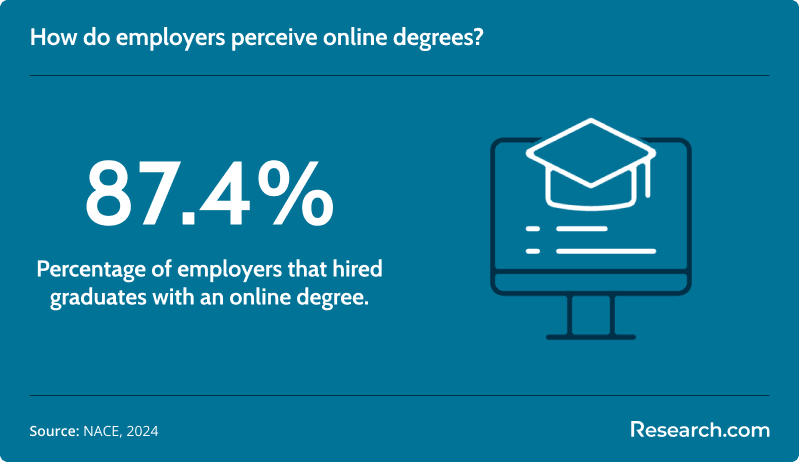
Drexel University’s comparison of online versus traditional degrees notes that employers value accredited online credentials equally when the institution has strong recognition and appropriate academic standards. A NACE survey also found that 87.4 % of employers hired graduates holding an online degree, reinforcing that online credentials are widely accepted when they come from legitimate accredited programs.
Online learners often avoid commuting and relocation costs, and they may pay lower mandatory fees. The original cost comparison notes that online students can often save 10–20 % of mandatory fees. However, online learning requires more self-direction, and clinical placement logistics can be more complicated. Campus programs may provide easier access to simulation labs and faculty in person, but daytime attendance can be difficult for LPNs/LVNs working rotating shifts. Students comparing earlier-stage options can also review LPN online programs to understand how online healthcare education differs by credential level.
| Factor | Online LPN/LVN-to-BSN bridge | Campus LPN/LVN-to-BSN program |
| Lecture format | Mostly asynchronous or hybrid online modules | Scheduled in-person classes |
| Clinical training | Completed in approved local or regional sites | Often coordinated through nearby partner facilities |
| Flexibility | Stronger fit for working nurses | Better for students who prefer fixed routines |
| Campus access | Virtual advising, library, tutoring, and tech support | Face-to-face faculty, labs, and peer interaction |
| Best fit | Licensed nurses who need schedule flexibility | Students who learn best in person and can attend regularly |
What Is the Average Cost of an LPN/LVN to BSN Online Bridge Program?
Across the programs evaluated, tuition ranges from $300 – $755 per credit, with a midpoint near $440. That is close to EducationData’s estimate that public four-year institutions charge about $406 per credit and private schools charge $496. When applied to the 120-credit BSN requirement, the estimated out-of-pocket range is $36,000 to $60,000, depending on transfer credits and institutional pricing.
Advanced-standing credit is one of the biggest cost reducers. Many bridge programs grant 12–30 credits for an active LPN/LVN license and prior nursing education, which can cut one semester or more from the final bill. Part-time students should also budget an extra 5–10 % for technology, proctoring, and term-based online fees that may accumulate over a longer enrollment period.
The national tuition comparison cited in the original data shows LPN/LVN certificate programs costing under $20,000, while RN bachelor’s programs range from $9,235 for in-state students to $26,401 for out-of-state students. The annual sticker price for BSN study in 2023-24 is also reported at $26,401.
Cost factors to compare before enrolling
| Cost item | Why it matters | Question to ask |
| Tuition per credit | The headline price is usually based on credit cost. | How many credits will I personally need after transfer review? |
| Advanced-standing credit | Credit for LPN/LVN training can reduce tuition and time. | How many credits will my license and prior courses earn? |
| Clinical costs | Travel, uniforms, background checks, and site requirements add expense. | Will I need to travel outside my area for clinicals? |
| Online fees | Technology and proctoring charges can add up. | Are fees charged per course, per term, or per exam? |
| NCLEX-RN preparation | Some programs include review tools in tuition; others do not. | Is NCLEX review included or billed separately? |
| Lost or reduced work hours | Clinical rotations may conflict with paid shifts. | Can I keep my current work schedule during clinical terms? |
What Financial Aid Options Are Available for LPN/LVN to BSN Online Bridge Students?
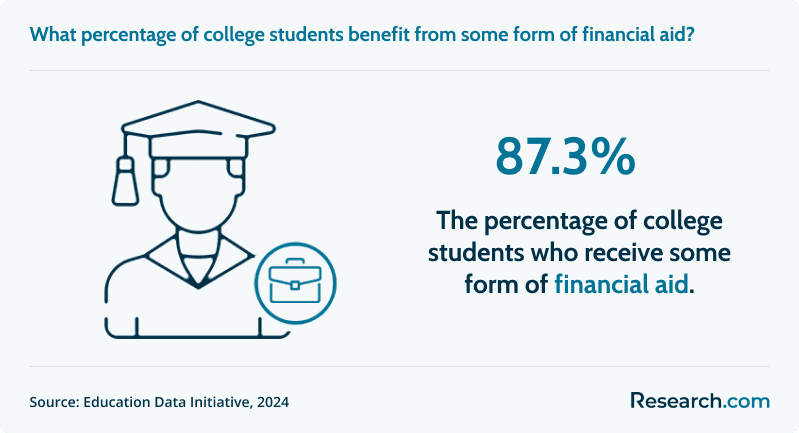
Online LPN/LVN-to-BSN students can usually access the same FAFSA-based aid as campus students if the school is eligible and the student meets federal requirements. NCES reports that 87% of first-time, full-time undergraduates receive some form of aid. Another cited figure shows that 87.3 % of all college students receive some form of financial aid.
Common funding sources include Federal Pell Grants, Direct Subsidized and Unsubsidized Loans, institutional scholarships, state grants, workforce programs, and employer tuition assistance. Federal Pell Grants provide up to $7,395 for 2024-25. Some hospitals reimburse $5 k–$10 k per year for employees who pursue a BSN, although terms vary by employer and may require a work commitment after graduation.
Institutional scholarships can also reduce the published price. The original tuition data notes that institutional scholarships routinely reduce costs by 25-40 %. Students searching for a lower-cost RN step before the BSN can also compare affordable LVN to RN programs online.
Smart ways to reduce your BSN bridge cost
- File the FAFSA as early as possible so you can compare complete aid packages.
- Request a written transfer-credit evaluation before committing to a school.
- Ask your employer about tuition reimbursement, scheduling flexibility, and post-graduation work obligations.
- Compare total program cost rather than only tuition per credit.
- Look for scholarships for working nurses, rural nurses, first-generation students, veterans, and under-represented nursing students.
- Avoid borrowing for living expenses unless you have calculated repayment against likely RN wages in your region.
What Are the Prerequisites for Enrolling in an LPN/LVN to BSN Online Bridge Program?
Admission requirements vary, but most programs begin by confirming that you hold an active, unencumbered LPN/LVN license. Many schools also want 6–12 months of recent bedside practice because bridge students are expected to build on practical nursing experience.
Applicants usually submit official transcripts showing a 2.5–3.0 GPA in prerequisite and general education courses. Common prerequisites include anatomy & physiology I–II, microbiology, English composition, and college algebra. These courses overlap with foundational nursing pathways such as an RN diploma program, and some schools limit transfer eligibility to courses completed within the last 10 years.
Other requirements commonly include a criminal background check, drug screen, immunization records, health insurance, CPR or basic life-support (BLS) certification, and proof that you can meet clinical-site standards. National Center for Education Statistics data show that 82% of health-science majors enter with at least two lab-science credits already complete, which can reduce remedial or prerequisite delays for some bridge students.
Typical admission checklist
- Active LPN/LVN license with no encumbrances.
- Official transcripts from practical nursing and college coursework.
- Minimum GPA, commonly 2.5–3.0.
- Completed science and general education prerequisites.
- Recent nursing work experience, often 6–12 months.
- Background check, drug screen, immunizations, and BLS certification.
- Ability to meet clinical placement requirements in your state or region.
What Courses Are Typically Included in an LPN/LVN to BSN Online Bridge Program?
LPN/LVN-to-BSN curricula add upper-division nursing theory, leadership, research, and RN-level clinical decision-making to the student’s previous practical nursing foundation. Coursework is designed to prepare graduates for the NCLEX-RN and for broader RN responsibilities across patient populations.
Common courses
- Health assessment
- Pathophysiology
- Pharmacology
- Adult and geriatric nursing
- Maternal-child nursing
- Community and public health nursing
- Evidence-based practice
- Nursing leadership and management capstone
- Informatics and quality improvement
Online modules may include recorded lectures, case studies, discussion boards, virtual simulations, and proctored testing. Clinical requirements are completed at approved facilities, often under an RN preceptor. Programs may require 500–700 hours of clinical learning, depending on curriculum design and state requirements.
BSN coursework also supports future graduate study. Students who want advanced clinical roles can use the BSN as a foundation for nurse practitioner, clinical nurse specialist, nurse educator, or leadership programs. If advanced practice is your long-term goal, Research.com’s guide on how to become a clinical nurse specialist explains one possible post-BSN path.
What Types of Specializations Are Available in LPN/LVN to BSN Online Bridge Programs?
Most LPN/LVN-to-BSN programs are generalist BSN programs because graduates must be prepared for broad RN practice and NCLEX-RN testing. Some schools, however, offer electives or focused clinical experiences that help students build toward a specialty area.
| Specialization area | What it emphasizes | Good fit for |
| Critical-care nursing | ICU skills, rapid response, monitoring, and high-acuity teamwork | Nurses aiming for ICU, step-down, or emergency settings |
| Pediatric nursing | Child development, family education, and chronic conditions in children | Nurses interested in children’s hospitals, clinics, or school health |
| Gerontology | Dementia care, fall prevention, palliative care, and aging populations | Nurses working with older adults or long-term care populations |
| Community/Public Health | Population assessment, prevention, health promotion, and disaster preparedness | Nurses drawn to public health departments, schools, and outreach programs |
| Informatics | Electronic health records, data use, workflow improvement, and decision-support tools | Nurses interested in technology, analytics, and system improvement |
| Nursing leadership | Staffing, budgeting, quality improvement, and unit-level management | Nurses planning for charge nurse, educator, or nurse manager roles |
What Challenges Might Arise During an Online LPN/LVN to BSN Bridge Program?
The flexibility of online study is valuable, but it can also hide the workload. LPN/LVN-to-BSN students are often working nurses, which means coursework, exams, discussion posts, simulations, and clinical rotations must fit around shifts that may already be physically demanding.
The most common challenge is time management. Asynchronous courses do not remove deadlines; they simply shift more responsibility to the student. Technology problems, limited clinical-site availability, and delayed communication with faculty can also create stress. Students who want a different graduate-entry direction can compare online direct entry MSN programs, but LPN/LVN bridge students should first confirm whether a BSN or RN pathway better matches their current license and goals.
Common challenges and better strategies
| Challenge | Why it causes problems | Better strategy |
| Working full-time during clinical-heavy terms | Clinical hours may conflict with paid shifts. | Ask for the clinical calendar early and discuss schedule changes with your employer. |
| Assuming online means self-paced | Most programs still have weekly deadlines and fixed clinical requirements. | Review the course format, exam schedule, and attendance expectations before enrolling. |
| Weak technology setup | Proctored exams and simulations require reliable equipment and internet access. | Confirm hardware, software, webcam, and internet requirements in advance. |
| Clinical placement delays | Licensure eligibility can be affected if hours are not completed on schedule. | Choose a school with clear clinical placement support in your state or region. |
| Isolation in online courses | Students may miss peer support and immediate faculty feedback. | Use office hours, cohort groups, tutoring, and advisor check-ins consistently. |
What Student Support Services Are Available in Online LPN/LVN to BSN Bridge Programs?
Support services matter because online nursing students still need academic coaching, clinical coordination, technology help, and career guidance. A lower tuition rate is less valuable if the school leaves students to find clinical placements alone or provides limited NCLEX preparation.
Strong programs typically provide academic advising, tutoring, writing support, technical support, library access, faculty office hours, disability accommodations, clinical placement guidance, and career services. Students thinking about future psychiatric advanced practice may also compare cheapest psychiatric NP programs after completing the BSN and meeting graduate admission requirements.
Support questions to ask before applying
- Will the school help secure clinical placements, or must I find my own site?
- Is support available during evenings or weekends for working nurses?
- Does the program include NCLEX-RN preparation in tuition?
- How quickly do faculty respond to online students?
- Are tutoring and writing support included, or do they cost extra?
- What happens if a clinical site cancels or cannot accept students?
Can the BSN Bridge Program Accelerate My Transition to Advanced Practice Nursing?
Yes, a BSN bridge can shorten the path to advanced nursing roles compared with remaining at the LPN/LVN level, because many graduate nursing programs require applicants to hold a BSN and an RN license. The bridge does not make someone an advanced practice nurse by itself, but it can create the academic foundation for future nurse practitioner, clinical nurse specialist, nurse midwife, nurse educator, or leadership study.
Students planning for graduate school should choose a BSN program with strong grades, research exposure, leadership coursework, and clinical experiences that align with their intended specialty. If you are comparing pathways into nurse practitioner roles, Research.com’s guide to an NP program for non-nurses can help clarify how nontraditional nursing pathways differ from LPN/LVN-to-BSN progression.
How Do Online LPN/LVN to BSN Programs Maintain Educational Quality?
Online LPN/LVN-to-BSN programs maintain quality through institutional accreditation, nursing accreditation, state board alignment, clinical standards, faculty oversight, and NCLEX-RN outcomes monitoring. CCNE and ACEN accreditation are especially important because they show that the nursing program has undergone external review against professional standards.
Quality online programs also use virtual simulation, standardized assessments, local clinical partnerships, course evaluations, faculty review, and outcome tracking. Students considering later specialization can also research affordable WHNP programs, but BSN program quality should be evaluated first because graduate options depend on a credible undergraduate foundation.
Signs of a credible online BSN bridge
- Regional institutional accreditation.
- CCNE or ACEN nursing accreditation.
- Clear state authorization and licensure disclosures.
- Transparent NCLEX-RN pass-rate information.
- Documented clinical placement process.
- Qualified nursing faculty with online teaching experience.
- Student support services designed for distance learners.
Can I Complete a BSN Online Without Clinicals?
An LPN/LVN-to-BSN program that prepares students for RN licensure generally requires clinicals. This is because the program is not just a degree-completion pathway; it is also preparing practical or vocational nurses for RN-level practice and NCLEX-RN eligibility.
Some RN-to-BSN programs are different. Because RN-to-BSN students already hold RN licensure, certain programs emphasize leadership, informatics, research, population health, and quality improvement without traditional clinical rotations. If you are already an RN and want that type of pathway, compare accredited online RN to BSN programs without clinicals. If you are still an LPN/LVN seeking RN licensure, assume clinicals will be required unless the school and your state board clearly state otherwise in writing.
How Does One Choose the Best LPN/LVN to BSN Online Bridge Program?
The best LPN/LVN-to-BSN program is not simply the cheapest or fastest. It is the program that is accredited, accepted for licensure in your state, affordable after transfer credits and aid, realistic for your schedule, and strong enough to prepare you for NCLEX-RN and RN practice.
Six-step program comparison process
- Verify accreditation. Confirm both regional institutional accreditation and CCNE or ACEN nursing accreditation.
- Check state eligibility. Ask whether the program meets RN licensure requirements where you plan to practice.
- Calculate your real cost. Multiply tuition by the credits you actually need after transfer and advanced-standing review.
- Review clinical placement support. Make sure the school can support placements near your ZIP code or employer.
- Study NCLEX-RN outcomes. Programs consistently above 90 % may indicate strong exam preparation, but also ask how many students were included in the rate.
- Evaluate support services. Prioritize programs with tutoring, technical support, advising, clinical coordination, and career services.
Students who already hold a non-nursing bachelor’s degree and want to move into nursing through a different route can compare the cheapest online accelerated BSN programs for non nurses. That pathway is different from an LPN/LVN-to-BSN bridge because it is designed for career changers rather than licensed practical or vocational nurses.
Questions to ask schools before you apply
| Question | Why it matters |
| Is the nursing program CCNE or ACEN accredited? | Nursing accreditation affects credibility, transferability, and graduate-school options. |
| Does the program meet RN licensure requirements in my state? | State approval determines whether you can use the program for licensure where you live or plan to work. |
| How many credits will transfer from my LPN/LVN program? | Transfer credit directly affects tuition and graduation timeline. |
| Who arranges clinical placements? | Students may struggle if they are expected to secure sites without school support. |
| Are there campus visits or residencies? | Travel requirements can affect cost, work schedules, and family obligations. |
| What is included in tuition? | NCLEX prep, simulation fees, proctoring, and clinical costs may or may not be included. |
| What happens if I fail a course or need to stop out? | Progression policies can affect cost, timeline, and eligibility to continue. |
Common mistakes to avoid
| Mistake | Risk | Better approach |
| Choosing based only on tuition per credit | A low per-credit rate may not be cheapest if few credits transfer. | Compare total cost after transfer review and fees. |
| Ignoring accreditation | Unaccredited or weakly accredited programs can limit licensure, transfer, and graduate study. | Confirm regional accreditation plus CCNE or ACEN nursing accreditation. |
| Assuming every online program works in every state | State board rules and clinical authorization can vary. | Get written confirmation for your state before enrolling. |
| Underestimating clinical hours | Clinical schedules may disrupt work and family responsibilities. | Ask for clinical timing, location expectations, and placement procedures. |
| Relying only on rankings | A highly ranked program may not match your license, location, budget, or schedule. | Use rankings as a starting point, then evaluate fit and licensure. |
| Assuming salary increases are guaranteed | Pay depends on location, employer, specialty, experience, and licensure. | Review actual RN job postings and wage data in your region. |
What Career Paths Are Available for Graduates of LPN/LVN to BSN Online Bridge Programs?
A BSN and RN license can open more nursing career paths than an LPN/LVN license alone. Many new BSN-prepared RNs begin in bedside roles such as medical-surgical nursing, telemetry, emergency nursing, pediatrics, intensive care, or long-term acute care. From there, they may move into case management, infection prevention, care coordination, informatics, travel nursing, public health, or leadership.
Public-health agencies and home-health companies also employ BSN-prepared nurses to support vaccination campaigns, chronic disease programs, care transitions, and community education. Leadership can begin with charge nurse or unit educator roles and may progress to nurse manager after two to three years of strong performance.
Specialty certifications, such as PCCN for progressive care or CEN for emergency nursing, may improve mobility and specialty credibility. A BSN can also satisfy entry requirements for graduate study in nurse practitioner, nurse midwife, nurse educator, or clinical nurse specialist programs.
If you are comparing helping professions outside nursing, Research.com’s discussion of whether becoming a mental health therapist is worth it can help you think through another patient-centered career path.
Career options after an LPN/LVN-to-BSN bridge
| Role or path | Typical focus | Why a BSN helps |
| Hospital staff RN | Direct care in med-surg, telemetry, ICU, emergency, or pediatrics | Many hospitals prefer or require BSN-prepared RNs. |
| Public health nurse | Community education, prevention, outreach, and population health | BSN coursework includes community and public health concepts. |
| Case manager | Care coordination, discharge planning, and resource navigation | BSN training supports coordination across systems and disciplines. |
| Nurse informatics pathway | EHR workflows, documentation, data, and quality improvement | BSN programs often introduce informatics and evidence-based practice. |
| Charge nurse or unit educator | Shift leadership, mentoring, and unit-based teaching | Leadership coursework prepares nurses for supervisory responsibility. |
| Graduate nursing student | NP, CNS, educator, midwife, or leadership preparation | A BSN is commonly required for graduate nursing admission. |
What Is the Job Market for Graduates with an LPN/LVN to BSN Online Bridge?
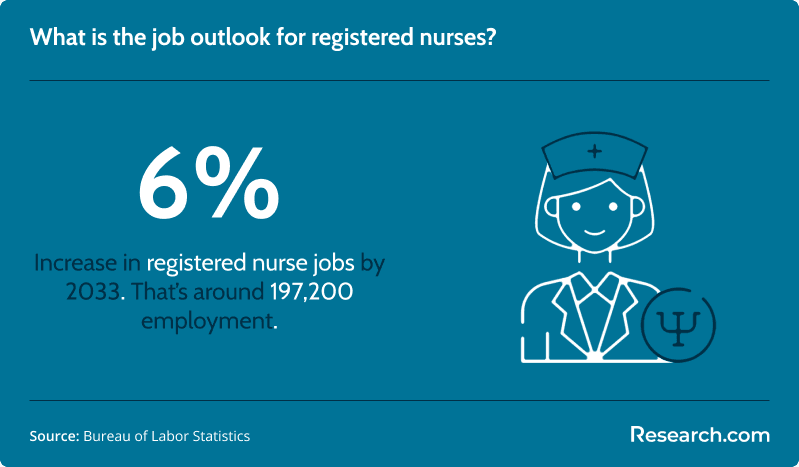
The registered nursing job market remains strong, although opportunity varies by region and specialty. The Bureau of Labor Statistics projects 6 % growth and 194,500 RN openings each year through 2033. The original data also notes about 197,200 new jobs over the decade.
Staffing pressure continues to shape the market. Hospital vacancy studies put current open-RN positions near 17 % nationwide, and the American Hospital Association reports that 63 % of nurses are routinely assigned too many patients. AACN surveys also report that 77 % of BSN graduates land roles within three months.
These figures help explain why many LPNs/LVNs ask, is nursing school worth it? For many students, the answer can be yes if the program is affordable, accredited, state-approved, and aligned with local hiring demand. However, the ROI is strongest when students limit debt, pass the NCLEX-RN promptly, and target employers that reward BSN preparation.
Current trends affecting LPN/LVN-to-BSN students
- Hospitals continue to prefer BSN-prepared nurses. Magnet-focused and large hospital systems often value bachelor’s-level preparation for clinical ladders, specialty units, and leadership pipelines.
- Online nursing education is more accepted when accredited. Employer acceptance of online degrees is stronger when the program has recognized accreditation and clear clinical training.
- Clinical placement capacity is a bottleneck. Even online programs depend on available preceptors and approved sites, so placement support is a major program-quality factor.
- Technology is changing nursing work. Informatics, electronic health records, remote monitoring, virtual care, and decision-support tools make digital confidence increasingly important for BSN graduates.
- Cost control matters more than ever. Students should compare total net price, transfer credits, reimbursement, and debt rather than assuming every BSN has the same ROI.
Key Insights
- An online LPN/LVN-to-BSN bridge can be a strong route to RN licensure and BSN-level mobility, but it still requires in-person clinical training.
- The BLS reports a 2024 RN median salary of $93,600, with the top 10 percent earning $135,320 or more.
- RN employment is projected to grow 6 % from 2023 – 2033, with about 197,200 new jobs over the decade and 194,500 RN openings each year through 2033.
- Program tuition in this guide ranges from $245/credit to $755/credit, and online LPN-to-BSN tuition averages $440 per credit.
- Fast-track bridges may take 12–18 months, but many working nurses should expect 24–36 months or longer if studying part-time.
- Accreditation is nonnegotiable. Look for regional accreditation plus CCNE or ACEN nursing accreditation, then confirm state licensure eligibility.
- Do not choose on tuition alone. Transfer credits, clinical placement support, fees, NCLEX preparation, and employer reimbursement can change the real cost.
- Financial aid is common: 87% of first-time, full-time undergraduates receive aid, and Pell Grants provide up to $7,395 for 2024-25.
- The best program is the one that fits your state, schedule, clinical location, budget, and career goal—not simply the one that ranks highest or advertises the fastest completion time.
References:
- American Association of Colleges of Nursing. 2025 Fact Sheet.
- American Nurses Association. Workforce Resources.
- AHA Center for Health Innovation. Workforce Shortages and Violence Are Rising Concerns: State Nursing Poll.
- Bureau of Labor Statistics. Occupational Employment and Wage Statistics Profile.
- Bureau of Labor Statistics. Registered Nurses — OOH.
- Clarkson College. Licensed Practical Nurse to BSN.
- CollegeTuitionCompare. Licensed Practical/Vocational Nurse Training Tuition.
- CollegeTuitionCompare. Registered Nursing—Registered Nurse Tuition.
- Data USA. Health Care & Social Assistance Workforce.
- Drexel University Online. Online Degree vs. Traditional Degree.
- EducationData.org. Average Cost of College.
- Excelsior University. LPN to BS in Nursing Program and Admissions Acknowledgment.
- Glassdoor. Nurse Salary.
- Herzing University. Online LPN to RN Program.
- Indiana State University. LPN/LVN to BSN Track.
- National Center for Education Statistics. IPEDS Trend Generator—Health Professions Tuition Table.
- National Center for Education Statistics. Undergraduate Enrollment in Career Education Programs Indicator.
- Salary.com. Registered Nurse Salary.
- Southwestern Oklahoma State University. LPN to BSN Program.
- University of Arkansas. Licensed Practical Nurse Bachelor of Science in Nursing.
- University of Mary. LPN to BSN Program.
- University of Sioux Falls. LPN to BSN.
- University of South Alabama. LPN to BSN Pathway.
- Wilson College. LPN to BSN Online.
- ZipRecruiter. Registered Nurse Salary.
- Zippia. How to Become a Nurse: Career Path.
- Zippia. Nurse Salary Data.
Other Things You Should Know About LPN/LVN to BSN Online Bridge Programs
Yes. Most LPN/LVN to BSN online bridge programs require supervised clinical hours, usually completed in approved local healthcare settings. Programs often include about 400 to 800 clinical hours, plus campus skills labs or intensives for hands-on assessment and practicum verification.
Eligibility requirements for LPN/LVN to BSN online bridge programs in 2027 typically include having an active and unencumbered LPN/LVN license, a diploma or certificate from an accredited LPN/LVN program, and a minimum GPA from previous coursework. Some programs may also require work experience in a healthcare setting.
Online LPN/LVN to BSN programs in 2027 typically require a reliable computer, high-speed internet access, and up-to-date web browsers. Some programs may also require specific software, such as virtual labs or e-learning platforms, to participate fully in coursework and interactive sessions.