2027 Combined Master's and Teaching Credential Programs: Prerequisites & Career Paths

Co-Founder and Chief Data Scientist
Schools across the nation face growing challenges, from teacher shortages to increasingly diverse student needs. Teachers remain essential in bridging learning gaps, fostering critical thinking, and preparing the next generation for a rapidly changing world.
For those who hold a non-education bachelor’s degree, entering the teaching workforce may seem out of reach—but combined master’s and teaching credential programs make it possible. These programs not only provide the licensure needed to step into the classroom but also offer advanced training that strengthens instructional skills, leadership potential, and long-term career growth.
This article will walk you through the prerequisites for admission and the career paths available, helping you understand how this dual approach can open doors to a rewarding future in education.
What are the benefits of pursuing combined master’s and teaching credential programs?
- Time Efficiency: Earn your teaching credential and graduate degree in one integrated program, saving both time and effort compared to pursuing them separately.
- Career Advancement: Gain advanced knowledge and credentials that open doors to leadership roles, specialized teaching positions, and higher earning potential.
- Comprehensive Preparation: Develop both practical classroom skills and deeper expertise in education theory, ensuring you’re well-equipped to meet diverse student needs.
- Accessibility for Non-Education Majors: These programs provide a direct pathway into teaching for those with bachelor’s degrees in other fields, expanding opportunities to join the profession.
What can you do with a combined master’s and teaching credential?
Earning a combined master’s and teaching credential opens a wide range of career opportunities in education and beyond. With both advanced academic preparation and the credentials to teach, graduates are positioned to make an immediate impact in schools while also keeping doors open for long-term growth.
- Classroom Teacher: The most direct path is becoming a licensed teacher in elementary, middle, or high school, equipped to design engaging lessons and address diverse learning needs.
- Specialized Educator: With a master’s-level foundation, you may pursue roles in special education, English as a Second Language (ESL), or subject-specific teaching.
- Instructional Leader: Many graduates move into roles such as department chair, curriculum specialist, or mentor teacher, guiding peers and shaping instructional practices.
- Administrative Pathways: A master’s degree can pave the way to leadership positions like assistant principal, principal, or district administrator, especially with further credentials.
- Education-Adjacent Careers: Beyond schools, your advanced training may qualify you for roles in educational nonprofits, curriculum development companies, or policy organizations.
Ultimately, a combined program not only gets you into the classroom faster but also provides the advanced skills and credentials to expand your influence across the education field.
Where can you work with a combined master's and teaching credential?
Graduates of combined master’s and teaching credential programs have the flexibility to work in a variety of educational settings. This dual qualification prepares you not only for traditional classrooms but also for specialized and non-traditional roles where advanced training is highly valued.
- Public and Private Schools: Teach at elementary, middle, or high schools with full licensure, supported by the deeper knowledge gained through graduate-level coursework.
- Charter Schools and Alternative Education Programs: Work in innovative learning environments that often value teachers with advanced training and fresh perspectives.
- Community Colleges: With a master’s degree, some graduates may qualify to teach entry-level or developmental education courses at two-year institutions.
- Specialized Learning Centers: Serve students in areas such as special education, ESL, or gifted programs, where specialized expertise is in demand.
- Education Nonprofits and Policy Organizations: Apply your teaching background to curriculum design, advocacy, or teacher training initiatives.
- Corporate Training and Educational Technology: Use your skills in instructional design and pedagogy to create training programs or develop learning technologies outside traditional schools.
By blending classroom readiness with advanced academic preparation, this combined pathway allows you to make an impact in both traditional school systems and broader education-related fields.
How much can you earn with a combined master's and teaching credential?
Earning both a master’s degree and a teaching credential often unlocks higher salary potential—though the exact earnings vary widely based on location, school district, experience, and subject areas.
To give you an idea, elementary and middle school teachers earn an average of $69,790 and $70,040 per year, respectively, according to the United States Bureau of Labor Statistics. Secondary school teachers, meanwhile, earn an average annual salary of $73,420. Special education teachers for preschool, elementary, and secondary school, earn an average of 72,230 per year.
Instructional coordinators earn an average of $77,600 per year. Education and childcare administrators earn an average of $109,470, with those working in kindergarten through secondary schools earning an average of $113,360 and those in preschool and daycare centers earning only about half of that figure. School principals, meanwhile, earn an average of $111,719 per year.
- What is a combined master’s and teaching credential program? Definition
- What master’s degree do you earn in a combined master's and teaching credential program? Master's Degrees
- What credentials are available in combined master’s and teaching credential programs? Credentials
- Can you get two teaching credentials at the same time? Can you get two teaching credentials at the same time?
- What are the prerequisites for a combined master’s and teaching credential program? Requirements
- What skills do you need in a combined master’s and teaching credential program? Core Skills
- How long do master's and teaching credential programs typically take to complete? Completion Time
- What career advancement opportunities are available to graduates of combined master's and teaching credential programs? What career advancement opportunities are available to graduates of combined master's and teaching credential programs?
- What alternative careers outside the school setting are available to graduates of combined master's and teaching credential programs? What alternative careers outside the school setting are available to graduates of combined master's and teaching credential programs?
- What is the job outlook for graduates of combined master's and teaching credential programs? Job Outlook
- What challenges might graduates encounter in combined master's and teaching credential programs? What challenges might graduates encounter in combined master's and teaching credential programs?
- What additional certifications or advanced training opportunities can accelerate career advancement? additional
If you already have a bachelor’s degree and want to become a licensed teacher, you may be weighing two options: earn a teaching credential first, then pursue a master’s later, or choose one program that combines both. A combined master’s and teaching credential program is designed for that decision point. It can shorten the path into the classroom, but it also requires careful planning because licensure rules, fieldwork requirements, costs, and program formats vary by state.
This guide explains how combined master’s and teaching credential programs work, what credentials they can lead to, who they are best for, and what questions to ask before enrolling. It also covers timelines, prerequisites, career options, job outlook, common mistakes, and practical steps for comparing programs in 2026.
Quick answer: Is a combined master’s and teaching credential program worth considering?
A combined master’s and teaching credential program can be a strong option if you need state teaching licensure and also want a graduate degree for long-term career growth. It is especially useful for career changers, recent bachelor’s graduates who did not major in education, and aspiring teachers who want to enter the classroom with advanced preparation. However, it is not automatically the best choice for everyone. You should confirm that the program is state-approved, leads to the exact credential you need, includes supervised teaching placements, and fits your budget and schedule.
| Best fit | Why it may work | What to verify first |
| Career changers with a non-education bachelor’s degree | The program can provide both teacher preparation and graduate-level education coursework in one pathway. | Whether your prior coursework satisfies subject-matter or basic-skills requirements. |
| Aspiring elementary, middle, or high school teachers | You can prepare for licensure while building a graduate foundation in instruction, assessment, and curriculum. | Which grade levels and subjects the credential authorizes you to teach. |
| Future special education, bilingual, or ESL teachers | Some programs offer specialized credentials or authorizations aligned with high-need classrooms. | Whether the specialization is included or requires extra coursework, testing, or fieldwork. |
| Working adults | Part-time and online coursework may help with flexibility. | Whether student teaching requires daytime, in-person classroom hours that conflict with employment. |
What is a combined master’s and teaching credential program?
A combined master’s and teaching credential program is a graduate-level teacher preparation route that allows students to work toward two goals at once: a master’s degree in education or teaching and eligibility for state teacher licensure. Instead of completing a credential program and then returning later for a separate graduate degree, students follow an integrated plan that combines pedagogy, field experience, and advanced education coursework.
These programs usually include methods courses, classroom management, assessment strategies, lesson design, inclusive teaching practices, and supervised clinical experience. The graduate portion may also cover curriculum theory, educational research, equity and access, instructional leadership, or specialized teaching methods, depending on the degree and concentration.
For students whose undergraduate major was not education, this route can be a direct bridge into education career paths without earning a second bachelor’s degree. By the end of the program, graduates typically aim to meet state requirements for a teaching credential while also holding a master’s degree that may support advancement into instructional coaching, curriculum work, leadership, or specialized teaching roles.
The chart below shows that many U.S. teachers did not major in education as undergraduates. Backgrounds such as business, psychology, liberal arts, and history can still lead to teaching when candidates complete an approved credential pathway.
What master’s degree can you earn in a combined program?
The graduate degree awarded depends on the university, the program design, and state licensure requirements. Most combined pathways award a teaching-focused or education-focused master’s degree.
| Degree type | Main focus | Best for |
| Master of Arts in Teaching (MAT) | Classroom practice, instructional methods, assessment, and subject-specific pedagogy. | New teachers who want practical preparation for daily classroom instruction. |
| Master of Education (M.Ed.) | Broader education study, which may include curriculum, leadership, policy, learning theory, or instruction. | Students who want teaching preparation with room for future leadership or curriculum roles. If you are comparing graduate education options, start with this explanation of what an M.Ed. degree is. |
| Specialized master’s in education | A focused area such as special education, STEM education, bilingual education, or English learner support. | Aspiring educators who want to serve a specific student population or teach in a high-need specialty. |
The important point is not only the title of the degree. You should also confirm that the program is approved for the credential you need in the state where you plan to teach. A master’s degree alone does not automatically authorize you to teach in a public school; licensure eligibility depends on state-approved teacher preparation, testing, background clearance, and supervised teaching requirements.
What teaching credentials are available in combined master’s and credential programs?
Combined programs are usually built around a specific licensure objective. The credential you pursue should match the grade level, subject, and student population you want to teach. Although terminology varies by state, common credential options include the following:
- Multiple Subject Credential: This credential is commonly associated with elementary education and self-contained classrooms where one teacher teaches several subjects to the same group of students.
- Single Subject Credential: This credential prepares teachers for a specific academic subject, such as English, math, science, or social studies, most often in middle school or high school settings.
- Education Specialist Credential: This pathway prepares teachers to serve students with disabilities. Programs may distinguish between different support levels, such as mild to moderate or moderate to severe needs.
- Bilingual authorization or ESL-related credential: This option helps teachers work with English learners and multilingual classrooms. Students interested in this route can also review the ESL teacher career path to understand typical responsibilities and preparation.
Some universities also offer credentials or add-ons in areas such as early childhood education, career technical education, or bilingual instruction. Before applying, ask whether the credential is embedded in the master’s program or whether it requires separate admission, additional tests, or extra field placements.
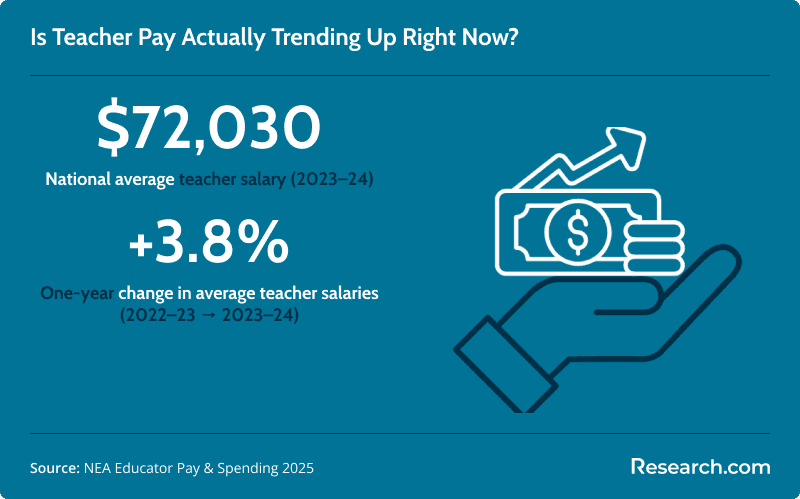
Teacher pay is usually determined by district salary schedules, state rules, years of experience, degree level, and credential status. The chart below provides context for teacher compensation trends and why credential completion matters for eligibility and advancement.
Can you earn two teaching credentials at the same time?
Yes, some programs allow candidates to pursue more than one credential or authorization during the same graduate pathway. This can make sense if your career goals clearly require both credentials, but it can also add testing, coursework, and field-placement demands.
| Dual-credential option | When it makes sense | Possible trade-off |
| Multiple Subject + Education Specialist | You want preparation for both general elementary classrooms and special education settings. Students interested in deeper specialization can compare online master’s programs in special education. | You may need additional supervised practice with different student populations. |
| Single Subject + bilingual or ESL authorization | You want to teach a specific subject while supporting English learners or bilingual classrooms. | The program may require language proficiency verification or specialized pedagogy coursework. |
| Two Single Subject Credentials | You want to qualify in two subject areas, such as math and science. | You may need extra subject-matter coursework or separate subject exams. |
A second credential can improve flexibility, especially in districts with staffing needs across special education, STEM, and multilingual education. Still, more credentials are not always better. Choose a dual pathway only if it aligns with the classrooms you actually want to teach in and if you can handle the additional requirements without delaying graduation unnecessarily.
What are the prerequisites for admission?
Admission rules vary by institution and state, but most combined programs screen for academic readiness, subject preparation, professional commitment, and clearance to work with children. If you are comparing programs, review the broader requirements for a master’s degree in education alongside the credential-specific requirements in your state.
- Bachelor’s degree: Applicants generally need a bachelor’s degree from an accredited institution. The major does not always need to be education, which is why these programs are common among career changers.
- Minimum GPA: Many programs list a minimum cumulative GPA of 2.75–3.0, though some schools may consider conditional admission or additional evidence of readiness.
- Basic skills competency: Candidates may need to show proficiency in reading, writing, and mathematics. Examples include the CBEST in California or the Praxis Core tests used in other states.
- Subject matter competency: Some pathways require proof that you know the subject you plan to teach. This may be met through approved coursework, subject exams such as the CSET or Praxis Subject Assessments, or a state-approved subject matter program.
- Letters of recommendation and statement of purpose: Programs often ask for references and a written explanation of your teaching goals, experience with learners, and motivation for entering the profession.
- Background check and fingerprint clearance: Because candidates work with minors during field placements, background clearance is typically required before classroom placement.
Do not assume that admission to the master’s program automatically means you are cleared for credential placement. Ask the school which requirements must be completed before student teaching and which can be completed while enrolled.
What skills do students need to succeed?
Combined programs are demanding because they require graduate-level study and classroom performance at the same time. Students pursuing an education degree with licensure should be prepared to build both academic and professional skills.
- Clear communication: Teachers need to explain ideas in accessible ways, listen carefully, and adjust language for different learners.
- Classroom management: Strong routines, expectations, and relationship-building skills help create safe and productive learning environments.
- Cultural responsiveness: Effective teachers understand that students bring different languages, identities, family contexts, and learning experiences into the classroom.
- Adaptability: Lesson plans often need adjustment when students misunderstand a concept, technology fails, or classroom conditions change.
- Collaboration: Credential candidates work with mentor teachers, university supervisors, families, administrators, and support specialists.
- Time management: Coursework, lesson planning, assessments, observations, and student teaching can overlap quickly, especially in accelerated formats.
- Reflective practice: Strong candidates can accept feedback, analyze what worked, revise their instruction, and keep improving.
Students comparing teaching with other service-oriented careers may also look at broader workforce guides, such as this overview of entry-level nursing roles and salary considerations, to understand how education, licensure, and practical training shape professional pathways in different fields.
The chart below shows skills that teachers commonly highlight on resumes, reinforcing the mix of instructional, interpersonal, and organizational abilities needed in the profession.
How long does a combined master’s and teaching credential program take?
Program length depends on the state, university calendar, credential type, student-teaching model, and whether you enroll full time or part time. Most combined programs take 1.5 to 3 years to complete.
| Enrollment format | Typical timeline stated by programs | Best for | Watch for |
| Full-time | About 18 to 24 months | Students who can prioritize graduate coursework and field placements. | Limited ability to work full time during intensive student teaching terms. |
| Part-time | Closer to 3 years | Working adults or caregivers who need a slower pace. | Longer time before licensure and possible changes in state requirements during enrollment. |
| Accelerated | As little as 12 to 15 months | Students who can handle a heavy, year-round schedule. | Compressed coursework, fewer breaks, and demanding clinical expectations. |
| Student teaching component | A semester to a full academic year | All credential candidates who need supervised classroom practice. | Placement schedules may follow K-12 school hours rather than graduate student preferences. |
The timeline question is similar to other professional-degree decisions: more education may create new options, but it also requires time and money. Professionals in other fields ask similar ROI questions, such as whether a nurse practitioner should pursue a DNP. For teaching candidates, the key is whether the combined credential and master’s pathway gets you to licensure efficiently without creating unnecessary debt or delaying employment.
Online vs. campus combined programs: which format should you choose?
Many combined programs now offer online or hybrid coursework, but teacher licensure still requires real classroom experience. Even if the academic courses are online, you should expect in-person observations, practicum hours, student teaching, or residency-style placements.
| Format | Advantages | Limitations | Best questions to ask |
| Online or hybrid | More flexibility for coursework and commuting; may work better for adults outside the university’s immediate area. | Field placements still occur in schools, and not every online program is approved in every state. | Can the school place me in my local district, and will the credential be recognized where I plan to teach? |
| Campus-based | More direct access to faculty, local school partnerships, cohort support, and campus resources. | Less flexible for students who live far from campus or need evening and weekend options. | Which partner districts host student teachers, and how competitive are placements? |
| Residency-style | More immersive classroom experience and closer mentoring. | Can be time-intensive and may limit outside employment. | How many hours will I spend in schools each week, and what financial support is available? |
What career advancement opportunities are available after graduation?
Graduates commonly begin as classroom teachers, but the combination of licensure and graduate study can support longer-term mobility. Advancement depends on district rules, years of experience, additional certifications, leadership preparation, and state requirements.
- Classroom leadership: Experienced teachers may mentor new educators, lead grade-level teams, support professional learning communities, or pilot instructional initiatives.
- Specialized teaching roles: Graduates with preparation in special education, STEM, bilingual education, or ESL may qualify for roles serving specific student needs.
- Curriculum and instruction: Master’s-level study can help teachers move toward instructional coaching, curriculum development, assessment design, or district-level teaching support.
- School leadership: Some educators later pursue assistant principal, principal, or district leadership roles, usually with additional administrative credentials.
- Teacher preparation and higher education: Experienced teachers may support preservice educators, teach in community college settings, or supervise field placements.
- Policy, nonprofit, and advocacy roles: Educators with classroom experience and graduate training may contribute to organizations focused on access, equity, literacy, or education reform.
Specialized expertise can matter in many fields. For example, science-oriented students comparing classroom teaching with lab or investigation roles might review forensic science technician salary information by state when evaluating whether to teach science or pursue a different science career. The broader lesson is the same: credentials, location, and specialization can shape opportunity.
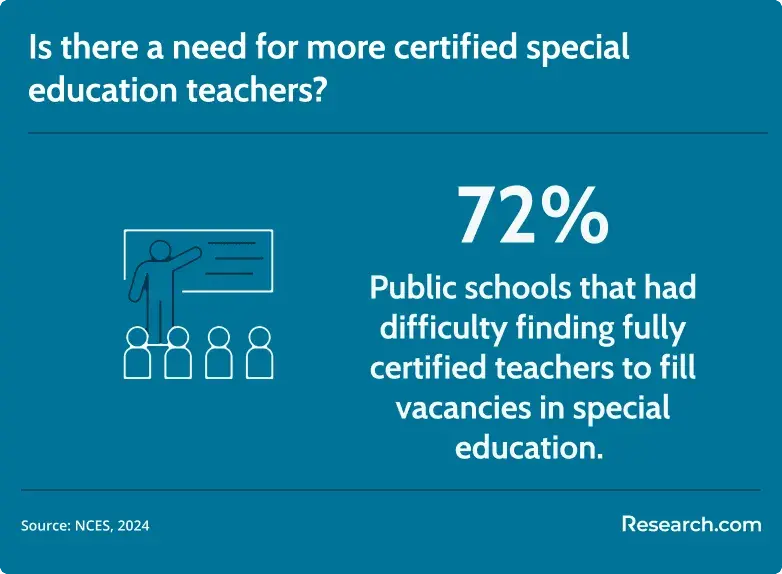
The image below highlights the need for certified special education teachers in public schools, which is one reason special education remains a common specialization for candidates seeking advancement and impact.
What careers outside K-12 schools can graduates pursue?
Not every graduate stays in a traditional classroom permanently. The skills developed in combined master’s and credential programs—lesson design, communication, assessment, facilitation, technology use, and learner support—can transfer to education-related roles beyond public or private schools.
- Corporate training and development: Former teachers may design onboarding, compliance training, leadership workshops, or professional learning programs for employers.
- Educational technology: Graduates can support learning platform design, curriculum products, implementation training, customer success, or instructional technology roles.
- Curriculum publishing: Teachers with strong writing and standards knowledge may help develop textbooks, digital lessons, assessments, or supplemental learning resources.
- Nonprofit and community education: Education graduates may manage literacy programs, youth development initiatives, tutoring networks, or family learning programs.
- Policy and advocacy: Classroom experience can provide practical insight for organizations focused on education access, school funding, multilingual learners, or special education services.
- Instructional consulting: Experienced educators may advise schools, districts, nonprofits, or companies on curriculum, professional development, inclusive instruction, or learning design.
Graduates interested in information services, school libraries, academic support, or research-based learning environments may also compare education credentials with an ALA-accredited online master’s in library science. For cost-conscious students, related options such as affordable online MLIS degree programs may be useful when exploring education-adjacent careers.
What is the job outlook for graduates?
The labor market for teachers is mixed: national employment projections show modest declines in some teaching occupations, but schools still expect large numbers of annual openings because of retirements, turnover, and replacement needs.
According to the BLS, overall employment of kindergarten and elementary school teachers is projected to decline 2% from 2024 to 2034. Even with that decline, about 103,800 openings are projected each year over the decade.
For high school teachers, employment is also expected to decline 2% from 2024 to 2034, with 66,200 openings projected each year. Middle school teacher employment is projected to decline by the same percentage, with 40,500 openings.
Special education teacher employment is projected at -1%, while 37,800 openings are still expected each year over the decade.
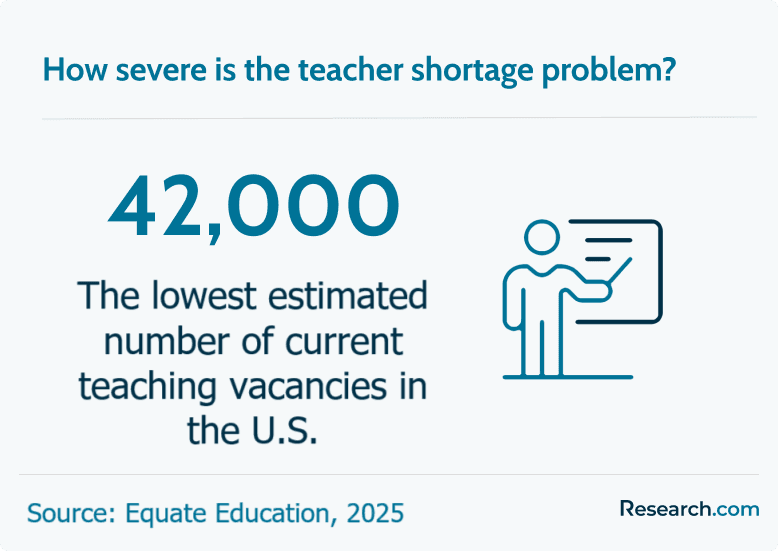
These projected declines do not mean every district has enough teachers. According to Equate Education, the United States faces a nationwide challenge linked to declining enrollment in teacher-preparation programs and thousands of vacant teaching positions. Current estimates suggest between 42,000 and over 100,000 teacher vacancies nationwide. Projections also indicate a decrease of 21% in newly hired educators by 2030.
For candidates, the practical takeaway is to evaluate job outlook locally. Demand can differ sharply by state, district, grade level, and specialty. Special education, STEM, bilingual education, and ESL may offer stronger hiring opportunities in some regions, but no program can guarantee employment or salary outcomes.
What challenges should students expect?
Combined programs can be efficient, but they are rarely easy. Students often manage graduate assignments, licensure paperwork, test preparation, field observations, and student teaching at the same time. The most common challenge is schedule pressure, especially when clinical placements require daytime availability in K-12 classrooms.
- Workload intensity: Accelerated programs can move quickly, leaving little room for falling behind on readings, lesson planning, or credential tasks.
- Financial pressure: Tuition, fees, certification exams, transportation, and reduced work hours during student teaching can affect affordability.
- Licensure complexity: Requirements can differ by state, credential, and subject area, so students must track deadlines carefully.
- Field-placement uncertainty: Placements depend on school partnerships, mentor availability, district calendars, and clearance timelines.
- Technology and AI expectations: Teachers are increasingly expected to use learning management systems, digital assessment tools, accessibility features, and emerging AI-supported instructional resources responsibly.
Some graduates later pursue doctoral or leadership preparation when they want to move into administration, research, or system-level roles. If that is part of your long-term plan, compare options carefully, including flexible pathways such as the fastest online EdD programs, but do not rush into a doctorate before understanding your professional goals.
What additional certifications or training can support advancement?
Additional credentials can strengthen a teaching career when they match a real school need or a clear professional goal. Useful options may include special education, bilingual education, ESL, reading instruction, instructional technology, gifted education, or administrative preparation. The best choice depends on your state rules, district salary schedule, and desired role.
| Training area | How it may help | Before enrolling, ask |
| Special education | Can prepare teachers to support students with disabilities and collaborate on individualized services. | Does this lead to an added credential or only professional development credit? |
| Bilingual or ESL authorization | Can expand your ability to teach English learners and multilingual students. | Are language proficiency requirements included? |
| Reading or literacy instruction | Can support intervention, literacy coaching, and early-grade instruction. | Is the credential recognized by my state or district? |
| Instructional technology | Can help teachers design digital learning, use classroom technology, and evaluate education tools. | Does the training cover accessibility, data privacy, and responsible AI use? |
| Administrative leadership | Can support a later move into assistant principal, principal, or district-level roles. | Does it meet state administrator credential requirements? |
How to choose the right combined master’s and teaching credential program
The best program is not simply the fastest or cheapest. It is the one that leads to the credential you need, prepares you well for the classroom, and fits your financial and personal situation.
- Start with the state where you plan to teach. Confirm the credential, exams, fieldwork, and background-clearance requirements for that state.
- Verify state approval and institutional accreditation. Do not rely only on marketing language. Ask whether the teacher preparation program is approved for licensure in your target state.
- Match the credential to your intended classroom. Elementary, secondary, special education, bilingual education, and ESL pathways are not interchangeable.
- Ask how field placements work. Find out whether the school arranges placements, whether you can complete them near your home, and what happens if a placement falls through.
- Compare total cost, not only tuition. Include fees, testing costs, books, transportation, technology, unpaid student-teaching time, and possible lost wages.
- Review completion and licensure support. Ask how the program helps students prepare for exams, submit licensure paperwork, and transition into teaching jobs.
- Talk to current students or recent graduates. Ask about faculty responsiveness, field-placement quality, workload, and whether the program matched what was advertised.
Common mistakes to avoid
| Mistake | Why it can hurt you | Better approach |
| Choosing a program before checking licensure approval | You could earn credits that do not lead to the credential required in your state. | Confirm state approval in writing before enrolling. |
| Looking only at tuition | Student teaching, exams, fees, and reduced work hours can change the real cost. | Build a full budget that includes direct and indirect expenses. |
| Assuming online means fully remote | Credential programs still require in-person classroom experience. | Ask exactly where and when fieldwork must be completed. |
| Pursuing two credentials without a clear reason | Extra credentials may add time, cost, and stress without improving your target career path. | Add a second credential only when it aligns with your intended role or local hiring demand. |
| Ignoring subject-matter requirements | You may be admitted but delayed from student teaching if subject requirements are incomplete. | Request a transcript review early. |
| Expecting a master’s degree to guarantee higher pay | Salary rules vary by district, contract, and state. | Review salary schedules and ask districts how graduate credits are recognized. |
Questions to ask before applying
- Is this program approved for the exact teaching credential I want?
- Will the credential meet requirements in the state where I plan to teach?
- What exams or competency requirements must I complete before student teaching?
- How are student-teaching placements assigned?
- Can I complete fieldwork near where I live?
- How many hours per week should I expect during the most intensive term?
- What is the total estimated cost, including fees and testing?
- Are scholarships, residency stipends, grants, or employer partnerships available?
- What support does the program provide for licensure paperwork and job placement?
- How does the program prepare students to use educational technology and AI tools responsibly?
What graduates say about combined master’s and credential programs
-
: "The combined pathway helped me enter the classroom with both the license I needed and a stronger understanding of how children learn. My graduate courses pushed me to plan for students with different strengths, needs, and learning styles, and I use that training every day as an elementary teacher. Having the credential and master’s together also made me a stronger applicant in my district.
—Celeste"
-
: "I started in the classroom, but the master’s coursework later helped me move into curriculum design. The credential gave me practical experience with students, while the graduate work helped me understand instructional theory and assessment more deeply. That combination gave me credibility when I began creating resources for other teachers in the district.
—Tory"
-
: "I came in with a bachelor’s degree outside education and was not sure where teaching would take me. I taught for several years, then moved into EdTech, where I now help develop online learning tools. The credential helped me understand real classroom needs, and the master’s degree gave me the academic foundation to design better learning experiences.
—Cindy"
References:
- United States Bureau of Labor Statistics. (2024, April 3). Occupational Employment and Wage Statistics | 25-2031 Secondary School Teachers, Except Special and Career/Technical Education. BLS.
- United States Bureau of Labor Statistics. (Data extracted on 2025, September 4). Occupational Employment and Wage Statistics Query System. BLS.
- United States Bureau of Labor Statistics. (2025, August 28). Occupational Outlook Handbook | High School Teachers. BLS.
- United States Bureau of Labor Statistics. (2025, August 28). Occupational Outlook Handbook | Kindergarten and Elementary School Teachers. BLS.
- United States Bureau of Labor Statistics. (2025, August 28). Occupational Outlook Handbook | Middle School Teachers. BLS.
- United States Bureau of Labor Statistics. (2025, August 28). Occupational Outlook Handbook | Special Education Teachers. BLS.
- Zippia. (2025, January 8). Principal demographics and statistics in the US. Zippia.
- Zippia. (2025, January 8). Teacher skills for your resume and career. Zippia.
Key Insights
- A combined master’s and teaching credential program can be efficient because it integrates graduate education coursework with state-approved teacher preparation.
- The most important factor is licensure alignment. Confirm that the program leads to the exact credential required for your intended state, grade level, subject, and student population.
- Common credentials include Multiple Subject, Single Subject, Education Specialist, and bilingual or ESL-related authorizations.
- Most programs take 1.5 to 3 years, with accelerated options sometimes taking as little as 12 to 15 months and full-time routes often taking about 18 to 24 months.
- Online coursework can add flexibility, but student teaching and field placements usually require in-person classroom hours.
- BLS projections show employment declines for several teaching occupations from 2024 to 2034, but annual openings remain substantial because of replacement needs.
- Dual credentials can improve flexibility, but they should be chosen strategically because they may add coursework, testing, and fieldwork.
- Before enrolling, compare total cost, accreditation, state approval, placement support, exam requirements, and local hiring demand—not just program speed or tuition.
Other Things You Should Know About Combined Master's and Teaching Credential Programs
Most combined master’s and credential programs require at least a 3.0 undergraduate GPA for admission. Some California programs also expect subject-matter competency before enrollment or by the end of the first term, and teacher preparation programs must lead to state credential approval.
The cost of a 2026 combined master's and teaching credential program varies, typically ranging from $20,000 to $60,000 depending on the institution and residence status. Tuition discounts or financial aid opportunities may be available to help offset these costs.