
2027 Going Back to College for a Teaching Degree

Co-Founder and Chief Data Scientist
Going back to college for a teaching degree is a serious decision, especially if you are leaving another career, managing family responsibilities, or trying to qualify for licensure without starting over academically. A teaching program can help you build classroom skills, meet state certification rules, and move into roles in K-12 schools, special education, curriculum, counseling, administration, or higher education. This guide explains how to evaluate programs, compare online and campus options, transfer prior credits, understand licensure, estimate career outcomes, and decide whether a teaching degree fits your goals and financial situation.
Is it worth it to go back to college for a teaching degree?
Going back to college for a teaching degree can be worth it if the program leads to licensure in your state, accepts enough transfer credits to keep costs manageable, and prepares you for the grade level or subject area you actually want to teach. It is not a guaranteed financial upgrade for every career changer, so the decision should be based on total cost, local hiring demand, certification rules, and your willingness to work in a profession with meaningful public impact but uneven pay and workload conditions.
- Career changers may need to submit college transcripts, complete prerequisite courses, provide recommendation letters, and meet GPA requirements before entering a teacher preparation program.
- Education careers can provide stable middle-income wages, though earnings vary by role and location. High school teachers had median annual wages of $64,580, while postsecondary teachers had $81,600, depending on the field taught.
- Employment through 2034 has been projected to decline for pre-K, elementary and middle school, and high school teachers, so candidates should review local demand rather than relying only on national projections.
- What should I look for in a teaching degree program?
- Online vs. campus teaching degrees: which format is better?
- Will previous college credits transfer into a teaching degree?
- What financial aid and scholarship options are available for teaching students?
- What admission requirements do teaching programs usually have?
- Which teaching degree concentrations can I choose?
- How do I get a teaching license after graduation?
- What jobs can I get with a teaching degree?
- How can teachers move into higher-level education roles?
- Should I earn a graduate degree to move ahead faster?
- What can I do with a teaching degree outside the traditional classroom?
- How can career changers use prior work experience in teaching?
- Which leadership paths can strengthen a teaching career?
- What doors can specialized education degrees open?
- Can extra certifications or interdisciplinary degrees improve my options?
- How do I check teaching program quality and accreditation?
- Can I teach while finishing certification or licensure requirements?
- Why do mentorship and support programs matter for new teachers?
- What alternative routes to teaching are available for career changers?
- Is a teaching degree a financially reasonable investment?
- What skills do today’s teachers need most?
- Which education trends are shaping teaching degree programs?
What factors should I consider when choosing a teaching program?
The best teaching program is not simply the cheapest, fastest, or most convenient option. It should match your state’s licensure rules, your target grade level or subject, your schedule, and your long-term career plans. Whether you are comparing campus programs or online teacher degrees, use the following criteria before applying.
- Accreditation and state approval. Confirm that the institution is properly accredited and that the educator preparation program is accepted for licensure in the state where you plan to teach. Recognition by organizations such as the Council for the Accreditation of Educator Preparation (CAEP) can signal program quality, but state approval is especially important for public school licensure.
- Licensure alignment. Ask whether the program qualifies graduates for the exact license you need, such as elementary education, secondary mathematics, special education, early childhood education, or a subject-specific endorsement.
- Grade level and subject concentration. Choose a program that fits the students you want to teach. Elementary preparation, secondary education, special education, STEM education, and early childhood education require different coursework and field placements.
- Curriculum quality. Look for coursework in pedagogy, classroom management, assessment, literacy instruction, educational psychology, culturally responsive teaching, technology integration, and subject-specific methods.
- Field experience. A strong program should include supervised classroom experience, practicum opportunities, and student teaching in real school settings. Career changers often benefit from early field exposure because it helps confirm whether teaching is the right fit.
- Faculty experience. Review whether instructors have classroom, school leadership, curriculum, special education, or district-level experience. Faculty who understand current school realities can provide more practical preparation.
- Flexibility. If you are working while studying, compare evening courses, online coursework, part-time options, accelerated terms, and student-teaching schedule requirements.
- Student support. Strong advising, tutoring, licensure exam preparation, career services, placement support, and mentoring can make a major difference, particularly for adults returning to college.
- Total cost. Compare tuition, fees, books, technology costs, travel to field placements, licensure exam fees, background checks, and the income you may lose during student teaching.
| Decision factor | Why it matters | Question to ask before enrolling |
| State licensure fit | A degree that does not meet your state’s requirements may delay or prevent certification. | Will this program qualify me for the teaching license I need in my state? |
| Field placement access | Student teaching is often required and may be difficult to schedule around work. | Who arranges placements, and can they be completed near where I live? |
| Transfer credit policy | Accepted credits can shorten the program and reduce cost. | How many of my previous credits can count toward this degree? |
| Program format | Online coursework may be flexible, but clinical teaching still requires in-person work. | Which parts are online, and which parts must be completed in schools? |
| Licensure exam support | Exam preparation can affect how quickly you qualify to teach. | Does the program provide test preparation, advising, and pass-rate information? |
How do online teaching degree programs compare to traditional on-campus programs?
Online and on-campus teaching degrees can both prepare students for licensure if they are accredited, state-approved, and include required field experiences. The better format depends on your schedule, learning style, location, and need for in-person support. Career changers often prefer online coursework for flexibility, but they should remember that student teaching, practicums, and classroom observations typically require in-person participation.
- Flexibility and scheduling: Online teaching programs can be easier to manage for working adults because lectures, assignments, and discussions may be offered asynchronously or in the evenings. Campus programs provide a more fixed schedule, which can be helpful for students who want structure and direct accountability.
- Interaction and learning style: Online programs rely on virtual discussions, video meetings, digital assignments, and independent study. Campus programs make it easier to build relationships through face-to-face classes, group projects, and direct access to instructors.
- Access to resources: Campus students may have easier access to libraries, teaching labs, education faculty, tutoring centers, and peer networks. Online students should check whether they receive comparable advising, technology support, digital library access, and placement assistance.
- Cost comparison: Online programs may reduce commuting and housing expenses, but they are not always less expensive. Campus programs may offer scholarships, assistantships, or institutional aid that changes the final cost. Compare the full price after aid, not just listed tuition.
- Quality and accreditation: Format is less important than approval and outcomes. An online program can be rigorous if it meets educator preparation standards and state licensure requirements. Even the easiest teaching degree should still be legitimate, accredited, and aligned with your intended career path.
| Program format | Best for | Potential drawbacks |
| Online teaching degree | Working adults, parents, rural students, and career changers who need scheduling flexibility. | Requires self-discipline, strong time management, and careful confirmation of local field placement options. |
| On-campus teaching degree | Students who want in-person support, direct faculty access, campus resources, and structured class meetings. | May be less convenient for students with full-time jobs or long commutes. |
| Hybrid teaching degree | Students who want flexible coursework but still value periodic in-person meetings and local networking. | Travel requirements and meeting dates may still conflict with work or family responsibilities. |
Can I transfer credits from previous college courses into a teaching program?
Many U.S. teaching programs allow transfer credits, but the amount accepted depends on the school’s policy, the accreditation status of your previous institution, course age, grades earned, and whether the coursework matches current degree requirements. General education credits are often easier to transfer than professional education courses, because teacher preparation programs must ensure that students meet state-specific pedagogy, fieldwork, and licensure standards.
Before enrolling, request an official transfer evaluation. Do not rely only on an informal estimate from a website or admissions conversation. Ask which credits apply to your major, which count only as electives, and which requirements must still be completed through the new institution.
- Send all transcripts early. Include every college or university you attended, even if you did not finish a degree.
- Ask about prerequisite gaps. Some programs require coursework in English, mathematics, science, social studies, psychology, or child development before admission.
- Clarify residency requirements. Schools may require a minimum number of credits to be completed through their institution before awarding the degree.
- Check fieldwork rules. Prior professional experience usually does not replace required student teaching unless the program or state specifically allows it.
Can I apply for financial aid or scholarships for a teaching program?
Yes. Students returning to college for a teaching degree may qualify for federal aid, state programs, institutional scholarships, private scholarships, grants tied to teaching commitments, and loan options. The right funding mix depends on your enrollment status, income, prior degree history, state, and whether the program is eligible for federal student aid.
- Federal student aid. Complete the Free Application for Federal Student Aid (FAFSA) to be considered for programs such as the Pell Grant and Direct Loans. Aid can help pay for tuition, books, fees, and some living expenses if you meet eligibility rules.
- Teacher Education Assistance for College and Higher Education (TEACH) Grant. The TEACH Grant provides up to $4,000 per year for students who agree to teach in high-need fields at low-income schools for at least four years after graduation.
- State grants and scholarships. Many states offer aid for teacher candidates, especially in shortage areas or high-need communities. Eligibility and award amounts vary, so check your state education agency and higher education authority.
- College-based aid. Universities may offer scholarships, grants, work-study opportunities, tuition discounts, or cohort-based funding for teacher preparation students. Contact the financial aid office before applying.
- Private scholarships. Education associations, foundations, community organizations, and employers may support aspiring teachers based on academic achievement, financial need, service commitment, identity, location, or intended teaching field.
| Cost-saving strategy | How it helps | What to verify |
| Transfer credits | Reduces the number of courses you need to complete. | Whether credits apply to degree requirements rather than only electives. |
| In-state public programs | May offer lower tuition for residents. | Residency rules and total fees. |
| Employer tuition support | Can lower out-of-pocket costs if you already work in education or a related field. | Service commitments, reimbursement limits, and grade requirements. |
| Teaching grants | Can provide aid tied to service in high-need schools or subjects. | Obligations, repayment rules, and qualifying positions. |
| Part-time enrollment | Allows continued income while studying. | Whether part-time status affects aid eligibility and graduation timeline. |
What are the typical admission requirements for a teaching program?
Admission requirements vary by institution and degree level, but most teaching programs evaluate academic readiness, prior coursework, communication ability, and fit for the profession. Career changers should pay close attention to whether the program is designed for first-time undergraduates, bachelor’s degree holders seeking certification, or graduate students preparing for advanced roles.
- Official transcripts. Applicants usually need to provide records from all colleges and universities previously attended so the program can evaluate grades, transfer credits, and prerequisites.
- Prerequisite coursework. Some programs require prior study in areas such as English, mathematics, science, and social studies to ensure candidates have the academic foundation needed for teacher preparation.
- Prior degree requirements. Depending on the grade level and teaching role, you may need a bachelor’s degree before entering a certification program. Those aiming for postsecondary teaching may need a master’s degree or doctorate in education or in the discipline they plan to teach.
- Minimum GPA. Many programs require a GPA, commonly ranging from 2.5 to 3.0 on a 4.0 scale. A higher GPA may improve competitiveness for selective programs, scholarships, or graduate admission.
- Recommendation letters. Programs may request letters from professors, supervisors, school leaders, or other professionals who can speak to your reliability, communication skills, academic ability, and potential to work with students.
Are there specialized tracks or concentrations within teaching programs?
Yes. Teaching programs commonly offer concentrations because preparation differs by student age, subject area, disability category, and school setting. Choosing the right concentration is one of the most important decisions you will make because it affects licensure, field placements, job options, and future advancement. It is also useful to compare concentrations with the broader demand for teachers in your region.
- Elementary Education. This route prepares teachers for kindergarten through sixth grade classrooms, with emphasis on child development, literacy, mathematics foundations, classroom routines, and broad subject instruction. There were 2,070,400 elementary and middle school teachers working in the US, and employment is expected to drop by 2% through 2034.
- Secondary Education. This track prepares teachers for middle or high school subjects such as English, Mathematics, Science, or Social Studies. It combines subject expertise with adolescent learning methods, assessment, and classroom management. There were 1,197,900 high school teachers in the US. Job openings for the role have also been forecasted to decline by 1.6% through 2034. Educators who want to deepen their expertise may compare secondary education masters programs.
- Special Education. This concentration focuses on students with disabilities or exceptional learning needs. Coursework often covers individualized education programs, inclusive instruction, behavior support, assessment, and collaboration with families and specialists. There were 559,500 special education teachers employed in the US, and their job outlook through 2034 is -1.4%.
- Early Childhood Education. This path centers on children from birth through age eight, including early literacy, cognitive development, play-based learning, family engagement, and developmentally appropriate practice.
- STEM Education. This concentration prepares teachers to support learning in Science, Technology, Engineering, and Mathematics through inquiry-based instruction, problem-solving, lab activities, and critical thinking.
| Concentration | Best fit for students who want to | Licensure consideration |
| Elementary Education | Teach multiple subjects to younger students. | Check the grade range covered by your state’s elementary license. |
| Secondary Education | Teach a specific academic subject to adolescents. | Subject-area exams and endorsements may be required. |
| Special Education | Support students with disabilities and individualized learning needs. | Requirements may vary by disability category, age level, or setting. |
| Early Childhood Education | Work with young children in early learning or primary-grade settings. | Confirm whether the credential applies to public school classrooms, preschool, or both. |
| STEM Education | Teach science, technology, engineering, or math with applied learning methods. | State rules may require specific subject coursework or testing. |
How do I apply for a teaching license after completing my degree program?
Teaching licensure is handled at the state level, so requirements differ depending on where you plan to work. In general, graduates must complete an approved educator preparation program, pass required exams, clear background checks, and submit documentation to the state education agency or licensing board.
- Complete the required exams. Candidates may need to pass the Praxis series or state-specific tests covering pedagogy, subject knowledge, reading instruction, or other required areas.
- Prepare your licensure application. Submit the state application along with official transcripts, proof of program completion, test results, fees, and any required institutional recommendation.
- Complete the background check process. Many states require fingerprinting and criminal history screening before issuing a license.
- Allow the state to review your file. The licensing agency evaluates whether your education, testing, background check, and other materials satisfy state requirements.
- Receive your license before teaching independently. Once approved, you can teach in public schools within the scope of the license issued by that state.
If you plan to move after graduation, ask the program how its graduates handle license portability. A license in one state does not automatically guarantee full certification in another.
What are the job prospects like for graduates with a teaching degree?
Teaching degree graduates can work in classrooms, student support services, curriculum, administration, and other education-related roles. Nationally, employment through 2034 has been projected to decline by around 2% for kindergarten, elementary, middle, and high school teachers. However, openings may still arise when educators retire, leave the profession, relocate, or move into other roles. Local shortages can also differ sharply from national trends, especially by subject, grade level, and district.
Common career options include the following:
- Classroom Teacher. K-12 teachers plan lessons, deliver instruction, assess learning, manage classrooms, communicate with families, and support student growth. Kindergarten and elementary school teachers had median annual wages of $61,430 and $62,340 respectively, while high school teachers had $64,580.
- Special Education Teacher. These educators adapt instruction, provide accommodations, collaborate on individualized education plans, and support students with disabilities academically and socially. Special education teachers had a median annual wage of $64,270.
- School Counselor. School counselors help students with academic planning, career development, social-emotional concerns, and crisis support. School and career counselors and advisors had a median annual wage of $65,140.
- Curriculum Developer. Curriculum developers and instructional coordinators create learning materials, align instruction with standards, analyze instructional needs, and support teacher effectiveness. Curriculum developers or instructional coordinators had a median wage of $74,720.
- Education Administrator. Principals, assistant principals, and district administrators oversee staffing, budgets, school operations, compliance, teacher evaluation, and improvement efforts. Education administrators had a median annual wage of $104,070 in the K-12 levels and $103,960 for the postsecondary level. If administration is your goal, compare affordable options for an online graduate program in educational administration or a doctor of education administration.
| Role | Typical preparation | Good fit for |
| K-12 classroom teacher | Teaching degree, approved preparation program, and state license. | People who want direct daily work with students. |
| Special education teacher | Special education coursework, field experience, and required license or endorsement. | Educators who are patient, collaborative, and skilled at adapting instruction. |
| School counselor | Usually graduate-level counseling preparation and state credentialing. | Professionals focused on student support, planning, and well-being. |
| Curriculum developer | Teaching experience, curriculum knowledge, and often advanced study. | Teachers who enjoy instructional design and standards alignment. |
| Education administrator | Teaching experience plus graduate preparation or leadership credentialing. | Educators interested in school leadership, policy, and operations. |
How can I advance my career in education beyond entry-level teaching positions?
Career growth in education usually comes from a combination of classroom effectiveness, advanced credentials, leadership experience, and specialization. New teachers can build toward roles in coaching, curriculum design, administration, teacher leadership, policy, higher education, or specialized student services.
- Pursue advanced degrees or targeted credentials. Graduate-level types of education degrees, subject-specific master’s programs, or endorsements in areas such as educational technology, curriculum, special education, or mathematics can strengthen your qualifications. A masters degree online in mathematics education may be useful for educators aiming to deepen subject expertise. In the fall of 2025, 424,062 graduate students enrolled in education degrees, making it the third most common major field among post-baccalaureate learners.
- Take on school-based leadership. Department chair, grade-level lead, instructional coach, mentor teacher, curriculum coordinator, and committee roles can help you demonstrate leadership before applying for formal administrative jobs.
- Stay active in professional development. Workshops, conferences, professional learning communities, coaching cycles, and mentorship programs can help teachers update their practice, learn new tools, and build professional networks.
Should I pursue an advanced degree to accelerate my teaching career?
An advanced degree can be useful when it clearly supports your next step, such as moving into instructional leadership, administration, curriculum, special education, higher education, or a hard-to-fill subject area. It can also help teachers develop deeper expertise in assessment, research, instructional design, educational technology, and student development. Before enrolling, compare tuition, time commitment, licensure benefits, employer salary policies, and job requirements. A masters degree for teachers may be worthwhile if it aligns with your district’s advancement structure and your long-term career plan.
What can I do with a teaching degree?
A teaching degree can lead to more than a traditional classroom position. Graduates may work in curriculum development, academic advising, instructional design, education policy, school administration, tutoring, training, education technology, assessment, nonprofit education programs, or postsecondary settings, depending on their degree level and credentials. If you want a broader look at classroom and non-classroom options, see What can I do with a teaching degree?.
How can I leverage my previous education and work experience when transitioning to a teaching career?
Career changers often bring strengths that traditional students may still be developing. Prior work experience can help you connect lessons to real-world examples, manage projects, communicate with families and colleagues, and mentor students. The key is to translate your background into teaching competencies.
- Use subject expertise strategically. Professionals from STEM, business, healthcare, arts, trades, technology, or communications can use industry knowledge to make academic content more practical and engaging.
- Highlight transferable skills. Communication, leadership, organization, conflict resolution, adaptability, training, problem-solving, and project management are directly relevant to classroom teaching.
- Build education-specific networks. Connect with teachers, principals, district recruiters, alumni, professional associations, and mentor programs. These relationships can help you understand hiring expectations and locate classroom opportunities.
| Previous experience | How it can help in teaching | How to present it |
| Management or supervision | Supports classroom leadership, planning, and conflict resolution. | Emphasize coaching, communication, and team development. |
| Technical or STEM work | Can make math, science, and technology lessons more applied. | Show how you explain complex ideas clearly. |
| Customer service or public-facing roles | Builds patience, listening, and family communication skills. | Connect experience to relationship-building and problem-solving. |
| Training or mentoring | Closely relates to lesson delivery and learner support. | Describe how you assessed needs and adjusted instruction. |
| Creative or communications work | Helps with lesson design, storytelling, and student engagement. | Provide examples of presentations, materials, or audience adaptation. |
What leadership opportunities can further enhance my teaching career?
Teachers can grow as leaders without immediately becoming principals. Many begin by mentoring new educators, leading professional learning communities, coordinating curriculum work, serving on school improvement teams, or becoming instructional coaches. For educators who want broader organizational leadership roles, an online doctorate in leadership can support advanced study in decision-making, systems improvement, team management, and organizational change.
What additional career opportunities do specialized education degrees unlock?
Specialized education degrees can prepare educators for roles that require deeper expertise than a general teaching credential provides. Depending on the program, graduates may move toward early childhood leadership, special education coordination, literacy support, curriculum design, education consulting, policy work, program evaluation, or school administration. Educators focused on early learning can explore how graduate study connects to early childhood education jobs that require knowledge of developmental milestones, family engagement, and age-appropriate learning design.
Can additional certifications or interdisciplinary degrees enhance my teaching career?
Additional credentials can help when they fill a real skill gap or qualify you for a specific role. Useful areas may include educational technology, reading instruction, English language learning, special education, curriculum design, school leadership, assessment, library science, or child development. The most important step is to verify that the credential is recognized by employers or licensing agencies before investing time and money. For educators interested in information literacy, research support, and school library roles, an online library science masters degree may broaden their professional options.
How can I assess the quality and accreditation of a teaching degree program?
Program quality should be evaluated through evidence, not marketing language. Confirm institutional accreditation, state approval for teacher preparation, licensure exam support, field placement quality, graduation outcomes, faculty qualifications, and student services. If you are comparing programs in related areas, such as a cheap MLIS degree online, use the same logic: accreditation, curriculum relevance, career fit, and total cost should guide the decision.
- Verify accreditation through official sources. Check the school’s accreditor and confirm that the educator preparation program is accepted by your state.
- Ask about licensure outcomes. Request information about exam preparation, program completion, and how graduates perform in the licensing process.
- Review field placement procedures. Strong programs should have clear systems for placing students in appropriate classrooms with qualified supervisors.
- Compare support services. Adult learners may need advising, tutoring, career coaching, technology support, and flexible scheduling.
- Read policies carefully. Pay attention to transfer credits, student teaching requirements, background checks, refund rules, and program dismissal standards.
Can I work as a teacher while completing any necessary certification or licensure requirements?
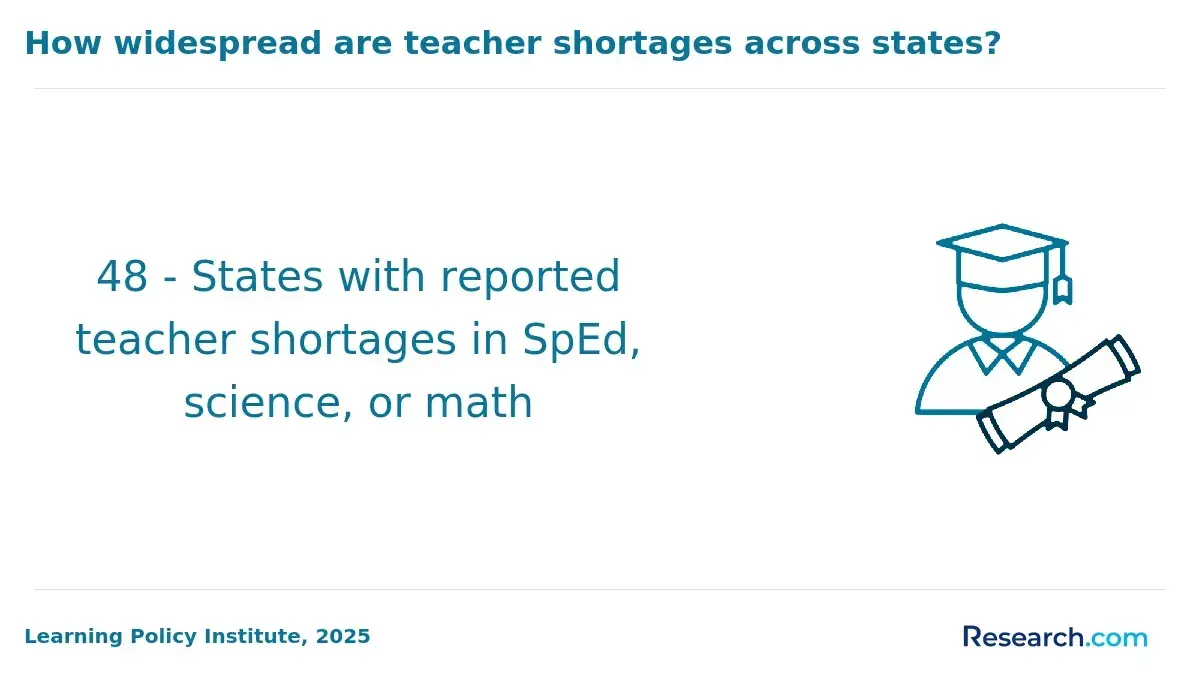
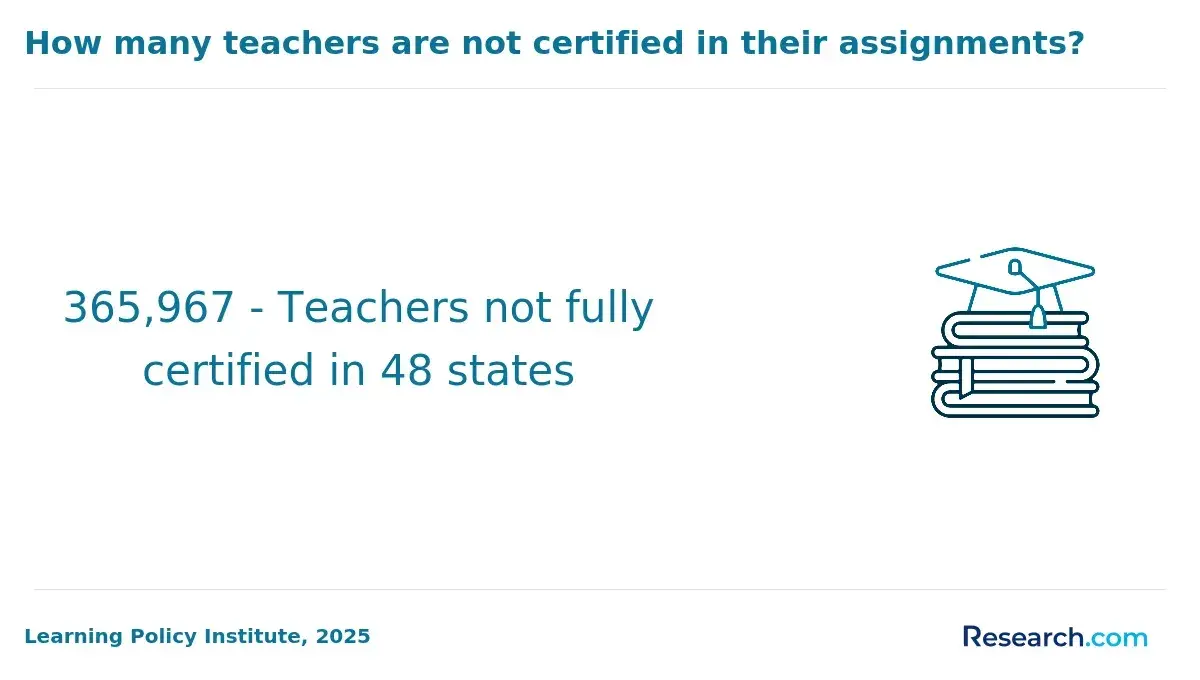
In some states, career changers can begin teaching while completing certification through alternative routes, provisional licenses, emergency credentials, or temporary permits. This option is especially relevant because 365,967 teachers are not fully certified in 48 states. These pathways may allow candidates with bachelor’s degrees or relevant experience to start teaching under provisional or temporary licenses while finishing coursework, exams, mentoring, and supervised practice.
This route can help aspiring teachers earn income and gain classroom experience sooner, but it also comes with pressure. New teachers may be managing a classroom while studying, preparing for exams, and meeting state deadlines. Before accepting a provisional teaching role, ask about required milestones, mentoring support, time limits, renewal rules, and what happens if you do not complete requirements on schedule.
What are the benefits of mentorship and support programs for aspiring teachers?
Mentorship is especially valuable for adults returning to school because teaching involves skills that are difficult to master through coursework alone. A strong mentor can help new teachers connect theory to classroom practice, interpret school culture, manage student behavior, and avoid early-career burnout.
- Practical guidance from experienced teachers: Mentors can help with lesson planning, classroom routines, grading, student engagement, parent communication, and behavior management.
- Confidence during the transition: Career changers often know their subject but need support adapting to school schedules, classroom expectations, and diverse student needs. Feedback from a mentor can make the transition less overwhelming.
- Professional networking: Mentorship programs can connect aspiring teachers with school leaders, district staff, peers, and experienced educators who may know about openings or professional development opportunities.
- Access to teaching materials and tools: Mentors often share lesson templates, assessment strategies, technology tools, classroom procedures, and resources that help new teachers build an effective toolkit.
- Support beyond the first semester: New teachers often need guidance through licensure, evaluations, classroom challenges, and career decisions. Long-term mentoring can support growth through the first years in the profession.
What are the alternative pathways to teaching for career changers?
Career changers do not always need to complete a traditional undergraduate teaching degree from the beginning. Alternative certification programs, post-baccalaureate teacher preparation routes, residency models, and provisional licensure pathways may allow adults with relevant degrees to move into teaching more quickly while completing state requirements.
Many states offer alternative licensure routes for candidates who already hold a bachelor’s degree. These pathways may be especially common in high-need fields such as STEM or special education. Participants may teach under supervision while completing coursework, exams, and mentoring requirements. For educators thinking beyond initial licensure and toward leadership, the cheapest online EdD programs may provide a separate route for advanced professional development.
Alternative certification can be attractive, but it is not automatically easier. Candidates should understand the workload, classroom expectations, and licensure deadlines before enrolling.
- Accelerated Timeline: Most alternative certification programs are designed to be completed in one to two years.
- Early Classroom Experience: Many routes place candidates in schools quickly, which can build practical skills but also requires readiness for immediate responsibility.
- Mentorship and Supervision: Alternative routes often include coaching or mentor support to help new teachers meet classroom and licensure expectations.
- Financial Flexibility: Because some participants can work while completing requirements, this path may reduce the need to pause employment for a full-time degree.
| Pathway | Who it may suit | Main caution |
| Traditional teaching degree | Students who need a full undergraduate route into teaching. | May take longer if few previous credits transfer. |
| Post-baccalaureate certification | Bachelor’s degree holders who need educator preparation and licensure coursework. | Requirements vary widely by state and subject. |
| Alternative certification | Career changers ready to enter classrooms while completing requirements. | Teaching while studying can be demanding. |
| Graduate education degree | Educators seeking specialization, leadership, or advanced roles. | May not replace initial licensure requirements unless designed to do so. |
Is earning a teaching degree a sound financial investment?
A teaching degree is a sound financial investment only when the expected benefits justify the cost and the program leads to the credential you need. Compare tuition, fees, books, testing costs, travel, student teaching obligations, and lost wages against realistic local salary data, benefits, job availability, and advancement options. If an advanced credential is part of your long-term plan, compare program cost and career value carefully; an online Ed D may make sense for experienced educators pursuing leadership, but it is not necessary for every teacher.
- Do not assume a degree guarantees higher pay. Salary schedules, local contracts, experience, and credentials all matter.
- Calculate net cost after aid. Include grants, scholarships, transfer credits, and employer support.
- Review your local labor market. National projections can hide state, district, subject, and grade-level differences.
- Consider non-financial value. Teaching can offer mission-driven work, public service, and long-term community impact, but the workload can be demanding.
Which core competencies are essential for modern educators?
Modern teachers need more than subject knowledge. Effective preparation now includes classroom management, lesson design, assessment, differentiation, technology use, family communication, collaboration, cultural responsiveness, and data-informed instruction. Teachers also need emotional resilience and the ability to adapt to changing student needs. Educators who want deeper knowledge of children’s growth, learning patterns, and developmental needs may find value in a child development online masters degree.
| Competency | Why it matters in classrooms |
| Classroom management | Creates a safe, organized learning environment where students can focus. |
| Instructional planning | Helps teachers align lessons with standards, assessments, and student needs. |
| Differentiation | Allows teachers to support students with different abilities, backgrounds, and learning profiles. |
| Technology integration | Supports digital learning, assessment, communication, and instructional engagement. |
| Assessment literacy | Helps teachers use data to adjust instruction and measure student progress. |
| Cultural responsiveness | Builds inclusive classrooms that respect students’ identities and experiences. |
What are the current trends in education that impact teaching degree programs?
Teaching programs are evolving because schools are changing. Future educators are being prepared for online and hybrid learning, technology-rich classrooms, STEM instruction, social and emotional learning, diverse student populations, and increased attention to teacher well-being. These trends should influence how you compare programs.
Online learning remains important, not only for college students earning teaching degrees but also for K-12 classrooms that use digital platforms, learning management systems, and blended instruction. Students seeking flexible completion options may also compare fast degree programs, but speed should never come at the expense of licensure readiness or adequate field experience.
STEM education continues to shape teacher preparation. Programs with STEM tracks may train future teachers to use inquiry, experimentation, problem-solving, and applied projects rather than relying only on lecture-based instruction.
Social and emotional learning is another major emphasis. Teaching candidates are increasingly expected to understand student well-being, classroom belonging, conflict resolution, and supportive learning environments. Programs that prepare teachers for diverse classrooms should include strategies for inclusion, trauma-informed practice, and collaboration with counselors, families, and support staff.
AI and educational technology are also affecting the profession. Teachers need to understand how to use digital tools responsibly, evaluate student work fairly, protect privacy, and help students develop critical thinking in an environment where automated writing and tutoring tools are widely available.
Common mistakes to avoid when going back to college for a teaching degree
- Choosing a program before checking state licensure rules. Always confirm that the degree leads to the license you need where you plan to teach.
- Focusing only on tuition. Add fees, books, exams, background checks, commuting, technology, and possible lost wages during student teaching.
- Assuming online means fully remote. Teacher preparation normally includes in-person fieldwork, observations, practicums, or student teaching.
- Ignoring transfer credit details. A school may accept credits generally but not apply them to your major or licensure requirements.
- Relying only on rankings or advertisements. Program fit, accreditation, licensure alignment, support, and placement quality matter more than marketing claims.
- Assuming salaries are guaranteed. Pay varies by location, contract, grade level, degree level, experience, and role.
- Underestimating workload. Teaching programs can involve coursework, lesson planning, field hours, exams, and unpaid or limited-paid student teaching commitments.
Key Insights
- A teaching degree is most valuable when it is accredited, state-approved, affordable after aid, and directly aligned with your target license, subject, and grade level.
- Online teaching degrees can work well for career changers, but field placements and student teaching usually require in-person classroom experience.
- Transfer credits can reduce time and cost, but you need an official evaluation showing how credits apply to degree and licensure requirements.
- National projections show employment through 2034 has been projected to decline for several K-12 teaching roles, so local demand, subject area, and district needs should guide your decision.
- Alternative certification may help bachelor’s degree holders enter teaching faster, but it requires careful planning because candidates may be teaching while completing coursework and exams.
- Advanced degrees and certifications can support leadership, curriculum, administration, or specialization, but they should be chosen based on career goals rather than assumptions about automatic pay increases.
- The smartest next step is to compare programs using licensure fit, total cost, transfer policy, field placement support, student services, and realistic career outcomes.
References
- Kurtz, H. & Baker, L. (2025, March 4). What Teacher Morale Looks Like in Every State. EdWeek. https://www.edweek.org/the-state-of-teaching/teaching-learning/what-teacher-morale-looks-like-in-every-state/2025/03
- Learning Policy Institute. (2025, July). An Overview of Teacher Shortages: 2025 Fact Sheet. https://learningpolicyinstitute.org/media/4764/download?inline&file=Teacher_Shortages_Overview_2025_FACTSHEET.pdf
- National Student Clearinghouse Research Center. (2026, January 15). Final Fall Enrollment Trends. https://nscresearchcenter.org/final-fall-enrollment-trends
- Steiner, E. D., Levine, P. R., Doan, S., & Woo, A. (2025). Teacher WellBeing, Pay, and Intentions to Leave in 2025. RAND. https://www.rand.org/pubs/research_reports/RRA1108-16.html
- U.S. Bureau of Labor Statistics. (2025, August 28). Occupational projections, 2024–2034, and worker characteristics. Retrieved February 2026, from https://www.bls.gov/emp/tables/occupational-projections-and-characteristics.htm
Other Things You Should Know about Going Back to College for a Teaching Degree
Most states require a supervised student-teaching placement of about 12 to 16 weeks before licensure. Candidates must complete the placement in an approved school, be observed by a cooperating teacher and university supervisor, and submit passing evaluations before the state licensing agency will issue a license.
The time it takes to complete the teaching licensure process can vary by state, but it generally takes between 1 to 2 years after completing a bachelor's degree. This includes student teaching, exams, and any additional state-specific requirements.
Prospective students must have a completed bachelor's degree and pass a basic skills test like the Praxis Core before enrolling. Additionally, they may need specific undergraduate coursework related to education, depending on the program they choose.


