2027 Applied Psychology ROI by Institution Type: Public vs Private vs Nonprofit Online Programs

Co-Founder and Chief Data Scientist
A prospective student comparing online applied psychology programs may see similar curriculums but face wide disparities in tuition costs and graduation success. According to a 2024 National Center for Education Statistics report, public institutions boast an average graduation rate 15 percentage points higher than private online schools, influencing long-term career prospects and debt accumulation.
Nonprofit programs often fall in between but vary greatly in institutional support and employer recognition. These differences affect loan repayment likelihood and professional mobility, especially in fields demanding licensure and practical experience.
This article analyzes ROI across public, private, and nonprofit online applied psychology programs to clarify these critical distinctions for informed enrollment decisions.
Key Things to Know About Applied Psychology ROI by Institution Type
- Private online applied psychology programs often feature higher tuition but boast better graduation rates, reflecting stronger learner support; however, this can increase student debt exposure and extend repayment timelines.
- Public institutions provide more affordable pathways with lower debt burdens, yet employers may weigh nonprofit program reputations more heavily, influencing career advancement potential in specialized psychology roles.
- Nonprofit online programs balance cost and flexibility, appealing to working adults; recent 2024 data shows these models enable timely completion but require careful consideration of accreditation differences affecting long-term credential value.
- Key Things to Know About Applied Psychology ROI by Institution Type Key Things to Know About Applied Psychology ROI by Institution Type
- What Does ROI Mean for a Applied Psychology Program and How Is It Measured? Understanding Applied Psychology Program ROI
- How Do Public, Private, and Nonprofit Online Applied Psychology Programs Differ in Overall Value? Value by Institution Type
- How Do Tuition Costs Affect the ROI of a Applied Psychology Program Across Institution Types? Tuition Costs and ROI
- How Do Graduation Rates Influence Applied Psychology Program ROI? Graduation Rates Impact ROI
- What Role Do Career Outcomes Play in the ROI of a Applied Psychology Degree? Career Outcomes and ROI
- How Does Student Debt Impact the Long-Term ROI of a Applied Psychology Program? Debt vs. Long-Term ROI
- How Do Flexibility and Adult Learner Support Affect Applied Psychology Program Value? Flexibility and Program Value
- How Do Accreditation and Institutional Reputation Influence Applied Psychology ROI? Accreditation and Reputation
- How Does Time-to-Degree Affect the ROI of Public, Private, and Nonprofit Applied Psychology Programs? Time-to-Degree
- How Can You Choose the Best Applied Psychology Program Based on Your ROI Goals? Choosing Programs by ROI
What Does ROI Mean for a Applied Psychology Program and How Is It Measured?
Return on investment in applied psychology programs must be assessed through a lens that integrates total educational costs, student debt, and realistic timelines alongside eventual career outcomes. For instance, a public online program with lower tuition might appear immediately affordable but could have a longer time-to-degree or lower graduation rate, which increases opportunity costs and debt accumulation.
Conversely, private or nonprofit programs often charge higher fees but invest in career placement and support services that can enhance employment prospects, thus shifting the balance of ROI when viewed over the long term. This nuanced evaluation is essential because different student goals, such as accelerating workforce entry versus maximizing credential prestige, can significantly impact which institution type delivers stronger personal and professional returns.
Measuring educational value in applied psychology degrees involves more than salary comparisons; factors like graduation rates and institutional reputation substantially influence outcomes. Nonprofit online programs demonstrate about an 8% higher graduation rate on average than public counterparts, which can translate into reduced debt burden and faster access to relevant employment opportunities, increasing ROI.
Students must also consider how their unique career plans align with institutional strengths, as a lower-cost option may lack critical networking or curricular relevance needed for specialized fields within applied psychology. Prospective learners seeking to balance affordability with impactful outcomes might explore an online master degree as a strategic choice that compresses time-to-degree while maintaining program quality.
How Do Public, Private, and Nonprofit Online Applied Psychology Programs Differ in Overall Value?
Evaluating the overall value of public, private, and nonprofit online applied psychology programs requires weighing more than tuition figures alone, as differences in financial aid availability, graduation rates, and career services heavily influence return on investment. Public programs often provide lower tuition, averaging about 40% less than private institutions per a 2024 government report, which translates into smaller debt loads and greater accessibility for working adults, though they may offer less personalized advising or career networking.
In contrast, private nonprofit programs frequently invest in smaller classes and tailored student support, which can enhance skill development and employer perceptions, but these benefits come with substantially higher costs and loan obligations that may not suit all learners. Nonprofit programs, whether public or private, tend to emphasize mission-driven education with balanced debt outcomes and meaningful flexibility, appealing to students seeking both academic rigor and pragmatic career alignment.
This mix of factors means that affordability and educational quality must be considered together, reflecting individual priorities such as the need for flexible pacing or access to professional networks. For instance, a career changer eyeing competitive roles might accept higher private tuition for enhanced career resources, while a working professional prioritizing cost-efficiency may favor a public option that supports credit transfers and timely completion.
Graduation rates and institutional reputation also influence employability perceptions, making it crucial to assess how each program's support services and affordability align with long-term debt and employment prospects. Such tradeoffs are increasingly relevant given rising demand for applied psychology expertise across healthcare and social service sectors, where employers value both credentials and demonstrated competency.
One graduate recalled weighing enrollment decisions after comparing a high-tuition private nonprofit program known for strong career advising with a more affordable public program offering flexible scheduling but fewer job placement resources. Concerned about accumulating sizable debt without guaranteed employment support, the student carefully reviewed graduation success rates and accreditation criteria before choosing a nonprofit program that balanced moderate tuition with solid flexibility and regional reputation.
This decision reflected a nuanced approach to value, focusing on personalized support and realistic affordability rather than prestige alone, illustrating how practical considerations shape effective educational investment in applied psychology fields.
How Do Tuition Costs Affect the ROI of a Applied Psychology Program Across Institution Types?
Tuition costs significantly shape the return on investment for applied psychology programs, but lower prices do not inherently guarantee stronger value. Public online programs often charge roughly half the tuition of private nonprofit counterparts, which can reduce upfront debt and shorten the time needed to recoup educational expenses through increased earnings.
However, students must weigh this affordability against factors like graduation rates, program completion speed, and the availability of financial aid, all of which influence the total cost of attendance and ultimate ROI. For example, a working professional leveraging a public program's flexible schedule and lower debt may see quicker financial benefits, but this path may offer fewer specialized resources compared to higher-cost alternatives.
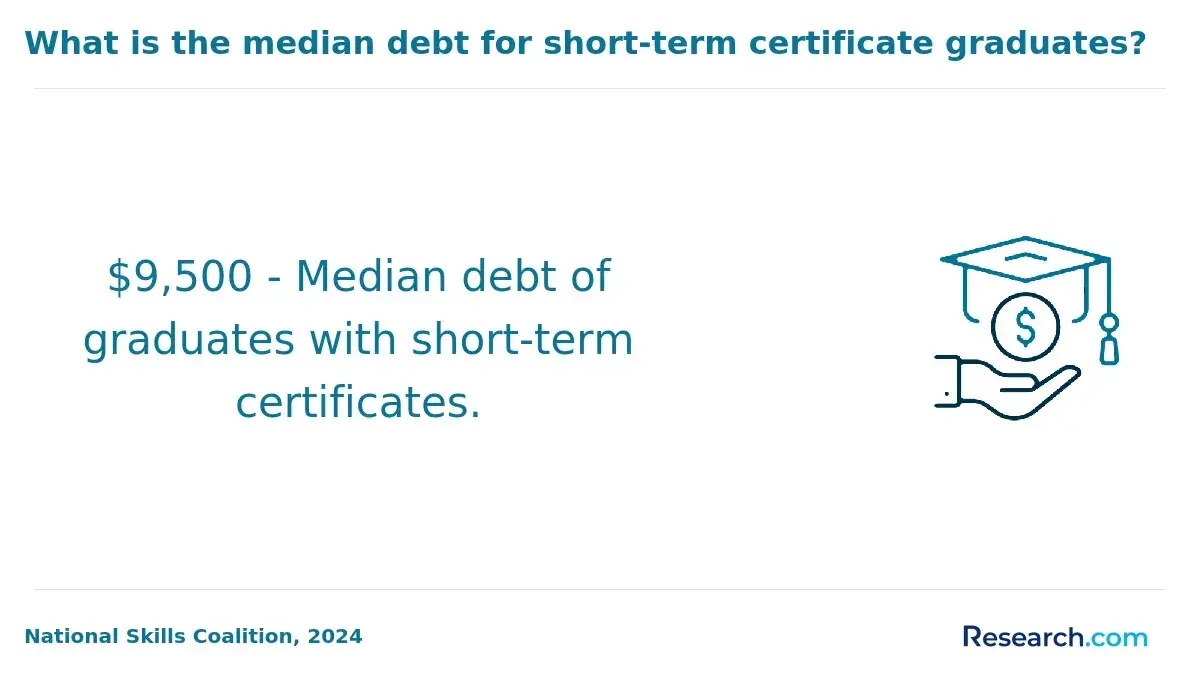
Conversely, private nonprofit online programs tend to demand higher tuition and lead to about 40% greater median debt at graduation, according to the Institute for College Access & Success (2024). Yet, such programs may justify their cost with stronger employer networks, tailored curricula, and elevated job placement rates that can enhance long-term salary growth.
This tradeoff benefits students with clear career targets in competitive segments of applied psychology, where access to advanced academic support and networking is critical. Still, these advantages hinge on a student's ability to absorb higher debt without compromising post-graduation financial stability, making the investment a nuanced decision anchored in both personal circumstances and market realities.
Ultimately, assessing ROI requires a contextual view: the lowest tuition does not automatically mean the best economic outcome, nor does a more expensive program inherently deliver proportional value. Decision-makers should consider how tuition interacts with program quality, debt levels, time-to-degree, and labor market alignment.
Such a multidimensional approach helps ensure that adult learners, career changers, and transfer students choose a path where educational costs align realistically with expected career gains and debt management strategies.
How Do Graduation Rates Influence Applied Psychology Program ROI?
Graduation rates are a significant but nuanced factor when evaluating applied psychology program ROI across public, private, and nonprofit online institutions. For example, the six-year graduation rate averages 43% at public online programs versus about 52% at private nonprofits, based on 2024 National Center for Education Statistics data.
This gap often reflects differences in student support services and admission practices, with private nonprofits frequently providing more personalized advising that can shorten time-to-degree and mitigate debt burdens. However, completion rates alone don't fully capture ROI for working adults or career changers who juggle external responsibilities; these students benefit when institutions offer flexible pacing and credit for experiential learning, which can alter traditional persistence patterns without necessarily diminishing program value.
Graduation rates serve as one indicator of institutional effectiveness, particularly in signaling how quickly students move into the workforce with reduced financial strain. Yet, many applied psychology students enroll part-time or face interruptions, making raw completion statistics an incomplete ROI metric. Comparing public and nonprofit online programs requires weighing these rates alongside curriculum alignment with career demands and support that affects long-term employability.
Prospective students looking for cost-conscious options should also consider affordability factors, including the cheapest online masters in mental health counseling, when assessing overall return alongside graduation outcomes.
What Role Do Career Outcomes Play in the ROI of a Applied Psychology Degree?
Employment outcomes critically shape the return on investment for online programs in applied psychology, making differences among public, private, and nonprofit institutions more than just a question of cost.
According to the 2024 U.S. Department of Education College Scorecard, graduates from public online applied psychology programs have somewhat higher employment rates within two years, around 78%, compared to 72% for private and 75% for nonprofit schools, indicating that institutional networks and curriculum alignment with employer needs can materially affect job placement.
For prospective students, this means weighing tuition expenses against the likelihood of timely, relevant employment, where practical experience opportunities and local partnerships often determine how quickly and sustainably they enter or advance in the workforce. The nuanced interplay of program reputation, skill development in areas like counseling and data analysis, and employer recognition influences whether graduates can translate their education into meaningful roles that justify the debt and time invested.
Variability in career mobility further complicates ROI calculations, particularly for working adults or career changers who rely on applied psychology degrees to pivot or upgrade their roles. Programs that partner with employers or emphasize specialized skills aligned with public sector or community services may enhance long-term career sustainability even if initial salaries are modest.
Geographic demand and prior experience also weigh heavily, limiting or expanding opportunities beyond the initial placement statistics. Thus, understanding these contextual factors is essential for students balancing immediate affordability with practical, realistic career trajectories rather than assuming all degrees yield equivalent returns.
One graduate of an online applied psychology program described initially questioning the real-world value of the degree beyond its cost and duration. Although the credential did not automatically lead to a higher salary, she found her employer recognized the skills gained as qualifying her for an internal promotion, expanding her responsibilities into program development rather than just frontline service.
Over time, the degree opened professional networks and practical insights that a traditional cost-benefit analysis might overlook, reinforcing that career outcomes must be assessed not solely by salary but by role relevance and growth potential within one's existing work environment.
How Does Student Debt Impact the Long-Term ROI of a Applied Psychology Program?
Higher debt levels from private online programs can substantially delay the point at which graduates of applied psychology programs achieve a positive long-term ROI, particularly when monthly repayments consume a large portion of entry-level earnings. Students facing this financial strain often must weigh whether the potential networking or institutional prestige justifies increased borrowing, especially since data indicates these private program attendees borrow 20-30% more than their public counterparts.
Conversely, public institutions typically provide lower tuition and state aid, reducing debt burdens and shortening the timeline for recovering educational investments, though such programs may vary in graduation rates and support services. This dynamic is critical for cost-conscious adult learners and transfer students who must assess educational value not only through cost but also completion likelihood and subsequent employability in applied psychology fields.
Debt management plays a decisive role in how student loan debt affects applied psychology program ROI, as those who borrow heavily without completing the program or securing relevant employment face sharply diminished returns. The Federal Reserve highlights a 15% higher delinquency rate among borrowers with debts exceeding $40,000, underscoring the risks inherent in over-borrowing for online programs.
Nonprofit options, while often cost-moderate, do not uniformly mitigate debt exposure, since repayment outcomes correlate more closely with total loan amounts than with institution type alone. Pragmatic borrowing aligned with realistic career expectations becomes essential, especially when comparing diverse online offerings, including well-researched options like the best online master's of social work programs that often share similar workforce challenges.
Ultimately, students must interpret the long-term financial impact of student debt on applied psychology graduates within the context of multiple intertwined factors: tuition cost, program quality, graduation success, and labor market conditions. Balancing these variables helps determine not only whether a particular online program offers meaningful ROI but also the extent to which debt burden could constrain career mobility and financial resilience.
Careful consideration of debt relative to career advancement prospects and educational flexibility remains paramount for students prioritizing sustainable economic benefits over purely academic credentials.
How Do Flexibility and Adult Learner Support Affect Applied Psychology Program Value?
Flexibility in scheduling and robust support services are pivotal factors shaping the real-world value of online applied psychology programs, particularly for adult learners balancing employment, family, and education. Programs that offer asynchronous coursework and part-time enrollment options reduce barriers that can delay degree completion, with evidence from the National Center for Education Statistics showing about a 15% higher retention rate in flexible formats.
However, this benefit often comes paired with tradeoffs: public institutions typically provide more affordable tuition and scalable flexibility but may lack the personalized advising, career counseling, and faculty engagement necessary to sustain student motivation and persistence. Private and nonprofit programs often address these gaps by delivering tailored support, such as transfer credit assistance, military accommodations, and close faculty access, that aligns more directly with adult learners' complex needs.
While these services can improve graduation rates and timely completion, a 2024 study by the Council for Adult and Experiential Learning highlights that students accessing such comprehensive aid are 20% more likely to finish on time, thereby enhancing workforce readiness and reducing long-term debt. The downside lies in higher tuition costs, which require careful scrutiny of financial aid options and post-graduation salary prospects, especially in mental health fields with variable employer expectations.
Ultimately, prospective students must weigh the immediate affordability and scale of public offerings against the more resource-intensive but potentially more outcome-effective supports of private and nonprofit programs. This balance significantly affects opportunity costs and the practical return on investment over a career horizon in applied psychology.
How Do Accreditation and Institutional Reputation Influence Applied Psychology ROI?
For prospective students weighing affordability against long-term career outcomes, the distinction between regional and programmatic accreditation versus national or non-accreditation can be decisive. A degree from a regionally accredited applied psychology program typically affords better credit transferability, smoother access to graduate school, and licensure eligibility.
Employers frequently prioritize candidates from accredited programs because accreditation signals verified academic rigor and relevant training. For example, a working professional obtaining licensure for counseling will face significant barriers if their degree lacks proper accreditation, limiting both job prospects and salary growth.
Institutional reputation interacts with accreditation in complex ways. Prestigious private universities may offer brand recognition that initially aids in employer perception, but public and nonprofit online programs have increasingly invested in student support and competencies that many employers value more than prestige alone.
According to a 2024 study by the National Center for Education Statistics, graduates of regionally accredited programs show a 15% higher employment rate and 12% greater median income five years after graduation relative to their peers from less recognized institutions. This data reflects how alignment of accreditation with practical career outcomes holds more consistent ROI implications than reputation alone, especially when juxtaposed with factors like tuition costs and debt burdens.
Students must balance these elements against personal career goals and local job market dynamics, recognizing that strong institutional standing doesn't guarantee better outcomes without solid accreditation backing and career services. Transparent graduation and licensure pass rates, specialized psychology accreditation, and demonstrated employer demand weigh heavily in maximizing educational investment, particularly for those navigating career changes or transfer pathways within the applied psychology domain.
How Does Time-to-Degree Affect the ROI of Public, Private, and Nonprofit Applied Psychology Programs?
Time-to-degree directly shapes the financial and career value of public applied psychology programs by influencing tuition exposure, opportunity costs, and the timeline for workforce entry. Public institutions often enable shorter completion times through accelerated tracks and generous transfer credit policies, which reduce both debt burden and lost income from extended enrollment periods.
However, students juggling work and family may find these compressed schedules less flexible, risking lower completion rates and diminished return. The reality is that a program's duration affects not just immediate expenses but also the cumulative income a graduate can earn over their career, making pace a critical factor in evaluating ROI.
Private applied psychology online degrees typically emphasize faster completion tied to full-time study with smaller cohorts, which can yield quicker career advancement for those able to maintain intensive enrollment. Yet, higher tuition and attrition risk counterbalance these advantages if the expedited path does not align with a student's capacity to persist.
Nonprofit programs often sit between public and private models, offering hybrid approaches that balance pacing with flexibility—important for working adults and transfer students who need manageable timelines. Decisions about enrollment intensity, program format, and credit transfer often dictate not only time-to-degree but also impact sustained enrollment and graduation, influencing overall value in nuanced ways.
Given these tradeoffs, cost-conscious learners weighing the average completion time and financial return in private applied psychology online degrees need to assess how pacing aligns with their employment and life demands.
Students exploring their options might also consider specific pathways tailored to those with unique backgrounds, such as felons, by reviewing resources on degrees felons can get. Balancing affordability, flexibility, and realistic timelines helps ensure that time-to-degree enhances rather than undermines the long-term ROI of online applied psychology education.
How Can You Choose the Best Applied Psychology Program Based on Your ROI Goals?
The highest return on investment in applied psychology programs is rarely defined by institution type alone; instead, it hinges on how individual priorities align with cost, time-to-degree, and career outcomes. Public online programs generally feature lower tuition and more state-supported financial aid, which can reduce debt burdens.
For instance, median student debt for public behavioral sciences graduates averaged $18,500 in 2024 compared to $32,000 at private institutions. Yet, private and nonprofit schools often offer more flexible schedules and stronger career services, which may accelerate graduation and improve employment prospects, key factors when assessing how to evaluate applied psychology program ROI.
Graduation rates and accreditation critically affect long-term value. Nonprofit online programs typically show higher on-time completion, helping working adults and career changers minimize total educational costs and enter the workforce sooner. Accreditation from reputable agencies like the APA enhances licensure opportunities and employer recognition, influencing salary trajectories in a field with steady demand.
When weighing public versus private or nonprofit, students must balance immediate affordability with potential network advantages and program quality that influence career stability and advancement.
Personal circumstances, such as current employment, family obligations, and flexibility needs, play a decisive role in determining the best program fit. Many learners benefit from online part-time pathways offered by nonprofits or private providers that allow maintaining income while studying, which can present a better ROI despite higher sticker prices.
For a practical comparison of online offerings in related fields, consider the human resource management masters degree online, which similarly balances cost, flexibility, and career impact across institution types.
References
- How We Calculated the Return on Investment of a Graduate Degree - FREOPP https://freopp.org/whitepapers/how-we-calculated-the-return-on-investment-of-a-graduate-degree/
- Flexible Programs Assist Adult Learners to Thrive - The EvoLLLution https://evolllution.com/opinions/flexible-programs-assist-adult-learners-to-thrive
- ROI Methodology – ROI Institute https://roiinstitute.net/roi-methodology/
- Masters in Psychology | Online Masters in Psychology | University of Phoenix https://www.phoenix.edu/online-psychology-degrees/psych-masters-degree.html
- The Long-Term Effects of Student Loans | ACE Blog https://ace.edu/blog/the-long-term-effects-of-student-loans/
- How To Choose A Psychology Program | Psychology.org https://www.psychology.org/resources/choosing-a-program/
- Is College Worth it? | Return on Investment Analysis of College Degree https://educationdata.org/college-degree-roi
- Online Applied Psychology Program | M.A. Applied Psychology https://www.thechicagoschool.edu/programs/psychology/ma-applied-psychology/
Other Things You Should Know About Applied Psychology ROI by Institution Type
Private programs often charge more, but this premium doesn't always translate into better ROI for applied psychology graduates. Many private institutions target specialized niches or offer smaller cohorts, which can mean more personalized attention but may not significantly boost employability or salary outcomes. For cost-conscious students, public or nonprofit programs frequently deliver comparable career advantages at lower tuition rates, making them a practical priority unless a private program aligns closely with specific career goals or networks.
The structure and delivery of online applied psychology programs vary notably, with private institutions sometimes emphasizing experiential or cohort-based learning, which benefits students seeking interactive, tight-knit communities. Public programs often offer larger class sizes and more standardized curricula, which may reduce personalized support but broaden access. This means students prioritizing mentorship and networking might find better ROI in private programs despite costs, while those seeking affordability and flexible pacing may gain more from public or nonprofit options.
Many nonprofit programs tend to design curricula with adult learners and working professionals in mind, often offering flexible scheduling and asynchronous course options. Compared to some public and private programs, nonprofits may impose a lighter coursework load per term, which can reduce stress and minimize income disruption. Therefore, for employed students focused on maintaining career momentum alongside study, nonprofit programs often present a stronger ROI through better work-study integration without sacrificing completion speed.
Employers in applied psychology typically weigh practical skills and relevant experience more heavily than institution type alone. However, degrees from public and nonprofit schools sometimes carry more recognized accreditation and established partnerships with health or social service sectors, which can ease job placement. Private online programs may excel at branding or specialized tracks but might require students to actively demonstrate competencies beyond the diploma. Students should prioritize programs with clear employer connections and applied training, regardless of institution type, to maximize ROI in competitive job markets.