2027 Best Careers to Pursue With a Project Management Master’s Degree

Co-Founder and Chief Data Scientist
A master’s in project management can move you beyond coordinating tasks into roles where you manage budgets, people, risk, strategy, vendors, and business outcomes. The challenge is choosing the right career direction after graduation. Project management jobs exist in technology, construction, engineering, finance, healthcare, manufacturing, consulting, and other sectors, but the best fit depends on your prior experience, technical background, salary goals, preferred work environment, and willingness to earn additional certifications.
This guide explains the strongest career options for project management master’s graduates, how the degree can affect advancement, which industries hire project managers, what skills employers value, and how to compare certifications, online programs, certificate alternatives, and return on investment. It is written for current graduate students, prospective master’s students, working professionals considering a career change, and project managers deciding whether an advanced degree can help them move into senior roles.
Quick Answer: What Can You Do With a Project Management Master’s Degree?
With a project management master’s degree, you can pursue roles such as engineering project manager, construction project manager, IT project manager, project management consultant, PMO manager, program manager, delivery manager, business analyst, portfolio manager, and agile coach or Scrum master. These jobs are found across industries that rely on complex planning, cross-functional coordination, budgeting, risk control, and stakeholder communication.
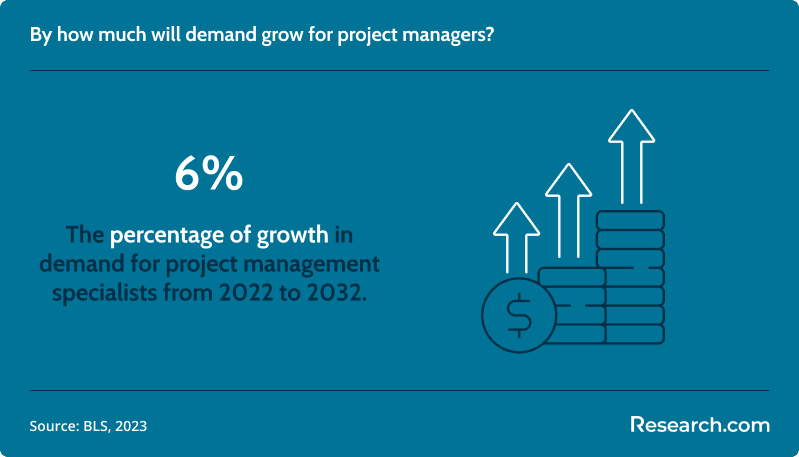
The strongest opportunities often go to candidates who combine the degree with industry experience, measurable project results, strong communication skills, and credentials such as PMP, CAPM, or PMI-ACP. The U.S. Bureau of Labor Statistics projects demand for project management specialists to grow by 7% from 2023 to 2033, and the Project Management Institute has estimated 2.3 million new project-oriented roles needed annually through 2030.
Key Things You Should Know About Careers With a Project Management Master’s Degree
- A master’s degree in project management can support career paths in IT, finance, healthcare, construction, engineering, consulting, manufacturing, energy, and other project-heavy fields.
- Common roles include project manager, program manager, PMO manager, construction project manager, project director, portfolio manager, business analyst, and project management consultant.
- The degree is most valuable when it strengthens practical skills in leadership, planning, budgeting, risk management, change management, stakeholder communication, and strategic decision-making.
- Career outcomes are not automatic. Salary and promotion potential depend heavily on experience, industry, location, technical knowledge, certifications, and the size and complexity of projects managed.
- Professionals who want senior leadership roles should evaluate whether a master’s degree, a professional certification, or a combination of both best fits their career stage.
- Best Careers to Pursue With a Project Management Master's Degree for 2027
- How does a project management master’s degree support career advancement?
- Which industries create the strongest demand for project managers?
- What skills do project management master’s programs develop?
- Which certifications work best with a project management master’s degree?
- What is the average salary for master’s-level project managers?
- What challenges do project managers face, and how can they manage them?
- How is AI changing project management careers?
- How can professionals move into project management from another field?
- What financing options are available for project management education?
- Are online project management master’s programs worth considering?
- Can short-term educational programs complement a project management master’s degree?
- Is a project management certificate a realistic alternative to a master’s degree?
- Is the ROI of a project management master’s degree worth it?
- Which skills and competencies are tied to higher project management salaries?
- How can you identify a strong online project management program?
- How can project management graduates maintain long-term career growth?
- How can additional professional certifications improve advancement prospects?
Best Careers to Pursue With a Project Management Master's Degree for 2027
The best career after a project management master’s degree is usually the one that combines your graduate training with your industry background. A construction professional may see the best return in construction management, while a software or systems professional may be better positioned for IT project management, delivery management, agile leadership, or portfolio work. If you are still exploring the broader value of the field, Research.com’s guide to what you can do with a project management degree can help you compare degree-based career options.
| Career | Typical career level | Best fit for | Salary information stated |
| Engineering Project Manager | Mid-Level Management | Professionals with engineering knowledge who can coordinate technical teams, budgets, schedules, and design or production requirements. | $138,280 - $178,806 annually |
| Construction Project Manager | Mid-Level Management | Candidates with construction, contracting, architecture, or field operations experience who want to lead building and infrastructure projects. | $105,308 - $138,741 annually |
| IT Project Manager | Mid-Level Management | Technology professionals who can manage software, systems, infrastructure, cybersecurity, or implementation projects. | $73,506 to $92,876 annually |
| Project Management Consultant | Senior-Level Management | Experienced project leaders who advise organizations on delivery methods, governance, efficiency, and recovery of troubled projects. | $127,536 - $188,110 annually; average of $157,325 per year |
| PMO Manager | Senior-Level Management | Project leaders who want to standardize methods, reporting, governance, resource planning, and portfolio oversight across an organization. | $121,199 - $175,743 annually; approximately $148,920 annually |
| Program Manager | Senior-Level Management | Professionals ready to manage several related projects that support a larger business objective. | $131,086 - $174,827 annually |
| Delivery Manager | Mid-Level Management | Professionals in technology, consulting, product, or operations environments who focus on predictable, efficient delivery. | $90,994 - $117,586 annually |
| Business Analyst | Mid-Level Management | Professionals who translate business needs into project requirements and work closely with stakeholders, product teams, and IT teams. | $97,706 - $118,158 annually |
| Portfolio Manager | Senior-Level Management | Experienced professionals who evaluate groups of projects and programs based on strategic value, risk, cost, and resource capacity. | $87,627 to a high of $161,657 annually |
| Agile Coach/Scrum Master | Varies by organization | Professionals who guide teams using agile practices, Scrum ceremonies, continuous improvement, and collaborative delivery methods. | Salary varies by employer, experience, and location. |
1. Engineering Project Manager
Engineering project managers lead technical projects that may involve product development, civil works, manufacturing systems, aerospace programs, facilities, or infrastructure. They coordinate engineers, vendors, schedules, documentation, budgets, compliance requirements, and technical milestones. Many employers prefer candidates with both engineering experience and formal project management training.
Career level: Mid-Level Management
Salary range: $138,280 - $178,806 annually
2. Construction Project Manager
Construction project managers oversee timelines, budgets, contractors, materials, inspections, safety requirements, and client expectations. This role can be especially attractive for professionals who already understand site operations and want to move into larger-scale leadership. It is also commonly discussed among the highest-paying construction management degree careers.
Career level: Mid-Level Management
Salary range: $105,308 - $138,741 annually
3. IT Project Manager
IT project managers plan and coordinate technology initiatives such as software launches, cloud migrations, cybersecurity improvements, enterprise system implementations, and infrastructure upgrades. The role requires project discipline plus enough technical fluency to communicate with developers, engineers, vendors, executives, and end users.
Career level: Mid-Level Management
Salary range: $73,506 to $92,876 annually
4. Project Management Consultant
Project management consultants help organizations improve delivery performance, reduce delays, redesign project processes, train teams, establish governance, and recover struggling initiatives. This path generally fits professionals who have already managed complex projects and can advise clients with credibility.
Career level: Senior-Level Management
Salary range: $127,536 - $188,110 annually
5. PMO Manager
A project management office manager builds and maintains the structure that helps an organization manage projects consistently. Responsibilities can include portfolio reporting, methodology selection, templates, resource planning, project audits, executive dashboards, and standards for documentation and delivery.
Career level: Senior-Level Management
Salary range: $121,199 - $175,743 annually
6. Program Manager
Program managers oversee groups of related projects that support a larger goal. Instead of focusing only on individual deliverables, they manage dependencies, benefits, risk, resources, stakeholder expectations, and alignment with business strategy.
Career level: Senior-Level Management
Salary range: $131,086 - $174,827 annually
7. Delivery Manager
Delivery managers focus on making project execution predictable and efficient. In technology and consulting environments, they often coordinate agile teams, remove blockers, improve workflows, monitor commitments, and ensure that clients or internal stakeholders receive usable outcomes on time.
Career level: Mid-Level Management
Salary range: $90,994 - $117,586 annually
8. Business Analyst
Business analysts connect business problems to project requirements. They gather stakeholder needs, document processes, define requirements, support testing, and help teams build solutions that solve the right problem. This can be a strong entry or transition role for professionals who are analytical but not yet ready to manage full project delivery.
Career level: Mid-Level Management
Salary range: $97,706 - $118,158 annually
9. Portfolio Manager
Portfolio managers look across many projects and programs to decide which initiatives deserve resources, which should be paused, and which are no longer aligned with organizational goals. This is a strategic role that requires financial awareness, prioritization skills, executive communication, and comfort with trade-offs.
Career level: Senior-Level Management
Salary range: $87,627 to a high of $161,657 annually
10. Agile Coach/Scrum Master
Agile coaches and Scrum masters help teams apply agile practices, improve collaboration, remove impediments, and deliver work in shorter cycles. This role is common in software and digital product environments, but agile methods are also used in operations, marketing, finance, and transformation projects.
How does a project management master’s degree support career advancement?
A project management master’s degree can help career advancement when it adds strategic, financial, leadership, and risk-management depth to your existing experience. It is not simply a credential for managing task lists. The degree is most useful for professionals who want to lead larger projects, manage multiple teams, influence executives, or move from technical contributor roles into management.
Some programs also overlap with leadership, organizational change, and management training. Professionals comparing graduate education with shorter leadership development options may also review Research.com’s coverage of the best online leadership courses to understand how different training paths compare.
| Advancement factor | How the master’s degree can help | What employers still look for |
| Leadership readiness | Graduate coursework can strengthen decision-making, team leadership, stakeholder management, conflict resolution, and organizational communication. | Examples of teams led, projects delivered, difficult stakeholders managed, and measurable outcomes achieved. |
| Strategic thinking | Students learn to connect project goals with organizational priorities, budgets, risk appetite, and long-term business value. | Ability to explain trade-offs, defend recommendations, and prioritize work under constraints. |
| Marketability | The degree can help candidates stand out for roles where employers prefer advanced education or leadership training. | Relevant industry background, technical fluency, certifications, and a record of successful delivery. |
| Industry flexibility | Project management skills can transfer across sectors such as IT, healthcare, construction, finance, and consulting. | Evidence that you understand the industry’s regulations, terminology, tools, and operational risks. |
| Earning potential | Advanced project managers with graduate preparation may qualify for senior roles with stronger compensation potential. | Salary depends on role, location, experience, employer size, industry, and scope of responsibility. |
When the degree is likely to help most
- You already have project-related experience and need a stronger credential to compete for senior roles.
- You want to move from managing single projects to managing programs, portfolios, or a PMO.
- Your target employers value graduate-level training for leadership, consulting, construction, engineering, healthcare, or enterprise technology roles.
- You need structured exposure to budgeting, contracts, risk analysis, governance, change management, and strategic planning.
When the degree may not be necessary yet
- You are new to project work and mainly need an entry-level credential or hands-on experience.
- Your employer prioritizes certifications and project results over graduate degrees.
- You are unsure which industry you want to enter and have not yet built a project portfolio.
- The total cost would create debt that is not justified by your realistic salary path.
Which industries create the strongest demand for project managers?
Project managers are employed wherever organizations need to coordinate people, money, schedules, vendors, risks, and deliverables. The best industry for you depends on your technical background and tolerance for complexity. Construction and engineering often require domain expertise. IT rewards technical fluency and agile delivery experience. Healthcare and finance may require strong compliance awareness. Consulting can offer variety but often demands client-facing communication and travel or fast-paced delivery cycles.
- Construction: Construction projects require close control of cost, scope, contracts, schedules, safety, subcontractors, permits, and inspections. Professionals who want specialized preparation may compare options such as a construction management online degree.
- Engineering: Engineering project managers coordinate technical teams across disciplines such as civil, mechanical, aerospace, manufacturing, and product engineering. Success usually requires technical credibility as well as project leadership.
- Information Technology: IT project managers oversee software development, platform upgrades, cybersecurity work, data initiatives, cloud migration, and digital transformation projects.
- Finance: Finance organizations use project managers for regulatory projects, reporting systems, operational improvements, cost controls, process redesign, and technology implementations.
- Healthcare: Healthcare project managers may lead facility upgrades, technology rollouts, compliance initiatives, workflow redesign, and patient-care improvement projects. Professionals interested in this sector may compare online healthcare management programs to understand healthcare-specific management training.
- Manufacturing: Project managers in manufacturing support production improvements, equipment implementation, quality initiatives, supply chain work, and cost-control projects.
- Consulting: Consulting firms hire project leaders to deliver client projects, manage timelines, coordinate specialist teams, and improve client operations.
- Energy and utilities: Energy organizations need project managers for infrastructure, renewable energy, grid modernization, maintenance, regulatory, and operational projects.
- Marketing: Marketing project managers coordinate campaigns, creative teams, budgets, vendors, launch calendars, and performance reporting.
- Defense and aerospace: These regulated sectors require careful management of specifications, timelines, safety standards, documentation, suppliers, and budgets.
Some graduates also explore adjacent management fields such as operations, events, travel, and service delivery. If that path interests you, Research.com’s overview of hospitality management careers can help you compare responsibilities and work environments.
In 2023, project management specialists held about 973,600 jobs. The chart below shows the largest employers of project management specialists:
What skills do project management master’s programs develop?
Project management master’s programs are designed to build both technical project-control skills and people-centered leadership skills. The most useful programs do more than teach terminology; they require students to plan, estimate, communicate, negotiate, analyze risks, and make decisions with incomplete information.
| Skill | Why it matters in project management | How to show it to employers |
| Communication | Project managers must explain scope, decisions, risks, changes, and expectations to people with different priorities and levels of technical knowledge. | Use examples of executive updates, stakeholder presentations, requirements documents, meeting facilitation, or conflict resolution. |
| Leadership | Projects often involve people who do not formally report to the project manager, so influence and motivation matter. | Describe how you aligned teams, delegated work, removed blockers, and maintained accountability. |
| Risk management | Successful project leaders identify problems early and create mitigation plans before risks become expensive failures. | Share risk registers, escalation plans, contingency strategies, or examples of prevented delays. |
| Strategic thinking | Projects should support business goals, not just produce deliverables. | Connect your project decisions to revenue, cost savings, compliance, customer experience, safety, or operational improvement. |
| Problem-solving | Scope changes, resource shortages, vendor issues, and technical barriers are common. | Use concise stories that explain the problem, your options, your decision, and the result. |
| Time management | Project managers must build schedules, identify dependencies, and manage competing deadlines. | Show experience with timelines, milestone tracking, sprint planning, or critical path thinking. |
| Budget management | Employers expect project leaders to understand cost estimates, forecasts, resource use, and budget variance. | Quantify budgets managed or explain how you monitored costs and made trade-offs. |
| Negotiation | Project leaders negotiate scope, deadlines, resources, vendor terms, and stakeholder expectations. | Provide examples of resolving conflict while protecting project goals. |
| Technical proficiency | Project management platforms, dashboards, collaboration tools, agile boards, and reporting systems are central to modern delivery. | List tools used and explain how they improved visibility, reporting, or team coordination. |
| Adaptability | Project conditions change, and rigid plans can fail when priorities, budgets, or requirements shift. | Describe how you adjusted scope, schedule, staffing, or methods while maintaining stakeholder trust. |
Communication is especially important because project managers translate between executives, technical specialists, vendors, customers, and frontline teams. Professionals who want a deeper communication foundation may also compare options such as an accelerated communications degree online.
The chart below shows the top three most common skills for project managers in 2024:
Which certifications work best with a project management master’s degree?
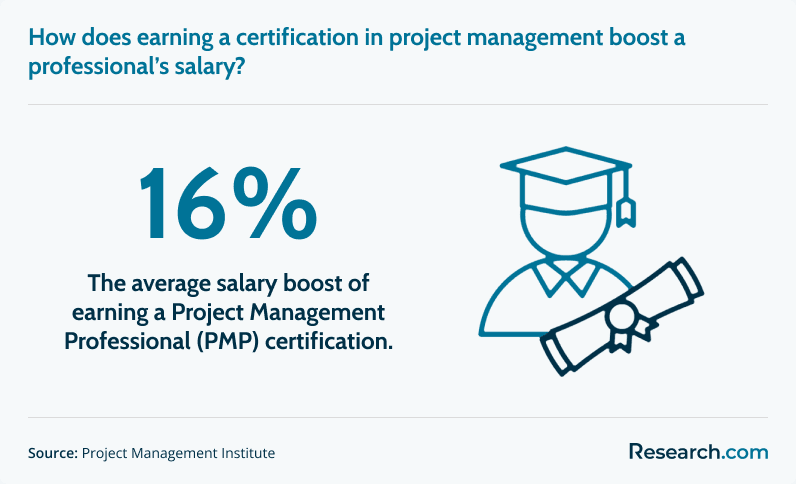
Certifications can make a project management master’s degree more job-ready by validating specific methods, experience levels, or delivery frameworks. The best certification depends on where you are in your career. CAPM is often better for early-career professionals, PMP is stronger for experienced project leaders, and PMI-ACP is useful for professionals working in agile environments.
| Certification | Provider | Best for | Requirements stated | Cost stated |
| Project Management Professional (PMP) | Project Management Institute (PMI) | Experienced project leaders who want a widely recognized project management credential. | A four-year degree, 36 months of project leadership experience, and 35 hours of project management education; or a high school diploma or associate degree, 60 months of project leadership experience, and 35 hours of project management education. | $405 for PMI members, $555 for non-members |
| Certified Associate in Project Management (CAPM) | PMI | Entry-level professionals who need a foundational project management credential. | A high school diploma or equivalent and 23 hours of project management education. | Around $300 |
| Agile Certified Practitioner (PMI-ACP) | PMI | Professionals working with agile teams, iterative delivery, and fast-changing project environments. | General project experience, agile project experience, and 21 hours of training in agile practices. | $495 for PMI members, $625 for non-members |
How to choose the right certification
- Choose CAPM if you are early in your project management career and need proof of foundational knowledge.
- Choose PMP if you already have substantial project leadership experience and want a credential recognized across industries.
- Choose PMI-ACP if your target roles involve agile teams, Scrum, Kanban, product delivery, software development, or digital transformation.
- Do not collect credentials randomly. Select certifications that match your target job descriptions and industry expectations.
What is the average salary for master’s-level project managers?
Project management salaries vary widely because the title appears in many industries and levels of responsibility. A project manager overseeing a small internal process improvement project is not paid the same as a program manager leading a large technology implementation or an engineering project manager handling high-value technical work.
- General average: Graduates with a project management master's degree earn an average of $88,000 per year, according to Payscale.
- Median salary: The U.S. Bureau of Labor Statistics reports a median annual wage of $98,580 for project management specialists.
- Higher-end salary example: Senior project managers can earn $115,891.
- Entry-level salary example: Entry-level project managers typically earn $74,694 annually.
Factors that can raise or lower salary
- Industry: Engineering, construction, consulting, finance, and technology roles may pay differently because project complexity and business impact vary.
- Experience: Employers pay more for professionals who have delivered projects, managed budgets, led teams, and solved real delivery problems.
- Project size: Larger budgets, higher risk, regulatory exposure, and executive visibility can increase compensation potential.
- Location: Pay often reflects local labor markets and cost of living.
- Certifications: PMP, PMI-ACP, and other relevant credentials can strengthen a candidate’s profile, but they do not guarantee a specific salary.
- Technical expertise: Project managers with knowledge of software, engineering, construction, healthcare operations, or finance may qualify for specialized roles.
The chart below shows the median annual wages for project management specialists in the top industries in which they worked in 2023.
What challenges do project managers face, and how can they manage them?
Project managers are often responsible for results without having full control over every person, budget decision, vendor, or executive priority that affects the project. That makes the role rewarding but demanding. Common challenges include unclear scope, shifting stakeholder expectations, unrealistic timelines, limited resources, distributed teams, technology changes, poor communication, and weak risk controls.
| Challenge | Why it creates problems | Practical response |
| Unclear scope | Teams waste time when deliverables, success criteria, and ownership are not defined. | Document scope, exclusions, assumptions, acceptance criteria, and change-control rules before work accelerates. |
| Stakeholder conflict | Executives, users, vendors, and technical teams may define success differently. | Map stakeholders early, clarify decision rights, and create a regular communication rhythm. |
| Remote or hybrid teams | Distributed teams can lose visibility into blockers, handoffs, and accountability. | Use shared dashboards, clear meeting norms, written decisions, and transparent issue tracking. |
| Rapid technology change | New tools can change timelines, risks, skills needed, and delivery methods. | Build learning time into plans, involve technical experts early, and update risk registers as assumptions change. |
| Competing priorities | Team members may be assigned to multiple projects at once. | Escalate capacity issues with data, negotiate priorities, and avoid promising timelines without resource confirmation. |
| Weak communication | Late or vague updates can damage trust and cause preventable surprises. | Tailor updates for each audience: executives need decisions and risks, while teams need next steps and dependencies. |
Professionals who are still building foundational business and management skills may consider whether additional education is useful before or alongside graduate-level project training. For some learners, a bachelor degree online in 2 years can provide a faster route to completing an undergraduate credential before pursuing advanced project management roles.
How is AI changing project management careers?
AI is changing project management by automating routine coordination work and improving access to data. As Harvard Business Review has noted, AI is transforming project management by affecting planning, monitoring, prediction, reporting, and decision support. This does not eliminate the need for project managers. Instead, it changes what strong project managers are expected to do.
- Routine work is becoming more automated: AI-enabled tools can assist with scheduling, draft status updates, summarize meeting notes, organize risks, and create reports.
- Decision-making is becoming more data-driven: Project leaders can use analytics to identify patterns, estimate delays, compare scenarios, and make faster recommendations.
- Risk management is becoming more predictive: AI tools can analyze large volumes of project data and flag warning signs before problems become visible through traditional reporting.
- Resource allocation can become more precise: AI can help compare capacity, skill availability, deadlines, and project requirements.
- Dashboards are becoming more real-time: Project managers can monitor progress, budget, dependencies, and performance indicators without relying entirely on manual reporting.
- Communication workflows are changing: Automated reminders, summaries, and frequently asked question responses can reduce administrative communication.
- Human judgment is becoming more important, not less: AI can suggest patterns, but project managers still need to manage trust, conflict, ethics, priorities, uncertainty, and stakeholder decisions.
How project managers can stay competitive in an AI-enabled workplace
- Learn how to validate AI-generated recommendations instead of accepting them automatically.
- Improve data literacy, including the ability to interpret dashboards, trends, and assumptions.
- Strengthen communication and change management skills, since people still determine whether project outcomes succeed.
- Understand privacy, security, and governance concerns when using AI tools with project data.
- Use automation to reduce administrative work and spend more time on stakeholder alignment, risk decisions, and strategic trade-offs.
How can professionals move into project management from another field?
Many project managers begin in another discipline, such as operations, administration, engineering, IT, healthcare, marketing, finance, logistics, education, or customer success. The transition is realistic if you can prove that you have already coordinated work, solved problems, communicated across teams, and delivered outcomes.
- Study the role before applying. Learn the project life cycle, common methodologies such as Agile and Waterfall, and core concepts such as scope, schedule, budget, risk, dependencies, and stakeholder management.
- Translate your existing experience. Look for transferable skills: planning, communication, leadership, organization, analysis, customer coordination, vendor communication, documentation, budgeting, and problem-solving.
- Volunteer for project-related work. In your current job, ask to coordinate a process improvement, lead a small implementation, manage a cross-functional task force, or document a workflow change.
- Build proof, not just interest. Create resume bullets that show scope, timeline, budget, number of stakeholders, systems used, or measurable results.
- Choose an appropriate credential. Early-career professionals may start with coursework or CAPM, while experienced professionals may prepare for PMP if they meet the stated requirements.
- Target bridge roles. Look for titles such as project coordinator, business analyst, implementation specialist, operations analyst, junior project manager, delivery coordinator, or PMO analyst.
For a deeper step-by-step explanation, Research.com’s guide on how to become a project manager explains education, experience, certifications, and career entry routes in more detail.
What financing options are available for project management education?
Financing a project management master’s degree requires more than checking tuition. Students should compare total program cost, fees, books, technology requirements, travel if applicable, time away from work, employer reimbursement rules, loan terms, and the likely career value of the credential.
- Employer tuition assistance: Some employers help pay for graduate coursework when the degree supports your current or future role. Ask about annual limits, grade requirements, repayment obligations, and approved schools.
- Scholarships and grants: Merit-based, need-based, institutional, professional association, and program-specific awards may reduce borrowing.
- Federal student aid: Eligible students can complete the FAFSA and compare federal loan options before considering private borrowing.
- Private loans: Private education loans may be available, but terms, rates, protections, and repayment flexibility vary.
- Payment plans: Some schools allow students to divide tuition into installments, which can reduce the need for upfront payment.
- Part-time enrollment: Studying part time may extend the timeline but can allow you to keep earning income and avoid excessive borrowing.
Students comparing online programs should also understand how aid works for distance learners. Research.com’s resource on online school financial aid can help you identify schools that participate in federal aid processes and compare funding considerations.
Are online project management master’s programs worth considering?
Online project management master’s programs can be worthwhile for working professionals who need flexibility, want to keep earning income, and can succeed in a self-directed learning environment. The format is especially practical for students already working in project-related roles because they can often apply coursework immediately at work.
Cost matters, but the cheapest option is not always the best value. A more affordable online project management degree may be a strong choice if it is properly accredited, offers relevant coursework, provides career support, and fits your schedule. Students should avoid choosing a program based only on tuition without checking quality indicators.
| Online project management master’s program | Best for | Potential drawbacks |
| Fully online asynchronous program | Working adults who need maximum scheduling flexibility. | Requires strong self-discipline and may offer less real-time interaction. |
| Online program with live classes | Students who want structure, discussion, and direct interaction with instructors and peers. | Scheduled sessions may be difficult for students with variable work hours. |
| Hybrid program | Students who want some campus access, networking, or in-person project work. | May require travel and may not work for students outside the region. |
| Accelerated online program | Professionals who can handle a heavier workload and want to finish faster. | Can be intense and may not fit demanding work or family schedules. |
Questions to ask before enrolling online
- Is the institution accredited by a recognized accreditor?
- Does the curriculum include risk, budgeting, leadership, agile methods, analytics, stakeholder management, and capstone or applied project work?
- Do faculty have practical project management or industry experience?
- What career services are available to online students?
- Can you complete the workload while maintaining your job and personal responsibilities?
- How much will the full program cost after fees, books, technology, and financing costs?
Can short-term educational programs complement a project management master’s degree?
Short-term educational programs can be useful when they fill a specific skill gap that a master’s program does not cover in depth. For example, a project manager may need focused training in data analytics, agile tools, construction estimating, healthcare compliance, procurement, AI tools, cybersecurity basics, or process improvement.
However, short-term programs should be chosen carefully. They are not always direct substitutes for graduate study, and not every fast program has strong labor-market value. Some learners researching very short credentials may encounter options such as an associate degree in 6 months online free, but project management professionals should evaluate whether the program is credible, relevant, accredited where applicable, and aligned with their actual career goals.
Is a project management certificate a realistic alternative to a master’s degree?
A project management certificate can be a good alternative to a master’s degree for professionals who want a faster, lower-cost way to learn fundamentals or validate specific skills. It may be enough if your goal is to move into project coordination, strengthen your resume, or qualify for roles where employers value certification more than graduate education.
A master’s degree is usually broader. It can be more appropriate for professionals aiming for senior leadership, consulting, program management, portfolio management, or PMO roles where strategic thinking, organizational leadership, finance, governance, and advanced communication are essential.
| Option | Best for | Strengths | Limitations |
| Project management certificate | Career changers, early-career professionals, and workers who need focused training quickly. | Shorter, usually less expensive, and useful for building targeted knowledge. | May not provide the same strategic depth, network, or leadership preparation as a master’s degree. |
| Professional certification | Professionals who meet experience requirements and want a recognized credential such as PMP, CAPM, or PMI-ACP. | Validates knowledge or experience against an external standard. | Requirements vary, and certification alone does not replace project results. |
| Master’s degree | Professionals seeking senior roles, broader leadership development, or long-term advancement. | Provides deeper study of leadership, strategy, risk, finance, governance, and complex project environments. | Requires more time, money, and academic commitment. |
Is the ROI of a project management master’s degree worth it?
The return on investment of a project management master’s degree depends on the total cost of the program, your current salary, the roles you can realistically pursue after graduation, and whether the degree helps you move into higher-responsibility work. ROI should not be judged only by average salary numbers. It should be judged against your specific career path.
How to evaluate ROI before enrolling
- Calculate total cost. Include tuition, fees, books, software, travel, loan interest, and any income lost if you reduce work hours.
- Compare realistic target roles. Look at job postings for your industry and location. Note whether they require a master’s degree, prefer PMP, or prioritize experience.
- Estimate time to benefit. Consider how long it may take to finish the degree and move into a better-paid role.
- Compare alternatives. Certificates, PMP preparation, employer-sponsored training, or short online degrees may offer a faster or less expensive route for some goals.
- Assess nonfinancial value. Leadership confidence, career mobility, professional network, and access to senior roles can matter even when the salary increase is gradual.
A master’s degree is more likely to be worth it if it leads to a clear promotion path, qualifies you for roles you could not otherwise access, or strengthens your ability to manage complex projects with higher business impact. It is less likely to be worth it if you choose an expensive program without a clear career plan.
Which skills and competencies are tied to higher project management salaries?
Higher-paying project management roles usually require more than knowing how to build a schedule. Employers tend to reward professionals who can manage complexity, communicate with executives, lead cross-functional teams, control risk, understand financial trade-offs, and use data to make decisions.
- Strategic leadership: Ability to connect projects to business outcomes, not just deliverables.
- Data analysis: Comfort interpreting dashboards, forecasts, performance metrics, and project trends.
- Agile and hybrid delivery expertise: Ability to adapt methods to the project environment rather than forcing one framework onto every team.
- Risk and issue management: Skill in identifying, escalating, and mitigating threats before they damage schedule, budget, safety, compliance, or customer trust.
- Financial management: Understanding budgets, resource costs, vendor costs, forecasts, and return on investment.
- Executive communication: Ability to explain trade-offs clearly and ask for timely decisions.
- Digital transformation awareness: Understanding how technology changes processes, staffing, customer experience, and project risk.
Targeted credentials can help prove these competencies when they match your career direction. Research.com’s guide to the highest paid certificate programs may help professionals compare credential options outside or alongside a project management master’s degree.
How can you identify a strong online project management program?
A high-quality online project management program should be accredited, academically rigorous, practical, transparent about costs, and aligned with current employer expectations. The program should help students build a project portfolio, not just complete readings and exams.
| Quality factor | What to verify | Why it matters |
| Accreditation | Confirm that the institution holds recognized accreditation. | Accreditation can affect financial aid, transferability, employer recognition, and academic credibility. |
| Curriculum relevance | Look for coursework in scope, schedule, cost, risk, quality, agile methods, procurement, leadership, communication, analytics, and capstone work. | The curriculum should reflect how projects are actually managed in modern organizations. |
| Faculty expertise | Review faculty backgrounds for project management, consulting, industry, research, or leadership experience. | Instructors with relevant experience can connect theory to workplace problems. |
| Applied learning | Check whether students complete simulations, case studies, team projects, or a capstone. | Employers value evidence that you can apply project tools and judgment. |
| Career support | Ask whether online students receive resume help, interview coaching, employer connections, and alumni access. | Career services can affect how well students translate the degree into job opportunities. |
| Flexibility | Compare synchronous requirements, part-time options, course length, start dates, and workload. | A program that does not fit your schedule can delay graduation or harm performance. |
| Total cost | Review tuition, fees, books, software, payment plans, and aid options. | The most useful program is one you can complete without taking on unrealistic financial risk. |
Some students search for easy programs, but “easy” should not be the main selection standard for a career-focused degree. If you are comparing workload and accessibility, Research.com’s resource on the easiest online degree options can provide context, but project management students should still prioritize accreditation, curriculum quality, and career alignment.
How can project management graduates maintain long-term career growth?
Long-term project management success comes from staying useful as business priorities, technology, delivery methods, and employer expectations change. A graduate degree can open doors, but continued growth depends on proof of results, professional learning, and the ability to lead through uncertainty.
- Build a measurable project portfolio. Track budgets, timelines, team sizes, tools used, risks managed, and outcomes delivered.
- Keep learning. Update skills in agile methods, analytics, AI tools, change management, industry regulation, and communication.
- Stay connected. Use professional associations, alumni groups, mentors, conferences, and internal leadership networks.
- Move toward business impact. As you advance, focus less on task completion and more on value, benefits, customer impact, cost control, and strategic alignment.
- Develop industry depth. Project leaders with specialized knowledge in healthcare, construction, engineering, finance, IT, or energy often have stronger positioning.
- Periodically reassess credentials. Additional training should support a specific goal, not simply add another line to your resume.
Professionals who want additional advanced training in a shorter format may compare options such as a one year masters program, especially if they are trying to update skills while continuing to work.
How can an affordable bachelor's degree provide a strong foundation for project management success?
A bachelor’s degree can provide the academic and professional foundation needed for project management master’s study, especially for students who need stronger preparation in writing, quantitative reasoning, business communication, research, and critical thinking. An affordable bachelor's degree may be a practical first step for learners who want to reduce total education cost before pursuing graduate-level project management training.
For aspiring project managers, the undergraduate major does not always have to be project management. Business, communications, information technology, engineering, construction management, healthcare administration, finance, and operations-related degrees can all support future project roles when paired with relevant experience.
How can additional professional certifications improve advancement prospects?
Additional certifications can improve advancement prospects when they strengthen a capability that employers are actively seeking. For project management graduates, the most useful credentials usually support a clear target role, such as agile delivery, risk management, construction, IT service management, business analysis, process improvement, cybersecurity, data analytics, or digital transformation.
The key is selectivity. Too many unrelated credentials can make a resume look unfocused. A smaller number of relevant certifications, backed by project results, is usually stronger. Professionals comparing credential options may also review Research.com’s overview of high paying jobs certificate programs to understand how certificate-based pathways differ across fields.
Common Mistakes to Avoid When Planning a Project Management Career
| Mistake | Why it can hurt your career | Better approach |
| Choosing a master’s program without checking accreditation | Accreditation can affect credibility, financial aid, transfer options, and employer acceptance. | Verify institutional accreditation before applying. |
| Focusing only on tuition | A low-cost program may still be a poor value if it lacks career support, applied learning, or respected credentials. | Compare total cost, curriculum, faculty, outcomes, flexibility, and student support. |
| Assuming a master’s degree guarantees a high salary | Salaries depend on experience, industry, role, location, and project scope. | Use job postings and salary sources to build a realistic career plan. |
| Ignoring certifications | Some employers strongly prefer credentials such as PMP, CAPM, or agile certifications. | Identify which certifications appear most often in your target job descriptions. |
| Choosing a field without considering your background | Technical industries may require domain knowledge that a project management degree alone does not provide. | Match your target industry to your experience or build domain skills before applying. |
| Relying only on rankings | Rankings may not reflect your budget, schedule, career goals, or learning needs. | Use rankings as one input, not the entire decision. |
| Underestimating communication skills | Many project failures are caused by poor expectations, unclear decisions, or weak stakeholder alignment. | Practice executive updates, facilitation, conflict resolution, and written documentation. |
Graduate Perspectives on Careers After a Project Management Master’s Degree
-
: "
Moving into project management gave my work more direction. I enjoy taking an idea from planning through delivery and knowing that my coordination, problem-solving, and leadership directly affect the outcome. – Selena
"
-
: "
In technology project management, every deadline and team dependency matters. The structured methods I learned helped me manage pressure at work and create better systems for staying organized outside of work as well. – Dianna
"
-
: "
Project management helped me move into a global role where I collaborate with teams in different countries. Delivering meaningful work while building relationships across cultures has made the career path especially rewarding. – Christy
"
Key Insights
- A project management master’s degree is most valuable when it is paired with relevant industry experience, measurable project outcomes, and strong communication skills.
- The best career path depends on your background: engineering, construction, IT, healthcare, finance, consulting, and operations all reward different types of expertise.
- Senior roles such as program manager, PMO manager, portfolio manager, and project management consultant require strategic thinking, financial awareness, risk management, and executive communication.
- Certifications can strengthen the degree. CAPM is useful for entry-level professionals, PMP is stronger for experienced project leaders, and PMI-ACP fits agile environments.
- Online project management master’s programs can be worthwhile, but only if they are accredited, practical, affordable for your situation, and aligned with your target roles.
- AI is reducing some administrative project tasks, but it increases the importance of judgment, stakeholder leadership, data literacy, ethics, and change management.
- Before enrolling, compare the degree’s full cost against realistic salary movement, employer expectations, alternative credentials, and your long-term career plan.
References:
- Bureau of Labor Statistics, U.S. Department of Labor. (2024). Occupational outlook handbook: Project management specialists. Retrieved December 30, 2024, from https://www.bls.gov/ooh/business-and-financial/project-management-specialists.htm
- Payscale. (n.d). Master of Science (MS), project management degree. Retrieved December 30, 2024, from https://www.payscale.com/research/US/Degree=Master_of_Science_(MS)%2C_Project_Management/Salary
- Project Management Institute. (2021). Talent gap: Ten-year employment trends, costs, and global implications. Retrieved from https://www.pmi.org/learning/careers/talent-gap-202
- Salary.com. (2024). Agile coach & Sr. scrum master salary in the United States. Retrieved December 30, 2024, from https://www.salary.com/research/salary/listing/agile-coach-and-sr-scrum-master-salary
- Salary.com. (2024). Business analyst salary in the United States. Retrieved December 30, 2024, from https://www.salary.com/research/salary/listing/business-analyst-salary
- Salary.com. (2024). Delivery manager salary in the United States. Retrieved December 30, 2024, from https://www.salary.com/research/salary/listing/delivery-manager-salary
- Salary.com. (2024). Entry level project manager salaries in the United States. Retrieved December 30, 2024, from https://www.salary.com/research/salary/position/entry-level-project-manager-salary
- Salary.com. (2024). IT project manager I salary in the United States. Retrieved December 30, 2024, from https://www.salary.com/research/salary/benchmark/it-project-manager-i-salary
- Salary.com. (2024). PMO manager salary in the United States. Retrieved December 30, 2024, from https://www.salary.com/research/salary/alternate/pmo-manager-salary
- Salary.com. (2024). Portfolio manager salary in the United States. Retrieved December 30, 2024, from https://www.salary.com/research/salary/alternate/portfolio-manager-salary
- Salary.com. (2024). Program manager salary in the United States. Retrieved December 30, 2024, from https://www.salary.com/research/salary/benchmark/program-manager-salary
- Salary.com. (2024). Project engineering manager salary in the United States. Retrieved December 30, 2024, from https://www.salary.com/research/salary/benchmark/project-engineering-manager-salary#google_vignette
- Salary.com. (2024). Project management consultant salary in the United States. Retrieved December 30, 2024, from https://www.salary.com/research/salary/posting/project-management-consultant-salary
- Salary.com. (2024). Project manager - construction salary in the United States. Retrieved December 30, 2024, from https://www.salary.com/research/salary/benchmark/project-manager-construction-salary
- Salary.com. (2024). Senior project manager salary in the United States. Retrieved December 30, 2024, from https://www.salary.com/research/salary/listing/senior-project-manager-salary
- Zippia. (2024, June 25). Project manager skills for your resume and career. Retrieved from https://www.zippia.com/project-manager-jobs/skills
Other Things You Should Know About Careers to Pursue With a Project Management Master’s Degree
In 2027, industries such as technology, healthcare, and construction are actively seeking project managers with a Master’s Degree. These sectors value advanced project management skills to implement complex projects efficiently, manage teams effectively, and optimize resource allocation, given industry-specific challenges and opportunities.
The Project Management Professional (PMP) certification is the main credential for senior project roles and requires 36 months of project leadership experience plus 35 hours of project management education, or a CAPM credential. Agile roles often ask for Scrum Master or PMI-ACP certification.