
2027 Hospitality Management Careers: Guide to Career Paths, Options & Salary

Co-Founder and Chief Data Scientist
Hospitality management is a career path for people who want to run guest-centered businesses, lead service teams, solve operational problems, and create experiences in hotels, restaurants, resorts, events, tourism, gaming, recreation, and luxury travel. The decision is not simply whether hospitality sounds interesting. Students and career changers need to know which roles are growing, what education level makes sense, how salaries vary, and whether the work style fits their strengths.
This guide explains hospitality management careers from a practical 2026 planning perspective. You will learn where the opportunities are, which degrees and certificates can help, what skills employers look for, how to compare programs, how to move into leadership, and what mistakes to avoid before investing time and money in this field.
Quick answer: Is hospitality management a good career path?
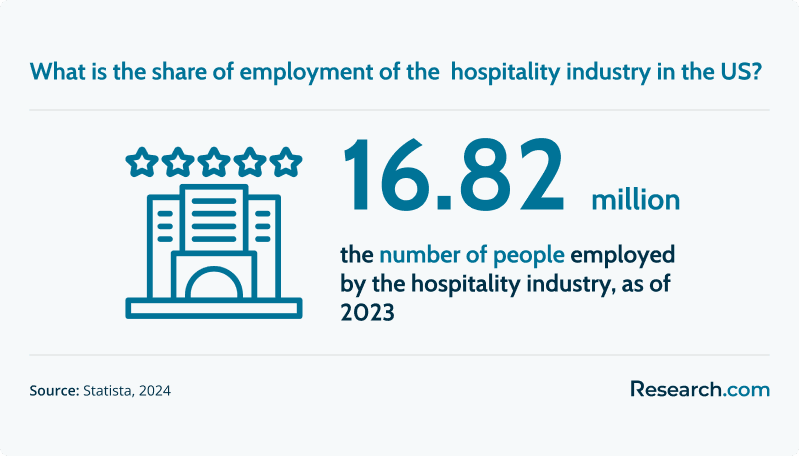
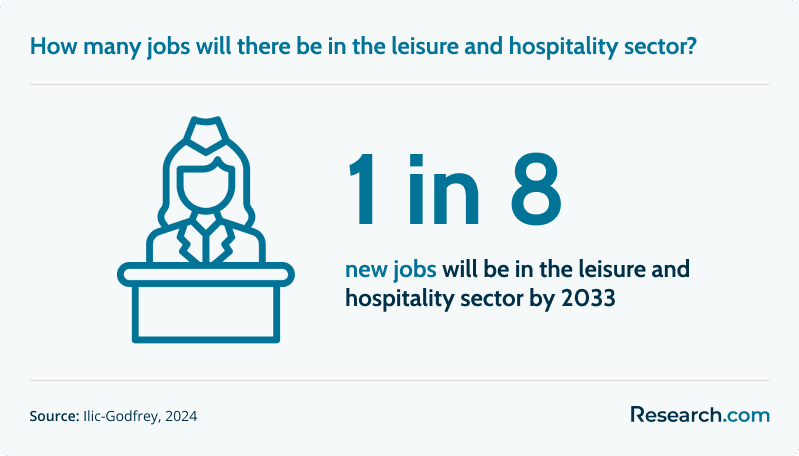
Hospitality management can be a strong career choice for people who enjoy service, leadership, fast-moving operations, and face-to-face problem-solving. The field employed 16.82 million hospitality professionals in the US as of 2023, and by 2033, one in eight new jobs will be in the leisure and hospitality sector. However, the best outcomes usually go to professionals who combine guest-service experience with business skills in finance, staffing, marketing, technology, and revenue management.
Key things to know before choosing hospitality management
- Career options are broad. Hospitality management includes hotels, restaurants, event planning, tourism, recreation, gaming, luxury services, corporate training, and travel advising.
- Demand remains active. By 2033, one in eight new jobs will be in hospitality, and 67% of hoteliers in 2024 report staffing shortages, which means employers continue to need qualified workers and managers.
- People skills are not enough. Communication and customer service matter, but managers also need budgeting, scheduling, data analysis, conflict resolution, compliance, and team leadership skills.
- Experience is the fastest credibility builder. Internships, front-desk roles, food and beverage supervision, event support, and guest services jobs can help students test the field before committing to advanced education.
- Hospitality is not limited to hotels. Event planning, tourism marketing, luxury travel, sustainability, and corporate training can suit professionals who like service-oriented work but want alternatives to hotel operations.
- Why choose hospitality management?
- Hospitality management career outlook
- Can you fast track a hospitality management degree?
- Trends changing hospitality management
- Can an MBA help hospitality managers advance?
- Skills needed in hospitality management
- How to start a hospitality management career
- Is a DBA useful for hospitality leadership?
- How to move up in hospitality management
- How to choose a hospitality management program
- Why networking matters in hospitality careers
- Alternative careers for hospitality management graduates
- Why financial skills matter in hospitality
- Common challenges in hospitality management
- Can an accelerated online business degree help?
- How online MBA programs support hospitality leadership
- Can entrepreneurship training strengthen a hospitality career?
Why choose hospitality management?
Hospitality management appeals to people who want work that blends business operations with human interaction. Instead of spending every day on one narrow task, managers often coordinate staffing, guest relations, budgets, vendors, facilities, marketing, service quality, and problem resolution. That variety is one reason the field attracts students who want a practical business career with visible impact.
The industry is also large enough to support many career directions. Hospitality professionals work in hotels, resorts, restaurants, conference centers, cruise and travel businesses, casinos, theme parks, sports venues, tourism organizations, and luxury service companies. For students comparing academic routes, reviewing hospitality and tourism degree requirements can clarify how programs prepare graduates for both service roles and management responsibilities.
Hospitality can also offer financial upside for professionals who reach senior positions. Hotel general managers earn a median annual salary of $98,000, and top regional leadership roles, including regional vice presidents in operations, can have hospitality management salary that exceed $150,000 annually. These higher-level jobs usually require a record of operational success, leadership ability, financial judgment, and the capacity to manage multiple teams or properties.
At the same time, hospitality is not a low-effort path. Work schedules may include nights, weekends, holidays, high-volume seasons, and urgent guest issues. The field is best suited to people who can stay composed under pressure, communicate clearly, and make decisions quickly when service quality, safety, or revenue is at stake.
| Hospitality management may fit you if... | You may want another path if... |
| You enjoy working with guests, clients, vendors, and staff every day. | You strongly prefer predictable hours and limited public interaction. |
| You like solving operational problems in real time. | You dislike fast-changing priorities or urgent service issues. |
| You want a business career with paths into hotels, events, tourism, food service, recreation, or luxury travel. | You want a field where advancement depends mostly on technical specialization rather than service leadership. |
| You are willing to start in hands-on roles to understand operations before managing others. | You expect to move directly into senior management without frontline or supervisory experience. |
Hospitality management career outlook
The outlook for hospitality management is strongest for roles tied to travel recovery, events, lodging operations, recreation, and guest experience. By 2033, one in eight new jobs will be in the leisure and hospitality sector. That growth does not mean every role grows at the same pace, so students should compare specific occupations instead of treating “hospitality” as one job market.
Hospitality management also overlaps with broader business training. Students who are still deciding between a hospitality-specific degree and a general management path may want to compare hospitality coursework with online leadership and management courses to see which option better matches their target role.
| Occupation | Median Annual Salary | Projected Job Growth (2023-2033) |
| Lodging Managers | $65,360 | 10% (Much faster than average) |
| Food Service Managers | $63,060 | 2% (Slower than average) |
| Meeting, Convention, and Event Planners | $49,470 | 18% (Much faster than average) |
| Amusement and Recreation Managers | $67,000 | 12% (Faster than average) |
| Gaming Managers | $76,910 | 7% (Faster than average) |
| Source: US Bureau of Labor Statistics, 2024 |
The table shows why career targeting matters. Meeting, Convention, and Event Planners have the highest projected growth among the listed roles, while Food Service Managers show slower projected growth. Lodging, recreation, and gaming roles still offer management opportunities, but competition, location, employer type, and experience can strongly affect outcomes.
Before enrolling, compare hospitality management degree costs with the roles you want. A lower-cost program with strong internship access may be a better choice than a more expensive option with weak employer connections, especially if your first job will be entry-level or supervisory.
Can you fast track a hospitality management degree?
Yes, some students can shorten the time needed to earn a hospitality-related credential through accelerated terms, transfer credits, prior learning assessment, summer enrollment, or competency-based formats. Fast-track options can be useful if you already have college credits, relevant work experience, or a clear career target.
The trade-off is workload. Accelerated programs often compress assignments, projects, and exams into shorter terms, which can be difficult for students who work full time or need flexible pacing. Before choosing this route, verify accreditation, internship requirements, course sequencing, and whether the program supports your intended job market. Students comparing faster routes can review fast track college programs to understand how accelerated formats differ.
Trends changing hospitality management
Hospitality employers increasingly expect managers to understand technology, sustainability, personalization, and workforce retention. Digital tools now support mobile check-in, guest messaging, labor scheduling, revenue analysis, inventory control, and review management. AI-enhanced guest services and analytics can help managers respond faster, but they do not replace the need for human judgment in service recovery, team leadership, and brand experience.
Sustainability is also becoming part of standard operations. Hotels, event venues, restaurants, and travel businesses are paying closer attention to energy use, waste reduction, sourcing, and guest expectations around environmentally responsible practices. Professionals who can connect service quality with cost control and sustainability may be better positioned for leadership roles.
For students who want a shorter starting point before committing to a bachelor's degree, the fastest associates degree online options can provide a way to build foundational business or hospitality knowledge quickly.
Can an MBA help hospitality managers advance?
An MBA can help hospitality professionals who want to move from property-level or department-level work into broader leadership, corporate strategy, finance, consulting, entrepreneurship, or multi-unit operations. The value is strongest when the student already has hospitality experience and uses the MBA to add financial analysis, data-driven decision-making, marketing strategy, and executive communication skills.
An MBA is not always necessary for early hospitality jobs. If your goal is front desk management, event coordination, or food and beverage supervision, experience and a focused hospitality degree or certificate may be more practical. If your goal is regional leadership or corporate management, comparing options such as the most affordable online MBA programs can help you decide whether the cost and time commitment make sense.
Skills needed in hospitality management
Hospitality managers need both service instincts and business discipline. According to industry guidance on hospitality skills, the strongest professionals combine communication, leadership, adaptability, cultural awareness, and operational knowledge.
Core hospitality management skills
- Guest service judgment. Managers must understand what guests need, set service standards, and know when to escalate or resolve a complaint immediately.
- Team leadership. Hospitality depends on coordinated work across front desk, housekeeping, kitchen, maintenance, sales, events, security, and vendors.
- Conflict resolution. Managers regularly handle guest concerns, employee issues, scheduling conflicts, and vendor problems while protecting service quality.
- Adaptability. Weather disruptions, overbookings, staff absences, supply delays, and unexpected guest needs require quick, calm decisions.
- Financial management. Budgeting, labor cost control, pricing, inventory, revenue targets, and profit margins become more important as professionals move into leadership.
Professional skills employers value
- Communication. Clear spoken and written communication helps prevent mistakes between departments and improves the guest experience.
- Collaboration. Hospitality managers rarely work alone; they coordinate teams with different schedules, cultures, and responsibilities.
- Time management. Managers often juggle guest issues, staffing, reporting, inspections, meetings, and daily service operations.
- Attention to detail. Room readiness, event setup, menu accuracy, billing, safety procedures, and guest preferences can all affect satisfaction.
- Cultural awareness. Hospitality serves guests and employs workers from many backgrounds, making respect and cultural sensitivity essential.
Students who want flexible training should compare curriculum, internship access, and affordability among the most affordable hospitality management programs online. A useful program should teach both guest-facing skills and the business side of operations.
How to start a hospitality management career
The best entry point depends on your education, work history, and target role. Many hospitality leaders begin in frontline jobs and move into supervisory positions after proving they can handle guests, teams, and operational pressure. Others use an associate, bachelor's, certificate, or internship to qualify for structured management training programs.
| Credential or experience level | Typical starting options | Best for |
| Certificate | Front desk associate, banquet coordinator, guest services representative | Career changers, working adults, or students testing a hospitality specialty |
| Associate degree | Front desk manager, event coordinator, food and beverage supervisor | Students seeking faster entry into supervisory or operations roles |
| Bachelor's degree | Hotel operations manager, sales and marketing manager, restaurant manager | Students targeting management training programs or broader leadership tracks |
| Master's degree | Hotel general manager, revenue manager, director of sales and marketing | Professionals seeking strategic, corporate, or senior management roles |
Jobs you can pursue with an associate degree in hospitality management
Front Desk Manager
Front desk managers supervise reception operations, reservations, check-ins, guest communication, and front office staff. This role is a strong starting point for people who want to understand hotel operations from the guest-facing side.
Median salary: $47,200
Event Coordinator
Event coordinators support weddings, meetings, conferences, banquets, and corporate functions. They coordinate timelines, vendors, setup details, client communication, and on-site problem-solving.
Median salary: $49,470
Food and Beverage Supervisor
Food and beverage supervisors help manage dining service, inventory, staff assignments, sanitation expectations, and guest satisfaction in restaurants, hotels, resorts, and event venues.
Median salary: $45,000
Jobs you can pursue with a bachelor's degree in hospitality management
Hotel Operations Manager
Hotel operations managers coordinate multiple departments to keep daily property operations running smoothly. They may monitor budgets, staffing, maintenance, service standards, and guest satisfaction goals.
Median salary: $66,000
Sales and Marketing Manager
Sales and marketing managers help attract guests, groups, corporate clients, and event customers. Their work may include campaigns, partnerships, market research, pricing support, and revenue-focused promotions.
Median salary: $72,100
Restaurant Manager
Restaurant managers oversee dining operations, staffing, customer service, safety compliance, budgets, and local marketing efforts. This role suits people who can balance guest experience with cost and labor control.
Median salary: $59,440
Can you get a hospitality management job with only a certificate?
Yes. A certificate can help qualify you for entry-level or specialized roles, especially if it includes practical training in hotel operations, event planning, food and beverage, or guest services. Certificate holders commonly pursue jobs such as front desk associate, banquet coordinator, and guest services representative.
A certificate is most useful when you want targeted training without committing to a full degree immediately. It can also help career changers build vocabulary, confidence, and basic operational knowledge. However, a certificate may not be enough for roles that require budgeting authority, department leadership, or multi-unit management experience.
The hospitality industry is continuing to recover from the major disruption it experienced in 2020. Hotels alone are projected to reach $133.30 billion in revenue in 2029, which makes this a relevant time to consider entry-level roles, internships, and management training pipelines.
Is a DBA useful for hospitality leadership?
A Doctorate of Business Administration can make sense for experienced hospitality professionals who want to lead at the executive level, consult, teach, or conduct applied business research. Unlike an entry-level credential, a DBA is usually most valuable after a professional has already developed management experience and wants to solve complex organizational problems.
Hospitality-focused leaders may use DBA-level study to examine service innovation, labor strategy, technology adoption, revenue models, guest behavior, sustainability, or multi-property operations. Because doctoral programs require a major investment, compare tuition, dissertation support, faculty expertise, and professional outcomes before enrolling. Cost-conscious candidates can start by reviewing options such as the cheapest DBA online programs.
How to move up in hospitality management
Advancement in hospitality usually comes from a combination of operational results, leadership reputation, professional education, and networking. Managers who can improve guest satisfaction, control costs, retain staff, and grow revenue are often better positioned for promotion than those who only have credentials.
Graduate education may help if your goal is senior leadership, corporate strategy, project-based operations, or cross-industry management. Some professionals compare hospitality graduate programs with a master of project management path when they want stronger training in timelines, budgets, risk, and complex initiatives.
Others choose broader business education. For example, cheap online business administration degree programs may help hospitality professionals build management skills that apply beyond hotels and restaurants.
Certifications that can support hospitality career growth
- Certified Hotel Administrator (CHA). A recognized credential for hotel managers that emphasizes operations, financial management, human resources, and guest service.
- Certified Hospitality Educator (CHE). A credential for professionals who teach hospitality management and need instructional and industry-specific expertise.
- Certified Food and Beverage Executive (CFBE). A credential from the American Hotel & Lodging Educational Institute focused on food and beverage leadership.
- Certified Sommelier (CS). A wine-service credential offered by the Court of Master Sommeliers for professionals in restaurants, hotels, and luxury service settings.
- Certified Guest Service Professional (CGSP). A credential that recognizes strong guest-service performance and service culture knowledge.
Certifications are most useful when they match your role. A revenue manager needs different proof of skill than a restaurant leader, event planner, wine professional, or hospitality instructor.
Jobs you can pursue with a master's in hospitality management
A master's degree can prepare experienced professionals for larger leadership, strategy, and revenue-focused responsibilities. It is most valuable when paired with work experience and a clear advancement goal.
Hotel General Manager
Hotel general managers oversee daily property performance, guest satisfaction, staffing, budgets, marketing coordination, safety standards, and operational quality. Graduate study can strengthen the strategic and financial skills needed for this role.
Median salary: $98,000
Revenue Manager
Revenue managers study demand, booking patterns, pricing, and inventory to help hotels and venues increase revenue. This role is data-heavy and benefits from analytical, forecasting, and market strategy skills.
Median salary: $90,000
Director of Sales and Marketing
Directors of sales and marketing create strategies to attract guests, events, groups, and corporate accounts. They may oversee campaigns, partnerships, promotions, sales teams, and market positioning.
Median salary: $125,000
Jobs you can pursue with a doctorate in hospitality management
A doctorate can support careers in academia, research, consulting, and executive leadership. It is generally not needed for most property-level management jobs, but it can be useful for specialized leadership or scholarly work.
Professor of Hospitality Management
Professors teach hospitality courses, mentor students, conduct research, and contribute to the development of future hospitality leaders.
Median salary: $79,640
Director of Hospitality Research
Directors of hospitality research study industry trends, consumer behavior, operations, labor, technology, and service innovation. Their findings may guide business decisions, academic work, or policy discussions.
Median salary: $100,000+ (varies based on employer and location)
Chief Operating Officer (COO)
COOs oversee high-level operations across departments, brands, properties, or regions. They focus on strategy, performance, systems, staffing, and long-term organizational growth.
Median salary: $165,000
Which certification is best for hospitality management?
The best certification depends on your target job. A hotel operations leader, event planner, revenue manager, and food and beverage executive should not all choose the same credential.
| Certification | Best fit | Why it may help |
| Certified Hotel Administrator (CHA) | Hotel managers and senior property leaders | Shows knowledge of hotel operations, leadership, financial management, and guest service |
| Certified Hospitality Revenue Manager (CHRM) | Revenue managers and pricing-focused professionals | Focuses on forecasting, pricing, market analysis, and revenue optimization |
| Certified Meeting Professional (CMP) | Meeting, convention, and event professionals | Supports expertise in event design, risk, budgeting, and event operations |
Students who want a lower-commitment entry point can begin with an online associate in hospitality management, then add experience, certifications, or graduate study as their goals become more specific.
How to choose a hospitality management program
A hospitality management program should be evaluated on more than tuition or convenience. The right program should connect classroom learning with the realities of hospitality work: guest service, operations, staffing, revenue, technology, food and beverage, events, and leadership.
| Factor to check | Why it matters | Question to ask |
| Accreditation | Accreditation affects quality assurance, credit transfer, graduate school options, and sometimes employer confidence. | Is the institution properly accredited, and will credits transfer if I continue my education? |
| Internships and employer connections | Hospitality hiring often rewards practical experience and industry references. | Which hotels, restaurants, event venues, tourism organizations, or corporate partners recruit from this program? |
| Curriculum | A useful program should include both service operations and business fundamentals. | Does the program cover finance, revenue management, marketing, leadership, technology, and guest experience? |
| Format | Online, hybrid, and campus programs differ in flexibility and networking opportunities. | Can I complete internships or practical requirements where I live or work? |
| Total cost | Tuition is only part of the investment; fees, travel, materials, and lost work time also matter. | What is the full cost through graduation, and what aid or transfer credit can reduce it? |
| Career support | Strong advising can help students identify realistic roles and employers. | What placement support, career coaching, alumni access, and interview preparation are available? |
For professionals who already hold a bachelor's degree and want a faster leadership credential, 18 month MBA programs may be worth comparing with master's programs in hospitality management.
Why networking matters in hospitality careers
Hospitality is a relationship-driven industry. Many opportunities come through supervisors, vendors, alumni, event partners, professional associations, former coworkers, and repeat clients. Networking can help you learn which employers promote from within, which properties are expanding, and which roles match your strengths.
Students should look for programs that create direct contact with employers through internships, guest speakers, alumni panels, site visits, case competitions, and mentorship. Experienced professionals may also consider executive programs with strong peer networks, including a cheap executive MBA if they want leadership development without losing access to professional contacts.
Alternative careers for hospitality management graduates
Hospitality management skills transfer well because the field trains professionals to manage people, service standards, budgets, schedules, customer expectations, and operational details. If hotel or restaurant management is not the right long-term fit, graduates can pursue adjacent roles.
Corporate Trainer
Corporate trainers design and deliver employee learning programs in customer service, leadership, onboarding, sales, and operations. Hospitality experience can be especially useful in organizations that rely on consistent service standards. A graduate program such as one of the best online hospitality management masters can strengthen training design and leadership skills.
Median salary: $63,080
Event Planner
Event planners organize corporate meetings, weddings, galas, conferences, and special events. They manage vendors, budgets, logistics, timelines, client expectations, and on-site execution.
Median salary: $57,850
Sustainability Manager
Sustainability managers help organizations reduce waste, improve energy practices, source responsibly, and track environmental initiatives. Hospitality professionals can apply operations knowledge to make sustainability practical rather than purely theoretical. This path is one example of what may be possible after exploring hospitality management education pathways or learning what you can do with an online hotel and restaurant management degree.
Median salary: $72,530
Luxury Travel Advisor
Luxury travel advisors plan high-end itineraries, premium experiences, tours, accommodations, and personalized travel services. Hospitality training helps advisors understand service expectations and client experience design.
Median salary: $60,000
Tourism Marketing Specialist
Tourism marketing specialists promote destinations, attractions, hotels, experiences, and regional travel campaigns. Hospitality knowledge helps them understand guest behavior and operational realities behind the marketing message.
Median salary: $65,000
Creative skills can also support hospitality careers, especially in branding, event design, menus, promotions, social media, and guest communications. Professionals interested in visual communication sometimes compare whether a graphic design course is easy or hard before adding design training to a hospitality or tourism career plan.
Why financial skills matter in hospitality management
Hospitality managers make decisions that affect revenue, labor costs, inventory, vendor spending, pricing, and profitability. Financial knowledge helps leaders understand whether an idea is simply attractive or actually sustainable.
Key financial skills include budgeting, forecasting, labor cost analysis, revenue management, profit-and-loss interpretation, capital planning, and return-on-investment evaluation. Professionals who want stronger finance training in less time can compare fast track finance degrees online with MBA or hospitality-focused options.
Common challenges in hospitality management
Hospitality management can be rewarding, but it also comes with pressure. Managers may deal with labor shortages, changing guest expectations, technology upgrades, seasonal demand, regulatory requirements, safety concerns, and sustainability goals. Staffing remains especially important because 67% of hoteliers in 2024 report staffing shortages.
Technology creates another challenge. Digital tools can improve scheduling, guest communication, pricing, and reporting, but they also require training and change management. Managers need to help teams adopt new systems without weakening service quality.
Professionals who want broader leadership preparation may compare hospitality graduate programs with accelerated MBA programs online, especially if they want a stronger foundation in strategy, finance, and organizational decision-making.
Common mistakes to avoid
- Choosing a program without checking accreditation. Accreditation can affect transfer credit, graduate school options, and employer confidence.
- Looking only at tuition. Compare total cost, fees, required travel, internship logistics, textbooks, technology, and time away from work.
- Assuming online always means easier. Online hospitality programs can still require projects, group work, internships, simulations, and strict deadlines.
- Ignoring hands-on experience. Hospitality employers often value internships and frontline experience because managers need to understand real operations.
- Picking a degree before choosing a target role. Hotel operations, events, revenue management, tourism marketing, and food service may require different coursework and experience.
- Expecting salary outcomes to be guaranteed. Pay depends on role, employer, location, experience, performance, and economic conditions.
- Overlooking work-life fit. Hospitality can involve evenings, weekends, holidays, and high-pressure seasons.
Can an accelerated online business degree help?
An accelerated online business degree can help hospitality professionals who want a broader business foundation without pausing their careers for a traditional campus schedule. This path may be useful for people moving from service roles into supervision, operations, sales, entrepreneurship, or general management.
The best candidates are self-directed learners who can manage compressed coursework while working or handling personal responsibilities. Before enrolling, confirm that the program covers finance, management, marketing, analytics, and communication skills that connect to your hospitality goals.
How online MBA programs support hospitality leadership
Online MBA programs can strengthen hospitality leadership by adding advanced business training in strategy, finance, analytics, marketing, operations, and organizational behavior. For hospitality professionals, this can be especially valuable when moving from department management into property, regional, corporate, or entrepreneurial leadership.
The key is fit. A general MBA may offer broader career mobility, while a hospitality master's may provide deeper industry specialization. Compare curriculum, flexibility, faculty experience, employer connections, and cost before choosing among the top online MBA programs.
Can entrepreneurship training strengthen a hospitality career?
Entrepreneurship training can help hospitality professionals who want to launch a restaurant, event company, boutique lodging concept, travel service, food venture, consulting practice, or guest-experience business. It can also help managers inside established companies think more creatively about new revenue streams, partnerships, and service models.
Useful entrepreneurship skills include opportunity analysis, business planning, pricing, brand positioning, customer discovery, funding strategy, and risk management. To explore where this training can lead, review what you can do with a entrepreneurship degree.
What graduates say about hospitality management careers
"Choosing hospitality management turned out to be one of the strongest career decisions I have made. The field has given me room to grow, opportunities to travel, and the chance to build meaningful relationships with people from many backgrounds. The work changes every day, and that challenge keeps me engaged." – Colin
"Hospitality management lets me combine creativity with leadership. Whether I am coordinating major events or improving the guest experience, I keep building skills that help me professionally and personally. The pace of the industry pushes me to keep learning." – Irma
"The best part of hospitality management is helping create experiences guests remember. I have worked in settings ranging from luxury hotels to international resorts, and the career has opened doors I did not expect. It rewards adaptability, passion, and genuine connection." – Tara
References
- ETC Employment & Training. (2024). Top 10 skills all hospitality employees have. etctld.com.au
- Flanagan, C. (2024). Essential soft skills for careers in hospitality. landmarkhotelgroup.com
- Gumus, M. (15 Mar 2022). 90% of hospitality workers are happy in their jobs. hospitalitytech.com
- Ilic-Godfrey, S. (12 Nov 2024). By 2033, 1 in 8 jobs will be in this sector. blog.dol.gov
- Kirk, P. (20 Mar 2024). Four years since start of pandemic, hotels are still struggling to fill jobs. hospitalityinvestor.com
Key Insights
- Hospitality management is a business career built around service. The strongest managers understand both guest experience and operational performance.
- Career outcomes vary by role. Meeting, Convention, and Event Planners show 18% projected job growth from 2023-2033, while Food Service Managers show 2% growth, so specialization matters.
- Degrees are useful, but experience is critical. Internships, frontline roles, and supervisory work often determine how quickly graduates move into management.
- Advanced education should match your goal. A certificate can support entry-level work, a bachelor's can open management tracks, an MBA can broaden leadership options, and a DBA is best reserved for experienced professionals pursuing executive, research, consulting, or academic roles.
- Do not choose a program based only on speed or price. Check accreditation, internship access, curriculum, employer relationships, total cost, and career support before enrolling.
- Hospitality is changing. Managers who understand technology, sustainability, revenue strategy, staffing, and personalization will be better prepared for the industry’s next stage.
Other Things You Should Know About Hospitality Management Careers
In 2027, high-earning hospitality management roles often require a bachelor's degree in hospitality management or related fields. Advanced positions may necessitate a master's degree, professional certifications like CHA (Certified Hotel Administrator), and substantial industry experience.
In 2027, potential high-earning roles in hospitality management include General Manager, Director of Sales and Marketing, Revenue Manager, and Executive Chef. These positions typically require strong leadership skills, strategic planning abilities, and industry experience, and can command salaries in the six-figure range depending on the establishment and location.
Hospitality managers who can use property management systems, revenue management software, and customer relationship tools are stronger candidates for higher-paying roles. Skills in data analysis, digital check-in systems, and labor scheduling are especially valued in hotels, resorts, and convention operations.
Certifications like the Certified Hotel Administrator (CHA) and Foodservice Management Professional (FMP) can enhance a hospitality management career in 2027. These credentials, offered by recognized bodies, validate expertise and can lead to higher salary prospects and career advancement within the industry.


