
2027 How to Become a Human Resources Assistant

Co-Founder and Chief Data Scientist
Becoming a human resources assistant is one of the most practical ways to enter the HR field without starting in a senior or highly specialized role. HR assistants support hiring, onboarding, employee records, payroll documentation, benefits administration, and compliance paperwork—tasks that affect nearly every employee in an organization.
This career path matters in 2026 because HR departments are handling more digital systems, stricter data privacy expectations, hybrid work processes, and talent-retention challenges. Employers still need organized, trustworthy people who can keep HR operations accurate and responsive.
This guide explains what HR assistants do, what education and skills employers usually expect, how to compare degree and certification options, how to prepare for interviews, what entry-level HR jobs to consider, and how this role can lead to higher-paying HR careers.
Quick answer: How do you become a human resources assistant?
To become a human resources assistant, you usually need at least a high school diploma or equivalent, strong administrative skills, comfort with spreadsheets and HR software, and the ability to handle confidential employee information. Many employers prefer candidates with an associate or bachelor’s degree in human resources, business administration, psychology, communications, or a related field. Internships, administrative experience, and entry-level certifications such as the aPHR can improve your chances, especially if you do not yet have direct HR experience.
Key things to know before pursuing an HR assistant role
- Core workplace skills matter as much as credentials. Employers look closely at communication, organization, accuracy, Microsoft Office skills, HRIS familiarity, discretion, and professionalism.
- A degree is helpful but not always required. An associate or bachelor’s degree in HR, business, or a related field can strengthen your resume, but administrative experience, internships, and certifications can also help you qualify.
- The job is broader than clerical work. HR assistants may support recruiting, onboarding, benefits, payroll, employee records, audits, and policy communication.
- Hands-on experience can close gaps. Internships, office assistant jobs, customer service roles, payroll support work, and recruiting coordinator tasks can all build relevant experience.
- Your application should prove reliability. A strong resume, tailored cover letter, interview examples, and familiarity with HR systems can help you stand out for entry-level HR openings.
- What does an HR assistant do?
- What are the main HR assistant responsibilities in 2026?
- What are the requirements to become an HR assistant in 2026?
- What degree is best for becoming a human resources assistant?
- What skills do HR assistants need?
- What entry-level HR jobs are best for beginners?
- How should you prepare for an HR assistant interview?
- Can advanced education help an HR assistant move up?
- How can HR assistants future-proof their careers?
- What challenges do HR assistants face today?
- How can a master’s degree change an HR assistant’s career path?
- How do advanced academic credentials shape HR career growth?
- Why does business acumen matter for HR assistants?
- How much do human resources assistants earn?
- Which HR assistant certifications are worth considering?
- What career paths can follow an HR assistant job?
What does an HR assistant do?
A human resources assistant is an entry-level HR professional who helps keep the HR function accurate, responsive, and compliant. The role usually combines administrative work with employee support, recruiting coordination, recordkeeping, payroll documentation, benefits assistance, and policy-related tasks.
HR assistants are often one of the first HR contacts employees encounter. A new hire may ask them about onboarding forms, an employee may need help updating benefits information, and a hiring manager may rely on them to schedule interviews or organize candidate documents. In 2024, there were 101,440 human resource assistants in the U.S. workforce, with the highest concentration of employment in companies and enterprises totaling 9,270 in 2023.
In practical terms, HR assistants help with the following:
- Recruiting coordination: Posting openings, organizing applications, scheduling interviews, and updating candidate files.
- Onboarding support: Preparing new-hire paperwork, explaining required forms, and helping coordinate orientation or training sessions.
- Employee recordkeeping: Updating personnel files, maintaining HR databases, and protecting sensitive employee information.
- Payroll and benefits assistance: Collecting time records, helping with benefits enrollment, and routing payroll or deduction questions.
- Compliance support: Helping HR teams maintain documentation, follow internal procedures, and handle confidential information appropriately.
The chart below shows the industries with the largest employment of Human Resources Assistants and helps identify where this support role is most commonly used.
What are the main HR assistant responsibilities in 2026?
The responsibilities of an HR assistant vary by company size, industry, and HR team structure. In a small organization, an HR assistant may support nearly every HR function. In a larger company, the role may focus on recruiting, records, benefits, or payroll support.
Recruiting and hiring support
- Publishing job openings: HR assistants may post roles on job boards, company career pages, or internal hiring platforms.
- Organizing candidate materials: They may review applications for completeness, track resume submissions, and keep candidate records updated.
- Scheduling interviews: Coordinating calendars between applicants, recruiters, and hiring managers is a common responsibility.
- Supporting background check workflows: HR assistants may help collect required information and monitor completion status.
- Preparing onboarding steps: They may send forms, confirm start dates, and help new employees understand required documentation.
Employee records and HR data
- Keeping employee files current: This includes contact details, job changes, performance documents, employment history, and other personnel records.
- Using HR information systems: HR assistants commonly enter, update, and retrieve information from HRIS platforms.
- Protecting confidential information: Employee data must be handled carefully, whether it involves pay, benefits, performance, discipline, or personal details.
General HR administration
- Processing HR documents: This may include employment forms, policy acknowledgments, status changes, leave documents, and internal requests.
- Responding to employee questions: HR assistants often answer routine questions about policies, benefits, payroll timing, and HR procedures.
- Coordinating meetings: They may schedule HR interviews, employee meetings, training sessions, and internal check-ins.
- Preparing reports: Some roles involve basic reporting on headcount, attendance, hiring activity, or HR records.
Benefits support
- Helping with enrollment: HR assistants may guide employees through benefits forms and enrollment deadlines.
- Answering routine benefits questions: They may explain where to find plan information or route complex questions to benefits specialists.
- Updating benefits changes: HR assistants may process changes related to life events, eligibility, or employee elections.
Payroll support
- Collecting time and attendance information: HR assistants may gather timesheets, absence records, or timekeeping corrections.
- Assisting payroll teams: They may help verify information before payroll is processed.
- Routing pay questions: Employees may ask about deductions, missing hours, or paycheck timing, and HR assistants often help direct those questions appropriately.
Compliance and policy support
- Maintaining employment documentation: HR assistants help ensure that required forms and records are complete and stored properly.
- Following employment rules: They support HR teams as they work with federal, state, and local labor requirements.
- Communicating policies consistently: HR assistants may help distribute policy updates and collect employee acknowledgments.
The broader human resources job description and duties include recruiting, employee relations, compensation, compliance, and organizational support. An assistant role gives beginners direct exposure to those functions and can help them decide which HR specialty fits their strengths.
| Responsibility area | What HR assistants often do | Why it matters |
| Recruiting | Post jobs, schedule interviews, organize candidate files | Keeps hiring processes moving and improves candidate communication |
| Onboarding | Prepare forms, confirm documents, coordinate orientation | Helps new employees start smoothly and reduces missing paperwork |
| Records | Update personnel files and HRIS records | Supports accurate reporting, compliance, and employee service |
| Payroll and benefits | Collect time data, process updates, answer routine questions | Reduces errors that affect pay, deductions, and employee trust |
| Compliance | Maintain documentation and follow HR procedures | Helps the organization reduce risk and meet employment obligations |
What are the requirements to become an HR assistant in 2026?
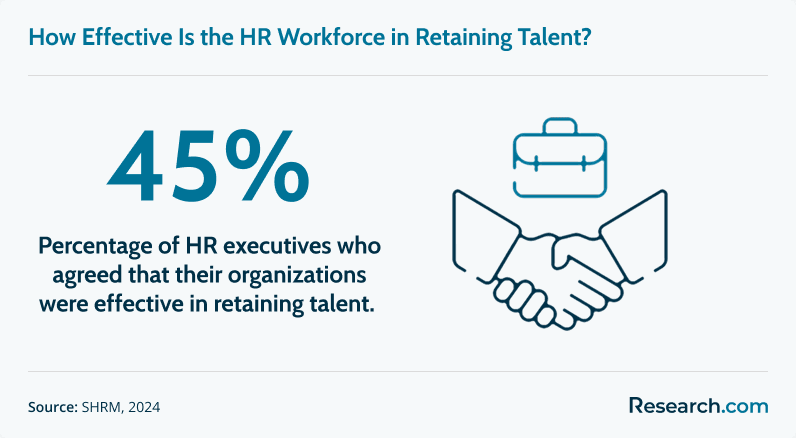
Most HR assistant jobs require a combination of education, administrative ability, communication skills, and trustworthiness. In 2024, approximately 45% of HR executives agreed that their organizations were effective in retaining talent. That finding highlights why employers value HR staff who can support organized, employee-focused processes from the ground level.
Typical education requirements
- High school diploma or equivalent: This is commonly the minimum education requirement for entry-level HR assistant roles.
- Associate or bachelor’s degree: Many employers prefer applicants with a degree in human resources, business administration, psychology, communications, or a related field.
- Relevant coursework: Classes in employment law, organizational behavior, business communication, payroll, benefits, and information systems can be useful.
Experience employers may accept
- Administrative work: Office assistant, receptionist, customer service, data entry, payroll clerk, or records coordinator experience can translate well.
- HR internships: Internship experience can show that you understand HR documents, employee confidentiality, and basic HR workflows.
- Volunteer or campus experience: Scheduling, event coordination, club administration, peer mentoring, or student employment can help if presented clearly on a resume.
Knowledge and technical expectations
- Computer skills: Microsoft Word, Excel, Outlook, and PowerPoint are commonly expected.
- HRIS familiarity: Experience with HR software is helpful, even if gained through coursework, internships, or training simulations.
- Basic employment law awareness: HR assistants are not expected to be attorneys, but they should understand the importance of consistent procedures, accurate records, and confidentiality.
Certifications and professional development
- Entry-level certification: A credential such as the aPHR can help candidates show foundational HR knowledge.
- Software training: Excel, payroll, applicant tracking systems, and HRIS training can strengthen a beginner’s application.
- Career specialization: Early exposure to recruiting can also help applicants explore how to start a career in human resources recruitment.
| Requirement | Minimum path | Stronger path |
| Education | High school diploma or equivalent | Associate or bachelor’s degree in HR, business, or a related field |
| Experience | Office, customer service, or data entry experience | HR internship, recruiting support, payroll support, or benefits administration exposure |
| Technology | Microsoft Office and email proficiency | Excel reporting, HRIS, applicant tracking systems, and digital recordkeeping |
| Professional credibility | Strong references and reliable work history | HR certification, relevant coursework, and documented HR projects |
What degree is best for becoming a human resources assistant?
You do not always need a college degree to become an HR assistant, but higher education can make you more competitive. A high school diploma or equivalent may satisfy the minimum requirement, while an associate degree or bachelor’s degree can help you qualify for more openings and prepare for promotion.
Among HR assistants, 34% has a baccalaureate degree. Useful majors include human resources, business administration, psychology, communications, and related fields. These programs can introduce employment law, recruiting, compensation, organizational behavior, training, and employee relations.
A degree is most valuable when it builds practical skills. Employers want candidates who can organize records, write professional emails, use spreadsheets, protect confidential information, and support employees calmly. If you do not have an HR degree, you can still compete by showing administrative experience, HR coursework, internship work, or certification preparation.
| Education option | Best for | Trade-offs |
| High school diploma or equivalent | Applicants pursuing entry-level administrative HR roles | May limit options with employers that prefer college coursework |
| Associate degree | Students who want a faster and often more affordable college path | May not carry the same weight as a bachelor’s degree for future management roles |
| Bachelor’s degree | Candidates who want stronger long-term advancement potential | Usually requires more time and financial investment |
| HR certificate or certification preparation | Career changers or applicants who already have general office experience | May not replace a degree for employers with strict education requirements |
What skills do HR assistants need?
Successful HR assistants combine accuracy, discretion, and service-oriented communication. Many of these abilities can be developed through coursework, internships, office jobs, and some of the best associate degrees tied to business, HR, or administrative fields.
Technical skills
- HRIS and digital recordkeeping: HR assistants should be able to enter data, update employee information, retrieve records, and support basic reporting.
- Microsoft Office proficiency: Word, Excel, Outlook, and PowerPoint are common tools. Excel is especially useful for lists, tracking, and basic HR reports.
- Employment documentation: Assistants should understand how to handle onboarding forms, policy acknowledgments, personnel files, and status-change paperwork.
- Recruiting coordination: Job posting support, interview scheduling, applicant tracking, and candidate communication are common entry-level tasks.
- Payroll and benefits basics: HR assistants may not run payroll independently, but they often help collect time records, update information, and answer routine questions.
Soft skills
- Clear communication: HR assistants must write professional messages and explain routine HR processes in plain language.
- Organization: The role often involves multiple deadlines, documents, calendars, and employee requests.
- Attention to detail: Small errors in names, dates, pay records, benefits elections, or forms can create major problems.
- Confidentiality: HR assistants see sensitive information and must know when not to share it.
- Professional judgment: They need to know when to answer a question, when to escalate it, and when to involve a manager or specialist.
- Adaptability: HR tools, policies, and employee expectations change frequently, so continuous learning is important.
- Internal customer service: Employees are internal customers, and HR assistants often shape how supported they feel.
These skills also create a foundation for advancement. If you are comparing long-term paths, review what do you need to be a human resources specialist to see how HR assistant experience can lead to more specialized responsibilities.
What entry-level HR jobs are best for beginners?
Several entry-level positions can help beginners enter human resources. These jobs differ in focus, so the best choice depends on whether you prefer administration, recruiting, payroll, benefits, employee support, or broad HR operations. Over 3 in 4 HR professionals say that scores on pre-employment assessments are just as important as or more important than traditional criteria like degrees or years of experience when deciding which applicants are the most qualified.
| Entry-level HR role | Best fit | Typical work |
| HR Assistant | Beginners who want broad exposure to HR administration | Recruiting support, onboarding paperwork, employee records, compliance documentation, and HR inbox support |
| HR Coordinator | Applicants ready for more process ownership | Documentation, benefits coordination, training logistics, and HR project support |
| Recruiting Coordinator | People who enjoy communication, scheduling, and candidate interaction | Interview scheduling, applicant tracking, job postings, and candidate follow-up |
| Payroll and Benefits Administrator | Detail-oriented candidates who like numbers and compliance | Payroll support, benefits updates, deduction questions, and employee compensation records |
| Junior HR Generalist | Candidates seeking a wider HR role after gaining some experience | Recruiting, employee relations support, compliance, training, and policy administration |
For beginners, the HR assistant role is often the most flexible starting point because it exposes you to several HR functions. HR assistants employed in the postal services sector received the highest salaries in 2023. As you gain experience, you can move toward recruiting, benefits, payroll, training, or HR operations. With deeper expertise, you may eventually explore human resources consultant career requirements.
The chart below highlights top-paying industries for HR assistant roles and can help job seekers understand where compensation may be more competitive.
How should you prepare for an HR assistant interview?
Strong HR assistant interview preparation starts with matching your experience to the job’s daily tasks. Employers want proof that you can protect confidential information, stay organized, communicate professionally, use office software, and follow procedures accurately.
What to prepare before the interview
- Examples of confidentiality: Be ready to discuss a time you handled sensitive information, even if it came from an office, school, volunteer, or customer service setting.
- Administrative examples: Prepare stories about scheduling, data entry, filing, document tracking, report preparation, or deadline management.
- Technology experience: Know which tools you have used, such as Microsoft Excel, Outlook, HRIS platforms, applicant tracking systems, payroll tools, or shared document systems.
- Employee-service mindset: Explain how you respond to questions professionally, especially when a person is frustrated or confused.
- Compliance awareness: Show that you understand why accuracy, consistency, and documentation matter in HR.
If your background is light on HR experience, targeted education can help you build vocabulary and confidence. One option is to compare the easiest human resources degree programs and look for coursework that covers employment law, HR technology, recruiting, and employee relations.
| Interview question | What the employer is testing | What your answer should show |
| How do you handle confidential information? | Discretion and judgment | You protect sensitive data, limit access, and follow policy |
| Tell me about a time you managed competing deadlines. | Organization and prioritization | You plan, track details, communicate delays, and meet deadlines |
| What HR or office software have you used? | Technical readiness | You can learn systems and use spreadsheets, email, and records tools accurately |
| How would you respond to an upset employee? | Professional communication | You listen, stay calm, clarify the issue, and escalate when needed |
Can advanced education help an HR assistant move up?
Advanced education can help HR assistants move from task-based support into analysis, leadership, and strategic HR work. Additional coursework or degrees may strengthen knowledge in employment law, workforce planning, compensation, organizational development, analytics, and digital HR systems.
This does not mean every HR assistant needs a graduate degree. Advanced education makes the most sense when it supports a defined goal, such as becoming an HR manager, HR business partner, compensation analyst, talent development leader, or consultant. Professionals who want business leadership training may compare online MBA HR programs to see whether the curriculum aligns with their career goals.
How can HR assistants future-proof their careers?
HR assistants can future-proof their careers by building skills that remain valuable as HR technology changes. Automation may reduce repetitive paperwork, but employers still need people who can interpret employee questions, maintain accurate records, support compliance, and use HR systems responsibly.
Practical ways to stay competitive
- Learn HR technology: Build comfort with HRIS tools, applicant tracking systems, spreadsheets, digital document workflows, and reporting dashboards.
- Improve data literacy: Practice reading basic HR metrics, spotting data errors, and explaining simple trends.
- Understand compliance basics: Stay aware of why consistent documentation and policy application matter.
- Build a professional network: Join HR communities, attend webinars, and learn from recruiters, generalists, and HR managers.
- Plan your next role early: Explore what can you do with an HR management degree to understand how education and experience can support advancement.
What challenges do HR assistants face today?
HR assistants work in a more complex environment than many entry-level job seekers expect. They must manage routine administrative work while adapting to remote and hybrid work processes, digital HR tools, changing employee expectations, and privacy concerns.
Common challenges
- High-volume administrative requests: HR assistants may handle many employee questions, documents, deadlines, and system updates at once.
- Data privacy pressure: Employee records contain sensitive information, so mistakes can damage trust and create risk.
- Technology changes: New HRIS tools, self-service platforms, and automated workflows require ongoing learning.
- Hybrid and remote work complexity: Onboarding, documentation, timekeeping, and communication may require more coordination across locations.
- Changing compliance expectations: HR teams must keep procedures current and consistent across federal, state, and local requirements.
For candidates who want a structured academic foundation while preparing for these challenges, an accredited online option such as a human resources associate degree online accredited can be worth comparing.
How can a master’s degree change an HR assistant’s career path?
A master’s degree in human resources can help an HR assistant move toward strategic, analytical, or leadership-focused roles. Graduate study may deepen knowledge in organizational development, change management, workforce analytics, employment law, compensation strategy, and employee relations.
This path is usually most useful after gaining work experience and identifying a clear career target. If you want to understand the kinds of roles a graduate credential may support, review what can you do with a master's degree in human resources.
How do advanced academic credentials shape HR career growth?
Advanced credentials can help HR assistants compete for roles that require broader business judgment and leadership ability. An MBA or HR-focused graduate program may strengthen decision-making, finance awareness, analytics, project management, and cross-functional collaboration.
Before enrolling, compare the credential with your target job. If you want HR leadership in a business setting, an MBA may be useful. If you want deeper HR specialization, a master’s in HR or an HR certification may fit better. To weigh the trade-offs, explore the benefits of MBA in human resources.
Why does business acumen matter for HR assistants?
Business acumen helps HR assistants understand how their work affects hiring speed, employee experience, compliance risk, payroll accuracy, retention, and workforce planning. Instead of seeing HR only as paperwork, business-minded HR assistants connect daily tasks to organizational goals.
Useful areas to develop include basic finance, workforce metrics, labor cost awareness, operations, customer service, and data analysis. If you are considering a broader business education route, it may help to evaluate whether is business administration a good degree for your HR goals.
How much do human resources assistants earn?
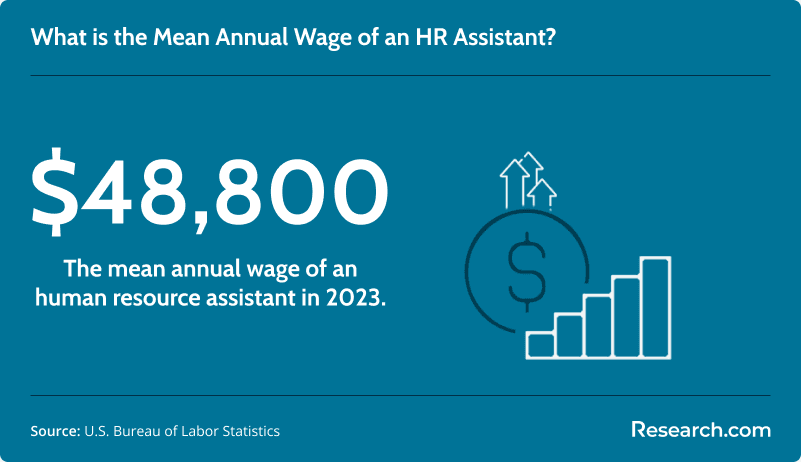
Human resources assistant pay varies by location, employer, industry, education, experience, and technical skill level. In the United States, the average annual salary generally falls within the range of $40,000 to $50,000. In 2023, the median annual wage based on BLS data was $48,800.
Entry-level roles may start closer to $35,000, while experienced HR assistants or those with specialized skills could earn upwards of $55,000 or more. Salary outcomes are not guaranteed, and job postings should be reviewed carefully for location, duties, benefits, and advancement potential.
Location can strongly influence pay. States with higher living costs and stronger demand for HR staff often report higher wages. California, New York, and Washington are examples of states that often report some of the highest average salaries for HR assistants. Metropolitan areas such as San Francisco, New York City, and Seattle may offer higher salary ranges because of labor market competition and cost of living. Education can also matter, including shorter pathways such as easy associate degrees when they build relevant business, HR, or administrative skills.
| Factor | How it can affect HR assistant pay |
| Location | Higher-cost labor markets may offer higher wages, though expenses may also be higher |
| Industry | Some industries offer more competitive compensation for HR support roles |
| Experience | Prior HR, payroll, recruiting, or administrative experience can support stronger offers |
| Technology skills | Excel, HRIS, payroll tools, and applicant tracking system experience can improve competitiveness |
| Education and certification | Relevant degrees or HR credentials may help applicants qualify for more roles |
Which HR assistant certifications are worth considering?
Certifications can help HR assistant candidates show commitment and foundational knowledge, especially when they do not have extensive HR experience. A certification does not guarantee a job or promotion, but it can strengthen a resume when paired with practical skills.
| Certification | Provider | Best for |
| SHRM Certified Professional (SHRM-CP) | Society for Human Resource Management | HR professionals who want to demonstrate operational and strategic HR knowledge |
| Professional in Human Resources (PHR) | HR Certification Institute | Professionals building technical and operational HR management knowledge; useful for those exploring how to become a human resources manager |
| aPHR | HR Certification Institute | Beginners who want to show foundational HR understanding early in their careers |
| Certified Professional in Talent Development (CPTD) | Association for Talent Development | Professionals interested in training, learning, and employee development |
| Payroll certifications | American Payroll Association | HR assistants who support payroll, deductions, timekeeping, and payroll compliance tasks |
How to choose a certification
- Match it to your target role. Choose recruiting, payroll, general HR, or talent development credentials based on where you want to go next.
- Check eligibility requirements. Some certifications are designed for beginners, while others may expect professional HR experience.
- Compare exam costs and renewal rules. Certification value depends partly on whether you can maintain it over time.
- Do not rely on certification alone. Employers still want evidence of accuracy, communication, software skills, and reliability.
The chart below shows methods HR executives use when filling specialized HR positions beyond certifications, giving readers a broader view of how HR talent is identified.
What career paths can follow an HR assistant job?
An HR assistant role can lead to several career directions. The best next step depends on which tasks you enjoy and where you build the strongest skills.
| Next career path | Good fit if you enjoy | How to prepare |
| HR Coordinator or HR Specialist | HR processes, records, compliance, and employee support | Build deeper knowledge in one HR function and take ownership of projects |
| Recruiter or Talent Acquisition Specialist | Candidate communication, sourcing, interviewing, and hiring workflows | Learn applicant tracking systems, screening practices, and hiring manager communication |
| Benefits Administrator or Specialist | Employee benefits, eligibility, enrollment, and compliance details | Develop benefits knowledge and improve documentation accuracy |
| HR Generalist | A broad mix of recruiting, employee relations, compliance, and training | Gain exposure across multiple HR functions and learn policy application |
| HR Manager | Leadership, policy development, team supervision, and HR operations | Combine experience with certifications or further education, including human resources master's programs |
| Training and Development Specialist | Employee learning, performance improvement, and instructional design | Build presentation skills, training coordination experience, and talent development knowledge |
| HR Business Partner | Strategic workforce planning and advising business leaders | Develop business acumen, analytics skills, and employee relations experience |
| Payroll Specialist or Payroll Manager | Pay accuracy, timekeeping, deductions, and payroll compliance | Learn payroll systems, wage documentation, and payroll regulations |
Common mistakes to avoid when starting an HR assistant career
- Choosing education without checking relevance. Make sure coursework covers HR, business communication, employment law, records, payroll, benefits, or HR systems.
- Focusing only on tuition. Consider transfer credits, schedule flexibility, career services, accreditation, and whether the program supports your target role.
- Assuming online programs are all equal. Compare curriculum, faculty experience, student support, and employer recognition.
- Ignoring software skills. HR assistant jobs often require spreadsheets, HRIS tools, applicant tracking systems, and digital document management.
- Writing a generic resume. Tailor your resume to show confidentiality, accuracy, scheduling, data entry, employee service, and administrative experience.
- Expecting salary outcomes to be guaranteed. Pay depends on location, employer, industry, experience, and responsibilities.
- Relying only on rankings or school reputation. A well-known program is not automatically the best fit if it does not match your budget, timeline, and career goals.
Questions to ask before choosing an HR education or training path
- Does the program cover employment law, recruiting, benefits, payroll, employee relations, and HR technology?
- Will credits transfer if I later pursue a higher degree?
- Does the program offer internships, career coaching, resume help, or employer connections?
- Can I complete the program while working?
- What is the total cost after fees, books, and technology requirements?
- Does the credential align with entry-level HR assistant jobs or with a later HR specialist or manager role?
- Will my employer provide tuition or student loan assistance? From an entry level role, HR assistants can take further studies and benefit from Section 127 of the Internal Revenue Code, which currently allows employers to offer up to $5,250 in educational assistance, including student loan repayment, as a tax-free benefit to employees.
Here’s what HR assistants have to say about their careers
- Beginning in an HR assistant position helped me understand employee relations from the front line. I worked closely with new hires, saw how onboarding affects confidence, and realized that supporting people through important workplace moments was the part of HR I enjoyed most. That early experience gave me the foundation I use now as an HR specialist. Stephen
- The role taught me how much organization matters in HR. I started with forms and files, then helped improve onboarding workflows. Seeing how better processes saved time and improved the employee experience made the work feel meaningful, and it gave me the confidence to pursue my PHR certification. Michael
- I expected the job to be mostly administrative, but it showed me how HR connects to culture, compliance, recruiting, and employee trust. That perspective changed my career goals and pushed me toward work where I can help shape a better workplace. Lara
Key Insights
- HR assistant is a realistic entry point into human resources. Many roles are accessible with a high school diploma or equivalent, though degrees, internships, administrative experience, and certifications can improve competitiveness.
- The strongest candidates prove accuracy and discretion. Employers value people who can handle confidential records, communicate clearly, use HR systems, and follow procedures consistently.
- A degree can help, but it should match your goal. Among HR assistants, 34% have a baccalaureate degree. HR, business, psychology, and communications programs can be useful when they build practical HR skills.
- HR assistant work can lead to multiple career tracks. Recruiting, benefits, payroll, HR generalist work, training, HR management, and HR business partner roles are all possible paths after gaining experience.
- Technology and compliance are becoming more important. HR assistants who learn HRIS tools, applicant tracking systems, spreadsheets, digital records, and basic employment documentation practices will be better positioned.
- Salary depends on more than the job title. In 2023, the median annual wage based on BLS data was $48,800, but location, industry, experience, education, and technical skills can affect actual pay.
- Certifications are useful when paired with experience. Credentials such as aPHR, PHR, SHRM-CP, CPTD, and payroll certifications can support career growth, but they work best alongside proven workplace skills.
- Do not choose a program or credential blindly. Check accreditation, cost, transfer policies, career services, schedule fit, curriculum relevance, and employer tuition benefits before enrolling.
References:
- AIHR. (n.d.). State of HR.
- Bureau of Labor Statistics. (n.d.). Occupational employment and wage statistics.
- HR Dive. (2024). HR 2025 trends.
- O*NET OnLine. (n.d.). Summary report for: Human resources assistants.
- Society for Human Resource Management. (2024). 2024 talent trends report.
- Society for Human Resource Management. (2024). Leading future of work insights on workforce evolution.
- Society for Human Resource Management. (2024). Research: State of workplace report: Inflation, talent.
- Society for Human Resource Management. (2024). State of the work place report.
Other Things You Should Know About Becoming a Human Resource Assistant
Certification from the Human Resource Certification Institute (HRCI) or the Society for Human Resource Management (SHRM) can significantly enhance your career as a human resources assistant in 2027. These certifications validate skills in HR practices, potentially making candidates more competitive in the job market.
Many employers require a background check before hiring a human resources assistant, especially because the role handles confidential employee records. Checks often include identity verification, criminal history, and sometimes employment verification. The requirement is set by the employer, not by a single federal HR licensing body.


