
2027 What Can You Do With a Master’s in Human Resources?

Co-Founder and Chief Data Scientist
A master’s in human resources can be a smart move—but only if it fits the role you want, the cost you can justify, and the level of responsibility you are aiming for. HR is no longer limited to hiring paperwork, benefits administration, and policy enforcement. Employers increasingly expect HR leaders to understand workforce analytics, employment law, compensation strategy, AI-enabled HR tools, employee experience, diversity initiatives, and organizational change.
This guide is for HR generalists, recruiters, people operations professionals, managers, and career changers who are deciding whether graduate study is worth the time and money. You will learn what jobs an HR master’s degree can lead to, how it compares with an MBA, which specializations may improve your marketability, what financial factors to review, and how to choose a program that supports your career goals.
The available outcomes are encouraging but should be interpreted carefully. Graduates with a master’s in HR have an 84% employment rate within six months and report an average salary of $88,416 annually. Those figures do not guarantee individual results, but they show why many professionals consider the degree when targeting senior HR, talent, compensation, learning, labor relations, or people analytics roles.
Quick Answer: Is a Master’s in Human Resources Worth It?
Yes, a master’s in human resources is often worth it for professionals who want to move into HR leadership, specialize in higher-paying HR functions, or strengthen their credibility for strategic roles. It is less useful for someone who only wants an entry-level HR job or cannot connect the program’s cost to a realistic career plan.
- HR master’s graduates have an 84% employment rate within six months and earn an average salary of $88,416.
- Specialized HR professionals earn 20% more than generalists, while specialized managers and directors earn 8% to 13% more.
- 83% of HR leaders say upskilling is necessary as AI and automation reshape HR work.
- 75% of HR professionals handle responsibilities outside their department, which can lead to consulting, training, operations, and strategy roles.
- 87% of organizations report leadership skill gaps, creating demand for HR professionals who can build stronger management pipelines.
- What jobs can you get with a master’s in human resources for 2027?
- Is a master’s in human resources worth it?
- How does a master’s in HR support career advancement?
- What HR master’s specializations should you consider?
- Which HR leadership roles may favor or require a master’s degree?
- Which industries hire HR professionals with graduate training?
- What financial factors matter before enrolling in a master’s in HR?
- Should HR professionals choose a master’s in HR or an MBA?
- How does an HR master’s compare with a fast MBA online?
- What accreditation details should you check in an HR master’s program?
- What is the long-term ROI of a master’s in HR?
- How can HR master’s programs help with networking and mentoring?
- What challenges do HR master’s students face, and how can they manage them?
- Can a master’s in HR support entrepreneurship?
- Can finance knowledge improve HR decision-making?
- How does HR technology affect career options?
- How do HR master’s programs prepare students for the future of work?
- How can HR master’s graduates stand out in the job market?
- What nontraditional career paths are available to HR master’s graduates?
What jobs can you get with a master’s in human resources for 2027?
A master’s in human resources can prepare you for advanced HR positions that involve strategy, compliance, leadership, analytics, employee relations, and organizational development. The degree is especially relevant for professionals who already have HR experience and want to qualify for management or specialized roles.
| Role | What the role focuses on | Average salary |
| Human Resources Manager | Leads HR teams, applies workplace policies, oversees hiring and employee relations, manages benefits administration, and helps ensure labor law compliance. | $121,14 |
| Compensation and Benefits Manager | Builds pay structures and benefits plans, reviews labor market data, monitors legal requirements, and balances competitiveness with budget limits. | $125,130 |
| Training and Development Manager | Creates employee learning programs, identifies skill gaps, evaluates training results, and supports career development across the organization. | $153,000 |
| Labor Relations Specialist | Works with management and employees on labor agreements, grievances, union-related matters, and workplace policies. | $77,000 |
| HR Information Systems Analyst | Maintains HR software, improves data quality, prepares reports, and helps HR teams use technology more effectively. | $82,016 |
| Talent Acquisition Manager | Directs recruiting strategy, employer branding, sourcing processes, candidate experience, and hiring goals. | $110,771 |
| Employee Relations Manager | Resolves workplace concerns, supports policy development, manages investigations, and works to strengthen retention and engagement. | $103,520 |
| Diversity and Inclusion Manager | Designs inclusion programs, coordinates training, tracks progress, and helps organizations build more equitable workplace practices. | $145,299 |
| Chief Human Resources Officer | Serves as the senior people executive, aligns HR strategy with business goals, oversees compliance, and advises executive leadership. | $216,000 |
| Organizational Development Consultant | Studies organizational systems, recommends process improvements, supports change initiatives, and helps leaders improve performance. | $85,000 |
These salary figures should be treated as reference points rather than promises. Location, industry, organization size, prior experience, certifications, and technical skills can all affect compensation.
Is a master’s in human resources worth it?
A master’s in human resources is most valuable when it helps you move from HR execution to HR strategy. It can strengthen your qualifications for roles that require judgment in workforce planning, labor compliance, compensation design, succession planning, people analytics, and organizational leadership.
The degree is also common among senior HR leaders. Among HR leaders at Fortune 100 and Inc. 100 companies, 57% hold a master’s degree or higher, compared with 38% whose highest degree is a bachelor’s. This does not mean a master’s degree is the only path to HR leadership, but it can help candidates compete for roles where employers expect advanced business and people-management expertise.
For working professionals, flexible formats matter. Many online master's in human resources programs are structured so students can keep working while completing coursework. That can reduce opportunity cost compared with leaving the workforce for full-time study.
| A master’s in HR may be worth it if... | It may not be the right move if... |
| You want to become an HR manager, HR director, CHRO, compensation leader, talent strategy leader, or organizational development consultant. | You are seeking your first HR job and can reach your goal with a bachelor’s degree, internship, HR assistant role, or certification. |
| You need deeper knowledge of employment law, workforce analytics, labor relations, compensation, and organizational behavior. | You are unsure whether you want to stay in HR long enough to recover the cost of graduate school. |
| Your employer values graduate education for promotion or leadership-track roles. | The program is not accredited, has weak career support, or does not align with your desired specialization. |
| You can use tuition assistance, scholarships, transfer credit, or part-time enrollment to manage costs. | You would need to take on debt without a clear salary, promotion, or career-transition strategy. |
How does a master’s in HR support career advancement?
A master’s in HR can help professionals advance by building the skills employers look for in senior people roles: strategic thinking, legal and ethical judgment, workforce planning, data interpretation, change leadership, and communication with executives.
The main career advantages include:
- Better early outcome indicators: MS Human Resource Management graduates have an 84% employment rate within six months of graduation.
- Access to leadership tracks: Graduate training can support advancement into positions such as HR director, chief human resources officer, talent acquisition manager, and employee relations leader.
- Specialized expertise: Courses in labor relations, HR technology, workforce analytics, and compensation strategy can help you move beyond generalist work.
- More strategic credibility: HR leaders are increasingly expected to explain how hiring, retention, training, and compensation decisions affect business performance.
- Higher earning potential: Many advanced HR positions pay more than entry-level or generalist roles, although compensation depends on employer, market, and experience.
The degree is not a shortcut around experience. Most employers still expect candidates for senior HR jobs to show practical judgment, conflict-resolution ability, compliance knowledge, and results from prior HR work.
What HR master’s specializations should you consider?
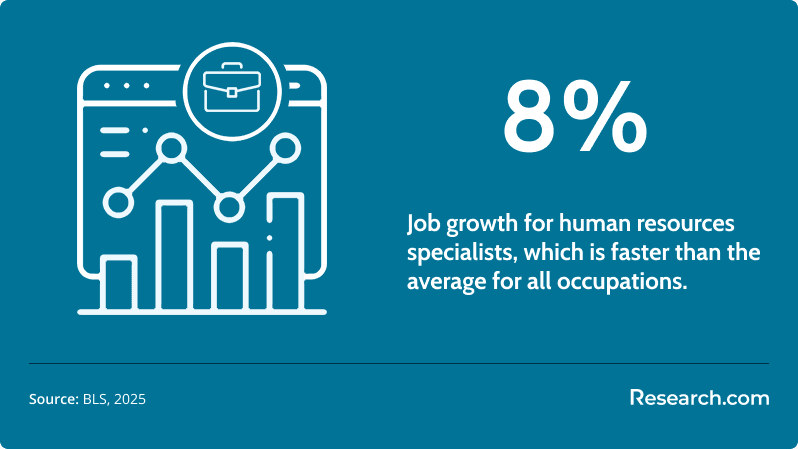
Specialization can be one of the strongest reasons to pursue a graduate HR degree. Specialized HR roles typically pay more than broad generalist positions: individual contributors in specialized HR roles earn about 20% more, while managers and directors in specialized HR roles make 8% to 13% more than those in general HR management.
| Specialization | Best fit for students interested in... | Common career direction |
| Talent Acquisition and Recruitment | Hiring strategy, workforce forecasting, candidate experience, employer branding, and sourcing systems. | Talent acquisition manager, recruiting operations leader, talent strategy consultant. |
| Compensation and Benefits | Pay equity, salary structures, incentive plans, benefits compliance, and market compensation analysis. | Compensation analyst, benefits manager, total rewards leader. |
| Employee Relations and Labor Law | Workplace investigations, policy interpretation, labor negotiations, dispute resolution, and compliance. | Employee relations manager, labor relations specialist, HR compliance leader. |
| HR Analytics and Workforce Planning | People data, forecasting, retention metrics, HR dashboards, and evidence-based workforce decisions. | HRIS analyst, people analytics specialist, workforce planning manager. |
| Organizational Development and Training | Leadership development, change management, performance improvement, learning design, and culture transformation. | Training and development manager, organizational development consultant, leadership development manager. |
If your goal is management, compare specializations with the responsibilities described in this guide on how to be a human resources manager. The right concentration should match the problems you want to solve at work—not just the course titles that sound most appealing.
Which HR leadership roles may favor or require a master’s degree?
Some senior HR roles do not formally require a master’s degree, but graduate education can be a meaningful advantage when employers are hiring for strategic leadership. Executives such as chief human resources officers often need fluency in workforce strategy, compliance risk, executive compensation, organizational design, culture, and board-level communication.
Professionals with a master’s-level HR degree may be stronger candidates for positions such as:
- Vice President of Human Resources
- Chief Talent Officer
- Director of Employee Experience
- Chief Human Resources Officer
- Organizational Development Director
These roles typically involve more than managing HR transactions. Leaders are expected to influence business strategy, develop future managers, shape workplace culture, guide digital transformation, and reduce legal or operational risk.
In 2025, key capabilities for HR leaders include data-driven decision-making, change management, and digital transformation. A master’s in HR is usually more targeted than an MBA for professionals committed to senior HR roles, while an MBA with an HR concentration can make sense for those who want wider business leadership options.
Which industries hire HR professionals with graduate training?
Organizations in nearly every sector need HR expertise, but demand is especially strong where employers face complex regulations, large workforces, specialized talent shortages, or fast-changing skill needs.
| Industry | Why HR graduate skills matter | Common HR priorities |
| Healthcare | Healthcare employers manage credentialed roles, compliance obligations, staffing shortages, and high-pressure work environments. | Credentialing, retention, workforce scheduling, compliance, leadership development. |
| Technology | Tech firms compete for specialized talent and often manage remote, hybrid, or globally distributed teams. | Recruiting, compensation strategy, remote culture, performance systems, retention. |
| Finance | Financial organizations operate under strict compliance, ethics, and risk-management expectations. | Policy enforcement, executive development, compensation governance, compliance training. |
| Manufacturing | Manufacturers often balance safety, labor relations, technical training, and workforce planning. | Safety training, labor relations, upskilling, shift staffing, employee engagement. |
| Government and nonprofit | Public and mission-driven organizations need policy-focused HR practices and structured workforce planning. | Policy administration, labor relations, talent development, workforce equity. |
Leadership development is a major need across sectors. According to an ATD study, 87% of organizations report leadership skill gaps, and 86% report challenges with managerial skill development. HR professionals who can build leadership pipelines and measure training effectiveness may be especially valuable.
What financial factors matter before enrolling in a master’s in HR?
Before choosing a program, calculate the full cost of attendance—not just tuition. Include fees, books, technology requirements, commuting or residency expenses, time away from work, and any lost income if you reduce your hours. Then compare those costs with realistic career outcomes, employer tuition support, and the salary range for the roles you are targeting.
Students comparing graduate business options should also review alternatives such as affordable MBA programs, especially if they want a broader management degree rather than a specialized HR credential.
| Cost or value factor | What to check before applying |
| Total program cost | Ask for the full tuition and fee estimate for the entire degree, including any campus visits or required residencies. |
| Work schedule impact | Decide whether you can study part time, keep your income, and avoid burnout while working. |
| Employer assistance | Check tuition reimbursement rules, grade requirements, service commitments, and annual funding limits. |
| Career services | Review coaching, alumni access, employer connections, internship support, and placement data. |
| Specialization fit | Make sure the curriculum supports the role you want, such as compensation, HR analytics, labor relations, or learning and development. |
| Debt risk | Estimate payments after graduation and compare them with conservative salary expectations. |
Should HR professionals choose a master’s in HR or an MBA?
The best choice depends on your target role. A master’s in HR is designed for people who want deep expertise in talent management, employment law, workforce analytics, labor relations, employee experience, and organizational behavior. An MBA is broader and usually covers finance, operations, marketing, leadership, and strategy across business functions.
If you want to become an HR director, compensation leader, people analytics manager, or CHRO, a master’s in HR may provide more directly relevant training. If you want to move into general management, consulting, operations leadership, or executive roles outside HR, an MBA may offer more flexibility. Reviewing online MBA programs can help you compare curriculum scope, format, and career outcomes.
| Decision point | Master’s in HR | MBA |
| Primary focus | People strategy, workforce systems, HR law, talent, compensation, employee relations. | General business leadership, finance, operations, marketing, strategy. |
| Best for | Professionals committed to HR leadership or specialized HR roles. | Professionals seeking broader executive or cross-functional leadership options. |
| Typical advantage | Depth in HR-specific issues and people-centered organizational strategy. | Breadth across business functions and stronger exposure to financial and operational decision-making. |
| Potential limitation | Less transferable outside HR than a general management degree. | May not go as deeply into employment law, labor relations, or HR analytics. |
How does an HR master’s compare with a fast MBA online?
A specialized HR master’s and a fast MBA online serve different goals. The HR master’s is more focused on workforce strategy, HR compliance, talent systems, employee relations, and organizational culture. A fast online MBA is typically built for speed and broad management coverage, with coursework across finance, operations, marketing, and strategic leadership.
Choose the HR master’s if your next promotion depends on HR-specific expertise. Consider the accelerated MBA route if you need a broader business credential, want to pivot into management beyond HR, or already have strong HR experience but need more exposure to finance and operations.
What accreditation details should you check in an HR master’s program?
Accreditation is one of the first quality checks prospective students should make. It affects academic credibility, transferability of credits, employer recognition, and access to certain types of financial aid. Review institutional accreditation first, then look at whether the business school or HR program has additional recognition, industry partnerships, experienced faculty, and curriculum alignment with current HR practice.
Also compare outcomes: graduation rates, employment support, alumni roles, employer relationships, and the availability of HR analytics, employment law, compensation, and leadership coursework. If cost is a major concern and you are comparing other advanced business credentials, you may also review options such as the cheapest DBA, but only if that path fits your career goals better than an HR master’s.
- Confirm the institution’s accreditation status before applying.
- Ask whether online and campus students receive the same degree and services.
- Review faculty experience in HR leadership, labor law, analytics, or organizational development.
- Check whether the curriculum prepares students for current HR technology and data-driven decision-making.
- Ask for career outcomes that are specific to the HR program, not only the university overall.
What is the long-term ROI of a master’s in HR?
The long-term return on investment depends on whether the degree helps you qualify for higher-level roles, move into better-paying specializations, expand your network, and stay competitive as HR becomes more data-driven and strategic. The strongest ROI usually comes when students already have HR or management experience and use the degree to move into leadership, compensation, people analytics, organizational development, or employee relations roles.
ROI should be compared with alternative routes. For example, online accelerated business degree programs may be more appropriate for students who need a broader business foundation before graduate study. A master’s in HR is most compelling when the credential directly supports the specific HR role you want.
How can HR master’s programs help with networking and mentoring?
Graduate HR programs can offer value beyond coursework when they connect students with alumni, faculty mentors, employers, and peers already working in the field. Networking matters in HR because many senior opportunities require trust, judgment, and evidence that you can handle sensitive workplace issues.
Look for programs that provide career coaching, employer panels, alumni events, internships or applied projects, mentoring programs, and access to HR leaders. Students who also want broader business exposure may compare complementary options such as the 6 month MBA, but speed should not be the only factor. The strength of the network and the relevance of the curriculum can matter more than completion time.
What challenges do HR master’s students face, and how can they manage them?
The most common challenge is balancing school with work, family responsibilities, and the emotional demands of HR roles. Students may also struggle to apply theory to complex workplace situations, keep up with HR technology, or choose a specialization without a clear career plan.
| Common challenge | Better approach |
| Choosing a program based only on tuition | Compare total cost, accreditation, curriculum quality, faculty experience, and career support. |
| Underestimating the workload | Ask current students how many hours per week the program requires and whether part-time enrollment is realistic. |
| Ignoring technology skills | Prioritize programs that include HRIS, people analytics, automation, or digital HR tools. |
| Selecting a specialization too late | Identify target roles early and choose electives, projects, and networking opportunities around that goal. |
| Assuming the degree guarantees promotion | Pair the degree with measurable work accomplishments, certifications, leadership experience, and a strong professional network. |
Some professionals may also compare executive-style business programs, including cheap executive MBA online programs, if they want a broader leadership credential while continuing to work.
Can a master’s in HR support entrepreneurship?
Yes. A master’s in HR can support entrepreneurial work for professionals who want to build consulting practices, talent advisory firms, leadership development services, employee training businesses, or people operations support for startups. The degree can be useful because new organizations often need help with hiring systems, compliance, compensation, culture, performance management, and change management.
Entrepreneurial HR professionals should also build business development, pricing, sales, finance, and operations skills. For a broader look at business-building pathways, review What can you do with an MBA in entrepreneurship?.
Can finance knowledge improve HR decision-making?
Finance skills can make HR leaders more effective because people decisions have direct budget and performance implications. Workforce planning, compensation design, benefits strategy, retention investments, training programs, and headcount decisions all require financial judgment.
HR professionals who can connect talent initiatives to cost, productivity, risk, and growth are better positioned to influence executive decisions. If you need stronger quantitative preparation, programs such as the fastest finance degree may help you build complementary business skills.
How does HR technology affect career options?
HR technology is expanding career opportunities for professionals who can combine people expertise with digital fluency. Automation is changing administrative HR tasks, while analytics tools are helping employers make more informed decisions about hiring, retention, training, and workforce planning.
Why HR technology matters
Digital systems now support recruiting, onboarding, learning, performance management, benefits administration, and employee engagement. Learning management systems are especially widespread: 96% of large and mid-size companies and 81% of small companies use them. HR professionals who can manage these platforms and interpret the data they produce can be more competitive.
HR tech skills employers may value
- Workforce analytics and reporting
- AI-supported recruiting tools
- Cloud-based HR management systems
- Learning management systems for employee development
- Data privacy awareness and ethical use of employee data
Technology-related credentials to consider
- SHRM People Analytics Specialty Credential
- HRCI’s Professional in Human Resources (PHR) with HR tech focus
- AIHR’s Digital HR Certificate
A human resources degree that includes HR technology, analytics, or digital transformation coursework can help professionals stay relevant as employers expect HR teams to work more efficiently and strategically.
How do HR master’s programs prepare students for the future of work?
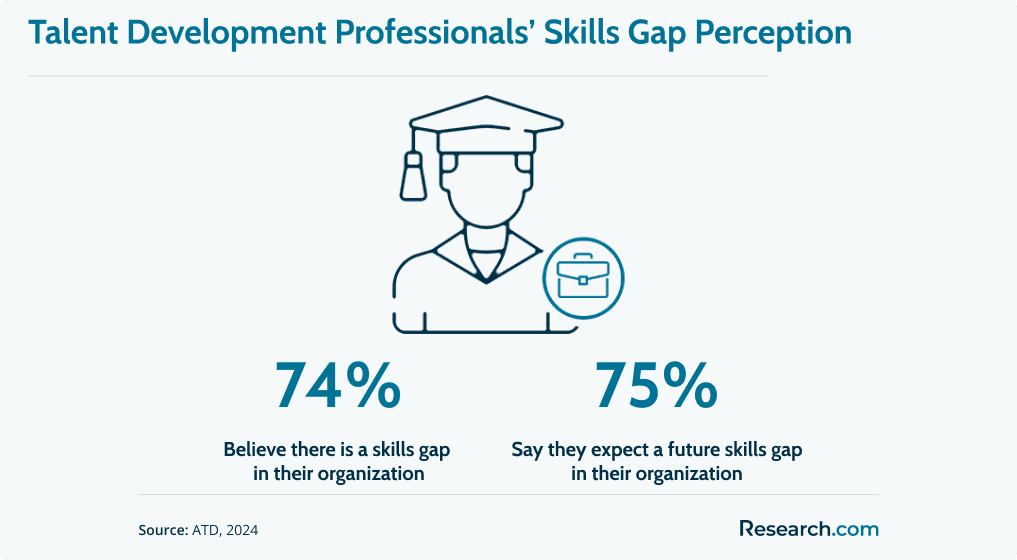
Strong HR master’s programs prepare students for a workplace shaped by AI, hybrid work, reskilling, employee well-being, compliance complexity, and demand for measurable business impact. The best programs do not treat HR as an administrative function; they teach students how people strategy affects organizational performance.
How HR education is changing
Modern HR curricula increasingly include people analytics, workforce planning, change management, diversity and inclusion strategy, digital HR systems, and employment law. These areas help students make decisions based on evidence rather than intuition alone.
Trends HR graduate students should understand
- AI-supported hiring and workforce analytics
- Employee experience and well-being as business concerns
- Reskilling and upskilling as automation changes job requirements
- DEI work as an ongoing HR responsibility rather than a one-time initiative
- Remote and hybrid work policies that balance flexibility, performance, and fairness
AI and automation in HR coursework
Graduate programs may expose students to automated onboarding, AI-based recruiting tools, digital HR platforms, and analytics dashboards. Students should learn not only how to use these tools, but also how to evaluate bias, privacy, transparency, and compliance risks.
Human skills remain essential
Technical fluency is not enough. HR leaders also need empathy, communication, adaptability, ethical judgment, conflict resolution, and the ability to guide leaders through difficult organizational decisions.
How can HR master’s graduates stand out in the job market?
HR master’s graduates stand out when they combine the degree with practical experience, measurable achievements, technology skills, and a clear specialization. Employers are more likely to value graduate education when candidates can show how their training improves hiring, retention, compliance, culture, or workforce planning.
Use upskilling strategically
According to SHRM, 83% of HR leaders say upskilling is essential for remaining competitive in a labor market affected by AI. That makes skills in analytics, automation, change leadership, and digital HR especially useful.
Translate coursework into business results
Instead of listing only degree credentials, candidates should show outcomes: reduced turnover, improved onboarding, stronger manager training, compensation analysis, better reporting, or successful policy implementation.
Build AI and data literacy
As AI becomes more integrated into HR, professionals who understand both the technology and its ethical risks can be stronger candidates. Those who want deeper technical preparation may consider an online AI degree as a complementary path.
Strengthen your professional profile
- Choose a specialization connected to your target role.
- Complete applied projects that solve real HR problems.
- Build a portfolio of policies, dashboards, training plans, or workforce analyses where appropriate.
- Network with alumni, faculty, recruiters, and HR associations.
- Prepare clear interview examples that show judgment, discretion, and measurable impact.
What nontraditional career paths are available to HR master’s graduates?
HR master’s graduates are not limited to internal HR departments. Because the degree develops skills in people systems, compliance, organizational change, leadership, and workforce planning, graduates may also pursue consulting, corporate training, business operations, nonprofit leadership, or talent advisory work.
HR consulting and talent advisory
Consultants help organizations improve recruiting, compensation, employee engagement, workforce planning, leadership development, and DEI initiatives. Graduate training can support credibility, especially in specialized areas such as executive coaching, labor relations, or organizational development.
Corporate training and learning development
Learning and development roles are a natural fit for HR professionals who enjoy designing training, building leadership programs, and measuring skill growth. Since 75% of HR professionals perform duties outside their department, moving into broader learning or development work can be a practical transition.
Government and nonprofit leadership
Public agencies and nonprofit organizations need HR professionals who can manage compliance, policy, labor relations, talent development, and workforce equity. Possible roles include labor relations specialist, policy analyst, and workforce development director.
Business strategy and operations
HR professionals with strong analytical and leadership skills may move into operations, workforce strategy, mergers and acquisitions support, or culture integration roles. Their value comes from understanding how organizational structure, people decisions, and business outcomes connect.
What HR Professionals Say About Earning a Master’s in Human Resources
-
: "
Completing my master’s in human resources helped me move from administrative HR work into a leadership position. I became more involved in policy decisions, culture initiatives, and talent strategy, and I felt better prepared to contribute at a strategic level. — Robert
"
-
: "
I had HR experience before graduate school, but I struggled to reach management roles. The program strengthened my understanding of labor law, employee relations, and strategic planning, which helped me qualify for a senior HR position and a meaningful salary increase. — Judy
"
-
: "
I wanted a career that combined business decisions with people leadership. My HR master’s program helped me build that foundation, expand my network, and connect with professionals who supported my job search before graduation. — Ernest
"
Common Mistakes to Avoid When Choosing a Master’s in HR
- Skipping the accreditation check: Verify institutional accreditation before you apply. Accreditation affects credibility and may influence financial aid or employer recognition.
- Looking only at tuition: Fees, books, software, travel, residency requirements, and reduced work hours can change the real cost.
- Choosing a program without a career target: A general HR curriculum may not be enough if you want compensation, analytics, labor relations, or organizational development roles.
- Assuming online always means flexible: Some online programs still require live sessions, group projects, campus visits, or fixed deadlines.
- Ignoring employer expectations: Review job postings for your target roles to see whether employers prefer a master’s degree, certifications, HRIS skills, analytics experience, or industry knowledge.
- Expecting the degree to work alone: Graduate education is strongest when combined with experience, professional relationships, and a record of solving real HR problems.
Questions to Ask Before You Enroll
- What roles do recent graduates get, and how many move into HR leadership or specialized HR positions?
- Does the program publish career outcomes for HR students specifically?
- Can working professionals complete the program without leaving full-time employment?
- Which courses cover HR analytics, employment law, compensation, labor relations, and HR technology?
- Are there applied projects, internships, consulting assignments, or capstone experiences?
- What career coaching, mentoring, alumni access, and employer connections are available?
- Will the program help you prepare for the HR specialization you actually want?
- How much will the degree cost after scholarships, employer assistance, and fees?
Key Insights
- A master’s in HR is most worthwhile for professionals targeting HR leadership, specialized HR roles, or strategic people operations positions.
- The degree can support career mobility, but experience, measurable results, technology skills, and networking still matter.
- Specialization is important: compensation, HR analytics, labor relations, talent acquisition, and organizational development can lead to stronger differentiation than a general HR path.
- Compare a master’s in HR with an MBA based on career direction. Choose HR for depth in workforce strategy; choose an MBA for broader business leadership flexibility.
- Check accreditation, total cost, curriculum relevance, program flexibility, and career outcomes before enrolling.
- AI, automation, HR analytics, hybrid work, and leadership skill gaps are changing employer expectations, making continuous upskilling essential for HR professionals.
References:
- Association For Talent Development. (2023, October 16). Bridging the skills gap: using learning opportunities to address current and future talent needs. ATD. https://www.td.org/product/p/792404
- Golden, R. (2021, March 22). Why are so many HR professionals performing work that falls outside HR? HR Dive. https://www.hrdive.com/news/why-are-so-many-hr-professionals-performing-work-that-falls-outside-hr/596895/
- MSHRM Career Outcomes - Purdue Business. (2025, January 7). https://business.purdue.edu/masters/programs/ms-human-resource-management/career-outcomes.php
- Occupational Outlook Handbook - Human Resources Specialists. (2025, February). U.S. Bureau of Labor Statistics. Retrieved February 25, 2025, from https://www.bls.gov/ooh/business-and-financial/human-resources-specialists.htm#tab-3
- SHRM. (2023, December 21). HR compensation: It pays to specialize. SHRM. https://www.shrm.org/topics-tools/news/benefits-compensation/hr-compensation-pays-to-specialize
- Salary.com. (n.d.). Human Resource Manager Salaries by education, experience, location and more. Salary.com. https://www1.salary.com/Human-Resource-Manager-Salaries.html
Other Things You Should Know about Getting a Master’s in Human Resources
Admission requirements for a master's in human resources in 2027 typically include a bachelor's degree from an accredited institution, a minimum GPA (often around 3.0), and relevant work experience. Some programs may also require GRE or GMAT scores, letters of recommendation, and a personal statement.
Core courses for a master's in human resources typically include Organizational Behavior, Labor Relations, Compensation Management, and Employment Law. In 2027, programs may also emphasize Diversity and Inclusion and the impact of AI in HR practices.
After a master’s in human resources, common credentials include SHRM-CP, SHRM-SCP, PHR, and SPHR. SHRM-CP and PHR are typically aimed at earlier-career professionals, while SHRM-SCP and SPHR require more senior-level HR experience, often 4 to 7 years.


