2027 How to Compare Online Physics Degrees by Math Rigor

Co-Founder and Chief Data Scientist
Choosing an online physics degree is really a choice about mathematical depth: the calculus, differential equations, linear algebra, and theory that determine whether the program supports engineering, research, teaching, or data careers. NCES distance education data released in 2024 shows that over half of U.S. undergraduates took at least one online course, making quality differences harder to spot from format alone.
This guide helps prospective physics students, transfer students, and career changers compare curricula, identify red flags, and choose a program whose math rigor matches their goals.
Key Things You Should Know
- A rigorous online physics degree usually requires calculus I-III, differential equations, linear algebra, mathematical methods, and upper-division courses such as classical mechanics, electromagnetism, quantum mechanics, and statistical mechanics.
- For career context, the BLS reports that the median annual pay for physicists and astronomers was $149,530 in 2024, but many research-level physics roles require graduate study beyond the bachelor's degree.
- Cost and ROI depend on total price, transfer credits, lab requirements, and career goals; College Board's 2024 pricing report lists average published tuition and fees at $11,610 for in-state public four-year colleges and $43,350 for private nonprofit four-year colleges.
What does math rigor mean in online physics degrees, and why does it matter?
Math rigor in an online physics degree means more than having a few calculus courses in the catalog. It refers to how deeply the program uses mathematical reasoning to model physical systems, solve equations, prove relationships, interpret data, and connect theory to experiments.
In practical terms, math rigor determines what the degree prepares you to do next. A program built around algebra-based physics may be useful for general science literacy or teacher preparation, while a calculus-based, proof-aware curriculum is more appropriate for graduate physics, engineering, applied mathematics, computational science, or quantitative industry roles.
The difference matters because physics is cumulative. If a program does not build enough mathematical foundation early, advanced courses may become descriptive rather than analytical. That can limit your readiness for graduate school, research assistantships, technical interviews, and roles that require modeling or computation.
The table below summarizes common levels of mathematical intensity. Use it as a first screen, not as the final verdict, because course descriptions and syllabi often reveal more than course titles.
| Math rigor level | Typical math foundation | Physics course pattern | Best fit | Possible limitation |
| Light | College algebra, trigonometry, introductory statistics | Conceptual or algebra-based physics | General education, science communication, some teacher-preparation pathways | Usually not enough for physics graduate study or advanced technical roles |
| Moderate | Calculus I-II, introductory computational tools | Calculus-based general physics plus selected upper-level electives | Interdisciplinary science, pre-engineering transfer, technical support roles | May lack full preparation for theoretical or research-heavy paths |
| High | Calculus I-III, differential equations, linear algebra, mathematical methods | Upper-level mechanics, electromagnetism, quantum mechanics, thermodynamics, labs | Graduate school preparation, research, engineering-adjacent work, computational careers | Requires strong preparation and sustained time for problem-solving |
A good rule is simple: if your goal involves modeling, simulation, graduate physics, aerospace, optics, materials, or data-intensive technical work, choose the highest math rigor you can realistically complete with strong grades.
How can you compare the math coursework required in different online physics programs?
To compare math coursework across online physics programs, do not rely only on program names. Two degrees can both say "physics" while requiring very different levels of calculus, theory, laboratory work, and quantitative computing. If you are still asking "Can you get a physics degree online?," the answer is yes, but the more important question is whether the online curriculum is mathematically equivalent to the path you need.
Use this step-by-step review when comparing programs. It helps you move from marketing language to verifiable academic requirements.
- Download the degree plan and count required math courses, not just total science credits.
- Check whether introductory physics is calculus-based, especially if you want graduate school, engineering-adjacent roles, or research experience.
- Look for the full upper-division physics sequence: classical mechanics, electricity and magnetism, quantum mechanics, statistical or thermal physics, and advanced laboratory.
- Review prerequisites for upper-level physics courses to see whether calculus III, differential equations, and linear algebra are actually used.
- Ask for recent syllabi and compare weekly topics, textbook level, grading methods, and problem-set expectations.
- Check whether computational physics, numerical methods, Python, MATLAB, Mathematica, or similar tools are part of the required curriculum.
- Confirm how labs are delivered and whether lab data analysis requires uncertainty propagation, curve fitting, and scientific programming.
The table below shows what to look for in a degree audit. It is especially useful for transfer students because missing one prerequisite can delay advanced physics courses by a semester or more.
| Curriculum item | Stronger sign | Weaker sign | Why it matters |
| Introductory physics | University physics with calculus | Conceptual or algebra-based general physics only | Upper-level physics assumes calculus-based mechanics and electromagnetism |
| Calculus sequence | Calculus I, II, and III required | Only one or two calculus courses required | Multivariable calculus is essential for fields, gradients, and advanced mechanics |
| Differential equations | Required before upper-level mechanics or waves | Optional elective | Many physical systems are modeled with differential equations |
| Linear algebra | Required before or alongside quantum mechanics | Not listed or only recommended | Quantum states, matrices, eigenvalues, and transformations require linear algebra |
| Mathematical methods | Dedicated physics math course required | Topics scattered across courses | A dedicated course connects math tools directly to physical applications |
| Computation | Required computational physics or numerical methods | No programming requirement | Modern physics work often involves simulation, data analysis, and automation |
One common mistake is comparing programs by credit count alone. A 120-credit degree can be rigorous or light depending on whether those credits include advanced math, theory, labs, and independent problem-solving.

What level of math preparation do you need before starting an online physics degree?
Before starting an online physics degree, you should be ready for college algebra, trigonometry, and precalculus at minimum. For a more rigorous program, the smoother entry point is readiness for calculus I in the first term, because delaying calculus often delays the entire physics sequence.
Math preparation matters even more online because lectures, office hours, tutoring, and peer study may require more self-direction. Students who are returning after time away from school should budget time for review before enrolling in calculus-based physics.
Use the following readiness checklist to decide whether to start immediately, take a bridge course, or choose a slower part-time plan:
- You can manipulate algebraic expressions, exponents, logarithms, vectors, and trigonometric identities without relying heavily on answer keys.
- You understand functions, graphs, limits, derivatives, and integrals well enough to begin calculus-based physics.
- You can spend several focused hours per week solving multi-step problems, not just watching lectures.
- You are comfortable using graphing tools, spreadsheets, or basic programming environments for quantitative work.
- You know how to ask precise questions when stuck, such as identifying the equation, assumption, or algebraic step that caused the problem.
If you are not calculus-ready, that does not mean physics is out of reach. It means you should plan the degree sequence carefully. Starting with precalculus, trigonometry, or a summer math refresher can protect your GPA and reduce the risk of repeating gateway courses.
The table below outlines preparation levels and what they usually mean for pacing.
| Current preparation | Likely starting point | Recommended pace | Main risk |
| Strong algebra but weak trigonometry | Precalculus or trigonometry review | One math course before calculus-based physics | Struggling with vectors, waves, and oscillations |
| Calculus I ready | Calculus I and introductory mechanics | Standard full-time or careful part-time plan | Heavy workload if labs and calculus are taken together |
| Completed calculus II | Calculus III, modern physics, or intermediate courses | Possible acceleration if prerequisites transfer | Gaps in sequences across institutions |
| Completed calculus III and differential equations | Upper-division physics prerequisites | Faster path possible after transfer evaluation | Program may still require in-residence credits |
Avoid the mistake of treating math prerequisites as bureaucratic hurdles. In physics, prerequisites are the language of the next course. Weak preparation often shows up later in quantum mechanics, electromagnetism, and advanced lab reports.
How does math intensity differ between online and campus-based physics degrees?
Math intensity does not automatically drop because a physics degree is online. The strongest online programs can require the same calculus sequence, theoretical physics, and problem sets as campus programs. The biggest differences usually involve delivery format, lab logistics, pacing, and access to informal peer support.
Compared with fields that are often easier to deliver fully online, such as a library science degree online, physics has a heavier dependence on laboratory methods, mathematical notation, and sequential prerequisites. That makes program design especially important.
The table below compares online and campus-based physics study in areas that affect math rigor. Use it to decide whether online learning fits your study habits and support needs.
| Factor | Online physics degree | Campus-based physics degree | Decision point |
| Problem-solving support | May rely on virtual office hours, forums, recorded solutions, and tutoring platforms | Often includes in-person recitations, study groups, and department spaces | Online can work well if support is scheduled and responsive |
| Labs | May use home kits, remote labs, simulations, intensive residencies, or local arrangements | Usually uses on-campus lab equipment and supervised sessions | Research-focused students should verify lab depth carefully |
| Math pacing | Flexible schedules can help working adults but may stretch prerequisite sequences | Fixed sequences may make progression clearer | Ask whether key courses are offered every term or only once per year |
| Faculty access | Depends on virtual advising and response time | May allow easier informal contact | Ask about faculty office-hour formats and response expectations |
| Peer network | Requires intentional use of cohorts, study groups, and discussion boards | Often develops naturally through labs and recitations | Students who need peer accountability should look for cohort features |
Online physics is a better fit for students who are disciplined, comfortable learning symbolic material through digital tools, and able to plan around labs. Campus study may be better if you want daily access to equipment, informal faculty contact, or a traditional research group environment.
Which curriculum features indicate a mathematically rigorous online physics program?
A mathematically rigorous online physics program leaves evidence throughout the curriculum. You should see advanced math used repeatedly, not isolated in a few prerequisite courses. The best signs appear in course sequencing, lab expectations, assessment methods, and faculty research alignment.
Look for these curriculum features when reviewing program pages, catalogs, syllabi, and advising sheets. They indicate that students are expected to use mathematics as a working tool, not just complete math courses separately.
- Calculus-based introductory mechanics and electricity and magnetism, rather than only conceptual or algebra-based physics.
- A required sequence that includes calculus III, differential equations, linear algebra, and mathematical methods for physicists.
- Upper-level theory courses that explicitly list vector calculus, partial differential equations, matrices, Fourier methods, or complex numbers.
- Advanced laboratory courses requiring uncertainty analysis, model fitting, technical writing, and original data interpretation.
- Computational physics or numerical methods that use coding to solve differential equations, simulate systems, or analyze experimental data.
- Capstone, thesis, or independent study options that require mathematical modeling or research-style problem formulation.
- Faculty-led research opportunities or project courses connected to areas such as condensed matter, optics, astrophysics, materials, or computational physics.
Also examine grading. A rigorous course often weights weekly problem sets, derivations, exams, lab reports, or projects more heavily than short quizzes alone. Multiple-choice-heavy assessment is not automatically weak, but it should not be the main evidence of advanced physics mastery.
Red flags include vague course descriptions, missing prerequisites, no upper-level lab, no calculus III requirement, and programs that advertise physics careers without explaining graduate school expectations. If a school cannot provide syllabi for core physics courses, treat that as a reason to investigate further.
How do accreditation and program quality relate to math standards in online physics?
Accreditation does not measure math rigor course by course, but it is still a baseline quality check. In the U.S., students should verify that the institution holds recognized institutional accreditation, because accreditation affects federal financial aid eligibility, transfer credit, graduate admissions review, and employer confidence.
Physics programs generally do not have a single universal programmatic accreditation requirement in the way that nursing, social work, or engineering programs may. However, if a physics degree is housed in an engineering, applied science, or teacher-preparation pathway, additional accreditation or state approval may matter for your goal.
Use the following checks before enrolling. They help separate legitimate online physics options from programs that may be difficult to transfer from or explain to graduate schools.
- Confirm institutional accreditation through the school's official accreditation page and the U.S. Department of Education's recognized accreditation resources.
- Ask whether the online physics degree has the same diploma wording, faculty oversight, and academic standards as any campus version.
- Check whether credits transfer into graduate physics, engineering, education, or applied science programs you may pursue later.
- Ask whether labs satisfy prerequisites for graduate programs, teacher licensure pathways, or professional programs that require laboratory science.
- Review faculty credentials and whether upper-level physics courses are taught by faculty with relevant graduate training in physics or closely related fields.
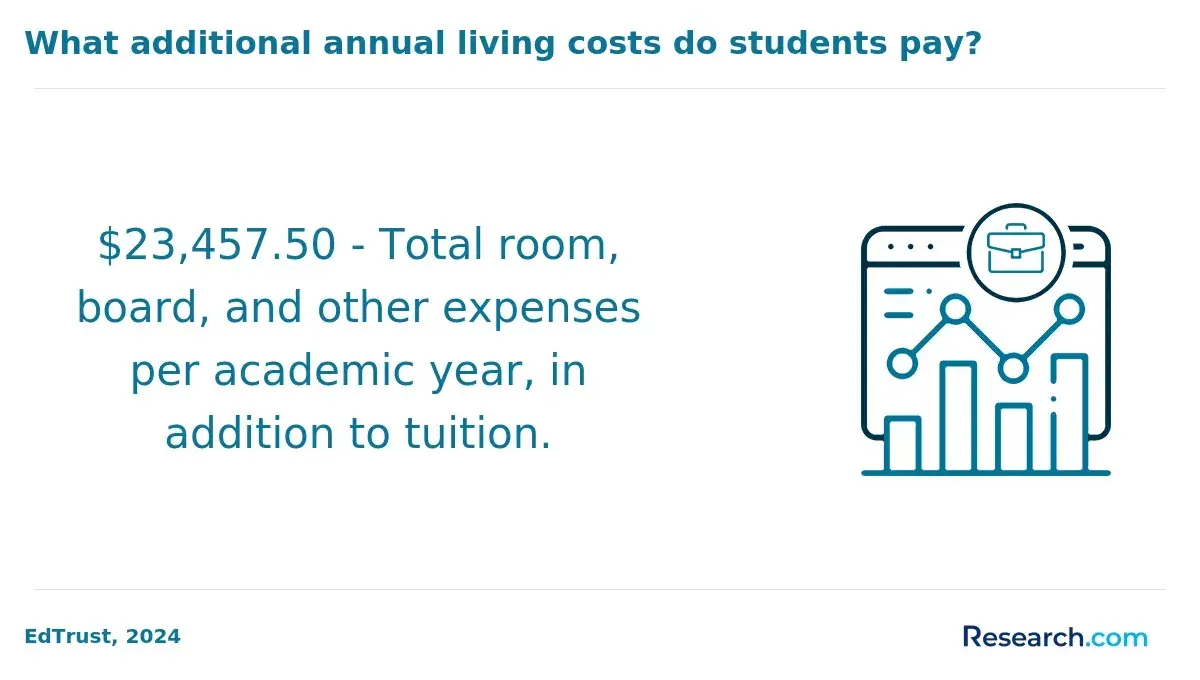
Cost should be part of this quality review, not separate from it. College Board's 2024 report lists average published tuition and fees for in-state public four-year colleges at $11,610 and private nonprofit four-year colleges at $43,350 for 2024-25. Those figures do not tell you which program is best, but they show why you should compare total cost, transfer credits, lab fees, residency travel, and time to completion before deciding.
A common mistake is assuming that a lower tuition rate automatically means better ROI. A cheaper program can become expensive if missing prerequisites, limited course availability, or weak transfer policies add extra terms.
How can you read course descriptions and syllabi to judge math depth in physics?
Course descriptions give you a quick overview, but syllabi reveal the real math depth. When possible, ask for recent syllabi from calculus-based physics, classical mechanics, electromagnetism, quantum mechanics, statistical mechanics, advanced lab, and computational physics.
When reading a syllabus, focus on the evidence that students actually practice mathematical physics. The following review process helps you judge depth without needing to be an expert in every topic.
- Start with prerequisites and confirm whether the course requires the math tools you expect for its level.
- Scan weekly topics for specific mathematical methods, such as vector calculus, matrix methods, Fourier series, eigenvalue problems, or differential equations.
- Check the textbook level; upper-division courses should generally use texts intended for physics majors, not only broad survey books.
- Review assignments and determine whether students complete derivations, multi-step problem sets, coding tasks, and lab analysis.
- Look at exam formats and grading weights to see whether quantitative reasoning is central to the grade.
- Read lab requirements for uncertainty analysis, model comparison, instrumentation, and scientific writing.
- Compare the syllabus to graduate program prerequisites if you plan to pursue an MS or PhD later.
The table below shows examples of wording that can signal stronger or weaker math depth. It should not replace a faculty conversation, but it can help you prepare better questions.
| Area | Stronger wording | Weaker wording | What to ask next |
| Mechanics | Lagrangian mechanics, coupled oscillations, central-force motion | Survey of motion and energy | Are derivations and differential equations required? |
| Electromagnetism | Maxwell's equations, boundary-value problems, vector fields | Electricity and magnetism concepts | Is vector calculus a prerequisite? |
| Quantum mechanics | Operators, eigenstates, Schrödinger equation, angular momentum | Introduction to modern physics topics | Is linear algebra required before enrollment? |
| Lab | Error propagation, curve fitting, instrumentation, technical reports | Demonstrations and lab activities | How are data analysis and uncertainty graded? |
| Computation | Numerical solutions, simulation, Python or MATLAB projects | Technology used when appropriate | Is programming required or optional? |
Be cautious with descriptions that sound impressive but remain vague. Words like "advanced," "innovative," and "career-ready" are less useful than concrete details about equations, tools, projects, prerequisites, and assessment.
How does math rigor in online physics influence graduate school and research opportunities?
Math rigor is one of the clearest signals of graduate school readiness in physics. Graduate admissions committees typically look for strong grades in upper-level theory, research experience, letters from physics faculty, and evidence that the student can handle mathematically demanding work.
A math-light physics degree does not necessarily block every next step, but it may require additional coursework before graduate studies. Students aiming for MS or PhD programs should prioritize degrees that include the standard physics-major core and enough advanced math to support theoretical and computational work.
The table below connects academic goals with the level of math rigor that usually makes the most sense. Requirements vary by institution, so always compare your degree plan with target graduate program prerequisites.
| Goal after bachelor's degree | Recommended math rigor | Important evidence to build | Potential gap to watch |
| Physics MS or PhD | High | Upper-level mechanics, electromagnetism, quantum mechanics, statistical mechanics, research or thesis | Missing advanced lab or mathematical methods |
| Engineering or applied science graduate study | High to moderate, depending on field | Calculus III, differential equations, linear algebra, computation, applied projects | Program-specific engineering prerequisites |
| Data science or computational science | Moderate to high with programming | Python, numerical methods, statistics, modeling projects | Insufficient statistics or machine learning background |
| Science teaching | Moderate, plus licensure pathway | Physics content breadth, labs, education coursework if required | State licensure requirements and supervised teaching |
| Technical industry roles | Moderate to high | Problem-solving portfolio, lab skills, coding, internships | Lack of directly marketable tools or experience |
Research opportunities also depend on program structure. Online students should ask whether they can join remote research groups, complete computational projects, work with local labs, or attend short campus residencies. For many students, a strong computational or data-analysis project can help compensate for limited physical access to research equipment.
The mistake to avoid is waiting until senior year to think about graduate preparation. If graduate school is possible, choose math-heavy electives early, build relationships with faculty, and ask about research options as soon as you enter upper-division coursework.
How does math-heavy vs math-light physics training affect career paths and salaries?
Math-heavy and math-light physics training can lead to different career options. A math-heavy degree is usually stronger for research, modeling, engineering-adjacent work, quantitative analysis, optics, aerospace, materials, and computational roles. A math-light path may still support science communication, education-related roles, technical sales, or interdisciplinary careers, but it may require additional credentials for highly quantitative jobs.
For salary context, the BLS reports a 2024 median annual pay of $149,530 for physicists and astronomers. That figure is useful for understanding the upper technical labor market, but it should not be read as a typical outcome for every bachelor's graduate because many physics roles require a graduate degree and specialized research preparation.
Some physics graduates also pivot into analytics, software, finance, engineering support, or data work. If you are comparing physics with a more directly data-focused path, reviewing the cheapest master in data science options can help you compare the cost of adding a targeted graduate credential after a physics foundation.
The table below shows how math intensity can influence career alignment. It does not guarantee job access, but it helps clarify which skills employers or graduate programs are likely to value.
| Training profile | Common strengths | Career directions that may fit | What may be needed next |
| Math-heavy physics | Modeling, differential equations, advanced problem-solving, computation | Research assistant, engineering analyst, computational scientist, optics or materials roles, graduate physics | Graduate degree, research experience, coding portfolio, internships |
| Physics plus strong programming | Simulation, data analysis, numerical methods, automation | Data analyst, scientific programmer, computational modeling, technical consulting | Statistics, databases, machine learning, software engineering practices |
| Physics plus education coursework | Science communication, lab instruction, conceptual explanation | Secondary teaching, tutoring, curriculum support, informal science education | State licensure or certification where required |
| Math-light physics or general science | Scientific literacy, communication, broad technical awareness | Technical sales, science writing, support roles, entry-level lab coordination | Additional technical training for quantitative roles |
Current employer expectations increasingly favor graduates who can combine physics reasoning with computational tools. AI and automation are changing routine analysis, but they also increase the value of people who understand models, assumptions, uncertainty, and physical constraints. For physics students, that means coding and mathematical interpretation are not optional extras if the goal is a competitive technical path.
What questions should you ask admissions advisors about math expectations in online physics?
Admissions advisors can explain policies, but you should ask detailed academic questions before enrolling. A strong online physics program should be able to answer how math prerequisites, labs, tutoring, transfer credits, and upper-level course rotations work in practice.
Use these questions in advising conversations. They are designed to reveal whether the program's math expectations match your preparation and goals.
- Is introductory physics calculus-based for physics majors, and is there a separate algebra-based track?
- Are calculus III, differential equations, linear algebra, and mathematical methods required for all physics majors?
- How often are upper-level physics courses offered, and what happens if I miss one in the sequence?
- Can I review recent syllabi for classical mechanics, electromagnetism, quantum mechanics, advanced lab, and computational physics?
- How are online labs delivered, and do they include quantitative uncertainty analysis and formal lab reports?
- What tutoring, recitation, faculty office-hour, or peer study options are available for math-heavy courses?
- How are transfer credits evaluated for calculus, differential equations, linear algebra, and physics labs?
- Do graduates enter physics graduate programs, engineering programs, teaching pathways, or technical industry roles?
- Will the transcript or diploma distinguish online study from campus study?
- Are there research, capstone, internship, or computational project opportunities for online students?
If you are comparing online degrees across very different fields, remember that fit depends on discipline. A master of library science may be judged by accreditation, practicum options, and information management outcomes, while online physics must be judged heavily by math sequence, labs, and upper-level theory.
The biggest red flag is an advisor who can only discuss convenience, speed, or tuition and cannot answer curriculum-specific questions. Physics is sequential, so vague answers about prerequisites and lab rigor can turn into real delays or limited options later.
Other Things You Should Know About Physics
It can be respected if it comes from an institutionally accredited school, uses calculus-based physics, includes rigorous upper-level courses and labs, and provides credible faculty support. The delivery format matters less than the curriculum, assessment quality, and student outcomes.
Yes, but competitiveness depends on your coursework, grades, research experience, faculty recommendations, and preparation in advanced math. If graduate school is a goal, choose a program with classical mechanics, electromagnetism, quantum mechanics, statistical mechanics, advanced lab, and mathematical methods.
A rigorous physics major typically requires calculus I, II, and III. Many programs also require differential equations, linear algebra, and a mathematical methods course because upper-level physics depends on multivariable calculus, matrices, and differential equations.
Consult academic advisors or faculty members specializing in physics education to assess the math rigor of online physics degrees. They can provide insights into curriculum details, mathematical prerequisites, and the level of complexity expected in these programs.
References
- Client Challenge https://education.seattlepi.com/math-concepts-needed-understand-college-level-physics-classes-3909.html
- 40 Questions to Ask Your Admissions Counselor - College Guide - Biola University https://www.biola.edu/college-guide/40-questions-to-ask-your-admissions-counselor
- Impact of a mathematical pre-course on first-year physics students https://www.scimath.net/article/impact-of-a-mathematical-pre-course-on-first-year-physics-students-16363
- Physics Curriculum: Order, Rigor, and Wonder in a Classical Education https://www.kolbe.org/blog/physics-curriculum-order-rigor-and-wonder-in-a-classical-education
- Mathematics for Physics, a student life-saving course https://physics-made-easy.com/mathematics-for-physics/
- Gamifying academic achievement in mathematical physics through student feedback on leaderboard performance tracking https://www.jotse.org/index.php/jotse/article/view/3321/1020
- IBO Physics: How to Succeed in the IB Physics Course https://www.revisiondojo.com/blog/ibo-physics-how-to-succeed-in-the-ib-physics-course
- Are Online Degrees Accredited? How to Identify Quality Distance Learning Programs https://www.umassglobal.edu/blog-news/online-degrees-accredited-identify-quality-distance-learning-programs
- What Does Mathematical Rigor Mean? https://2024.mindresearch.org/blog/what-does-mathematical-rigor-mean