2027 Online Physics Degrees With the Best Support for Returning Adults

Co-Founder and Chief Data Scientist
Choosing an online physics degree is harder than picking a typical online major because physics depends on labs, calculus, and close academic support. For returning adults balancing work, family, and transfer credits, the right program can make the difference between steady progress and stopping out.
The stakes are real: the U. S. Bureau of Labor Statistics reports a May 2024 median wage of $166,290 for physicists, though many research roles require graduate study. This guide explains accredited options, costs, timelines, support services, and career paths so you can decide whether an online physics degree fits your goals.
Key Things You Should Know
- Online physics bachelor's programs are rare, so returning adults should prioritize regional accreditation, lab delivery, transfer-credit fit, and adult-focused advising before comparing reputation or tuition.
- A bachelor's in physics can support technical, engineering-adjacent, data, education, and research-assistant roles, but independent physicist roles commonly require a master's or PhD; BLS lists $166,290 as the May 2024 median wage for physicists.
- Most bachelor's degrees require about 120 semester credits, and cost depends heavily on transfer credits, residency rules, per-credit tuition, lab fees, books, and whether the school accepts prior college, military, or workplace learning.
What should returning adults look for in a high-quality online physics degree?
A high-quality online physics degree for returning adults should do more than post lectures online. It should help you complete a lab-heavy, math-intensive major without needing to pause your career or relocate.
The best fit is usually a regionally accredited bachelor's program that clearly explains how online labs, exams, advising, transfer credits, and tutoring work. Physics is cumulative, so weak support in calculus, programming, or introductory mechanics can affect every later course.
The table below summarizes the main features adult learners should compare before applying. Use it to separate programs that are merely online from programs built to support working students through a demanding science curriculum.
| Program feature | Why it matters for returning adults | What to ask before enrolling |
| Regional accreditation | Accreditation affects federal aid eligibility, credit transfer, graduate school options, and employer recognition. | Is the institution accredited by a recognized regional accreditor, and is the degree listed in the current catalog? |
| Online lab model | Physics requires experimentation, measurement, uncertainty analysis, and lab reporting, not just theory. | Are labs completed through home kits, remote instrumentation, simulations, local partnerships, or short campus visits? |
| Math placement and tutoring | Returning adults may need a path back into algebra, trigonometry, precalculus, and calculus. | Does the school offer placement support, refresher courses, online tutoring, and faculty office hours outside business hours? |
| Transfer-credit policy | Prior credits can shorten time to completion and reduce total cost. | How many credits can transfer, which science courses must be repeated, and will older calculus or physics credits count? |
| Flexible pacing | Adults often need part-time enrollment, stop-out options, and predictable course rotations. | Can you take one or two courses per term, and are upper-division physics courses offered often enough to avoid delays? |
| Career and graduate-school advising | Physics outcomes vary widely depending on internships, research, programming, and graduate study plans. | Does advising cover technical careers, teacher preparation, engineering-adjacent roles, and graduate-school prerequisites? |
A common mistake is choosing the cheapest option before confirming lab access and upper-division course availability. A lower tuition rate may not save money if missing prerequisites, infrequent course offerings, or rejected transfer credits add extra terms.
Adult learners should also consider whether physics is the right science path. If your interests are more Earth systems, environmental data, mapping, or natural hazards, a best online geology degree comparison may point you toward programs with more online availability and clearer applied career paths.
How do online physics degrees compare to campus-based programs for adult learners?
Online physics degrees can work well for disciplined adult learners, but they are not identical to campus-based programs. The biggest differences are lab access, scheduling flexibility, peer interaction, and how easily you can join research groups.
The comparison below shows where each format tends to be stronger. The right choice depends less on whether online or campus is "better" and more on whether the format fits your schedule, learning style, and career target.
| Decision factor | Online physics degree | Campus-based physics degree |
| Schedule | Better for working adults who need asynchronous lectures, part-time pacing, and fewer commute demands. | Better for students who can attend scheduled labs, recitations, and in-person office hours. |
| Labs | May use home lab kits, simulations, remote instruments, or arranged local experiences. | Usually provides direct access to lab equipment, instrumentation, and supervised lab sections. |
| Research access | Possible but often requires proactive outreach, remote computational projects, or summer experiences. | Often easier to join faculty labs, attend seminars, and build research relationships. |
| Peer network | Depends on discussion boards, virtual study groups, and online tutoring communities. | More natural peer interaction through classrooms, labs, student clubs, and study spaces. |
| Career fit | Strong for adults seeking advancement into technical, analytical, education, or graduate-preparation pathways while employed. | Strong for students targeting intensive research preparation, experimental lab work, or direct faculty mentorship. |
Online study makes the most sense if you are self-directed, comfortable using software tools, and able to reserve consistent weekly study time. It may be a poor fit if you need daily in-person structure, want extensive hands-on experimental research, or plan to apply immediately to highly competitive doctoral programs without supplementing your record with research experience.
Physics overlaps with engineering in electronics, materials, optics, energy, and computation. If your goal is licensure-oriented engineering practice rather than physics research or technical analysis, compare physics programs with accredited online electrical engineering programs before committing.
Which accredited U.S. schools offer online physics degrees suited to working adults?
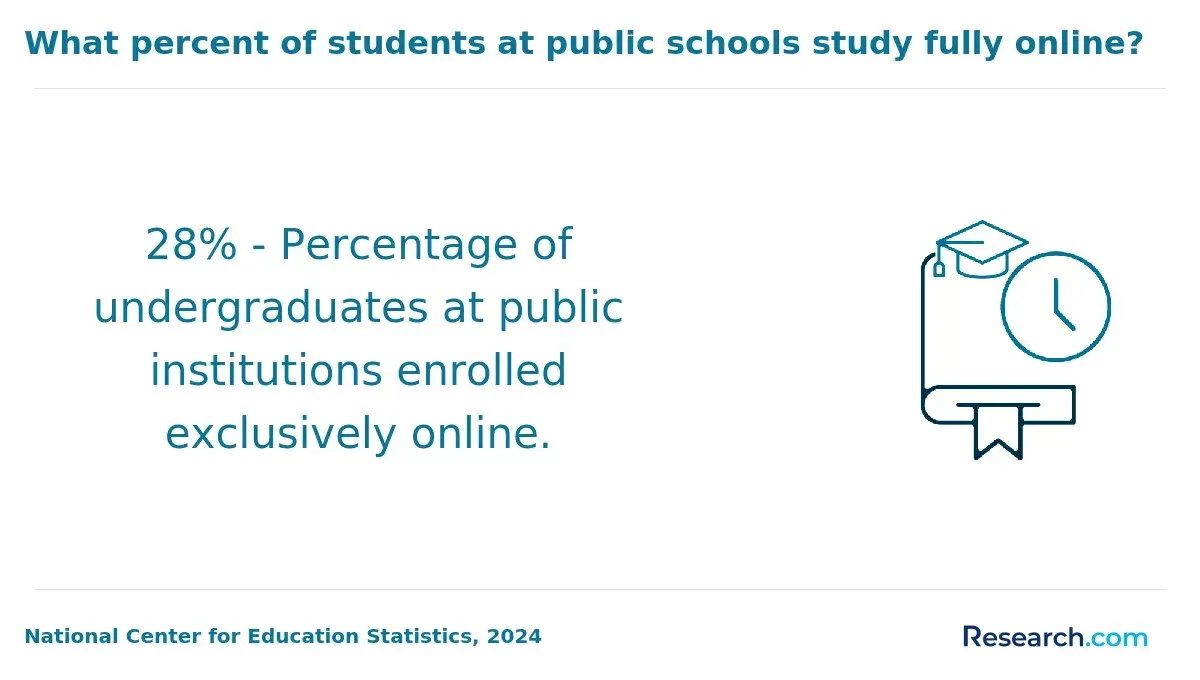
Online physics degrees are much less common than online business, computer science, or psychology degrees because schools must solve the lab-delivery problem. Returning adults should therefore start with a short, carefully verified list and confirm current availability directly with each institution.
The schools below are accredited U.S. institutions that have publicly offered online physics or applied physics bachelor's pathways suited to adult or transfer students. Program names, delivery methods, and requirements can change, so use this as a starting point rather than a final enrollment decision.
| School | Accreditation | Online physics pathway | Why it may fit returning adults | Important limitation to verify |
| Arizona State University Online | Higher Learning Commission | Online Bachelor of Science in Physics | Large online infrastructure, success coaching, broad student services, and a structured bachelor's format. | Confirm current lab formats, math placement, course sequencing, and whether any in-person components apply. |
| Oregon State University Ecampus | Northwest Commission on Colleges and Universities | Online Bachelor of Science in Physics | Established Ecampus model, science-focused online delivery, academic support, and adult-learner flexibility. | Confirm quarter-credit planning, lab expectations, upper-division course rotation, and transfer-course equivalencies. |
| University of Arizona Online | Higher Learning Commission | Online applied physics pathway, commonly structured for students with technical or transfer backgrounds | May suit adults bringing community-college, applied-science, military, or technical coursework into a bachelor's plan. | Confirm whether the current pathway is a BS, BAS, or related applied degree and how it aligns with graduate physics goals. |
Because the market is small, you should not rely on a ranking list alone. A program with excellent support but a course sequence that conflicts with your work schedule may be less practical than a less famous program that accepts more transfer credit and offers predictable part-time enrollment.
When speaking with admissions, ask for a written degree plan based on your transcript before you apply. That plan should show remaining math, physics, lab, general education, and elective requirements by term.
What admission requirements do online physics programs have for returning and nontraditional students?
Admission requirements for online physics programs usually resemble other bachelor's programs, but placement in math and science courses deserves special attention. Returning students may be admitted to the university before they are ready to begin calculus-based physics.
Most applicants should expect some combination of the following requirements. The exact rules vary by school, applicant type, transfer status, and state authorization.
- High school diploma, GED, or equivalent completion credential.
- Official transcripts from high school and all previously attended colleges.
- Minimum GPA requirements that may differ for first-year, transfer, and readmission applicants.
- Math placement through prior coursework, placement testing, AP or CLEP credit, or institutional assessment.
- English composition or general education placement, especially for transfer students with older credits.
- Technology requirements, including reliable internet, webcam or proctoring capability, and software access.
- Possible prerequisite coursework in precalculus, calculus, chemistry, computer programming, or introductory physics.
Adult learners should be especially careful with older STEM credits. A school may accept a course as elective credit but still require you to retake calculus, laboratory physics, or modern physics if the prior course is outdated, non-calculus-based, or missing a lab component.
A smart application sequence is to apply early, request a transcript evaluation, meet with a physics adviser, and ask whether any prerequisite refreshers are recommended. This prevents the common mistake of enrolling in a physics course before rebuilding the math foundation needed to succeed.
How long do online physics degrees take and what do they typically cost?
Most bachelor's degrees require about 120 semester credits, though schools on a quarter system may list a larger number of quarter credits. Full-time students often finish in about four years, while returning adults studying part time may need five to six years unless they bring substantial transfer credit.
Cost is harder to compare than time because online programs use different tuition models. Some charge by credit, some vary by residency, and some add lab, proctoring, technology, or course-material fees. The federal Pell Grant maximum for the 2025-26 award year is $7,395, which can reduce out-of-pocket cost for eligible undergraduates but will not cover the full cost of most bachelor's programs.
The table below explains the major cost drivers. Use it to calculate total cost rather than comparing only the advertised tuition line.
| Cost factor | How it affects adult learners | What to verify |
| Per-credit tuition | A small per-credit difference becomes significant across 120 credits. | Ask whether online students pay in-state, out-of-state, or separate online tuition. |
| Transfer credits | Accepted credits can reduce both tuition and time to completion. | Request an official transfer evaluation before assuming credits will apply to the major. |
| Lab fees and materials | Physics may require lab kits, software, sensors, or proctored lab assessments. | Ask for course-level fee estimates for all lab sciences. |
| Books and software | Calculus, physics, and programming courses may use paid platforms or specialized tools. | Ask whether open educational resources, student licenses, or inclusive access fees are used. |
| Pacing | Part-time enrollment may be more manageable but can extend fee exposure and delay career moves. | Ask whether courses are offered every term or only once per year. |
| Financial aid status | Dropping below half-time enrollment can affect aid eligibility and loan deferment. | Confirm minimum credits for grants, loans, scholarships, and employer tuition assistance. |
To estimate your own cost, multiply remaining credits by the confirmed per-credit tuition, then add expected fees, books, lab costs, and any travel. If a school charges $500 per credit and you need 60 remaining credits after transfer, tuition alone would be $30,000 before fees; this simple calculation often reveals why transfer planning matters more than sticker price.
Adults using employer reimbursement should also ask whether reimbursement is paid up front or after grades post. If reimbursement comes later, you may need a payment plan or short-term cash strategy even when your employer ultimately covers part of the cost.
What core courses and specializations are included in an online bachelor's in physics?
An online bachelor's in physics is built around mathematics, foundational physics, laboratory practice, and problem solving. The curriculum is usually more quantitative than many other science majors, so students should expect sustained work in calculus, differential equations, computation, and scientific writing.
Most programs include a sequence like the one below. Course names vary, but the progression from mechanics to electricity, quantum topics, and advanced lab work is common.
- Calculus I, II, and III, often followed by differential equations or linear algebra.
- General physics with calculus, including mechanics, waves, electricity, magnetism, and thermodynamics.
- Modern physics, which introduces relativity, quantum ideas, atomic physics, and nuclear physics.
- Classical mechanics, electromagnetism, quantum mechanics, statistical mechanics, or thermal physics at the upper-division level.
- Laboratory courses focused on measurement, instrumentation, uncertainty, data analysis, and technical reports.
- Computational physics, scientific programming, numerical methods, or data analysis.
- Capstone, senior project, research experience, or advanced laboratory requirement.
Specializations are less common in online physics than in campus programs, but electives may let you lean toward astrophysics, applied physics, optics, materials, education, computation, or engineering preparation. If you already know your target industry, choose electives strategically rather than taking whatever fits the schedule.
Physics is not the only online science pathway. Students interested in agriculture, veterinary-adjacent industries, feed systems, or life-science production may find an animal science bachelor degree online more directly aligned with their goals than a physics curriculum.
How do online physics programs support adult learners with tutoring, labs, and advising?
Support services are especially important in online physics because students are managing difficult technical material at a distance. For returning adults, strong support should be visible before enrollment, not discovered after the first failed exam.
Ask schools to describe support in practical terms: who helps, when they are available, what courses they cover, and whether services are included in tuition. The most useful programs usually combine academic, technical, and career support.
- Physics and math tutoring that covers calculus-based mechanics, electromagnetism, differential equations, and lab reports, not just general study skills.
- Faculty office hours offered online, with evening or recorded options when possible.
- Academic advising that maps prerequisites and course rotations across multiple terms.
- Success coaching or adult-learner advising focused on time management, re-entry anxiety, and balancing school with work.
- Writing support for technical lab reports, research summaries, and graduate-school statements.
- Library and research help for accessing journals, citation tools, and scientific databases.
- Technology support for learning platforms, proctoring systems, programming environments, and remote lab tools.
- Career services that help translate physics skills into resumes for data, engineering, education, defense, energy, and technology roles.
Lab support deserves separate scrutiny. A credible online lab plan should explain how you will collect data, document methods, demonstrate academic integrity, receive feedback, and meet safety expectations. Programs that vaguely say "labs are online" without explaining the method are a red flag.
Another red flag is advising that treats physics like a general online major. Physics prerequisites are tightly sequenced, so a single missed calculus or lab course can delay graduation by a full term or more if the course is not offered frequently.
What careers can you pursue with an online physics degree, and in which industries?
A physics bachelor's degree can lead to several career directions, but it is important to match the degree to the level of role you want. A bachelor's may be enough for some technical, analytical, education, and engineering-support roles, while research physicist positions often require graduate study.
The table below shows common pathways for physics graduates and the industries where those skills are used. Use it to think beyond the job title "physicist," which is only one possible outcome.
| Career direction | Typical responsibilities | Industries that may hire | Additional preparation that can help |
| Research assistant or laboratory technician | Set up experiments, collect data, maintain equipment, and support faculty or industry research teams. | Universities, national labs, defense contractors, medical device firms, materials companies. | Lab experience, instrumentation, Python, MATLAB, data documentation, safety training. |
| Data analyst or scientific computing associate | Clean data, build models, visualize results, and support quantitative decision-making. | Technology, finance, energy, healthcare analytics, government, logistics. | Python, SQL, statistics, machine learning fundamentals, project portfolio. |
| Engineering technician or engineering associate | Test components, troubleshoot systems, analyze measurements, and support engineering teams. | Electronics, aerospace, manufacturing, robotics, renewable energy, telecommunications. | CAD exposure, circuits, quality systems, industry-specific software. |
| Physics or science teacher | Teach secondary science, design labs, assess student learning, and support STEM readiness. | Public schools, private schools, tutoring companies, education technology. | State teacher certification or alternative licensure, depending on location. |
| Graduate student in physics or related fields | Develop deeper expertise through research, advanced coursework, and thesis or dissertation work. | Universities, research institutes, national laboratories, R&D employers. | Strong GPA, research experience, advanced math, faculty recommendations. |
AI and automation are changing physics-related work by increasing demand for computational modeling, simulation, data analysis, and coding. For adult learners, this means programming and statistics electives can improve career flexibility even if the degree title remains physics.
Physics can also support careers in science communication, archives, technical documentation, museum work, and research information services. If your long-term goal is managing scientific collections, scholarly databases, or research libraries, a masters in library science may eventually pair well with a technical undergraduate background.
What salary ranges and job outlook can physics graduates expect in the United States?
Salary expectations for physics graduates vary widely because the degree feeds into several occupations. A bachelor's graduate working as a technician, analyst, teacher, or engineering associate will usually be in a different labor market than a PhD-level research physicist.
The U.S. Bureau of Labor Statistics reported a May 2024 median annual wage of $166,290 for physicists. That figure is useful as a high-level benchmark, but adult learners should treat it carefully: many roles included in that occupation require graduate education, specialized research experience, or employment in high-paying sectors such as federal research, aerospace, or scientific R&D.
The table below gives a practical way to interpret salary and outlook by pathway rather than assuming one number applies to every physics graduate.
| Pathway | Education level commonly expected | Salary interpretation | Outlook considerations |
| Physicist or research scientist | Often master's or PhD for independent research roles | BLS physicist wage data is most relevant here, but it may not represent bachelor's-only roles. | Opportunities depend on research funding, sector, security clearance needs, and graduate preparation. |
| Engineering or technical support | Bachelor's degree plus applied skills may be sufficient for some roles | Pay varies by industry, with aerospace, electronics, and energy often valuing quantitative lab skills. | Hands-on experience, internships, and software skills can matter as much as the major title. |
| Data and computational roles | Bachelor's degree plus coding, statistics, and portfolio projects | Physics training can be valuable, but applicants compete with computer science, math, and statistics graduates. | AI tools increase productivity expectations, making coding and model-evaluation skills important. |
| Teaching | Bachelor's degree plus state-approved teacher preparation or alternative certification | Compensation is usually tied to district salary schedules, state, experience, and credentials. | Shortages in secondary STEM teaching can create opportunities, but licensure rules vary by state. |
For return on investment, focus on the job you are actually targeting. If you want a bachelor's-level technical role, prioritize internships, programming, instrumentation, and transferable credits. If you want to become a physicist in the research sense, plan for graduate school early and choose a program that supports faculty recommendations and research exposure.
How can adult learners evaluate accreditation, credit transfer, and prior learning in physics?
Accreditation, credit transfer, and prior learning are three of the most important issues for returning adults because they affect cost, speed, aid eligibility, and future options. Do not assume that all online physics credits will transfer or that every science course taken years ago will satisfy a current major requirement.
Use the following steps before enrolling. They are especially important if you have community-college credits, military training, international coursework, professional certifications, or an unfinished bachelor's degree.
- Confirm institutional accreditation through the school's accreditor and the U.S. Department of Education's recognized accreditation database.
- Verify that the physics degree is active in the current catalog and available in your state.
- Request an official transfer-credit evaluation, not an informal estimate, before making a financial commitment.
- Ask which credits apply to general education, which apply to the major, and which count only as electives.
- Check whether calculus-based physics, lab sciences, and advanced math have recency requirements.
- Ask whether CLEP, AP, DSST, military credit, portfolio assessment, or workplace learning can reduce elective or general education requirements.
- Confirm graduate-school implications if you plan to apply for a master's or PhD in physics, engineering, astronomy, or applied science.
Programmatic accreditation is less central in physics than it is in fields such as nursing, counseling, or ABET-accredited engineering. However, institutional accreditation is still essential, and students pursuing engineering-adjacent roles should understand that a physics degree is not the same as an accredited engineering degree for licensure purposes.
A common red flag is a school that promises unusually fast completion without a transcript review. Physics has real prerequisite chains, and legitimate acceleration usually comes from accepted transfer credits, year-round enrollment, or strong prior preparation rather than skipping core math and lab requirements.
Other Things You Should Know About Physics
Yes, some accredited U.S. schools offer online physics or applied physics bachelor's pathways. However, lab delivery varies, so you should confirm whether labs use kits, simulations, remote instruments, local arrangements, or any required campus visits.
An online physics degree from a regionally accredited institution can be respected, especially when the transcript and diploma come from the same accredited university system. Employers will still care about skills, projects, internships, coding ability, lab experience, and how well the degree fits the role.
Physics can be a strong choice for adults who enjoy math, problem solving, technology, and quantitative work. It may not be the best fit if you need a fast, low-math credential or want a career path with a direct license built into the undergraduate degree.
In 2027, online physics degree programs support returning adults through flexible scheduling, personalized academic advising, and career counseling. Institutions often offer mentorship programs and resources tailored to non-traditional students, allowing them to balance educational pursuits with personal and professional responsibilities.
References
- So You Want to Learn Physics... — Susan Fowler https://www.susanjfowler.com/blog/2016/8/13/so-you-want-to-learn-physics
- Building a physics degree for the future: five key questions we need to answer – Physics World https://physicsworld.com/a/building-a-physics-degree-for-the-future-five-key-questions-we-need-to-answer/
- 2025 Best Online Degrees in Physics https://www.onlineu.com/degrees/physics
- What Can You Do with a Physics Degree? https://willamette.edu/academics/college/physics/career-options
- Physics in high school and college ... academic support courses and exercises - Private lessons https://www.apprentus.com/en-ee/private-lessons/online/tutoring/physics/physics-high-school-college-academic-suppo
- Where Can I Find a Physics Online Course for Credit? 5 Great Options - Prereqcourses https://www.prereqcourses.com/physics-online-course-for-credit/
- CAEL | Why Credit for Prior Learning (CPL) or Prior Learning Assessment (PLA) Matters https://www.cael.org/lp/cpl-pla
- Online vs. On-Campus: Which Mode of Learning Is Best for You? https://www.onlinemastersdegrees.org/student-resources/which-mode-of-learning-is-best/