2027 Best Online Bachelor's in Physics for Working Adults

Co-Founder and Chief Data Scientist
Choosing an online bachelor's in physics is harder than finding a typical online business or psychology degree because fully online physics majors are rare and lab requirements matter. Yet the payoff can be real: the U.S. Bureau of Labor Statistics projected 7% growth for physicists and astronomers from 2023 to 2033, faster than the average for all occupations.
This guide is for working adults comparing accredited options, costs, schedules, transfer policies, and career outcomes so they can decide whether an online physics degree is the right investment.
Key Things You Should Know
- Fully online physics bachelor's programs are uncommon in the U.S.; the strongest options are institutionally accredited programs that clearly explain lab delivery, transfer credit, upper-division math requirements, and any campus or proctored components.
- A physics bachelor's is versatile, but many "physicist" roles prefer graduate education; bachelor's graduates often compete for roles in engineering support, data analysis, software, education, research labs, quality assurance, and technical sales.
- Cost varies widely: College Board's 2024 pricing report listed average 2024-25 published tuition and fees of $11,610 for in-state public four-year students, $30,780 for out-of-state public students, and $43,350 for private nonprofit four-year students.
What is an online bachelor's in physics and how does it compare to campus programs?
An online bachelor's in physics is an undergraduate degree that teaches mechanics, electricity and magnetism, thermodynamics, quantum mechanics, statistical physics, calculus-based problem solving, and laboratory methods through distance-delivered coursework. For working adults, the key difference is not the physics content itself; it is how the program handles labs, exams, advising, and course sequencing around a job schedule.
Campus programs usually offer easier access to lab equipment, research groups, faculty offices, tutoring centers, and peer study groups. Online programs can be better for adults who cannot relocate, need asynchronous coursework, or want to use transfer credits from community college, military training, or prior college attendance.
The table below compares the practical trade-offs that matter most before enrolling. Use it to decide whether online delivery solves your access problem without weakening the parts of the degree you need for your goal.
| Factor | Online bachelor's in physics | Campus bachelor's in physics | Best fit |
| Schedule | Often includes asynchronous lectures, recorded materials, and flexible weekly deadlines | Usually follows fixed class and lab meeting times | Online works better for employed adults with predictable but limited study windows |
| Laboratories | May use lab kits, simulations, remote instrumentation, partner sites, or short residencies | Uses campus laboratories and in-person supervision | Campus may be stronger for students targeting experimental research immediately after graduation |
| Networking | Depends heavily on virtual office hours, online cohorts, faculty responsiveness, and internships | More spontaneous contact with faculty, research groups, and classmates | Online students should choose programs with structured advising and career support |
| Career alignment | Works well for data, technical, education, engineering support, and graduate-school preparation if the curriculum is rigorous | Often better for students who want on-campus research experience or direct lab assistantship access | The right choice depends on whether you need flexibility or physical research access more |
Physics overlaps with engineering, computing, and data-intensive fields, so some adults should compare adjacent programs before choosing. Veterans and military-connected learners who want a more directly engineering-focused path may also want to review online electrical engineering degree programs for veterans when comparing physics with applied engineering options.
Which universities offer the best accredited online bachelor's in physics in the U.S.?
The best accredited online bachelor's in physics programs for working adults are usually not "best" because of a ranking label. They are best when they combine recognized institutional accreditation, a real physics major rather than a loose science studies degree, transparent lab expectations, adult-friendly scheduling, and enough upper-division coursework for graduate school or technical employment.
Fully online physics bachelor's options are limited, so readers should verify current availability directly with each university before applying. The table below summarizes reputable U.S. options that have been known for online or distance-accessible physics bachelor's pathways and explains who each may fit best.
| University | Online physics pathway | Institutional accreditation | Why it may work for adults | Important check before applying |
| Arizona State University | Online Bachelor of Arts in Physics | Higher Learning Commission | Good fit for students who want a broad physics foundation with online course delivery and flexibility | Ask how labs are completed, whether the BA meets your graduate-school prerequisites, and how often upper-division courses are offered |
| University of North Dakota | Distance-accessible physics bachelor's pathway | Higher Learning Commission | Good fit for students who want a traditional public university physics curriculum with distance learning options | Confirm current online course availability, lab format, exam proctoring, and any required campus visits |
| Liberty University | Online Bachelor of Science in Physics | Southern Association of Colleges and Schools Commission on Colleges | Good fit for students who prefer an online private university format with accelerated course scheduling | Review transfer credit rules, lab requirements, science course sequencing, and whether the faith-based environment matches your preferences |
Because physics is a lab-based discipline, institutional accreditation is the minimum filter, not the whole quality test. Programmatic accreditation is not as common in physics as it is in engineering, nursing, or business, so adult learners should focus on curriculum depth, faculty credentials, lab integrity, graduate-school acceptance, and employer relevance.
A strong program should provide enough math and physics for your next step. If a school cannot clearly explain how online students complete labs, upper-level courses, advising, and capstone work, treat that as a red flag rather than a minor inconvenience.
How do I choose a reputable online physics bachelor's program as a working adult?
Working adults should choose an online physics bachelor's by matching the program to a specific outcome: graduate study, teaching, data work, engineering support, scientific computing, or career change. A reputable program is not simply the cheapest or fastest option; it is the one that lets you complete rigorous physics coursework without hidden barriers.
Use the following steps to evaluate programs before you submit applications or FAFSA information. These checks help you avoid programs that look flexible but become difficult to finish.
- Confirm institutional accreditation through a recognized accreditor and make sure the degree title is a bachelor's in physics, applied physics, or a closely related physical science field.
- Ask for a written explanation of lab delivery, including lab kits, simulations, remote labs, partner-site labs, proctored exams, and any required in-person sessions.
- Review the upper-division course rotation so you know whether courses such as quantum mechanics, electromagnetism, and statistical physics are offered often enough for part-time completion.
- Request a transfer credit evaluation before enrolling, especially if you have calculus, chemistry, computer science, engineering, or military technical credits.
- Compare total cost, not just tuition, including technology fees, lab kits, proctoring, books, travel, repeated courses, and the cost of extending the degree part time.
- Ask what graduates do after the program, including graduate school, teaching, data analysis, engineering support, software, laboratory roles, or government work.
Common mistakes include choosing a program because it is labeled "online" without checking lab requirements, assuming a physics bachelor's automatically leads to a physicist job, and ignoring math placement. Another mistake is picking physics when the real goal is software development; in that case, a computer science bachelor degree online may provide a more direct route.
For a working adult, the best program usually has predictable course rotations, accessible faculty, clear transfer pathways, and enough rigor to keep graduate school open. A program that is fast but thin in advanced math or lab work may save time now while limiting options later.
What admission requirements and prior coursework do online physics degrees typically expect?
Admission requirements for online physics bachelor's programs vary by school, but most expect evidence that you can handle calculus-based science. Adult learners are often admitted through freshman, transfer, readmission, or degree-completion pathways depending on prior college credit.
Most programs will review both general university admission requirements and readiness for the physics major. The following items are the most common requirements or preparation areas to check.
- High school diploma, GED, or equivalent completion record for first-time college students
- Official transcripts from every college previously attended, even if credits are old or incomplete
- College algebra, precalculus, or calculus placement, depending on where the physics sequence begins
- Prior laboratory science coursework, often including physics, chemistry, or other natural science classes
- Minimum GPA requirements for transfer admission or major declaration, which vary by institution
- English composition and general education credits that may be transferable into the bachelor's degree
- Technology readiness, including a reliable computer, broadband access, webcam, scientific calculator or software, and the ability to use learning platforms
Calculus is the most important readiness factor. If you have not taken precalculus recently, consider taking a placement test seriously rather than rushing into calculus and physics at the same time. A slower start can be faster overall if it prevents failed or repeated technical courses.
Adult learners with prior credits should ask whether old science and math courses expire for major requirements. Some schools accept older general education credits but require recent calculus, physics, or lab coursework if the material is foundational to advanced study.
What does the curriculum for an online bachelor's in physics usually include?
An online bachelor's in physics usually includes a mix of general education, mathematics, core physics, advanced physics, laboratory work, electives, and a capstone or research-style project. The strongest programs do not reduce physics to conceptual survey courses; they require mathematical modeling, problem solving, and experimental reasoning.
The table below shows what students usually encounter in a physics curriculum and why each area matters. This helps you read degree plans more critically instead of assuming all physics majors cover the same ground.
| Curriculum area | Typical courses | Why it matters |
| Mathematics foundation | Calculus I-III, differential equations, linear algebra, mathematical methods | Physics uses math as its language, so weak math preparation can slow progress in nearly every upper-level course |
| Core physics | Classical mechanics, electricity and magnetism, waves, optics, thermodynamics | These courses build the conceptual and quantitative foundation for technical roles and graduate study |
| Modern and advanced physics | Quantum mechanics, statistical mechanics, relativity, nuclear or particle physics | Advanced coursework signals that the degree goes beyond introductory science |
| Laboratory and computation | Experimental methods, electronics, data acquisition, Python, numerical modeling, simulation | Employers increasingly value graduates who can collect, clean, analyze, and interpret technical data |
| Electives and applications | Astronomy, materials science, computational physics, biophysics, engineering electives, data analysis | Electives let adult learners align the degree with careers in technology, education, labs, or graduate school |
A current trend affecting physics education is the growth of computational work. Many physics graduates now use programming, statistical tools, simulations, and machine learning alongside traditional lab methods, so a program that includes Python, numerical methods, or data analysis can be more career-relevant than one focused only on theory.
If you already know you want to move toward analytics or AI-heavy scientific work, plan electives carefully. Some physics graduates later pursue a master of data science online to formalize skills in machine learning, statistics, and large-scale data systems.
How long does an online physics bachelor's degree take and can I study part time?
Most bachelor's degrees require about 120 semester credits, but the real timeline for an online physics degree depends on transfer credits, math placement, course sequencing, and whether the program allows part-time enrollment. Physics can be harder to accelerate than some majors because calculus, labs, and upper-division physics courses often have strict prerequisites.
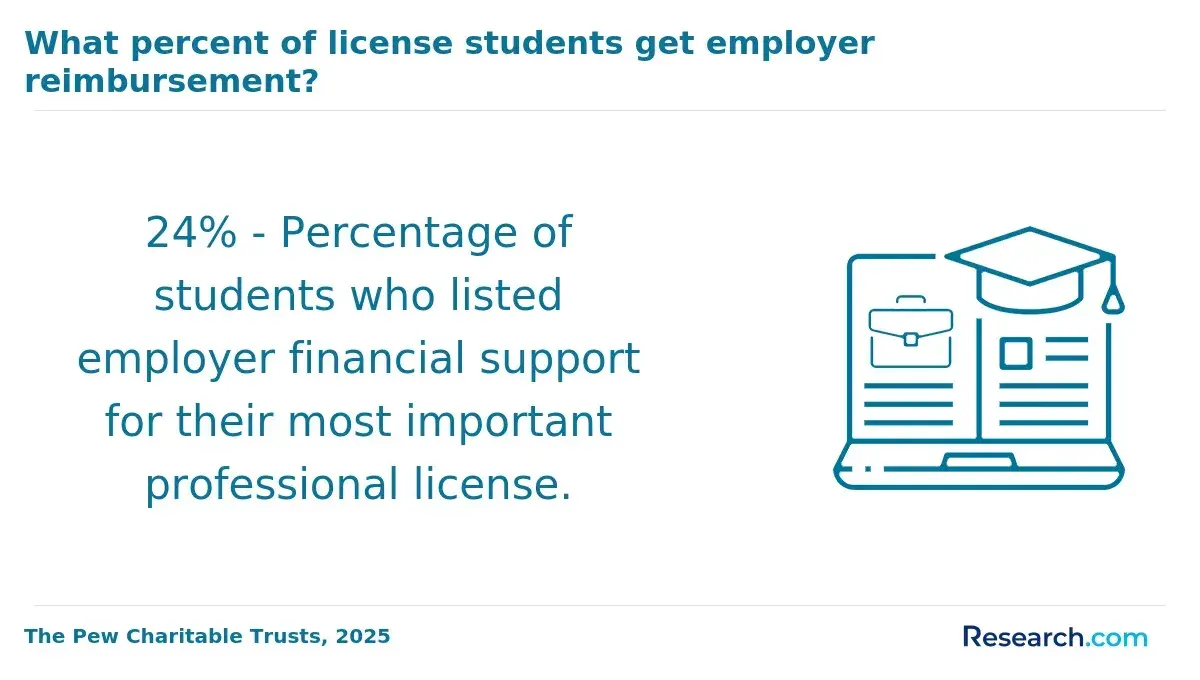
The table below shows realistic completion timelines for different adult learner profiles. It is meant to help you estimate time-to-degree before you compare tuition or employer reimbursement.
| Student profile | Typical pace | Likely timeline | Main constraint |
| First-time student studying full time | 12-15 credits per term | About four years | Completing calculus, physics sequences, labs, and general education in order |
| Transfer student with associate degree | 6-12 credits per term | Often two to three years after transfer | Whether prior math, science, and general education credits apply cleanly |
| Working adult studying part time | 3-9 credits per term | Often four to six years depending on credits already earned | Course rotation and the ability to take sequential math and physics courses without long gaps |
| Career changer with prior bachelor's degree | Major requirements only, if allowed | Varies widely by school | Whether the institution offers second-degree admission and accepts prior general education credits |
Part-time study is possible, but it requires careful planning. Taking one course at a time may work for general education, but physics sequences often build semester by semester, so long pauses between calculus, mechanics, and electromagnetism can make later courses harder.
Before enrolling, ask for a term-by-term plan based on your actual transfer evaluation. If the advisor cannot show when required upper-division courses will be available, you may face delays even if the program is officially online.
What does an online physics program cost and what financial aid can adult learners use?
Online physics degree costs depend on residency status, public versus private pricing, transfer credits, fees, books, lab supplies, and how long you study part time. Tuition is only one part of the calculation because lab kits, software, proctoring, and repeated courses can affect the total bill.
College Board's 2024 pricing report gives useful national context for published tuition and fees at four-year institutions. These figures are not online-specific, but they help adult learners understand the price range they may see when comparing schools.
- Average 2024-25 published tuition and fees for in-state students at public four-year institutions: $11,610
- Average 2024-25 published tuition and fees for out-of-state students at public four-year institutions: $30,780
- Average 2024-25 published tuition and fees for students at private nonprofit four-year institutions: $43,350
Financial aid can reduce out-of-pocket cost, but eligibility depends on enrollment status, prior aid use, degree level, income, school participation, and satisfactory academic progress. The maximum federal Pell Grant for the 2024-25 award year was $7,395, which can be especially important for lower-income adult learners who qualify.
Use these steps to evaluate affordability before committing. They focus on total cost and completion risk rather than sticker price alone.
- Complete the FAFSA and compare the net price after grants, scholarships, employer tuition assistance, military benefits, and transfer credits.
- Ask whether online students pay in-state, out-of-state, per-credit, flat-rate, or special online tuition.
- Request a list of required fees, including lab kits, remote proctoring, textbooks, software, graduation fees, and technology charges.
- Estimate the cost of studying part time, including extra terms and the possibility that financial aid may change below half-time enrollment.
- Prioritize transfer-friendly programs if you already completed calculus, chemistry, physics, programming, or general education courses at a lower-cost institution.
- Avoid borrowing based on optimistic salary assumptions; compare debt against several realistic career paths, not only the highest-paying physics-related jobs.
The most affordable program is not always the best value. A slightly higher-cost program may be worth considering if it accepts more transfer credits, offers stronger advising, has predictable upper-division course availability, or reduces the risk of delayed graduation.
What careers can you pursue with an online bachelor's in physics?
A bachelor's in physics can lead to several career directions, but many graduates do not hold the job title "physicist" right away. Employers value physics graduates for quantitative reasoning, modeling, instrumentation, problem solving, and the ability to learn technical systems quickly.
The table below summarizes common career paths for physics bachelor's graduates and how closely each path connects to the degree. Use it to identify whether physics fits your desired outcome or whether another major would be more direct.
| Career path | Typical responsibilities | How a physics degree helps | Additional preparation often needed |
| Research or laboratory technician | Operate equipment, collect data, maintain experiments, document results | Builds lab reasoning, measurement skills, and scientific problem solving | Hands-on lab experience, safety training, instrumentation skills |
| Engineering technician or engineering support specialist | Test prototypes, analyze failures, support design teams, prepare technical reports | Connects mechanics, electromagnetism, materials, and measurement to applied problems | CAD, electronics, manufacturing, or industry-specific tools |
| Data analyst or scientific programmer | Clean data, build models, visualize results, automate technical workflows | Physics training supports quantitative thinking and computational modeling | Python, SQL, statistics, machine learning, portfolio projects |
| High school physics teacher | Teach physics, design labs, assess students, meet state curriculum standards | Provides subject-matter depth in physics and math | State teacher licensure or alternative certification requirements |
| Technical sales or applications specialist | Explain scientific products, support customers, translate technical needs into solutions | Helps with complex instruments, optics, electronics, software, or lab technologies | Communication skills, product training, industry experience |
| Graduate student in physics, engineering, or applied science | Conduct research, complete advanced coursework, teach or assist in labs | Provides the foundation for specialized research or technical advancement | Strong GPA, recommendations, research experience, advanced math |
Physics is a strong fit if you like abstract problem solving and are willing to build complementary skills. If your primary goal is software engineering, cybersecurity, or app development, online degrees in computer science may offer a more targeted path with fewer physics lab requirements.
For career readiness, do not wait until senior year to specialize. Build a portfolio around one direction: coding projects for data roles, lab documentation for technician roles, tutoring or classroom experience for teaching, or applied electronics and instrumentation for engineering support.
What salary ranges and job outlook can physics bachelor's graduates expect?
Salary outcomes for physics bachelor's graduates vary because the degree feeds into many occupations. Some roles require only a bachelor's degree, while many research physicist positions prefer or require a master's or doctorate, so readers should not interpret physicist salary data as a guaranteed bachelor's-level outcome.
The table below uses U.S. Bureau of Labor Statistics data published in 2024 to show salary and outlook context for physics-related career directions. These figures are occupation-level benchmarks, not promises for any individual graduate.
| Occupation or path | Relevant BLS median pay context | Job outlook context | How to interpret it |
| Physicists | The median annual wage for physicists was $155,680 in May 2023 | Physicists and astronomers were projected to grow 7% from 2023 to 2033 | Many physicist roles require graduate education, so bachelor's graduates should treat this as a long-term benchmark |
| Data scientists | The median annual wage for data scientists was $108,020 in May 2023 | Data scientist employment was projected to grow much faster than average from 2023 to 2033 | Physics graduates can compete if they add programming, statistics, machine learning, and portfolio evidence |
| Software developers | The median annual wage for software developers was $132,270 in May 2023 | Software development remained a high-growth technical field in BLS projections | A physics degree can help, but employers usually expect strong coding experience and demonstrable projects |
| High school teachers | The median annual wage for high school teachers was $65,220 in May 2023 | Demand varies by state, district, and subject shortage area | Physics teachers may need state licensure, student teaching, or alternative certification |
The strongest salary strategy is to connect physics to a marketable skill cluster. Examples include physics plus Python, physics plus electronics, physics plus teacher licensure, physics plus data visualization, or physics plus materials testing.
AI and automation are changing the skill mix rather than eliminating the need for quantitative workers. Graduates who can use computational tools, validate models, understand measurement limits, and explain technical results may be better positioned than those who rely only on theory.
Are there certifications or advanced degrees that strengthen a physics career after graduation?
Certifications and advanced degrees can strengthen a physics career, but the right choice depends on your target role. A certificate can help you prove a specific skill quickly, while a graduate degree may be necessary for research, higher education, or specialized scientific leadership.
Consider the following options after or near the end of the bachelor's degree. Each is useful for a different career direction, so choose based on the jobs you plan to pursue.
- Teacher licensure or alternative certification if you want to teach physics in public secondary schools; requirements vary by state and may include exams, supervised teaching, and background checks.
- Programming, data analytics, cloud, or machine learning certificates if you want to move into scientific computing, data science, or analytics roles.
- Electronics, instrumentation, quality, safety, or manufacturing-related credentials if you want laboratory, engineering support, or technical operations roles.
- Master's degree in physics, applied physics, engineering, materials science, astronomy, or medical physics if you want deeper technical specialization.
- Doctorate in physics or a related field if your goal is independent research, tenure-track academia, or many advanced physicist roles.
Graduate school is not automatically the best financial decision, especially for adults balancing work and family responsibilities. Compare tuition, assistantship availability, opportunity cost, and the specific credential expectations for your target job before applying.
If your physics background leads you toward analytics, machine learning, or AI-enabled research, a master of data science online can be a practical next step, especially when paired with a physics portfolio that shows modeling and quantitative problem solving.
Other Things You Should Know About Physics
For 2027, online physics labs in reputable programs are designed to be as rigorous and educational as traditional labs. They employ virtual simulations and home experiments to ensure students gain equivalent hands-on experience and understanding, making them a legitimate component of online physics degrees.
Some technical roles use physics skills at the bachelor's level, but many jobs with the title "physicist" require a master's or doctorate. A bachelor's degree is often the starting point for research, engineering support, data, teaching, or graduate study.
You may want another path if you dislike advanced math, need daily in-person lab access, want the fastest route to a software job, or cannot commit to sequential coursework. Physics rewards persistence, but it is not the easiest online STEM major to complete casually.
References
- Types of Financial Aid for Online Colleges https://www.umassglobal.edu/blog-news/types-financial-aid-online-colleges
- Financial Aid for Adult Learners: Grants, Scholarships & How to Pay for College (2026 Guide) https://www.straighterline.com/blog/financial-aid-resources-adults
- How to Pay for College as an Adult Learner - ReUp Education https://reupeducation.com/blog/how-to-pay-for-college-as-an-adult-learner/
- 2025 Best Online Degrees in Physics https://www.onlineu.com/degrees/physics